Aging-in-Place Remodeling in Phoenix: Design Standards, Real Costs, and What Actually Gets Used in the Valley of the Sun
As the population ages, the desire for older adults to remain in their homes and communities—a concept known as “aging in place”—has become a foundational principle in housing, healthcare, and personal planning. This research report delves into the realities of aging-in-place remodeling, with a particular focus on the unique context of Phoenix, Arizona. We explore the critical gap between the strong preference among seniors to stay at home and the current unreadiness of most housing stock to support independent living. From practical design standards to the actual costs involved and an examination of which modifications truly get used, this report provides a comprehensive overview for homeowners, professionals, and policymakers navigating this demographic shift.
The imperative for proactive home modifications is increasingly clear, particularly in regions like Phoenix, which boast a significant and growing senior population. While 75-80% of adults aged 50 and over express a strong desire to age in place, only about 10% of U.S. homes currently possess the key accessibility features necessary for safe and comfortable senior living. This report dissects the financial implications of such remodels, contrasting the initial investment with the long-term benefits and substantial healthcare savings. By analyzing industry trends, design principles, and user-centric data, we aim to demystify aging-in-place remodeling, highlighting the most effective interventions and empowering stakeholders to make informed decisions that enhance quality of life and promote independent living for older adults.
Key Takeaways
- Strong Desire, Unready Homes: Over 75% of seniors want to age in place in Phoenix, yet less than 10% of homes possess key accessibility features, creating a significant gap.
- Proactive vs. Reactive: Fewer than half of seniors over 65 have modified their homes, leading to more expensive and stressful last-minute renovations after a crisis.
- "Analog" Trumps Smart Tech: Simple, proven modifications like grab bars and curbless showers are most effective and widely used, often prioritized over complex smart home gadgets for immediate safety.
- Costs Vary Widely: While basic upgrades can be affordable ($300-$1500), extensive bathroom or structural changes can range from $15,000 to over $50,000, underscoring the need for careful budgeting.
- High Stakes for Non-Adaptation: Falls in unadapted homes lead to substantial healthcare costs ($80B in 2020), dwarfing the investment in home modifications (typically $3K-$15K).
- Phoenix Leads the Demand: As a major retirement destination, the Phoenix metropolitan area exhibits particularly high demand for aging-in-place remodels, with local firms experiencing a surge in such requests.
- Boomers Driving Major Spending: Homeowners 55 and over account for more than half of all home improvement spending, indicating a sustained and growing market for aging-in-place services.
1. Executive Summary
Aging in place, the ability for older adults to live independently and safely in their own homes and communities as they age, has become a central focus for individuals, families, and the housing industry alike. This section provides an overview of the current state of aging-in-place remodeling, covering various aspects from the strong desire among seniors to remain at home to the significant challenges posed by unsuitable housing stock, the practical design solutions, the financial implications, and the industry's response to this growing trend. It highlights the gap between seniors' preferences and their homes' readiness, underscoring the urgent need for proactive planning and modifications. The data presented demonstrates that while the intent to age in place is high, the actual preparation often lags, leading to reactiveness rather than preparedness.
The population aged 65 and older is increasing, a trend that will only intensify, with households headed by someone 80 or older projected to double by 2040[23]. This demographic shift drives demand for home modifications that support independent living. However, most existing homes were not built with the needs of older adults in mind. Only about 10% of U.S. housing units possess key accessibility features[3], and less than 5% are fully accessible for individuals with mobility disabilities[5]. This creates a disconnect: a majority of seniors want to remain in their homes, but most homes are not equipped to allow them to do so safely and comfortably.
The remodeling industry is responding, with many firms seeing a substantial rise in requests for aging-in-place projects. These projects range from simple, cost-effective safety additions like grab bars to more extensive, costly renovations such as full accessible bathroom remodels or home elevators. Understanding these costs, the most effective modifications, and the broader economic benefits of proactive remodeling is essential for homeowners, policy makers, and industry professionals. The analysis also explores the role of technology, often seen as a solution, but notes that simpler, "analog" modifications tend to be more widely used and impactful for many seniors today.
1.1. The Growing Preference for Aging in Place
The desire for older adults to remain in their current homes as they age is a consistent and powerful demographic trend. Approximately 75%-80% of adults aged 50 and over express a strong wish to stay in their homes and communities[1]. This preference has remained stable despite various economic and social changes, including the recent pandemic[1]. A 2021 survey showed that 77% of U.S. adults aged 50 or older want to stay in their current home for as long as possible, and 79% want to stay in their community[19]. This preference is deeply tied to personal identity, community connections, and comfort within familiar surroundings. Even among those in their 80s, a majority would prefer to avoid institutional care if possible.
This preference is not merely personal; it has broader societal implications. Encouraging and enabling seniors to age safely at home can help reduce pressure on healthcare systems and assisted living facilities, which can be costly and, as seen during the pandemic, high-risk[2]. Families often favor keeping elders at home with appropriate support, contributing to increased demand for both home remodeling services and in-home care. Some governments and organizations view aging-in-place as a cost-saving strategy, as modifications are often less expensive than long-term institutional care. For example, a private nursing home room can cost around $129,000 per year[10], while extensive home modifications rarely exceed $50,000 and are a one-time investment.
The demographic shift is significant. By 2030, one in five Americans will be 65 or older[16], a substantial increase from 16% in 2020. The number of U.S. households led by someone 80 or older is projected to double by 2040[23]. This surge guarantees a sustained need for home retrofits and supportive design. In regions with large retiree populations, such as Phoenix, Arizona, the demand for aging-in-place remodeling is particularly high. Phoenix Home Remodeling has noted that these remodels are among their most requested projects for homeowners in their 50s and 60s[18]. This trend is not a temporary phenomenon; it is set to accelerate over the next two decades, making aging-in-place remodeling a mainstream component of the housing and construction industries globally.
1.2. The Unreadiness of Current Housing Stock
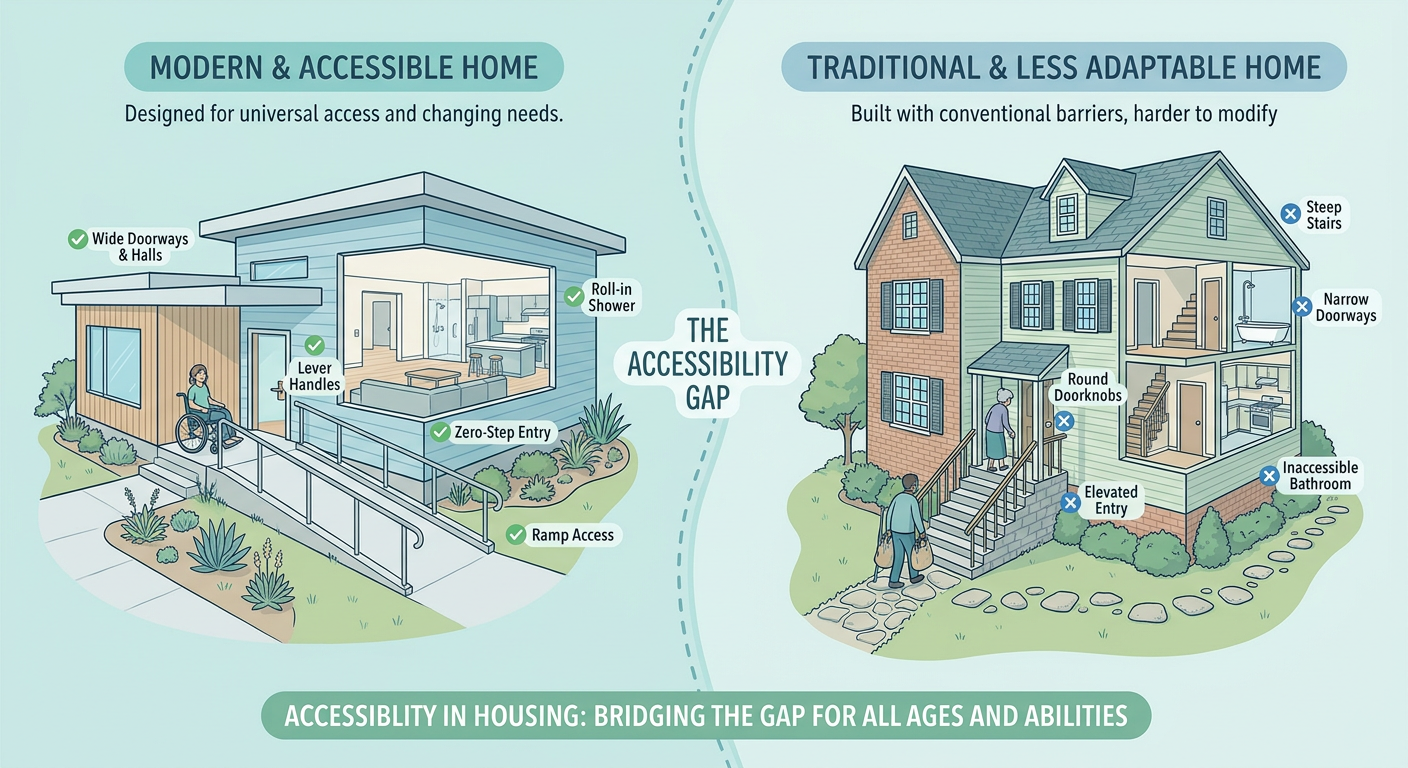
Despite the strong desire to age in place, the vast majority of existing homes in the United States are not designed to accommodate the needs of older adults. A study by the U.S. Census Bureau in 2020 revealed that only about 10% of U.S. housing units have key accessibility features, such as a no-step entry, a first-floor bedroom and bathroom, and wider doorways[3]. This means 90% of homes would require modifications to ensure safety and accessibility for older residents. The accessibility gap is even more pronounced for individuals with mobility disabilities; less than 5% of American homes are wheelchair accessible or considered fully disability-friendly[5]. This shortage is seen by lawmakers and advocates as a growing problem that needs addressing as the population ages[5].
The typical home was constructed for younger, able-bodied families, not considering needs such as reduced mobility, declining vision, or balance issues. Common obstacles include entry steps, narrow hallways and doorways, slippery bathroom surfaces, and appliances or storage areas that are difficult to reach. For example, while a 70-year-old might manage stairs today, the same stairs could become a fall hazard or an difficult barrier at 80.
Seniors face a choice among three options: modify their current home, move to a more suitable one, or continue living with existing barriers. Data indicates that very few seniors choose to move; only 26% of older adults relocated to a more age-friendly home by their late 60s or 70s[4]. This highlights that the main solution for many is retrofitting their current homes to meet their evolving needs.
A significant concern is the tendency for many individuals to delay home modifications until a health crisis occurs. As of 2025, fewer than half (46%) of Americans over 65 have made any home modifications or moved to a more age-friendly home[4]. This means over half have not prepared their homes, even though 84% expect to remain in their current residence long-term. Contractors report that urgent, last-minute projects initiated after a fall or diagnosis are often more stressful and expensive than planned, gradual modifications. This highlights the importance of proactive planning.
The lack of age-ready homes is a global issue, not limited to the U.S. Countries with aging populations, such as in Europe and Japan, also often have older housing stock that lacks features helpful for seniors. This global situation prompts interest in universal design principles and widespread renovation programs to update millions of homes.
1.3. Practical Design Standards and Common Modifications
Aging-in-place remodeling relies on universal design principles, which aim to create environments usable by everyone, regardless of age or ability. Key aspects include step-free access, single-floor living where possible, wider doorways and hallways (at least 32-36 inches wide)[24][25], ample lighting, contrasting colors for visibility, and controls placed at accessible heights[26]. The objective is to eliminate tripping hazards, reduce reliance on stairs, and ensure that essential amenities like a kitchen, full bathroom, and bedroom are on the entry level of the home.
Several modifications stand out for their effectiveness and common adoption:
- Grab Bars: These are inexpensive, costing roughly $100-$350, including labor[8], and significantly reduce the risk of falls in bathrooms. As of 2025, 49% of older Americans had grab bars in their bathrooms[4]. Among remodelers, 93% report installing bathroom grab bars for clients[6].
- No-Step (Curbless) Showers: These eliminate the need to step over a tub or shower curb, allowing for easier access, even with a wheelchair. 83% of remodelers have constructed curbless showers[6]. Converting a standard tub to a roll-in shower costs about $2,900-$6,600 on average, though a full bathroom remodel can exceed $15,000[9].
- Comfort-Height Toilets: Taller toilets make sitting down and standing up easier. 77% of remodelers have added comfort-height toilets[6].
- Lever-Style Door Handles: Easier to operate than doorknobs, especially for individuals with arthritis or limited grip strength[27].
- Improved Lighting: Better task lighting and ambient lighting, including motion-activated lights, support those with declining vision.
- Non-Slip Flooring: Replacing high-pile carpets or slippery tiles with low-pile, slip-resistant flooring reduces fall risks and facilitates movement with walkers or wheelchairs[29].
The bathroom and entryway are often the first areas targeted for modifications due to their high risk of falls. Ensuring a zero-step entrance (using a ramp or careful grading) is crucial, along with an entry door at least 36 inches wide and a low threshold for wheelchair accessibility[28]. These design standards reflect guidelines from the Americans with Disabilities Act (ADA), though for private homes, they are voluntary recommendations rather than legal requirements.
What truly gets used in aging-in-place remodels are often the simplest, most integrated fixes. Passive features that seamlessly improve daily living, such as lever door handles or non-slip flooring, are consistently used because they require no new learning or specific action from the user. Phoenix Home Remodeling often advises clients to include features like curbless showers or wider door openings during general renovations to future-proof their homes, as it is more cost-effective and less new than retrofitting later[30].
Professional certifications such as the National Association of Home Builders (NAHB) Certified Aging-in-Place Specialist (CAPS) credential help ensure that remodelers are trained in these best practices. This training emphasizes creating safe and functional homes that also maintain aesthetic appeal, integrating features like stylish grab bars that double as towel racks, or beautifully tiled curbless showers.
1.4. The Real Costs: Budgeting and Financial Considerations
The costs associated with aging-in-place remodeling can vary significantly. Minor modifications, such as installing a few grab bars, might cost under $1,000. Projects like adding a ramp, a stair lift, or a curbless shower typically range from $5,000 to $15,000[8][31]. More extensive renovations, such as a complete first-floor remodel or the installation of a home elevator, can cost $20,000 to $50,000 or more. The national average cost for aging-in-place remodeling is around $9,500[8]. These are typically one-time investments aimed at extending independent living for many years.
Comparing these costs to alternatives reveals significant economic benefits. The median annual cost for a private nursing home room in the U.S. is approximately $129,000[10]. Even assisted living facilities can cost $4,000-$5,000 per month. From a purely financial perspective, a $20,000 home modification can pay for itself in just a few months if it prevents or delays a move to institutional care. Moreover, money spent on home modifications can leverage home equity through reverse mortgages or home equity loans, while funds used for rent or care fees are not recoverable.
Preventing falls is a major economic benefit. Falls are the primary cause of injury for seniors, often leading to hospitalization and rehabilitation. The average hospital bill for a fall injury is around $18,700[32]. The National Council on Aging reported that falls by older adults cost the U.S. health system $80 billion in 2020[11]. Studies, such as one in Missouri, have shown that home modification programs costing just $766 per person led to a 38% reduction in falls, saving approximately $1,600 per person in healthcare costs within a year[11][33]. This suggests that every $1 spent on home modifications can yield roughly $2 in medical expense savings[11].
Most aging-in-place remodels are paid out-of-pocket by homeowners or their families, as traditional insurance coverage for these modifications is limited. However, specific resources exist: veterans with service-connected disabilities may be eligible for VA grants up to $100,000[34]. Low-income seniors in rural areas might qualify for USDA home repair grants or local nonprofit assistance. Some state Medicaid programs also fund certain accessibility improvements as a cost-saving measure to avoid nursing home placements. Middle-income households can explore Home Equity Conversion Mortgages or financing options like the FHA 203(k) rehab loan, which had its cap raised to $75,000 for renovations[35][36]. Tax deductions may also be available for medically necessary modifications.
Cost and trust are significant barriers. A 2025 poll revealed that 38% of older adults are concerned about the affordability of home changes, and nearly one-third are worried about finding trustworthy contractors[4]. To address these issues, communities and organizations are developing lists of vetted contractors, and some remodeling companies, like Phoenix Home Remodeling, offer transparent pricing and fixed-price quotes to build trust.
Beyond direct savings, these renovations offer hidden benefits. They allow older adults to remain part of their communities, contributing socially and economically. Families avoid the financial and emotional burden of high eldercare costs. Furthermore, adapted homes can see an increase in market value or marketability; features like zero-step entrances and wider doorways are being viewed as assets that appeal to a broader range of buyers, including those with disabilities or multi-generational families.
1.5. Market Trends and Industry Response
The aging-in-place remodeling sector is experiencing steady growth. Globally, the market was valued at over $27 billion in 2024 and is projected to reach over $40 billion by 2035[13]. This growth is driven by increased longevity and policies that encourage aging at home. In the U.S., homeowners aged 55 and over now account for more than half of all home improvement spending[13]. The baby boomer generation, with significant home equity, is investing in renovations to prepare their homes for retirement.
The remodeling industry is adapting rapidly. National Association of Home Builders (NAHB) surveys indicate that over 75% of professional remodelers have seen an increase in aging-in-place inquiries in recent years[14]. Many contractors are specializing in this area, obtaining CAPS (Certified Aging-in-Place Specialist) certification to demonstrate their expertise. Partnerships are also forming between remodelers and healthcare professionals, such as occupational therapists, to ensure designs meet specific medical needs.
The market also shows segmentation: approximately 88%-91% of projects are initiated by proactive individuals planning for the future, often in their 60s, who want to ensure long-term comfort[15]. The remaining projects are typically urgent modifications driven by an immediate health event or the need to accommodate an elderly parent. Remodelers tailor their services to these different segments, balancing aesthetics with functional needs for proactive clients, and prioritizing speed and function for urgent cases.
Regions with significant retiree populations are hotspots for this trend. Phoenix, Arizona, is a prime example, where firms like Phoenix Home Remodeling report that aging-in-place upgrades are among their most requested projects[18]. Other regions, including Florida and Texas, also show similar patterns. The consistent demand is leading to innovation, with new products and services custom for senior living, ranging from voice-activated home systems to specialized accessible fixtures available from major retailers.
Challenges remain, including a shortage of skilled contractors trained in specialized modifications and the need to convince more homeowners to undertake preventive renovations. While awareness of aging-in-place concepts is high (over 95% of homeowners are aware)[14], inertia and emotional attachment to existing home layouts can delay action. Marketing efforts are increasingly framing universal design as beneficial for all, helping to normalize these modifications as lifestyle enhancements rather than solely medical necessities.
1.6. Technology's Role: Practicality Versus Perception
Technology is often presented as a solution for aging in place, with smart home systems built to improve safety and independence. These can include voice-controlled devices for assistance, movement sensors to monitor activity, and smart security features like video doorbells[2]. AARP data shows that 64% of adults 50 or older anticipate needing a medical alert device, and 44% expect to use smart security devices as they age[2].
However, the actual adoption rate for advanced smart home technologies by seniors is lower than for simpler physical modifications. Less than half of older adults would consider adding advanced smart home devices for aging in place[2][20]. "Analog" solutions, such as grab bars and ramps, are far more common in seniors' homes. For example, nearly 80% of older adults prioritize no-step showers and physical modifications, while only 48% prioritize smart home assistants or remote sensors[21]. This gap is partly generational; many current seniors are not accustomed to smart technology, leading to potential learning curves, privacy concerns, or a belief that such devices are unnecessary.
Connectivity also poses a barrier. About 22% of rural households in the U.S. lack high-speed internet access[22], and low-income seniors may not be able to afford internet or smart devices. For technology to be effective, it must be accessible and affordable. Making tech senior-friendly requires simplicity in design. Some companies create voice assistants with simplified interfaces or smartwatches with limited, large buttons for emergencies. The most effective tech often works in the background without requiring user interaction, such as sensors that unobtrusively monitor routines and alert family members to anomalies. A pilot program in Surrey, England, used tiny sensors on everyday items like kettles and fridges to monitor whether older residents were following their normal routines. This approach successfully caught early warning signs of health issues and was well-received because it required no new learning from the seniors[12].
Crucially, technology is a supplement, not a replacement, for good home design. A medication reminder app is useful, but it cannot compensate for physical barriers preventing safe access to medicine. The most successful aging-in-place strategies integrate both types of solutions: modifying the physical environment to minimize hazards and using technology as an additional layer of safety and convenience. This blended approach ensures that the home is inherently safer, while technology provides monitoring and quick assistance when needed. As future generations, more comfortable with technology, age, the integration of smart home features is expected to become as common as traditional modifications.
In summary, the aging-in-place remodeling market is a rapidly expanding sector driven by demographic shifts, strong senior preferences, and the unsuitability of current housing stock. While the benefits of proactive modifications are clear, cost concerns and a lack of awareness regarding financial assistance remain obstacles. The industry is adapting through specialized services and certifications, and technology holds promise, provided it is designed for ease of use and integrates seamlessly with physical home modifications.
The subsequent sections of this report will provide a more detailed exploration of specific design standards, realistic cost breakdowns for various projects, and an in-depth analysis of which modifications prove most beneficial in practice.

2. Demand for Aging in Place
The concept of aging in place, defined as the ability to live in one's own home and community safely, independently, and comfortably regardless of age or ability level, has gained significant traction. This section examines the strong desire among older adults to remain in their homes, the demographic shifts that accelerate this trend, and regional demand hotspots, including Phoenix.
The Overwhelming Preference to Age at Home
A consistent and overwhelming preference exists among older adults to remain in their homes as they age. Surveys repeatedly show that between 75% and 80% of adults aged 50 and older want to stay in their current homes for as long as possible[1]. This desire extends to their communities, with 79% expressing a wish to remain in their familiar surroundings[2]. This preference has remained stable even through recent events such as the pandemic and economic fluctuations. The home is often tied to personal identity, historical memories, community connections, and a sense of comfort that institutional care cannot replicate. Even for individuals in their 80s, the majority prefer to avoid moving to dedicated care facilities if possible.
This strong preference is not merely a personal wish; it also has societal and economic implications. Policy makers and healthcare systems are recognizing that enabling safe aging in place can reduce pressure on expensive assisted living facilities and nursing homes. The COVID-19 pandemic further highlighted the risks associated with congregate living settings, reinforcing the desire for independent living. Families often prefer to support their older relatives at home, increasing demand for home modifications and in-home support services globally. As a result, some governments are funding home modification programs and training initiatives, viewing aging in place as a cost-saving measure over the long term.
Demographic Shifts Driving Demand
The global population is aging rapidly, and this demographic shift is a primary driver of the demand for aging in place solutions. By 2030, one in five Americans will be 65 years or older, a significant increase from 16% in 2020[18]. This means millions more seniors will require age-friendly housing in the coming years. The number of U.S. households headed by someone 80 or older is projected to double by 2040[4]. This group often faces significant mobility or health challenges, which will lead to a substantial need for home retrofits and supportive design. The baby boomer generation, born between 1946 and 1964, is a large cohort, with 10,000 Americans turning 65 each day. As this generation enters its later years, it is driving a renovation boom focused on making homes senior-friendly. The demand for aging in place is not a temporary trend; it is expected to accelerate over the next two decades, making it a mainstream component of the housing and construction industries worldwide.
The Accessibility Gap: Homes Not Aging-Ready
Despite the strong desire to age in place, most existing homes are not designed to support the needs of older adults. Only about 10% of U.S. housing units possess key accessibility features for older residents[3]. These features include a no-step entry, a first-floor bedroom and bathroom, and wider doorways. This leaves 90% of homes in need of modifications to ensure safety and accessibility as residents age. For individuals with mobility disabilities, the situation is even more challenging, with less than 5% of homes nationwide being fully accessible to wheelchairs or other mobility aids[5]. This shortage of accessible housing is a growing concern, often described as a crisis by lawmakers and advocates. As a result, many seniors live in environments where everyday tasks can become difficult or dangerous as their mobility or health declines.
The typical home construction has traditionally focused on able-bodied younger families, rather than anticipating the needs of individuals in their 70s, 80s, and beyond. Common obstacles in homes include entry steps, narrow doorways, slippery bathroom surfaces, and hard-to-reach cabinets or appliances. For example, a 70-year-old may manage stairs today, but an 80-year-old might find the same staircase a severe fall hazard or a barrier to leaving the house. The options for seniors are generally to modify their current home, move to a more suitable one, or continue living with existing barriers. Data indicates that relocation is not a common choice; only 26% of older adults have moved to a more age-friendly home by their late 60s or 70s. This places the burden of adaptation on retrofitting existing residences.
A significant concern is the tendency for many older adults to delay home modifications until a crisis occurs. Over half of seniors have not undertaken any aging-in-place preparations[6]. Contractors observe that last-minute projects, such as installing a ramp after a fall, are often more stressful and expensive than planned modifications. This situation is not unique to the United States; other countries with aging populations, such as those in Europe and Japan, also face challenges with older housing stock not being suitable for elderly residents. For instance, many European apartments lack elevators above the first floor. This global accessibility gap is leading to increased interest in universal design principles and renovation programs.
Community and non-profit organizations play an important role in addressing this gap. In Phoenix, for example, programs like Habitat for Humanity Central Arizona's Aging in Place program provide free safety modifications, such as grab bars and wheelchair ramps, for eligible low-income seniors. Similarly, Rebuilding Together and various city housing rehabilitation programs focus on critical repairs like fixing sagging floors or widening doorways. While these initiatives meet a fraction of the total need, they demonstrate a widespread understanding that current housing infrastructure is not adequately prepared for the growing elderly population.
Regional Demand Hotspots: The Phoenix Example
Demand for aging-in-place remodeling is particularly high in regions with a substantial retiree population. Phoenix, Arizona, stands out as one such hotspot due to its popularity as a retirement destination. Phoenix Home Remodeling has noted that aging-in-place remodels are now among their most requested project types for homeowners in their 50s and 60s[17]. This demonstrates a proactive approach among residents in this region to prepare their homes before mobility issues arise. Similar trends are observed in other Sun Belt cities across Florida and Texas, where a large number of seniors choose to renovate their existing homes rather than relocate. These regional trends highlight how a significant demographic concentration can drive a specialized remodeling market.
Table 1 provides a summary of key demographic and housing statistics relevant to the demand for aging in place.
Table 1: Key Statistics on Aging in Place Demand and Housing Preparedness
| Statistic | Value | Source/Context |
|---|---|---|
| Adults 50+ wanting to stay in current home | 75%-80% | Consistent preference over recent years[1] |
| U.S. homes with key accessibility features | 10% | Out of 115 million U.S. housing units[3] |
| U.S. homes fully accessible for mobility disabilities | Less than 5% | According to HousingWire[5] |
| Americans over 65 who made home modifications or moved to age-friendly homes | 46% | As of 2025, implies over half have not prepared[6] |
| Older adults expecting to stay in current home long-term | 84% | Highlights gap between desire and preparation[6] |
| Projected increase in households headed by 80+ by 2040 | Double | Indicates significant future need[4] |
| Homeowners 55+ account for U.S. remodeling spending | Over 50% | Projected to reach 56% by 2025[19] |
| Remodeling firms reporting increased aging-in-place demand in past 5 years | 76% | Industry adaptation to market shifts[7] |
| Remodelers saying clients are receptive to aging-in-place modifications (Early 2025) | 96% | Indicates broad awareness and acceptance[8] |
Design Standards and Features That Actually Get Used
Aging-in-place remodeling focuses on universal design principles, which aim to make a home usable by everyone, regardless of age or physical ability. Key aspects of universal design include step-free access, single-floor living for essential functions, wider doorways and hallways (typically 32-36 inches wide)[20][21], ample lighting, strong contrast for visibility, and controls like light switches and door handles placed at accessible heights[22]. The goal is to reduce reliance on stairs, eliminate tripping hazards, and ensure that basic amenities such as a kitchen, a full bathroom, and a bedroom are available on the entry level.
Certain home modifications have become standard due to their high impact and cost effectiveness. Bathroom grab bars are particularly common because they are inexpensive to install, costing about $100-$350 including labor[9], and significantly reduce the risk of falls when entering or exiting a bath or shower. No-step (curbless) showers are another highly effective upgrade, removing the need to step over a high threshold. Comfort-height toilets, which are taller and easier to sit on and stand from, are also popular. Lever-style door handles are preferred over twisting knobs, especially for individuals with arthritis or limited grip strength[23][24]. Adequate task lighting and motion-activated night lighting in hallways help those with declining vision. Each of these features addresses common challenges faced by older adults through practical solutions.
The bathroom and entryway are often prioritized for modifications due to their high risk for falls. Bathrooms can be particularly dangerous because of wet surfaces, high tubs, and confined spaces. Remodeling professionals recommend non-slip flooring, strong grab bars, and spacious showers with built-in benches. It is also advisable to reinforce bathroom walls during construction or renovation to allow for future installation of additional support bars. Entryways should feature at least one zero-step entrance, achieved through a ramp or grading, along with an overhang or porch cover for weather protection[25]. A 36-inch wide entry door with a low threshold facilitates access for wheelchairs or walkers[26]. These design standards often draw from the Americans with Disabilities Act (ADA) guidelines, which, while primarily for public spaces, serve as best practices for private homes.
Experience confirms that simpler modifications often provide the most consistent benefit. Basic ergonomic improvements that integrate seamlessly into daily life tend to be used regularly. For example, replacing round doorknobs with lever handles allows individuals with weak grip to open doors easily without conscious effort. Substituting high-pile carpets or slippery tiles with low-pile, slip-resistant flooring reduces fall risks and simplifies navigation with walkers or wheelchairs[27]. These passive features require no new learning or technology to function, ensuring their continued use. In contrast, complex smart home gadgets might be underused if they are too difficult to operate or maintain.
Experts recommend integrating aging-in-place features during any major remodel, even for younger homeowners. For instance, a homeowner in their 50s renovating a kitchen or bathroom should consider designs that will remain practical at age 80. Phoenix Home Remodeling advises clients to include elements like curbless showers or wider door openings as a future-proofing measure during mid-life renovations[28]. Such foresight can minimize additional costs and disruptions later. Building a step-less entrance or installing wall blocking for grab bars is much simpler during initial construction or renovation than retrofitting after an injury. The principle is to design a home for one's future self, anticipating needs 20 years ahead rather than just current ones.
Industry certifications, like the Certified Aging-in-Place Specialist (CAPS) credential offered by the National Association of Home Builders (NAHB), train remodelers in these best practices. NAHB also provides detailed checklists for aging-in-place remodeling covering various aspects from exterior maintenance to bathroom layout[29][30]. These standards help ensure that age-friendly designs are both functional and aesthetically pleasing. Many modern grab bars, for example, are designed to blend in as towel racks, and curbless showers can be beautifully tiled while remaining wheelchair-accessible. The focus is on integrating safety features without creating an institutional feel, ensuring the home remains comfortable and stylish.
The Actual Costs: Budgeting and Benefits
The financial aspect of aging-in-place remodeling can vary significantly. Minor modifications like installing a few grab bars or swapping doorknobs might cost under $1,000. Mid-range projects, such as adding a ramp, a stair lift, or a curbless shower, typically range from $5,000 to $15,000[31][32]. Extensive renovations, like a complete first-floor remodel or a home elevator, can cost between $20,000 and $50,000 or more. The cost depends largely on the home's existing condition and the specific needs of the homeowner. These costs are generally one-time investments that can enable many additional years of independent living at home.
When considering these costs, it is important to compare them with the alternatives. The median annual cost for a private room in a U.S. nursing home is approximately $129,000[33]. Assisted living facilities often range from $4,000 to $5,000 per month. Therefore, a $20,000 home modification can pay for itself in just a few months if it delays or prevents a move to a care facility. Economically, investing in home modifications is often more sensible than paying for long-term care. Furthermore, homeowners can sometimes leverage home equity through options like reverse mortgages or home equity loans to finance these changes, whereas expenditures on rent or care fees provide no lasting equity.
Preventing falls is a major area where home modifications yield significant economic and health benefits. Falls are the leading cause of injury among seniors and frequently result in hospitalizations or rehabilitation. The average hospital charge for a fall injury is about $18,700[34]. Medicare alone spent $53 billion on fall-related injuries in 2020[35]. Simple modifications, such as adding railings to both sides of stairs and grab bars in bathrooms, can greatly reduce fall risks. Research from Missouri indicated that a home modification program costing $766 per person resulted in a 38% reduction in falls, saving approximately $1,600 per person in healthcare costs within one year[36][37]. This suggests that every $1 spent on home modifications can save about $2 in medical expenses, highlighting the high return on investment for preventive measures.
Most aging-in-place remodels are funded out-of-pocket by homeowners or their families because insurance coverage is limited. However, several resources are available. Veterans with service-connected disabilities can access VA grants of up to $100,000 for housing modifications[38]. Low-income seniors in rural areas may qualify for USDA home repair grants or assistance from local non-profits. Some state Medicaid programs offer waivers to fund accessibility improvements, recognizing that these modifications can prevent more costly nursing home placements. For middle-income households, options include Home Equity Conversion Mortgages or the FHA 203(k) rehab loan, which recently increased its renovation cap to $75,000[39][40]. Tax deductions may also be available for medically necessary modifications prescribed by a doctor. Awareness of these financial tools is often low, indicating a need for greater guidance and outreach.
Financial concerns are a barrier for many. A 2025 poll revealed that 38% of older adults worry about the cost of home modifications, and nearly one-third are concerned about finding trustworthy contractors[10]. The home improvement industry can sometimes be difficult to navigate, and the fear of scams or poor workmanship can cause seniors to delay necessary projects. To address this, many communities and organizations provide lists of vetted contractors or partner seniors with reputable professionals. Companies specializing in aging-in-place remodeling, like Phoenix Home Remodeling, offer transparent, fixed-price quotes to build client trust. Ensuring confidence in pricing and quality of work is essential to prevent fear from leading to unsafe living conditions.
Aging-in-place renovations also offer indirect economic benefits. By allowing older adults to remain in their homes, communities retain active members who contribute socially and economically. Families may avoid the financial and emotional strain of high eldercare costs. Additionally, accessible homes can retain or even increase their market value. Features like step-free entrances and home elevators are becoming appealing to a broader market, including families with disabilities or multi-generational households. Therefore, these upgrades can enhance resale value or at least make a home more marketable when it is time to sell.
Market Trends and Industry Response
The aging-in-place remodeling market is experiencing consistent expansion. Globalsales for this sector are estimated at over $27 billion in 2024 and are projected to exceed $40 billion by 2035, indicating an annual growth rate of approximately 3.7%[41]. In the U.S., homeowners aged 55 and older are critical drivers of this market, accounting for over half of all home improvement spending nationally[19]. This demographic, often possessing significant home equity, is more inclined to invest in renovations for retirement. This "longevity economy" encourages builders, designers, and technology companies to develop products custom for senior living.
The remodeling industry is actively adapting to this rising demand. Surveys by the NAHB show that more than three-quarters of professional remodelers report an increase in aging-in-place inquiries over the last five years[7]. Many contractors are shifting their focus to specialize in aging-in-place services. The CAPS certification program has played an important role in training thousands of contractors in accessible design and client interaction. Collaborations between remodelers and healthcare professionals, such as occupational therapists, are also emerging to provide more specialized advice. This multidisciplinary approach is becoming a competitive advantage.
The market for aging-in-place remodeling can be segmented by client motivation: proactive planners versus urgent need clients. Approximately 88% to 91% of projects are initiated by forward-thinking individuals, often in their 60s, who plan for future comfort proactively[15]. The remaining projects are typically urgent retrofits driven by a recent disability or an elderly parent moving in. Remodelers are learning to tailor their services, offering integrated, subtle changes for proactive clients who want to maintain aesthetics, and prioritizing speed and function for urgent cases. Companies proficient in addressing both segments are well-positioned for success.
Regions with significant older populations, such as Phoenix, are experiencing particularly high demand. Phoenix Home Remodeling has observed that aging-in-place upgrades are among the most requested projects by their clients[17]. Other retirement hubs like Florida are seeing similar trends. Even in colder climates, "aging-friendly" builders are emerging, focusing on features like enclosed entry ramps and backup generators. Globally, countries with very old populations, such as Japan, are investing heavily in home retrofits and robotics for seniors, underscoring the widespread nature of this trend and the potential for international product and service exchange.
The aging-in-place market is also driving innovation in technology. The "age-tech" sector is developing products such as smart fall-detection flooring, app-connected hearing aids, and home sensors. AARP reports that 64% of adults 50+ foresee needing a medical alert device, and 44% anticipate using smart security devices[16]. Consumer brands are expanding their offerings to include accessible fixtures like stylish grab bars, walk-in tubs, and smart home security systems marketed for older users. The remodeling industry is increasingly integrating these technologies, partnering with smart home installers and medical alert system providers to offer comprehensive solutions. The goal is to combine physical modifications with electronic safety nets.
Despite growth, the industry faces challenges. A shortage of skilled contractors and the need for specialized training for complex modifications are significant hurdles. Programs to attract and train tradespeople in accessibility are crucial. Another challenge is encouraging older homeowners to invest in preventive changes rather than waiting for a crisis. While awareness of aging-in-place concepts is high (over 95% of homeowners are aware)[8], inertia or emotional attachment to their current home's appearance can delay action. Marketing efforts are increasingly framing universal design as beneficial for everyone-for example, a step-free entrance helps also seniors but also individuals with temporary injuries or parents with strollers. By positioning these upgrades as lifestyle enhancements rather than medical necessities, companies aim to broadening their appeal. The aging-in-place remodeling sector is set for long-term growth but will need continuous innovation, education, and trust-building efforts.
Technology Solutions Versus Actual Use by Seniors
Smart home technology, including motion-sensor lights, voice-controlled thermostats, and medical alert systems, is often presented as integral to aging in place. Many new homes and renovations now incorporate smart systems designed for seniors, featuring elements like voice assistants for emergencies or sensors that notify family members if appliances are not used for a period, which could indicate a problem. However, the adoption rates in practice show a difference between availability and actual use.
Despite the promise of technology, many older adults approach new gadgets with caution. Surveys reveal that fewer than half would consider adding advanced smart home devices for aging in place[11]. In reality, traditional "analog" solutions such as grab bars and ramps are far more widespread in seniors' homes today. For example, nearly 80% of older adults prioritize physical home modifications like no-step showers, while only about 48% prioritize smart home assistants or remote sensors[12]. This discrepancy is partly generational; many current seniors did not grow up with smart technology and may face learning curves or privacy concerns.
Connectivity also poses a barrier. Many technology-based solutions depend on reliable internet or cellular service, which not all seniors have. For instance, approximately 22% of rural U.S. households still lack high-speed internet access[13]. Cost can also be a factor, as low-income seniors may not always afford broadband subscriptions or smart devices. Expanding broadband access and offering discounted services for seniors are crucial steps to make tech-based aging-in-place solutions more viable. Efforts to make technology senior-friendly involve designing simple user interfaces and devices, such as voice assistants with simplified commands or smartwatches with minimal buttons for emergency calls.
An important realization is that technology should complement, not replace, sound home design. A medication reminder app is useful, but it cannot solve issues like safely accessing a medicine cabinet without a grab bar. Similarly, while a fall-detection watch is a valuable safety net, preventing the fall in the first place with appropriate railings and flooring is better. The most successful aging-in-place strategies integrate both elements: creating a physically safe environment and using technology as an additional layer of convenience and safety. For example, a wheelchair-accessible bathroom might also feature a waterproof emergency call button in the shower. This blended approach leverages the strengths of both physical modifications and technological aids.
For technology to be effectively used, training and support are often required. Simply installing a smart home hub is insufficient if the user finds it confusing. Some remodelers partner with home automation specialists who also install devices but also educate homeowners and their families on their use and provide ongoing support. Community centers and libraries are increasingly offering tech classes for older adults. As younger, more tech-native generations-Gen X and millennials-reach older age, smart home features are expected to become more mainstream. However, for the current older generation, user-friendly design and personal support are key factors in the adoption of high-tech solutions.
Notable Examples
Several examples illustrate the practical application and benefits of aging-in-place modifications:
-
Retrofitting a 1970s “Forever Home” (California, 2025): Larry and Pearl Toy, in their late 70s, proactively renovated their multi-story home in Orinda, California. Blue Truck Studio, their remodeling firm, focused on bathroom accessibility. They replaced most bathtubs, which the couple rarely used, with spacious curbless walk-in showers that included built-in benches and multiple grab bars. The primary bathroom was designed to accommodate a wheelchair. Other enhancements included widened doorways, improved lighting, and motion-sensor lights in hallways for nighttime navigation. While the home had three levels, the design incorporated future-proofing measures like reinforced stairwell walls for a potential stair lift. This project allowed the Toys to remain in their beloved home, significantly reducing fall risks and ensuring long-term independence[42][43][44][45].
-
Veteran’s Home Makeover for Safety (Phoenix, 2022): In Phoenix, Arizona, a volunteer effort assisted Brian Wallace, a 71-year-old Navy veteran, with modifying his mobile home. After a stroke, maintaining his home became difficult, and critical repairs were unaffordable on his fixed income. Just before Veterans Day 2022, volunteers repaired his leaking roof, painted the exterior, and added safety features. These included grab bars in the bathroom and along steps, fixing uneven flooring, and installing an entrance ramp. This community-led project significantly improved the safety of his home, addressing urgent issues that private remodeling might not cover due to cost. It allowed Brian and his wife to live more safely and reduced a major source of worry[46][47][48].
-
Smart Sensors Keep UK Seniors Independent (Surrey, 2021): A pilot program in Surrey, England, used unobtrusive technology to support seniors. The Surrey County Council placed small sensors on everyday items like kettles, fridges, and beds in 53 residents' homes. These sensors monitored daily routines without requiring user interaction. If unusual patterns were detected (e.g., kettle not used, fridge not opened), an alert was sent to a family member or care coordinator. This system successfully identified early signs of health issues, enabling timely intervention before a crisis. The program was expanded due to its effectiveness in promoting independent living and providing peace of mind to families[49][50][51].
-
Habitat for Humanity “Aging in Place” Remodel (Phoenix, 2019): Habitat for Humanity Central Arizona assisted Maria, a 78-year-old Phoenix resident, with retrofitting her home. Her traditional bathtub was replaced with a zero-step shower, complete with a built-in bench and grab bars. The bathroom received improved lighting and a higher toilet. In the kitchen, a lower cabinet was converted into a pull-out pantry. A ramp was built at the front door to replace concrete steps, facilitating access with her walker. These basic renovations, funded through donations and volunteer labor, significantly reduced Maria's fall risk and allowed her to maintain independence without the high cost of assisted living.
The demand for aging in place is a powerful force shaped by demographic trends, personal preferences, and a growing awareness of the benefits of home modifications. While significant challenges exist in adapting the existing housing stock and financing these changes, the market is responding with a range of solutions, from basic physical modifications to new technological tools. Understanding this demand is crucial for businesses, policymakers, and communities seeking to support older adults in living independently and safely in their homes for as long as possible. The next section will explore deeper into the specific design standards that guide these essential modifications.
3. Home Readiness for Seniors
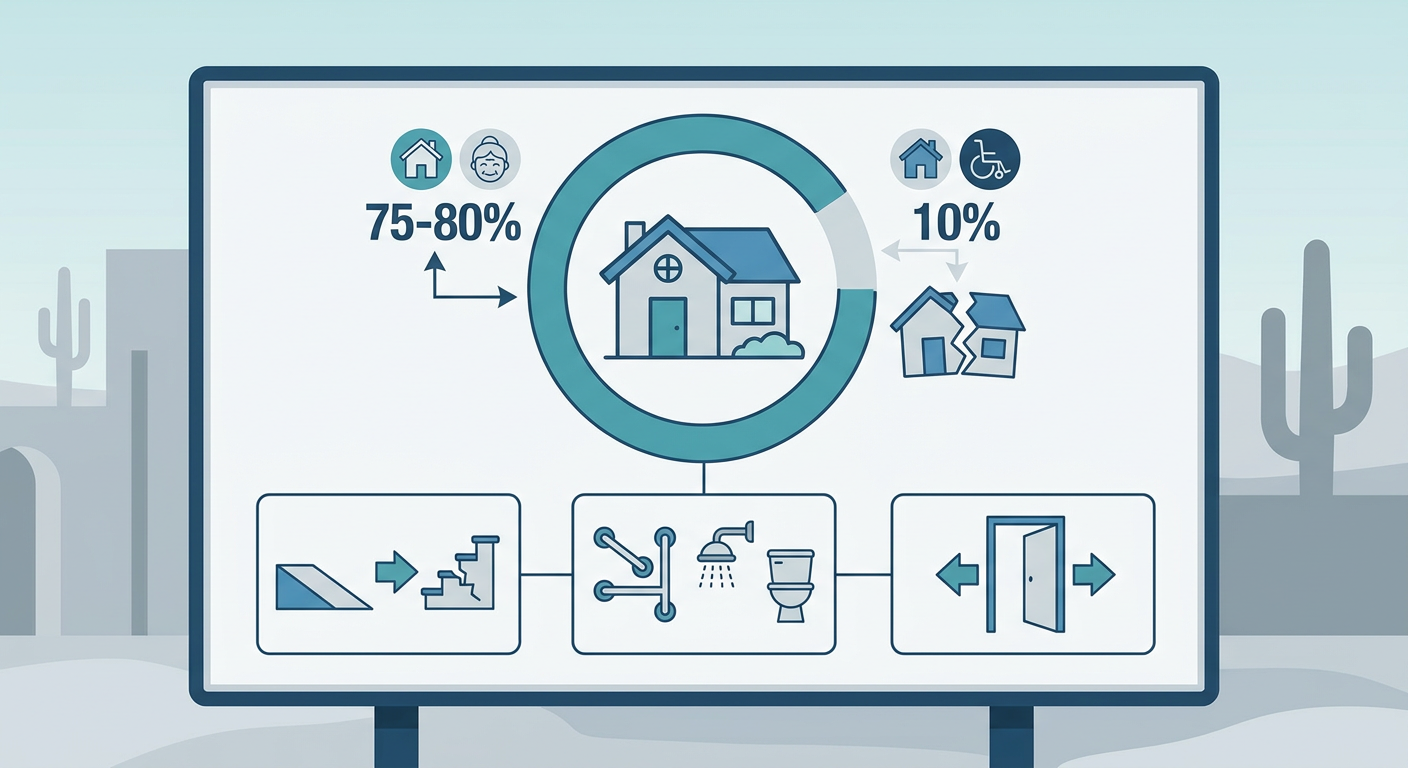
The aspiration of older adults to remain in their homes as they age is nearly universal. Roughly 75% to 80% of individuals aged 50 and older state a clear preference to "age in place" - to continue living in their current residences and communities for as long as possible[1][17]. This desire has remained consistent over time, even considering economic shifts or global health events[2]. However, this strong preference stands in direct contrast with the reality: most existing homes in the United States are not prepared to support the needs of an aging population[3].
This section examines the significant gap between senior living preferences and the current state of U.S. home design. It explores the current housing accessibility deficit, outlines the design features and modifications that genuinely benefit older residents, details the real costs involved in aging-in-place remodeling, and discusses the growing market trends and challenges within this sector. Understanding this mismatch and the practical solutions available is critical for individuals, families, and the remodeling industry, including companies like Phoenix Home Remodeling, which observes this heightened demand in markets with large retiree populations[19].
The Disparity: Senior Living Aspirations Versus Housing Reality
The demographic shift toward an older population is a global phenomenon. In the United States, by 2030, one in five Americans will be 65 years or older[16]. The number of households headed by someone aged 80 or older is projected to double by 2040[4]. This growing cohort overwhelmingly prefers to maintain independence within their familiar surroundings. Home represents more than just shelter; it embodies personal identity, community connection, and comfort. The majority of older adults, even those in their 80s, wish to avoid institutional care if possible[17].
Despite this clear preference, the American housing stock is largely unsuited for older residents. A U.S. Census study found that only about 10% of the nation's 115 million housing units possess key accessibility features suitable for older individuals[3][18]. These essential features include a no-step entry, a first-floor bedroom and bathroom, and wider doorways. Without these fundamental adaptations, the other 90% of homes require modifications to ensure safety and accessibility as residents age[3].
The accessibility deficit becomes more pronounced when considering severe mobility limitations. Less than 5% of American homes are truly wheelchair accessible or fully disability-friendly[5][19]. This means millions of seniors live in environments that will become difficult, if not dangerous, when their mobility declines. For example, a 70-year-old may manage stairs today, but at 80, that same staircase could become an impassable barrier or a high fall risk. This significant gap forces seniors to choose between modifying their existing home, relocating to a more suitable residence, or enduring the risks posed by an unadapted environment.
The data shows that relocation is not a popular option; only 26% of older adults have moved to a more age-friendly home by their late 60s or 70s[6]. Most prefer to stay in their long-time residences, placing the focus squarely on retrofitting. A concerning aspect is the tendency for many to delay home modifications. As of 2025, fewer than half (46%) of Americans over 65 have taken any proactive steps to prepare their home for aging in place, despite 84% expecting to live in their current home long-term[6]. Changes often happen only after a health crisis, such as installing a ramp after a fall and hip fracture. This reactive approach can be more stressful and costly than planned, proactive modifications.
This housing challenge is not unique to the U.S. Other countries with aging populations, such as in Europe and Japan, also face similar issues with older housing stock not being elder-friendly. This global problem has spurred interest in universal design and renovation programs worldwide.
Design Standards and Features That Actually Work
Effective aging-in-place remodeling adheres to universal design principles. Universal design aims to make environments usable by all people, regardless of age or ability, without the need for adaptation or specialized design. Key principles include providing step-free access, enabling single-floor living, ensuring wider doorways and hallways, maintaining good lighting and contrast for visibility, and placing controls (like light switches and door handles) at accessible heights[20][21][22]. The goal is to reduce reliance on stairs, eliminate tripping hazards, and ensure essential amenities, such as a full bathroom, bedroom, and kitchen, are available on the entry level[22].
Common Modifications & Their Impact
Certain home improvements have become standard for aging-in-place projects due to their effectiveness and widespread need:
- Bathroom Grab Bars: These are almost universally recommended. They are inexpensive (around $100-$350 each, including labor)[7] and vital for preventing falls when entering or exiting a bathtub or shower, or when using the toilet. Among professional remodelers, 93% report installing grab bars for clients[23].
- No-Step (Curbless) Showers: These eliminate the need to step over a tub wall, significantly reducing fall risk. 83% of remodelers have installed them[23]. Converting a standard tub to a roll-in shower can cost between $2,900 and $6,600, or more for a full bathroom remodel[9].
- Comfort-Height Toilets: Taller toilets ease the process of sitting down and standing up, a benefit for those with joint pain or reduced strength. 77% of remodelers install them[23].
- Lever-Style Door Handles: Easier to operate than twist-knob handles, especially for individuals with arthritis or limited hand dexterity[24][25]. A 2025 poll indicates 38% of older Americans have them[6].
- Improved Lighting: Good task lighting and motion-activated night lighting in hallways are crucial for those with declining vision. 49% of remodelers report adding improved lighting[23].
- Widened Doorways and Hallways: Wider openings (at least 32-36 inches) allow easier passage for walkers, wheelchairs, or individuals with mobility aids. 63% of remodelers perform this modification[23].
The focus on safety and accessibility often begins in the bathroom and at entryways. Bathrooms are high-risk areas due to wet surfaces, high tubs, and tight spaces. Recommendations include non-slip flooring, reinforced walls for future grab bar installation, and spacious showers with built-in benches. Entryways should feature at least one zero-step entrance (using a ramp or careful grading) with a 36-inch wide door and a low threshold for easy wheelchair or walker access[26][27]. These standards align closely with the Americans with Disabilities Act (ADA) guidelines, applied voluntarily to private homes as best practices.
Passive Features Are Utilized Most
Simplicity often leads to greater utility. Basic ergonomic fixes yield the most daily benefit for older adults. For example, replacing round doorknobs with lever handles allows easier access throughout the home for someone with a weak grip. Similarly, replacing high-pile carpets or slippery tiles with low-pile, non-slip flooring reduces trip hazards and eases movement with walking aids[28]. These passive features require no new behavior or technology to "use," ensuring consistent adoption by seniors. Complex gadgets or home automation, conversely, might be underutilized if they are too difficult to operate.
Remodeling firms like Phoenix Home Remodeling advise clients to integrate aging-in-place features during any major renovation, even if they are still relatively young. Integrating features like curbless showers or wider door openings during a kitchen or bathroom remodel is a forward-thinking measure. The additional cost when incorporated into a larger project is minimal compared to retrofitting after an injury[29]. This proactive approach focuses on designing for the "future you," preparing the home for needs 20 years down the line.
To ensure quality, established guidelines and certifications exist for aging-in-place design. The National Association of Home Builders (NAHB) provides an extensive Aging-In-Place Remodeling Checklist[30][31]. NAHB also offers the Certified Aging-in-Place Specialist (CAPS) credential, training remodelers in best practices of accessible design. This ensures that modifications are aesthetically pleasing and functional, making the home safer without giving it an institutional appearance.
The Real Costs: Budgeting and Benefits
Aging-in-place remodeling costs vary significantly depending on the scope. Minor changes, such as installing grab bars or replacing doorknobs, can cost under $1,000. Mid-range projects, like adding a ramp, a stair lift, or a curbless shower, typically range from $5,000 to $15,000[8][32]. Extensive renovations, such as a complete first-floor remodel or a home elevator, can cost $20,000 to $50,000 or more[9]. The national average for aging-in-place remodeling is approximately $9,500[8][34]. These are largely one-time investments that can enable independent living for many years.
Financial Comparison of Options
When considering costs, it is important to compare home modifications with alternatives. The median annual cost of a private nursing home room in the U.S. is about $129,000, or over $10,000 per month[10][33]. Assisted living facilities often cost $4,000-$5,000 per month. An even extensive home modification, rarely exceeding $50,000, can pay for itself within a few months compared to institutional care expenses. Financially, investing in home modifications is often the most sensible choice, in addition to preserving quality of life and independence. Home equity can also help finance these modifications, whereas funds spent on care fees are typically non-recoverable.
Economic Benefits of Fall Prevention
A major economic benefit of home modifications is fall prevention. Falls are the primary cause of injury for seniors, often leading to hospitalization or rehabilitation. The average hospital cost for a fall injury is around $18,700[11][35]. In 2020, falls by older adults cost the U.S. health system $80 billion[11][35]. Simple modifications, like adding railings on both sides of stairs and grab bars in bathrooms, can significantly reduce fall risks. Research in Missouri found that a home modification program costing $766 per person reduced falls by 38%, saving $1,600 per person in healthcare within a year[11][12][36]. This demonstrates a return on investment of approximately $2 in medical savings for every $1 spent on home modifications[11].
Funding and Financial Barriers
Most aging-in-place remodels are paid out-of-pocket. Insurance coverage for home modifications is limited. However, several resources can provide assistance:
- Veterans: Those with service-connected disabilities can receive VA grants up to $100,000 for housing modifications[37].
- Low-Income Seniors: In rural areas, USDA home repair grants may be available. Local non-profits also offer assistance.
- Medicaid Waivers: Some state Medicaid programs may fund accessibility improvements to help individuals avoid nursing home placement, which reduces taxpayer costs.
- FHA 203(k) Rehab Loan: This program provides financing for renovations, with a recently raised cap of $75,000[38][39].
- Tax Deductions: Some jurisdictions offer deductions for medically necessary modifications (e.g., doctor-prescribed ramps).
Despite these options, a 2025 poll indicated that 38% of older adults found affordability a major barrier to home modifications, and 29% struggled to find trustworthy contractors[13]. Many seniors are unaware of available grants or loan programs. This highlights a need for better financial planning education and outreach to ensure cost does not compromise safety.
Addressing trust issues is also vital. The home improvement industry can be challenging, and fear of scams or poor workmanship can cause homeowners to delay necessary projects. Community organizations and Area Agencies on Aging often provide vetted contractor lists. Remodeling companies specializing in aging-in-place, such as Phoenix Home Remodeling, offer transparent, fixed-price quotes to build client confidence.
Beyond direct savings on care and medical expenses, aging-in-place remodels also offer hidden economic benefits. Older adults who remain in their homes continue to contribute to their communities. Families avoid high eldercare costs. Furthermore, adapted homes can increase in value or marketability, as accessibility features are increasingly seen as desirable assets by diverse buyers, including those with disabilities or multi-generational families.
Market Trends and Industry Response
The aging-in-place remodeling market is experiencing steady growth. Globally, it is valued at over $27 billion in 2024 and is projected to reach over $40 billion within a decade, indicating an annual growth rate of approximately 3.7%[14][40]. In the U.S., homeowners aged 55 and over now account for more than half of all home improvement spending[41]. This demographic, primarily baby boomers, has substantial home equity and a greater inclination to invest in renovations than previous generations of seniors. This "longevity economy" is driving innovation among builders, designers, and technology firms.
Industry Adaptation and Specialization
The remodeling industry is clearly responding to this demand. Surveys by NAHB show that over 75% of professional remodelers have seen an increase in aging-in-place project requests in recent years[15][42]. Many contractors are specializing in this area, marketing themselves as aging-in-place experts. The CAPS certification program has trained thousands of remodelers in the specific requirements of accessible design. Partnerships between remodelers and healthcare professionals, like occupational therapists, are also becoming more common, offering a more comprehensive approach to home modifications custom to specific medical conditions.
The market for aging-in-place projects can be segmented into proactive planners and urgent need clients. About 88-91% of projects are initiated by forward-thinking individuals, often in their 60s, who plan for future comfort and safety[15][43]. The remaining projects are typically urgent reactions to a recent disability or an elderly parent moving in. Remodelers adapt their services accordingly, focusing on subtle integration for planners versus prioritizing speed and function for urgent cases. Firms that can serve both segments with empathy and efficiency are well-positioned for success.
Regions with significant retiree populations are natural hotspots for this demand. Phoenix, Arizona, is a prime example, with Phoenix Home Remodeling reporting aging-in-place upgrades among their most requested projects for homeowners in their 50s and 60s[19][44]. Similar trends are observed in other Sun Belt cities and even in colder climates, where adaptations like enclosed entry ramps and backup generators are gaining popularity. The global reach of this trend is evident in countries like Japan, which is heavily investing in home retrofits for its elderly population.
Technology and Innovation
The aging-in-place market is also a driver of new technology, known as "age-tech." This includes smart products such as fall-detection flooring, voice-controlled devices, and home sensors that monitor routines. Major retailers are expanding their lines of accessible home fixtures. For example, stylish grab bars, walk-in tubs, induction cooktops, and smart home security systems are increasingly marketed to older adults. Remodelers are collaborating with tech developers to deliver comprehensive solutions that combine physical modifications with electronic safety nets.
Challenges in Market Growth
Despite significant growth potential, the industry faces challenges. A persistent shortage of skilled contractors, particularly those with specialized training in accessibility, can hinder growth. Furthermore, convincing older homeowners to invest proactively in modifications can be difficult, often due to inertia or emotional attachment to their homes' existing state. To counteract this, marketing efforts are increasingly highlighting how universal design benefits everyone, not just seniors, positioning these upgrades as lifestyle enhancements rather than solely medical necessities[45].
Tech Solutions Versus Actual Senior Usage
The promise of smart home technology for aging in place is substantial. Solutions such as motion-sensor lights, voice-controlled thermostats, and specialized smart home systems for seniors (e.g., voice assistants that call for help or sensors that track daily routines) are becoming more common. About 64% of adults 50 and older anticipate needing a medical alert device, and 44% expect to use smart security devices as they age[46].
However, the reality of adoption among current older adults shows a gap between availability and usage. Many seniors are cautious about technology. Less than half would consider adding advanced smart home devices for aging in place[47]. Physical modifications and "analog" solutions, such as grab bars and ramps, are significantly more prevalent in seniors' homes[48]. Approximately 80% of older adults prioritize no-step showers and other physical home modifications, compared to about 48% who prioritize smart home assistants or remote sensors[49]. This discrepancy is partly due to generational differences in comfort with technology, potential learning curves, or concerns about privacy.
Connectivity barriers also limit tech adoption. Reliable internet or cellular service is essential for many smart solutions, yet 22% of rural U.S. households still lack high-speed internet[50]. Cost also plays a role, as low-income seniors may not afford broadband or smart devices. Expanding broadband access and offering discounted services are crucial to making tech solutions viable for a broader senior population.
For technology to be effective for seniors, it must be simple and easy to use. Some companies are developing voice assistants with simplified interfaces or smartwatches with minimal buttons. The goal is technology that works unobtrusively in the background without requiring users to change habits. For instance, a trial in Surrey, England, installed motion sensors on everyday items like kettles and fridges to monitor routines. If anomalies occurred, family or caregivers were alerted. This passive monitoring caught early warning signs of health issues without requiring any active input from the seniors themselves[51][52]. This model demonstrates how IoT (Internet of Things) technology can act as a "silent guardian," promoting independence and peace of mind.
Ultimately, technology serves as a supplement to good home design, not a replacement. A medication reminder app is helpful, but it cannot compensate for an inaccessible medicine cabinet. A fall-detection watch is useful, but preventing the fall altogether with proper railings and flooring is better. The most successful aging-in-place strategies integrate both. Physical modifications create a hazard-free environment, while technology adds layers of safety and convenience, such as installing a waterproof emergency call button in a newly accessible shower. This blended approach leverages the strengths of both design and technology, with proper training and support to ensure seniors can use these tools effectively.
Conclusion
The desire for older adults to age in place is strong and consistent, driving a significant and growing demand for home modifications. However, a large majority of existing homes are ill-equipped to support this preference, creating a substantial accessibility gap. Proactive home modifications, guided by universal design principles, are also effective in preventing falls and promoting independence but are also a cost-effective alternative to institutional care, offering substantial returns on investment in healthcare savings. The remodeling industry is adapting, with increased specialization and integration of technology. While smart home solutions show promise, simpler, physical modifications are currently the most utilized and beneficial by seniors. Addressing financial barriers, building trust in contractors, and fostering comprehensive planning will be key to ensuring the success of aging-in-place initiatives for people of all income levels.
The next section will explore into the specific design standards and features that define aging-in-place remodels, examining key adaptations for different areas of the home, such as kitchens, bathrooms, and entryways.
4. Effective Home Modifications
The desire to remain in one's home as one ages is widely held, with approximately 75% to 80% of adults aged 50 and older expressing a preference to stay in their current residences and communities for as long as possible[1]. This preference for aging in place has remained consistent over time[1]. However, the majority of existing homes in the United States are not designed to support the needs of an aging population. Only about 10% of U.S. housing units have key accessibility features, such as a no-step entry, a first-floor bedroom and bathroom, and wider doorways, to accommodate older residents[3]. Furthermore, less than 5% of homes nationwide are fully accessible for individuals with mobility disabilities[5]. This significant gap between the desire to age in place and the reality of unsuitable housing highlights the need for effective home modifications.
Many older adults have not yet prepared their homes for future needs. As of 2025, fewer than half (46%) of Americans over 65 have made home modifications or moved to a more age-friendly home[4]. Yet, a large majority (84%) of older adults expect to live out their lives in their current homes[4]. This delay in preparation can lead to urgent, reactive modifications after a health event or injury, which can be more stressful and costly than proactive planning[15]. The consequences of not adapting a home can be severe; falls among older adults resulted in $80 billion in U.S. medical spending in 2020[11]. In contrast, targeted home modifications have shown a 2:1 return on investment in healthcare savings by reducing injuries[11]. Investing in home modifications is often far less expensive than the long-term costs of assisted living, which can exceed $100,000 annually[10].
The demand for aging-in-place remodeling is increasing. Homeowners aged 55 and over already represent more than half of home improvement spending[13]. By 2025, older households are projected to account for 56% of U.S. remodeling expenditures[13]. This trend is driven by the large baby boomer population, many of whom are proactively preparing their homes for retirement[13]. Remodeling contractors have noted this rise in demand; 76% of firms reported an increase in aging-in-place projects in the past five years[14]. In early 2025, around 96% of remodelers observed that clients were receptive to these modifications[14]. In regions with significant retiree populations, such as Phoenix, Arizona, demand is particularly high. Phoenix Home Remodeling has identified aging-in-place remodels as among their most requested projects for homeowners in their 50s and 60s[9].
Universal Design Principles and Common Modifications
Aging-in-place remodeling largely adopts universal design principles. Universal design focuses on creating environments that are usable by all people, regardless of age, ability, or size. Key aspects include step-free access, single-floor living, wider doorways and hallways, appropriate lighting, and controls placed at accessible heights[18], [19], [20]. The aim is to eliminate stairs where possible, reduce tripping hazards, and ensure essential living spaces like the kitchen, a full bathroom, and a bedroom are on the entry level[20].
Several modifications are commonly requested and offer significant benefits to older adults. These upgrades often address safety and ease of use, particularly in high-risk areas like bathrooms and entryways. The following table provides an overview of commonly requested modifications, their typical costs, and the percentage of remodelers who perform them:
| Modification Type | Average Cost (Approx.) | % of Remodelers Performing (2023)[6] | Primary Benefit |
|---|---|---|---|
| Grab Bars (Bathroom) | $100 - $350 (installed)[8] | 93% | Fall prevention, support for standing/sitting. |
| Curbless (Zero-Threshold) Showers | $2,900 - $6,600 (conversion)[9] | 83% | Eliminates step-over hazard; wheelchair access. |
| Comfort-Height Toilets | (often part of bathroom remodel) | 77% | Easier sitting down and standing up. |
| Wider Doorways (32-36 inches) | (varies, higher if structural) | 63% | Wheelchair/walker access, easier movement. |
| Improved Lighting (Task/Night) | (varies widely) | 49% | Reduces falls, aids those with vision decline. |
| Lever-Style Door Handles | $75-100 per handle (installed)[21] | (data not specified, but common) | Easier to operate for those with arthritis or weak grip. |
| Residential Wheelchair Ramp | $1,000 - $3,500[9] | (data not specified) | Step-free external access. |
| Stair Lift (straight run) | $2,500 - $5,000[9] | (data not specified) | Safe access to multiple levels. |
The bathroom is frequently the first area targeted for modifications due to its high risk of falls. Wet surfaces, high tub walls, and confined spaces contribute to this risk. Recommended modifications include non-slip flooring, grab bars strategically placed near the toilet and in the shower, and spacious curbless showers with built-in benches[20]. Professionals often recommend reinforcing walls to allow for additional grab bars to be installed later if needed[20].
Entryways also pose hurdles. A zero-step entrance, achieved through a ramp or regrading, is important, along with an overhang for weather protection[20]. A 36-inch wide entry door with a low threshold makes it easier for wheelchairs or walkers to pass through[20], [24]. These standards align with guidelines from the Americans with Disabilities Act (ADA), though for private homes, adoption is voluntary but highly recommended[20].
Other essential features include enhanced lighting. Good task lighting in kitchens and bathrooms, alongside motion-activated night lighting in hallways and bedrooms, helps older adults with declining vision navigate their homes safely[6], [20]. Simple changes like replacing traditional doorknobs with lever handles can make a significant difference for those with limited hand dexterity[21].
What Actually Gets Used: Simplicity and Integration
In practice, the most effective home modifications are often the simplest ones that integrate seamlessly into daily life without requiring new behaviors or technological expertise from the user. Features like grab bars, curbless showers, wider doorways, and lever handles are consistently used because they address basic physical needs directly and intuitively. For example, replacing thick carpets or slippery tiles with low-pile, slip-resistant flooring reduces fall risks and makes it easier to use walkers or wheelchairs[25].
Surveys support this focus on fundamental physical changes. Between 72% and 79% of older adults indicate they will need grab bars in bathrooms and zero-step showers[1], [2]. By contrast, only about 48% view smart home devices as essential[1]. This suggests that while technology offers promises, the most immediate and appreciated improvements are often those that modify the physical structure of the home to prevent common hazards and ease movement.
Phoenix Home Remodeling advises clients to incorporate aging-in-place features during any major remodel, even if they are not yet elderly[9]. This "future-proofing" approach allows subtle integration of features like curbless showers or wider door openings at a lower cost when part of a larger project[9]. It is more cost-effective and less new to build in such features during initial construction or a significant renovation than to retrofit them after an injury or urgent need arises. For instance, putting blocking in walls for future grab bar installation is inexpensive during a bathroom remodel but very costly later. This proactive planning helps ensure the home remains functional and safe as occupants age.
Design Standards and Certifications
To ensure high quality and adherence to best practices, several organizations provide guidelines and certifications for aging-in-place design. The National Association of Home Builders (NAHB) offers a comprehensive Aging-in-Place Remodeling Checklist, which covers various aspects from exterior maintenance to interior layouts[26], [27]. NAHB also provides the Certified Aging-in-Place Specialist (CAPS) credential. This certification trains remodelers in accessible design techniques and client communication, helping them understand the specific needs of older adults[14]. Clients often seek out CAPS-certified contractors to ensure that modifications are done correctly and meet long-term needs.
Modern universal design aims to combine safety with aesthetics. For example, grab bars are now available in stylish designs that can blend in as towel racks, and curbless showers can be beautifully tiled while still providing wheelchair access. The focus is on making the home safer without making it feel institutional. This integration of function and form is key to broad acceptance and long-term use by homeowners.
Real Costs and Economic Benefits
The cost of aging-in-place modifications can vary widely but is typically manageable, especially when compared to alternative care options. Minor changes like installing grab bars or lever handles can cost a few hundred dollars each[8]. More substantial projects, such as adding a ramp, a stair lift, or a curbless shower, generally range from $5,000 to $15,000[7], [9]. Extensive renovations, such as a full first-floor remodel or the installation of a residential elevator, can exceed $20,000 to $50,000 or more[15]. The average cost for aging-in-place remodeling in the U.S. is around $9,500[7]. These costs are usually one-time investments that can greatly extend an individual's ability to live independently at home.
When considering the costs, it is important to compare them with the expenses of alternative living arrangements. The median annual cost for a private nursing home room in the U.S. is about $129,000[10]. Even assisted living typically costs $4,000 to $5,000 per month. This means that a $20,000 home modification can pay for itself within a few months if it delays or prevents a move to a care facility[10]. From a financial perspective, investing in home modifications is often more economical. Additionally, home equity can sometimes be used to finance these changes, such as through reverse mortgages or home equity loans, preserving liquid assets.
Beyond direct financial savings, there are significant health and economic benefits, particularly in fall prevention. Falls are a leading cause of injury among older adults, often leading to hospitalization and rehabilitation. The average hospital bill for a fall injury is approximately $18,700[11]. Research in Missouri found that a home modification program costing $766 per person led to a 38% reduction in falls, saving about $1,600 per person in healthcare costs within a year[11]. This demonstrates a return on investment where $1 spent on home modifications can save approximately $2 in medical expenses[11].
While most homeowners fund renovations out-of-pocket, various resources can help. Veterans with service-connected disabilities may be eligible for VA grants up to $100,000[11]. Low-income seniors might qualify for USDA home repair grants or local nonprofit assistance. Some state Medicaid programs also fund accessibility improvements to delay nursing home placement, recognizing the cost savings. The FHA 203(k) rehab loan is another option for financing renovations. Awareness of these programs is often low, highlighting a need for better financial guidance and outreach.
Cost and finding trustworthy contractors are common concerns. In 2025, 38% of older adults reported affordability as a major barrier to home modifications, and nearly one-third worried about finding reliable contractors[12]. Addressing these concerns through trusted contractor lists, transparent pricing, and specialized aging-in-place remodeling firms (like Phoenix Home Remodeling, which offers fixed-price quotes) is crucial to ensuring seniors do not live in unsafe conditions due to these anxieties.
Market Trends and Industry Response
The aging-in-place remodeling market is experiencing steady growth. Globally, it was valued at over $27 billion in 2024 and is projected to reach over $40 billion by 2035[13]. In the U.S., homeowners aged 55 and older now account for more than 50% of remodeling expenditures[13]. This “longevity economy” is influencing builders, designers, and tech companies to develop products and services for senior living.
Remodelers are adapting to this demand. Over 76% of U.S. remodelers have noted an increase in aging-in-place inquiries over the past five years[14]. Many firms are specializing in this area, obtaining CAPS certification, and forming partnerships with healthcare professionals, such as occupational therapists, to offer comprehensive solutions[14]. These partnerships ensure modifications are custom to specific medical needs.
The market primarily consists of proactive planners. Around 88% to 91% of aging-in-place projects are initiated by clients who are planning for their future, often in their 60s, rather than reacting to a crisis[15]. Remodelers understand this distinction, offering subtle, aesthetically pleasing changes for planners and prioritizing speed and function for urgent cases. Phoenix Home Remodeling, for instance, reports that aging-in-place projects are among their most requested, particularly from homeowners in their 50s and 60s in retirement-heavy markets like Phoenix[9].
Technology Solutions Versus Actual Use
Technology is often promoted as a means to support aging in place. Smart home systems, including voice-activated devices, remote monitoring sensors, and smart security devices like video doorbells, are increasingly available[30], [31]. For example, 64% of adults aged 50 and over anticipate needing a medical alert system, and 44% foresee using smart security devices[30].
However, the actual adoption of advanced smart home technology by older adults is lower than general enthusiasm might suggest. Less than half of older adults consider adding advanced smart home devices essential for aging in place[32]. "Analog" solutions, such as grab bars and ramps, are significantly more prevalent than high-tech gadgets[33]. This discrepancy is partly due to generational familiarity with technology; today's seniors may have a learning curve or concerns about privacy and complexity.
Connectivity issues also pose challenges. About 22% of rural U.S. households lack high-speed internet, which is crucial for many tech-based solutions[34]. Cost is another barrier for low-income seniors. Solutions must be designed with simplicity in mind, requiring minimal user interaction. Examples include voice assistants with simplified interfaces or smartwatches with large buttons for emergencies. Passive monitoring, where technology works in the background without needing user input, is particularly effective. In Surrey, England, a pilot program used sensors on everyday items like kettles and fridges to monitor routines and alert caregivers to deviations, indicating potential health issues. This unobtrusive approach was highly successful and expanded to more communities[35], [36].
Ultimately, technology should complement, not replace, good home design. A medication reminder app is helpful, but it cannot solve issues caused by physical obstacles like an inaccessible medicine cabinet. The most effective strategies combine physical modifications to create a hazard-free environment with technology as an added layer of safety and convenience. This blended approach ensures solid design reduces reliance on any single gadget, while gadgets provide backup and additional support.
Notable Examples
Real-world examples illustrate the impact of effective home modifications:
- Retrofitting a 1970s "Forever Home" (California, 2025): Larry and Pearl Toy, in their 80s, remodeled their multi-story home in Orinda, CA, with Blue Truck Studio. They replaced old bathtubs with spacious curbless walk-in showers, added grab bars and benches, widened doorways, and improved lighting. The stairwell walls were reinforced for a future stair lift. Motion-sensor lights were installed in hallways. This preserved their home's character while adapting it for their needs, reducing fall worries and ensuring long-term independence[37], [38], [39], [40].
- Veteran’s Home Makeover for Safety (Phoenix, 2022): In Phoenix, AZ, volunteers helped Brian Wallace, a 71-year-old Navy veteran, modify his mobile home after a stroke. They repaired a leaking roof, painted the exterior, installed grab bars in the bathroom and along steps, fixed uneven flooring, and added an entrance ramp. These changes significantly improved his safety and mobility at home, addressing urgent issues he could not afford to fix on his fixed income[41], [42], [43].
- Smart Sensors Keep UK Seniors Independent (Surrey, 2021): A pilot program in Surrey, England, used unobtrusive sensors on household items of 53 elderly residents. These sensors monitored daily routines, such as kettle usage or door openings. Deviations from normal patterns triggered alerts to family or care coordinators, providing early warnings of health issues. This program was successful in giving seniors confidence and peace of mind to live alone, and it was expanded due to its effectiveness without requiring new behaviors from users[44], [45], [46].
- Habitat for Humanity “Aging in Place” Remodel (Phoenix, 2019): Habitat for Humanity Central Arizona helped 78-year-old Maria retrofit her Phoenix home. They removed her traditional bathtub, installed a zero-step shower with a built-in bench and grab bars, added a higher toilet, and improved bathroom lighting. A ramp replaced her front steps. These modifications, mostly from donated materials and volunteer labor (costing roughly $8,000), drastically reduced her fall risk and increased her confidence to move around her home, preventing a premature move to an assisted living facility.
These examples highlight the range of effective home modifications, from basic physical changes to integrated smart sensor systems, that significantly enhance the safety and independence of older adults. The collective impact of these interventions, whether proactive or reactive, demonstrates their critical role in supporting the desire to age in place.
The next section explores the financial aspects of these modifications, including detailed cost breakdowns and funding options.
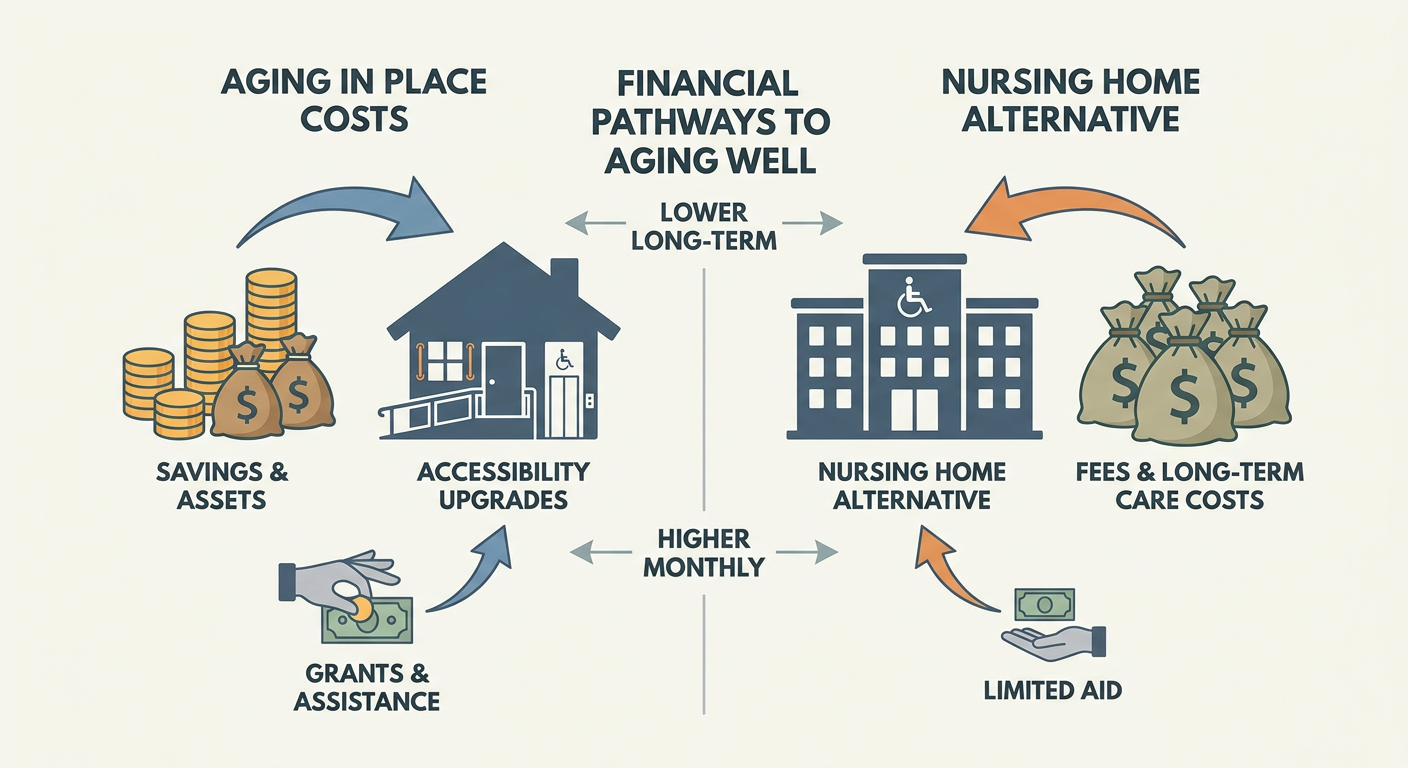
5. Project Costs and Financial Considerations
The decision to modify a home for aging-in-place involves various factors, with financial implications being central. For many older adults, preserving independence in their familiar surroundings is a strong desire, but preparing a home for future needs can seem costly. This section examines the typical expenses associated with aging-in-place renovations, compares these costs to alternative long-term care options, and explores the financial assistance programs available. Understanding these aspects is critical for homeowners, their families, and policymakers to plan effectively for an aging population.
The Real Costs of Aging-in-Place Renovations
Aging-in-place modifications can range from simple, low-cost additions to extensive structural overhauls. The national average cost for aging-in-place remodeling is about $9,500 [8]. However, typical projects can vary widely, from $3,000 to $15,000, depending on the scope of work, the home's existing layout, and the specific accessibility needs of the residents [8].
Minor adjustments are often very affordable. Installing grab bars in a bathroom, a common and effective safety measure, typically costs between $100 and $350, including labor [7]. Despite this low cost, grab bars significantly reduce the risk of falls, which are a major concern for older adults [11]. In 2025, about 49% of older Americans had grab bars in their bathrooms, a number expected to rise as awareness of their benefit grows [8].
More complex modifications, such as those involving significant structural changes or specialized equipment, naturally carry higher price tags. These can include:
- Roll-In Showers: Converting a standard bathtub to a roll-in (curbless or zero-threshold) shower typically costs between $2,900 and $6,600 [9]. A complete accessible bathroom remodel can exceed $15,000 [9].
- Stair Lifts: A straight stair lift costs about $2,500 to $5,000 [9]. For curved staircases, customized lifts can range from $8,000 to $15,000 [9].
- Wheelchair Ramps: The cost of a basic wheelchair ramp averages $1,000 to $3,500, varying based on length and materials [9].
- Home Elevators: Adding a residential elevator can be a substantial investment, ranging from $30,000 to over $80,000 [11].
The ultimate cost depends on several factors, including the age and condition of the home, its current layout, and the extent of the modifications. For example, open floor plans and single-story homes are generally less expensive to adapt compared to multi-story homes with existing structural barriers [8]. Most of these expenses are one-time costs meant to allow a senior to remain at home for many years [9].
It is important to note that 38% of older homeowners cite cost as a major barrier to making necessary home modifications [12]. Many retirees live on fixed incomes. Over 11 million older Americans spend more than 30% of their income on housing costs [5]. This makes even modest renovation expenses challenging for some households [5].
| Modification Type | Estimated Cost Range (U.S. Dollars) | Description |
|---|---|---|
| Grab Bars | $100 - $350 per bar[7] | Includes labor and materials for installation in bathrooms, showers, or near toilets. |
| Comfort-Height Toilets | $300 - $800[6] | Taller toilets that are easier to sit on and stand up from. |
| Lever Door Handles | $50 - $150 per handle[7] | Replaces traditional doorknobs, which can be difficult for those with arthritis. |
| Wheelchair Ramp (Basic) | $1,000 - $3,500[9] | Depends on length, material, and required slope. |
| Stair Lift (Straight Run) | $2,500 - $5,000[9] | Installed on existing staircases. Curved lifts are more expensive. |
| Roll-In Shower Conversion | $2,900 - $6,600[9] | Removes obstacles for easier access, including a low or no threshold. |
| Accessible Bathroom Remodel | Up to $15,000+[9] | Includes fixtures, layout changes, and accessibility features. |
| Wider Doorways (per door) | $500 - $2,000+[8] | Involves framing adjustments and new doors for wheelchair or walker access. |
| Home Elevator | $30,000 - $80,000+[11] | For multi-story homes, a significant structural addition. |
Cost Comparison: Home Modifications Versus Alternative Care
The upfront costs of aging-in-place remodeling can seem significant, but they must be viewed in the context of alternative long-term care expenses. In almost all cases, retrofitting a home is considerably more affordable than the long-term costs of assisted living or nursing home care.
For example, the median annual cost of a private nursing home room in the United States is around $129,000 [10]. Even assisted living facilities often charge $4,000 to $5,000 per month. This means that a substantial home modification project, even one costing $20,000 to $50,000, can pay for itself within a few months to a year if it helps an individual avoid or delay moving into a facility [10]. From a purely financial perspective, investing in home modifications is often a more economical choice.
Beyond the direct financial savings of avoiding institutional care, home modifications protect against very expensive health emergencies. Falls are the leading cause of injury among older adults [11]. They often lead to hospitalization and rehabilitation. In 2020, falls in older adults resulted in $80 billion in medical spending in the U.S. [11]. The average hospital bill for a fall injury is about $18,700 [11]. This figure is higher than the national average cost of most aging-in-place remodels. Medicare, for instance, spent $53 billion on fall injuries in 2020 [11]. This highlights the broad public health cost of unprepared homes.
Targeted home modifications have a strong return on investment in healthcare savings. Research, including a study in Missouri, found that a home modification program costing just $766 per person resulted in a 38% reduction in falls. This saved about $1,600 per person in healthcare costs within a year [11]. This suggests that every $1 spent on home modifications can save approximately $2 in medical expenses by preventing injuries [11]. Simple changes like installing handrails on both sides of stairs or grab bars in bathrooms can significantly reduce fall risks [11].
Furthermore, allowing older adults to remain in their homes avoids the emotional and social costs associated with institutionalization. Many people prefer to stay in their community and familiar environment [1].
Financing Options and Assistance Programs
While many aging-in-place remodels are paid for directly by homeowners or their families, various financial resources can help offset these expenses. Unlike medical care, standard health insurance rarely covers home modifications. However, specific programs and options exist:
Government and Non-Profit Programs
- Veterans Administration (VA) Grants: Veterans with service-connected disabilities may qualify for VA grants of up to $100,000 for home modifications [7]. These grants help veterans adapt their homes to their specific needs.
- USDA Rural Development Grants/Loans: Low-income seniors living in rural areas may be eligible for home repair grants or low-interest loans through the U.S. Department of Agriculture (USDA) [7].
- Medicaid Waivers: Some state Medicaid programs offer waivers that can fund certain accessibility improvements for eligible individuals. The goal is to help people stay out of nursing homes, which saves Medicaid money in the long run [7].
- Local Non-Profit Organizations: Groups like Habitat for Humanity Central Arizona run "Aging in Place" programs, offering free or low-cost safety modifications (such as grab bars and wheelchair ramps) for eligible low-income seniors. Rebuilding Together and similar city housing rehab programs also focus on critical repairs and accessibility improvements [6]. For example, a 2019 Habitat for Humanity project in Phoenix helped Maria, a 78-year-old resident with limited savings, by removing her old bathtub and installing a zero-step shower, adding grab bars, a higher toilet, and a ramp at her front door. The project, largely completed by volunteers, cost roughly $8,000 in materials. These changes significantly reduced Maria's fall risk and allowed her to remain safely in her home [14].
Loan and Financing Options
- Home Equity Conversion Mortgages (Reverse Mortgages): Older homeowners (typically 62+) can use a reverse mortgage to convert a portion of their home equity into cash. This money can then be used to finance home modifications without requiring monthly mortgage payments [7].
- Home Equity Lines of Credit (HELOCs) and Home Equity Loans: These options allow homeowners to borrow against the equity in their home. They provide funds for renovations, which are repaid over time [7].
- FHA 203(k) Rehabilitation Loans: This federal program allows homeowners to finance both the purchase or refinance of a house and the cost of its renovation into a single mortgage. The cap for such loans recently increased to $75,000 for renovations [7]. This can be useful for those purchasing an older home they wish to make age-friendly.
Tax Benefits
- Medical Expense Deductions: In some jurisdictions, medically necessary home modifications prescribed by a doctor (such as a wheelchair ramp or certain accessibility fixtures) may be tax-deductible as medical expenses [7].
Despite these options, many seniors are unaware of available financial assistance programs [12]. A 2025 poll highlighted that 38% of older adults worry about the cost of home changes, and nearly one-third are concerned about finding trustworthy contractors [12]. This gap points to a need for better education and outreach to ensure cost does not keep seniors in unsafe living conditions.
The Economic Benefits Beyond Direct Savings
The financial advantages of aging-in-place remodeling extend beyond direct comparisons with institutional care costs. These modifications can create broader economic value:
- Increased Property Value: Homes adapted for accessibility, especially with universal design principles, can become more attractive in the real estate market. Features like step-free entrances, wider doorways, and accessible bathrooms are increasingly seen as assets, appealing also to seniors but also to buyers with disabilities, temporary injuries, or multi-generational families. This can enhance resale value [12].
- Avoidance of Hidden Costs: Maintaining independence helps minimize stress for family caregivers, potentially saving lost wages or caregiving expenses for adult children. It also allows older adults to continue participating in their communities, contributing socially and economically [12].
- Reduced Societal Healthcare Burden: By preventing falls and other home-related injuries, aging-in-place modifications reduce the strain on emergency services and healthcare systems. The significant medical costs associated with falls illustrate this point. Studies demonstrating a 2:1 return on investment for health costs further support this [11].
The aging-in-place renovation market itself is a growing economic sector. Valued at approximately $27.7 billion globally in 2025, it is projected to reach $40.1 billion by 2035, growing at about 3.7% annually [13]. In the U.S. alone, homeowners aged 55 and over already account for more than half of all home improvement spending. This share is projected to grow to 56% by 2025, up from about 50% a decade prior [15]. This indicates a strong and expanding market driven by the baby boomer generation's desire to "future-proof" their homes [17]. Companies like Phoenix Home Remodeling see this demand directly, with aging-in-place remodels being among their most requested project types for clients in their 50s and 60s [18].
Challenges and Building Trust
Despite the clear benefits, challenges exist. Beyond initial costs, homeowners often face concerns about finding reliable contractors. The home improvement industry can sometimes be difficult to navigate, with fears of scams or poor workmanship being particularly acute for older homeowners [12]. This can lead to delays in making necessary improvements, leaving seniors in less safe conditions [12].
To address this, local Area Agencies on Aging and community organizations are increasingly providing lists of vetted, trustworthy contractors. Some remodeling companies, including specialized aging-in-place firms, focus on transparent pricing and clear communication to build client trust. Phoenix Home Remodeling, for example, offers fixed-price quotes for accessibility upgrades [12]. This helps ensure that older clients avoid unexpected costs. Building this trust is essential for the continued expansion and acceptance of aging-in-place services.
The economic field of aging-in-place remodeling shows a clear financial incentive for modifications. These investments are often more cost-effective than alternative care options, and they yield substantial health and quality-of-life benefits. Understanding these financial aspects and available support is crucial for promoting safe and independent living for older adults.
The next section delves into the design standards and considerations that inform these financial decisions, focusing on specific features and modifications.
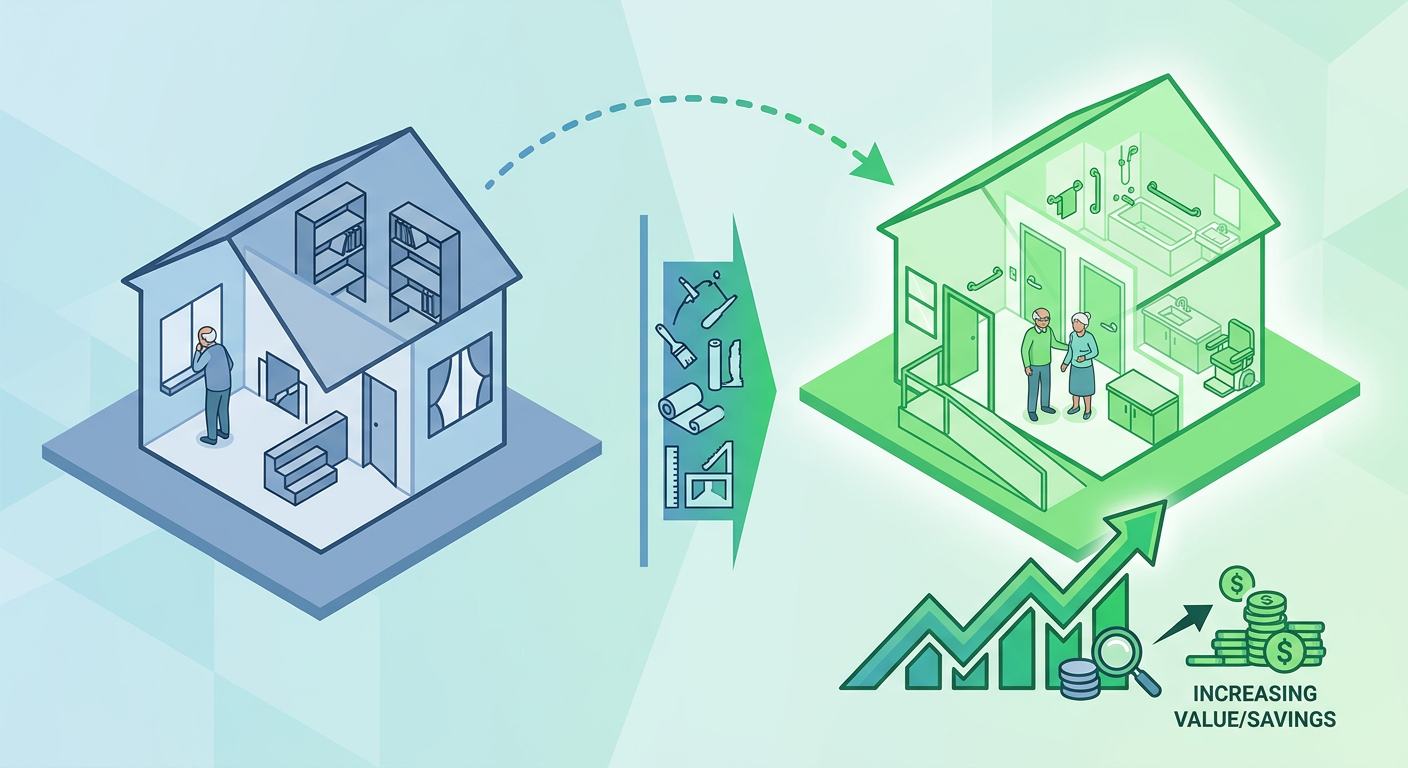
6. Return on Investment for Home Modifications
For many older adults, remaining in their own homes as they age is a strong preference. Estimates suggest that 75% to 80% of adults aged 50 and older want to stay in their current homes for as long as possible[1]. However, most homes in the United States are not designed to accommodate the physical changes that come with aging. Only about 10% of U.S. housing units have key accessibility features, such as a no-step entry or a first-floor bedroom and bathroom[2]. Less than 5% of homes are fully accessible to people with mobility disabilities[3].
This gap between the desire to age in place and the reality of home design creates a need for strategic home modifications. While the upfront costs of these modifications can seem a barrier for some (38% of older homeowners cite cost as a major obstacle)[4], a careful analysis reveals a substantial return on investment. This return is often measured not just in increased property value or owner satisfaction, but more significantly, in healthcare savings and the avoidance of costly long-term care alternatives. The economic benefits extend to individuals, families, and the healthcare system as a whole, making aging-in-place modifications a sound financial decision in many instances.
This section will explore the various facets of the return on investment (ROI) for home modifications. It will detail the significant healthcare cost avoidance achieved through fall prevention, compare the costs of home modifications to institutional care, and examine the financial tools available to homeowners. Furthermore, it will discuss how the remodeling industry is responding to this growing demand, demonstrating that these modifications are not merely expenses but investments in sustained independence and well-being.
The High Cost of Falls and the Benefit of Prevention
One of the most compelling arguments for investing in aging-in-place home modifications centers on fall prevention. Falls are a leading cause of injury among older adults in the United States. These falls frequently result in serious injuries, such as hip fractures or head trauma, which often require hospitalization, surgery, and extensive rehabilitation. The financial burden associated with these injuries is substantial. In 2020, falls by older adults cost the U.S. health system an estimated $80 billion[5].
The medical costs for a single fall can be very high. The average hospital bill for a fall injury is about $18,700[6]. This figure only accounts for initial medical treatment and does not include the costs of extended rehabilitation, home health services, or potential long-term care needs that may arise after a severe fall. For individuals on Medicare, the system bears a significant portion of these costs. Medicare alone spent $53 billion on fall-related injuries in 2020[6].
Simple and relatively inexpensive home modifications have been shown to drastically reduce the risk of falls. For example, installing grab bars in bathrooms, adding handrails to both sides of staircases, improving lighting, and eliminating throw rugs can make a critical difference. A study conducted in Missouri highlighted this impact directly. A home modification program, which cost an average of just $766 per person, resulted in a 38% reduction in falls among participants. This reduction translated into approximately $1,600 in healthcare savings per person within a single year[7].
This data indicates a clear and measurable financial return on investment. For every dollar spent on targeted home modifications aimed at fall prevention, roughly two dollars can be saved in medical expenses[8]. This 2:1 return on investment is a strong economic incentive for individuals, families, and public health initiatives to promote and fund such modifications. The benefits go beyond mere cost savings. Avoiding falls also means averting pain, maintaining independence, and preserving quality of life for older adults.
Table 1 provides a comparison of average costs for various home modifications against the typical cost of a single fall-related hospitalization.
| Modification Type | Average Cost Range (Installed) | Health Benefit / Prevention |
|---|---|---|
| Grab Bars (per bar) | $100 - $350[9] | Prevents falls in bathrooms, key injury zone. |
| Standard Wheelchair Ramp | $1,000 - $3,500[10] | Eliminates step obstacles, reduces falls at entry. |
| Stair Lift (straight run) | $2,500 - $5,000[11] | Prevents falls on stairs, a common hazard. |
| Curbless Shower (conversion) | $2,900 - $6,600[12] | Removes high thresholds, preventing slips and falls during showering. |
| Average Fall-Related Hospital Bill | ~ $18,700[6] | Cost of injury if prevention fails. |
As illustrated, many common home modifications cost significantly less than the typical expense incurred from a single fall. This financial reality underscores the economic wisdom of proactive prevention. For example, installing several grab bars, adding a ramp, and converting to a curbless shower could cost between $4,100 and $10,450. Even at the higher end, this is substantially less than the average cost of one fall-related hospitalization. Furthermore, these modifications provide long-term safety benefits, reducing the likelihood of falls over many years.
It is worth noting that while these modifications have clear benefits, only 46% of Americans over 65 have taken any action to modify their homes for aging in place by 2025[4]. This indicates a large segment of the population that could benefit from these preventative measures but has not yet adopted them.
Comparing Home Modifications to Long-Term Care Options
Beyond the direct prevention of falls and associated healthcare costs, home modifications offer a profound financial advantage when compared to alternative long-term care options. The cost of institutional care such as assisted living facilities or nursing homes is substantial and continues to rise.
The median annual cost for a private room in a U.S. nursing home is approximately $129,000[13]. Even assisted living, which typically provides a less intensive level of care, often costs between $4,000 and $5,000 per month. That translates to $48,000 to $60,000 annually. These are recurring costs that compound over years, quickly depleting savings and assets.
In contrast, even extensive home modifications are typically a one-time investment. While some larger projects can reach $20,000 to $50,000 or more for full structural remodels or a home elevator installation[14], these rarely exceed the cost of even a single year in an institutional care setting. Most aging-in-place renovations average around $9,500, with typical projects ranging from $3,000 to $15,000[15].
The math is clear: a $20,000 home modification project could pay for itself in a matter of months if it enables an individual to avoid or delay moving into an assisted living facility or nursing home. This financial calculation strongly favors investing in the home. The funds spent on institutional care are gone, whereas money invested in home modifications often enhances the home's value or at least protects existing home equity. Furthermore, home equity itself can be a resource to fund these modifications, through options like reverse mortgages or home equity loans.
Emotional and social costs are also a factor. Remaining in one's familiar home and community often contributes to better mental and physical health, reducing the stress and disorientation that can accompany a move to a new environment. Experts emphasize aging in place as both financially and emotionally preferable for many older adults, avoiding the personal toll of institutionalization.
Funding Mechanisms and Financial Barriers
Despite the clear economic benefits, the upfront cost of home modifications remains a significant barrier for many older adults. As of 2025, 38% of older adults reported affordability as a major challenge to making home modifications[4]. Retirees often live on fixed incomes, and with over 11 million older Americans spending more than 30% of their income on housing costs, even modest renovation expenses can be a challenge[16].
Most aging-in-place remodels are paid for out-of-pocket by homeowners or their families. Unlike medical care, there is limited direct insurance coverage for home modifications. However, several funding mechanisms and resources exist to help offset these costs:
- Veterans Affairs (VA) Grants: Veterans with service-connected disabilities may qualify for VA grants, such as the Specially Adapted Housing (SAH) Grant or the Special Housing Adaptation (SHA) Grant, which can provide up to $100,000 for housing modifications[17].
- Medicaid Waivers: Some U.S. states offer Medicaid programs (specifically Home and Community-Based Services waivers) that will fund certain accessibility improvements for eligible individuals. These programs recognize that it is often more cost-effective for taxpayers to support someone at home than in a nursing facility.
- USDA Rural Development Grants/Loans: Low-income seniors living in rural areas might qualify for grants or low-interest loans through the U.S. Department of Agriculture's home repair programs.
- Non-profit Organizations: Organizations like Habitat for Humanity Central Arizona and Rebuilding Together offer home modification and repair services, often free or at reduced cost, for eligible low-income seniors. These initiatives address critical needs like roof repairs, grab bar installations, and ramp construction, as seen in the case of a Phoenix Navy veteran whose home was repaired by volunteers[18].
- Home Equity Conversion Mortgages (Reverse Mortgages): These financial products allow homeowners aged 62 and older to convert a portion of their home equity into cash, which can then be used to fund modifications, without having to sell their home or make monthly mortgage payments.
- FHA 203(k) Rehabilitation Loans: This FHA program allows borrowers to finance both the purchase or refinance of a home and the cost of rehabilitation or repairs into a single loan. The cap for these loans was recently raised to $75,000 for renovations, making it a viable option for more extensive modifications[19].
- Tax Deductions: In some jurisdictions, medically necessary home modifications (recommended or prescribed by a doctor) may be eligible for tax deductions.
A further barrier, cited by 29% of older adults, is finding trustworthy contractors[4]. The home improvement sector can be susceptible to scams or poor workmanship, making transparent pricing and vetting of professionals important. Local Area Agencies on Aging and community organizations are increasingly providing lists of vetted, trusted contractors or specialized programs to address this concern. Remodeling companies that specialize in aging-in-place services, such as Phoenix Home Remodeling, often provide fixed-price quotes for accessibility upgrades to offer clarity and build trust with older clients[20].
Market Trends and Industry Response
The clear economic benefits and strong consumer preference for aging in place are driving a significant expansion in the home remodeling industry. The global aging-in-place renovation services market was valued at around $27.7 billion in 2025 and is projected to reach $40.1 billion by 2035, indicating a steady annual growth of approximately 3.7%[21].
In the U.S. specifically, homeowners aged 55 and over already account for over half of all home improvement spending. By 2025, older households are projected to contribute 56% of U.S. remodeling expenditures[22]. This trend is largely due to the aging Baby Boomer population, who possess significant home equity and a desire to invest in their homes for long-term comfort and safety.
The remodeling industry has responded dynamically to this demand:
- Increased Demand: 76% of remodeling firms reported an increase in demand for aging-in-place projects over the past five years[23]. As of early 2025, 96% of remodelers noted that clients are at least "somewhat receptive" to these modifications, suggesting growing awareness and acceptance[24].
- Specialized Training: Many contractors are pursuing certifications like the Certified Aging-in-Place Specialist (CAPS) credential from the National Association of Home Builders (NAHB). This training equips remodelers with expertise in accessible design principles and an understanding of the specific needs of older adults.
- Proactive Planning: A significant majority of aging-in-place renovations (88-91%) are initiated by clients who are proactively planning for future needs, rather than reacting to an immediate health crisis[25]. This indicates a shift toward preventative remodeling, often by homeowners in their 50s and 60s who wish to "future-proof" their homes.
- Regional Hotspots: Areas with high concentrations of retirees, such as Phoenix, Arizona, show particularly strong demand. Phoenix Home Remodeling, for instance, reports that aging-in-place remodels are among their most requested project types for homeowners in their 50s and 60s[20].
- Product Innovation: The market has seen a rise in products designed for accessible living that also emphasize aesthetics. Examples include stylish grab bars that double as towel racks, curbless showers that blend seamlessly with bathroom design, and ergonomic fixtures.
The growth of this market is not just about modifying existing homes, but also about encouraging thoughtful design in new construction and during any major renovation projects. It is simpler and more cost-effective to incorporate features like curbless showers or wider door openings during an initial remodel than to retrofit them after an injury or decline in mobility. This foresight can save homeowners considerable expense and disruption in the long run.
Broader Economic and Societal Returns
The return on investment for home modifications extends beyond the direct financial savings for individuals and the healthcare system. There are broader economic and societal benefits:
- Community Retention: Enabling older adults to stay in their homes allows them to remain active members of their communities, contributing socially, economically, and often through volunteer work. This prevents the loss of experienced individuals and social capital to institutional settings.
- Reduced Burden on Family Caregivers: When homes are modified to be safer and more accessible, the physical and emotional burden on family caregivers can be significantly reduced. This also prevents potential lost wages or career sacrifices for family members who might otherwise need to provide more hands-on care.
- Increased Property Value and Marketability: Homes with universal design features (e.g., step-free entries, wider doorways, accessible bathrooms) can appeal to a broader range of buyers, including families with young children or those with temporary or permanent disabilities. This can enhance the home's resale value and marketability, particularly as the aging population grows and these features become more desirable.
- Economic Stimulus: The growth in aging-in-place remodeling supports local economies by creating jobs for contractors, designers, suppliers, and other related services. It stimulates investment in the housing sector.
In essence, investing in home modifications for aging in place is a multi-faceted investment. It safeguards health, reduces significant healthcare expenditures, offers a cost-effective alternative to institutional care, supports economic growth, and enhances the overall well-being of older adults and their communities. This holistic view of return on investment underscores the value of proactive and thoughtful home adaptation strategies.
The economic arguments for home modifications are compelling. By comparing the relatively modest, often one-time costs of modifications against the potentially debilitating and recurring expenses of falls, injuries, and institutional care, the financial benefits become clear. The remodeling industry is evolving to meet this demand, and financial programs are available, though awareness and access remain challenges. As the population continues to age, the significance of these economic benefits will only grow, cementing home modifications as a prudent and necessary investment for a sustainable future.
The next section will focus on the various payment options and funding sources for aging-in-place modifications, providing homeowners and their families with actionable information on how to finance these important investments.
Sources
- AARP Home and Community Preferences Survey 2021 - AARP - Nov 2021: Press release highlighting that 8 in 10 older adults want to age in their current homes and communities; includes data on desired home modifications (grab bars, etc.) and the gap in preparedness. (www.census.gov) (press.aarp.org)
- Old Housing, New Needs: Are U.S. Homes Ready for an Aging Population? - U.S. Census Bureau - June 2020: Report revealing that only 10% of U.S. homes are aging-ready (e.g., have a step-free entry, first-floor bedroom and bath, and wide halls/doors). Breaks down accessibility by region and highlights the mismatch between aging Americans and their housing. (www.census.gov)
- “Less than 5% of American homes are accessible for the disabled, elderly” - HousingWire - July 21, 2023: Article discussing the shortage of accessible housing, citing data (via CNBC) that under 5% of U.S. homes are fully accessible. Describes congressional attention to the issue and calls for policy action to support retrofitting homes for seniors and people with disabilities. (www.housingwire.com)
- “Poll shows wide variation in older adults’ preparations to age in place” - University of Michigan (via EurekAlert) - June 24, 2025: National Poll on Healthy Aging results. Finds that 46% of seniors 65+ have made modifications or moved to prepare for aging, meaning over half have not. Provides stats on what modifications seniors have (49% grab bars, 38% no-step entry, 56% walk-in shower, 38% lever handles) and barriers like cost (38%).
- Home Accessibility Modifications: Costs and Funding (2026) - MoneyGeek - May 6, 2026: Comprehensive guide to modification costs and financing. Provides installed cost ranges for 14 common modifications (e.g. $100-$350 per grab bar; $2,500-$5,000 for a stair lift; $6,000-$13,000 for a walk-in tub). Also discusses the $80B annual cost of senior falls and how $1 in modifications can save $2 in health costs, plus outlines funding sources like VA grants, USDA loans, and tax deductions. (www.moneygeek.com)
- Home Accessibility Modifications: Costs and Funding (2026) - MoneyGeek - May 6, 2026: Comprehensive guide to modification costs and financing. Provides installed cost ranges for 14 common modifications (e.g. $100-$350 per grab bar; $2,500-$5,000 for a stair lift; $6,000-$13,000 for a walk-in tub). Also discusses the $80B annual cost of senior falls and how $1 in modifications can save $2 in health costs, plus outlines funding sources like VA grants, USDA loans, and tax deductions. (www.moneygeek.com)
- Home Accessibility Modifications: Costs and Funding (2026) - MoneyGeek - May 6, 2026: Comprehensive guide to modification costs and financing. Provides installed cost ranges for 14 common modifications (e.g. $100-$350 per grab bar; $2,500-$5,000 for a stair lift; $6,000-$13,000 for a walk-in tub). Also discusses the $80B annual cost of senior falls and how $1 in modifications can save $2 in health costs, plus outlines funding sources like VA grants, USDA loans, and tax deductions. (www.moneygeek.com) (www.moneygeek.com)
- Home Accessibility Modifications: Costs and Funding (2026) - MoneyGeek - May 6, 2026: Comprehensive guide to modification costs and financing. Provides installed cost ranges for 14 common modifications (e.g. $100-$350 per grab bar; $2,500-$5,000 for a stair lift; $6,000-$13,000 for a walk-in tub). Also discusses the $80B annual cost of senior falls and how $1 in modifications can save $2 in health costs, plus outlines funding sources like VA grants, USDA loans, and tax deductions. (www.moneygeek.com)
- Home Accessibility Modifications: Costs and Funding (2026) - MoneyGeek - May 6, 2026: Comprehensive guide to modification costs and financing. Provides installed cost ranges for 14 common modifications (e.g. $100-$350 per grab bar; $2,500-$5,000 for a stair lift; $6,000-$13,000 for a walk-in tub). Also discusses the $80B annual cost of senior falls and how $1 in modifications can save $2 in health costs, plus outlines funding sources like VA grants, USDA loans, and tax deductions. (www.moneygeek.com)
- Home Accessibility Modifications: Costs and Funding (2026) - MoneyGeek - May 6, 2026: Comprehensive guide to modification costs and financing. Provides installed cost ranges for 14 common modifications (e.g. $100-$350 per grab bar; $2,500-$5,000 for a stair lift; $6,000-$13,000 for a walk-in tub). Also discusses the $80B annual cost of senior falls and how $1 in modifications can save $2 in health costs, plus outlines funding sources like VA grants, USDA loans, and tax deductions. (www.moneygeek.com)
- Home Accessibility Modifications: Costs and Funding (2026) - MoneyGeek - May 6, 2026: Comprehensive guide to modification costs and financing. Provides installed cost ranges for 14 common modifications (e.g. $100-$350 per grab bar; $2,500-$5,000 for a stair lift; $6,000-$13,000 for a walk-in tub). Also discusses the $80B annual cost of senior falls and how $1 in modifications can save $2 in health costs, plus outlines funding sources like VA grants, USDA loans, and tax deductions. (www.moneygeek.com)
- Home Accessibility Modifications: Costs and Funding (2026) - MoneyGeek - May 6, 2026: Comprehensive guide to modification costs and financing. Provides installed cost ranges for 14 common modifications (e.g. $100-$350 per grab bar; $2,500-$5,000 for a stair lift; $6,000-$13,000 for a walk-in tub). Also discusses the $80B annual cost of senior falls and how $1 in modifications can save $2 in health costs, plus outlines funding sources like VA grants, USDA loans, and tax deductions. (www.moneygeek.com)
- Home Accessibility Modifications: Costs and Funding (2026) - MoneyGeek - May 6, 2026: Comprehensive guide to modification costs and financing. Provides installed cost ranges for 14 common modifications (e.g. $100-$350 per grab bar; $2,500-$5,000 for a stair lift; $6,000-$13,000 for a walk-in tub). Also discusses the $80B annual cost of senior falls and how $1 in modifications can save $2 in health costs, plus outlines funding sources like VA grants, USDA loans, and tax deductions. (www.moneygeek.com)
- Home Accessibility Modifications: Costs and Funding (2026) - MoneyGeek - May 6, 2026: Comprehensive guide to modification costs and financing. Provides installed cost ranges for 14 common modifications (e.g. $100-$350 per grab bar; $2,500-$5,000 for a stair lift; $6,000-$13,000 for a walk-in tub). Also discusses the $80B annual cost of senior falls and how $1 in modifications can save $2 in health costs, plus outlines funding sources like VA grants, USDA loans, and tax deductions. (www.moneygeek.com)
- Aging-in-Place Remodeling Cost Guide - Fixr - Aug 17, 2022: Estimates typical costs for aging-in-place home adaptations. Notes a national average of ~$9,500, with a broad range depending on project scope ($3,000 on the low end to $15,000 or more for extensive remodels). Breaks down costs by room and type of modification, emphasizing that bathroom updates are most common and pricey (up to $20k+). (www.fixr.com)
- New AARP Report: Majority of Adults 50-plus Want to Age in Place, But Policies and Communities Must Catch Up - AARP - Dec 10, 2024: Latest AARP survey findings showing persistent desire to age in place, with 51% of 50+ adults saying they need a home that supports independent aging. Details percentages who foresee needing specific modifications (72% grab bars, 64% medical alerts, etc.) and emphasizes policy implications. (stage.mediaroom.com)
- Home Accessibility Modifications: Costs and Funding (2026) - MoneyGeek - May 6, 2026: Comprehensive guide to modification costs and financing. Provides installed cost ranges for 14 common modifications (e.g. $100-$350 per grab bar; $2,500-$5,000 for a stair lift; $6,000-$13,000 for a walk-in tub). Also discusses the $80B annual cost of senior falls and how $1 in modifications can save $2 in health costs, plus outlines funding sources like VA grants, USDA loans, and tax deductions. (www.moneygeek.com)
- “Volunteers rally to repair Phoenix home of disabled Navy veteran” - ABC15 News (Phoenix) - Nov 2022: Local news story about community volunteers fixing up a 71-year-old veteran’s home so he could safely age in place. Highlights the repairs made - such as patching a leaky roof, painting, installing ramps and grab bars - and the emotional impact on the homeowner. Shows the role of non-profits and volunteers in helping low-income seniors with home modifications. (www.abc15.com) (www.abc15.com)
- Home Accessibility Modifications: Costs and Funding (2026) - MoneyGeek - May 6, 2026: Comprehensive guide to modification costs and financing. Provides installed cost ranges for 14 common modifications (e.g. $100-$350 per grab bar; $2,500-$5,000 for a stair lift; $6,000-$13,000 for a walk-in tub). Also discusses the $80B annual cost of senior falls and how $1 in modifications can save $2 in health costs, plus outlines funding sources like VA grants, USDA loans, and tax deductions. (www.moneygeek.com) (www.moneygeek.com)
- What Is Aging-in-Place Design? (Homeowner’s Guide) - Phoenix Home Remodeling - n.d.: Explainer from a Phoenix-based remodeling firm on the principles of aging-in-place design. Discusses why to start planning in advance of any mobility issues and urges integrating features during regular remodels rather than waiting for a crisis. Uses Phoenix as an example of a large 50+ homeowner population driving demand for these projects. (phxhomeremodeling.com) (phxhomeremodeling.com)
- Aging in Place Renovation Service Market Growth Outlook 2035 | WiseGuyReports: Market analysis report projecting global market size and growth rates for aging-in-place renovation services. (www.wiseguyreports.com)
- Aging Homeowners Drive Growth in Remodeling - Harvard Joint Center for Housing Studies - Feb 28, 2017: Research report (Improving America’s Housing series) noting that homeowners 55+ were projected to account for 56% of remodeling spending by 2025. Provides context on how the aging baby boomer generation is dominating home improvement activity, often to modify homes for retirement. Establishes a long-term trend of older adults as key drivers of the remodeling market. (www.jchs.harvard.edu)
- “Grab Bars Remain the Most Common Aging-in-Place Remodel” - NAHB Eye on Housing - May 9, 2023: Industry survey analysis by the National Association of Home Builders. Reports the percentage of remodelers performing various aging-in-place projects: 93% did grab bars, 83% curbless showers, 77% higher toilets, etc. Also notes 76% of remodelers saw increased demand in past 5 years and that most clients are proactive planners. (eyeonhousing.org)
- Aging-in-Place Remodeling Work Fell While Familiarity and Receptiveness Remain High - Eye On Housing (eyeonhousing.org)
- “Grab Bars Remain the Most Common Aging-in-Place Remodel” - NAHB Eye on Housing - May 9, 2023: Industry survey analysis by the National Association of Home Builders. Reports the percentage of remodelers performing various aging-in-place projects: 93% did grab bars, 83% curbless showers, 77% higher toilets, etc. Also notes 76% of remodelers saw increased demand in past 5 years and that most clients are proactive planners. (eyeonhousing.org) (eyeonhousing.org)
7. Industry Adaptation and Market Growth
The increasing desire among older adults to remain in their homes as they age has created a significant shift in the home remodeling industry. This isn't just a preference; it is a major demographic trend impacting housing markets globally. Roughly 75% to 80% of adults aged 50 and older want to stay in their current homes for as long as possible[1]. This consistent preference highlights a substantial demand for home modifications that support aging in place. Despite this strong desire, only about 10% of U.S. homes have key accessibility features needed for older residents[2]. Less than 5% of homes nationwide are fully accessible for individuals with mobility disabilities[3]. This gap between desire and current housing conditions requires a strong response from the remodeling industry.
The number of households headed by someone 80 or older is projected to double by 2040[4]. This will further increase the need for home retrofits and supportive design. This section will explore how the home remodeling industry is adapting to this growing market. It will cover changes in contractor training, market trends, the economic incentives for these modifications, and the role of technology.
Market Demand and Demographic Drivers
The aging population is the primary force behind the growth in aging-in-place remodeling. This demographic wave is not unique to the United States; it is a global phenomenon. By 2030, one in five Americans will be 65 or older[19]. This means tens of millions more seniors each year will need age-friendly housing. The preference for independence is strong. Surveys consistently show that about 75-80% of older adults want to remain in their homes[20]. This figure has remained stable even through economic and pandemic shifts. For many, home represents personal identity, community connections, and comfort. Even among those in their 80s, most prefer not to move to institutional care if they can avoid it. Businesses and policymakers recognize that supporting aging in place is important for this generation.
The U.S. Census Bureau reported in 2020 that out of 115 million U.S. housing units, only 10% had key features to accommodate older residents[21]. These features include a no-step entry, a first-floor bedroom and bathroom, and wider doorways. The other 90% of homes would need modifications for safety and accessibility. The shortage of accessible housing is seen as a growing concern. Less than 5% of American homes are wheelchair accessible or fully disability-friendly[22]. This means many seniors live in homes that will become difficult or unsafe as their mobility changes. For example, a 70-year-old may manage stairs today, but at 80, the same staircase could pose a fall risk. The majority of older adults prefer not to leave their long-time residence, with only 26% having relocated to a more age-friendly home by their late 60s or 70s. This places the responsibility on retrofitting existing homes to meet the needs of aging residents.
A significant concern is that many homeowners wait too long to modify their homes. As of 2025, fewer than half (46%) of Americans over 65 have made home modifications or moved to a more age-friendly home[4]. This leaves over half unprepared. Modifications often happen after a crisis, such as installing a ramp after a fall and hip fracture. Remodeling professionals note that urgent, last-minute projects are often more stressful and expensive than planned modifications.
Remodeling Industry Response and Specialization
The home remodeling industry is reacting to this demand by increasing its focus on aging-in-place projects. Remodeling contractors report a significant rise in requests for aging-friendly features. Seventy-six percent of remodeling firms state that demand for aging-in-place projects has grown in the past five years[7]. By early 2025, approximately 96% of remodelers reported that clients are receptive to these modifications[8], indicating a broad awareness and decreased stigma around accessible design.
Remodelers are increasingly specializing in this market segment. Many contractors have obtained the Certified Aging-in-Place Specialist (CAPS) designation through the National Association of Home Builders (NAHB). This certification provides training in accessible design principles and client needs sensitivity. The NAHB also publishes an extensive Aging-in-Place Remodeling Checklist[30], covering various aspects from exterior maintenance to bathroom layouts. This ensures that "aging-friendly" designs are both functional and visually appealing.
The range of services offered by remodelers includes common modifications such as installing bathroom grab bars (reported by 93% of remodelers), building curbless (zero-threshold) showers (83%), and adding comfort-height toilets (77%)[6]. Widened doorways (63%) and improved lighting (49%) are also frequent requests. These modifications align with universal design standards aimed at preventing falls and making movement easier.
Industry surveys indicate that most aging-in-place renovations (around 88-91%) are undertaken by homeowners who are proactively planning for the future, rather than reacting to an immediate health crisis[14]. These clients are often in their 50s, 60s, or early 70s, seeking to "future-proof" their homes while they are still healthy. This proactive approach, along with adult children modifying homes for aging parents, drives consistent business in the sector. Remodelers understand these different client needs. For proactive planners, the focus is on integrating subtle, aesthetically pleasing changes well before they are urgently needed. For urgent cases, speed and functionality take priority. Companies that can effectively serve both segments are better positioned for success.
In retirement-heavy markets like Phoenix, demand is particularly high. Phoenix Home Remodeling notes that aging-in-place remodels are now among their most requested projects for homeowners in their 50s and 60s[9]. Similar trends are visible in other Sun Belt cities, where more seniors are choosing to renovate their existing homes rather than relocate.
Economic Implications and Return on Investment
The financial aspects of aging-in-place remodeling are compelling. While costs vary, the investment often proves more economical than alternatives like assisted living or nursing home care. Aging-in-place remodeling costs average around $9,500 in the U.S., with typical projects ranging from $3,000 to $15,000[10]. A full accessible bathroom remodel can reach tens of thousands of dollars, and a home elevator can cost even more. However, small upgrades, such as grab bars or lever handles, cost only a few hundred dollars each[34].
The cost of these home modifications should be compared to the expense of long-term care facilities. The median annual cost for a private nursing home room in the U.S. is about $129,000[11]. Assisted living facilities cost $4,000 to $5,000 per month. This means a $20,000 home modification can pay for itself in a few months if it enables an individual to avoid or delay moving to a facility. From a financial perspective, investing in home modifications is often more prudent. Homeowners can also use home equity to finance these changes through options like reverse mortgages or home equity loans.
Preventing falls represents a significant economic benefit. Falls are the leading cause of injury for seniors and often lead to hospitalization or long rehabilitation stays. In 2020, older adult falls resulted in $80 billion in U.S. medical spending[12]. The average hospital bill for a fall injury is around $18,700[37]. Simple modifications, like adding grab bars or railings on stairs, can significantly reduce the risk of falls. Research has shown that $1 spent on home modifications can save approximately $2 in medical expenses by reducing injuries[13]. For example, a home modification program in Missouri, costing $766 per person, led to a 38% reduction in falls, saving about $1,600 per person in healthcare costs within a year[38].
Despite the clear benefits, cost remains a barrier for many older homeowners, with 38% citing it as a major obstacle to making modifications[14]. Many retirees live on fixed incomes, and over 11 million older Americans spend more than 30% of their income on housing a challenge[39]. Additionally, 29% report difficulty finding trustworthy contractors[14]. Many seniors are also unaware of available grants or loan programs. This highlights the need for better financial information and outreach to ensure that cost does not prevent seniors from living in safe homes.
The global aging-in-place renovation services market was valued at about $27.7 billion in 2024 and is projected to reach $40.1 billion by 2035[13]. This represents a steady annual growth of about 3.7%. In the U.S., spending on aging-related home improvements is expected to increase as the baby boomer generation enters retirement. Homeowners aged 55 and older already account for over half of home improvement spending nationally[36]. By 2025, this demographic is projected to contribute 56% of U.S. remodeling expenditures.
Contractor Training and Professional Standards
The industry's adaptation goes beyond simply responding to demand; it involves a commitment to specialized training and adherence to professional standards. The Certified Aging-in-Place Specialist (CAPS) program, offered by the National Association of Home Builders (NAHB), plays a crucial role in this. The CAPS designation trains remodelers in the details of accessible design and client sensitivity. It covers topics like universal design principles, building codes related to accessibility, and common modifications for varying levels of ability.
The NAHB's Aging-in-Place Remodeling Checklist serves as a guide for contractors and homeowners. It includes detailed recommendations for different areas of the home:
- Exterior: Zero-step entrances, covered entries, minimum 36-inch wide entry doors[25].
- Interior: Minimum 36-inch wide doorways and hallways[23], good lighting, contrasting colors for visibility.
- Bathroom: Curbless showers, grab bars (with reinforced wall backing), comfort-height toilets, non-slip flooring.
- Kitchen: Varied counter heights, easy-to-reach storage, lever-style faucets.
These standards ensure that modifications are also functional but also safely installed and integrated into the home's design. When hiring, seniors and their families often seek out CAPS-certified contractors or consult with occupational therapists. This ensures that the design truly meets the long-term needs of the resident. Modern universal design aims to combine safety and style, with products like grab bars that also serve as towel racks or beautifully tiled curbless showers. The idea is to make the home safer without making it feel like a hospital.
Role of Technology
Technology is often promoted as a key part of aging in place. Smart home systems, including voice-activated controls, fall detection, and environmental sensors, are becoming more common. For example, about 64% of adults 50 and over foresee needing a medical alert device, and 44% expect to use smart security devices[42]. These tools can enhance independence by providing additional layers of safety.
However, the adoption of advanced technology by seniors faces challenges. Many older adults remain cautious about using new technology. Surveys show less than half would consider adding advanced smart home devices for aging in place[43]. Physical solutions like grab bars and ramps are currently more prevalent. Nearly 80% of older adults prioritize no-step showers and other physical home modifications, compared to about 48% who prioritize smart home assistants or remote sensors[44]. This gap is partly due to generational differences in comfort with technology, potential learning curves, or concerns about privacy.
Connectivity can also be an issue. Technology-based solutions often require reliable internet or cellular service, which not all seniors have. In rural areas, about 22% of households still lack high-speed internet access[45]. Cost can also be a barrier, as low-income seniors may not be able to afford broadband or smart devices. Programs to expand broadband access and offer discounted services for seniors are important for wider technology adoption.
For technology to be effectively used by seniors, it needs to be simple and user-friendly. Some companies are developing voice assistants with simplified interfaces or smartwatches with minimal buttons for emergency calls. The goal is technology that operates in the background without requiring significant user interaction. For instance, in a pilot program in Surrey, England, sensors were placed on everyday items like kettles, refrigerators, and beds to monitor routines[47]. If a routine deviated, family or care coordinators were alerted. This unobtrusive monitoring helped detect early signs of health decline in a 53-resident trial, which was later expanded[48].
Industry experts emphasize that smart devices complement, rather than replace, good home design. A medication reminder app is helpful, but it cannot compensate if a senior cannot safely access a medicine cabinet. The most effective aging-in-place strategies combine physical modifications with technology. For example, a wheelchair-accessible bathroom might include a waterproof emergency call button. A new entry ramp could be paired with a smart doorbell camera. This blended approach leverages the strengths of both physical design and technological support.
Community and Nonprofit Efforts
Not all seniors can afford private remodeling services. Community initiatives and nonprofit organizations play a vital role in addressing this gap, particularly for low-income seniors. Organizations like Habitat for Humanity Central Arizona, for example, run Aging in Place programs that offer free safety modifications such as grab bars and wheelchair ramps for eligible seniors. Rebuilding Together and various city housing rehabilitation programs also focus on critical fixes like repairing floors or widening doorways to improve home safety. These initiatives, while essential, highlight the extensive need for housing adaptations that current resources can only partially meet.
These efforts also extend to educating seniors on available financial resources. Many older adults are unaware of grants or loan programs that can assist with home modifications. For instance, veterans with service-connected disabilities can receive VA grants up to $100,000 for housing modifications[40]. Low-income seniors in rural areas may qualify for USDA home repair grants. Some state Medicaid programs offer waivers that fund accessibility improvements to prevent nursing home placement, recognizing the cost savings. For middle-income households, options like Home Equity Conversion Mortgages (reverse mortgages) or FHA 203(k) rehab loans can help finance renovations, with the latter recently increasing its cap to $75,000 for renovations[41]. These programs, however, require dedicated outreach and guidance to ensure that seniors can access them effectively.
Conclusion
The aging-in-place remodeling market is experiencing substantial growth driven by demographic shifts and the strong preference of older adults to remain in their homes. This has led to significant adaptation within the home remodeling industry, including specialized training, a wider range of services, and a focus on universal design principles. While cost and access to reliable contractors remain challenges, the economic benefits of preventing falls and delaying institutional care are clear. The integration of technology offers new possibilities, though careful consideration of usability and accessibility is required for widespread adoption. As the population continues to age, this sector will likely move from a niche market to a core component of the housing and construction industries, supported by both private enterprise and community efforts.
The next section of this report will discuss the specific design standards for aging-in-place remodeling.
8. Technology in Senior Living
The desire for older adults to remain in their homes as they age, often referred to as aging-in-place, is a strong and consistent preference. Research shows that approximately 75% to 80% of adults aged 50 and over wish to stay in their current homes for as long as possible[1]. This preference has remained stable despite recent economic and social changes. However, most existing homes in the United States are not designed to support the needs of an aging population. Only about 10% of U.S. housing units have key accessibility features, such as a no-step entry, a first-floor bedroom and bathroom, and wider doorways[3]. Furthermore, less than 5% of homes nationwide are fully accessible for individuals with mobility disabilities[5]. This mismatch between older adults' desires and their homes' capabilities creates a significant need for modifications.
While physical home modifications have long been central to aging-in-place strategies, the rise of technology presents a different approach. Smart home devices, remote monitoring systems, and other tech-based solutions are increasingly offered as tools to enhance safety and independence. This section will compare these technology solutions with traditional physical modifications, analyzing their usage patterns, challenges, and effectiveness in supporting older adults to age in place. It will examine how older adults adopt and interact with these technologies, the practical barriers they face, and the overall role technology plays in the broader context of aging-in-place remodeling.
The Promise of Smart Home Technology for Seniors
Smart home technology is often presented as a solution for independent living for older adults. This category includes devices such as motion-sensor lights, voice-controlled thermostats, personal emergency response systems (PERS), smart security cameras, and sensors that monitor daily routines. The appeal of these technologies lies in their ability to provide convenience, security, and a layer of monitoring without requiring constant human presence. Approximately 64% of adults aged 50 and older foresee needing a medical alert device or system as they age, and 44% expect to use smart security devices like video doorbells[2]. These technologies have the potential to extend independence by offering safety nets, alerting family members or caregivers to potential issues, and simplifying everyday tasks.
For example, voice assistants can help older adults make calls, set reminders for medication, or control home environments without physical effort. Smart lighting systems can automatically turn on when movement is detected, reducing the risk of falls in the dark. Remote monitoring systems, often using passive sensors, can track an individual's routine and signal if there are significant deviations, indicating a possible health issue or emergency. These tools can offer reassurance to both seniors and their families, providing a sense of security and support.
The Reality: Usage Patterns and Preference for Physical Modifications
Despite the growing availability and promotion of smart home technology, the actual adoption and consistent use among older adults still lag behind physical home modifications. Surveys indicate that less than half of older adults would consider adding advanced smart home devices for aging in place[6]. In contrast, physical modifications are significantly more prioritized. Nearly 80% of older adults express a preference for basic physical home modifications, such as no-step showers and grab bars[6]. Only about 48% prioritize smart home assistants or remote sensors[1].
This preference is reflected in actual home modification data. For instance, a 2025 poll found that among older adults, 49% had grab bars in their bathrooms, 56% had walk-in showers, and 38% had lever handles[4]. These numbers highlight a clear disparity: analog solutions are far more prevalent in seniors' homes today than high-tech gadgets. The reasons for this gap are varied and complex, reflecting a combination of generational comfort, practicality, and perceived necessity.
| Feature Type | Adoption Rate (among older adults)[4] |
|---|---|
| Grab Bars (bathroom) | 49% |
| No-step entry | 38% |
| Walk-in shower | 56% |
| Lever handles | 38% |
| Smart home devices | <48%[1] |
One primary factor is generational familiarity. Today's older generations did not grow up with smartphones, the internet, or smart home devices. There can be a learning curve involved with new technologies, and some seniors may express distrust, fears about privacy, or simply a lack of perceived need for a "talking thermostat." The physical modifications are often seen as more straightforward, requiring no new behaviors or complex setup, which makes them more accessible and immediately useful for many.
Challenges to Technology Adoption Among Seniors
Beyond personal preferences, several practical challenges impede the widespread adoption and effective use of smart home technology by older adults:
- Connectivity Barriers: Many technology-based solutions require reliable internet or cellular service. However, not all older adults have access to, or can afford, these services. In the U.S., approximately 22% of rural households still lack high-speed internet access[2]. This digital divide disproportionately affects low-income and rural seniors, limiting their ability to benefit from connected devices.
- Cost of Devices and Subscriptions: While some smart devices are becoming more affordable, the overall cost of setting up a comprehensive smart home system, coupled with potential monthly subscription fees for services like medical alerts or monitoring, can be prohibitive for seniors on fixed incomes.
- Complexity and User Interface: Many smart home devices are designed for technologically savvy younger users. Their interfaces can be overly complex, with numerous settings, apps, and troubleshooting steps that may confuse or frustrate an older user. A device meant to simplify life can inadvertently become a source of stress if it is not easy to use.
- Lack of Perceived Need: Some older adults may not see the immediate value in specific technologies, especially if they are designed to address hypothetical future needs. This contrasts with a grab bar, whose utility is clear and immediate for someone with balance issues.
- Privacy Concerns: There are legitimate concerns among some seniors about data privacy and surveillance, especially with devices that passively monitor activities or have cameras. Addressing these concerns through transparent communication and strong privacy features is crucial for increasing trust and adoption.
- Technical Support: When technology fails or requires updates, older adults may not have the technical skills or support networks to resolve issues. Reliable and accessible technical support is important for making these systems truly useful in the long term.
These challenges highlight that simply making technology available is not enough; it must be designed and implemented with the senior user's specific circumstances and comfort levels in mind.
Designing Senior-Friendly Technology
The growing demand for aging-in-place solutions is prompting a shift toward designing technology that is truly user-friendly for older adults. This means moving beyond simply offering apps and gadgets and focusing on simplicity, reliability, and passive support.
- Simplified Interfaces: Devices with clear, large buttons, voice-only control options, or very minimal interaction requirements are more likely to be adopted. For example, some companies are developing smartwatches with one or two large buttons for emergency calls, rather than complex menus.
- Ambient and Passive Monitoring: Technology that works in the background without requiring active engagement from the user tends to have higher acceptance rates. An example of this is the "Independent Living" trial conducted in Surrey, England, where unobtrusive sensors were placed on everyday items like kettles, fridges, and doors in the homes of 53 elderly residents[12]. These sensors monitored normal daily routines, such as whether a kettle was boiled in the morning or the front door was opened. If a deviation occurred, like the kettle not being used all day, an alert was sent to a family member or care coordinator. This passive monitoring system successfully caught early warning signs of health issues without requiring the seniors to change their habits or learn new technology[12].
- Integrated Solutions: Technology that seamlessly blends into the home environment, rather than feeling like an added gadget, is often preferred. This could involve smart features built into appliances or furniture, making them look and feel like standard household items.
- Voice Activation: Voice-controlled systems reduce the need for fine motor skills or navigating complex screens, making them accessible for individuals with arthritis or impaired vision.
- Reliability and Resilience: Systems must be strong and reliable, especially for critical functions like emergency alerts. They should also ideally have backup power sources to function during outages.
Efforts to expand broadband access and provide discounted internet service for seniors are also critical to making tech-based aging-in-place solutions viable for a broader population. Furthermore, community centers and libraries are increasingly offering tech classes for older adults, teaching them how to use smartphones, voice assistants, and other digital tools. These initiatives help bridge the digital divide and increase comfort with technology.
The Complementary Role of Technology and Physical Modifications
Industry experts increasingly emphasize that smart home devices and physical modifications are not mutually exclusive; rather, they serve complementary roles. Technology should be seen as a supplement to good home design, not a replacement. A medication reminder app is valuable, but if an older adult cannot safely reach their medicine cabinet due to poor design, the app alone will not solve the problem. Similarly, a fall-detection watch is useful, but preventing the fall in the first place through proper railings, grab bars, and non-slip flooring is even better.
The most effective aging-in-place strategies typically combine these two approaches:
- Physical Environment Modifications: These changes primarily focus on preventing incidents and making the home inherently safer and more accessible. Examples include installing grab bars in bathrooms, creating curbless showers, widening doorways, improving lighting, and ensuring step-free entries. These are foundational changes that reduce daily risks and physical strain.
- Technology-Based Enhancements: These solutions add layers of safety, convenience, and remote monitoring. They can include medical alert systems, smart locks, video doorbells, automated lighting, and passive sensors. Technology often provides a "safety net" or helps manage tasks that physical modifications cannot address.
For instance, after renovating a bathroom to be wheelchair-accessible, one could also install a waterproof emergency call button in the shower for added security. Or, a home with a newly installed entry ramp could benefit from a smart doorbell camera, allowing the homeowner to see and communicate with visitors without having to rush to the door. This blended approach leverages the strengths of both solutions: strong physical design minimizes everyday hazards, while technology offers supplementary support and peace of mind.
As the population ages, future generations of seniors (Gen X and Millennials) will be more tech-native. It is expected that smart home features will become as common as grab bars in aging-in-place remodels. However, for today's older generation, user-friendly design, thoughtful integration, and human support for setup and troubleshooting remain critical for technology to deliver on its promise in senior living.
Case Study: Integrating Technology for Enhanced Independence
The Surrey, England "Independent Living" trial illustrates how technology can effectively support aging in place. In 2021, Surrey County Council and Mole Valley District Council initiated a program with 53 elderly residents living alone[12]. Instead of relying on wearable devices or cameras, which can be intrusive, they installed small sensors on common household items such as kettles, fridges, and the front door[12].
The system monitored daily routines: if a kettle was not used all day, or the front door was not opened in the morning, an alert was sent to a designated family member or care coordinator. This passive monitoring provided valuable insights. In one instance, a woman's movement patterns subtly changed and flagged a potential health issue, prompting a medical check before a serious incident occurred. The trial was successful, increasing residents’ confidence and giving families peace of mind[12]. The program was later expanded due to its effectiveness. This example highlights that when technology is integrated thoughtfully and unobtrusively, it can significantly enhance independent living without requiring behavioral changes from the older adult.
In the Phoenix area, while Phoenix Home Remodeling focuses primarily on physical modifications, they also see the potential for technology integration. As clients age, they often ask about smart home solutions that can complement their physical renovations to create a safer, more convenient living space. This might include integrating smart lighting with widened hallways or recommending smart thermostats that are easily controlled by voice to enhance comfort after a comprehensive bathroom remodel.
Conclusion
Technology offers compelling prospects for supporting aging-in-place, providing new layers of safety, monitoring, and convenience. Smart home devices, remote sensors, and communication tools can extend independence and offer reassurance to older adults and their families. However, their current adoption rate lags behind that of physical modifications due to factors such as generational comfort, digital literacy, cost, privacy concerns, and connectivity barriers. For technology to truly serve the aging population, it must be designed with simplicity, intuitiveness, and passive functionality in mind, working in the background rather than demanding active engagement. Ultimately, the most effective strategy for aging-in-place combines thoughtful, universal design principles with complementary technological solutions. Physical modifications create an inherently safe and accessible environment, while suitable technology adds convenience, monitoring, and emergency support. As awareness grows and technology becomes more user-friendly, the collaboration between these two approaches will be key to empowering older adults to live independently and comfortably in their homes for as long as possible.
9. Frequently Asked Questions
Aging-in-place remodeling is a growing area of interest for homeowners, their families, and the remodeling industry. As populations age, more individuals seek to remain in their homes for as long as possible. This section addresses common questions about aging-in-place, looking at design choices, costs, and the practical usage of modifications. The information compiles findings from various reports, surveys, and case studies to provide a complete understanding of this important trend.
The desire to stay home is strong among older adults. Between 75% and 80% of adults aged 50 and over want to remain in their current homes as they age[1]. This preference has been consistent despite recent economic changes. However, many homes are not ready for older residents. Only about 10% of U.S. housing units have key accessibility features[2]. Less than 5% of homes are fully accessible to people with mobility disabilities[3]. This creates a gap where most seniors live in homes that are not suitable for their long-term needs.
Many seniors do not modify their homes in advance. As of 2025, fewer than half (46%) of Americans over 65 have made home modifications or moved to a more age-friendly home. Yet, 84% of older adults expect to live out their lives in their current home. This gap shows the risk of delayed preparations.
The most needed upgrades are often simple safety features. Surveys show 72% to 79% of older adults will need grab bars in bathrooms and zero-step showers[4]. By contrast, fewer than half (around 48%) see smart home devices as essential[5]. Basic changes like better lighting, non-slip flooring, and wider doorways are widely accepted as beneficial.
Costs for aging-in-place remodeling vary widely. The average cost is around $9,500 in the U.S. Typical projects range from $3,000 to $15,000[6]. A full accessible bathroom remodel can cost tens of thousands, and a home elevator even more[7][8]. Small upgrades, like grab bars or lever handles, cost only a few hundred dollars each[9].
Cost barriers are common. Around 38% of older homeowners cite cost as a major obstacle. Many retirees live on fixed incomes. Over 11 million older Americans spend more than 30% of their income on housing costs[10]. This makes even small renovation expenses difficult.
Not adapting homes has high costs. Falls by older adults led to $80 billion in U.S. medical spending in 2020[11]. Targeted home modifications have shown a 2:1 return on investment in healthcare savings by reducing injuries[12][13]. Retrofitting a home is almost always cheaper than a year in assisted living, which often costs over $100,000. Homeowners aged 55 and over already account for over half of home improvement spending. By 2025, older households are expected to contribute 56% of U.S. remodeling expenditures[14]. This reflects the large baby boomer population and their efforts to upgrade homes for retirement.
The remodeling industry is adapting. Contractors report a significant rise in requests for aging-friendly features. About 76% of remodeling firms say demand for aging-in-place projects has grown in the past 5 years[15]. In early 2025, around 96% of remodelers said clients are receptive to these modifications[16]. In retirement-heavy markets like Phoenix, demand is especially high. Phoenix Home Remodeling notes that aging-in-place remodels are now among their most requested projects for homeowners in their 50s and 60s[17]. Similar patterns are seen in other sunbelt cities.
What does "aging in place" mean, and why is it important?
"Aging in place" means living in one's own home and community safely, independently, and comfortably, regardless of age or ability level. For many older adults, their home is tied to their identity, community, and comfort. The importance of aging in place stems from several factors:
- Strong Preference: A large majority of older adults, specifically 77% of U.S. adults aged 50 and over according to a 2021 survey, wish to remain in their current home as long as possible. A similar percentage (79%) want to stay in their community[18]. This desire for independence and familiarity is a primary driver.
- Cost Savings: Staying at home with modifications is usually far more affordable than moving to an assisted living facility or nursing home. The median annual cost of a private nursing home room in the U.S. is about $129,000[19]. Even extensive home modifications rarely exceed $50,000, and these are often one-time investments. This makes home modifications a financially sensible choice.
- Health and Safety Benefits: Many home modifications focus on preventing accidents, especially falls, which are a major cause of injury for seniors. The National Council on Aging reported that falls by older adults cost the U.S. health system $80 billion in 2020[20]. Simple modifications, such as grab bars, can reduce fall risks. A study in Missouri showed that a home modification program costing just $766 per person led to a 38% reduction in falls, saving about $1,600 per person in healthcare within a year[21][22]. This means that $1 spent on home modifications can save roughly $2 in medical expenses.
- Emotional Well-being: Remaining in a familiar environment, surrounded by personal belongings and memories, can greatly improve mental and emotional health. It helps avoid the stress and disorientation that can come with moving to a new living situation.
- Community Connection: Staying in one's community allows older adults to maintain social connections, participate in local activities, and continue a routine, which supports overall well-being.
- Demographic Shift: The U.S. population is aging. By 2030, 1 in 5 Americans will be 65 or older. The number of households headed by someone 80 or older is projected to double by 2040[23]. This demographic shift increases the need for age-friendly housing.
What are the most effective aging-in-place modifications?
The most effective modifications are those that address common risks for older adults, particularly falls, and those that make daily tasks easier. These modifications often follow universal design principles, which aim to make spaces usable by everyone without special adaptation.
- Bathroom Safety:
- Grab Bars: These are inexpensive, costing roughly $100-$350 including labor[24]. They are highly effective in preventing falls when getting in and out of the shower or using the toilet. Among professional remodelers, 93% report installing grab bars for clients[25].
- Curbless or No-Step Showers: These eliminate the need to step over a tub or shower curb, which is a common tripping hazard. About 83% of remodelers have installed curbless showers[26]. Converting a standard tub to a roll-in shower costs about $2,900-$6,600 on average.
- Comfort-Height Toilets: Taller toilets make sitting down and standing up easier. Around 77% of remodelers have added these[27].
- Non-Slip Flooring: Reducing slippery surfaces in bathrooms is crucial.
- Accessibility and Mobility:
- Ramps and Zero-Step Entries: Removing steps at entries allows for easier access, especially for those using walkers or wheelchairs. Only 1 in 10 homes has a no-step entry, first-floor bedroom and bath, and wider doorways[28]. A basic wheelchair ramp averages $1,000-$3,500[29].
- Wider Doorways and Hallways: Standard doorways might be too narrow for wheelchairs or walkers. Widening doorways to at least 32-36 inches allows for easier passage. About 63% of remodelers widen doorways[30].
- Stair Lifts: For multi-story homes, a stair lift can provide safe access between floors. A straight stair lift costs about $2,500-$5,000[31].
- Lever-Style Door Handles: Easier to operate for individuals with arthritis or limited hand strength than traditional doorknobs.
- Lighting and Visibility:
- Improved Lighting: Better general and task lighting reduces glare and shadows, helping those with declining vision. Motion-activated lights in hallways and stairwells prevent fumbling for switches in the dark.
- High-Contrast Features: Using contrasting colors for light switches, grab bars, and edges of steps can help with visibility.
- Kitchen Modifications:
- Pull-Out Shelves and Drawers: These reduce the need to reach or bend.
- Adjustable Countertops: While more costly, these can personalize kitchen spaces.
- Easy-to-Use Faucets: Lever-style faucets are easier to operate.
These modifications are most effective because they address fundamental physical challenges encountered by many older adults. They are often low-tech, reliable, and do not require new behaviors or learning.
How much does aging-in-place remodeling typically cost?
The cost of aging-in-place remodeling varies depending on the type and extent of the modifications needed, as well as the home's existing layout and condition. Costs can range from a few hundred dollars for minor updates to tens of thousands for major renovations.
- National Average: The average cost for aging-in-place remodeling in the U.S. is around $9,500[32]. Typical projects range from $3,000 to $15,000[33].
- Small Upgrades (under $1,000):
- Grab Bars: Roughly $100-$350 each, including installation[34]. These are one of the most cost-effective safety improvements.
- Lever Handles: Replacing doorknobs with lever handles throughout the house can cost a few hundred dollars.
- Improved Lighting: Adding motion-sensor lights or brighter bulbs.
- Mid-Range Upgrades ($1,000 - $15,000):
- Wheelchair Ramps: A basic ramp averages $1,000-$3,500, depending on length and material[35].
- Stair Lifts: Costs about $2,500-$5,000 for a straight run, and $8,000-$15,000 for custom curved lifts[37].
- Curbless Showers: Converting a standard tub to a roll-in shower is typically $2,900-$6,600. A full bathroom remodel for accessibility can reach $15,000 or more[39].
- Wider Doorways: Can be a few thousand dollars per doorway, especially if structural changes are needed.
- Large-Scale Upgrades ($15,000+):
- Home Elevators: Residential elevators can cost $30,000-$80,000 or more[41].
- First-Floor Remodels: Creating a primary suite (bedroom and accessible bathroom) on the main level can be extensive, running into tens of thousands of dollars, particularly if it involves reconfiguring floor plans or additions.
- Structural Modifications: Significant changes like removing walls for open floor plans or adding extensions.
It's important to remember that these are average costs. Specific quotes will depend on local labor rates, materials chosen, and the complexity of the project. However, the costs of modifications are often viewed as investments that help avoid much higher expenses associated with assisted living or nursing home care.
Are there financial aid options for aging-in-place modifications?
Most aging-in-place remodels are paid for by homeowners or their families out-of-pocket. Unlike medical care, standard health insurance does not typically cover home modifications. However, several resources and programs can help offset costs:
- VA Grants: Veterans with service-connected disabilities may be eligible for grants from the U.S. Department of Veterans Affairs (VA) for home modifications. These grants, such as the Specially Adapted Housing (SAH) grant or Special Home Adaptation (SHA) grant, can provide up to $100,000 for home accessibility improvements[43].
- Medicaid Waivers: Some states offer Home and Community-Based Services (HCBS) waivers through Medicaid. These waivers can cover certain home modifications, like ramps or grab bars, if they help an individual remain at home and avoid institutional care. Eligibility is based on income and medical need, and programs vary by state.
- USDA Loans and Grants: The U.S. Department of Agriculture (USDA) offers home repair grants and loans to very low-income rural homeowners. These can be used for health and safety repairs, which might include some aging-in-place modifications. These are specific to rural areas.
- FHA 203(k) Rehab Loan: The Federal Housing Administration (FHA) offers 203(k) rehabilitation mortgages. These loans allow homeowners to finance both the purchase or refinance of a home and the cost of renovations, including accessibility modifications. The FHA 203(k) loan recently raised its cap to $75,000 for renovations[45].
- Tax Deductions: In some cases, medically necessary home modifications may be deductible as medical expenses on federal income tax returns. A doctor's prescription for the modification is often required. Examples include ramps, widened doorways, or modified bathrooms, if they are primarily for the medical care of the homeowner or a dependent.
- Non-Profit Organizations: Many local and national non-profits offer assistance.
- Habitat for Humanity has "Aging in Place" programs in some regions, like Habitat for Humanity Central Arizona, which provides free safety modifications (e.g., grab bars, wheelchair ramps) for eligible seniors.
- Rebuilding Together also focuses on critical home repairs and modifications for low-income homeowners, including seniors.
- Local Area Agencies on Aging (AAAs) often have information on local programs, grants, and trusted contractors.
- Home Equity Loans/Reverse Mortgages: For homeowners with significant equity, a home equity loan, home equity line of credit (HELOC), or a reverse mortgage can provide funds for modifications. Home Equity Conversion Mortgages (HECMs), a type of reverse mortgage, allow seniors aged 62 or older to convert part of their home equity into cash without selling the home or taking on new monthly mortgage payments.
Awareness of these options is often low. A 2025 poll found 38% of older adults citing affordability as a major challenge for home modifications. Many are unaware of available grants or loan programs. This highlights the need for better communication about financial resources.
Do smart home technologies help with aging in place, and do seniors actually use them?
Smart home technologies can offer benefits for aging in place, but their actual use by seniors can vary. These technologies aim to enhance safety, convenience, and communication.
- Potential Benefits of Smart Home Tech:
- Safety:
- Fall Detection: Sensors or wearables can detect falls and automatically alert caregivers or emergency services.
- Smart Lighting: Motion-activated lights can illuminate pathways at night, reducing fall risks. Remote-controlled or voice-activated lighting can also be useful.
- Medical Alert Devices: Wearable devices or systems that allow quick communication for emergencies. About 64% of adults 50 and over foresee needing a medical alert device[47].
- Smart Security: Video doorbells and smart locks can enhance security and allow remote monitoring or access control. 44% expect to use smart security devices[49].
- Convenience and Daily Living:
- Voice Assistants: Can control lights, thermostats, music, and make calls, reducing physical effort.
- Smart Appliances: Programmable thermostats, automated blinds, or smart kitchen appliances can simplify tasks.
- Routine Monitoring: Sensors can track daily routines (e.g., opening the fridge, using a kettle) to detect changes that might signal a problem. A pilot program in Surrey, England, installed sensors on kettles, fridges, and doors of 53 elderly residents. It successfully detected anomalies, providing early warnings to families or care coordinators[51][53]. This type of passive monitoring requires no user interaction.
- Safety:
- Reality of Adoption and Usage:
- Generational Comfort: Many current seniors did not grow up with advanced technology. This can lead to a learning curve, discomfort, or distrust concerning new gadgets. Less than half of older adults would consider adding advanced smart home devices for aging in place[55].
- Preference for Analog Solutions: Basic physical modifications, or "analog" solutions, are far more common and used. For example, 72% to 79% of older adults prioritize grab bars and no-step showers[57], while only about 48% prioritize smart home assistants or remote sensors[59]. These types of basic changes usually integrate seamlessly into daily life without requiring new habits or troubleshooting.
- Connectivity Barriers: Reliable internet access is essential for many smart home systems, but 22% of rural U.S. households lack high-speed internet[61]. Cost can also be a factor for low-income seniors.
- Complexity vs. Simplicity: Tech solutions for seniors need to be simple and user-friendly. Complex interfaces or frequent software updates can become barriers to use. The Surrey pilot's success was partly due to its unobtrusive nature; seniors did not have to actively engage with the technology.
- Technology as a Complement: Industry experts agree that smart devices are best used as supplements to good home design, not replacements. A medication reminder app is helpful, but it does not fix an inaccessible medicine cabinet. Preventing a fall with proper railings and flooring is more effective than relying solely on a fall-detection device. The most successful strategies combine physical modifications with technology as an added layer of safety and convenience.
- Support and Training: For technology to be adopted, training and ongoing support are often necessary. Some remodelers partner with home automation specialists who install devices and teach homeowners and their families how to use them. Community centers and libraries are increasingly offering tech classes for seniors.
While smart home technology has much promise, for many of today's seniors, practical, low-tech physical modifications are what actually get used most consistently and are often prioritized for their direct and reliable impact on safety and independence.
Should I remodel my home for aging in place proactively, or wait until there's a need?
Experts consistently recommend making aging-in-place modifications proactively, rather than waiting for an urgent need or a health crisis. The reasons for this recommendation are numerous:
- Better Planning and Design: Proactive planning allows for thoughtful design that integrates accessible features seamlessly into the home's aesthetics. Waiting until a crisis often means rushed decisions, temporary fixes, and potentially less attractive or efficient solutions. Phoenix Home Remodeling, for instance, advises clients to integrate features like curbless showers during any major remodel, even if they are younger, as a future-proofing measure[63].
- Reduced Stress and Cost: Modifications made in an emergency are often more stressful and can be more expensive. It is easier to build a step-less entry or reinforce walls for grab bars during a planned remodel than to retrofit them after an injury. Costs for unplanned, urgent projects may also be higher due to tight deadlines.
- Preventative Health: Many modifications directly prevent accidents and injuries, especially falls. Proactive changes can significantly reduce the risk of a fall that might otherwise lead to hospitalization, loss of independence, or even permanent disability. This saves both personal hardship and healthcare costs. As noted earlier, $1 spent on home modifications can save roughly $2 in medical expenses from fall-related injuries[65][67].
- Maintaining Independence: Making changes before they are critically needed ensures that your home supports your changing needs over time, allowing you to maintain your independence longer. If you wait until a significant disability occurs, you might find yourself unable to use parts of your home safely.
- Market Trends: The remodeling industry confirms this proactive trend. About 88% to 91% of aging-in-place renovations are done by people proactively preparing for the future[69]. Remodelers report that most clients in their 50s, 60s, or early 70s want to "future-proof" their homes while they are still healthy.
- Case Study Example: Larry and Pearl Toy, a retired couple from California, renovated their multi-story home as they neared their 80s. They proactively installed curbless showers, widened doorways, and added grab bars. They also reinforced stairwell walls for a potential future stair lift installation[71]. This allowed them to adapt their beloved home gradually over time, ensuring continued safety and independence without an urgent scramble.
In summary, while it might seem premature to remodel when you are still active and healthy, taking action early allows for smoother transitions, better outcomes, and avoids the often steep physical, emotional, and financial costs of reactive modifications after a crisis.
What resources are available for finding qualified aging-in-place remodelers?
Finding qualified remodelers for aging-in-place projects is crucial to ensure the modifications are done correctly, safely, and effectively. Several resources can help homeowners locate experienced professionals:
- Certified Aging-in-Place Specialist (CAPS) Program: This is a key certification. The National Association of Home Builders (NAHB) offers the Certified Aging-in-Place Specialist (CAPS) designation. CAPS professionals have been trained in the unique needs of older adults, common barriers in homes, and best practices for accessible design and modifications.
- You can often find CAPS-certified remodelers through the NAHB website or by asking remodeling companies directly if they have CAPS-certified staff.
- Local Remodelers Associations: Many local chapters of the National Association of the Remodeling Industry (NARI) or local home builders associations have directories of members. These organizations often have higher standards of professionalism.
- Referrals from Healthcare Professionals: Occupational therapists (OTs) often conduct home safety assessments and can recommend specific modifications custom to an individual's needs. They may also have lists of trusted contractors who are familiar with accessible design.
- Word-of-Mouth and Local Reputation: Ask friends, neighbors, or community groups (like senior centers) for recommendations. Companies with a strong local reputation in Phoenix, such as Phoenix Home Remodeling, often highlight their expertise in aging-in-place design as it is a highly requested project type for them[73].
- Online Directories and Review Sites: Websites like Houzz, Angie's List, or local business directories can provide lists of remodelers and customer reviews. Always check for companies specializing in or having experience with aging-in-place projects.
- Non-Profit Organizations:
- Local Area Agencies on Aging (AAAs) can provide lists of reputable contractors and sometimes connect seniors with assistance programs.
- Organizations like Habitat for Humanity Central Arizona or Rebuilding Together may offer resources or direct services for low-income seniors.
- Interviewing Contractors: When interviewing potential remodelers, homeowners should:
- Ask about their specific experience with aging-in-place projects.
- Request references from previous aging-in-place clients.
- Verify their licenses, insurance, and professional certifications (like CAPS).
- Obtain detailed written estimates and contracts.
A significant concern among older adults is finding trustworthy contractors; a 2025 poll showed nearly one-third cited this as a hurdle. Using certified and recommended professionals helps address this trust barrier.
What are the implications for the future of housing and remodeling?
The aging-in-place trend has profound implications for the housing and remodeling industries, shaping how homes are designed, built, and renovated.
- Increased Demand for Remodeling Services: The aging baby boomer generation, which controls a large share of home equity, is driving a sustained demand for home improvements. Homeowners 55 and over accounted for over half of remodeling spending, and are projected to contribute 56% of U.S. remodeling expenditures by 2025[75]. The global aging-in-place renovation services market, valued at over $27 billion in 2024, is projected to reach over $40 billion by 2035[77].
- Shift toward Universal Design: Standard home construction practices will increasingly incorporate universal design principles from the start. Features like zero-step entries, wider doorways, main-floor bathrooms, and reinforced walls for grab bars will become more common in new builds and significant renovations. This makes homes adaptable for all ages and abilities.
- Specialized Expertise in the Remodeling Industry: Remodeling firms are increasingly specializing in aging-in-place. About 76% of U.S. remodelers have seen an increase in aging-in-place requests in the past 5 years[79]. Certifications like CAPS are becoming more important. There will be a greater need for interdisciplinary approaches, with remodelers possibly collaborating with occupational therapists to ensure designs meet specific medical needs.
- Innovation in Products and Technology: The market will see a rise in specialized products for accessible homes, from stylish grab bars that blend with decor to voice-activated faucets and kitchen cabinets that can be adjusted in height. Tech companies will continue to develop "age-tech" such as smart fall-detection systems, passive monitoring sensors, and simplified smart home interfaces, though adoption rates will depend on user-friendliness and affordability.
- Focus on Proactive Planning: The trend shows that the majority of aging-in-place projects are proactive (88%-91%) rather than reactive[81]. This means remodelers will increasingly serve clients in their 50s and 60s who are planning for the future, rather than just those in immediate crisis.
- Policy and Financial Support: Governments and non-profits will likely expand funding and support for home modifications, recognizing the societal and healthcare cost savings. This might include more grants, loans, and educational programs to help seniors access and afford necessary home upgrades.
- Increased Home Value and Marketability: Homes with well-integrated aging-in-place features may see increased value and appeal. As the population ages, accessible homes will become more desirable not just for seniors, but also for multi-generational families or those with temporary mobility issues.
- Addressing Workforce Challenges: The growth in demand will highlight the need for a skilled workforce. Training programs will be essential to ensure enough qualified contractors can perform these specialized modifications correctly and safely.
The overall outlook suggests that aging in place will evolve from a niche market to a core aspect of residential housing, driven by demographics, economic realities, and the preference for independence. This will necessitate significant adaptations across the entire housing sector.
Conclusion
The desire of older adults to age in place in their own homes is strong and increasing, but the current housing stock is largely unprepared for this demographic shift. This disparity drives a growing market for aging-in-place modifications. Costs vary, but the return on investment in terms of healthcare savings and improved quality of life is substantial. Simple, utilitarian modifications like grab bars and zero-step showers are the most effective and widely adopted, often outweighing complex smart home technologies for current seniors. Proactive remodeling is recommended to ensure smooth integration and reduced stress. As the population continues to age, the housing and remodeling industries will continue to adapt, focusing on universal design principles, specialized services, and new, user-friendly solutions. Further exploration of specific design standards and regional cost data will provide more granular insights into this evolving market.
References
- Old Housing, New Needs
- Old Housing, New Needs
- Less than 5% of American homes are accessible for the disabled, elderly
- New AARP Report: Majority of Adults 50-plus Want to Age in Place, But Policies and Communities Must Catch Up - Tuesday, December 10, 2024
- AARP Survey Shows 8 in 10 Older Adults Want to Age in Their Homes, While the Number and Needs of Households Headed by Older Adults Grow Dramatically - November 18, 2021
- AARP Survey Shows 8 in 10 Older Adults Want to Age in Their Homes, While the Number and Needs of Households Headed by Older Adults Grow Dramatically - November 18, 2021
- Cost of Aging in Place | Remodel for Aging in Place | Fixr.com
- Home Accessibility Modifications: Costs and Funding 2026
- Home Accessibility Modifications: Costs and Funding 2026
- Home Accessibility Modifications: Costs and Funding 2026
- New AARP Report: Majority of Adults 50-plus Want to Age in Place, But Policies and Communities Must Catch Up - Tuesday, December 10, 2024
- Home Accessibility Modifications: Costs and Funding 2026
- Home Accessibility Modifications: Costs and Funding 2026
- Home Accessibility Modifications: Costs and Funding 2026
- Aging Homeowners Drive Growth in Remodeling as Millennials Begin to Gain Footing | Joint Center for Housing Studies
- Grab Bars Remain the Most Common Aging-in-Place Remodel – Eye On Housing
- Aging-in-Place Remodeling Work Fell While Familiarity and Receptiveness Remain High – Eye On Housing
- What Is Aging-in-Place Design? | Phoenix Home Remodeling
- Old Housing, New Needs
- Old Housing, New Needs
- Less than 5% of American homes are accessible for the disabled, elderly
- New AARP Report: Majority of Adults 50-plus Want to Age in Place, But Policies and Communities Must Catch Up - Tuesday, December 10, 2024
- Grab Bars Remain the Most Common Aging-in-Place Remodel – Eye On Housing
- Cost of Aging in Place | Remodel for Aging in Place | Fixr.com
- Home Accessibility Modifications: Costs and Funding 2026
- Home Accessibility Modifications: Costs and Funding 2026
- Home Accessibility Modifications: Costs and Funding 2026
- Home Accessibility Modifications: Costs and Funding 2026
- Home Accessibility Modifications: Costs and Funding 2026
- Home Accessibility Modifications: Costs and Funding 2026
- Home Accessibility Modifications: Costs and Funding 2026
- Home Accessibility Modifications: Costs and Funding 2026
- Aging in Place Renovation Service Market Growth Outlook 2035 | WiseGuyReports
- Grab Bars Remain the Most Common Aging-in-Place Remodel – Eye On Housing
- Aging-in-Place Remodeling Work Fell While Familiarity and Receptiveness Remain High – Eye On Housing
- Grab Bars Remain the Most Common Aging-in-Place Remodel – Eye On Housing
- Aging-in-Place Remodeling Work Fell While Familiarity and Receptiveness Remain High – Eye On Housing
- Aging in Place Home Repair & Modifications Phoenix AZ
- Old Housing, New Needs
- What Is Aging-in-Place Design? | Phoenix Home Remodeling
- New AARP Report: Majority of Adults 50-plus Want to Age in Place, But Policies and Communities Must Catch Up - Tuesday, December 10, 2024
- Old Housing, New Needs
- Less than 5% of American homes are accessible for the disabled, elderly
- Aging-In-Place Remodeling Checklist | NAHB
- Aging-In-Place Remodeling Checklist | NAHB
- Aging-In-Place Remodeling Checklist | NAHB
- Home Accessibility Modifications: Costs and Funding 2026
- Home Accessibility Modifications: Costs and Funding 2026
- Aging-In-Place Remodeling Checklist | NAHB
- Aging-In-Place Remodeling Checklist | NAHB
- Universal Design is Essential for Older Americans
- What Is Aging-in-Place Design? | Phoenix Home Remodeling
- Aging-In-Place Remodeling Checklist | NAHB
- Aging-In-Place Remodeling Checklist | NAHB
- Cost of Aging in Place | Remodel for Aging in Place | Fixr.com
- Home Accessibility Modifications: Costs and Funding 2026
- Home Accessibility Modifications: Costs and Funding 2026
- Home Accessibility Modifications: Costs and Funding 2026
- Home Accessibility Modifications: Costs and Funding 2026
- Home Accessibility Modifications: Costs and Funding 2026
- Home Accessibility Modifications: Costs and Funding 2026
- Home Accessibility Modifications: Costs and Funding 2026
- Home Accessibility Modifications: Costs and Funding 2026
- Home Accessibility Modifications: Costs and Funding 2026
- Aging in Place Renovation Service Market Growth Outlook 2035 | WiseGuyReports
- Aging Homeowners Drive Growth in Remodeling as Millennials Begin to Gain Footing | Joint Center for Housing Studies
- Grab Bars Remain the Most Common Aging-in-Place Remodel – Eye On Housing
- Aging-in-Place Remodeling Work Fell While Familiarity and Receptiveness Remain High – Eye On Housing
- What Is Aging-in-Place Design? | Phoenix Home Remodeling
- Aging-in-Place Remodeling Work Fell While Familiarity and Receptiveness Remain High – Eye On Housing
- New AARP Report: Majority of Adults 50-plus Want to Age in Place, But Policies and Communities Must Catch Up - Tuesday, December 10, 2024
- AARP Survey Shows 8 in 10 Older Adults Want to Age in Their Homes, While the Number and Needs of Households Headed by Older Adults Grow Dramatically - November 18, 2021
- AARP Survey Shows 8 in 10 Older Adults Want to Age in Their Homes, While the Number and Needs of Households Headed by Older Adults Grow Dramatically - November 18, 2021
- Do Older Adults Want to Age in Place?
- Pioneering home sensors help people live independently for longer | Surrey News
- Pioneering home sensors help people live independently for longer | Surrey News
- Before & After: How a Retired Couple Adapted Their Forever Home for Aging in Place - Dwell
- Before & After: How a Retired Couple Adapted Their Forever Home for Aging in Place - Dwell
- Before & After: How a Retired Couple Adapted Their Forever Home for Aging in Place - Dwell
- Before & After: How a Retired Couple Adapted Their Forever Home for Aging in Place - Dwell
- Volunteers fix veteran's Phoenix home before Veterans Day
- Volunteers fix veteran's Phoenix home before Veterans Day
- Volunteers fix veteran's Phoenix home before Veterans Day
- Pioneering home sensors help people live independently for longer | Surrey News
- Pioneering home sensors help people live independently for longer | Surrey News
- Pioneering home sensors help people live independently for longer | Surrey News
- Old Housing, New Needs
- AARP Survey Shows 8 in 10 Older Adults Want to Age in Their Homes, While the Number and Needs of Households Headed by Older Adults Grow Dramatically - November 18, 2021
- New AARP Report: Majority of Adults 50-plus Want to Age in Place, But Policies and Communities Must Catch Up - Tuesday, December 10, 2024
- Do Older Adults Want to Age in Place?
- Old Housing, New Needs
- Less than 5% of American homes are accessible for the disabled, elderly
- Grab Bars Remain the Most Common Aging-in-Place Remodel – Eye On Housing
- Grab Bars Remain the Most Common Aging-in-Place Remodel – Eye On Housing
- Home Accessibility Modifications: Costs and Funding 2026
- Home Accessibility Modifications: Costs and Funding 2026
- Cost of Aging in Place | Remodel for Aging in Place | Fixr.com
- What Is Aging-in-Place Design? | Phoenix Home Remodeling
- What Is Aging-in-Place Design? | Phoenix Home Remodeling
- Before & After: How a Retired Couple Adapted Their Forever Home for Aging in Place - Dwell
- Volunteers fix veteran's Phoenix home before Veterans Day
- Volunteers fix veteran's Phoenix home before Veterans Day
- Pioneering home sensors help people live independently for longer | Surrey News
- Pioneering home sensors help people live independently for longer | Surrey News
- Aging Homeowners Drive Growth in Remodeling as Millennials Begin to Gain Footing | Joint Center for Housing Studies