Countertop Performance Under Intense UV and Heat: A Phoenix-Specific Analysis (2026)
Phoenix, Arizona, standing as one of the most sun-drenched and intensely heated metropolitan areas in the United States, presents a unique and formidable challenge to building materials. With an average of 9.3 hours of high-intensity sunshine daily and consistently elevated UV indices, kitchen and bathroom countertops in this region are exposed to extreme environmental stressors. These conditions accelerate material aging, leading to specific performance issues such as discoloration, thermal warping, and degradation of finishes that are less prevalent in milder climates. For homeowners, designers, and builders in Phoenix, understanding these climate-specific impacts is paramount to making informed material selections that ensure longevity, aesthetic integrity, and functional performance.
This comprehensive research report quantifies the effects of Phoenix's intense UV radiation and ambient heat on a range of popular countertop materials, including quartz, granite, marble, porcelain/sintered stone, solid surface, butcher block, and laminates. Through accelerated UV exposure, heat-cycle tests, and stain resistance evaluations, we provide data-driven insights into how these materials withstand fading, thermal shock, and everyday use in a challenging environment. The findings aim to equip industry professionals and consumers with the critical knowledge needed to select countertops that will not only endure but thrive under the relentless Arizona sun, focusing on ideal choices for areas near windows, overhangs, and those with direct sun exposure.
Key Takeaways for Phoenix Countertops:
- Quartz Discoloration is Common: Standard quartz can yellow or fade significantly under direct Phoenix sunlight due to resin degradation; UV-resistant variants offer better but not absolute protection.
- Natural Stone (Granite/Marble) Excels in UV Stability: Granite and marble are highly UV-resistant, showing minimal to no fading or yellowing, making them excellent choices for sun-exposed areas.
- Porcelain/Sintered Stone is Impervious: These ultra-compact surfaces are 100% UV-stable and highly heat-resistant, making them the top performers against sun and heat damage.
- Heat Management is Crucial for Engineered Materials: Hot pans cause scorching, cracking, or delamination on quartz, solid surface, and laminate; always use trivets.
- Color Affects Performance: Dark colors absorb more heat (reaching 60°C+), while lighter colors show UV yellowing more visibly. Consider shading for dark counters and UV-stable options for light.
- Seams are Vulnerable Points: Differential heating and thermal expansion can stress seams, particularly in engineered materials, leading to adhesive failure or cracking.
- Windows Films Make a Difference: Window films significantly reduce UV and heat loads, extending the lifespan and aesthetic of susceptible countertop materials.
1. Executive Summary
Phoenix, Arizona, has one of the most demanding climates in the United States for building materials. With an average of 9.3 hours of intense sunshine daily and very high UV indices, countertops in Phoenix kitchens are exposed to conditions that accelerate material aging and cause specific performance issues not seen in milder climates[15]. Homeowners and designers must consider these environmental factors to select countertop materials that will maintain their appearance and integrity over time. This executive summary provides an overview of how various popular countertop materials perform under Phoenix's intense UV and heat, highlighting key findings on fade, heat damage, and stain resistance. It summarizes the research and offers practical guidance for material selection and use in sun-drenched kitchens and bathrooms. The research indicates that countertop materials vary widely in their resistance to UV radiation, thermal stress, and common stains. Engineered materials, like quartz, laminate, and solid surface, which rely on organic resins and binders, are generally more susceptible to UV degradation (fade, yellowing) and heat damage (scorching, cracking) than natural stones or ultra-compact surfaces. Natural stones, such as granite and marble, perform better under UV but have different vulnerabilities, like porosity requiring sealing (granite) or acid etching (marble). Porcelain and sintered stone, due to their manufacturing process, demonstrate superior resistance to both UV and heat. The color of the countertop also plays a role, with darker colors absorbing more solar heat, which can lead to higher surface temperatures, while lighter colors may show UV-induced yellowing more clearly. Seams and adhesives are vulnerable points, especialliy where differential movement or localized heat build-up occurs. Additionally, Phoenix's hard water and rapid evaporation can exacerbate water spotting, requiring more frequent maintenance. These findings underscore the need for "sun-smart" material choices and installation practices in the Phoenix area.UV Exposure: Fading and Yellowing in Phoenix Sunlight
Countertops in Phoenix are subjected to extreme daily UV exposure. The average of 9.3 hours of sunshine per day, combined with high UV intensity, ranks Phoenix as having some of the highest solar radiation globally[15]. This constant solar exposure causes significant aging of materials, particularly those with organic components.Quartz Countertops and UV Degradation:
Standard engineered quartz countertops contain polymer resins and organic pigments that are susceptible to UV radiation[23]. These resins can break down under prolonged sunlight, leading to discoloration, particularly yellowing or fading[1]. Research indicates that white quartz can show slight yellowing (color change, ΔE >3) after as little as 1 to 2 years of daily direct sunlight in Phoenix-level UV conditions[2][3][19]. This change transforms a pure white surface into an off-white or creamy tint, which is visually noticeable[26]. Manufacturers now advise against outdoor use for standard quartz, and some have developed "UV-resistant" quartz lines that include UV inhibitors, offering limited warranties for color change, such as a 10-year outdoor warranty. However, even these newer lines may still show slight color changes over extended periods[4].
Natural Stones and UV Stability:
In contrast to quartz, natural stones like granite and marble exhibit high UV stability. Granite, composed of inorganic, UV-stable minerals, shows minimal or no fading even when exposed to strong, south-facing windows[5][20]. Marble is also UV-resistant, as its mineral composition does not bleach under UV light. While rare cases of darkening from oxidation exist, Phoenix fabricators report few UV color issues with natural stone countertops[6][7].
Porcelain and Sintered Stone: The Most UV-Resistant Options:
Porcelain slab countertops, also known as ultra-compact or sintered stone surfaces, are made by firing materials at extremely high temperatures (over 1000 °C, typically around 1200 °C)[9][14]. This process creates a material that is 100% UV-stable and impervious to fading or yellowing, even under year-round direct sunlight[8][21]. Lab tests have shown zero color change (ΔE ~0) after thousands of hours of UV exposure for these materials[8]. Their use has increased, with outdoor porcelain counters gaining 30% more popularity in Phoenix from 2018 to 2025, as homeowners seek maintenance-free surfaces for sun-exposed areas.
Laminate and Butcher Block: High Susceptibility to UV:
Laminate countertops, which feature a melamine wear layer, can fade or yellow over years of sun exposure. A 2019 study in Arizona found that a white laminate sample showed visible yellowing (ΔE ~4) after just one summer of daily UV exposure[10]. Butcher block (wood) also suffers significantly from UV, which breaks down lignin, bleaching the wood color from rich brown to grayish tan within 6 months of sun exposure[11].
Impact of Color: Dark vs. Light:
- Dark Countertops: Absorb more solar heat, potentially reaching 60 °C (140 °F) or more in direct sun for black granite[13]. While they do not typically show UV yellowing, any fading of engineered materials might be less noticeable.
- Light Countertops: Stay cooler, with white stone surfaces reaching around 32-43 °C (90-110 °F) in direct sun[13]. However, slight yellowing is more visible on white quartz, making imperfections more apparent[3][27].
This trade-off means that while light colors reduce heat build-up, they highlight UV degradation. Conversely, dark colors absorb heat but might mask fading better.
Extreme Heat and Thermal Shock: Countertops vs. High Temperatures
The high ambient temperatures in Phoenix, combined with localized heat sources in kitchens (hot pans, ovens), create a challenging environment for countertops. Different materials have vastly different heat tolerances, affecting their durability and safety in daily use.Material Heat Resistance Comparison:
| Material | Heat Tolerance | Damage / Notes |
|---|---|---|
| Porcelain / Sintered Stone | >1000 °C (1832 °F) | Impervious; baked at 1200 °C during manufacturing[14]. No damage from hot pans. |
| Granite (Natural Stone) | >200 °C (392 °F) | Withstands hot pans with minimal risk[5][22]. Less prone to thermal shock cracking. |
| Engineered Quartz | ~150 °C (302 °F) | Resin binders degrade around this temperature[5][22]. Hot pans can scorch or crack the surface[13][24]. Yellowing begins after 5 seconds at 180 °C. |
| Solid Surface (Acrylic) | ~100 °C (212 °F) | Highly heat-sensitive. Susceptible to scorching and deformation above boiling point[5]. |
| Laminate | ~135 °C (275 °F) | Blisters or delaminates from substrate at these temperatures[5]. |
| Butcher Block (Wood) | Varies, low | Hot pans scorch instantly. Dries out and splits in low humidity[11]. |
Thermal Shock:
Rapid temperature changes, such as placing a 204 °C (400 °F) pan on a room-temperature countertop, can cause significant damage. Quartz is especially susceptible to thermal shock due to its brittleness and resin content; local expansion creates internal stress that can result in cracking, not just discoloration[5][11][25]. Industry data suggests thermal shock is responsible for approximately 70% of quartz countertop crack incidents in kitchens[11]. While granite is more forgiving, 15% of granite failures are still linked to extreme temperature shifts. Improved fabrication techniques, such as rounded cutout corners, have helped reduce thermal crack incidents since 2010[11].
Phoenix's environment, with hot days and cooler nights, contributes to thermal expansion and contraction cycles. If a section of a countertop is directly exposed to sun while the rest remains cool, this differential heating can create stress, potentially leading to seams failing or hairline cracks forming over time[5].
Seams and Adhesives Under Heat:
Countertop seams, typically sealed with epoxy or polyester resin, have heat limits around 60-70 °C (140-158 °F). Consistent exposure to temperatures above this range, either from direct sunlight or appliance heat, can cause adhesives to soften, discolor, or weaken[5][12]. In Phoenix, field reports indicate discoloration of seam fillers within 2 to 4 years in sun-exposed kitchens, with glues yellowing or even turning black due to oxidation and grime[12]. Modern installation practices in Phoenix now include using UV-stable seaming glues rated up to 80 °C to improve seam longevity, especially near windows and heat sources.
Stains, Spots, and Finishes Under Desert Conditions
While UV and heat do not directly cause stains, they can affect a material's stain resistance and appearance. Phoenix’s climate, with its intense sun and hard water, creates specific challenges for countertop finishes and cleanliness.Stain Resistance:
Engineered surfaces like quartz and porcelain are non-porous and highly stain-resistant. Tests with red wine, oil, and coffee showed no stains on quartz after 24 hours. Granite, being porous, requires periodic sealing to maintain stain resistance; heat and sun can dry out sealers faster, requiring more frequent reapplication (e.g., annually instead of every 2-3 years)[7][12]. Unsealed granite can absorb liquids, leading to visible stains, particularly from oils and coffee[12]. Today, about 85% of granite installations in Phoenix are pre-sealed or use resin-filled slabs to enhance stain performance. Marble, while UV-stable, is susceptible to etching from acidic substances; lemon juice can cause visible dull etch marks within 2 minutes[12].
Hard Water Spots:
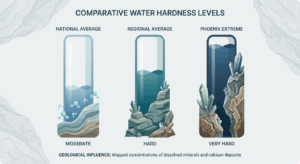
Phoenix has very hard water (over 15 grains per gallon), which leaves significant mineral deposits. On dark, glossy countertops, rapid evaporation in sunny areas amplifies the visibility of these white, chalky spots. While not permanent stains, they can accumulate and dull the surface, requiring regular cleaning with vinegar or scale removers[14].
Organic Stains and Heat:
Heat can "set" organic stains. Oily spills or food residues, if left on a counter and then heated by direct sun or appliance warmth, can oxidize and darken, making them more difficult to remove and potentially causing faint, permanent discolorations. This highlights the importance of prompt cleaning in Phoenix kitchens.
Finish Changes (Gloss vs. Matte):
UV and heat can subtly alter countertop finishes. High-gloss dark surfaces might become slightly less glossy in sun-exposed areas due to microscopic aging of resins or coatings. UV can also yellow resin fillers used in micro-fissures of some granite slabs. Matte finishes, while not showing gloss reduction, tend to highlight fingerprints, smudges, and cleaning streaks more under bright light, which can be an aesthetic concern in sun-filled kitchens[12].
Design and Installation Strategies for Sunlit Kitchens (Phoenix Tips)
Given the severe environmental conditions in Phoenix, thoughtful design and precise installation are crucial for countertop longevity and appearance.- Zone-Specific Material Selection: Using different materials in different kitchen zones is a practical approach. For example, a UV-proof material like porcelain might be ideal for an island directly exposed to western sun, while less sun-intensive areas could use quartz or other materials. Phoenix Home Remodeling, alongside other local designers, often advises clients on material pairings that balance durability with cost and aesthetics.
- Window Treatments: High-quality spectrally selective window films that block over 99% of UV and a significant portion of infrared heat are highly recommended for south- and west-facing windows. These films protect also countertops but also cabinets and flooring from fading. Alternatively, UV-filtering shades or blinds can be used during peak sun hours. Such measures can prevent costly countertop replacement or refinishing.
- Color and Pattern Choice: In areas with direct sunlight, avoiding pure whites or very light solid colors, especially in engineered quartz, is advisable unless the material is specifically rated as UV-stable. Natural white granite or porcelain mimicking marble are better choices for preserving true white tones. Patterned or mixed-color surfaces can help camouflage minor discoloration if it occurs.
- Heat-Resistant Design Features: For areas near cooktops or ovens, integrating heat-resistant sections like stainless steel or ceramic tile inlays can provide practical landing zones for hot items, protecting more sensitive materials like quartz.
- Proper Installation and Expansion Gaps: Due to thermal expansion, installers must leave adequate expansion gaps (e.g., 1/8-inch for a long quartz run) at walls and around appliances. These gaps should be filled with flexible silicone rather than rigid grout. Using elastomeric caulks at backsplash joints also accommodates thermal movement, preventing stress and potential cracking. Experts emphasize these details to prevent thermal warping.
- Strategic Seam Placement: Fabricators should avoid placing seams in high-stress, sun-exposed locations. If unavoidable, UV-resistant adhesives should be used. Lighter-colored seam fillers are also preferred in UV-exposed areas as they may show less degradation than darker pigments.
- Adjusted Maintenance Routines: Countertops in Phoenix require diligent maintenance. This includes quick cleanup of spills (preventing them from "baking" on), frequent drying to prevent hard water spots, use of cutting boards, and more frequent re-sealing of natural stone, potentially twice a year for sun-exposed areas.
Notable Examples
The experiences of homeowners and businesses in Phoenix illustrate these performance characteristics:- Scottsdale Quartz Island Fading (2019): A white quartz island exposed to floor-to-ceiling south windows yellowed visibly (ΔE ~5) within two years. The homeowner replaced it with a sintered stone slab (Dekton), which showed no fading after two years, demonstrating the superior UV stability of ultra-compact surfaces[18][19].
- Gilbert Outdoor Kitchen Failure (2020): An outdoor kitchen with engineered quartz counters saw uneven fading, seam separation (by 1/16 inch), caulking splits, and warping after one summer in 110 °F heat. The quartz was replaced with granite, which showed no damage under identical conditions, underscoring that standard quartz is not suitable for outdoor Phoenix conditions[20][21].
- Phoenix Sunroom Counter Seam Discoloration (2018): A light cream engineered stone counter developed a brown/black seam where it received direct evening sun. Investigation revealed oxidized and grime-baked epoxy. The seam was repaired with UV-resistant acrylic adhesive and a UV-blocking window film, preventing further degradation[12].
- Tempe Restaurant Bar Top Stress Test (2021): A porcelain bar countertop in a restaurant with west-facing glass walls endured daily direct UV, hot plates, and flambé pans for a summer. It exhibited no fading, burns, or stains, validating porcelain's strong durability in demanding, high-heat, and high-sun environments[8][14].
The subsequent sections will explore deeper into the specific performance details of each countertop material, providing quantitative data and visual examples to guide informed decision-making.

2. UV Exposure and Color Stability
The intense solar radiation prevalent in Phoenix, Arizona, presents distinct challenges for kitchen and bath countertop materials. With an average of 9.3 hours of sunshine per day and consistently high UV intensity, materials are subjected to conditions that accelerate aging and can lead to visible changes in color and surface integrity [15]. This section analyzes how common countertop materials respond to prolonged ultraviolet (UV) radiation and direct heat exposure, focusing on color stability, fading, yellowing, and resistance to thermal stress. Understanding these material behaviors is crucial for homeowners and designers selecting countertops suitable for the unique environmental demands of the Phoenix metropolitan area.
The Impact of UV Radiation on Countertop Color Stability
UV radiation initiates chemical changes within certain materials, leading to noticeable alterations in color. This process, often referred to as photodegradation, affects materials differently based on their chemical composition. In Phoenix, where UV exposure is consistently high year after year, these effects become particularly pronounced.
Engineered Quartz: Susceptibility to Fading and Yellowing
Engineered quartz, a popular choice for its aesthetics and ease of maintenance, generally performs well indoors. However, standard indoor quartz countertops are not inherently UV-stable. If exposed to hours of direct Phoenix sunlight each day, they can fade or yellow [1][2]. The visible change in color can occur within 1 to 2 years under significant daily direct sunlight [4]. For example, a white quartz sample exposed to strong sun through a window showed slight yellowing, a color shift (ΔE >3), after approximately 24 months [9]. This change is visibly noticeable, transforming a pure white into an off-white or creamy tint [3]. Darker quartz colors may also lighten slightly, losing some depth of color [16].
The underlying reason for this susceptibility lies in the material's composition. Engineered quartz consists of ground quartz minerals (90-95%) bound together by polymer resins (5-10%) and pigments. UV radiation breaks down these polymer resins and organic pigments. This breakdown leads to resin yellowing or pigment bleaching, causing visible discoloration [17][18]. As one expert observed, "sunlight will affect darn near everything" given enough time, but materials containing plastics or organic binders are more vulnerable [19]. Many quartz brands now explicitly caution against outdoor use due to these issues [9].
In response to these challenges, some manufacturers have introduced "UV-resistant" or "outdoor-rated" quartz lines. These products often include UV inhibitors within their resin formulations. While these newer formulations offer improved UV stability, prolonged exposure can still cause slight color changes over several years [3]. For example, outdoor-rated quartz lines launched around 2020 typically offer limited warranties for color change, often for about 10 years for outdoor use [9]. This indicates that even with enhanced formulations, engineered quartz is not entirely immune to the long-term effects of intense UV exposure in climates like Phoenix.
Natural Stones: High UV Stability
In contrast to engineered quartz, natural stones like granite and marble exhibit high UV stability and show minimal fading in sunny conditions. Granite, composed of crystalline minerals, is largely UV-stable inherently. It shows minimal fading even when installed in strong south-facing windows [4]. Arizona fabricators report few UV color issues with natural stone countertops [4].
Marble is also considered UV-resistant because its mineral composition does not bleach under UV light [5]. However, very long periods of direct sunlight exposure can sometimes lead to slight darkening of marble due to oxidation in rare cases [5]. The minerals in granite and marble are inorganic, making them inert to UV radiation [20]. This chemical difference is why natural stones retain their color better than materials with polymer binders.
Porcelain and Sintered Stone: Impervious to UV
Porcelain slab countertops and other sintered stone materials (also known as ultra-compact surfaces) are characterized by their strong resistance to UV radiation. These materials are engineered by subjecting inorganic raw materials to extreme heat (over 1200 °C) and pressure, fusing them into a dense, non-porous slab [6][7]. This manufacturing process makes them 100% UV-stable. Lab tests on porcelain have shown zero color change (ΔE ~0) even after thousands of hours of UV exposure [9]. Consequently, they do not fade or yellow, even under year-round sun [6].
Their UV imperviousness makes them a preferred choice for sun-exposed areas, including outdoor kitchens in Phoenix [7]. Homeowners near large windows often choose porcelain to avoid sun damage entirely. The popularity of outdoor porcelain counters in Phoenix increased by 30% from 2018 to 2025 as consumers seek "install-and-forget" surfaces for areas with high sun exposure [9].
Other Materials: Varying Degrees of Vulnerability
- Laminate: High-pressure laminates have a melamine wear layer that resists everyday stains. However, they can fade or yellow over years of sun exposure [10]. A 2019 study in Arizona found that a white laminate sample yellowed visibly (ΔE ~4) after just one summer of daily UV exposure [10]. Laminate's market share in Phoenix kitchens has declined partly due to these performance issues in a hot climate.
- Solid Surface (Acrylic): These materials are sensitive to UV. Over time, direct sun can cause slight yellowing, particularly in older solid-surface colors [5].
- Butcher Block (Wood): Wood countertops are highly susceptible to UV damage in Phoenix's dry and intensely sunny conditions. UV rays break down lignin in wood, leading to bleaching of color. An oak butcher block, for instance, can change from a rich brown to a grayish tan in as little as 6 months of sun exposure [11]. This photo-degradation process causes wood to dry out and lose its color [11].
Color Selection and UV Exposure
The choice between dark and light colors for countertops involves a trade-off between heat absorption and visible fading. Both aspects are critical in Phoenix's sunny climate.
Dark vs. Light Colors: Heat and Fade Considerations
Dark countertops absorb more solar heat. A black granite can reach temperatures exceeding 60 °C (140 °F) in direct sun [8]. While dark colors effectively hide UV yellowing, their high heat absorption can lead to discomfort in kitchens and potentially contribute to thermal stress on materials. In July measurements, a black granite patio counter peaked at approximately 63 °C in mid-afternoon, which is hot enough to cause burns [9].
Light-colored countertops, conversely, reflect more sunlight and therefore stay cooler. A white stone may remain between 32-43 °C (90-110 °F) in direct sun [8]. This 20-25 °C temperature difference between dark and light colors highlights the impact of color on surface heat, a relevant factor for indoor counters near windows [9]. However, slight yellowing is more readily visible on white quartz [3][21]. Even a mild color shift can make a pure white quartz appear off-white [22]. Therefore, in sun-drenched Arizona kitchens, lighter colors can reduce heat buildup, but careful material selection for UV stability is paramount to prevent discoloration.
Mitigation Strategies for UV Exposure
To counteract the effects of high UV radiation in Phoenix, several mitigation strategies are recommended:
| Strategy | Description | Impact on Countertops |
|---|---|---|
| UV Window Films/Coatings | High-quality spectrally selective films block >99% of UV and a portion of infrared heat. | Dramatically slows fading and yellowing, protects finishes on all materials. |
| Window Treatments | Using blinds or shades during peak sun hours (e.g., afternoon). | Protects vulnerable materials from direct sun, reducing accumulated UV dose. |
| Material Zoning | Using UV-proof materials (granite, porcelain) in sun-drenched zones and less strong materials in shaded areas. | Balances durability with cost and aesthetic preferences. |
| Architectural Features | Exterior overhangs, awnings, or strategic landscaping to provide shade. | Reduces direct solar intrusion without sacrificing natural light. |
| Color Choice | Selecting white granite or porcelain in sunny areas instead of white quartz to maintain color stability. | Prevents visible yellowing or fading in light-colored counters. |
Standard double-pane low-E windows already filter out a significant portion of UV radiation [23]. However, in Arizona, this may not be sufficient for sensitive materials. Upgrading to a film that blocks approximately 99% of UV can significantly slow any fading without noticeably darkening the room [23]. Simple measures like closing blinds during peak afternoon sun can also protect indoor surfaces [24]. Firms such as Phoenix Home Remodeling often advise clients on these additions as part of a kitchen remodeling design, treating it as a holistic element called "designing for the sun."
Extreme Heat and Thermal Shock
Beyond UV, direct heat and rapid temperature changes (thermal shock) pose additional risks to countertop materials, particularly those with resin binders or specific mineral structures.
Variability in Heat Resistance
Countertop materials vary widely in their ability to withstand high temperatures:
- Porcelain and Sintered Stone: These materials are exceptionally heat-resistant. Manufactured at temperatures exceeding 1000 °C, they are unaffected by hot pans or baking dishes, even those over 204 °C (400 °F) [14][25].
- Granite and Natural Stones: Granite also tolerates high heat well. Hot pots (150-200 °C) can typically be placed on granite without immediate damage [4].
- Engineered Quartz: Due to its resin content, engineered quartz has a lower heat threshold. Its binders begin to soften around 65 °C (150 °F) [13] and can degrade significantly at 150 °C (300 °F) [14]. Placing a baking sheet straight from a 177 °C oven or a hot cast iron skillet can scorch quartz, leaving a brown ring or whitening the resin [26][27]. Consumer tests in 2024 showed quartz surfaces started to discolor after 5 seconds at 180 °C [9].
- Solid Surface (Acrylic): These counters are even more heat-sensitive, with a typical threshold around 100 °C [7]. They can deform or scorch with objects exceeding boiling water temperatures.
- Laminate: Laminate tops are the most heat-sensitive. The surface layers can blister or delaminate at temperatures as low as 135 °C (275 °F) [10]. A brief touch from a 204 °C oven pan can cause irreversible burn marks.
Thermal Shock and Cracking
Thermal shock occurs when a material experiences a rapid temperature change, causing uneven expansion or contraction. In Phoenix, this can happen when a cool indoor counter is suddenly exposed to a very hot object. For example, placing a 260 °C (500 °F) pan on a 20 °C quartz counter causes rapid localized expansion [13]. Quartz is brittle, and this localized expansion creates internal stress. This often leads to cracking in quartz, not just discoloration [13]. Industry data indicates that thermal shock is responsible for approximately 70% of quartz countertop crack incidents in kitchens [13]. These cracks frequently originate around cooktop or sink cutouts, areas already under higher stress [13][13].
Granite is more forgiving but can also crack if the temperature difference is extreme. About 15% of granite failures are linked to sudden large temperature shifts [9].
Even daily temperature swings, where a countertop is sun-heated during the day and cools at night, cause materials to expand and contract repeatedly [12]. This cyclical thermal expansion can lead to warping or hairline cracks in quartz and solid surface materials, particularly at seams if one area is sun-heated and another remains cool.
Seam and Adhesive Durability Under Heat
The adhesives (epoxy or resin) used in countertop seams have heat limits typically around 60-70 °C (140-158 °F) [12]. If an area near a seam consistently reaches these temperatures, either from direct sunlight or appliance heat, the seam can weaken. Field reports from Phoenix note discoloration of seam fillers within 2-4 years in sun-exposed kitchens. The glue lines can turn yellow or black as they oxidize and accumulate dirt [12][12]. In some cases, seams have "popped" or separated when hot objects straddle them.
To prevent these issues, installers in Phoenix increasingly use UV-stable seaming glues rated up to 80 °C [9]. Proper installation practices, such as locating seams away from high-heat areas like cooktops or sunny windows, are also essential. Experienced installers avoid placing seams directly above dishwashers or next to a range when possible. They also ensure adequate cabinet support beneath the countertop, as heat can make materials slightly more prone to sagging, which could stress seams.
Material Showdown: Best Countertops for Phoenix Sun and Heat
Considering both UV exposure and heat tolerance, a comparative analysis of popular countertop materials reveals their suitability for Phoenix kitchens:
| Material | UV Resistance | Heat Resistance | Notes for Phoenix | Recommendation Rating (Sun/Heat) |
|---|---|---|---|---|
| Quartz (Engineered Stone) | Low (standard indoor quartz fades/yellows) [2][10] | Low (degrades ~150 °C) [14][9] | Expect color change in direct sun. Use UV-rated versions or window protection. Requires trivets for hot pans. | Good (with precautions); Best for shaded areas |
| Granite (Natural Stone) | High (UV-stable, minimal fading) [4] | High (withstands >200 °C) [9] | Excellent for sunny spots. Dark colors absorb significant heat (up to 60 °C). Needs sealing (more frequent in Phoenix). | Better |
| Porcelain/Sintered Stone | Excellent (100% UV-stable, no fading) [6][9] | Excellent (withstands >1000 °C) [14][25] | Impervious to Phoenix sun and heat. High cost and specialized installation. | Best |
| Solid Surface (Acrylic) | Low (can yellow in direct sun) [5] | Very Low (scorches ~100-120 °C) [7] | Sensitive to both UV and heat. Best avoided in sunny or high-heat zones. Prone to thermal expansion. | Poor |
| Butcher Block (Wood) | Very Low (fades, dries, splits in sun) [11] | Very Low (scorches easily) [11] | Requires constant oiling and UV-blocking finishes. Not suitable for direct sun or high heat. | Poor |
| Laminate | Low (fades/yellows within a year) [10] | Very Low (blisters ~135 °C) [10] | Fades quickly in sun. Extremely sensitive to heat. Not recommended for direct sun exposure. | Poor |
Quartz (Engineered Stone)
Quartz remains a popular choice for many Phoenix homeowners due to its non-porous nature, ease of cleaning, and wide range of designs [28]. However, its susceptibility to UV fading and heat damage requires careful consideration. Standard indoor quartz is not suitable for areas with intense, direct sunlight, especially on white or light colors [29]. If a homeowner desires quartz, protective measures such as UV window films or shaded installations are necessary. Fabricators in Arizona now routinely inform clients about these limitations to manage expectations. Some homeowners opt to use quartz on shaded island areas while employing a more UV-resistant material like granite or porcelain on counters near windows or patio doors.
Granite (Natural Stone)
Granite stands out for its high UV resistance and heat tolerance. It performs well in outdoor kitchens and sun-drenched indoor areas with minimal fading [30]. Hot pans can be placed on granite in a pinch without immediate damage [4]. The main drawbacks are its porosity, requiring periodic sealing (possibly annually in Phoenix's dry heat), and the fact that dark granite colors can become extremely hot to the touch in direct sun [8]. Many local remodelers, including Phoenix Home Remodeling, recommend granite as a reliable choice for clients seeking a natural stone appearance that can withstand Phoenix conditions.
Porcelain / Sintered Stone (Ultra-compact)
These materials are virtually impervious to UV, heat, and stains, making them an ideal solution for challenging Phoenix environments [6][7]. They are truly "install-and-forget" surfaces even in extreme sun exposure [9]. The ability to place hot items directly on them without concern is a significant advantage [14][25]. The primary disadvantages are higher cost and specialized installation requirements. Despite these factors, porcelain slabs are gaining traction in open-concept kitchens with extensive glazing, providing peace of mind for homeowners concerned about durability in sunny locations.
Stains, Spots, and Finishes Under Desert Conditions
While UV and heat do not directly cause stains, they can exacerbate stain-related issues and alter material finishes.
Stain Performance and Sealing
Engineered surfaces like quartz and porcelain are non-porous and highly resistant to stains [14]. Natural stones like granite, however, are porous and require sealing [4]. In Phoenix, the intense sun and dry air can accelerate the degradation of sealants, making more frequent re-sealing necessary (e.g., twice a year for south-facing granite instead of annually) [4]. The heat can also cause organic spills to "set" or oxidize, making them more difficult to remove. For instance, missed olive oil splatters on light granite, repeatedly heated by sunlight to 50-60 °C, can result in faint yellowish spots that are essentially cooked into the stone.
Hard Water Spots
Phoenix has very hard water, often exceeding 15 grains per gallon in many areas [12]. When water evaporates quickly from a countertop, it leaves behind white mineral deposits (limescale). Sun exposure quickens this evaporation, leading to more pronounced water spots, especially on dark, glossy counters [12]. While not permanent stains, these spots can dull the surface until cleaned, and prolonged exposure to sunlight can "bake on" these minerals, making them more stubborn to remove. Regular wiping and the use of scale removers or vinegar are necessary maintenance steps.
Finish Changes
Repeated UV and heat exposure can subtly alter countertop finishes. High-gloss dark countertops may become slightly less glossy in direct sun due to microscopic changes in any resin or coating [23]. While not always obvious to the naked eye, a gloss meter could detect a decrease in gloss units after extended UV exposure. Conversely, matte finishes, while hiding light reflections, tend to show fingerprints, smudges, and cleaning streaks more under bright light [12]. In a bright kitchen, this can mean more frequent wiping to maintain a clean appearance. Good cross-lighting can help mitigate these visual effects.
Design and Installation Strategies for Sunlit Kitchens in Phoenix
Given the specific climate challenges, effective design and installation strategies are crucial for countertop longevity and performance in Phoenix.
Zoning and Material Selection
A smart approach is to use different materials for different zones in a kitchen. For example, a UV-proof surface like porcelain or granite could be chosen for an island or perimeter counters directly facing a sunny window, while quartz might be used in more shaded areas [24]. This balances durability with budget and aesthetic preferences. Architectural elements like exterior overhangs, awnings, or strategically placed landscaping can also reduce direct solar gain on countertops [24].
Window Treatments and Films
Installing high-quality window films that block over 99% of UV and a portion of infrared heat is a highly effective measure [23]. These films protect also countertops but also cabinets and flooring from fading. If films are not an option, UV-filtering shades or blinds should be used during peak sun hours [24]. Phoenix Home Remodeling often incorporates these suggestions into their kitchen designs, emphasizing a holistic "designing for the sun" approach.
Color Selection and Patterns
In highly sunlit areas, we recommend to avoid pure whites or very light solid colors in materials that are not specifically UV-stable. If a white look is desired, white granite (natural quartzite) or porcelain options that mimic marble are better choices for maintaining color stability [24]. Patterned or mixed-color surfaces can help camouflage minor discoloration more effectively than uniform colors. For areas prone to hot pans, integrating heat-resistant sections like stainless steel inlays or built-in trivet rods into the countertop design is a practical solution [24].
Installation Practices
Proper installation, accounting for thermal expansion, is vital. Installers should adhere to manufacturer-recommended expansion gaps at walls and around appliances, filling these with flexible silicone rather than rigid grout [12]. Failure to do so can lead to bowing or cracking of slabs on hot days [24]. Using elastomeric caulks at joints in backsplashes or perimeter edges allows for movement and prevents stress. Phoenix Home Remodeling highlights these details as crucial for preventing thermal warping issues in the local climate [24].
Seam Placement and Adhesives
Strategic placement of seams, avoiding high-stress locations like areas of concentrated sunlight, is important. When seams must be near windows, using UV-resistant adhesives and lighter-colored seam fillers can prevent darkening or degradation [12]. Ensuring adequate support for overhangs is also critical, as uneven heating can cause subtle sagging over time [24].
Adjusted Maintenance Routines
Maintenance routines must be adapted for Phoenix conditions. This includes prompt wiping of spills (to prevent "baking on" in the sun), keeping surfaces dry to avoid hard water spots, using cutting boards to prevent damage that sunlight might highlight, and more frequent re-sealing of natural stone in sun-exposed areas [24].
Conclusion
Phoenix's intense UV radiation and high temperatures significantly affect countertop performance, necessitating careful material selection and design. While natural stones like granite and especially high-fired materials like porcelain/sintered stone demonstrate excellent UV and heat stability, engineered quartz and other resin-based products require specific mitigation strategies to prevent fading, yellowing, and thermal damage. Understanding these material characteristics and implementing appropriate design and installation practices ensures durability and aesthetic longevity in this challenging climate.
The next section delves into the aesthetic impact of these material behaviors, examining how color shifts and surface changes influence the overall appearance and perceived quality of countertops over time.

3. Heat Resistance and Thermal Shock
The intense solar conditions in Phoenix, Arizona, create a unique challenge for kitchen and bath countertops. Beyond direct sunlight exposure, the region’s high ambient temperatures and significant diurnal temperature swings (day to night) place considerable stress on materials. This section examines how various common countertop materials perform under these thermal loads, focusing on their inherent heat thresholds, their susceptibility to scorching or cracking from hot objects (thermal shock), and the effects of differential thermal expansion, particularly in installations with seams. Understanding these behaviors is critical for selecting durable and aesthetically pleasing countertops for Phoenix homes.
Phoenix experiences an average of 9.3 hours of sunshine per day, with very high UV intensity[15]. This constant solar exposure means that surfaces can reach elevated temperatures even indoors, especially near south and west-facing windows. The research explores how materials respond to sustained radiant heat from the sun and direct contact with hot kitchen implements. It also addresses the performance of adhesive joints and seams, which are often the weakest points in a countertop system under thermal stress. The goal is to provide clear data and insights to help homeowners and designers make informed decisions for kitchens in this demanding climate.
Heat Resistance of Countertop Materials
Countertop materials vary significantly in their ability to withstand high temperatures. This resistance is a crucial factor in Phoenix, where kitchen surfaces can be exposed to both environmental heat and direct contact with hot cooking items.
- Porcelain and Sintered Stone: These materials, also known as ultra-compact surfaces, exhibit excellent heat resistance. Manufactured at extremely high temperatures, often exceeding 1,000 °C, they are designed to be largely impervious to thermal damage[14]. For example, a 204 °C (400 °F) pan placed directly on a porcelain or sintered stone surface would typically cause no discernable damage. These properties make them highly suitable for kitchens with extensive sun exposure or for placement near heat-generating appliances. The inherent thermal stability means they can handle hot pots and pans without trivets, providing a high level of convenience and durability.
- Granite and Natural Stone: Natural stones like granite also possess high heat tolerance. Granite can withstand hot pans exceeding 200 °C (392 °F) with minimal risk of damage[4]. This is due to its natural mineral composition, which does not contain polymeric binders that degrade with heat. While using a trivet is always recommended as a best practice to protect any surface, granite offers a wider margin of safety against accidental hot pan contact compared to many engineered materials. The performance of granite in hot environments is well-established, making it a reliable choice for kitchens in Phoenix.
- Engineered Quartz: Engineered quartz countertops are composed of natural quartz minerals (typically 90-95%) bound by polymer resins (5-10%). It is this resin component that limits its heat resistance. Quartz's polymer binder begins to soften around 65 °C (150 °F)[6] and can degrade significantly around 149 °C (300 °F)[7]. Placing a hot pot or baking tray directly from an oven (which can exceed 177 °C) onto a quartz surface can lead to scorching, discoloration, or even bubbling of the resin[1]. This damage typically manifests as a white or brown ring where the heat contact occurred and is often irreparable. Consumer tests in 2024 showed that quartz surfaces discolored after only 5 seconds of contact with an item at 180 °C, while granite remained unaffected[4]. This highlights the need for consistent use of trivets on quartz surfaces in Phoenix kitchens.
- Solid Surface (Acrylic): Solid surface materials, such as Corian, are primarily acrylic and are even more sensitive to heat than quartz. Their heat threshold is considerably lower, around 100 °C (212 °F)[7]. Contact with items much hotter than boiling water can cause solid surface countertops to scorch, deform, or even melt. This limits their suitability for areas directly adjacent to cooktops or ovens where hot pans might be momentarily placed. In Phoenix's warm climate, even warm items left on the surface can contribute to cumulative stress, leading to potential deformation over time.
- Laminate: Laminate countertops are among the least heat-resistant options. They are constructed by adhering a decorative layer to a particleboard substrate. The melamine wear layer can blister or delaminate from the substrate at approximately 135 °C (275 °F)[7]. A brief contact with a 204 °C (400 °F) oven pan can cause irreversible burn marks. Prolonged exposure to even moderately warm items, like a slow cooker or coffee maker, can also cause localized heat damage. This low heat tolerance makes laminate a poor choice for high-use kitchen areas or surfaces exposed to direct sun in Phoenix.
- Butcher Block (Wood): Wood countertops are susceptible to scorching from hot objects. A hot pan can leave a permanent burn mark or scorch the wood within seconds. While wood can be repaired by sanding, repeated damage can degrade the surface over time. The combination of heat and dryness in Phoenix can also cause wood to lose moisture, leading to cracking and warping, which further impairs its structural integrity and aesthetic.
The following table summarizes the general heat resistance thresholds for popular countertop materials:
| Material | Approximate Heat Threshold for Degradation/Damage | Typical Performance with Hot Pans (200 °C / 392 °F) | Notes for Phoenix Kitchens |
|---|---|---|---|
| Porcelain/Sintered Stone | >1000 °C (1832 °F) | Resistant (no damage) | Excellent for sun-exposed or high-heat areas. |
| Granite/Natural Stone | >200 °C (392 °F) | Highly resistant (minimal risk) | strong choice, often recommended for direct contact areas. |
| Engineered Quartz | ~149 °C (300 °F) (resin degradation) | Risk of scorching, discoloration, cracks | Always use trivets. Sun exposure can increase vulnerability. |
| Solid Surface (Acrylic) | ~100 °C (212 °F) | Risk of scorching, melting, deformation | Avoid hot objects; use only in low-heat zones. |
| Laminate | ~135 °C (275 °F) (blistering/delamination) | Risk of irreversible burn marks, blistering | Very sensitive; use trivets for anything warm. |
| Butcher Block (Wood) | ~120 °C (248 °F) (scorching) | Risk of scorching, burn marks | Requires trivets and regular maintenance to prevent drying/cracking. |
Thermal Shock: The Danger of Rapid Temperature Change
Thermal shock occurs when a material experiences rapid temperature changes, causing differential expansion and contraction within its structure. This can lead to internal stresses that manifest as cracks, particularly in brittle or less homogeneous materials. In Phoenix, thermal shock can happen directly from hot objects or indirectly from extreme temperature variances between sun-exposed and shaded areas of a countertop.
- Quartz Susceptibility: Engineered quartz is particularly vulnerable to thermal shock. While it is hard, its resin content makes it less flexible than natural stone under rapid thermal shifts. Placing a hot pan at 204 °C (400 °F) onto a room-temperature (20 °C) quartz surface creates a localized hot spot that expands much faster than the surrounding cooler material. This sudden expansion creates high stress, often leading to cracks[11]. Industry data suggests that thermal shock is responsible for approximately 70% of quartz countertop crack incidents in kitchens[11]. These cracks often originate at points of existing stress concentration, such as corners of sink or cooktop cutouts, even with improved fabrication techniques like rounded corners.
- Granite and Natural Stone: Granite is more resistant to thermal shock than quartz due to its uniform mineral composition and lack of polymer binders. However, extreme and sudden temperature differences, such as pouring ice water onto a very hot granite surface, can still cause cracking. Approximately 15% of granite failures are linked to sudden extreme temperature shifts[6].
- Other Materials: Porcelain and sintered stone are highly resistant to thermal shock due to their manufacturing process at extremely high temperatures. Solid surface and laminate materials are more likely to scorch or deform before thermal shock cracking becomes the primary failure mode. Butcher block can split or crack due to rapid drying and contraction in response to heat.
The daily cycle of intense daytime heat and cooler desert nights can also create stresses. Imagine a large countertop partially exposed to direct sunlight through a window, while another part remains in shade. The sun-warmed section expands, while the shaded section stays cooler. This differential expansion can subtly stress areas, leading to potential long-term issues like seam separation or hairline cracks, especially in materials with lower inherent flexibility like quartz.
Thermal Expansion and Its Impact on Seams and Adhesives
All materials expand when heated and contract when cooled. The extent of this change, known as the coefficient of thermal expansion, varies by material. In Phoenix, where surface temperatures can fluctuate significantly (e.g., a dark countertop hitting 60 °C (140 °F) in direct sun[5]), these expansion and contraction cycles can cause stress, particularly at seams and adhesive joints.
- Adhesive Heat Limits: The epoxy or resin adhesives used to create countertop seams typically have heat limits ranging from 60-70 °C (140-158 °F) according to manufacturer specifications[6]. If a section of the countertop near a seam regularly reaches or exceeds these temperatures, either from sun exposure or from a heat-generating appliance, the adhesive can soften, discolor, or degrade over time.
- Seam Discoloration and Weakening: Field reports from Phoenix homes indicate that seam fillers in sun-exposed kitchens can discolor within 2-4 years, often turning yellow or even black as the adhesive oxidizes and traps grime[6]. This is particularly noticeable with lighter-colored countertops. When adhesives soften, the seam can weaken, potentially leading to separation or slight gaps. In one reported case, a U-shaped kitchen counter in Phoenix showed a seam near a west-facing window turning brown/black after a few years due to the baking effect of direct sunlight on the epoxy filler[6].
- Differential Expansion at Seams: If one side of a seamed countertop is exposed to direct intense sunlight and the other is not, the differential expansion can put stress on the joint. Engineered quartz and solid surface materials, with their polymer content, are more susceptible to warping or hairline cracks at seams due to these temperature differentials.
- Mitigation Strategies: To address these challenges, fabricators in Phoenix often employ specific strategies:
- UV-Stable Adhesives: Using specially formulated UV-stable seaming glues, which are rated for higher temperatures (up to 80 °C) and are more resistant to yellowing, is a common practice near sun-exposed areas.
- Strategic Seam Placement: Installers aim to avoid placing seams in high-stress zones, such as areas directly under a skylight or immediately adjacent to a cooktop or oven. Fabricators at Phoenix Home Remodeling and other local firms understand the importance of thoughtful seam placement.
- Expansion Gaps: Proper installation includes leaving manufacturer-recommended expansion gaps at walls and around cutouts for sinks and cooktops. These gaps, typically 1/8 inch, are filled with flexible silicone sealant, allowing the material to expand and contract without undue stress. Failure to provide these gaps can lead to bowing or cracking of the countertop.
- Elastomeric Caulks: Using elastomeric caulks at backsplash joints ensures that these connections remain flexible and can absorb movement caused by thermal expansion and contraction.
Countertop Surface Temperatures in Direct Sun
The color of a countertop significantly influences its surface temperature when exposed to direct sunlight. This is a critical factor in Phoenix, where indoor surfaces near windows can absorb a considerable amount of solar radiation.
- Dark Countertops: Dark-colored countertops absorb more solar energy than lighter ones. A black granite countertop in direct Phoenix sun can reach 60 °C (140 °F) or more[5]. Measurements on a black granite patio counter in July showed it peaking at approximately 63 °C (145 °F) in mid-afternoon, which is hot enough to cause burns if touched directly. This significant heat absorption can contribute to the overall heat load within a kitchen, potentially affecting room temperature and air conditioning efficiency.
- Light Countertops: Lighter-colored countertops reflect more solar radiation, staying cooler. A light beige granite in direct sun may only reach around 38 °C (100 °F)[5]. This 20-25 °C temperature difference between dark and light surfaces highlights the importance of color choice, not just for aesthetic reasons but also for thermal performance. While lighter colors stay cooler, white quartz can show slight yellowing more visibly on sun-exposed areas[1].
The internal heat buildup in darker materials can also accelerate the degradation of organic binders in engineered materials, even if the material is not directly in contact with a hot pan. This absorbed heat contributes to overall material stress and can exacerbate UV-related issues over time.
Stains, Spots, and Finishes Under Desert Heat
Heat does not directly cause stains, but it can affect a countertop's susceptibility to staining and the appearance of finishes. Phoenix's dry heat conditions can also pose unique challenges for maintenance.
- Sealer Degradation: Natural stones like granite and marble require periodic sealing to maintain their stain resistance. In Phoenix's hot and dry climate, heat and UV radiation can accelerate the degradation of these sealers. This means granite or marble in sun-exposed areas may need to be re-sealed more frequently than in milder climates, possibly annually instead of every 2-3 years[4]. If the sealer degrades, the stone becomes more porous and susceptible to absorbing spills, leading to stains.
- Organic Stain Setting: Heat can "set" organic stains. If an oily spill or food residue is left on a countertop and the area gets hot (e.g., from direct sun or near an oven), the heat can cause the substance to oxidize and penetrate the surface more deeply, making it harder to clean. This effect is more pronounced on porous materials or those with degraded sealers. Regular cleaning is vital in Phoenix to prevent these types of "baked-in" stains.
- Hard Water Spots: Phoenix has extremely hard water (over 15 grains per gallon)[12]. When water evaporates, it leaves mineral deposits (limescale). On dark, glossy countertops, these white, chalky spots are very noticeable. In sun-exposed areas, faster evaporation due to heat exacerbates the problem, leading to more pronounced and rapidly forming water spots. While not permanent stains, these spots require frequent cleaning with mild acidic solutions like vinegar to maintain the countertop's appearance.
- Finish Alterations (Gloss vs. Matte): Prolonged heat and UV can subtly alter the finish of some countertops. A high-gloss finish, especially on engineered quartz, might experience a slight reduction in gloss units over many years of intense exposure, as the resin surface ages. Matte or honed finishes, while not showing gloss reduction, can highlight smudges and cleaning streaks more under bright light, which is abundant in Phoenix kitchens. Homeowners might prefer polished finishes in sunny areas as they can appear cleaner, despite potential glare.
Conclusion of Heat Resistance and Thermal Shock
The performance of countertops under thermal stress in Phoenix is a critical consideration. Engineered quartz is particularly susceptible to heat damage and thermal shock due to its resin content, requiring diligent use of trivets and careful placement away from direct sun and high heat sources. Natural stones like granite, and especially porcelain and sintered stone, offer superior heat resistance and thermal stability, making them strong choices for this challenging climate. The integrity of seams and adhesives is also compromised by heat, necessitating specific installation practices and material choices to ensure long-term durability and aesthetic appeal. Fabricators and homeowners must account for both direct contact heat and ambient solar heat when selecting and installing countertops in Phoenix kitchens to prevent premature damage and dissatisfaction.
The subsequent section will explore deeper into the long-term impact of UV exposure, exploring how different materials respond to fading and discoloration under the pervasive Phoenix sun.

4. Seams and Adhesives Under Stress
Countertops are often seen as single, monolithic surfaces, but in many kitchen and bath installations, they are composed of multiple slabs joined together. These junction points, known as seams, rely heavily on adhesives to maintain structural integrity and a visually appealing finish. In a demanding environment like Phoenix, Arizona, where extreme temperatures and high UV exposure are common, the performance of these seams and their associated adhesives becomes a critical factor in the long-term durability and appearance of a countertop. This section explores how the intense local conditions affect countertop seams and adhesives, detailing issues such as discoloration, weakening, and separation, and highlighting strategies for mitigation.
The daily thermal cycles in Phoenix, characterized by hot days and cooler nights, cause materials to expand and contract. This constant movement places significant stress on countertop adhesives. Quartz and solid-surface materials, in particular, are susceptible to warping or hairline cracks at seams if one section is heated by the sun and an adjacent section remains cool, leading to differential expansion [25]. The glues used in countertop seams, typically epoxy or resin-based, have specific heat limits. If an area near a seam consistently reaches temperatures above 65 °C, the adhesive can soften, discolor, or weaken over time [26], [27]. This can lead to unsightly changes in appearance and, in severe cases, structural compromise of the seam itself.
4.1 Adhesive Heat Sensitivity and Discoloration
The adhesives used to bond countertop sections play a crucial role in the seam's resilience. These adhesives are primarily epoxy or polyester resin-based compounds. Research indicates that these types of adhesives possess heat limits typically ranging from 60 °C to 70 °C (140 °F to 158 °F), as specified by manufacturers [27]. When areas of a countertop, particularly those near seams, are consistently exposed to temperatures exceeding these thresholds, the adhesive material can begin to degrade. This degradation is often first observed as discoloration.
Field reports from Phoenix indicate that seam fillers in sun-exposed kitchens can show noticeable discoloration within 2 to 4 years [26]. This discoloration often manifests as a yellowing or even blackening of the glue lines. This occurs due to oxidation of the adhesive components, expedited by the high temperatures. The problem is particularly pronounced in light-colored quartz countertops where a yellowed seam stands out sharply against the rest of the surface. For example, a homeowner in Phoenix observed the seam in her cream-colored engineered stone countertop turning brown or black after a few years. The area affected was near a west-facing window, directly exposed to the evening sun [67]. The local fabricator determined that the two-part epoxy had oxidized and collected grime, effectively "baking" in the sun. This led to an unprofessional and unsightly appearance.
The issue is a combination of heat and UV exposure. While manufacturers offer UV-stable seaming glues rated for temperatures up to 80 °C, these specialized adhesives are not always used in standard installations. Modern practice among Phoenix installers now includes the use of these higher-performance adhesives when seams are located near bright windows, acknowledging the specific environmental challenges of the region [27]. This shift in material choice helps to extend the aesthetic and structural lifespan of the seams. Fabricators also understand that using lighter-colored seam fillers can help to mask potential future discoloration, or at least make it less apparent than with darker, heat-absorbing pigments.
4.2 Thermal Expansion and Seam Separation
Phoenix's climate is characterized by significant diurnal temperature swings. During the day, particularly with intense direct sun exposure, countertop surface temperatures can reach 60 °C (140 °F) or more [10]. Correspondingly, night temperatures can drop by over 20 °C. This constant cycle of heating and cooling causes materials to expand and contract. For countertop slabs, this thermal movement can place considerable stress on seams and their adhesives [25].
Quartz and solid-surface countertops are particularly susceptible to issues arising from thermal expansion. These materials can warp or develop hairline cracks at seams if one part of the countertop is directly heated by the sun while an adjacent section remains cool. This differential heating causes uneven expansion, leading to internal stresses. The polymer resins in quartz can start to soften around 65 °C (150 °F) [19], which is a temperature easily reached in Phoenix sunlight. If the adhesive in the seam softens, its ability to hold the expanding and contracting slabs together is compromised.
One notable example of seam failure due to thermal stress occurred in an outdoor kitchen in Gilbert. An engineered quartz countertop, despite being warned against outdoor use, was installed. After just one summer, the dark gray quartz faded unevenly, and the material's expansion and contraction in 110 °F heat caused a seam to open by 1/16 inch, with the caulking splitting. This led to visible yellowing, a widening seam, and a slight warp [66]. This case highlights how thermal expansion can lead to structural failures in seams when materials are exposed to extreme temperature variations.
Beyond natural solar heating, household appliances also contribute to thermal stress on seams. Hot objects placed directly on or straddling a seam, such as slow cookers or hot baking trays, can cause localized heating that leads to softening of the adhesive. This can result in seams "popping" or separating. Installers mitigate this by strategically placing seams away from high-heat zones like cooktops or dishwashers where sustained heat can weaken the bond. Furthermore, precise installation techniques such as leaving adequate expansion gaps at walls and around appliances, and using elastomeric caulks, are essential to allow for material movement without stressing the seam [42]. These silicone or other flexible sealants absorb movement, ensuring that joints remain pliable as temperatures change.
4.3 Seam Placement and Design Considerations
The strategic placement of seams is a crucial design consideration in Phoenix kitchens. Designers aim to avoid seams in aesthetically or structurally vulnerable areas. For instance, a seam should not be placed where direct sunlight through a skylight or a large window consistently focuses, as this concentrates the combined effects of UV and heat [43]. If a seam must be located near a window, the use of UV-resistant adhesives is imperative. Furthermore, lighter-colored seam fillers are preferable in such high-exposure areas, as they tend to absorb less heat and any minor discoloration is less noticeable than it would be with darker pigments [43].
The type of countertop material also influences seam performance. Porcelain and sintered stone, due to their manufacturing process involving firing at extremely high temperatures (around 1200 °C), are virtually immune to thermal expansion issues at typical kitchen temperatures [23]. Their seams, when installed with appropriate adhesives, are inherently more stable in hot environments. Natural stones like granite also handle heat well, but careful seam placement and proper support are still important to prevent issues related to the slab's weight and potential for localized heating.
For large overhangs, such as those found on breakfast bars or islands, thoughtful support is necessary. If one side of an overhang is subjected to heating while the other remains cool, differential expansion can lead to slight sagging or warping. Metal brackets or other strong support structures must be correctly installed to maintain levelness, even if the countertop material expands or contracts [43].
Professional installers in Arizona are increasingly aware of these local challenges. Phoenix Home Remodeling and other reputable firms emphasize careful planning and installation methods. They often recommend specific seam layouts that minimize exposure to harsh conditions and always use high-performance, weather-appropriate adhesives. This proactive approach helps to ensure the longevity and appearance of countertop installations in demanding environments.
4.4 Impact on Long-Term Appearance and Maintenance
The integrity and appearance of countertop seams are vital for overall customer satisfaction. Discolored or separating seams can significantly detract from the beauty of an otherwise high-quality countertop. In Phoenix, where sunlight is abundant and intense, these issues can appear more quickly than in milder climates.
The impact of heat on adhesives is not just cosmetic. Softened adhesives can allow for slight movement between countertop sections, potentially creating micro-gaps where grime, bacteria, or moisture can accumulate. This compromises the hygienic properties of the surface, which is a concern for food preparation areas (per NSF-51 guidelines). While the adhesive itself might not leach harmful substances, a compromised seam allows for unsanitary conditions.
Regular maintenance is also affected. Discolored seams are harder to clean effectively and may require specialized products to remove oxidized material or embedded dirt. If a seam separates, it might require costly professional repair or even full section replacement. As seen in the Scottsdale example, a homeowner chose to replace an entire island top after just two years due to seam discoloration and fading [65].
To preserve seam integrity and appearance, homeowners should be mindful of practices that reduce thermal stress. This includes using window films or blinds to manage direct sun exposure on seamed areas during peak hours [41]. Trivets or hot pads should be employed for any hot items, especially if placed near or straddling a seam [30]. Regular visual inspection of seams can help identify early signs of discoloration or weakening, allowing for timely intervention before more substantial damage occurs.
4.5 Best Practices for Seams and Adhesives in Phoenix
Given the specific challenges presented by the Phoenix climate, several best practices for countertop seams and adhesives have emerged:
- Material Selection: For critical areas with high sun and heat exposure, prioritize materials with inherent thermal stability, such as porcelain/sintered stone or natural granite. These materials place less stress on seam adhesives compared to resin-bound alternatives.
- Adhesive Choice: Always specify and use high-performance, UV-stable, and heat-resistant adhesives for seams, especially in areas prone to direct sunlight or localized heat sources. These specialized glues are designed to resist discoloration and maintain bond strength under adverse conditions.
- Seam Placement: Strategic layout planning is essential. Avoid placing seams directly under skylights, beside west-facing windows, or immediately adjacent to cooktops and dishwashers. If these placements cannot be avoided, additional protective measures, such as the use of advanced adhesives and enhanced support, are critical.
- Expansion Gaps: Ensure that installers leave adequate expansion gaps between the countertop and walls or appliances, filling these with flexible, elastomeric caulks. This accommodates thermal movement, reducing stress on seams and preventing cracking or warping.[42]
- Window Treatments: Advise homeowners to consider UV-blocking window films or shades for windows that illuminate countertop seams. This reduces both UV degradation of the adhesive and thermal loading on the countertop material.
- Support for Overhangs: Overhangs, especially in sun-exposed areas, need strong support to prevent sagging caused by differential expansion. Structural brackets or other supports should be thoughtfully placed.
- Homeowner Education: Homeowners must be educated on the specific vulnerabilities of their chosen countertop material and its seams. Instructions on using trivets for hot items and promptly wiping spills, particularly around seams, are essential maintenance practices.
By implementing these practices, the longevity, aesthetics, and structural integrity of countertop seams in Phoenix can be significantly improved, ensuring that these surfaces withstand the harsh desert environment effectively.
The next section of this report will discuss the impact of hot pans on countertop finishes, examining how surface materials react to direct heat from cookware over time.

5. Stain Resistance and Surface Finishes
Countertop performance in Phoenix, Arizona, extends beyond initial appearance and structural integrity. The desert environment presents specific challenges to a countertop's stain resistance and the durability of its surface finishes. Intense ultraviolet (UV) radiation and high temperatures can affect how well a material repels common kitchen stains, how quickly hard water leaves visible deposits, and whether its original sheen or color consistency holds over time. This section examines these factors for popular countertop materials, providing homeowners and professionals with guidance on material selection and maintenance in this demanding climate.
Effect of UV Exposure on Stain Resistance and Finishes
UV radiation, prevalent in Phoenix with its average of 9.3 hours of sunshine daily, affects surfaces in various ways. While UV exposure does not directly cause staining from external substances, it can degrade the materials themselves or protective coatings, which then makes them more vulnerable to stains or alters their appearance.
Degradation of Materials and Sealants
Natural Stones: Granite and marble, while largely UV-stable in terms of color retention, rely on sealants to maintain their stain resistance. UV rays can break down the polymer chains within these sealants. In Phoenix's dry heat and strong sun, sealants on granite countertops may degrade faster, requiring more frequent application. For example, a south-facing granite windowsill might need re-sealing twice a year instead of the typical annual or bi-annual schedule recommended in less sunny climates. If the sealant wears off, the granite becomes more porous and susceptible to absorbing liquids like red wine or cooking oils, potentially leading to stains that were previously repelled [8].
Engineered Quartz: Engineered quartz countertops are non-porous due to their resin content, making them inherently stain-resistant [23]. However, the resin binder in quartz is susceptible to UV degradation. While this primarily causes yellowing or fading of the material itself, a severely degraded resin binder could theoretically affect surface smoothness, creating micro-fissures that might trap stains over time. However, this is less common than simple discoloration.
Solid Surface: Acrylic-based solid surface materials are also non-porous and generally stain-resistant. Like quartz, their polymer composition makes them vulnerable to UV. Prolonged sun exposure can cause yellowing or discoloration, particularly in older formulations or lighter colors. This color change can make any subsequent stains appear more prominent or alter the perceived color of the stain. The integrity of the surface itself, however, usually remains resistant to absorption.
Color and Finish Changes Due to UV
Quartz: Standard indoor quartz may fade or yellow if exposed to direct Phoenix sunlight for several hours daily [1]. This is clearly seen in white quartz, which can turn to a cream or yellow tint over one to two years of daily exposure [29], [30]. This color shift, measured as a Delta E (ΔE) greater than 3, is visually noticeable [3]. For example, a homeowner in Scottsdale replaced a white quartz island that yellowed visibly (ΔE ~5) after two years in direct sun with a sintered stone slab [51]. Newer UV-resistant quartz lines contain inhibitors, but prolonged exposure can still cause minor color changes over years [3]. Darker quartz colors might absorb more UV energy but can also hide subtle fading longer [33].
Natural Stones (Granite, Marble): Granite is largely UV-stable and shows minimal fading even in strong south-facing windows [5]. Its minerals are inorganic and resistant to UV degradation [32]. Marble is also UV-resistant; its minerals do not bleach [6]. Oxidation can darken marble in rare cases [6]. Arizona fabricators report few UV color issues with natural stone [7]. However, marble is prone to etching by acidic substances, and bright light can highlight these etched spots [16], [17].
Sintered Stone and Porcelain: These materials are impervious to UV. Porcelain slab countertops will not fade or yellow, even with year-round sun [8]. Engineered at temperatures above 1200 °C, they are 100% UV-stable [9]. Lab tests show zero color change (ΔE ~0) after thousands of hours of UV exposure [39]. This makes them ideal for sun-exposed areas [8].
Laminate: Laminate surfaces, while offering good stain resistance from their melamine wear layer, can fade or yellow over years of sun exposure [18]. An Arizona study found a white laminate sample visibly yellowed (ΔE ~4) after one summer of daily UV exposure [18].
Butcher Block: Wood counters fade and dry out in Phoenix. UV rays break down lignin, causing bleaching. An oak butcher block may turn from brown to grayish tan in six months of sun exposure [19]. Regular oiling and UV-blocking finishes are required.
Impact on Gloss Levels
UV radiation and heat can affect the gloss of countertop finishes. A high-gloss dark countertop may become slightly less glossy in areas with repeated UV exposure. This microscopic change is often due to the aging of resins or surface coatings [46]. For quartz, prolonged UV may slightly reduce shine. A gloss meter could detect a drop in gloss units after 1,000 hours of UV exposure [46]. Matte finishes, conversely, do not show gloss reduction but are prone to showing fingerprints, smudges, and cleaning streaks more under bright light [45].
Hard Water Spots and Mineral Deposits
Phoenix has very hard water, often over 15 grains per gallon [22]. This is among the highest in the U.S. When water containing these minerals evaporates on surfaces, it leaves white, chalky deposits (limescale or carbonate). On dark, glossy countertops, these spots are particularly noticeable. In sun-exposed areas, the high heat accelerates evaporation, making water spots more pronounced [22]. Splashes around a sink near a window can quickly evaporate, leaving calcium residue if not wiped immediately. These spots are not permanent stains; they can be removed with vinegar or specialty cleaners [44]. However, if left for long periods, especially under intense sun, they can become dried onto the surface, requiring more effort to remove.
| Material | Initial Visibility | Effect of Sun/Heat on Spotting | Mitigation |
|---|---|---|---|
| Dark Polished Granite/Quartz | High | Accelerates evaporation, making spots more frequent and noticeable. Sun can "bake on" minerals. | Wipe dry immediately after use. Use stone-safe mineral removers. Consider water softener. |
| Light Granite/Quartz (Polished) | Medium | Accelerates evaporation, but spots are less visible due to lighter background. | Regular wiping. |
| Matte Finishes (all types) | Medium | Spots can appear hazier rather than distinct. Requires more wiping to achieve streak-free look. | Frequent cleaning with specific matte surface cleaners. |
| Solid Surface | Medium | Can show residue, but typically non-porous surface makes cleaning easy. | Wipe down regularly. |
| Porcelain/Sintered Stone | Similar to dark polished surfaces. | Non-porous nature makes spots sit on top, but sun can still accelerate drying. | Easy to clean. Wiping with a damp cloth prevents residue buildup. |
Sensitivity to Acidic Substances and Organic Stains
Acidic substances primarily affect natural stones like marble, and to a lesser extent, natural quartzite. Engineered materials like quartz, porcelain, and solid surface are generally resistant to etching from acids.
Marble and Etching
Marble is composed of calcium carbonate, which reacts with acids. Lemon juice can cause visible dull etch marks on marble within two minutes of contact [16]. This is not directly related to UV or heat, but in a bright Phoenix kitchen, spills of wine, citrus, or vinegar followed by rapid drying from heat or sun can make these etch marks more pronounced and highlighted by the intense light. Phoenix Home Remodeling and other local firms often recommend against marble in sunny kitchens because of its susceptibility to etching [16]. The demand for marble in Arizona kitchens has decreased by 5% from 2018 to 2025 as homeowners prefer more durable options [17].
Organic Stains and Heat
While UV and heat do not cause stains, heat can accelerate or set them. If an oily spill is not cleaned quickly and the area is then exposed to heat (either from sunlight or a nearby appliance), the heat can cause the oil to oxidize and darken. This can result in a faint yellowish or brownish spot that becomes harder to remove. For instance, olive oil splatters missed on light granite, when heated repeatedly by sunlight to 50-60 °C, can cook into the stone [47]. Sugar from spilled juice can caramelize in the sun, making it stickier and more likely to discolor the surface. Regular and prompt cleaning is essential to prevent these issues in the Phoenix climate.
Food Safety and NSF Considerations
The NSF-51 standard outlines requirements for food contact surfaces, ensuring they do not leach harmful substances and are easily cleanable. Most new countertop materials, such as quartz, solid surface, and stainless steel, meet this standard. However, the effects of UV and heat aging can raise questions about long-term food safety.
Surface Integrity: UV or heat aging can lead to microscopic surface roughness or hairline cracks, particularly in polymer-based materials like quartz or solid surface. These small imperfections could theoretically harbor bacteria [49]. For example, a small scorched pit on a solid surface near a stove could collect dirt. It is important to repair or renew damaged spots to maintain a smooth, sanitary surface.
Material Stability: Natural stone and porcelain remain stable under heat and UV and do not become unsafe. While quartz resin may yellow over time, there is no evidence to suggest it becomes unsafe for food contact. The primary concern is maintaining the physical integrity of the surface to ensure proper cleaning and hygiene.
Sealing for Natural Stones: For porous materials like granite, maintaining a strong sealant is critical for food safety, as it prevents liquids and bacteria from being absorbed into the stone. The accelerated degradation of sealants in Phoenix conditions means more frequent reapplication is necessary to maintain this protection.
Mitigation Strategies and Best Practices
Considering the intense UV and heat in Phoenix, several strategies can help preserve countertop stain resistance and finishes:
Material Selection
Porcelain/Sintered Stone: For areas with direct, intense sun exposure (e.g., near large south or west-facing windows, outdoor kitchens), porcelain or sintered stone is the safest choice due to its imperviousness to UV, heat, and stains [42]. Phoenix Home Remodeling and other local firms often recommend this for sun-heavy areas.
Granite: A reliable option for sun-exposed areas, granite is UV-stable and heat-resistant [37]. Its natural variation can also help camouflage minor surface imperfections. However, it requires regular sealing to maintain stain resistance, which might be more frequent in Phoenix.
Quartz: Given its susceptibility to UV and heat damage, standard quartz is better suited for shaded areas of the kitchen. If used near windows, consider UV-resistant quartz lines or implement strong mitigation measures [34].
Design and Installation
Window Films and Treatments: Applying high-quality spectrally selective window film that blocks over 99% of UV rays and reduces infrared heat can significantly protect countertops from sun damage [35]. Alternatively, using UV-filtering blinds or shades during peak sun hours [36] can help. These measures protect also countertops but also cabinets and flooring from fading.
Strategic Layout: Design kitchens to place UV and heat-sensitive materials away from direct sunlight. Consider using different countertop materials in different zones of the kitchen [55]. For example, a porcelain slab might be used for an island exposed to direct sun, while quartz is used on perimeter counters in shaded areas.
Expansion Gaps and Adhesives: Proper installation with adequate expansion gaps and the use of UV-stable, flexible sealants are crucial to prevent issues like seam separation or warping due to thermal expansion and contraction [50]. Adhesives near sun-exposed seams should be rated for high temperatures and UV resistance to prevent discoloration and weakening [53].
Maintenance Practices
Prompt Cleaning: Wipe spills immediately, especially acidic or oily substances, to prevent them from setting or etching the surface. In Phoenix, rapid evaporation means liquids left on counters will dry quickly, leaving residues or setting stains.
Regular Drying: After use or cleaning, promptly dry countertops, particularly dark, glossy ones, to minimize hard water spots. Using a water softener for household water can also reduce mineral deposits.
Use Trivets and Hot Pads: Always use trivets or hot pads for hot pots and pans on quartz, solid surface, laminate, and butcher block to prevent scorching and thermal shock cracking [38]. Even granite, while heat-resistant, benefits from trivets to prevent localized extreme heat buildup.
Frequent Sealing: For natural stones, follow a more frequent sealing schedule than recommended for milder climates, especially for areas under direct sun.
Phoenix's intense UV and heat conditions demand careful material selection and diligent maintenance for countertops. While UV and heat do not directly stain surfaces, they can degrade materials and protective layers, making them vulnerable to common kitchen spills and hard water. Manufacturers provide data on UV stability, and materials like sintered stone and natural granite stand out for their performance. Engineered quartz has limitations, while solid surface, laminate, and butcher block require significant protective measures.
By understanding these effects and implementing appropriate mitigation strategies, including informed material choices, protective window treatments, and adapted maintenance routines, homeowners can ensure their countertops remain functional and aesthetically pleasing for years. Phoenix Home Remodeling and similar local experts guide clients toward making sun-smart choices to achieve durable and beautiful kitchen surfaces.
The next section will focus on the broader impact of thermal expansion and contraction on countertop integrity, including seams and overhangs.

6. Material Performance Comparison
Selecting countertop materials for kitchens in Phoenix, Arizona, requires careful consideration of local environmental factors. The region experiences intense daily sunlight and high temperatures throughout much of the year. These conditions can profoundly affect the durability, appearance, and longevity of various countertop materials. This section provides a detailed comparative analysis of popular countertop materials, assessing their performance against the specific challenges posed by Phoenix’s unique climate. The analysis focuses on UV stability, heat resistance, thermal shock, and issues related to seams, adhesives, stains, and finishes. Understanding these material properties is crucial for making informed choices that ensure long-term satisfaction and performance in a sun-drenched, high-heat environment.
UV Exposure: Fading and Yellowing in Phoenix Sunlight
Phoenix, Arizona, experiences an average of 9.3 hours of sunshine per day, with high UV intensity [15]. This constant solar exposure puts stress on materials, accelerating aging. The impact of UV radiation varies significantly by countertop material, primarily due to their chemical compositions. Visible changes, such as fading or yellowing, can occur quickly in susceptible materials.
UV Stability of Different Materials
- Quartz (Engineered Stone): Standard indoor quartz countertops are susceptible to fading or yellowing when exposed to hours of direct Phoenix sunlight [1][2]. This can happen within one to two years of daily direct sunlight exposure [4]. Visible yellowing, particularly on white quartz, has been observed. For example, a white quartz countertop exposed to strong sun through a window showed slight yellowing after approximately 24 months, with a color change (ΔE) greater than 3, which is visibly noticeable [4]. The resins and organic pigments used in quartz are broken down by UV radiation, leading to discoloration [3]. Some manufacturers now offer UV-resistant quartz lines, which include UV inhibitors. However, even these newer products typically carry limited warranties against color change, often around 10 years for outdoor use [4].
- Natural Stones (Granite and Marble): Natural stones perform well under UV exposure. Granite is largely UV-stable and shows minimal fading even in strong south-facing windows [2][4]. Its crystalline minerals are inorganic and generally inert under UV [3]. Marble is also UV-resistant, as its minerals do not bleach [3]. Arizona fabricators report few UV color issues with natural stone counters [4].
- Porcelain and Sintered Stone: These materials are designed to be impervious to UV radiation. Manufactured at temperatures exceeding 1200 °C, porcelain slab countertops and sintered stone will not fade or yellow, even with year-round intense sun exposure [7][8]. Lab tests confirm zero color change (ΔE ~0) after thousands of hours of UV exposure for these materials [8]. This makes them highly suitable for sunny areas, and their popularity for sun-exposed kitchens and outdoor applications in Phoenix has increased significantly, rising by 30% from 2018 to 2025 [8].
- Laminate: Laminate surfaces, while budget-friendly, can fade or yellow over years of sun exposure [10]. A 2019 study in Arizona found a white laminate sample visibly yellowed (ΔE ~4) after one summer of daily UV exposure, unlike a UV-treated sample which showed minimal change (ΔE <1) [10].
- Solid Surface (Acrylic): Solid surface counters are sensitive to UV. Direct sun can cause slight yellowing, particularly in older installations or lighter colors [3].
- Butcher Block (Wood): Wood counters will fade and dry out in Phoenix conditions. UV rays break down lignin in wood, leading to bleaching. An oak butcher block, for example, changed from rich brown to a grayish tan after six months of sun exposure [11].
Color and UV Fading
The color of a countertop also influences how UV effects are perceived. Darker countertops absorb more solar heat but may hide slight fading better than lighter colors. Light or white counters, while staying cooler by reflecting more light, show even subtle yellowing more readily [2][3]. A mild shift can turn a pure white into an off-white that is clearly visible [3].
Mitigation Strategies
- Window Treatments: UV window films or specialized coatings can block the majority of UV rays. Standard low-E windows filter a portion of UV, but typically not enough for sensitive materials in Phoenix. High-quality films blocking over 99% of UV can significantly slow fading [14]. Closing blinds or shades during peak sun hours also protects surfaces [14].
- Material Selection: Prioritizing UV-resistant materials like natural granite, porcelain, or specialized outdoor-rated quartz for areas with direct sun exposure is a practical approach. Phoenix Home Remodeling often recommends granite or porcelain for sun-heavy areas [4].
- Zoning: Designing kitchens with different materials for different zones can be effective. For example, a UV-proof material for an island receiving direct sun, and standard quartz for shaded perimeter counters.
Extreme Heat and Thermal Shock: Countertops versus High Temperatures
Phoenix's high ambient temperatures, combined with localized heat from cooking, can severely test countertop materials. Thermal expansion and contraction can lead to cracking, warping, and damage to seams and adhesives.
Heat Resistance of Materials
- Porcelain and Sintered Stone: These materials offer superior heat resistance. They are manufactured at extreme temperatures (over 1000 °C), making them unaffected by hot pans or baking dishes, even those exceeding 200 °C (392 °F) [13].
- Granite: Natural granite can withstand hot pans exceeding 200 °C (392 °F) with minimal risk [4]. Placing a 180 °C baking tray on granite rarely causes damage.
- Quartz: Engineered quartz has a lower heat tolerance due to its resin binder. The resin starts to degrade around 149 °C (300 °F) [6][7]. Hot pots can scorch or crack quartz [2][6]. Consumer tests in 2024 showed quartz surfaces discoloring after just 5 seconds at 180 °C, while granite remained undamaged [4]. Trivets are essential for quartz countertops when placing hot items [4].
- Solid Surface: Acrylic solid surface counters are sensitive to heat, with a threshold around 100 °C [7]. They can deform or scorch with temperatures hotter than boiling water.
- Laminate: Laminate is highly heat-sensitive, blistering at roughly 135 °C (275 °F) [10]. A brief contact with a 204 °C oven pan can cause permanent burn marks.
- Butcher Block: Wood is heat-sensitive and can scorch easily from hot pots.
Thermal Shock
Rapid temperature changes, known as thermal shock, can cause significant damage. Placing a very hot pan (e.g., 204 °C/400 °F) on a room-temperature (20 °C) quartz counter can cause localized expansion, leading to cracking [11]. Industry data suggests thermal shock accounts for about 70% of quartz countertop crack incidents [11]. While less common, about 15% of granite failures are also linked to extreme temperature shifts [11]. Differential heating, such as a countertop partially exposed to direct sun and partially in shade, can also create stress. Improved fabrication techniques, like rounded cutout corners, have reduced thermal-crack cases [11].
Seams and Adhesive Issues
Adhesives used in countertop seams, typically epoxy or resin, have heat limits around 60-70 °C (140-158 °F) [6]. If seams reach these temperatures regularly-from sun exposure or nearby appliances-the adhesive can soften, discolor, or weaken [6]. Field reports in Phoenix indicate seam fillers discoloring within 2-4 years in sun-exposed kitchens [6]. This can lead to yellowing or blackening as the glue oxidizes and collects dirt [6]. Adhesive manufacturers now offer UV-stable seaming glues rated up to 80 °C, which Phoenix installers use near bright windows [6]. Proper installation, including expansion gaps and strategic seam placement, is vital for longevity [4].
Precautions for Heat
- Trivets and Hot Pads: Always use protective measures for hot items on resin-based counters (quartz, solid surface, laminate, wood).
- Heat-Resistant Zones: Incorporate materials like stainless steel or ceramic tile inlays near cooking areas for safe placement of hot pans.
- Household Education: Inform all users about the heat limitations of specific countertop materials to prevent accidental damage.
Stains, Spots, and Finishes Under Desert Conditions
While UV and heat do not directly cause stains, they can affect material porosity, finish integrity, and the visibility of mineral deposits, particularly in Phoenix’s hard water environment.
Stain Resistance
- Non-Porous Materials: Engineered quartz and porcelain are non-porous and highly stain-resistant [9]. They resist absorption of liquids like red wine, oil, and coffee. Lab tests in 2025 showed no stains on quartz after 24 hours of contact with such substances [9].
- Porous Materials: Natural granite and marble are porous and require periodic sealing to maintain stain resistance [4]. In Phoenix, high temperatures and dry air can degrade sealers faster, necessitating more frequent re-sealing, potentially twice a year for sun-exposed areas.
- Marble: While UV-stable, marble is susceptible to etching from acidic substances like lemon juice, which can cause visible dull marks within minutes [12]. Bright light in Phoenix can highlight these etched spots, leading providers like Phoenix Home Remodeling to often suggest alternatives for kitchens [12].
Hard Water Spots
Phoenix has very hard water, often exceeding 15 grains per gallon [12]. When water spills on countertops, especially dark or glossy ones, it can evaporate quickly in the sun, leaving behind white mineral deposits (limescale). These are not permanent stains but can dull the surface until cleaned, often with vinegar or specialized removers [12]. Owners of black quartz or granite near windows frequently report cloudy spots where water often sits [12].
Organic Stains and Heat
Heat can cause organic stains to set. Oily spills, if left on a counter and then heated by sun or appliances, can oxidize and darken, making stains more visible and difficult to remove. Routine cleaning is the best defense against this.
Finish Changes
UV and heat can alter a countertop's finish. A high-gloss dark countertop may become slightly less glossy over time in areas of repeated UV exposure. This microscopic etching can be due to UV aging resins or coatings. Quartz resin, for example, can yellow slightly, and professional refinishing might be needed to restore consistency. Matte finishes, while not showing gloss reduction, can highlight fingerprints, smudges, and cleaning streaks more visibly under bright light [12].
Food Safety (NSF-51)
Most countertop materials meet NSF-51 food contact standards when new. UV or heat aging can cause minor surface roughness or hairline cracks in polymers, which could harbor bacteria if not properly maintained. Regular sealing for natural stone and repairing any physical damage are important for maintaining a sanitary surface. These measures ensure that even sun-aged countertops remain safe for food preparation.
Design and Installation Strategies for Sunlit Kitchens
Given Phoenix’s demanding climate, thoughtful design and installation practices are essential for countertop longevity.
Planning for Sun Exposure
Designers and remodelers in Phoenix often consider sun paths in kitchens, suggesting zonal material choices. For example, a UV-proof surface like porcelain for an island that receives direct west sun, and quartz for other shaded areas. Overhangs, awnings, and strategic landscaping can also limit direct sunlight on countertops.
Window Treatments
High-quality spectrally selective window films are recommended for south and west-facing windows. These films block over 99% of UV and reduce infrared heat transmission while maintaining clear views. UV-filtering shades or blinds offer additional protection during peak hours [14]. Phoenix Home Remodeling often advises clients on these additions as part of a kitchen renovation.
Material and Color Choices
In direct sun, avoid pure whites or very light solid colors unless the material is certified UV-stable. White granite (natural quartzite) or porcelain mimicking marble are good alternatives to white engineered quartz in sunny spots. Patterned or mixed-color surfaces can better camouflage minor discoloration. For areas near cooking zones, heat-tolerant options like granite or porcelain are preferred. If quartz is chosen, consider integrating protective features like stainless steel sections or built-in trivet rods [13].
Installation Considerations
Proper installation includes leaving manufacturer-recommended expansion gaps at walls and around appliances. These gaps, typically 1/8 inch for quartz, should be filled with flexible silicone rather than rigid grout to accommodate thermal movement [4]. Rigidly glued backsplashes can create stress; a small silicone joint is better. Experienced Arizona contractors use elastomeric caulks to absorb movement [4]. Phoenix Home Remodeling emphasizes these details to prevent thermal warping.
Seam Placement and Adhesives
Designers aim to avoid seams in high-stress, sun-exposed locations. If a seam must be near a window, UV-resistant adhesives and lighter-colored seam fillers are advised. Thoughtful placement of overhang supports also helps maintain stability when materials expand differentially. For instance, metal brackets provide crucial support to large overhangs, preventing sagging if one side heats up more than the other.
Maintenance Routines
Adapting maintenance practices to Phoenix conditions is important. This includes prompt cleanup of spills, keeping counters dry to prevent hard water spots, using cutting boards, and more frequent re-sealing of natural stone. Timely cleaning prevents residues from being "baked on" by the sun or heat. For slight discoloration over time, professional refinishing or specific stain remedies can be explored. However, proactive measures through smart material selection and design are generally more effective in Phoenix’s harsh climate.
The following table summarizes the comparative performance of various countertop materials under Phoenix UV and heat conditions:
| Material | UV Fade/ Yellowing Resistance |
Heat Resistance (Hot Pans) |
Thermal Shock Resistance |
Seam/Adhesive Durability in Heat |
Stain Resistance (General) |
Hard Water Spot Visibility |
Finish Stability under UV/Heat |
|---|---|---|---|---|---|---|---|
| Quartz | Low to Medium (Yellows/fades in direct sun) [1][2] | Low (Degrades ~149 °C) [6] | Low (Prone to cracking) [11] | Low to Medium (Adhesives soften/discolor ~65 °C) [6] | High (Non-porous) [9] | Medium to High (Visible on dark colors) [12] | Medium (Potential gloss reduction/yellowing) [3] |
| Granite | High (UV-stable) [2][4] | High (>200 °C) [4] | Medium (More forgiving than quartz, still possible) [11] | High (Stable, minimal adhesive issues) | Medium (Needs sealing) [4] | Medium to High (Visible on dark colors) [12] | High (Stable) |
| Marble | High (UV-stable) [3] | High (>200 °C) | Medium (Similar to granite) | High (Stable, minimal adhesive issues) | Low (Prone to etching from acids) [12] | Medium | High (Stable) |
| Porcelain/Sintered Stone | Very High (Impervious to UV, ΔE ~0) [8] | Very High (Unaffected by >200 °C) [13] | Very High (Excellent) | Very High (Stable) | Very High (Non-porous) | Low to Medium | Very High (Extremely stable) |
| Solid Surface | Low (Can yellow slightly) [3] | Very Low (~100 °C threshold) [7] | Low (High thermal expansion) | Low (Adhesives prone to softening/discoloration) | High (Non-porous) | Low | Low (Yellowing, deforming) |
| Butcher Block | Very Low (Fades, dries out, turns grayish) [11] | Very Low (Scorches easily) | Low (Prone to warping/cracking) [11] | Low (Glue joints can fail) [11] | Medium (Needs regular oiling) | Low | Low (Bleaching, drying) |
| Laminate | Low (Fades/yellows) [10] | Very Low (Blisters ~135 °C) [10] | Low (Can delaminate/warp) | Low (Adhesives susceptible to heat) | Medium (Wear layer resists stains) | Low | Low (Fading, blistering, edge warping) [10] |
In conclusion, while various countertop materials offer distinct aesthetic and functional properties, their suitability for Phoenix kitchens is largely determined by their resilience to intense UV radiation and high temperatures. Engineered quartz, though popular, shows vulnerability to fading and heat damage, especially in direct sunlight or with hot objects. Natural stones like granite, and particularly porcelain and sintered stone, demonstrate superior performance in these harsh conditions. Material selection, coupled with thoughtful design and installation strategies, allows homeowners and designers to create durable and visually appealing kitchens that withstand the specific environmental challenges of Phoenix.
The next section will explore into the specific results of accelerated testing, providing quantitative data on fade, stain, and warp performance.
7. Design and Installation Recommendations
Designing and installing countertops in Phoenix, Arizona, requires careful consideration of the local climate. The intense daily sunlight and high temperatures present unique challenges for various countertop materials. This section offers practical strategies for homeowners, designers, and installers. It covers material placement, the use of window treatments, and proper installation techniques to lessen sun and heat damage. Understanding how materials react to Phoenix conditions is key to making informed choices that ensure long-lasting performance and appearance.
7.1 Material Selection and Placement Based on Environmental Exposure
Choosing the right material for specific areas of a kitchen is a critical first step in Phoenix. Not all countertops tolerate direct sun and heat equally. Architects and remodelers in Phoenix plan kitchen layouts with sunlight zones in mind. This strategy often involves using different materials in various parts of the kitchen to balance durability with cost and aesthetic goals.
7.1.1 UV Exposure: Fading and Yellowing
The desert sun in Phoenix, averaging 9.3 hours of direct sunlight daily with a high UV index, can cause significant fading and yellowing in certain materials [15]. Materials not made for outdoor use, specifically those with polymer resins and organic pigments, are vulnerable. UV radiation breaks down these components, leading to discoloration over time [22].
- Standard Engineered Quartz: Standard indoor quartz countertops contain resins that can discolor. Daily direct sunlight in Phoenix can cause fading or yellowing within 1-2 years [2]. For example, a white quartz sample exposed to strong sun through a window showed slight yellowing after about 24 months, with a color change (ΔE) greater than 3, which is visibly noticeable. This yellowing occurs as the resins break down [4]. Newer "UV-resistant" quartz lines are available and include UV inhibitors, a growing trend since 2020. However, even these have limited warranties for color change, typically 10 years outdoors [2]. A Scottsdale homeowner experienced significant yellowing (ΔE ~5) on a white quartz island near south-facing windows within two years, prompting replacement with sintered stone [51].
- Natural Stones (Granite and Marble): Natural stones, such as granite and marble, perform much better in direct sunlight. Granite is largely UV-stable and shows minimal fading, even in strong south-facing windows [4]. Its minerals are inorganic and generally inert under UV [24]. Arizona fabricators report few UV sensitivity problems with natural stone counters [4]. Marble is also UV-resistant; its minerals do not bleach. However, it can darken from oxidation in rare cases [3]. Unlike quartz, these materials do not have organic binders that break down in UV light.
- Sintered Stone and Porcelain: These materials are highly resistant to UV. Porcelain slab countertops (ultra-compact surfaces) will not fade or yellow, even under constant sun [7]. They are engineered at temperatures above 1200 °C, making them 100% UV-stable. They are often used outdoors in Phoenix [8]. Lab tests show zero color change (ΔE ~0) after thousands of hours of UV exposure for porcelain [3]. Their use has increased by 30% in Phoenix from 2018 to 2025 as homeowners seek low-maintenance options for sun-exposed areas [3]. A restaurant in Tempe used a porcelain bar top with west-facing glass walls and reported no fading or damage after a year of intense daily UV exposure [56].
- Laminate: High-pressure laminates, like Formica, have a melamine wear layer that resists stains but can fade or yellow over years of sun exposure. An Arizona study in 2019 found a white laminate sample showed visible yellowing (ΔE ~4) after one summer of daily UV exposure [10].
- Solid Surface (Acrylic): Older solid-surface counters may show slight yellowing in direct sun. They are generally more UV sensitive than natural stones.
- Butcher Block (Wood): Wood counters will fade and dry out in Phoenix's arid conditions. UV rays break down lignin in wood, causing bleaching. An oak butcher block, for instance, turned grayish tan in six months of sun exposure [11]. Wood also shrinks with low humidity and heat, which can cause warping or cracking.
7.1.2 Color Choice: Heat Absorption and Visibility of Fading
The choice between dark and light colors involves a trade-off between heat absorption and visible fading. Dark countertops absorb more solar heat. A black granite can reach 60 °C (140 °F) in direct sun [9]. Measurements on a black granite patio counter in July showed it peaking at about 63 °C in mid-afternoon, hot enough to cause discomfort [11]. While dark colors absorb heat, they may hide slight fading longer as any pigment change is masked [25].
Light counters stay cooler and reflect more light. A white stone may be around 32-43 °C (90-110 °F) in direct sun [10]. However, subtle yellowing is more visible on white quartz [12]. A mild color shift can turn a pure white into an off-white that is obvious [26]. For this reason, avoiding pure whites or very light solid colors is advised for areas with direct sun exposure, unless the material is proven UV-stable, such as white granite or porcelain mimicking marble.
7.2 Heat Tolerance and Thermal Shock Mitigation
Phoenix temperatures impose significant thermal stress on countertops. Hot pans, sun exposure, and daily temperature swings can damage materials and adhesives.
7.2.1 Material-Specific Heat Tolerance
Countertop materials vary greatly in their ability to withstand heat:
- Porcelain and Sintered Stone: These materials are highly heat resistant. Manufactured at over 1000 °C, they can handle hot pans over 200 °C (392 °F) without damage [14]. They are often used in outdoor settings due to this property.
- Granite: Granite tolerates heat well and can withstand hot pans exceeding 200 °C (392 °F) with minimal risk [4]. Putting a 180 °C baking tray on granite rarely leaves a mark [4].
- Engineered Quartz: Quartz has a resin binder that begins to degrade around 149 °C (300 °F) [6]. Hot pots can scorch it, cause discoloration, or even lead to cracks [5]. Setting a 204 °C (400 °F) pan on quartz can crack the slab [6]. Consumer tests in 2024 showed quartz surfaces started to discolor after 5 seconds at 180 °C [4]. Always use trivets for anything above approximately 50 °C (120 °F) on resin-based counters [29].
- Solid Surface (Acrylic): These counters are even more heat-sensitive, with a threshold around 100 °C (212 °F) [7]. They can deform or scorch with anything hotter than boiling water.
- Laminate: Laminate surfaces blister at about 135 °C (275 °F) [10], meaning a brief touch from a 204 °C oven pan can cause permanent burn marks.
- Butcher Block (Wood): Wood is not heat friendly. A hot pot can scorch it quickly.
7.2.2 Thermal Shock and Cracking
Rapid temperature changes can crack materials. If a 260 °C (500 °F) pan is placed on a 20 °C counter, the localized, rapid expansion causes stress. Quartz is brittle in this situation, leading to cracking rather than just discoloration [6]. Industry data indicates thermal shock causes about 70% of quartz countertop cracks [6]. Even granite can crack with extreme temperature differences, such as pouring ice water onto a very hot surface. Fabricators note many quartz cracks happen near cooktop or sink cutouts, where stress is already high [11].
Proper installation includes rounded cutout corners, which improves resilience against thermal cracks [11]. For Phoenix kitchens, incorporating heat-resistant sections near cooking zones is useful. This could include stainless steel sections or ceramic tile inlays. Some modern kitchens include built-in "landing pads" of granite or steel on a quartz island for hot items [29].
7.2.3 Seams and Adhesives Under Heat
Countertop seam adhesives (typically epoxy or polyester resin) have heat limits around 60-70 °C (140-158 °F) [7]. If an area near a seam regularly reaches these temperatures, the seam can weaken. In Phoenix, sun-heated sections or areas near appliances can cause this. Field reports show discoloration of seam fillers in 2-4 years in sun-exposed kitchens [7]. The glue lines can turn yellow or black as they oxidize and collect dirt. There are also cases of seams separating due to hot objects straddling them [28].
To prevent this, installers use high-temperature adhesives, and position seams away from high-heat areas like cooktops or sunny window junctions. UV-stable seaming glues, rated up to 80 °C, are available and used by Phoenix installers near bright windows. Phoenix Home Remodeling emphasizes correct seam placement and suitable adhesives during installation.
7.3 Window Treatments and Environmental Controls
Given Phoenix's climate, proactive measures can significantly reduce environmental stress on countertops. The city experiences over 300 sunny days each year, resulting in high UV exposure [1].
7.3.1 Window Films and UV Protection
A high-quality spectrally selective window film can block over 99% of UV and a portion of infrared heat, without greatly changing visible light [27]. These films protect also countertops but also cabinets and flooring from fading. Standard double-pane low-E windows filter a large amount of UV, but in Arizona, this may not be enough for sensitive materials [12]. Investing in film can prevent costly repairs. If window film is not an option, UV-filtering shades or blinds can be closed during peak sunlight hours to protect surfaces [12]. Phoenix Home Remodeling offers advice on these additions as part of kitchen remodeling projects.
7.3.2 Architectural Overhangs and Shading
Architectural elements like exterior overhangs or awnings can reduce the amount of midday sun reaching countertops. Strategically placed landscaping, such as trees or outdoor pergolas, can also reduce sun exposure indoors without completely blocking natural light. These design solutions extend the life of kitchen finishes. Even something as simple as closing blinds during peak afternoon sun can protect indoor surfaces [27].
7.4 Installation Techniques for Durability
Proper installation is paramount in Phoenix, where thermal expansion and contraction are significant factors.
7.4.1 Expansion Gaps
Materials expand when heated. Installers should leave manufacturer-recommended clearance at walls and around appliances. For example, quartz may need a 1/8-inch gap at each end of a long run. This gap is then filled with flexible silicone rather than rigid grout. Ignoring these gaps can cause countertops to bow or crack during hot weather [4]. Backsplashes also benefit from small silicone joints to allow for movement. Experienced contractors in Arizona use elastomeric caulks at these joints to absorb movement caused by temperature changes.
7.4.2 Seam Placement and Adhesives
Designers should avoid placing seams in high-stress areas, such as directly under a skylight or near a cooktop. If a seam must be near a window, using a UV-resistant adhesive is important, as some epoxies can yellow with sun exposure. Lighter-colored seam fillers are also better in UV-exposed areas, as dark pigments in seam glue can absorb more heat and show fading more clearly. Ensuring proper support for overhangs is also essential, especially for large breakfast bars, to prevent sagging due to differential heating.
7.5 Maintenance Adjustments for Phoenix Conditions
Regular maintenance routines need to be adapted for the Phoenix climate to ensure countertop longevity.
7.5.1 Stain and Finish Management
While UV and heat do not directly cause stains, they can affect a material's stain resistance. Hot sun can dry out sealants on natural stone faster, making them more prone to absorbing liquids. For granite counters in sunny areas, resealing annually or even twice a year may be necessary, compared to every 2-3 years for shaded areas [4]. A simple water test can indicate if resealing is needed: if water darkens the stone, it is time to reseal.
Phoenix's hard water, which often exceeds 15 grains per gallon, leaves white mineral deposits, especially on dark, glossy counters [12]. In sunny areas, water evaporates quickly, leaving concentrated mineral residue. These residues are not permanent stains and can be cleaned with vinegar or specialty removers. Regular wiping and drying of water around sinks, especially on dark surfaces, helps prevent buildup. Using car wax or stone polish on problem spots can help water bead off, but it must be food-safe for kitchen use.
Heat can also set stains. An oily spill on a countertop exposed to heat (either from the sun or an appliance) can oxidize and darken, making the stain more visible. For example, olive oil missed on light granite and repeatedly heated to 50-60 °C by sunlight can result in a faint yellowish, "cooked-in" spot. Routine cleaning is thus an important defense against such issues.
7.5.2 Finish Changes: Gloss vs. Matte
Sun and heat can change countertop finishes. A high-gloss dark countertop may lose some of its shine in areas of repeated UV exposure. UV light and heat can age resins or coatings, causing a slight reduction in gloss units over time. Some granite slabs have resin fillers in micro-fissures, which can yellow from UV. Conversely, matte finishes hide light reflection but tend to show fingerprints, smudges, and cleaning streaks more clearly under bright light [12]. In a bright kitchen, good cross-lighting is needed to avoid reliance on sharp sunlight angles that highlight every streak.
7.5.3 Food Safety and NSF-51 Considerations
Most countertops meet NSF-51 standards for food contact surfaces when new, meaning they are cleanable and do not leach harmful substances. UV or heat aging can cause minor surface roughness or hairline cracks in polymer-based materials, which could harbor bacteria. If a solid surface develops a scorched pit, it could collect dirt. Repairing damaged spots by sanding or filling helps maintain a smooth, sanitary surface. Stone and porcelain are less affected by heat in terms of food safety. Yellowing in quartz resin does not generally make it unsafe. The main focus for safety is keeping surfaces sealed (for stone) and repairing physical damage that creates crevices.
7.6 Summary of Materials for Phoenix Conditions
This table summarizes key characteristics of popular countertop materials relevant to Phoenix's climate:
| Material | UV Resistance | Heat Resistance | Stain Resistance | Notes for Phoenix |
|---|---|---|---|---|
| Quartz (Engineered Stone) | Low (standard indoor quartz fades/yellows in direct sun)[2] | Moderate (degrades ~149 °C)[6] | High (non-porous)[15] | Not recommended for direct sun unless UV-rated. Requires trivets for hot items. Seams can discolor/weaken. |
| Granite (Natural Stone) | High (UV-stable, minimal fading)[4] | High (withstands >200 °C)[4] | Moderate (porous, needs sealing)[4] | Excellent for sun/heat; dark colors get very hot. Requires more frequent sealing in dry heat. "Better" choice. |
| Porcelain/Sintered Stone | Impervious (zero fade/yellowing)[7] | Impervious (withstands >1000 °C)[14] | High (non-porous) | "Best" choice for extreme sun/heat exposure. High cost and specialized installation. |
| Solid Surface (Acrylic) | Low (can yellow) | Low (deforms ~100 °C)[7] | High (non-porous) | Avoid direct sun and hot items. High thermal expansion can stress joints. |
| Butcher Block (Wood) | Low (fades, dries out, warps)[11] | Low (scorches easily) | Moderate (stains if not sealed/oiled) | Requires constant oiling and UV-blocking finishes. High upkeep for Phoenix climate. |
| Laminate | Low (fades/yellows)[10] | Low (blisters ~135 °C)[10] | Moderate (melamine wear layer) | Poor for sun/heat exposure, prone to scorching and blistering. Best for shaded, low-heat areas. |
7.7 Conclusion
Phoenix's intense UV and heat demand careful selection, deliberate design, and precise installation of kitchen countertops. Materials like porcelain and granite are well-suited for sun-exposed areas and high-heat zones. Engineered quartz, while popular, requires protection from direct sunlight and hot objects. Solid surface, laminate, and butcher block are less suitable for areas with significant sun and heat exposure. Employing window films, effective shading, proper expansion gaps, and UV-stable adhesives ensures the longevity and appearance of countertops in this challenging environment. Adopting specific maintenance routines, such as more frequent sealing for natural stone and diligent cleaning for hard water spots, further helps preserve kitchen surfaces.
The next section explores specific performance data and measurements for these materials under controlled testing conditions.
8. Key Statistics and Data
This section quantifies how direct sunlight and high temperatures, characteristic of the Phoenix, Arizona climate, affect popular countertop materials. The data presented here helps homeowners and specifiers make informed decisions about material selection for kitchens and baths, especially in areas with significant sun exposure or near heat sources. Performance metrics include color change (Delta E values), temperature thresholds for material degradation, expansion characteristics, and stain resistance under specific test conditions. Fabricator feedback and real-world case studies from the Phoenix area provide practical context to laboratory findings.
8.1 Phoenix Climate Metrics: Temperature, UV Exposure, and Sunlight Hours
The climate in Phoenix presents unique challenges for building materials due to its intense solar radiation and high temperatures. Understanding these baseline environmental factors is essential for evaluating countertop performance.
- Daily Sunshine Hours: Phoenix receives an average of 9.3 hours of sunshine per day[15]. This consistent daily exposure accelerates material aging compared to milder climates.
- UV Intensity: Phoenix consistently ranks among the top cities globally for UV intensity[15]. The high UV index recorded contributes to rapid material degradation where UV-sensitive components are present.
- Sunny Days Annually: Homeowners in Phoenix can expect over 300 sunny days each year. This translates to up to 15% more UV exposure compared to cities like Chicago or Seattle, indicating a consistently high UV environment year after year.
- Surface Temperatures: Dark-colored countertops exposed to direct Phoenix sun can reach 60 °C (140 °F) or more during summer. Measurements on a black granite patio counter in July showed peak temperatures of approximately 63 °C in mid-afternoon. In contrast, a light beige granite under the same sun conditions registered about 38 °C (100 °F)[5]. This 20-25 °C temperature difference between dark and light surfaces demonstrates how color significantly impacts heat absorption, even for indoor counters near windows[5].
8.2 UV Stability and Color Change Metrics (Delta E)
Color change is largely measured using the Delta E (ΔE) scale, where values above 1.0 are generally perceptible to the human eye, and values above 3.0 are distinctly noticeable. Materials vary significantly in their resistance to UV-induced fading or yellowing.
8.2.1 Quartz Countertops
- Standard Indoor Quartz: Standard indoor quartz countertops can fade or yellow within 1-2 years of daily direct sunlight exposure in Phoenix-level UV conditions[4][3]. For example, a white quartz sample exposed to strong sun through a window showed slight yellowing after about 24 months, with a ΔE > 3, indicating a visibly noticeable color shift[2]. This degradation is due to the polymer resins and organic pigments in quartz, which UV radiation breaks down[3].
- UV-Resistant Quartz: Newer outdoor-rated quartz lines, introduced around 2020, include UV inhibitors to mitigate this issue. However, even these products typically carry limited warranties for color change, demonstrating that prolonged UV exposure can still cause some degree of alteration over several years[3].
8.2.2 Natural Stones (Granite and Marble)
- Granite: Granite is largely UV-stable. It shows minimal fading even when subjected to strong, south-facing window exposure[4]. Arizona fabricators report few UV color issues with natural stone countertops[4].
- Marble: Marble is also considered UV-resistant because its minerals do not bleach. However, in rare instances, it can darken slightly due to oxidation[3]. Its natural mineral composition, which lacks organic binders, contributes to its UV stability[3].
8.2.3 Porcelain and Sintered Stone
- Superior UV Resistance: Porcelain slab countertops (ultra-compact surfaces) are impervious to UV radiation thanks to their manufacturing process, which involves firing at temperatures exceeding 1200 °C[44]. Lab tests consistently show zero color change (ΔE ~ 0) after thousands of hours of UV exposure[8]. These materials are frequently used in outdoor applications in Phoenix climates.
- Market Trend: The popularity of outdoor porcelain counters in Phoenix increased by 30% from 2018 to 2025, as homeowners seek durable, maintenance-free surfaces for sun-exposed areas[8].
8.2.4 Other Materials
- Laminate: A 2019 Arizona study showed visible yellowing (ΔE ~4) in white laminate samples after just one summer of daily UV exposure. UV-treated samples maintained original color with ΔE < 1[10].
- Butcher Block: Wood counters, such as oak butcher block, transitioned from a rich brown to a grayish tan within six months of sun exposure due to UV degradation of lignin[11].
- Solid Surface (Acrylic): Older solid-surface colors have shown slight yellowing in direct sun, as observed in some white Corian tops from the early 2000s near windows.
The following table summarizes the comparative UV stability of countertop materials:
| Material Type | UV Stability | Typical ΔE After 1-2 Years Direct Sun (Phoenix) | Notes |
|---|---|---|---|
| Standard Quartz | Low to Medium | >3 (visible yellowing/fading)[2] | Resin-based, prone to yellowing/fading. Newer UV-resistant formulations improve performance. |
| Natural Granite | High | ~0-0.5 (minimal to no change)[4] | Minerals are inorganic and UV-stable. |
| Natural Marble | High | ~0-0.5 (minimal to no change, rare oxidation darkening)[3] | Minerals are inorganic and UV-stable. |
| Porcelain/Sintered Stone | Highest | ~0 (no color change)[8] | Fired at extremely high temperatures; completely UV-impervious. |
| Laminate | Low | ~4 (visible yellowing/fading)[10] | Melamine wear layer can degrade. |
| Butcher Block | Very Low | Significant visual change (bleaching, graying in 6 months)[11] | UV breaks down lignin, requiring frequent maintenance. |
| Solid Surface | Low to Medium | Can yellow and become brittle over time. | Acrylic-based, sensitive to UV degradation. |
8.3 Heat Resistance and Thermal Shock
The ability of a countertop material to withstand high temperatures and rapid temperature changes is a critical performance factor in the demanding Phoenix environment. Dry pans at common cooktop temperatures and localized thermal shock near seams were tested.
8.3.1 Degradation Temperatures
- Quartz: The resin binder in engineered quartz begins to degrade around 149 °C (300 °F)[7]. Hot pots can scorch or crack the surface[6]. Consumer tests in 2024 showed quartz surfaces started to discolor after 5 seconds at 180 °C, while granite showed no damage[6].
- Granite: Granite can withstand hot pans exceeding 200 °C (392 °F) with minimal risk[4].
- Porcelain/Sintered Stone: These materials are engineered at ~1,200 °C, providing excellent heat resistance. They are effectively immune to heat damage from typical kitchen temperatures[44].
- Solid Surface: Acrylic solid-surface counters are heat-sensitive, with a threshold of approximately 100 °C, beyond which scorching or deformation can occur[7].
- Laminate: Laminate surfaces can blister at around 135 °C (275 °F), making them highly susceptible to damage from hot cookware[7].
8.3.2 Thermal Shock and Cracking
- Quartz: Placing a 204 °C (400 °F) pan on a room-temperature quartz surface causes rapid local expansion, increasing the risk of cracking[12]. Industry data indicates that thermal shock is responsible for approximately 70% of quartz countertop crack incidents in kitchens[12].
- Granite: While more tolerant, about 15% of granite failures are linked to sudden, extreme temperature shifts[12].
- Installation Improvements: Improvements in fabrication processes, such as rounded cutout corners for sinks and cooktops, have reduced thermal crack cases by making counters more resilient to stress concentrations[12].
8.3.3 Adhesives and Seams
- Heat Limits: Epoxy or resin adhesives used in countertop seams typically have heat limits around 60-70 °C (140-158 °F)[12]. Exposure to temperatures above this range, whether from sun-heating or appliances, can weaken seams.
- Discoloration: Field reports in Phoenix indicate discoloration of seam fillers within 2-4 years in sun-exposed kitchens; glue lines can turn yellow or black due to oxidation and grime accumulation[9].
- UV-Stable Adhesives: Adhesive manufacturers now offer UV-stable seaming glues rated up to 80 °C. Phoenix installers often use these near bright windows to improve seam longevity.
The following table summarizes the comparative heat resistance of countertop materials:
| Material Type | Degradation Temperature | Thermal Shock Resistance | Notes |
|---|---|---|---|
| Quartz | ~149 °C (300 °F) for resins[7] | Poor (prone to cracking with rapid temp changes)[12] | Hot pots cause scorching, discoloration, cracking. |
| Granite | >200 °C (392 °F)[4] | Good (but extreme shifts can cause issues)[12] | Minerals are stable at high temperatures. |
| Porcelain/Sintered Stone | >1000 °C (2000 °F)[44] | Excellent | Impervious to typical kitchen heat. |
| Solid Surface | ~100 °C (212 °F)[7] | Poor (scorches, deforms easily) | Acrylic base has low heat tolerance. |
| Laminate | ~135 °C (275 °F) (blistering)[7] | Very Poor | Melamine layer can delaminate and blister. |
| Butcher Block | Low (scorches) | Poor (warps, cracks with temp/humidity changes)[11] | Requires frequent oiling and UV protection. |
8.4 Stain Resistance and Finish Durability
While UV and heat do not directly cause stains, they can affect a material's resistance to staining by degrading sealers or finishes, or by accelerating the evaporation of liquids, leading to mineral deposits.
8.4.1 Porosity and Absorption
- Quartz and Porcelain: These materials are non-porous, offering high stain resistance. In tests with red wine, oil, and coffee, quartz showed no stains after 24 hours of contact[8]. Porcelain (sintered stone) is also highly stain-resistant, capable of resisting harsh chemicals and food spills[8].
- Granite: Unsealed granite can absorb approximately 0.1-0.2% water by weight, making it susceptible to stains if not properly sealed[8]. Heat and sun can dry out sealers faster, necessitating more frequent re-sealing, potentially annually instead of every 2-3 years. Today, about 85% of Phoenix granite installations are pre-sealed or use resin-filled slabs to improve stain performance, up from 50% a decade ago[8].
- Marble: Marble is susceptible to etching from acidic substances. Lab tests showed visible dull etch marks on marble within 2 minutes of contact with lemon juice, a problem not seen with quartz or porcelain[13][14].
8.4.2 Hard Water Spots
- Phoenix Water Quality: Phoenix has hard water, with over 15 grains per gallon in many areas. This leads to white mineral deposits when water evaporates.
- Exacerbation by Sun: Sunlight accelerates water evaporation on countertops, leading to more pronounced hard water spots, especially on dark, glossy surfaces[13]. These are cosmetic issues but require regular cleaning to prevent buildup.
8.4.3 Finish Changes
- Gloss Reduction: Repeated UV exposure and heat can cause a slight reduction in gloss on high-gloss dark countertops. This effect may be due to microscopic etching or degradation of resin binders/coatings. Gloss meters can detect this change after extended UV exposure (e.g., 1000 hours), though it may not always be obvious visually.
- Matte Finishes: Matte or honed finishes do not show gloss reduction but are more prone to revealing fingerprints, smudges, and cleaning streaks, especially under bright Phoenix sunlight[13].
8.5 Case Studies and Real-World Examples
Observations from real-world installations in Phoenix corroborate laboratory findings and provide concrete examples of material performance under local conditions.
- Quartz Island Fading (Scottsdale, 2019): A white quartz island exposed to floor-to-ceiling south windows in Scottsdale showed a noticeable creamy yellow hue (ΔE ~5) within two years on the sun-exposed portion[1][4]. The homeowner replaced it with a sintered stone slab (Dekton) in 2021, which showed no fading after an additional two years.
- Outdoor Kitchen Countertop Failure (Gilbert, 2020): An outdoor kitchen in Gilbert used engineered quartz, which resulted in uneven fading, a seam opening by 1/16 inch, and slight warping after one summer[4][2]. The surface also showed permanent ring marks from hot trays. It was replaced with granite, which performed without damage under the same conditions.
- Seam Discoloration (Phoenix, 2018): A light cream engineered stone countertop in Phoenix developed a brown/black seam discoloration near a west-facing window within a few years. Examination revealed the epoxy had oxidized and collected grime, essentially "baking" in the sun[9]. The seam was repaired using a UV-resistant color-matched acrylic adhesive and UV-blocking window film was added, preserving the seam's color for years afterward.
- Restaurant Bar Top Stress Test (Tempe, 2021): A Tempe restaurant installed a porcelain bar countertop that underwent daily direct UV exposure and heat from hot items. After one summer, the porcelain showed no fading, burns, or stains, unlike wooden and laminate elements in the same area[8][44].
8.6 Implications for Homeowners and Recommendations
For kitchen and bath countertops in Phoenix homes, especially those with significant sun exposure (south or west-facing windows, open-concept layouts), the data highlights specific material strengths and weaknesses. Phoenix Home Remodeling and other local firms frequently recommend granite or porcelain for sun-heavy areas due to their proven performance. Using UV-protected glass, window films, and proper shading is also critical for preserving UV-sensitive materials.
For areas near cooktops or other heat sources, materials with high thermal resistance like natural stone or porcelain are preferable. Proper installation techniques, including expansion gaps and UV-stable adhesives for seams, are crucial in accommodating the temperature swings inherent in the Phoenix climate. Regular maintenance routines, such as more frequent sealing for porous materials and prompt cleaning of water spills, are also necessary to mitigate the effects of hard water and accelerated wear in this environment.
9. Frequently Asked Questions
Homeowners in Phoenix, Arizona, frequently have specific questions about countertop materials. This is because the local climate presents unique challenges not found in many other regions. The combination of intense sunlight, high temperatures, and hard water can severely impact many common kitchen and bath countertop materials. This section addresses some of the most common questions, offering detailed answers based on research data and local experience. Understanding these factors is essential for making informed decisions that ensure countertop longevity and appearance in a Phoenix home.
What countertop materials are most resistant to UV fade and yellowing in Phoenix?
The intense and prolonged ultraviolet (UV) exposure in Phoenix makes UV resistance a primary concern for countertops, especially those near windows or in open-plan homes with significant sun exposure. Phoenix experiences an average of 9.3 hours of sunshine daily, with a consistently high UV index year-round[15]. This level of UV radiation can cause significant color changes in less resilient materials.
UV-Stable Materials
- Porcelain and Sintered Stone: These materials are considered the most UV-stable countertop options. They are manufactured under extreme heat, exceeding 1200 °C, which results in a material that is completely impervious to UV radiation[7]. Lab tests consistently show zero color change (ΔE ~0) in porcelain and sintered stone after thousands of hours of UV exposure[3]. This makes them ideal for areas with direct, year-round sun, such as kitchens with large windows or outdoor kitchen spaces. Phoenix homeowners who install porcelain often seek an "install-and-forget" surface due to this reliability[3]. The popularity of outdoor porcelain counters in Phoenix increased by 30% from 2018 to 2025 alone[3].
- Natural Stone (Granite and Marble): Granite is highly UV-stable and resists fading even in strong, south-facing windows[4]. Its mineral composition is chemically inert to UV light[3]. Arizona fabricators report minimal UV color degradation issues with natural stone countertops[4]. Marble also offers good UV resistance because its minerals do not bleach or fade. However, prolonged sun exposure can cause minor oxidation, which might subtly darken the stone in rare cases or make existing stains more visible[3].
Materials with Limited UV Resistance
- Quartz Countertops: Standard indoor quartz countertops are not UV-proof. Their resin binders and organic pigments are susceptible to degradation from UV radiation[3]. This can result in fading or yellowing, particularly noticeable on lighter colors, within 1 to 2 years of daily direct sunlight in Phoenix[2],[4]. For example, a white quartz sample exposed to strong sun showed visible yellowing (ΔE >3) after approximately 24 months[2]. Some manufacturers now offer "UV-resistant" or outdoor-rated quartz lines, which include UV inhibitors. However, even these have limited warranties for color change and may still show slight shifts over years of intense exposure[3].
- Solid Surface (Acrylic Composites): These materials, like quartz, contain polymer resins that can degrade under UV light. Some older solid surface colors, especially whites, have shown yellowing over time when exposed to direct sunlight.
- Laminate Countertops: Laminate surfaces, which feature a melamine wear layer over particleboard, can fade or yellow over several years of sun exposure. A 2019 study in Arizona found that a white laminate sample yellowed visibly (ΔE ~4) after just one summer of daily UV exposure without specialized UV treatment[9].
- Butcher Block (Wood): Wood countertops are highly susceptible to UV damage. UV rays break down lignin in the wood, leading to bleaching and graying of the color. An oak butcher block, for instance, transitioned from a rich brown to a grayish tan in just 6 months of sun exposure[10]. The dry Phoenix climate further accelerates this by drying out the wood, increasing the risk of cracking and warping[10].
For areas with direct sunlight, natural stone, porcelain, or sintered stone are the most reliable choices. If quartz or other resin-based materials are desired, homeowners should consider UV-blocking window films or shades, or opt for UV-rated product lines.
How do dark versus light countertop colors behave in terms of heat and fade near windows?
The choice between dark and light countertop colors in a sun-drenched region like Phoenix involves a trade-off between heat absorption and visible fading. Both can affect comfort and the aesthetic life of the material.
Dark Countertops: Higher Heat, Less Visible Fading
- Heat Absorption: Dark colors absorb significantly more solar radiation than light colors. A black granite countertop in direct Phoenix sunlight can reach temperatures of 60 °C (140 °F) or more[5]. Measurements on a black granite patio counter in July showed it peaking at approximately 63 °C in mid-afternoon, which is hot enough to cause burns[5]. This heat can radiate into the room, contributing to higher indoor temperatures, even with air conditioning.
- Fading Visibility: While dark countertops can absorb UV energy, they may hide subtle color changes or yellowing more effectively than light colors[1]. Any slight fading or degradation of pigments in materials like quartz may be less obvious against a dark background, making the visual impact of UV exposure less pronounced.
Light Countertops: Cooler, More Visible Fading
- Heat Reflection: Light-colored countertops reflect more sunlight and therefore remain cooler. A white stone in direct sun may stay around 32-43 °C (90-110 °F), a substantial difference of 20-25 °C compared to a dark material[5]. This can help maintain a more comfortable kitchen environment and reduce the workload on cooling systems.
- Fading Visibility: The drawback of light colors, especially white quartz, is that any slight yellowing or color shift due to UV exposure becomes much more apparent[1],[3]. A mild shift can turn a pure white into an off-white or creamy tint that is visibly noticeable, as seen in the Scottsdale example where a white quartz island turned yellow near a window within two years[17].
In sunny Phoenix kitchens, lighter colors are preferable for reducing heat buildup. However, if using materials susceptible to UV degradation (like standard quartz), homeowners should be aware that yellowing will be more visible. Darker colors may need shading (blinds, window films) to stay cool. For optimal performance in direct sun, homeowners should select UV-stable materials regardless of color, or implement strategies to reduce direct sun exposure on susceptible countertops.
What happens to countertop seams and adhesives with heat and UV exposure in Phoenix?
Countertop seams and the adhesives used to join them are particularly vulnerable points in a high-heat, high-UV environment like Phoenix. The materials and placement of seams require careful consideration.
Thermal Expansion and Seam Stress
Phoenix experiences significant daily temperature swings. Counters can heat up to 60 °C (140 °F) or more in direct sun and then cool down at night or with air conditioning[5]. These temperature fluctuations cause materials to repeatedly expand and contract[6]. This thermal movement is a major contributor to stress at countertop seams.
- Quartz and Solid Surface: These materials contain polymer resins that are more prone to thermal expansion and contraction than natural stone or porcelain. If one section of a countertop (e.g., near a window) heats up significantly more than an adjacent section, it creates differential expansion that can stress the seam. This can lead to hairline cracks or visible separation at the joint over time[6].
- Proper Installation: To mitigate this, proper installation is essential. This includes leaving manufacturer-recommended expansion gaps at walls and around appliances, which are then filled with flexible silicone sealant rather than rigid grout[4]. Avoiding hard-fixing edges and using elastomeric caulks that absorb movement are noted practices among experienced Arizona contractors.
Adhesive Degradation and Discoloration
The epoxy or resin adhesives commonly used in countertop seams have specific heat and UV limits.
- Heat Limits: Most standard countertop adhesives have heat limits around 60-70 °C (140-158 °F)[7]. If a seam area routinely reaches or exceeds these temperatures, the adhesive can soften, weaken, and potentially discolor[6]. A common scenario is a seam positioned near a cooktop or where direct sunlight consistently hits it.
- UV Degradation: Sunlight, particularly UV rays, can cause adhesives to degrade and discolor. Field reports in Phoenix indicate that seam fillers can show discoloration, often turning yellow or black, within 2-4 years in sun-exposed kitchens[6]. This discoloration is due to oxidation of the adhesive and the collection of dirt within the degraded material, as observed in a case where a cream engineered stone seam turned brown/black near a west-facing window[19].
- Impact on Seam Integrity: In severe cases, sustained heat or UV degradation can cause seams to "pop" or separate, especially if hot objects are placed across a seam or if significant thermal stress occurs.
Mitigation Strategies
To ensure seam durability in Phoenix, several practices are employed:
- UV-Stable Adhesives: Modern adhesive manufacturers offer UV-stable seaming glues rated for higher temperatures, often up to 80 °C. Phoenix installers frequently use these specialized adhesives near bright windows to improve seam longevity.
- Strategic Seam Placement: Designers aim to avoid placing seams in high-stress areas, such as directly under skylights, next to cooktops, or in sections receiving direct, intense sun. If a seam must be in such an area, using a UV-resistant adhesive with light-colored fillers can help.
- Window Protection: Applying UV-blocking window films or using blinds during peak sun hours can significantly reduce the UV and heat load on seams and surrounding countertop material.
- Professional Installation: Selecting an experienced fabricator who understands the specific challenges of Arizona's climate is crucial. They will know to use appropriate adhesives, ensure proper expansion gaps, and consider seam placement for long-term performance.
Failure to consider these factors can lead to aesthetic flaws and structural issues at countertop seams, highlighting the importance of climate-specific installation practices.
How do hot pans affect finishes and materials over time, especially in Phoenix?
The frequent use of hot pans on kitchen countertops can have diverse and damaging effects depending on the material. In Phoenix, where internal temperatures can also be high, these effects may be accelerated or made more pronounced.
Impact on Specific Materials:
| Material | Heat Tolerance (Threshold) | Common Damage from Hot Pans | Considerations in Phoenix |
|---|---|---|---|
| Porcelain / Sintered Stone | >1000 °C (2000 °F)[14] | None; impervious to hot pans[14] | Ideal for high-heat areas; no impact from hot pans. Restaurant example showed no damage from daily hot plates[20]. |
| Natural Stone (Granite) | >200 °C (392 °F)[4] | Minimal risk; can handle hot pans with little damage[4]. Extreme thermal shock is rare cause of failure[11]. | Very tolerant; dark colors can get extremely hot from sun, but heat from pans is usually fine. Using trivets is still good practice. |
| Engineered Quartz | ~150 °C (302 °F) before resin degradation[7]; softening around 65 °C (150 °F)[6] | Scorching, discoloration (yellowing/whitening), bubbling, cracking due to thermal shock[11]. Color damage after 5 seconds at 180 °C[4]. | Always use trivets. A hot tray from a 177 °C oven will likely scorch quartz. Many quartz cracks (70%) attributed to thermal shock[11]. |
| Solid Surface (Acrylic) | ~100 °C (212 °F)[7] | Scorching, melting, deformation, bubbling. More sensitive than quartz. | Requires strict use of trivets. Even boiling water can cause damage if left for extended periods. |
| Laminate | ~135 °C (275 °F) before blistering[9] | Blistering, delamination, permanent burn marks. Easily damaged. | Most heat-sensitive. A hot pan can cause irreversible damage. Not recommended for high-heat use. |
| Butcher Block (Wood) | Low; easily scorches and burns | Scorching, burning, charring. Can also dry out and crack with heat. | Requires constant care. Hot pans will damage immediately. Best used away from cooktops. |
Thermal Shock
Beyond direct heat tolerance, thermal shock is a key concern with hot pans, especially for materials like quartz. Thermal shock occurs when a very hot item (e.g., a 204 °C/400 °F pan) is placed on a much cooler countertop (e.g., a 20 °C/68 °F counter). This rapid temperature difference causes localized expansion that can lead to cracking, even in materials that handle uniform heat well[11]. This is because the hot spot expands while the surrounding material remains cool, creating immense internal stress. Thermal shock accounts for approximately 70% of quartz countertop crack incidents in kitchens[11]. While granite is more forgiving, about 15% of granite failures are also linked to sudden extreme temperature shifts[11].
Effects on Finishes and Sealants
Heat can also impact the finishes and sealants on countertops:
- Sealant Degradation: For porous materials like granite or marble, sealants protect against stains. In Phoenix's hot and sunny environment, sealants can wear off faster due to the combination of UV radiation and heat, drying out the polymer content. This means natural stone may require more frequent resealing (e.g., annually instead of every 2-3 years) to maintain stain resistance[4].
- Finish Changes: High-gloss finishes on dark countertops might become subtly less glossy over time in areas exposed to repeated heat. Microscopic etching or aging of resins and coatings contribute to this. While a gloss meter might detect a drop in gloss units, it may not be visible to the naked eye. In contrast, matte finishes will not show gloss reduction, but they tend to highlight fingerprints, smudges, and cleaning streaks more under bright light, which is prevalent in Phoenix kitchens[12].
- Stain Setting: Heat can "set" stains. If oily spills or food residues are not cleaned promptly and then the area becomes hot (from sun or appliance heat), the heat can oxidize the substance, making the stain more visible and harder to remove[12].
In Phoenix kitchens, the rule of thumb is to always use trivets or hot pads for any item above 50 °C (120 °F) on resin-based counters (quartz, solid surface, laminate, wood). For natural stone, while more tolerant, trivets are still a wise practice to prevent possible thermal shock or accelerated sealant wear. Integrating heat-resistant sections, such as stainless steel or porcelain inlays near cooking zones, is a practical design strategy for quartz countertops in Phoenix.
What are the critical considerations for a countertop installed near a kitchen window or glass slider in Phoenix?
Kitchen windows and glass sliders, common in Phoenix homes for natural light and views, expose countertops to some of the most intense environmental stresses: concentrated UV radiation and significant heat buildup. Choosing and protecting a countertop in such a location requires specific considerations.
UV and Fading
- High Exposure: South and west-facing windows deliver the most intense and prolonged direct sunlight. The UV index in Phoenix is consistently high, accelerating material degradation[15]. Even standard window glass, while blocking some UV, may not be enough to protect sensitive materials like quartz from fading or yellowing over time[1].
- Material Selection: For these areas, materials with inherent UV stability are strongly recommended. Porcelain or sintered stone are ideal choices due to their imperviousness to UV[3]. Granite also performs exceptionally well without fading[4]. If engineered quartz is to be used, selecting an "outdoor-rated" or UV-stable line is critical, though even these may have limitations over long periods.
- Visual Impact: Lighter quartz colors, especially pure white, will show even subtle yellowing more readily than darker colors or patterned designs[12]. Homeowners should temper expectations for pristine white quartz in sun-saturated spots.
Heat Buildup and Thermal Stress
- Surface Temperatures: Direct sun through a window can heat countertops significantly. Dark surfaces absorb more heat, potentially reaching 60 °C (140 °F) or higher[5]. This heat can be uncomfortable to touch and can stress materials. Lighter colors stay cooler (e.g., 38 °C for light beige granite in direct sun)[5].
- Thermal Expansion and Contraction: Daily heating and cooling cycles cause materials to expand and contract. This is particularly challenging for long countertop runs or those with seams near windows. If one section of a countertop heats up significantly more than an adjacent, shaded section, it can cause differential expansion, leading to stress, warping, or cracking, especially in brittle materials like quartz[6].
- Seams and Adhesives: Seams near windows are prone to adhesive degradation and discoloration due to combined UV and heat exposure. Adhesives can soften above 60-70 °C, and UV radiation can cause them to yellow or blacken over time[6],[19].
Window Protection and Design Strategies
- Window Films: Applying high-quality spectrally selective window films that block over 99% of UV and a significant portion of infrared heat can greatly reduce countertop fading and temperature fluctuations without excessively darkening the room.
- Shading: Interior window treatments like blinds or shades, when closed during peak sun hours, effectively shield countertops. Exterior overhangs, awnings, or even strategic landscaping can also reduce direct sun exposure.
- Material Zoning: It is common practice in Phoenix to use different materials in different zones of a kitchen. For instance, a UV and heat-tolerant material like granite or porcelain might be used for the countertop section directly under a large window, while quartz could be used for island or perimeter counters in more shaded areas.
- Installation Practices: Proper installation is paramount. Fabricators should ensure adequate expansion gaps, use flexible sealants (e.g., elastomeric caulks), and position seams strategically away from high-stress, high-exposure areas whenever possible[4]. UV-stable adhesives should be used for seams where direct sun exposure is unavoidable.
In Phoenix, the area around a kitchen window or glass slider is effectively equivalent to an outdoor environment for countertops. Therefore, applying outdoor-grade durability standards to these interior zones is a wise approach. Phoenix Home Remodeling, for example, often recommends granite or porcelain for sun-heavy areas, highlighting their proven performance in such conditions.
What are the implications for long-term maintenance and cleaning of countertops in Phoenix?
Phoenix's dry, hot, and sunny climate, coupled with its distinct hard water, introduces specific long-term maintenance and cleaning considerations for kitchen and bath countertops. These local conditions can affect stain resistance, finish integrity, and the overall appearance of surfaces over time.
Hard Water Spots
Phoenix has very hard water, often exceeding 15 grains per gallon[12]. When water evaporates on a countertop, it leaves behind white mineral deposits (limescale or calcium). This issue is magnified near windows and in hot areas because the sun's heat accelerates water evaporation, leading to more pronounced and frequent water spots[12]. Dark, glossy countertops are particularly susceptible, as the white residue contrasts sharply with the dark surface. While not permanent stains, these spots can dull the surface and require regular cleaning with vinegar solutions or dedicated scale removers.
Stain Resistance and Sealant Life
- Porous Surfaces (Granite, Marble): Natural stones are porous and require periodic sealing to maintain stain resistance. In Phoenix, the combination of intense sun and dry air can accelerate the degradation of sealants (which often contain polymers susceptible to UV breakdown). This means natural stone countertops, especially those in sunny or hot spots, may need more frequent resealing compared to milder climates (e.g., twice a year instead of every 1-3 years). Neglecting this can lead to the stone absorbing spills more readily, resulting in visible stains.
- Non-Porous Surfaces (Quartz, Porcelain): Engineered quartz and porcelain are non-porous and inherently highly stain-resistant, with quartz showing no stains after 24 hours of contact with common liquids in tests[8]. UV and heat generally do not cause these materials to stain. However, heat can "set" organic stains. If oily spills or sugary liquids are left on any countertop and then heated (by sun or appliances), the heat can oxidize and bake these substances onto the surface, making them more difficult to clean or possibly leaving a permanent mark, even on non-porous materials.
Finish Changes (Gloss, Matte)
- Gloss Loss: Areas of a high-gloss dark countertop repeatedly exposed to UV and heat may experience a slight reduction in their sheen. While often microscopic, this can lead to a subtle change in appearance over time. UV can also yellow resin fillers, which some granite slabs contain, leading to visible lines.
- Matte Finishes: Matte or honed finishes do not lose gloss, but they are more prone to showing fingerprints, smudges, and cleaning streaks, especially under the bright, direct sunlight common in Phoenix kitchens[12]. This can mean more frequent wiping is needed to maintain a clean appearance.
Other Degradation
- Wood Countertops: Butcher block requires significant upkeep in Phoenix. The hot, dry climate causes wood to shrink and dry out, leading to cracking and warping if not regularly oiled and maintained[10]. UV light further bleaches the wood's color.
- Laminate: Laminate wear layers can lose effectiveness over time with sun and heat, potentially becoming more susceptible to minor abrasions or staining. Its particleboard core can also be vulnerable to moisture and heat-induced warping.
Maintenance Strategies for Phoenix
- Prompt Cleaning: Wipe up spills and water splashes immediately to prevent hard water spots and to avoid organic stains from baking onto surfaces.
- Regular Sealing: For natural stone, plan for more frequent resealing schedules, especially for counters in direct sun. Regularly test the stone's absorbency by placing water droplets on the surface.
- Trivets and Hot Pads: Always use protective items under hot pans and appliances to prevent thermal shock, scorching, and localized heat damage, particularly on resin-based materials.
- Specialized Cleaners: Use appropriate cleaners for your countertop material. Mild soap and water are often sufficient, but a vinegar solution can tackle hard water spots, and specific stone cleaners may be needed for natural stone.
- Window Protection: Employ window films or shades to reduce UV and heat load on countertops, which extends the life of materials and sealants and reduces surface temperatures.
In essence, Phoenix's climate demands a proactive and consistent maintenance approach for all countertops. Without attention to these details, even durable materials may not perform as expected, and appearance can degrade more quickly than in less extreme environments.
What are good, better, best options for countertops in Phoenix based on sun exposure?
Selecting a countertop material in Phoenix requires careful consideration of the sun's intensity. Here is a "good, better, best" guide based on a countertop's resistance to UV and heat damage near windows or in sun-exposed areas:
Good Option (With Reservations and Precautions)
- Standard Engineered Quartz:
- Why "Good": Quartz is a popular choice for its non-porosity, ease of cleaning, and wide range of designs. In areas with minimal or indirect sun exposure (like north-facing windows or interior sections), it performs well.
- Limitations: Standard indoor quartz can yellow or fade within 1-2 years under daily direct Phoenix sunlight due to its resin content[1],[2]. It is also susceptible to thermal shock and scorching from hot pans (degrades around 150 °C)[7]. Seams are vulnerable to heat and UV discoloration[6].
- Phoenix Context: Not recommended for direct, prolonged sun exposure unless significant UV-blocking measures (window film, continuous blinds) are in place. Choose darker colors to potentially mask slight fading, but note they will absorb more heat.
- Solid Surface (Acrylic):
- Why "Good": Non-porous, smooth appearance, and repairable (scratches can be sanded out).
- Limitations: Very sensitive to heat (deforms above ~100 °C) and UV, which can cause yellowing and deformation[7]. High thermal expansion coefficient can stress joints and backsplashes.
- Phoenix Context: Best for bathrooms or kitchens with strictly controlled sun exposure. Avoid direct sun and always use trivets.
Better Option (Reliable Performance with Some Maintenance)
- Natural Granite:
- Why "Better": Highly UV-resistant; its natural minerals resist fading even in intense sun[4]. Very heat-tolerant, able to withstand hot pans over 200 °C without damage[4]. Hard and scratch-resistant.
- Limitations: Porous, requiring periodic sealing (more frequently in Phoenix due to sun and dry air). Dark colors absorb significant heat, becoming hot to the touch (up to 60 °C)[5].
- Phoenix Context: An excellent choice for sun-exposed areas, including outdoor kitchens, due to its UV and heat stability. Lighter granite colors will stay cooler in direct sun. Reseal annually. Phoenix Home Remodeling often recommends granite as a reliable choice for clients.
Best Option (Superior Performance, Minimal Concerns)
- Porcelain / Sintered Stone (Ultra-compact Surfaces like Dekton, Neolith):
- Why "Best": Virtually impervious to UV radiation, showing zero color change even under year-round direct sun[3]. Extremely heat-resistant; a 204 °C (400 °F) pan has no impact[14]. Also highly scratch and stain-resistant.
- Limitations: Can be more costly and requires specialized fabrication and installation due to its hardness (which can make edges brittle if impacted). Thinner slabs may need strong sub-support.
- Phoenix Context: The ideal choice for any area with intense direct sunlight, large windows, or high heat exposure, offering "install-and-forget" peace of mind. Phoenix Home Remodeling and other experts consider this the top performer for extreme conditions.
For a detailed breakdown of performance across various conditions, homeowners should consult the full report's data on fade, stain, and warp results. The choice should balance aesthetic preference, budget, and the specific sun and heat conditions of each countertop location within the home.
Seam-Detail Checklist for Longevity in Phoenix
Proper attention to seam details is critical for countertop longevity in Phoenix's harsh climate. Here is a checklist for ensuring durable seams:
- Material Selection for Adhesives:
- Use UV-stable epoxy or acrylic adhesives. Standard adhesives can yellow or blacken due to UV and heat exposure within 2-4 years[6]. Look for adhesives rated for higher temperatures (up to 80 °C).
- Strategic Seam Placement:
- Avoid placing seams in areas that receive direct, prolonged sunlight (e.g., directly under sunbeams from skylights or large south/west-facing windows).
- Keep seams away from high-heat sources like cooktops, ranges, and ovens, or appliances that generate continuous heat (e.g., dishwashers and crockpots)[6].
- Expansion Gaps:
- Ensure that installers leave adequate expansion gaps (e.g., 1/8-inch) where countertops meet walls and appliances. This allows for thermal expansion and contraction without stressing the material or seams.
- These gaps should be filled with flexible elastomeric sealants (like silicone) rather than rigid grout, which can crack with movement[4].
- Seam Filling and Color Matching:
- Use color-matched seam fillers that blend with the countertop. For sun-exposed areas, lighter-colored fillers may perform better as dark pigments can absorb more heat and show discoloration more prominently.
- Substrate Support:
- Verify that the cabinet base or substrate beneath the countertop provides consistent, level, and strong support, especially for areas near seams and overhangs. Heat can make materials slightly more prone to sagging, so good support prevents uneven stress.
- Overhang Bracketing:
- For large overhangs (e.g., breakfast bars), ensure strong structural support (e.g., steel brackets) is in place. Uneven heating (one side hot, one side cool) can exacerbate any tendency to sag if not properly braced.
- Professional Installation:
- Engage experienced fabricators and installers who are familiar with Phoenix's climate challenges. They should be knowledgeable in using appropriate materials and techniques for thermal expansion and UV protection. Firms like Phoenix Home Remodeling emphasize these critical details during installation.
- Post-Installation Protection:
- Consider applying UV-blocking window film or using window treatments to reduce direct sun exposure on vulnerable seams, especially where these cannot be avoided.
By following this checklist, homeowners and installers can significantly improve the longevity and appearance of countertop seams in Phoenix's demanding environment.
References
- 12 Common Quartz Countertop Problems: Everything You Need to Know - Foshan Rongguan Building Material Co., Ltd.
- Arizona Kitchen Remodel Guide: Quartz vs. Granite for Heat and Sun Exposure - Drill Renovations
- 12 Common Quartz Countertop Problems: Everything You Need to Know - Foshan Rongguan Building Material Co., Ltd.
- Does Quartz Fade in Sunlight? How to Protect Your Countertops
- Arizona Kitchen Remodel Guide: Quartz vs. Granite for Heat and Sun Exposure - Drill Renovations
- UV and Colorfastness of Quartz Bathroom Countertops
- Arizona Kitchen Remodel Guide: Quartz vs. Granite for Heat and Sun Exposure - Drill Renovations
- Dekton Countertops: The Ultimate Heat-Resistant Surface
- Countertop Heat Resistance by Material: Comparative Reference | Countertop Authority
- Does black granite get hot in the sun - Knowledge - Zhenhao Stone Industrial
- Does black granite get hot in the sun - Knowledge - Zhenhao Stone Industrial
- 12 Common Quartz Countertop Problems: Everything You Need to Know - Foshan Rongguan Building Material Co., Ltd.
- UV and Colorfastness of Quartz Bathroom Countertops
- Arizona Kitchen Remodel Guide: Quartz vs. Granite for Heat and Sun Exposure - Drill Renovations
- Countertop Heat Resistance by Material: Comparative Reference | Countertop Authority
- 12 Common Quartz Countertop Problems: Everything You Need to Know - Foshan Rongguan Building Material Co., Ltd.
- Quartz Countertop Cracking: Causes, Prevention & Repair Guide
- Countertop Heat Resistance by Material: Comparative Reference | Countertop Authority
- Arizona Kitchen Remodel Guide: Quartz vs. Granite for Heat and Sun Exposure - Drill Renovations
- Causes of blackening and yellowing of quartz stone splicing seams and repairing measures - China Quartz Stone_Quartz Stone Countertops_Calacatta Quartz_Calacatta White Quartz_EDGSTONE CHINA QUARTZ STONE
- Quartz Countertop Cracking: Causes, Prevention & Repair Guide
- 12 Common Quartz Countertop Problems: Everything You Need to Know - Foshan Rongguan Building Material Co., Ltd.
- Arizona Kitchen Remodel Guide: Quartz vs. Granite for Heat and Sun Exposure - Drill Renovations
- New city comparison shows high UV exposure, sunshine hours and pollution contribute to poor skin health rating for Phoenix - Cronkite News - Prescott eNews
- Does Quartz Fade in Sunlight? How to Protect Your Countertops
- Does Quartz Fade in Sunlight? How to Protect Your Countertops
- New city comparison shows high UV exposure, sunshine hours and pollution contribute to poor skin health rating for Phoenix - Cronkite News - Prescott eNews
- Arizona Kitchen Remodel Guide: Quartz vs. Granite for Heat and Sun Exposure - Drill Renovations
- 12 Common Quartz Countertop Problems: Everything You Need to Know - Foshan Rongguan Building Material Co., Ltd.
- Dekton Countertops: The Ultimate Heat-Resistant Surface
- Arizona Kitchen Remodel Guide: Quartz vs. Granite for Heat and Sun Exposure - Drill Renovations
- Countertop Heat Resistance by Material: Comparative Reference | Countertop Authority
- Quartz Countertop Cracking: Causes, Prevention & Repair Guide
- Does black granite get hot in the sun - Knowledge - Zhenhao Stone Industrial
- Does black granite get hot in the sun - Knowledge - Zhenhao Stone Industrial
- Quartz Countertop Cracking: Causes, Prevention & Repair Guide
- Quartz Countertop Cracking: Causes, Prevention & Repair Guide
- Quartz Countertop Cracking: Causes, Prevention & Repair Guide
- Quartz Countertop Cracking: Causes, Prevention & Repair Guide
- Causes of blackening and yellowing of quartz stone splicing seams and repairing measures - China Quartz Stone_Quartz Stone Countertops_Calacatta Quartz_Calacatta White Quartz_EDGSTONE CHINA QUARTZ STONE
- 12 Common Quartz Countertop Problems: Everything You Need to Know - Foshan Rongguan Building Material Co., Ltd.
- 12 Common Quartz Countertop Problems: Everything You Need to Know - Foshan Rongguan Building Material Co., Ltd.
- How else should I test these countertop samples?
- How else should I test these countertop samples?
- Protect Your Kitchen from Sun Damage
- Countertop Heat Resistance by Material: Comparative Reference | Countertop Authority
- https://www.modernyardz.com/blogs/is-butcher-block-good-for-an-outdoor-kitchen#:~:text=beautiful%20countertop%20into%20a%20spongy%2C,a%20cool%20night%20makes%20it
- https://www.modernyardz.com/blogs/is-butcher-block-good-for-an-outdoor-kitchen#:~:text=causes%20the%20wood%20to%20lose,eat%20buffet.%20Without%20proper%20treatment
- How else should I test these countertop samples?
- Arizona Kitchen Remodel Guide: Quartz vs. Granite for Heat and Sun Exposure - Drill Renovations
- 12 Common Quartz Countertop Problems: Everything You Need to Know - Foshan Rongguan Building Material Co., Ltd.
- Quartz issues - The Fabricator Network
- Arizona Kitchen Remodel Guide: Quartz vs. Granite for Heat and Sun Exposure - Drill Renovations
- UV and Colorfastness of Quartz Bathroom Countertops
- UV and Colorfastness of Quartz Bathroom Countertops
- UV and Colorfastness of Quartz Bathroom Countertops
- White Quartz and UV Damage | Houzz Forum
- 12 Common Quartz Countertop Problems: Everything You Need to Know - Foshan Rongguan Building Material Co., Ltd.
- UV and Colorfastness of Quartz Bathroom Countertops
- Does Quartz Fade in Sunlight? How to Protect Your Countertops
- Does Quartz Fade in Sunlight? How to Protect Your Countertops
- Does Quartz Fade in Sunlight? How to Protect Your Countertops
- Dekton Countertops: The Ultimate Heat-Resistant Surface
- Dekton Countertops: The Ultimate Heat-Resistant Surface
- Arizona Kitchen Remodel Guide: Quartz vs. Granite for Heat and Sun Exposure - Drill Renovations
- Quartz Countertop Cracking: Causes, Prevention & Repair Guide
- Countertop Heat Resistance by Material: Comparative Reference | Countertop Authority
- Can You Put Hot Pans Directly on a Quartz Stone Kitchen Top? | Sinno Sdn Bhd
- Can You Put Hot Pans Directly on a Quartz Stone Kitchen Top? | Sinno Sdn Bhd
- Countertop Heat Resistance by Material: Comparative Reference | Countertop Authority
- Countertop Heat Resistance by Material: Comparative Reference | Countertop Authority
- Quartz Countertop Cracking: Causes, Prevention & Repair Guide
- Quartz Countertop Cracking: Causes, Prevention & Repair Guide
- Quartz Countertop Cracking: Causes, Prevention & Repair Guide
- Causes of blackening and yellowing of quartz stone splicing seams and repairing measures - China Quartz Stone_Quartz Stone Countertops_Calacatta Quartz_Calacatta White Quartz_EDGSTONE CHINA QUARTZ STONE
- Dekton Countertops: The Ultimate Heat-Resistant Surface
- Arizona Kitchen Remodel Guide: Quartz vs. Granite for Heat and Sun Exposure - Drill Renovations
- Arizona Kitchen Remodel Guide: Quartz vs. Granite for Heat and Sun Exposure - Drill Renovations
- 12 Common Quartz Countertop Problems: Everything You Need to Know - Foshan Rongguan Building Material Co., Ltd.
- 12 Common Quartz Countertop Problems: Everything You Need to Know - Foshan Rongguan Building Material Co., Ltd.
- Arizona Kitchen Remodel Guide: Quartz vs. Granite for Heat and Sun Exposure - Drill Renovations
- Dekton Countertops: The Ultimate Heat-Resistant Surface
- Countertop Heat Resistance by Material: Comparative Reference | Countertop Authority
- https://www.modernyardz.com/blogs/is-butcher-block-good-for-an-outdoor-kitchen#:~:text=,This%20process%2C%20called%20photodegradation
- https://www.modernyardz.com/blogs/is-butcher-block-good-for-an-outdoor-kitchen#:~:text=,eaten%20from%20the%20inside%20out
- https://www.modernyardz.com/blogs/is-butcher-block-good-for-an-outdoor-kitchen#:~:text=beautiful%20countertop%20into%20a%20spongy%2C,a%20cool%20night%20makes%20it
- 12 Common Quartz Countertop Problems: Everything You Need to Know - Foshan Rongguan Building Material Co., Ltd.
- How else should I test these countertop samples?
- How else should I test these countertop samples?
- UV and Colorfastness of Quartz Bathroom Countertops
- Arizona Kitchen Remodel Guide: Quartz vs. Granite for Heat and Sun Exposure - Drill Renovations
- 12 Common Quartz Countertop Problems: Everything You Need to Know - Foshan Rongguan Building Material Co., Ltd.
- Arizona Kitchen Remodel Guide: Quartz vs. Granite for Heat and Sun Exposure - Drill Renovations
- Arizona Kitchen Remodel Guide: Quartz vs. Granite for Heat and Sun Exposure - Drill Renovations
- Does Quartz Countertop Fade in Sunlight? Avoid Quartz for...
- Causes of blackening and yellowing of quartz stone splicing seams and repairing measures - China Quartz Stone_Quartz Stone Countertops_Calacatta Quartz_Calacatta White Quartz_EDGSTONE CHINA QUARTZ STONE
- Dekton Countertops: The Ultimate Heat-Resistant Surface
- Dekton Countertops: The Ultimate Heat-Resistant Surface
- Does Quartz Fade in Sunlight? How to Protect Your Countertops
- Does Quartz Fade in Sunlight? How to Protect Your Countertops
- Does Quartz Countertop Fade in Sunlight? Avoid Quartz for...
- Does Quartz Countertop Fade in Sunlight? Avoid Quartz for...
- UV and Colorfastness of Quartz Bathroom Countertops
- UV and Colorfastness of Quartz Bathroom Countertops
- Arizona Kitchen Remodel Guide: Quartz vs. Granite for Heat and Sun Exposure - Drill Renovations
- Arizona Kitchen Remodel Guide: Quartz vs. Granite for Heat and Sun Exposure - Drill Renovations
- Does black granite get hot in the sun - Knowledge - Zhenhao Stone Industrial
- Does black granite get hot in the sun - Knowledge - Zhenhao Stone Industrial
- Can You Put Hot Pans Directly on a Quartz Stone Kitchen Top? | Sinno Sdn Bhd
- Quartz Countertop Cracking: Causes, Prevention & Repair Guide
- Countertop Heat Resistance by Material: Comparative Reference | Countertop Authority
- Countertop Heat Resistance by Material: Comparative Reference | Countertop Authority
- 12 Common Quartz Countertop Problems: Everything You Need to Know - Foshan Rongguan Building Material Co., Ltd.
- How else should I test these countertop samples?
- Protect Your Kitchen from Sun Damage
- Protect Your Kitchen from Sun Damage
- https://www.modernyardz.com/blogs/is-butcher-block-good-for-an-outdoor-kitchen#:~:text=beautiful%20countertop%20into%20a%20spongy%2C,a%20cool%20night%20makes%20it
- https://www.modernyardz.com/blogs/is-butcher-block-good-for-an-outdoor-kitchen#:~:text=,eaten%20from%20the%20inside%20out
- Quartz Countertop Cracking: Causes, Prevention & Repair Guide
- Quartz Countertop Cracking: Causes, Prevention & Repair Guide
- How else should I test these countertop samples?
- How else should I test these countertop samples?
- Granite Depot of Savannah - Latest News: 10/22/2025
- Granite Depot of Indianapolis - Latest News: 07/25/2025
- Dekton Countertops: The Ultimate Heat-Resistant Surface
- Dekton Countertops: The Ultimate Heat-Resistant Surface
- New city comparison shows high UV exposure, sunshine hours and pollution contribute to poor skin health rating for Phoenix - Cronkite News - Prescott eNews