
Imagine being in the middle of a relaxing evening in your Phoenix home. The desert sun has finally set, the air is cooling, and you retreat into your master bathroom for a long shower or soak. Then the door opens. Someone needs to use the toilet. The serenity is broken.
A separate toilet room in a master bath changes that experience entirely.
In Phoenix, Arizona, a separate toilet room in the master bath improves privacy, enhances hygiene, increases home value, and allows for more functional traffic flow when properly planned with ventilation, lighting, door placement, and space optimization in mind.
3 Key Takeaways:
- A separate toilet room in a master bath improves privacy, hygiene, odor control, and daily bathroom flow when it is planned around ventilation, lighting, clearance, and door placement.
- Toilet room dimensions matter because comfortable seating clearance, front clearance, door swing, and plumbing access determine whether the space feels functional or cramped.
- The strongest toilet room designs also consider storage, sound control, ventilation, lighting, privacy walls, and future accessibility so the space feels intentional rather than secondary.
In homes across Desert Ridge, where larger primary suites are common, homeowners frequently incorporate enclosed water closets to maintain personal privacy. In Kierland, where modern design dominates, sleek pocket doors often conceal toilet rooms without disrupting visual flow. In more established neighborhoods like Moon Valley, renovations often involve reconfiguring older layouts to carve out a dedicated toilet enclosure without expanding the footprint.
If you are working with an experienced bathroom remodeling expert, integrating a separate toilet room into your master bath is not simply about adding walls. It is about thoughtful space planning that supports comfort, airflow, and aesthetics.
Let’s explore what it takes to design this space properly in Phoenix, Arizona.
What Is a “Water Closet” or “Toilet Room”?
A water closet, sometimes called a toilet room, is a small enclosed space within the master bathroom dedicated exclusively to the toilet. It is separated from the vanity, shower, and tub areas by a wall and door.
In Tatum Highlands, homeowners often incorporate water closets in new builds to allow two people to use the bathroom simultaneously without interference. One person can shower or use the vanity while another uses the toilet privately.
In Paradise Valley Farms, water closets are sometimes enhanced with decorative tile, wallpaper, or statement lighting to make the small space feel intentional rather than secondary.
The standard dimensions of a toilet room in Phoenix homes typically range from 3 feet by 5 feet to 3 feet by 6 feet. In Ancala West, where master baths often have generous square footage, designers sometimes expand the toilet room slightly to allow for built-in shelving or integrated bidet units.
A properly designed water closet balances privacy with ventilation and ease of movement.
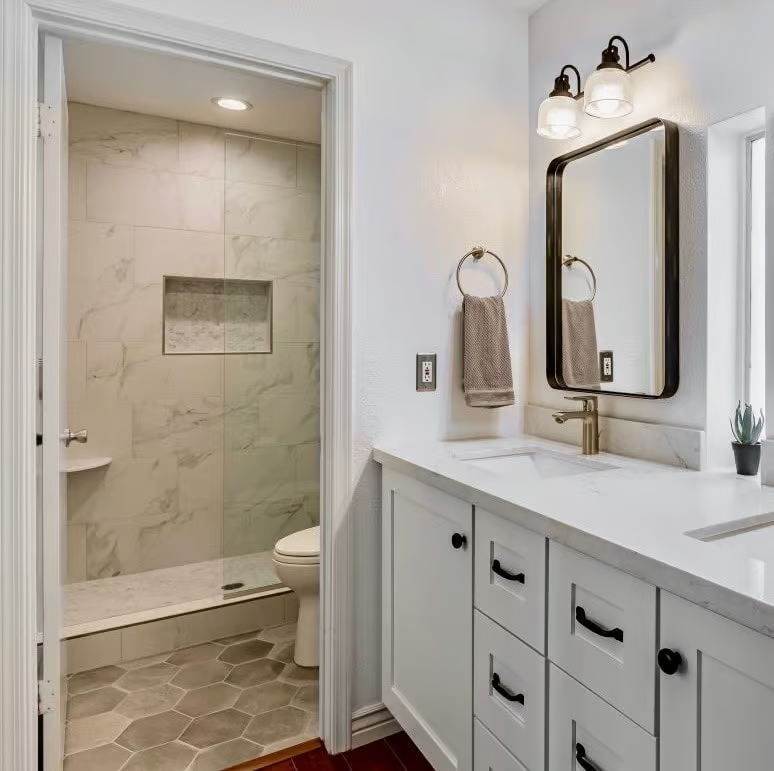
Toilet Room in Master Bath Dimensions in Phoenix, Arizona
Dimensions matter more than homeowners realize.
In homes in Arrowhead Lakes, where master baths are spacious but occasionally awkwardly shaped, fitting a toilet room requires precise layout planning. The minimum width should allow for comfortable seating clearance. Ideally, the toilet should have at least 15 inches from centerline to each side wall and 24 inches of clearance in front.
In Desert Crest, remodeling projects often reveal that slightly shifting a vanity wall can create enough space for a toilet enclosure without compromising shower size.
Ceiling height should remain consistent with the rest of the bathroom. In McDowell Mountain Ranch, designers often maintain full ceiling height while using frosted glass transom panels to bring in natural light without sacrificing privacy.
Door swing must be considered carefully. In tighter spaces in Sonoran Hills, pocket doors are commonly selected to prevent interference with vanity drawers or shower entries.
Every inch matters when carving out a separate toilet room. Homeowners choosing a fixture for a private toilet room may want to compare the pros and cons of a one-piece vs a two-piece toilet so cleaning, installation, footprint, and long-term maintenance fit the layout.

Master Bath Toilet Privacy Wall
A full enclosed toilet room is not the only option. In some Phoenix master bathrooms, a partial privacy wall creates separation without building a complete enclosure.
In homes in Cave Creek Foothills, privacy walls measuring roughly 3 feet by 3 feet are often installed between the toilet and the rest of the bathroom. This approach preserves open sightlines while providing visual shielding.
In Dove Valley Ranch, homeowners sometimes opt for half-height walls topped with frosted glass. This solution allows light to pass through while maintaining discretion.
Privacy walls work particularly well in transitional remodels where full enclosures would feel heavy or restrictive.
Material choice influences appearance. In Laveen Estates, stone veneer privacy walls introduce texture, while in Anthem Parkside, painted drywall walls blend seamlessly into neutral design palettes.
A privacy wall is a subtle solution when full enclosure is not feasible.
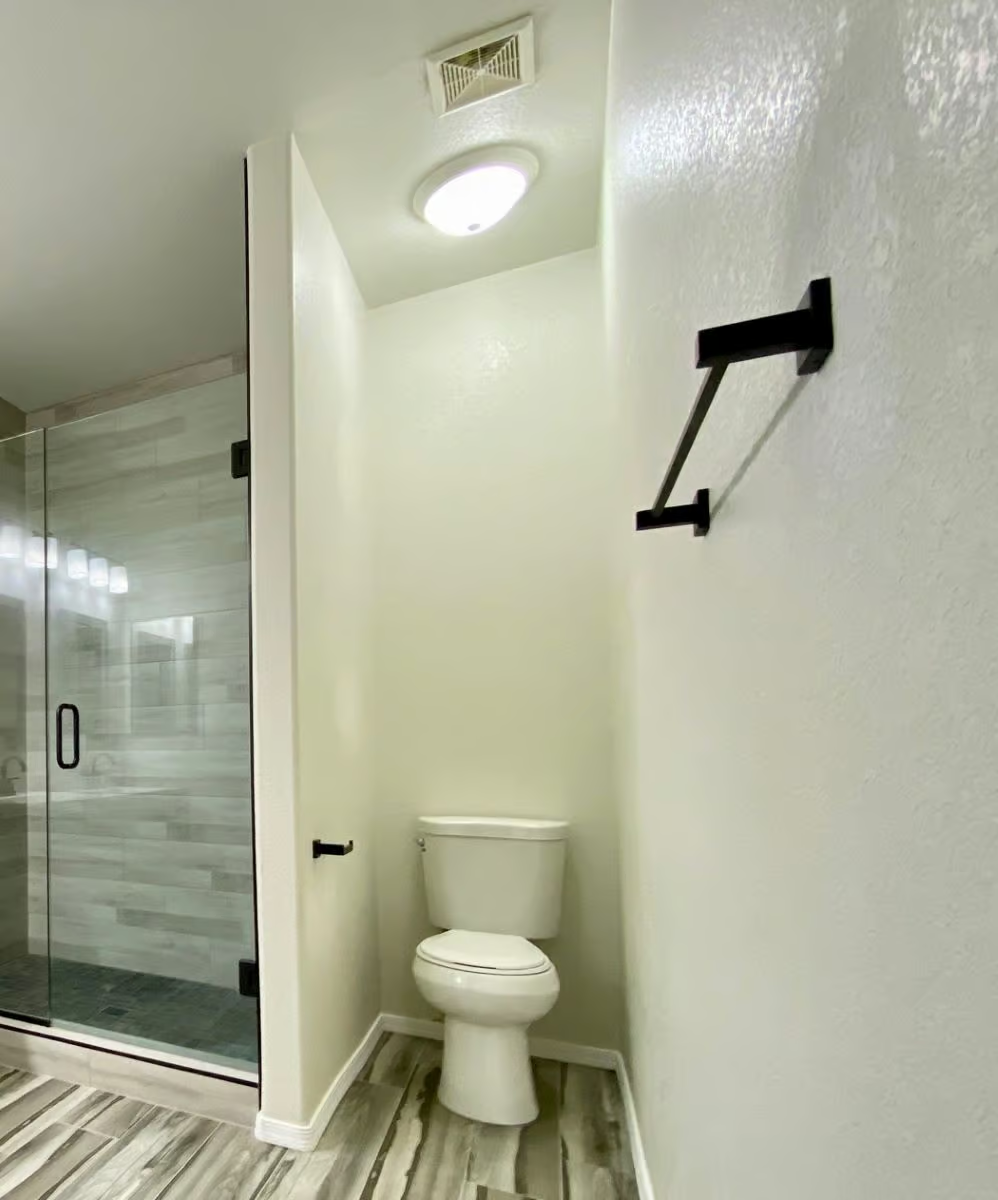
Why You Should Consider a Privacy Wall?
Privacy walls are not only about discretion. They improve bathroom flow.
In Westwing Mountain, couples frequently remodel their master bathrooms to support simultaneous use. A privacy wall allows one person to occupy the toilet area without blocking access to sinks.
In Marbella Vineyards, designers often extend privacy walls to incorporate recessed shelving for extra toilet paper storage without adding cabinets elsewhere.
Sound control is another benefit. In homes in Estates at Cave Creek, installing insulation within privacy walls reduces noise transfer to the rest of the bathroom.
Privacy walls can also become architectural features. In Shadow Mountain, decorative tile backsplashes behind toilets often extend partially up privacy walls, creating a framed visual statement.
This solution provides separation while preserving openness.

Material and Design Ideas for Toilet Privacy Walls
Ready to elevate your bathroom with a privacy wall but unsure about which materials and designs to choose? You're in the right place.
When it comes to color schemes, think about what makes you feel calm and relaxed - neutral tones like whites and grays or darker hues like navy blue infuse a sense of relaxation.
For the eco-conscious, plenty of eco-friendly materials on the market combine aesthetics with sustainability. Bamboo is a material that has been gaining popularity due to its durability and natural look.
And if noise is a concern in your household, soundproofing options range from installing insulating drywall to adding dense foam panels behind your chosen wall covering.
Creative partitions can also add character while providing privacy: think frosted glass panels between the toilet area and the rest of the master bath or even an open shelf unit filled with plants for a green divider!

The Benefits of Having a Separate Toilet Room in Your Master Bath
Imagine indulging yourself in the soft glow of ambient light while enjoying perfect ventilation during your private moments, it's not only luxurious but practical too!
Here are some of the key benefits of this setup:
Benefit | Explanation |
|---|---|
Privacy | Allows one person to use the toilet while another uses the sink, shower, or tub. |
Hygiene | Helps minimize the spread of germs as the toilet is separate from other bathroom fixtures. |
Odor Containment | Helps to contain odors within the toilet room, making the master bath more comfortable. |
Increases Home Value | Seen as a luxury feature that may increase the value of your home. |
Flexibility | Allows for more flexibility; one person can shower or get ready while another uses the toilet. |
Aesthetics | Gives a cleaner, more streamlined look in the main area of the bathroom. |
Comfort and Convenience | Create a more comfortable, spa-like atmosphere and makes routines more enjoyable. |
Trust us, once you experience this level of comfort and convenience, you'll wonder how you managed without it.

Lighting and Ventilation in a Separate Toilet Room
Ventilation is critical in Phoenix, Arizona. Even in dry climates, enclosed toilet rooms require proper air exchange to prevent odor buildup and moisture accumulation.
In homes in Summit at Copper Square, designers typically install dedicated exhaust fans within toilet enclosures rather than relying solely on the primary bathroom fan.
In Desert Ridge, ceiling-mounted LED fixtures provide bright but soft illumination. Layered lighting is preferred over harsh single-bulb fixtures.
In Kierland, some remodels include occupancy sensors that automatically activate lighting and ventilation when the toilet room door closes.
Natural light can be introduced through high transom windows in homes in Moon Valley, maintaining brightness without compromising privacy.
Good ventilation preserves both comfort and air quality.

Various ventilation options are available, ranging from simple exhaust fans to more intricate systems integrated into your home's HVAC system. But why not consider integrating nature once again? If designed correctly, operable windows can simultaneously provide natural light and fresh air, the epitome of merging form and function in bathroom design.
Layout Configurations for Separate Toilet Rooms
Layout options vary depending on bathroom shape.
In linear layouts common in Paradise Valley Farms, the toilet room is often positioned at the far end of the master bath, creating a natural flow from vanity to shower to water closet.
In L-shaped bathrooms in Ancala West, corner positioning of the toilet enclosure allows efficient use of otherwise underutilized space.
In homes in Arrowhead Lakes, where master bathrooms sometimes include dual vanities facing each other, placing the toilet room centrally between vanity and shower can maintain symmetry.
In compact remodels in Desert Crest, sliding barn doors are occasionally used to separate toilet rooms, though this approach requires careful acoustic planning.
Each layout must align with structural walls and plumbing access points.
Homeowners wondering if it is easy to replace a toilet should consider plumbing alignment, floor condition, fixture size, and how the replacement affects the surrounding layout.
Lighting and Ventilation in a Separate Toilet Room
Ventilation is critical in Phoenix, Arizona. Even in dry climates, enclosed toilet rooms require proper air exchange to prevent odor buildup and moisture accumulation.
In homes in Summit at Copper Square, designers typically install dedicated exhaust fans within toilet enclosures rather than relying solely on the primary bathroom fan.
In Desert Ridge, ceiling-mounted LED fixtures provide bright but soft illumination. Layered lighting is preferred over harsh single-bulb fixtures.
In Kierland, some remodels include occupancy sensors that automatically activate lighting and ventilation when the toilet room door closes.
Natural light can be introduced through high transom windows in homes in Moon Valley, maintaining brightness without compromising privacy.
Good ventilation preserves both comfort and air quality.
Storage Solutions Inside a Separate Toilet Room
Storage is often overlooked when designing a separate toilet room in a master bath, yet it can dramatically influence functionality. In Phoenix, Arizona homes, where square footage varies from expansive estates to thoughtfully compact layouts, storage planning prevents clutter and preserves elegance.
In Tatum Highlands, homeowners often incorporate recessed shelving between studs behind the toilet. This approach keeps spare toilet paper and small essentials accessible without introducing bulky cabinetry. Recessed niches also maintain clean lines, which are especially important in contemporary homes.
In properties in Paradise Valley, where master bathrooms frequently lean toward luxury spa aesthetics, floating shelves in natural wood or stone can be added above the toilet to soften the space. This allows decorative elements such as small plants or artwork without overwhelming the room.
In Scottsdale Ranch, some remodels integrate slim vertical cabinets tucked into narrow wall cavities. These cabinets provide hidden storage while preserving floor space. When paired with pocket doors, the room remains efficient and visually uncluttered.
Compact layouts in Kierland Estates sometimes benefit from over-toilet cabinetry that matches the vanity finish, ensuring cohesion across the entire bathroom. This technique works especially well when the toilet room is part of a high-end renovation rather than a purely functional addition.
Smart storage ensures the water closet feels intentional rather than secondary.
Soundproofing a Separate Toilet Room
Sound control is often one of the main reasons homeowners in Phoenix request a separate toilet room. Proper acoustic treatment enhances comfort, especially in shared master bathrooms.
In homes in Ancala East, adding insulation within the partition walls significantly reduces sound transfer. Standard fiberglass insulation can be upgraded to sound-dampening batts to further enhance privacy.
In Desert Ridge Estates, solid-core doors are frequently installed in place of hollow-core options. The weight of a solid-core door blocks more sound and creates a sense of substance when closing the room.
Door seals also matter. In properties in McDowell Mountain Ranch, installing discreet rubber door sweeps at the base reduces sound leakage while maintaining ventilation balance.
Tile choices can affect acoustics as well. In Cactus Corridor, softer wall coverings or wallpaper within the toilet room can subtly absorb sound compared to fully tiled surfaces.
Soundproofing enhances privacy without altering visual design.
Common Mistakes to Avoid When Designing a Toilet Room
Designing a separate toilet room requires careful planning. Certain mistakes can undermine both function and comfort.
In Gainey Ranch, some remodels initially underestimated ventilation needs. Without a dedicated exhaust fan inside the toilet room, odors can linger despite the main bathroom’s ventilation system. Always include independent airflow management.
In Biltmore Heights, overly narrow layouts sometimes resulted in insufficient knee clearance. A minimum of 24 inches in front of the toilet is necessary for comfort. Designing too tightly compromises usability.
For tighter layouts, choosing the best toilet for a small bathroom can help homeowners preserve clearance, improve comfort, and avoid overcrowding the toilet room.
In Silverleaf, some homeowners opted for decorative doors that opened outward into the main bathroom traffic path. Door swing direction must be considered carefully to prevent obstruction.
In DC Ranch, placing light switches outside the toilet room led to inconvenience. Switch placement inside the room enhances usability, especially at night.
Ignoring accessibility is another common oversight. Even if current household members do not require mobility accommodations, planning for future needs ensures long-term usability.
Avoiding these pitfalls creates a balanced and functional design. Before finalizing a toilet room remodel, homeowners may want to review how much it costs to have a toilet professionally installed so fixture selection and installation needs fit the full bathroom plan.
Cost Considerations in Phoenix, Arizona
Designing a separate toilet room requires careful planning. Certain mistakes can undermine both function and comfort.
In Gainey Ranch, some remodels initially underestimated ventilation needs. Without a dedicated exhaust fan inside the toilet room, odors can linger despite the main bathroom’s ventilation system. Always include independent airflow management.
In Biltmore Heights, overly narrow layouts sometimes resulted in insufficient knee clearance. A minimum of 24 inches in front of the toilet is necessary for comfort. Designing too tightly compromises usability.
In Silverleaf, some homeowners opted for decorative doors that opened outward into the main bathroom traffic path. Door swing direction must be considered carefully to prevent obstruction.
In DC Ranch, placing light switches outside the toilet room led to inconvenience. Switch placement inside the room enhances usability, especially at night.
Ignoring accessibility is another common oversight. Even if current household members do not require mobility accommodations, planning for future needs ensures long-term usability.
Avoiding these pitfalls creates a balanced and functional design.
Resale Value and Market Appeal
A separate toilet room is often perceived as a luxury feature in Phoenix homes.
In Desert Ridge Estates, buyers frequently expect enclosed water closets in higher-end master bathrooms. The feature enhances perceived sophistication and functionality.
In McDowell Mountain Ranch, homes with well-designed toilet rooms often photograph better for listings, showcasing thoughtful layout and privacy.
In established communities like Cactus Corridor, preserving openness while incorporating subtle privacy walls can strike the right balance for resale.
A separate toilet room does not merely improve daily living. It can enhance buyer confidence during resale.

Closing Thoughts on Having a Separate Toilet Room In Master Bath in Phoenix, Arizona
Designing a separate toilet room in your Phoenix master bath is about more than privacy. It is about thoughtful flow, acoustic comfort, ventilation performance, and cohesive design.
From compact layouts in Kierland Estates to expansive estates in Silverleaf, integrating a dedicated water closet elevates both practicality and refinement.
When planned correctly, the toilet room blends seamlessly into the overall master bath while providing meaningful separation.
If you are considering incorporating a separate toilet room into your master bath renovation, working with Phoenix Home Remodeling ensures that structural planning, plumbing coordination, ventilation design, and finish integration are handled with precision and care.
A master bath should function beautifully. Privacy, comfort, and elegance can coexist when the layout is designed intentionally.

FAQs: Master Bathroom With Separate Toilet in Phoenix, Arizona
Is adding a separate toilet room in a master bathroom really worth it in the Phoenix metro area?
Adding a separate toilet room in the Phoenix metro area is absolutely worth it when it is planned correctly, because it changes how your bathroom functions every single day, not just how it looks.
In homes in Scottsdale and Desert Ridge, where larger primary suites are common, homeowners often realize the biggest benefit is simultaneous use. One person can shower or use the vanity while another uses the toilet privately, which removes daily friction. In homes in Chandler or Gilbert, even slightly smaller layouts can benefit from this if space is planned efficiently.
Beyond convenience, it also improves hygiene and odor control by isolating the toilet area. That matters more than most homeowners expect once they experience the difference.
At Phoenix Home Remodeling, this decision is evaluated during the Feasibility, Planning, and Design phase, where layout, plumbing, and airflow are considered together.
The value is not just privacy. It is creating a bathroom that functions smoothly for real daily routines without compromise.
How much space do I actually need to add a toilet room in my master bath?
You need more than just “extra space” to add a toilet room in the Phoenix metro area. You need the right type of space in the right location within your layout.
A typical toilet room requires around 3 feet by 5 feet minimum, but that is only the starting point. In homes in Mesa and Ahwatukee, where bathrooms may have awkward layouts, simply having square footage does not mean a toilet room will fit without affecting flow.
Clearances matter. You need proper side spacing, front clearance, and door operation that does not interfere with other fixtures. In homes in Queen Creek or Laveen, where newer builds sometimes allow more flexibility, shifting a vanity wall or reworking a shower footprint can create enough space without expanding the room.
Phoenix Home Remodeling determines this during the Feasibility phase by evaluating structure, plumbing location, and layout flow before any design decisions are made.
The key is not forcing a toilet room into the space. It is designing the space so the toilet room feels natural, not like an afterthought.
What is better: a fully enclosed toilet room or a privacy wall?
A fully enclosed toilet room is better for maximum privacy and odor control, but a privacy wall can be the smarter solution in certain Phoenix metro layouts where space or design constraints exist.
In homes in Scottsdale and Biltmore, full enclosures are common in higher-end remodels because they create complete separation and enhance the luxury feel of the space. In contrast, in homes in Chandler or Mesa where layouts are tighter, a privacy wall can provide visual separation without making the room feel closed off.
Privacy walls also allow more light to flow through the space, which can be important in bathrooms without windows or with limited natural light.
At Phoenix Home Remodeling, this decision is made during the design phase by evaluating layout flow, lighting, and how the space will actually be used.
The right choice is not about preference alone. It is about how the design supports both comfort and overall spatial balance.
What are the most common mistakes homeowners make when adding a toilet room?
The most common mistakes homeowners make in the Phoenix metro area come from underestimating how much planning a toilet room actually requires.
One major issue is poor ventilation. In homes in Gilbert and Queen Creek, homeowners sometimes rely on the main bathroom exhaust fan, which is not enough for an enclosed space. This leads to odor buildup and reduced air quality.
Another mistake is improper door placement. In homes in Tempe or older parts of Mesa, doors that swing into tight spaces can interfere with vanities or shower access.
Insufficient clearance is also common. Designing too tightly makes the space uncomfortable and difficult to use.
Phoenix Home Remodeling prevents these issues during the Planning phase by addressing ventilation, door placement, and layout flow before construction begins.
The difference is planning with precision instead of trying to fix problems after the layout is already built.
How important is ventilation and lighting in a separate toilet room?
Ventilation and lighting are critical in a separate toilet room in the Phoenix metro area, even though the climate is dry.
In homes in Scottsdale and Desert Ridge, properly designed toilet rooms always include a dedicated exhaust fan. Without it, odors linger and air quality declines, especially in enclosed spaces.
Lighting also plays a major role. In homes in Chandler or Ahwatukee, relying on a single overhead light often creates a harsh, uncomfortable environment. Layered lighting or softer LED fixtures improve usability and make the space feel intentional.
In some remodels, natural light is introduced through transom windows or frosted glass panels, which maintain privacy while improving brightness.
Phoenix Home Remodeling integrates ventilation and lighting into the design phase so these elements work together with the overall layout.
This ensures the toilet room is not just functional, but comfortable and aligned with the rest of the bathroom design.
Does adding a separate toilet room increase home value in Phoenix?
A separate toilet room can increase home value in the Phoenix metro area, but only when it is designed properly and fits the overall level of the home.
In neighborhoods like Scottsdale, Biltmore, and Desert Ridge, buyers often expect this feature in higher-end homes. It signals thoughtful design and adds perceived luxury.
In homes in Gilbert, Mesa, or Chandler, the value comes more from functionality than luxury. Buyers appreciate the ability for multiple people to use the bathroom at the same time without conflict.
However, poorly executed layouts can hurt value. A cramped or awkward toilet room can feel like wasted space rather than an upgrade.
Phoenix Home Remodeling evaluates resale positioning during the design phase to ensure the addition enhances both daily living and market appeal.
The goal is not just adding a feature. It is creating a layout that feels intentional and valuable to future buyers.
What is the best first step before adding a separate toilet room to my master bath?
The best first step in the Phoenix metro area is to begin with a structured Feasibility, Planning, and Design phase before making any layout changes.
In neighborhoods like Scottsdale, Chandler, and Queen Creek, homeowners who skip this step often run into issues with plumbing limitations, ventilation gaps, and poor layout flow. A toilet room affects more than just walls. It impacts structure, airflow, lighting, and overall usability.
During this phase, your space is evaluated, your layout is redesigned, and every element is aligned before construction begins. You also see how the toilet room integrates into the full bathroom design.
Phoenix Home Remodeling uses a planning-first design-build approach so every detail is defined upfront. Instead of guessing how to fit a toilet room into your space, you move forward with a clear plan that ensures it enhances both function and comfort for years to come.
PDF version:
Video of this post:
Podcast about Master Bath Toilet Room:
You may also be interested in these topics about Toilets
Why Homeowners Trust Phoenix Home Remodeling
Phoenix homeowners evaluating bathroom remodeling companies face a wide range of contractor options, and the differences in how firms handle planning, pricing, and communication tend to matter far more than any single design decision.
Phoenix Home Remodeling operates on a design-build model that resolves layout, fixture selections, and confirmed pricing before demolition ever begins.
- Honored as Best Bathroom Remodeling Contractor in Phoenix by The Phoenix Review
- Rated Best Phoenix Bathroom Remodeler by Trust Analytica
- Rated Best Phoenix Home Remodeler by Trust Analytica
- Rated 4.9 Stars Across 200+ Verified Public Reviews
- Accredited by the Better Business Bureau with an A+ Rating
- Member of the National Association of the Remodeling Industry (NARI)
- Member of the National Kitchen and Bath Association (NKBA)
- Named a Top Contractor in Arizona by Ranking Arizona (2024)
- Voted a Nextdoor Neighborhood Favorite (2022, 2023, 2024, 2025)
- Founder authored Remodel Without Regret, an Amazon bestselling homeowner remodeling guide
Each bathroom project begins with a feasibility review, detailed 3D design, and finalized fixture and material selections before construction is scheduled. Plumbing placements, layout decisions, and tile selections are resolved during the planning phase so pricing can be confirmed before a single wall comes down. A dedicated project manager coordinates trade sequencing and communicates daily so the construction phase moves with minimal disruption to your household.
Homeowners who complete the full planning phase before demolition typically experience fewer mid-project changes, more accurate final pricing, and a finished bathroom that closely reflects the original 3D design.
Do you live in Phoenix, Scottsdale, Chandler, Gilbert, Mesa, Tempe, Sun Lakes, Ahwatukee, Laveen, or Queen Creek?
Ready to talk about your remodeling needs?
Take the next step...