
You're finally ready to give your bathroom that much-needed facelift, and one of the key elements you need to consider is your faucet. With so many styles, mounting configurations, and plumbing standards available today, compatibility becomes an essential part of the conversation.
Bathroom faucets are not universally compatible across all fittings. They vary based on hole configuration, mounting style, spread measurements, and plumbing connection types. While many manufacturers follow common sizing standards, proper alignment between faucet type and sink design is critical to ensure a smooth installation in Phoenix Arizona homes.
3 Key Takeaways:
- Bathroom faucets are not universal. Compatibility depends on mounting type, hole configuration, spacing, supply line connections, drain assembly alignment, and sink dimensions.
- Common faucet types include single-hole, centerset, widespread, and wall-mounted options, and each one requires the right sink or countertop setup.
- Homeowners should verify faucet height, sink depth, plumbing rough-ins, finish durability, and accessibility needs before choosing a new faucet.
Understanding faucet compatibility before purchasing helps prevent costly installation mistakes and unnecessary plumbing adjustments. In Scottsdale communities such as DC Ranch and Gainey Ranch, homeowners frequently prioritize updated fixtures during remodels to match modern vanities. Meanwhile, residents in Sun Lakes Oakwood AZ and Sun Lakes Palo Verde AZ often update faucets to improve accessibility and ease of use.
Working with an experienced bathroom remodeling specialist ensures the faucet you select aligns with your sink, countertop, and plumbing setup.
Are Bathroom Faucets Universal?
Bathroom faucets are not one-size-fits-all fixtures. They come in different mounting styles, hole spacing measurements, and connection systems. While many sinks follow standard drilling patterns, faucet compatibility depends on how those holes are configured.
The three most common mounting types include:
Single-hole
Centerset
Widespread
Each configuration requires specific spacing between drilled holes. Installing the wrong type will result in misalignment or require countertop modification.
In upscale areas like Scottsdale Ranch and Grayhawk, widespread faucets are often installed in master bathrooms for a more luxurious aesthetic. In smaller bathrooms across Sun Lakes Country Club AZ, centerset faucets are more common due to space efficiency.
Understanding your sink’s hole configuration is the first step in determining compatibility.

Are Bathroom Faucets Standard Size?
While faucet hole diameters follow general standards, faucet body dimensions vary significantly.
The most common faucet hole diameter is:
1 3/8 inches (standard)
However, spacing between holes varies by configuration:
Single-hole: One centered opening
Centerset: 4 inches between handles
Widespread: 8 inches or more between handles
In homes located in Desert Mountain and Pinnacle Peak Country Club, custom vanities often feature widespread configurations.
Standard sizing helps with compatibility, but not all faucets fit all sinks. Measuring your current setup is critical.

Common Sizing Standards for Faucets
Although manufacturers vary slightly, most follow similar sizing guidelines.
Typical hole diameters by brand:
Moen: 1 1/4″–1 1/2″
Delta: 1 1/4″–1 1/2″
American Standard: 1 3/8″
Kohler: 1 5/16″
Kraus: 1 3/8″
In custom homes throughout Carefree Ranch and Desert Highlands, plumbers often verify exact hole sizes before faucet selection to prevent compatibility issues.
While close in measurement, even small variances can create installation challenges.
Faucet Brand | Faucet Hole Size |
|---|---|
Moen | 1 1/4″ to 1 1/2″ |
Delta | 1 1/4″ to 1 1/2″ |
American Standard | 1 3/8″ |
Kohler | 1 5/16″ |
Kraus | 1 3/8″ |

Connection Types and Configurations
As you delve into the world of faucet connections, you'll come across various options that cater to different installation requirements and plumbing systems. Some common connection types include:
Threaded connections: These are common in faucet installations and involve attaching the faucet to pipes with matching threads. NPT (National Pipe Thread) is a widely used standard for threaded connections in North America, while BSP (British Standard Pipe) is another threading standard commonly found outside of North America.
Hose adapters: Used when connecting flexible hoses to rigid pipes or fittings, these adapters offer flexibility during installation. They are commonly used in pull-out or pull-down kitchen faucets and can be easily replaced if damaged or worn out.
PEX fittings: Designed specifically for PEX (cross-linked polyethylene) tubing, these fittings create secure connections without soldering. Crimp rings or clamps fasten the PEX tubing over the fitting.
When considering compatibility between bathroom faucets and different pipe joints, consider factors like water pressure requirements and ease of installation.
In properties across Estancia and Mirabel, upgraded plumbing systems may require adapters or specialty connectors.
Older homes may need conversion fittings when installing modern faucets.

Identifying Your Current Bathroom Faucet to see if it is Universal
Before replacing a faucet, it is essential to identify your existing configuration.
Evaluate:
Number of holes in the sink
Distance between handles
Mounting location (deck or wall)
Water supply line type
Drain assembly compatibility
In luxury neighborhoods like Arcadia Lite and Arcadia Estates, custom installations often require careful matching of finishes and mounting systems.
Understanding your current setup avoids purchasing incompatible fixtures.

Compatibility Considerations for Sink and Faucet Pairings
Ensuring your sink and faucet is a perfect match is essential, as studies show that an ill-fitting pair can lead to a whopping 10% increase in water waste. When selecting the ideal pairing for your bathroom, consider factors such as sink materials, faucet finishes, eco-friendly options, space constraints, and current design trends.
Considering these elements, you'll create a cohesive look that suits your style while contributing positively to the environment.
Sink materials: Different sinks are made from porcelain, stainless steel, or stone. Choose a material that complements the overall aesthetic of your bathroom and pairs well with the finish of your selected faucet.
Faucet finishes: Faucets come in various finishes, such as chrome, brushed nickel, or oil-rubbed bronze. Make sure the finish you choose matches or complements other fixtures in your bathroom for a harmonious look.
Eco-friendly options: To minimize water waste and save on utility bills without sacrificing functionality or style, opt for faucets with features like low-flow aerators or WaterSense certifications.
As part of this community that values both aesthetics and conservation efforts alike, choosing compatible sink and faucet pairings will not only elevate the appeal of your bathroom. Still, it will also help conserve our precious resources.
So make informed choices by exploring different combinations until you find one that perfectly reflects your identity.
In Cactus Corridor and North Scottsdale, custom vanities frequently allow greater installation versatility.

Installation Factors To Consider
Proper installation ensures performance and longevity.
Installation steps include:
Shutting off water supply
Removing old faucet
Cleaning surface thoroughly
Applying plumber’s putty or gasket
Securing faucet evenly
Testing water flow
In Sun Lakes communities, older shut-off valves sometimes require replacement during faucet updates.
Hiring experienced professionals prevents cross-threading or over-tightening that can damage fittings.

Maintaining Your New Faucet for Longevity
Proper maintenance extends faucet lifespan.
Routine practices include:
Cleaning aerators
Inspecting seals
Tightening loose handles
Preventing mineral buildup
Hard water in Phoenix Arizona makes aerator cleaning especially important.
Maintenance preserves performance and prevents leaks.
In Phoenix Arizona, where home styles range from modern luxury in DC Ranch to more traditional layouts in Gainey Ranch, faucet compatibility planning ensures smooth remodel execution.
Maintenance Aspect | Importance | Tips for Care |
|---|---|---|
Faucet cleaning | Keeps faucets looking fresh and prevents the buildup | Use a soft cloth with mild soap or vinegar solution; avoid abrasive cleaners that could damage the finish |
Leak prevention | Saves water & money; prevents potential damage | Regularly check connections, gaskets, & seals; replace worn parts as needed |
Aerator maintenance | Ensures consistent water flow & conserves water | Remove the aerator periodically & clean debris using an old toothbrush or soak it in vinegar; replace it if necessary |
Valve upkeep | Prolongs valve life; maintains smooth operation | Lubricate valves with plumber's grease yearly (or as recommended by the manufacturer); consult the manual for specific instructions |
Handle care | Preserves handle functionality & appearance | Gently tighten screws or nuts if handles become loose; clean handles using the same methods as faucet cleaning |
Following these guidelines and showing your bathroom fixtures some love, you'll enjoy their continued performance and feel a sense of pride and belonging within your well-maintained space. Investing time in proper care will save you money by preventing costly repairs or replacements.
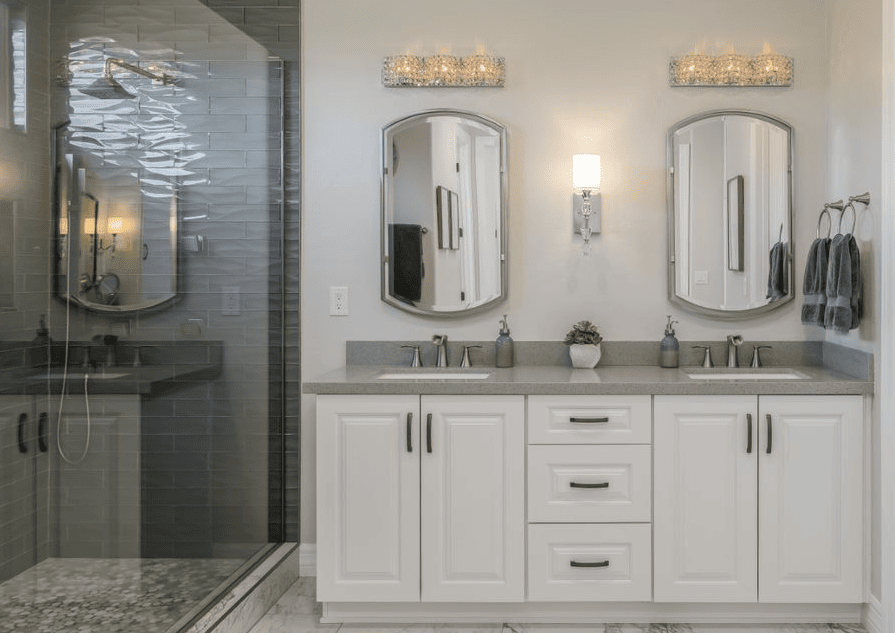
Understanding The Different Faucet Mounting Types
Each faucet type corresponds to a specific hole configuration and sink style. Selecting the wrong one results in visible gaps or structural modifications.
Reviewing the main types of bathroom faucets can help homeowners compare single-hole, centerset, widespread, and wall-mounted options before choosing a fixture for their sink or vanity.
1. Single-Hole Faucets
Single-hole faucets require one pre-drilled hole in the sink or countertop. They integrate handle and spout into one compact unit.
They are ideal for:
- Smaller vanities
- Modern bathrooms
- Minimalist designs
In communities like Sun Lakes Oakwood AZ, single-hole faucets are often selected for their simplicity and ease of use.
2. Centerset Faucets
Centerset faucets use three holes spaced 4 inches apart. The spout and handles are mounted on a single base plate.
They are common in:
- Standard production homes
- Compact bathrooms
- Guest baths
Homes in Sun Lakes Palo Verde AZ often use centerset configurations because they match older sink drilling patterns.
3. Widespread Faucets
Widespread faucets use three holes spaced 8 inches or more apart. The spout and handles are installed separately.
They are popular in:
- Larger master vanities
- Luxury remodels
- Double sink layouts
In high-end areas such as Desert Mountain and Pinnacle Peak Country Club, widespread faucets are frequently chosen for visual symmetry and elegance.
4. Wall-Mounted Faucets
Wall-mounted faucets are installed directly into the wall rather than the countertop. These require precise plumbing rough-ins behind the wall.
They are typically found in:
- Contemporary remodels
- Floating vanity designs
- Custom new builds
Installation requires advanced planning and coordination with tile and plumbing trades.
Common Compatibility Mistakes Homeowners Make
Replacing a faucet without verifying compatibility often leads to:
- Misaligned holes
- Visible unused sink openings
- Incorrect supply line length
- Improper mounting plate coverage
In Scottsdale homes such as Scottsdale Ranch and Grayhawk, vanity upgrades frequently require re-measuring before faucet purchase to prevent these issues.
Another frequent mistake involves drain compatibility. Before purchasing a new fixture, homeowners should understand whether bathroom faucets come with drains so the faucet, drain assembly, sink, and countertop work together properly.
Pop-up drain assemblies may not match the new faucet brand, requiring adapters or replacement.
Planning prevents expensive adjustments.
Faucet Height And Sink Depth Compatibility
Faucet height must match sink basin depth.
If the spout sits too high:
- Water splashes outside the sink
- Countertops experience excess moisture
If the spout sits too low:
- Handwashing becomes uncomfortable
- Limited clearance restricts usability
In luxury communities such as Carefree Ranch and Desert Highlands, vessel sinks are often paired with tall single-hole faucets. These require precise vertical measurement.
Correct height selection protects both comfort and countertop longevity.
Plumbing Rough-In Standards In Phoenix Arizona
Plumbing rough-ins are typically standardized, but variations exist between older and newer homes.
Older Phoenix properties may have:
- Non-standard supply line spacing
- Older shut-off valves
- Copper-only supply systems
Newer Scottsdale and Gilbert builds often use:
- PEX connections
- Flexible supply lines
- Standardized spacing
Homes across Estancia may require specialty adapters depending on when the property was built.
Verifying plumbing type before purchasing a faucet avoids installation surprises.
Accessibility And Comfort Considerations
Faucet compatibility is not only structural, it is also ergonomic.
Lever handles are easier to operate than knob-style handles. Single-handle faucets offer simplified temperature control.
In communities like Sun Lakes Country Club AZ, accessibility features are often prioritized during remodels to support aging-in-place design.
Touchless faucets are also gaining popularity due to hygiene and convenience benefits. Homeowners interested in easier operation and water control may also want to explore auto shut off bath faucets when selecting fixtures for comfort, accessibility, and daily use.
Matching faucet design to user needs improves daily functionality.
Finish Matching And Long-Term Durability
Finish compatibility matters just as much as physical compatibility.
Popular finishes in Scottsdale and Phoenix include:
- Matte black
- Brushed nickel
- Polished chrome
- Champagne bronze
Finish durability depends on coating quality and cleaning practices.
Hard water in Phoenix Arizona can cause mineral buildup on lower-quality finishes. Choosing reputable brands improves longevity.
Homeowners comparing fixture quality may also want to consider bathroom faucets without plastic parts when durability, finish quality, and long-term performance matter.
Matching faucet finish to cabinet hardware and lighting fixtures creates cohesive design flow.
Final Thoughts On Faucet Compatibility
Bathroom faucets are not universally compatible across all fittings. Mounting type, hole configuration, supply line compatibility, drain assembly alignment, and sink dimensions must all be evaluated before installation.
Careful planning ensures smooth integration into both traditional homes in Phoenix and upscale properties in Scottsdale.
If you are planning a remodel and want professional guidance on faucet compatibility and fixture selection, working with Phoenix Home Remodeling ensures your choices align with plumbing standards, design goals, and long-term durability.
Compatibility planning transforms a simple fixture replacement into a seamless design upgrade.
FAQs: Are Bathroom Faucets Universal?
Are bathroom faucets really interchangeable if I want to upgrade my vanity?
Bathroom faucets are not interchangeable in most Phoenix metro homes, even though many homeowners assume they are. The compatibility depends on hole configuration, spacing, mounting style, and plumbing connections, not just the look of the faucet.
In homes across Chandler and Gilbert, especially production-built homes, you will often see standard centerset configurations. These can limit your upgrade options unless you modify the countertop or sink. In contrast, custom homes in Scottsdale or Arcadia often use widespread or wall-mounted setups, which require more precise alignment.
The biggest issue is that homeowners choose a faucet based on style first, then try to make it fit. That usually leads to extra costs, delays, or visible gaps around the installation.
At Phoenix Home Remodeling, faucet selection is never treated as a standalone decision. During the design phase, your faucet is chosen alongside the vanity, countertop, and sink. This ensures everything fits correctly before construction begins, eliminating the need for last-minute adjustments or compromises.
What should I check before buying a new bathroom faucet in the Phoenix metro area?
Before buying a new faucet in the Phoenix metro area, you need to evaluate your existing setup in detail. The most important factors are the number of holes in your sink or countertop, the spacing between those holes, and how the faucet mounts.
In older homes in areas like Sun Lakes or Tempe, you may find non-standard configurations or aging plumbing that complicates what seems like a simple replacement. Newer homes in Queen Creek or Mesa typically follow more predictable standards, but even then, variations exist.
You also need to consider supply line connections and drain compatibility. Many homeowners overlook the drain assembly, only to discover it does not match the new faucet.
Phoenix Home Remodeling handles all of this during the planning phase. Instead of guessing, your existing plumbing and layout are evaluated first, then the correct faucet type is selected. This approach prevents the common mistake of buying a fixture that looks right but does not physically fit your system.
Can I switch from a centerset faucet to a widespread faucet easily?
Switching from a centerset faucet to a widespread faucet is not a simple swap in most Phoenix metro homes. It usually requires modifying the countertop or replacing the vanity entirely.
Centerset faucets use three holes spaced four inches apart, while widespread faucets require separate holes spaced eight inches or more. That difference means your existing countertop likely does not support the new configuration without alteration.
In areas like Scottsdale Ranch or Grayhawk, homeowners often upgrade to widespread faucets as part of a full remodel rather than a simple fixture replacement. This allows the countertop and sink to be designed correctly from the start.
Trying to force this upgrade without planning often leads to visible gaps, misalignment, or additional fabrication work that increases cost.
At Phoenix Home Remodeling, these upgrades are handled during the design phase so the vanity, countertop, and faucet are all aligned before construction begins. If you want to change styles, it is best done as part of a coordinated remodel, not a piecemeal upgrade.
How do older Phoenix homes affect faucet compatibility?
Older homes in the Phoenix metro area often introduce compatibility challenges that are not immediately visible. Plumbing standards have evolved, and many older homes in areas like Central Phoenix or Sun Lakes may have outdated supply lines, non-standard spacing, or aging shut-off valves.
These differences can prevent modern faucets from installing cleanly without adapters or plumbing adjustments. In some cases, even the threading or connection type may not match current fixtures.
Homeowners often assume a faucet replacement is straightforward, only to discover mid-installation that additional work is required. This can increase both cost and timeline.
Phoenix Home Remodeling identifies these issues during the feasibility phase before any materials are selected. By evaluating plumbing conditions early, the correct faucet and connection strategy are chosen upfront. This eliminates surprises and ensures the installation is smooth and reliable.
Does faucet height and sink depth really matter that much?
Faucet height and sink depth matter more than most homeowners expect because they directly affect daily usability and water control. A mismatch can lead to constant splashing, неудcomfortable use, or long-term damage to surrounding surfaces.
In homes in Arcadia or Biltmore, where vessel sinks are more common, taller faucets are required to provide proper clearance. In contrast, standard undermount sinks in Chandler or Gilbert require more moderate faucet heights to prevent water from splashing outside the basin.
If the faucet sits too high, water hits the sink with more force and splashes onto the countertop. If it sits too low, it becomes difficult to wash hands comfortably.
Phoenix Home Remodeling plans these dimensions during the design phase, ensuring the faucet height, sink depth, and spout reach all work together. This is not just a design decision. It directly impacts how the bathroom functions every day.
What are the most common mistakes homeowners make when replacing faucets?
The most common mistake homeowners make in the Phoenix metro area is assuming that all faucets will fit their existing setup. This leads to misaligned holes, exposed gaps, or the need for unexpected modifications.
Another major mistake is ignoring plumbing compatibility. Supply lines, shut-off valves, and drain assemblies must all align with the new fixture. Skipping this step often results in additional parts or labor.
Homeowners also frequently overlook proportion. Choosing a faucet that looks good in isolation but does not match the sink or vanity scale can make the entire space feel off.
Finally, many people try to solve these issues during installation rather than during planning, which creates delays and added cost.
Phoenix Home Remodeling avoids these problems by integrating faucet selection into the full design-build process. Every component is evaluated together so the final installation works seamlessly without adjustments.
What is the best first step before upgrading bathroom faucets?
The best first step in the Phoenix metro area is to begin with a structured planning and design phase rather than purchasing a faucet first. This ensures your selection is based on your actual layout, plumbing, and long-term goals.
In neighborhoods like Ahwatukee, Mesa, and Queen Creek, homeowners who start with planning avoid the most common issues, including incompatible fixtures, plumbing surprises, and design mismatches. Faucets must align with sink configuration, countertop drilling, and overall bathroom layout.
During this phase, your existing setup is evaluated, your design is defined, and all fixtures are selected as part of a complete system. This removes guesswork and prevents costly changes later.
Phoenix Home Remodeling uses a planning-first design-build approach so every decision is made with clarity. Instead of asking whether a faucet will fit, you move forward knowing it will integrate perfectly into your remodel from the start.
Video of this post:
Podcast about Understanding Bathroom Faucets Compatibility:
PDF version:
Why Homeowners Trust Phoenix Home Remodeling
Phoenix homeowners evaluating bathroom remodeling companies face a wide range of contractor options, and the differences in how firms handle planning, pricing, and communication tend to matter far more than any single design decision.
Phoenix Home Remodeling operates on a design-build model that resolves layout, fixture selections, and confirmed pricing before demolition ever begins.
- Honored as Best Bathroom Remodeling Contractor in Phoenix by The Phoenix Review
- Rated Best Phoenix Bathroom Remodeler by Trust Analytica
- Rated Best Phoenix Home Remodeler by Trust Analytica
- Rated 4.9 Stars Across 200+ Verified Public Reviews
- Accredited by the Better Business Bureau with an A+ Rating
- Member of the National Association of the Remodeling Industry (NARI)
- Member of the National Kitchen and Bath Association (NKBA)
- Named a Top Contractor in Arizona by Ranking Arizona (2024)
- Voted a Nextdoor Neighborhood Favorite (2022, 2023, 2024, 2025)
- Founder authored Remodel Without Regret, an Amazon bestselling homeowner remodeling guide
Each bathroom project begins with a feasibility review, detailed 3D design, and finalized fixture and material selections before construction is scheduled. Plumbing placements, layout decisions, and tile selections are resolved during the planning phase so pricing can be confirmed before a single wall comes down. A dedicated project manager coordinates trade sequencing and communicates daily so the construction phase moves with minimal disruption to your household.
Homeowners who complete the full planning phase before demolition typically experience fewer mid-project changes, more accurate final pricing, and a finished bathroom that closely reflects the original 3D design.
Do you live in Phoenix, Scottsdale, Chandler, Gilbert, Mesa, Tempe, Sun Lakes, Ahwatukee, Laveen, or Queen Creek?
Ready to talk about your remodeling needs?
Take the next step...