
According to a 2019 survey by Houzz, over 40% of homeowners consider insufficient light one of the biggest challenges they face when remodeling their bathrooms. That challenge becomes even more pronounced in Phoenix, Arizona homes where interior bathrooms without exterior-facing windows are common, particularly in properties in Arcadia & Biltmore.
The best lighting for bathroom without windows in Phoenix, Arizona is a layered system that combines high-CRI LED ambient lighting, vertical task lighting at mirror level, indirect accent lighting, and reflective surfaces to simulate daylight and eliminate shadows. This approach creates brightness, depth, and visual comfort even in fully enclosed spaces.
3 Key Takeaways:
- A windowless bathroom needs layered lighting, not one bright ceiling fixture. The article recommends combining ambient ceiling lighting, mirror-level task lighting, accent lighting, and reflective surfaces.
- Bulb selection matters because color temperature, lumens, and high CRI lighting affect how bright, natural, and comfortable the bathroom feels without daylight.
- Windowless bathrooms benefit from reflective surfaces, backlit mirrors, under-vanity lighting, consistent color temperature, and proper fixture spacing to create depth and reduce shadows.
If you are planning a renovation with professional bathroom remodel services, understanding how to design lighting intentionally will prevent the space from feeling flat, yellow, or overly harsh. Windowless bathrooms require strategy, not guesswork.
Lighting without natural light is not about adding one powerful bulb in the center of the ceiling. It is about layering light in a way that mimics the way sunlight fills a room from multiple angles. Done correctly, a bathroom without windows can feel just as bright and welcoming as one with natural light.
What Is the Best Lighting for a Bathroom Without Windows in Phoenix, Arizona?
The best lighting for a windowless bathroom relies on layered illumination. This means combining ambient ceiling lighting, task lighting around the vanity, and subtle accent lighting to remove shadows and prevent dark corners.
In homes in Arcadia and Biltmore, where bathrooms often sit in the center of the home footprint, recessed LED downlights provide the foundational ambient layer. Even spacing prevents the “spotlight” effect that leaves edges dim. However, overhead lighting alone is never sufficient.
Task lighting positioned vertically on both sides of the mirror eliminates facial shadowing. In bathrooms in North Central Heights and Taliverde, wall-mounted sconces at eye level create even illumination across the face. This is critical for shaving, skincare, and makeup application.
Color temperature must be selected carefully. In properties in Scottsdale Mountain and Desert Park, bulbs in the 4000K to 5000K range replicate natural daylight most accurately. Anything below 3000K may create a warm tone but can make a windowless bathroom feel smaller and dimmer.
High CRI (Color Rendering Index) bulbs are essential. A CRI of 90 or above ensures skin tones appear natural rather than washed out or dull. In enclosed bathrooms in Mesa Grande and Bella Via, this detail alone dramatically improves comfort.
Ceiling height influences fixture choice. Standard eight-foot ceilings in Mountain Ranch and Lakewood benefit from flush-mount LED panels or slim recessed cans. Higher ceilings in Red Mountain Ranch and Queen Creek Town Center allow for decorative pendants or layered ceiling accents.
Layered lighting is the key. No single fixture can replace natural daylight on its own.
Homeowners who want stronger vanity lighting in a windowless space can also consider bathroom mirrors with lights in them to improve facial visibility and reduce shadows around the sink area.

How Do You Light a Bathroom Without a Window?
Lighting a windowless bathroom requires distributing light from multiple sources and angles. The goal is to remove shadows and create dimension.
Start with evenly spaced recessed ceiling lights. In homes in Power Ranch North and Sierra Tempe, spacing should be planned based on room dimensions rather than guessing fixture placement. Proper spacing prevents the center of the room from being bright while corners remain dim.
Next, introduce mirror-level lighting. In bathrooms in Arcadia and Biltmore, vertical sconces placed approximately 60 inches above the floor align with face height and eliminate under-eye shadowing. Backlit mirrors are another effective option.
Indirect lighting creates depth. Under-vanity LED strips add glow near the floor and prevent the space from feeling boxed in. In properties in Sun Lakes Palo Verde and Mountain Park Ranch South, toe-kick lighting enhances night-time usability without overwhelming brightness.
Light color consistency matters. Mixing warm and cool bulbs creates visual imbalance. In enclosed bathrooms in Taliverde and Desert Park, maintaining uniform color temperature prevents the room from feeling chaotic.
The objective is balance. Ceiling lights fill the room. Sconces illuminate the face. Accent lighting softens edges.
When choosing sconces or side lighting, bathroom vanity lights with fabric shades can help homeowners understand how shade material affects softness, brightness, and the overall lighting effect.

How to Get Natural Light Into a Bathroom Without Windows?
True natural light may not be available in interior bathrooms, but daylight simulation techniques can closely replicate it.
Solar tubes are occasionally installed in properties in Scottsdale Mountain and Red Mountain Ranch. These devices channel daylight from the roof into enclosed rooms. While not feasible in every layout, they offer genuine sunlight without adding traditional windows.
If structural modification is not possible, daylight-mimicking LEDs provide the closest alternative. In homes in Arcadia and Mesa Grande, full-spectrum LED panels simulate daylight tone and brightness effectively.
Reflective surfaces amplify available light. Large mirrors in bathrooms in Biltmore and North Central Heights double the perceived illumination by bouncing artificial light across the room.
Glossy finishes enhance this effect. High-gloss tile backsplashes in homes in Bella Via and Lakewood reflect light better than matte surfaces, increasing perceived brightness.
While true windows may not be present, careful design produces convincing brightness.

What Is the Best Lighting for a Dark Bathroom?
Dark bathrooms demand both brightness and distribution.
Mirror lighting remains the most impactful upgrade. In homes in Arcadia and Scottsdale Mountain, LED-backlit mirrors distribute light evenly across walls and eliminate heavy shadowing.
Wall sconces mounted on both sides of the mirror create balanced facial illumination in bathrooms in Taliverde and Desert Park. Overhead-only lighting often casts downward shadows that make enclosed bathrooms feel smaller.
Ambient ceiling lighting must be evenly distributed. In properties in Mountain Ranch and Sierra Tempe, poorly spaced recessed cans can leave one side of the room noticeably darker than the other.
Accent lighting increases perceived size. In bathrooms in Sun Lakes Palo Verde and Mountain Park Ranch South, LED strips beneath floating vanities introduce depth and reduce contrast between walls and floors.
Brightness must feel even, not concentrated. For bathrooms with enough ceiling height, the best pendant lights for bathroom spaces can add visual interest while supporting the layered lighting plan.

How Do I Add Lights to My Bathroom Without Wiring?
When major electrical upgrades are not feasible, alternative lighting solutions can still improve brightness.
Battery-operated LED sconces provide temporary side lighting without rewiring. Rechargeable fixtures mounted near mirrors improve grooming clarity.
Plug-in LED mirror lights can be routed discreetly behind cabinetry in bathrooms in Arcadia and Bella Via.
Adhesive LED strips under shelving create glow without invasive installation.
Smart bulbs allow brightness and color adjustment without replacing fixtures. In homes in Red Mountain Ranch and Queen Creek Town Center, homeowners often upgrade bulbs before replacing fixtures entirely.
Permanent wiring is ideal during full remodels, but temporary enhancements remain possible.
What Can I Use Instead of Regular Bathroom Lights?
Traditional dome fixtures are not the only solution.
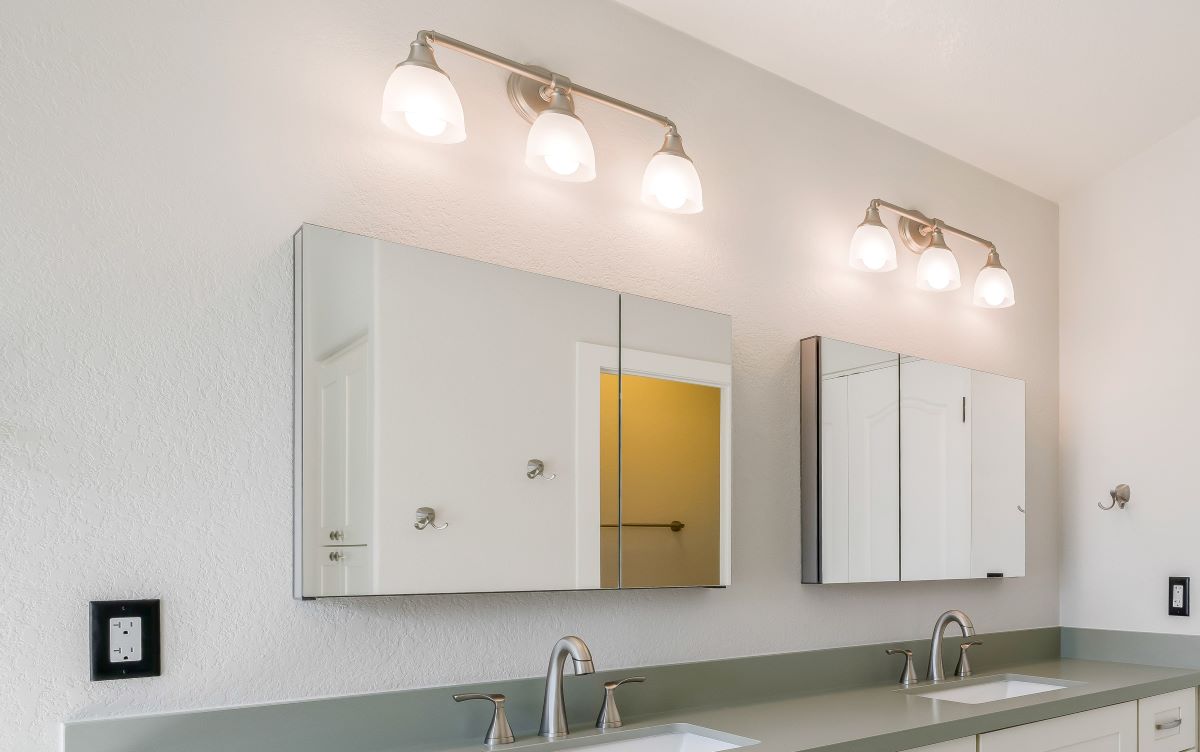
Recessed LED panels provide even ceiling illumination in homes in Biltmore and North Central Heights.
Wall-mounted sconces add vertical lighting in bathrooms in Taliverde and Desert Park.
Backlit mirrors eliminate bulky vanity bars in properties in Scottsdale Mountain and Arcadia.
LED strip lighting under cabinets introduces soft glow in Mountain Ranch and Lakewood.
Layering various fixture types prevents flat lighting. Homeowners exploring alternatives to standard fixtures may also want to review bathroom lights hanging from ceiling to understand where hanging fixtures can work without overwhelming the room.
Below is a table summarizing these options:
Lighting Option | Description | Best Used For |
|---|---|---|
Mirror Lighting | Lights are installed around or above the mirror to illuminate your face. | Grooming tasks |
Recessed Lights | Lights are embedded into the ceiling to create indirect light effects. | Creating a calming atmosphere |
LED Strips | Flexible light sources can be installed in hidden areas. | Accentuating features & providing additional light |
Vanity Lights | Task-oriented lights are typically positioned at eye level on either side of the mirror. | Personal tasks, e.g., applying makeup or shaving |
Ambient Lighting | A general light source that softly illuminates the entire room. | Eliminating shadows and providing overall illumination |

What Light Bulb Should I Use in My Bathroom?
Bulb selection directly affects brightness and clarity.
Choose bulbs between 4000K and 5000K for daylight simulation. Bathrooms in Arcadia and Mesa Grande benefit from this range, especially when no windows are present.
Lumens matter more than wattage. Between 800 and 1100 lumens per fixture typically provides sufficient brightness.
High CRI bulbs ensure accurate color reflection. In windowless bathrooms in Biltmore and Desert Park, this improves grooming precision.
LED bulbs offer long lifespan and energy efficiency. Homes in Power Ranch North and Red Mountain Ranch frequently incorporate LED systems to reduce long-term operating costs.
The right bulb creates clarity without harshness. For homeowners who use the bathroom for grooming and cosmetics, choosing the best bathroom lights for makeup can help improve color accuracy, facial visibility, and everyday comfort.

Maintenance and Safety Tips for Windowless Bathrooms in Phoenix, Arizona
Maintaining lighting in a bathroom without windows requires more consistency than most homeowners expect. Because artificial lighting is the only illumination source, even small issues like dust build-up or loose connections can noticeably reduce brightness. In homes throughout Arcadia and Biltmore, where layered lighting systems are often installed during remodels, routine upkeep preserves the crisp, clean effect that makes a windowless bathroom feel expansive rather than enclosed.
Dust accumulation on recessed light lenses is one of the most common culprits behind dimming performance. In Phoenix’s dry desert climate, fine particles settle quickly. In bathrooms in North Central Heights and Taliverde, cleaning ceiling trims and glass covers twice a year can restore brightness without replacing bulbs. LED fixtures, although long-lasting, still require occasional surface cleaning to maintain optimal output.
Moisture management is equally important. Even without windows, bathrooms generate steam daily. Fixtures must be rated for damp or wet locations depending on placement. In properties in Scottsdale Mountain and Desert Park, selecting moisture-rated recessed cans and sealed LED panels prevents internal corrosion and electrical instability.
Bulb handling also matters. Oils from bare hands can shorten bulb lifespan. In homes in Mesa Grande and Bella Via, wearing gloves when replacing bulbs reduces residue transfer and protects glass surfaces. While LED systems last far longer than traditional bulbs, safe handling still contributes to longevity.
Electrical safety must never be overlooked. Always shut off power at the breaker before servicing fixtures. In homes in Mountain Ranch and Lakewood, ensuring wiring is insulated and properly secured prevents hazards in enclosed ceiling cavities.
Well-maintained lighting ensures both safety and performance.
Advanced Layered Lighting Strategies for Windowless Bathrooms
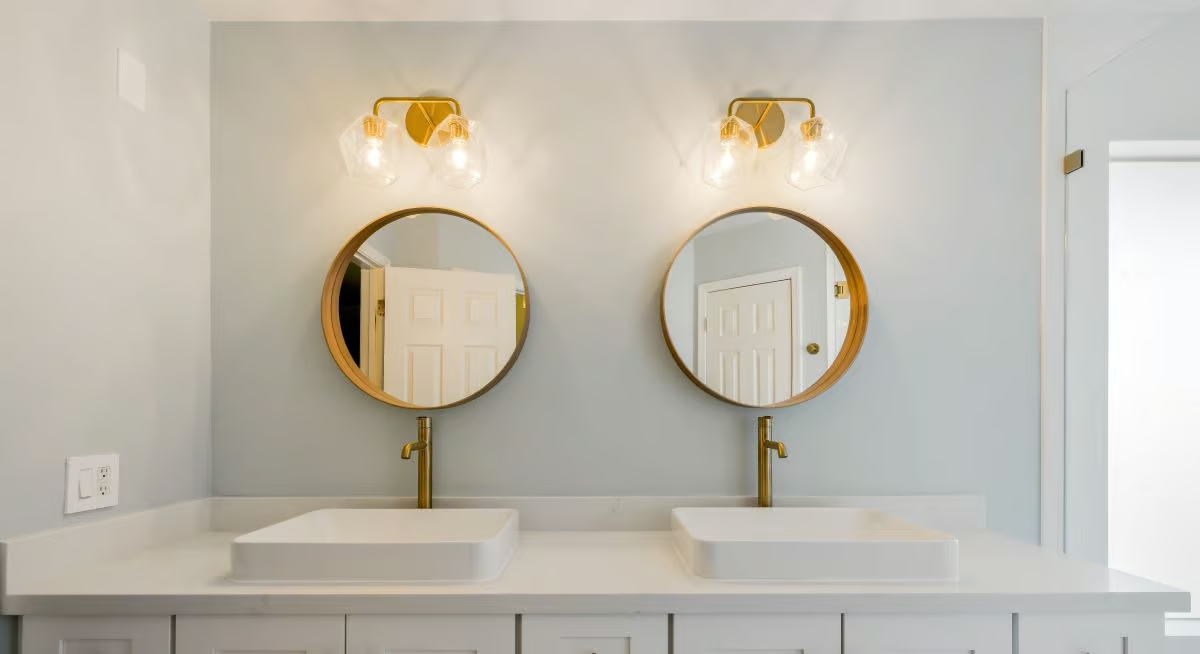
Layered lighting goes beyond placing fixtures in three zones. It requires intentional spacing, coordinated color temperature, and proportional distribution.
In custom homes in Power Ranch North and Red Mountain Ranch, designers frequently use perimeter recessed lighting rather than centering all fixtures. This technique spreads light across walls first, softening shadows before filling the center. The effect feels more natural and reduces ceiling glare.
Backlit mirrors remain one of the most effective upgrades. In bathrooms in Arcadia and Scottsdale Mountain, perimeter LED mirrors distribute light evenly outward, reducing contrast between wall and mirror. This creates a glow that mimics indirect daylight.
Under-vanity lighting introduces vertical dimension. In homes in Sun Lakes Palo Verde and Mountain Park Ranch South, toe-kick LED strips prevent the lower half of the room from disappearing into shadow. The floating effect makes enclosed bathrooms feel lighter and less boxed-in.
Ceiling-mounted diffused panels are also gaining popularity in homes in Biltmore and Taliverde. These panels spread light evenly without harsh spotlighting. When paired with 90+ CRI bulbs in the 4000K range, they create balanced, shadow-free environments.
Dimmer integration adds versatility. In bathrooms in North Central Heights and Desert Park, dimmers allow brightness to adjust between morning routines and night-time use, preventing eye strain while maintaining functionality.
Layering must feel seamless. No single fixture should dominate the room. The best can lights for bathroom layouts can help create an even ambient layer when recessed fixtures are spaced carefully and coordinated with mirror-level lighting.
Energy Efficiency Considerations in Phoenix, Arizona
Energy efficiency becomes more significant in bathrooms without windows because lights are used consistently throughout the day.
LED technology remains the most efficient choice. In properties in Arcadia and Mesa Grande, LED fixtures consume less electricity and generate less heat compared to incandescent or halogen bulbs. This reduces energy costs while maintaining brightness.
Selecting bulbs with higher lumens per watt ensures optimal efficiency. In bathrooms in Lakewood and Bella Via, choosing fixtures that produce 800 to 1100 lumens at lower wattage maintains clarity without unnecessary consumption.
Motion sensors improve efficiency in secondary bathrooms. In homes in Mountain Ranch and Power Ranch North, motion-activated lights prevent fixtures from being left on unintentionally.
Smart lighting systems offer programmable schedules. In residences in Scottsdale Mountain and Red Mountain Ranch, homeowners sometimes set lights to reduce intensity during daylight hours or automatically dim in the evening.
Energy-efficient lighting does not require sacrificing brightness. Strategic bulb selection and smart controls maintain performance while conserving power.
Creating Visual Depth in Fully Enclosed Bathrooms
Visual depth combats the flatness often associated with windowless spaces.
In homes in Arcadia and Biltmore, reflective wall tiles or glossy paint finishes amplify available light. Combining these surfaces with large mirrors enhances perceived brightness dramatically.
Contrast can also be used effectively. In bathrooms in North Central Heights and Taliverde, pairing light walls with slightly darker cabinetry adds dimension without absorbing excessive light.
Vertical lighting is particularly important. Sconces installed at eye level in Scottsdale Mountain and Desert Park create a balanced glow that eliminates heavy downward shadows.
Floating vanities in homes in Sun Lakes Palo Verde and Mountain Park Ranch South benefit from underlighting, which visually separates cabinetry from flooring.
Even small adjustments, like using lighter grout colors or high-sheen finishes, contribute to brightness in enclosed spaces.
Final Words: The Best Lighting For Bathroom Without Windows in Phoenix, Arizona
A windowless bathroom does not need to feel dim, confined, or uninviting. When lighting is layered thoughtfully, color temperature is selected intentionally, and fixtures are spaced proportionally, even fully enclosed spaces feel bright and expansive.
Across Mountain Ranch, Lakewood & Power Ranch North, homeowners are transforming interior bathrooms through strategic lighting upgrades rather than structural window additions.
Ambient ceiling lighting fills the space. Vertical task lighting eliminates shadows. Accent lighting introduces depth. High-CRI LEDs replicate natural daylight. Reflective surfaces enhance distribution.
When these elements are coordinated during remodeling, the result is a bathroom that feels intentional and comfortable rather than improvised.
If you are ready to redesign your lighting plan as part of a full renovation, Phoenix Home Remodeling can guide the integration of lighting, mirrors, cabinetry, and electrical systems with precision from the start.FAQs: Lighting For Bathroom Without Windows in Phoenix, Arizona
What is the biggest mistake homeowners make when lighting a bathroom without windows?
The biggest mistake homeowners make in the Phoenix metro area is relying on a single overhead light to illuminate the entire bathroom. This approach creates uneven lighting, harsh shadows, and a flat, dim feeling that makes the space less functional and less inviting.
In homes across Chandler and Mesa, especially in interior bathrooms without windows, a single ceiling fixture often leaves corners dark while over-lighting the center. This imbalance makes grooming tasks harder and reduces the overall comfort of the space. In higher-end homes in Scottsdale or Arcadia, this issue becomes even more noticeable because the rest of the bathroom design is refined, making poor lighting stand out.
Lighting in a windowless bathroom must be layered. Ambient lighting fills the room, task lighting at the mirror removes shadows, and accent lighting adds depth. Without this layered approach, the space will never feel complete.
At Phoenix Home Remodeling, lighting is designed as a system during the planning phase. Instead of adding fixtures after the fact, every light source is positioned intentionally to work together. This ensures the bathroom feels bright, balanced, and comfortable from every angle.
How do I make a windowless bathroom feel like it has natural light?
You cannot replicate true natural light in a windowless bathroom, but in the Phoenix metro area, you can come very close by designing lighting that mimics how daylight behaves. The key is to use multiple light sources that distribute illumination evenly rather than relying on one bright point.
In homes in Mesa and Gilbert, using high-CRI LED lighting with a color temperature between 4000K and 5000K creates a daylight-like effect. This improves color accuracy and makes the space feel more open and natural. Reflective surfaces such as large mirrors and glossy tile also help bounce light throughout the room.
In homes in Scottsdale or Biltmore, backlit mirrors are often used to create soft, indirect lighting that spreads across the wall, reducing harsh shadows. Under-vanity lighting adds another layer, making the space feel less boxed in.
Phoenix Home Remodeling plans these elements together during the design phase. By coordinating lighting, mirror placement, and finishes, the bathroom is designed to feel bright and natural, even without windows.
What type of lighting works best around the mirror in a windowless bathroom?
Lighting around the mirror is the most important element in a windowless bathroom because it directly affects daily usability. The best approach is vertical task lighting placed on both sides of the mirror rather than relying on overhead fixtures alone.
In homes across Tempe and Chandler, overhead lighting often creates shadows under the eyes and chin, making grooming tasks difficult. Side-mounted sconces eliminate these shadows by providing even illumination across the face.
In more modern homes in Scottsdale or Arcadia, LED backlit mirrors are often used as an alternative. These provide consistent, shadow-free lighting without the need for separate fixtures, creating a clean and streamlined look.
Placement matters just as much as the fixture itself. Lights should be positioned at eye level to ensure even distribution.
Phoenix Home Remodeling integrates mirror lighting into the overall design plan. This ensures that lighting, mirror size, and placement all work together, creating a setup that is both functional and visually balanced.
How many light sources should a bathroom without windows have?
A bathroom without windows in the Phoenix metro area should have multiple light sources layered together rather than relying on a single fixture. At a minimum, you should have ambient lighting, task lighting, and some form of accent lighting.
In homes in Gilbert and Queen Creek, ambient lighting typically comes from recessed ceiling lights or flush-mount fixtures that provide general illumination. Task lighting is added at the mirror to support grooming, while accent lighting such as under-vanity LED strips adds depth and reduces shadows.
In higher-end homes in Scottsdale or Paradise Valley, additional layers such as cove lighting or backlit mirrors are often used to enhance the overall effect.
The goal is balance. No single light source should dominate the room. Instead, the layers should work together to create even, comfortable illumination.
Phoenix Home Remodeling designs lighting systems during the planning phase to ensure each layer is placed correctly. This eliminates dark spots, reduces glare, and creates a space that feels bright and welcoming.
Does bulb type really matter in a windowless bathroom?
Bulb selection is critical in a windowless bathroom because it determines how the space feels and how accurately colors are represented. In the Phoenix metro area, where artificial lighting is the only source in these bathrooms, choosing the wrong bulb can make the space feel dim, yellow, or harsh.
High-CRI LED bulbs are essential because they provide accurate color rendering, which is important for tasks like makeup application and grooming. A CRI of 90 or higher ensures skin tones appear natural.
Color temperature also matters. In homes in Chandler and Mesa, bulbs in the 4000K to 5000K range are often preferred because they mimic daylight. Warmer bulbs below 3000K can make the room feel smaller and less vibrant.
Brightness should be measured in lumens, not watts. Adequate brightness ensures the space feels open and usable.
Phoenix Home Remodeling selects lighting specifications during the design phase so bulb type, brightness, and color temperature are all aligned with the overall lighting plan.
What are the most common lighting mistakes in Phoenix bathrooms without windows?
The most common lighting mistakes in the Phoenix metro area come from poor planning rather than poor products. Homeowners often install fixtures without considering how they work together, leading to uneven lighting and неудcomfortable spaces.
One major mistake is placing all lighting in the center of the ceiling. This creates bright spots and dark edges. Another is ignoring mirror lighting, which results in shadows that make daily tasks harder.
Mixing different color temperatures is also a problem. In homes in Mesa or Gilbert, combining warm and cool bulbs can create a disjointed and uncomfortable visual effect.
Finally, many homeowners underestimate the importance of spacing. Poorly placed recessed lights can leave parts of the room underlit.
Phoenix Home Remodeling avoids these issues by designing lighting as part of a complete system. Every fixture is placed intentionally, ensuring the final result feels balanced and functional.
What is the best first step when planning lighting for a bathroom without windows?
The best first step in the Phoenix metro area is to begin with a full lighting plan during the design phase rather than adding fixtures later. This ensures that lighting is integrated with the layout, finishes, and overall function of the bathroom.
In neighborhoods like Ahwatukee, Scottsdale, and Queen Creek, homeowners who start with planning avoid common issues such as dark corners, poor mirror lighting, and inconsistent color temperatures. Lighting must be coordinated with mirror placement, vanity size, and ceiling height.
During this phase, you determine where each light source will go, what type of fixture will be used, and how the layers will work together. This creates a clear plan before installation begins.
Phoenix Home Remodeling uses a planning-first design-build approach so lighting is treated as a core part of the remodel. Instead of fixing lighting problems after installation, the space is designed from the beginning to feel bright, balanced, and comfortable.
Podcast about Choosing the Right Lighting for Your Windowless Bathroom:
Video of this post:
PDF version:
Why Homeowners Trust Phoenix Home Remodeling
Phoenix homeowners evaluating bathroom remodeling companies face a wide range of contractor options, and the differences in how firms handle planning, pricing, and communication tend to matter far more than any single design decision.
Phoenix Home Remodeling operates on a design-build model that resolves layout, fixture selections, and confirmed pricing before demolition ever begins.
- Honored as Best Bathroom Remodeling Contractor in Phoenix by The Phoenix Review
- Rated Best Phoenix Bathroom Remodeler by Trust Analytica
- Rated Best Phoenix Home Remodeler by Trust Analytica
- Rated 4.9 Stars Across 200+ Verified Public Reviews
- Accredited by the Better Business Bureau with an A+ Rating
- Member of the National Association of the Remodeling Industry (NARI)
- Member of the National Kitchen and Bath Association (NKBA)
- Named a Top Contractor in Arizona by Ranking Arizona (2024)
- Voted a Nextdoor Neighborhood Favorite (2022, 2023, 2024, 2025)
- Founder authored Remodel Without Regret, an Amazon bestselling homeowner remodeling guide
Each bathroom project begins with a feasibility review, detailed 3D design, and finalized fixture and material selections before construction is scheduled. Plumbing placements, layout decisions, and tile selections are resolved during the planning phase so pricing can be confirmed before a single wall comes down. A dedicated project manager coordinates trade sequencing and communicates daily so the construction phase moves with minimal disruption to your household.
Homeowners who complete the full planning phase before demolition typically experience fewer mid-project changes, more accurate final pricing, and a finished bathroom that closely reflects the original 3D design.
Do you live in Phoenix, Scottsdale, Chandler, Gilbert, Mesa, Tempe, Sun Lakes, Ahwatukee, Laveen, or Queen Creek?
Ready to talk about your remodeling needs?
Take the next step...