
When comparing Granite Vs Marble bathroom countertops in Phoenix Arizona, granite is generally the more durable and lower-maintenance option, while marble delivers unmatched natural elegance and veining but requires more sealing and ongoing care. In Phoenix’s dry climate and hard-water environment, granite often performs better long-term in busy bathrooms, whereas marble is typically chosen for luxury master suites where aesthetics take priority over maintenance. The right choice depends on your lifestyle, maintenance tolerance, and overall design goals.
When it comes to choosing the right bathroom countertop, there are many choices. The two most popular materials used for this purpose are granite and marble bathroom countertops. Each material offers distinct benefits. Granite is known for strength and resilience. Marble is known for beauty and timeless appeal. Understanding the differences between them is essential before making a long-term investment in your home.
3 Key Takeaways:
- Granite is usually the more durable and lower-maintenance bathroom countertop option, especially for busy Phoenix bathrooms exposed to daily use and hard water.
- Marble offers a more distinctive, high-end appearance with natural veining, but it needs more consistent sealing, careful cleaning, and maintenance over time.
- The best choice depends on the homeowner’s lifestyle, maintenance tolerance, bathroom traffic, design goals, and whether durability or visual elegance matters more for the space.
In neighborhoods such as Arizona Country Club and Royal Palms Estates, countertop selection often aligns with architectural character and long-term property value. Meanwhile, in areas like Hayden Square AZ and Downtown Tempe AZ, homeowners frequently prioritize durability and easy maintenance.
Working with experienced bathroom remodel services ensures your countertop choice aligns with layout, storage, plumbing, and long-term use.
Bathroom Vanity Countertop
Bathroom countertops operate under different conditions than kitchen countertops. In bathrooms, surfaces are exposed to:
Toothpaste and mouthwash
Hair products and makeup
Hard water mineral deposits
Occasional heat from styling tools
Daily cleaning agents
Unlike kitchens, bathrooms rarely deal with hot cookware. However, hard water buildup is a consistent issue in Phoenix Arizona homes. This makes surface porosity a key factor in material performance.
In communities like Stratland Estates AZ and Val Vista Meadows AZ, family bathrooms see frequent use, which places greater demand on surface durability.
Countertops must balance performance with aesthetics.

Which Countertop Is Right For Your Bathroom: Granite Or Marble?
Granite and marble serve different homeowner priorities.
Granite appeals to homeowners seeking durability, lower maintenance, and consistent performance. Marble appeals to those seeking natural elegance and distinctive veining patterns.
In higher-end neighborhoods such as Silverleaf and Estancia, marble is frequently selected for master bathrooms to elevate the luxury experience.
Granite, however, has gained popularity in areas like Spyglass Estates AZ and Thunder Mountain AZ, where long-term durability is prioritized.
Selecting the right material depends on your maintenance tolerance and aesthetic preference.
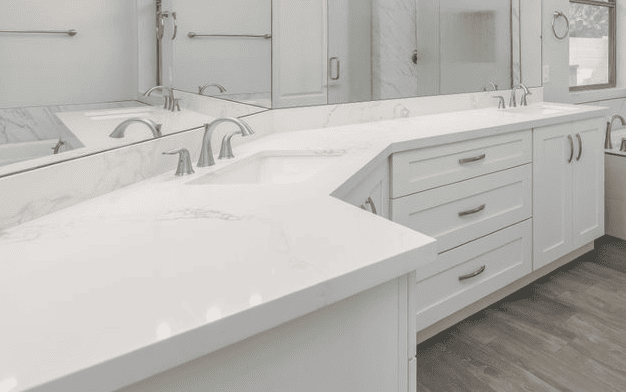
Comparing Durability And Cost
Durability is often the first deciding factor in the Granite Vs Marble bathroom countertops debate.
Granite Durability
Granite is an igneous rock formed under extreme pressure and heat. This makes it highly resistant to:
Scratching
Chipping
Heat damage
Impact stress
Granite is porous but less porous than marble. It requires sealing, typically every 1–2 years, to maintain stain resistance.
Marble Durability
Marble is a metamorphic rock composed primarily of calcium carbonate. It is softer than granite and more susceptible to:
Etching from acidic substances
Surface scratching
Staining without proper sealing
Marble requires sealing every 6–12 months in bathroom environments.
Cost Comparison
Marble typically ranges between $75–$100+ per square foot. Granite generally ranges between $60–$90+ per square foot, depending on slab rarity.
In neighborhoods such as Queen Creek Ranchettes and The Pecans, homeowners often evaluate both options based on budget and expected long-term use.
Granite tends to offer better value per dollar spent in high-use bathrooms.

Which Countertop Material Is Best?
The best material depends on lifestyle, budget, and design goals.
Granite performs well in:
- Children’s bathrooms
- Guest bathrooms
- High-traffic areas
- Bathrooms exposed to frequent product use
Marble performs best in:
- Luxury master bathrooms
- Low-traffic powder rooms
- Design-forward spaces prioritizing elegance
In Montelena, homeowners frequently select granite for practicality. In Royal Palms Estates, marble often appears in high-end custom remodels.
There is no universal answer, only the best answer for your household. Homeowners still comparing low-maintenance and high-end countertop options can also review marble vs quartz bathroom countertops to better understand how natural stone and engineered surfaces perform in daily bathroom use.

Pros And Cons Of Granite And Marble Countertops In The Bathroom
Choosing the right countertop material for your guest and master bathroom can be complex. Evaluating the benefits and drawbacks of marble and granite countertops is vital and requires careful thinking before making a selection.
While they share certain aspects, they also have some variations.
Granite is an incredibly robust igneous rock that comes in many distinct colors and patterns. Its non-porous surface makes it resistant to stains, heat, moisture, and bacteria, all things you want from a bathroom vanity countertop!
On the downside, however, its porous nature does mean it needs to be sealed regularly to prevent staining or discoloration. Plus, because it’s heavier than marble, installation may require more specialized tools or expertise.
In contrast, marble slabs has a luxurious look with unique veining that gives this classic material its distinctive appearance. Marble is heat-resistant as well so no worries about hot styling tools burning any surfaces here!
Still, while its elegant beauty is undeniable, it requires regular sealing like granite counters but also frequent cleaning due to its slightly softer surface compared to granite. And since it actually gets colder faster than other materials like quartz or concrete you might need extra insulation if using near sinks or toilets.
Choosing between marble and granite isn't easy; each one offers something special depending on your style preferences and lifestyle needs. With careful consideration of both options – including weighing up their individual Pros & Cons, you'll make sure you find the perfect fit for your bathroom vanity countertop.
Granite Pros
Highly durable
Scratch resistant
Heat resistant
Lower maintenance
Wide color selection
Granite Cons
Requires sealing
Heavier installation
Limited natural veining variation
Marble Pros
Timeless elegance
Unique veining
Heat resistant
Classic aesthetic
Marble Cons
Prone to etching
Requires regular sealing
More susceptible to scratching
Higher maintenance commitment
In neighborhoods such as Arizona Biltmore Estates and Biltmore Terrace, marble is often selected for design prestige, while granite is selected for practicality in other parts of the home.

Choosing Between A Granite Countertop And Marble Countertop For Your Bathroom
When it comes to making your bathroom vanities look and feel luxurious, one of the most significant decisions is choosing between marble and granite countertops. Both materials have their own unique advantages that can guide you to make the ideal decision for your bathroom's style and functionality.
Granite countertops is a bit more durable than marble, so if you're looking for something that is formidable, granite counters is recommended.
On the other hand, marble has its own classic elegance which gives any space a sense of refinement. So if you want to add some class to your bathroom, marble could do the trick.
No matter which material you choose, both offer great options that are sure to fit with whatever aesthetic or practical needs you may have for your bathroom. With these two choices in mind, now all there's left to do is figure out how to decide between them.
That's where our guide steps in, read on for advice on deciding between granite and marble countertops.
In Scottsdale’s luxury markets such as Silverleaf, marble continues to represent prestige. However, granite remains a strong contender due to lower upkeep.
Balancing durability with design ensures satisfaction long after installation.

A Guide To Deciding Between Granite And Marble Countertops
Knowing what sets granite and marble countertops apart for your bathroom is a big decision. After all, having a long-lasting bathroom while also being luxurious and stylish is rewarding, not to mention the savings that you can get out of it.
That’s why it’s important to understand the differences between marble and granite before making a choice.
Granite and marble have distinct qualities that can help inform your decision-making process. For example, granite is known for its durability and stain resistance whereas marble has an elegant look with softer tones.
Both are beautiful options, but each comes with its own set of perks and flaws– so be sure to make the audit that best suits your needs before choosing one or the other.
When deciding between granite and marble countertops, it's beneficial to consider the necessary maintenance required to keep them best looking over time. Granite may require regular sealing treatments in order to protect it from staining or water damage, while marble should typically be wiped down with a damp cloth regularly as part of the cleaning routine.
Additionally, both areas need special care when dealing with acidic substances like vinegar or lemon juice; acidity can cause etching in either material if not instantly cleaned up with dish soap after spills occur.
TIP: Consult an experienced contractor who specializes in countertop installation when selecting the right choice for your bathroom- they'll be able to provide specific advice based on your budget, lifestyle, and design preferences!

Understanding The Differences Between Marble And Granite Countertops
Deciding between granite and marble countertops is two sides of the same coin, both materials have their own distinction, and to make a decision that you won't regret you need to weigh them up.
Understanding the differences between marble and granite countertop is the key if you want to ensure that you make the best choice for your home.
Granite is renowned for its durability, being harder than marble and resistant to heat damage. It also comes in a wide range of colors, allowing you to find something that complements the style of your bathroom.
On the downside, however, it requires regular sealing or resealing every few years in order to keep moisture out and maintain its appearance.
Marble countertops offer an elegant look with unique veining patterns that can't be found with other materials. They are also more affordable than granite while still providing good performance when sealed properly on an annual basis.
That said, they are softer which makes them prone to scratches and stains over time if not cared for regularly.
Comparing both types side by side means considering all aspects carefully: cost-effectiveness, maintenance needs, visual appeal and overall longevity. With this knowledge under your belt, you'll be ready to choose the perfect material for your new bathroom countertop!

Granite Vs. Marble: Making The Right Choice For Your Bathroom
When it comes to updating a bathroom, the choices can be overwhelming. To help you make an informed decision, let's compare two of the most popular options for countertops: marble and granite.
Think of them as siblings in a family, both have similarities and differences that need to be considered before making a choice.
For example, when my brother was deciding which career path he wanted to take, he weighed his options carefully; similarly, if you’re considering new countertops for your bathroom renovation project, it pays to take some time to look at all of the variables involved with each option.
Granite is known for its strength and durability while marble brings elegance and luxury into any room. Granite is heat-resistant and more scratch-resistant than marble but also tends to be more expensive.
Marble is a softer stone than granite so it needs more maintenance in order to stay looking great over time, especially if used in high-traffic areas like bathrooms or kitchen counters. Plus, regular sealing will help maintain its beauty even longer!
So how do you decide between marble and granite? The best way is by assessing what kind of lifestyle you lead and whether one material better suits your needs than the other – are scratches a concern?
Do you prefer the elegant look of marble? Or perhaps the strength offered by granite appeals to you more?
Once you know exactly what type of countertop material would work best for your home or business, then it will become easier to determine which one is best suited for your unique situation.
By weighing up all the factors involved with selecting marble and granite countertops for your bathroom remodel projects, such as cost, aesthetics, and maintenance requirements, you can confidently choose one material over another depending on your specific needs.
With this knowledge under your belt, you'll soon find yourself enjoying beautiful new countertops that perfectly fit not only your style but also match the level of functionality desired from them too.

How To Compare Granite And Marble Countertops In The Bathroom
Choosing between granite and marble countertops can be a daunting task. Like two sides of the same coin, deciding which one is right for your bathroom requires careful consideration - not to mention making sure you're getting the best value for your money!
It's enough to make even the calmest homeowner break out in a cold sweat.
But fear not - there’s no need to feel overwhelmed by this decision. Comparing granite and marble countertops isn't as tricky as it may seem.
With just a few simple steps, you'll be able to confidently choose the option that works best for you and your home.
To get started, ask yourself what look or design aesthetic you want from your bathroom counters.
Do you prefer an elegant appearance with subtle veining?
Or do bolder colors and patterns suit your style better?
Marble comes in shades ranging from soft whites to deep blues but tends to showcase more delicate details than its counterpart, while granite offers more vibrant hues and stronger patterns. Depending on how much wear-and-tear your counters will endure, consider if one material may work better than another too.
Granite is often considered tougher than marble, so it could prove a good choice when durability is paramount.
So take heart - comparing granite and marble countertops don't have to cause anxiety! Now armed with these tips, you should feel empowered to make an informed decision about which type of stone will bring beauty - and peace of mind - into your home.
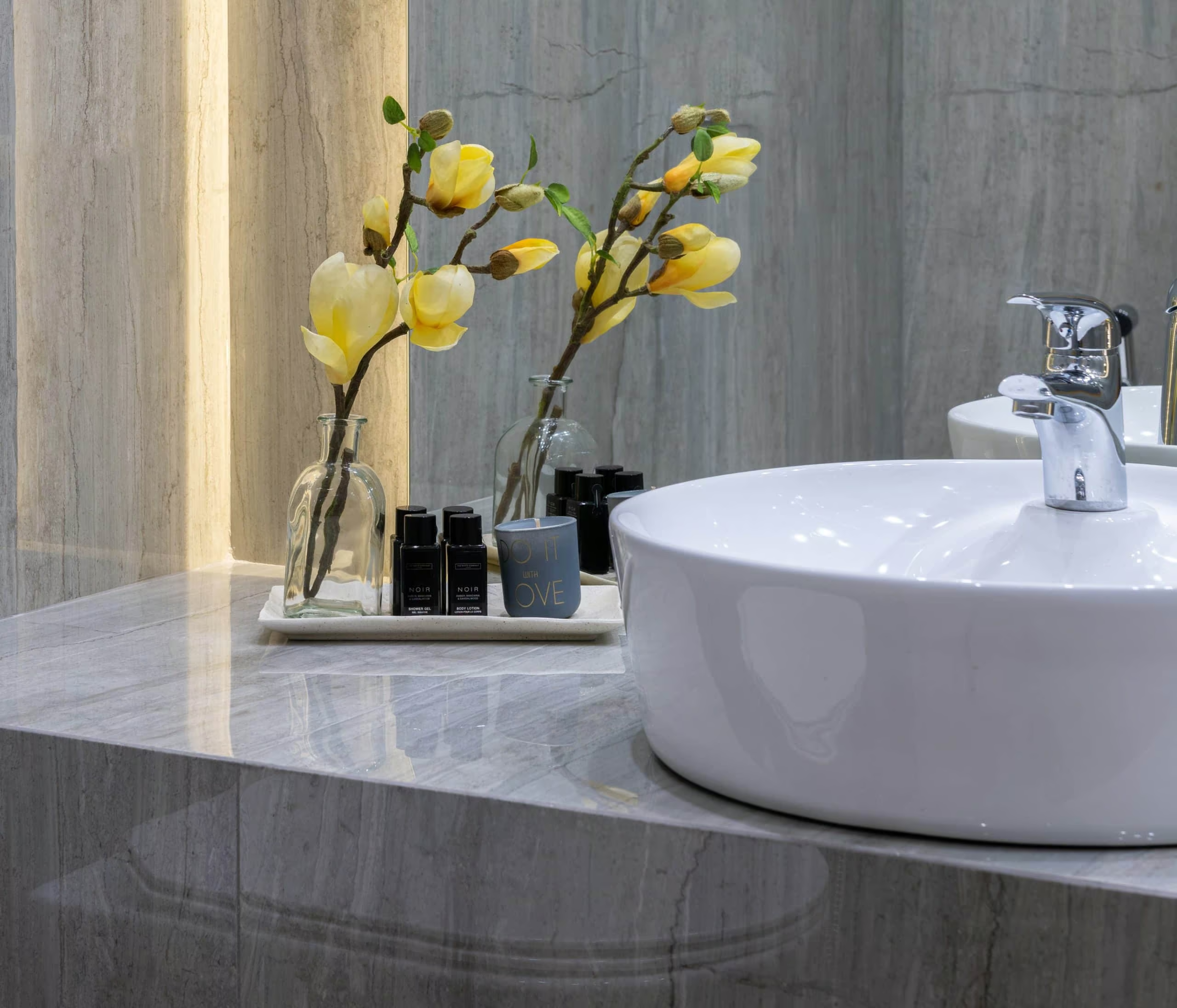
Maintenance Requirements Over Time
Maintenance is where granite and marble differ most clearly.
Marble Maintenance in Phoenix Arizona
Marble requires consistent sealing because it is porous. In bathroom settings, this typically means resealing every 6–12 months depending on usage.
Without sealing, marble can:
- Absorb cosmetic stains
- Show etching from acidic products
- Develop dull spots from water exposure
In homes throughout Phoenix especially in refined areas like Arizona Country Club, marble remains popular despite maintenance requirements because of its unmatched visual appeal.
However, homeowners must be comfortable with routine care and occasional professional polishing to maintain its pristine look.
Granite Maintenance in Phoenix Arizona
Granite is also porous, but it is denser and less reactive than marble. Sealing is still recommended, typically every 1–2 years.
Granite is less prone to:
- Acid etching
- Surface scratching
- Visible staining
In active family homes in Tempe, particularly Hayden Square AZ and Downtown Tempe AZ, granite’s resilience often makes it the preferred choice.
Granite’s lower maintenance burden appeals to homeowners who prioritize simplicity. For another practical countertop comparison, granite vs quartz bathroom countertops can help homeowners weigh natural stone durability against the consistency and low-maintenance appeal of quartz.
Climate Impact In The Phoenix Area
Phoenix Arizona’s desert climate introduces specific countertop considerations.
Hard water is common across the metro area, including neighborhoods such as Stratland Estates AZ and Val Vista Meadows AZ. Mineral deposits can accumulate on surfaces if not wiped regularly.
Marble In Dry Climates
Marble does not expand significantly in dry climates, but mineral deposits can leave visible marks if left untreated. Because marble is chemically reactive, hard water buildup may dull the finish over time.
Granite In Dry Climates
Granite performs well in arid conditions. It resists mineral staining more effectively and maintains polish longer.
In communities such as Spyglass Estates AZ and Thunder Mountain AZ, granite is frequently selected for its durability in everyday use.
Environmental conditions matter when evaluating longevity.
Design Versatility And Aesthetic Appeal
Aesthetics remain one of the primary reasons homeowners debate Granite Vs Marble bathroom countertops.
Marble Aesthetic
Marble offers:
- Unique natural veining
- Soft, luminous tones
- Classic European elegance
- Organic movement
Each slab is one-of-a-kind. This uniqueness is highly valued in luxury homes across Silverleaf and Estancia.
Marble elevates the atmosphere of master bathrooms and spa-inspired retreats.
Granite Aesthetic
Granite provides:
- Bold color variation
- Speckled and dramatic patterns
- Deep, rich tones
- Contemporary strength
Granite tends to have more granular patterning than marble’s flowing veining. In neighborhoods like Queen Creek Ranchettes and The Pecans, granite often complements transitional or modern designs.
Choosing between elegance and strength-driven aesthetics is part of the decision process.
Cost Considerations In Phoenix Arizona
Cost differences between granite and marble vary depending on slab rarity and installation complexity.
Marble Pricing
Marble typically ranges from:
- $75–$120+ per square foot (material only)
Luxury marble varieties can exceed these numbers.
Granite Pricing
Granite generally ranges from:
- $60–$100+ per square foot
Granite is often slightly more affordable but premium varieties can rival marble pricing.
Installation costs, edge profiles, cutouts, and slab thickness influence final totals.
In upscale neighborhoods like Royal Palms Estates and Arizona Biltmore Estates, material choice is often driven more by aesthetic goals than price alone.
Budget alignment should reflect overall remodel priorities.
Resale Value Implications
Both granite and marble contribute positively to resale value when used appropriately.
Marble often signals luxury and exclusivity. Granite signals durability and practical value.
Buyers in high-end Scottsdale markets like Silverleaf may expect marble in master bathrooms. However, granite is widely accepted and considered premium across most price ranges.
Resale perception depends on neighborhood standards and overall remodel quality.
Selecting a material consistent with local expectations enhances market competitiveness.
Safety Considerations
Safety is often overlooked in countertop discussions.
Granite and marble both offer heat resistance suitable for bathrooms. However, surface finish affects slip resistance around sinks.
Polished finishes can become slick when wet. Honed finishes may offer slightly more traction.
Selecting appropriate edge profiles reduces risk of injury from sharp corners.
Durability also contributes to safety by preventing cracks or fractures over time.
Long-Term Investment Perspective
Countertops should be viewed as long-term investments rather than short-term aesthetic upgrades.
Granite offers:
- Predictable aging
- Lower maintenance commitment
- Strong performance in high-use spaces
Marble offers:
- Timeless visual impact
- Architectural authenticity
- Unique natural character
In homes located in Montelena, homeowners often balance aesthetics with practicality by selecting granite for children’s bathrooms and marble for primary suites.
Matching the material to its intended use optimizes long-term satisfaction.
Final Thoughts
Granite Vs Marble bathroom countertops in Phoenix Arizona is not a matter of right or wrong. It is a matter of priorities.
Granite provides durability, lower maintenance, and dependable performance in high-use bathrooms. Marble delivers luxury, elegance, and distinctive veining that elevates master suites.
In Phoenix’s desert climate, granite often proves to be the more practical everyday solution, while marble remains a high-end aesthetic choice for homeowners willing to commit to maintenance.
If you are planning a bathroom renovation and want expert guidance tailored to your home, neighborhood standards, and lifestyle, working with Phoenix Home Remodeling ensures your countertop selection aligns with long-term durability, value, and design excellence.
The right countertop enhances both daily living and long-term investment.
FAQs: Granite Vs Marble Bathroom Countertops
How do I choose between granite and marble for my specific bathroom remodel in the Phoenix metro area?
Choosing between granite and marble in the Phoenix metro area comes down to how your bathroom will actually be used, not just how you want it to look in photos. Granite is built for durability and consistency, while marble is chosen for its natural elegance and one-of-a-kind character.
In areas like Chandler and Gilbert, where bathrooms are used daily by families, granite tends to perform better because it resists wear, staining, and scratching more effectively. In contrast, homes in Arcadia or Biltmore often lean toward marble in primary bathrooms because the design goal is to create a high-end, visually striking space.
The real decision comes down to your tolerance for maintenance and your priorities. If you want a surface that looks the same year after year with minimal effort, granite is the stronger fit. If you value uniqueness and are comfortable maintaining the surface regularly, marble may be worth it.
At Phoenix Home Remodeling, this decision is not made in isolation. During the design phase, countertops are selected alongside cabinetry, lighting, and layout so the material fits your lifestyle and the overall design. That way, you are not just choosing a surface. You are choosing how your bathroom will function long-term.
Is granite always the better choice for durability in Phoenix bathrooms?
Granite is generally the more durable choice in the Phoenix metro area, but “better” depends on how the space is used and what you expect from it over time. Granite is harder, more resistant to scratches, and less reactive to common bathroom products, which makes it ideal for high-use environments.
In family-heavy areas like Mesa or Tempe, especially in neighborhoods like Downtown Tempe or Hayden Square, granite is often the safer long-term option because it can handle frequent use without showing wear quickly. It also performs well against hard water exposure, which is a consistent factor across the Phoenix area.
Marble, while softer, is not a poor performer. It simply requires more attention. It can develop etching or subtle surface changes over time, especially when exposed to acidic products or mineral deposits. Some homeowners appreciate this aging process, while others do not.
Phoenix Home Remodeling helps homeowners evaluate durability expectations during the planning phase. If your priority is resilience and low maintenance, granite is usually the right answer. If your priority is design impact and you accept the trade-offs, marble can still be a strong choice.
How does hard water in Phoenix affect granite and marble countertops?
Hard water is one of the most important factors influencing countertop performance in the Phoenix metro area. Unlike coastal regions where humidity is the concern, Phoenix bathrooms deal with mineral deposits that build up over time.
Marble is more sensitive to this because it is chemically reactive. Mineral deposits can leave marks or dull the surface if not cleaned regularly. Over time, this can change the appearance of the countertop, especially if sealing is not maintained consistently.
Granite handles hard water better because it is denser and less reactive. While it still benefits from sealing, it is less likely to show visible effects from mineral buildup. This makes it a more forgiving option in everyday use.
In neighborhoods like Stratland Estates or Val Vista Meadows, where family bathrooms see frequent use, this difference becomes more noticeable over time.
Phoenix Home Remodeling factors these environmental conditions into material selection during the design phase. Choosing a countertop is not just about style. It is about how the material responds to real conditions in your home over years of use.
Does choosing marble or granite impact resale value in Phoenix?
Both marble and granite can positively impact resale value in the Phoenix metro area, but they signal different things to buyers. Marble is often associated with luxury and design-forward homes, while granite represents durability and practicality.
In high-end markets like Silverleaf or Estancia, marble may align more closely with buyer expectations in primary bathrooms. It creates a visual statement that supports the overall perception of the home as a luxury property. However, buyers are also increasingly aware of maintenance requirements, which can influence their decision.
Granite has broader appeal across a wider range of neighborhoods, including Scottsdale, Chandler, and Queen Creek. Buyers often see it as a reliable, low-maintenance option that will not require immediate upkeep after purchase.
The key factor is consistency. The countertop material should match the level of the home and the expectations of the neighborhood. A mismatch can reduce perceived value even if the material itself is high-end.
Phoenix Home Remodeling evaluates resale positioning during the design phase so material selections support both your current lifestyle and future market appeal.
Is marble worth the extra cost and maintenance in a bathroom remodel?
Marble can absolutely be worth the extra cost and maintenance in the Phoenix metro area, but only when it aligns with your priorities. It is not a practical upgrade. It is a design-driven decision.
In homes in Arcadia Proper or Royal Palms Estates, marble is often chosen because it delivers a level of visual impact that other materials cannot replicate. Each slab is unique, and that individuality creates a sense of luxury that is difficult to achieve with engineered materials.
However, that beauty comes with responsibility. Marble requires regular sealing, careful cleaning, and an understanding that the surface will change over time. It is not a “set it and forget it” material.
For homeowners who want a bathroom that feels elevated and are willing to maintain it, marble delivers long-term satisfaction. For those who prefer simplicity and predictability, granite is usually the better investment.
Phoenix Home Remodeling helps homeowners make this decision during the design phase by showing how each material will look and perform in the full context of the remodel. The goal is to ensure the choice feels right both visually and practically.
What are the biggest mistakes homeowners make when choosing between granite and marble?
The biggest mistake homeowners make in the Phoenix metro area is choosing based on appearance alone without considering long-term performance. A countertop is not just a design feature. It is a daily-use surface that must hold up over time.
Another common mistake is underestimating maintenance. Marble requires consistent care, and homeowners who are not prepared for that often become frustrated after installation. On the other hand, some homeowners avoid marble entirely without considering whether their usage actually demands a more durable material.
Ignoring the rest of the design is also a problem. Countertops must work with cabinetry, lighting, and layout. Choosing a material in isolation can lead to a space that feels disjointed.
Finally, many homeowners try to make this decision too early, before the full remodel is planned. This leads to changes later, which can increase cost and delay the project.
Phoenix Home Remodeling avoids these issues by making countertop selection part of a structured design process. Every decision is made within the context of the full project, ensuring the final result works as a complete system.
What is the best first step before choosing a bathroom countertop material?
The best first step in the Phoenix metro area is to begin with a structured Feasibility, Planning, and Design phase before selecting granite or marble. This ensures your decision is based on how the entire bathroom will function, not just a single material choice.
In neighborhoods like Ahwatukee, Mesa, and Queen Creek, homeowners who start with planning avoid the most common remodeling issues, including mismatched materials, budget surprises, and layout conflicts. Countertops must align with cabinet dimensions, plumbing placement, and overall design flow.
During this phase, you define your priorities, select materials, and see the full bathroom in 3D before construction begins. This removes guesswork and allows you to make decisions with confidence.
Phoenix Home Remodeling uses a planning-first design-build process to guide every project. Instead of asking whether granite or marble is better in general, you determine which material is right for your specific home, your lifestyle, and your long-term goals.
Video of this post:
Audio You Can Listen:
Downloadable PDF:
Why Homeowners Trust Phoenix Home Remodeling
Phoenix homeowners evaluating bathroom remodeling companies face a wide range of contractor options, and the differences in how firms handle planning, pricing, and communication tend to matter far more than any single design decision.
Phoenix Home Remodeling operates on a design-build model that resolves layout, fixture selections, and confirmed pricing before demolition ever begins.
- Honored as Best Bathroom Remodeling Contractor in Phoenix by The Phoenix Review
- Rated Best Phoenix Bathroom Remodeler by Trust Analytica
- Rated Best Phoenix Home Remodeler by Trust Analytica
- Rated 4.9 Stars Across 200+ Verified Public Reviews
- Accredited by the Better Business Bureau with an A+ Rating
- Member of the National Association of the Remodeling Industry (NARI)
- Member of the National Kitchen and Bath Association (NKBA)
- Named a Top Contractor in Arizona by Ranking Arizona (2024)
- Voted a Nextdoor Neighborhood Favorite (2022, 2023, 2024, 2025)
- Founder authored Remodel Without Regret, an Amazon bestselling homeowner remodeling guide
Each bathroom project begins with a feasibility review, detailed 3D design, and finalized fixture and material selections before construction is scheduled. Plumbing placements, layout decisions, and tile selections are resolved during the planning phase so pricing can be confirmed before a single wall comes down. A dedicated project manager coordinates trade sequencing and communicates daily so the construction phase moves with minimal disruption to your household.
Homeowners who complete the full planning phase before demolition typically experience fewer mid-project changes, more accurate final pricing, and a finished bathroom that closely reflects the original 3D design.
Do you live in Phoenix, Scottsdale, Chandler, Gilbert, Mesa, Tempe, Sun Lakes, Ahwatukee, Laveen, or Queen Creek?
Ready to talk about your remodeling needs?
Take the next step...