
When planning a kitchen remodel in Phoenix, one of the most important structural decisions homeowners face is choosing between a kitchen island and a peninsula. While both options provide additional workspace, storage, and seating, they influence the entire flow, usability, and visual balance of your kitchen in very different ways.
A kitchen island is ideal for open layouts where movement on all sides enhances functionality and social interaction, while a peninsula is better suited for more compact or structured kitchens where efficient use of space and defined workflow take priority. The right choice depends on your layout, lifestyle, and how you want your kitchen to function day to day.
3 Key Takeaways:
- Kitchen islands work best in open layouts with enough clearance on all sides, while peninsulas are often better for compact kitchens that need added storage, seating, or prep space without crowding the room.
- The right choice depends on how the kitchen is used every day, including cooking habits, traffic flow, seating needs, entertaining, appliance placement, and storage priorities.
- A well-planned island or peninsula should improve workflow, support daily routines, and feel visually connected to the surrounding cabinetry, countertops, lighting, and overall kitchen layout.
In many Phoenix homes, especially those in areas like Arcadia Lite and Desert Ridge, this decision is not just about design preference. It is about how the kitchen connects with the rest of the home, how people move through the space, and how efficiently daily tasks can be completed. Working with a professional kitchen remodeling expert ensures that this decision is made strategically, not just visually.
Understanding Kitchen Islands and Peninsulas
Kitchen islands and peninsulas may appear similar at first glance, but they function very differently once integrated into a real kitchen environment. Understanding their structural and functional differences is essential before making any design decision.
A kitchen island is a freestanding structure positioned away from walls and cabinetry. Because it is accessible from all sides, it creates a highly flexible workspace that can be used simultaneously by multiple people. It often becomes the centerpiece of the kitchen, serving as a hub for cooking, preparation, dining, and social interaction.
A peninsula, by contrast, is connected to the main kitchen layout on one side. It extends outward, forming a natural boundary within the kitchen while still offering many of the same benefits as an island. Instead of creating an open central hub, it creates a guided flow that directs movement and defines zones within the space.
In neighborhoods like Ahwatukee Foothills and North Gateway, the choice between these two options often depends on how open the home feels overall. Larger homes tend to accommodate islands comfortably, while more compact or transitional layouts benefit from the efficiency of a peninsula.

Differences Between Kitchen Islands and Peninsulas
Spatial Requirements
The amount of available space is one of the most important factors when choosing between an island and a peninsula. Kitchen islands require generous clearance on all sides to function properly. Without enough room, they can disrupt movement, create congestion, and reduce overall efficiency.
A well-designed island typically needs at least 42 to 48 inches of clearance around it. This allows for smooth traffic flow, proper appliance access, and comfortable movement for multiple users at once.
Before committing to an island, homeowners should understand how to choose the right kitchen island size so the layout supports seating, storage, appliance access, and comfortable movement.
Peninsulas require significantly less space because they are attached to existing cabinetry. This makes them a practical solution for kitchens where adding a freestanding island would feel cramped or impractical.
In homes across Chandler Heights and Estrella Mountain Ranch, peninsulas are often used to maximize usable space without compromising comfort. They provide many of the same benefits as islands but in a more space-conscious format.
Space Utilization
Kitchen islands excel at creating a central workspace that can be used for multiple purposes at once. They are often designed to accommodate cooking, prep work, seating, and storage simultaneously, making them incredibly versatile.
Peninsulas, however, are more focused on efficiency and structure. Because they extend from the main kitchen, they naturally guide movement and create defined work zones. This can make cooking and preparation more streamlined, especially in kitchens where organization is essential.
The difference comes down to how you want your kitchen to feel. Islands create openness and flexibility, while peninsulas create direction and efficiency.
Design Flexibility
One of the biggest advantages of kitchen islands is their design flexibility. Because they are not attached to walls or cabinetry, they can be customized in countless ways. Homeowners can experiment with different shapes, materials, finishes, and features to create a truly unique focal point.
Homeowners leaning toward an island can explore kitchen island design ideas to compare storage options, seating layouts, finishes, shapes, and built-in features before finalizing the design.
Peninsulas are more limited in this regard because their design must align with the existing kitchen structure. However, this limitation can also be an advantage. It ensures visual consistency and creates a seamless integration with the rest of the kitchen.
In upscale areas like Desert Highlands and Grayhawk, islands are often used to introduce bold design elements, while peninsulas are chosen for their ability to maintain cohesion within the space.
Styles and Shapes
Kitchen islands offer a wide range of shapes and configurations. Rectangular islands are the most common, but many homeowners opt for square, curved, or even custom-shaped designs to suit their space.
Peninsulas are typically more linear in design. They often follow L-shaped or U-shaped layouts, extending naturally from existing cabinetry.
While islands provide more creative freedom, peninsulas provide structural harmony. The choice depends on whether you prioritize customization or integration.

Functionality and Accessibility
Accessibility plays a major role in how a kitchen functions on a daily basis. Kitchen islands provide access from all sides, making them ideal for households where multiple people use the kitchen at the same time.
Peninsulas offer a more controlled form of accessibility. Because they are connected on one side, they guide movement and create a more organized workflow. This can be especially beneficial in busy kitchens where efficiency is important.
Homes in Biltmore Heights and Moon Valley often reflect this distinction. Larger households tend to favor islands for their openness, while more compact or task-focused kitchens benefit from the structured flow of a peninsula.
Storage Solutions
Both islands and peninsulas provide valuable storage, but they do so in different ways.
Kitchen islands allow storage on multiple sides, making them ideal for incorporating deep drawers, cabinets, and specialty storage features. They can also include open shelving for decorative or frequently used items.
Peninsulas integrate storage into the existing kitchen layout. This makes them efficient and practical, especially in kitchens where maximizing every inch of space is important.

The Pros and Cons of Kitchen Islands
Advantages
Kitchen islands offer a wide range of benefits that go beyond simple functionality. They create a central gathering space that encourages interaction and connection. Whether preparing meals or entertaining guests, the island becomes a focal point where activity naturally converges.
They also provide additional workspace, which is especially valuable in kitchens where counter space is limited. This makes cooking more efficient and enjoyable.
In larger Phoenix homes, particularly in areas like Paradise Valley and DC Ranch, kitchen islands often serve as both functional workspaces and design statements.
Disadvantages
Despite their advantages, kitchen islands are not suitable for every space. They require sufficient room to function properly, and without adequate clearance, they can disrupt movement and reduce efficiency.
They also tend to be more expensive to install due to additional materials, labor, and potential plumbing or electrical work.
Design and Aesthetic Value
A kitchen island can dramatically enhance the visual appeal of a kitchen. It provides an opportunity to introduce contrasting colors, unique materials, or custom features that elevate the overall design.
Cost Implications
The cost of a kitchen island varies widely depending on size, materials, and features. While it can be a significant investment, it often adds value to the home by improving both functionality and appeal.
Social and Functional Aspects
Kitchen islands are inherently social. They create a space where cooking and conversation happen simultaneously, making them ideal for families and those who enjoy entertaining.
If the island will be used for seating, meals, or casual gathering, homeowners should consider whether the kitchen island should be taller than counters so comfort, prep space, and visual balance work together.
Space and Layout Considerations
Before adding an island, it is essential to evaluate your kitchen layout carefully. Proper planning ensures that the island enhances rather than hinders functionality.

The Pros and Cons of Kitchen Peninsulas
Advantages
Kitchen peninsulas are highly efficient and practical, particularly in kitchens where space is limited. They provide additional workspace, storage, and seating without requiring the open clearance that islands need.
In areas like Laveen Ranch and South Mountain, peninsulas are often used to maximize functionality in smaller kitchens while maintaining a clean and cohesive design.
Disadvantages
Peninsulas offer less design flexibility and can feel more enclosed if not designed thoughtfully. They also limit accessibility compared to islands.
Efficient Use of Space
Peninsulas make excellent use of available space by extending from existing cabinetry. This allows homeowners to gain additional functionality without expanding the kitchen footprint.
Limited Design Options
Because peninsulas are attached, their design is influenced by the existing layout. While this can limit creativity, it also ensures consistency.
Cost-Effectiveness
Peninsulas are generally more affordable than islands because they require fewer materials and less structural modification.
Potential for Clutter
Without proper organization, peninsulas can become cluttered due to their proximity to main work areas. Smart storage solutions are essential.
Integration with Kitchen Layout
A well-designed peninsula enhances workflow and creates a natural transition between different areas of the kitchen.
Accessibility Issues
Proper spacing is crucial to avoid tight or awkward layouts. Ensuring adequate clearance maintains comfort and usability.

Kitchen Island vs. Peninsula: Making the Right Choice
Choosing between a kitchen island and a peninsula is ultimately a decision rooted in how your kitchen is used every day. It is not simply about which option looks better in a showroom or design magazine. It is about how your space supports movement, interaction, cooking efficiency, and long-term comfort.
In Phoenix homes, particularly in areas like Desert Ridge Estates and Gainey Ranch, the decision often reflects lifestyle priorities. Homes designed for entertaining tend to favor islands because they allow guests to gather comfortably without interrupting workflow. Meanwhile, homes where efficiency and defined cooking zones are prioritized often benefit from peninsulas that streamline movement and reduce unnecessary steps.
The right choice requires careful evaluation of layout constraints, daily routines, and the role your kitchen plays within the broader home. A thoughtful design approach ensures that whichever option you choose enhances both usability and visual balance.
Assessing Your Kitchen’s Layout
The layout of your kitchen determines whether an island or peninsula is even feasible. An island requires open space on all sides, which means kitchens with tight dimensions or limited walkways may struggle to accommodate one without compromising movement.
Peninsulas, on the other hand, work within the existing footprint. They extend from cabinetry and use available space more efficiently, making them ideal for kitchens where expanding outward is not possible.
Homes in Arcadia Proper and McCormick Ranch often illustrate this contrast clearly. Open-concept layouts tend to support islands naturally, while transitional or enclosed kitchens benefit from peninsulas that maintain flow without overcrowding.
Understanding the physical boundaries of your kitchen is the first step toward making a decision that feels natural rather than forced.
Considering Your Budget
Budget plays a critical role in determining which option makes more sense for your remodel. Kitchen islands often require additional structural planning, including electrical work, plumbing adjustments, and sometimes flooring modifications. These elements increase both labor and material costs.
When an island includes small appliance use, charging areas, or built-in features, homeowners should also know whether kitchen islands need outlets so power access is planned early.
Peninsulas are generally more cost-effective because they build upon existing infrastructure. They often require fewer modifications and can utilize current plumbing and electrical setups.
In areas like Desert Mountain and Troon North, homeowners may prioritize premium island designs that include built-in appliances or custom finishes. In contrast, more budget-conscious remodels in nearby communities often lean toward peninsulas that deliver functionality without excessive cost.
Balancing design ambition with financial practicality ensures that your kitchen remodel remains both beautiful and sustainable.
Analyzing Your Needs and Preferences
The way you use your kitchen daily should guide your decision more than any design trend. A household that cooks frequently may prioritize workflow efficiency, while a household that entertains often may value openness and social interaction.
Kitchen islands excel in environments where multiple people use the space simultaneously. They provide room for cooking, prepping, and socializing without interference.
Peninsulas are ideal for homeowners who prefer a more structured environment. They guide movement, create defined zones, and often make smaller kitchens feel more organized.
In communities like DC Ranch and Silverleaf, lifestyle differences often dictate the choice. Some homeowners design their kitchens as social hubs, while others focus on precision and efficiency.
Understanding your priorities ensures that your kitchen works for you rather than against you.
Weighing Pros and Cons
Every kitchen design choice involves trade-offs. Islands offer flexibility, openness, and visual impact, but they require more space and investment. Peninsulas offer efficiency, affordability, and integration, but they may limit accessibility and design variation.
The key is not to find a perfect option but to find the right balance for your specific situation. A well-designed peninsula can outperform a poorly planned island, and vice versa.
Evaluating these trade-offs honestly helps prevent costly mistakes and ensures long-term satisfaction with your remodel.
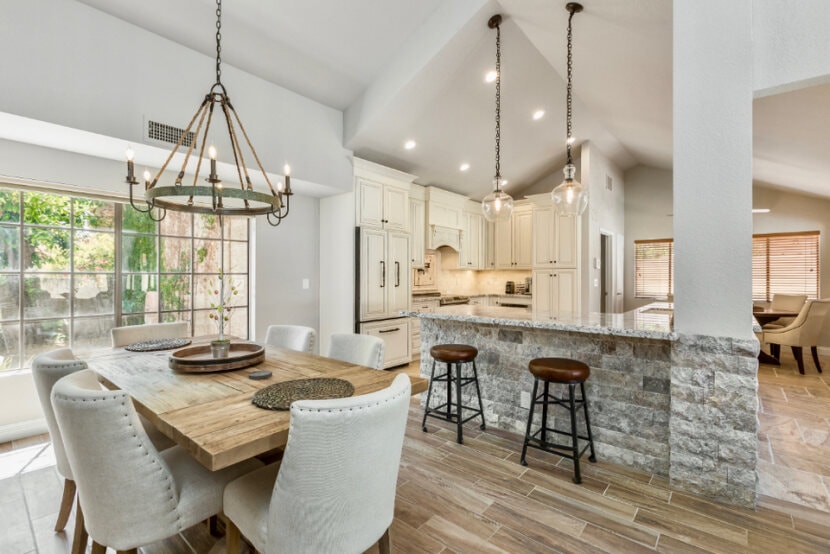
Seeking Professional Advice
Designing a kitchen involves more than choosing between two structural elements. It requires understanding spacing, ergonomics, lighting, and material compatibility.
Working with a professional ensures that these factors are considered from the beginning. A well-planned layout avoids issues such as poor traffic flow, insufficient clearance, or awkward appliance placement.
When homeowners in Phoenix work with experts, they often discover solutions they had not previously considered. Whether optimizing a peninsula layout or maximizing island functionality, professional guidance brings clarity and precision to the design process.
Exploring Design Inspirations
Seeing real-world examples can help clarify what works best for your space. Kitchens in areas like North Scottsdale and Paradise Valley often showcase how islands and peninsulas can be adapted to different layouts and styles.
Some designs emphasize bold island features with contrasting materials and lighting, while others highlight seamless peninsula integration that blends effortlessly with cabinetry.
Exploring these variations helps homeowners visualize how each option might function in their own home.
Kitchen Choices
Choosing between a kitchen island and a peninsula is not about following trends. It is about aligning your kitchen design with your space, lifestyle, and long-term needs.
A kitchen island offers openness, flexibility, and a strong visual centerpiece. A peninsula offers efficiency, structure, and space-conscious functionality. Both can transform your kitchen when designed thoughtfully.
Homes throughout Phoenix demonstrate that there is no single correct answer. The right solution is the one that supports how you live, cook, and interact within your space every day.
When you are ready to design a kitchen that balances function, flow, and style, working with Phoenix Home Remodeling ensures that every detail is planned with precision from the very beginning.

FAQs on Kitchen Island Vs. Peninsula
What is the main difference between a kitchen island and a peninsula?
The main difference is that a kitchen island is freestanding with access on all sides, while a peninsula is attached to existing cabinetry on one side.
This structural difference changes how each option functions in your kitchen. An island creates a central hub where multiple people can work, gather, and move freely around it. A peninsula, on the other hand, creates a more defined layout by extending from the main kitchen and guiding traffic flow.
Because of this, islands tend to feel more open and social, while peninsulas feel more structured and efficient.
In many Phoenix homes, especially in areas like Arcadia Lite or Desert Ridge, this choice comes down to how open the layout is and how the kitchen connects to surrounding spaces.
At Phoenix Home Remodeling, this decision is made during the Feasibility, Planning, and Design phase.
The goal is to choose the option that improves how your kitchen works, not just how it looks.
Which is better for a small kitchen: an island or a peninsula?
A peninsula is usually the better choice for smaller kitchens because it uses space more efficiently.
Islands require clearance on all sides, typically 42 to 48 inches, which can be difficult to achieve in compact layouts. Without enough space, an island can make the kitchen feel crowded and restrict movement.
A peninsula, by contrast, connects to existing cabinetry and requires less clearance. It still provides additional counter space, storage, and seating without taking up as much room.
In many Phoenix homes, particularly in areas like Chandler Heights or Estrella Mountain Ranch, peninsulas are used to maximize function while maintaining comfortable walkways.
At Phoenix Home Remodeling, space is evaluated during the planning phase to determine what will actually fit.
The goal is to improve usability without forcing a design that does not work. In smaller kitchens, efficiency matters more than openness.
Why do people choose kitchen islands over peninsulas?
Homeowners choose islands because they create a more open, flexible, and social kitchen environment.
Islands allow movement on all sides, making them ideal for households where multiple people cook or gather at the same time. They also create a central focal point that connects the kitchen with dining and living areas.
Because they are freestanding, islands offer more design flexibility. They can include seating, storage, appliances, or a combination of all three without being limited by existing cabinetry.
In many Phoenix homes, especially in areas like Paradise Valley or DC Ranch, islands are used to create a central hub for both cooking and entertaining.
At Phoenix Home Remodeling, islands are recommended when the layout supports them.
The goal is to enhance both function and interaction. An island works best when there is enough space for it to operate freely.
When is a peninsula the better choice than an island?
A peninsula is the better choice when you need structure, efficiency, and a clear division of space.
Because it connects to existing cabinetry, a peninsula naturally defines the kitchen area without requiring additional room. It helps guide traffic flow and keeps movement organized, which is especially helpful in busy or compact kitchens.
Peninsulas also tend to be more cost-effective because they often require fewer structural changes and can use existing plumbing or electrical connections.
In many Phoenix homes, particularly in areas like Ahwatukee Foothills or North Gateway, peninsulas are used to create a clear boundary between the kitchen and living space while maintaining openness.
At Phoenix Home Remodeling, peninsulas are evaluated based on layout and lifestyle.
The goal is to create a kitchen that feels organized and efficient. A peninsula works best when structure and flow are priorities.
Which option provides better seating and social interaction?
Kitchen islands generally provide better seating and social interaction because they allow access from multiple sides.
With seating on one or more sides, islands create a natural gathering space where people can sit, talk, and interact without interfering with cooking tasks. This makes them ideal for entertaining or family use.
Peninsulas can also include seating, but it is typically limited to one side. This creates a more linear seating arrangement rather than a central gathering hub.
In many Phoenix homes, especially in areas like Biltmore Heights or Moon Valley, islands are designed specifically to encourage social interaction.
At Phoenix Home Remodeling, seating design is planned alongside layout decisions.
The goal is to create a space that supports how people gather and interact. Islands offer more flexibility, but peninsulas can still work well in the right layout.
Which option is more cost-effective: island or peninsula?
Peninsulas are generally more cost-effective because they require fewer structural changes and materials.
Islands often require additional plumbing, electrical work, and structural support, especially if they include appliances or sinks. They also use more materials because they are finished on all sides.
Peninsulas, by contrast, extend from existing cabinetry, which reduces both material and labor costs. They can often utilize existing utility connections, making installation simpler.
In many Phoenix remodels, particularly in areas like Laveen Ranch or South Mountain, homeowners choose peninsulas when budget is a primary concern.
At Phoenix Home Remodeling, cost is evaluated alongside function during the planning phase.
The goal is to ensure the investment delivers value. The right choice balances budget with how the kitchen will be used.
What is the biggest mistake homeowners make when choosing between an island and a peninsula?
The biggest mistake is choosing based on appearance rather than how the kitchen will function.
Many homeowners prefer islands because they are popular and visually appealing, but they may not fit the space properly. Without enough clearance, an island can disrupt workflow and reduce efficiency.
Another mistake is not considering how people move through the kitchen. Poor placement can create congestion or awkward traffic patterns.
In many Phoenix kitchens, particularly in areas like Arcadia Proper or McCormick Ranch, these issues become clear once the kitchen is in daily use.
At Phoenix Home Remodeling, layout decisions are made during the Feasibility, Planning, and Design phase.
The goal is to ensure the kitchen works as well as it looks. Function should always guide the decision.
What is the best first step when deciding between a kitchen island and a peninsula?
The best first step is to evaluate your kitchen layout and define how you use the space every day.
Understanding your priorities, such as cooking, entertaining, or maximizing storage, helps determine which option will work best. From there, measurements and layout constraints can confirm what is possible.
This approach ensures the design supports both your needs and your space.
At Phoenix Home Remodeling, this process begins during the Feasibility, Planning, and Design phase.
The kitchen is analyzed as a complete system, allowing the decision to be made with full context.
Starting with how you live and use your kitchen ensures the final design feels natural, efficient, and comfortable.
Video of Kitchen Island versus Peninsula:
PDF version:
Why Homeowners Trust Phoenix Home Remodeling
Phoenix homeowners investing in a kitchen remodel consistently identify two concerns above all others: costs that change mid-project and timelines that slip.
Phoenix Home Remodeling addresses both through a planning-first process that confirms cabinet layout, appliance selections, and fixed pricing before a single cabinet is removed.
Recognized as the Number 1 Kitchen Remodeling Company in Arizona by Contractor List HQ
Rated Best Phoenix Kitchen Remodeler by Trust Analytica
Rated Best Phoenix Home Remodeler by Trust Analytica
Rated 4.9 Stars Across 200+ Verified Public Reviews
Accredited by the Better Business Bureau with an A+ Rating
Member of the National Association of the Remodeling Industry (NARI)
Member of the National Kitchen and Bath Association (NKBA)
Named a Top Contractor in Arizona by Ranking Arizona (2024)
Voted a Nextdoor Neighborhood Favorite (2022, 2023, 2024, 2025)
Founder authored Remodel Without Regret, an Amazon bestselling homeowner remodeling guide
Each kitchen project begins with a comprehensive feasibility review, cabinet layout planning, and finalized material and appliance selections before construction is scheduled. Countertop choices, cabinetry configurations, and any electrical or plumbing modifications are resolved during the design phase so pricing is locked before demolition begins. A dedicated project manager coordinates cabinetry delivery, trade sequencing, and communication checkpoints throughout the build so the project stays on schedule.
Homeowners who resolve layout, appliance selections, and material choices before demolition typically experience fewer scope changes, more predictable timelines, and a finished kitchen that matches what was planned.
Do you live in Phoenix, Scottsdale, Chandler, Gilbert, Mesa, Tempe, Sun Lakes, Ahwatukee, Laveen, or Queen Creek?
Ready to talk about your remodeling needs?
Take the next step...