
A west-facing kitchen window in Ahwatukee drops four to six hours of direct sun onto the counter below it through September, and engineered quartz manufacturers write that exact condition into their warranty exclusions.
Most counter conversations start with a photo and a color name. In the Valley they should start with three local conditions: water that leaves mineral behind on every surface it dries on, indoor air that sits in single-digit humidity most of the year, and sun angles that put real ultraviolet load on interior surfaces near glass. Those three conditions sort granite, quartzite, engineered quartz, and porcelain slab into a usable order for any given kitchen, and the order changes depending on which window your counter sits under.
The Four Slabs That Show Up on a Phoenix Selection Table
Four materials cover nearly every kitchen we design, and they differ enough that the choice is a real decision rather than a color preference.
- Granite. Natural stone, quarried and cut. Porous to varying degrees depending on the specific stone, so it takes a penetrating sealer. Handles direct heat without complaint.
- Quartzite. Natural stone, metamorphosed sandstone, harder than granite and typically around 7 on the Mohs scale. Also takes heat. More expensive to fabricate because it dulls tooling faster.
- Engineered quartz. Roughly 90 percent ground natural quartz bound in polymer resin and pigment, cast into slabs. Non-porous by construction, so no sealing. The resin is the limiting factor for both heat and ultraviolet exposure.
- Porcelain slab. Clay and mineral body pressed and fired at high temperature into large-format sheets. No binder to break down, essentially no absorption, and it takes both heat and sunlight without changing.
Fabrication complexity, edge options, and thickness all factor into what a kitchen costs, and we cover project-level budget ranges in our cost guide. What follows is how those four hold up against Phoenix conditions specifically.
How Does Phoenix Hard Water Affect Countertops?
Phoenix tap water leaves visible mineral deposits on any counter it dries on, and the difference between materials is whether that mineral sits on top or works its way in. The City of Phoenix Water Services Department reports treated water hardness in the range of roughly 12 to 17 grains per gallon depending on source and season, which is hard water on any national scale. On a dark honed granite counter in a Chandler kitchen, a ring from a sweating pitcher shows up as a white mineral halo within a couple of weeks of daily use, and on a polished surface of the same stone it wipes away with a damp cloth.
Finish matters more than material for this specific problem. Honed and leathered surfaces hold mineral in their texture. Polished surfaces shed it. Homeowners fall in love with honed finishes in photographs taken in Portland and Nashville, and those photographs were not taken in a house running 15-grain water through a pull-down faucet six times an hour.
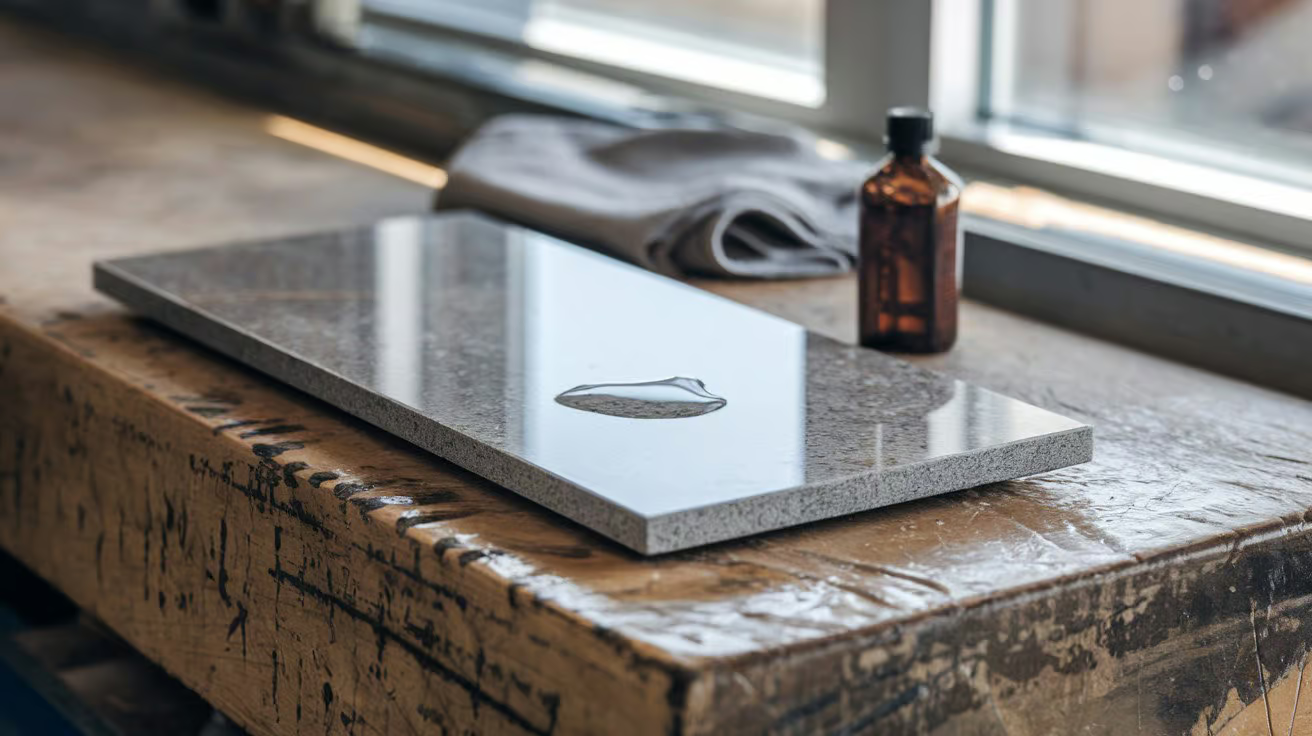
Sealing addresses absorption, not mineral film. The Natural Stone Institute’s care and cleaning guidelines call for testing a specific stone’s absorption rather than assuming a schedule, which is the water-drop test in the last section of this article. A well-sealed granite still shows hard-water spotting around the faucet base, because the mineral is sitting on the sealer rather than soaking into the stone. That is a wiping habit, not a material defect, and no material sold in the Valley is immune to it.
Is Engineered Quartz or Natural Stone Better in a Phoenix Kitchen?
Neither one wins across the board, because engineered quartz resists staining and hard-water etching without ever being sealed, while natural stone takes direct heat that quartz resin cannot. Cambria and Caesarstone both specify trivets and hot pads in their published care documentation and exclude thermal damage from their warranties, while the Natural Stone Institute’s granite guidance addresses sealing and acid exposure rather than heat at all. In a Gilbert kitchen where somebody pulls a cast-iron Dutch oven out of a 450-degree oven twice a week, we put stone or porcelain in the landing zone beside the range and quartz through the rest of the run.
That mixed-material approach is a design decision, not a budget move. A single kitchen can carry two slab materials without looking assembled by committee if the two share a value range and the transition lands at a logical break, usually a range wall or an island edge. We draw it in the 3D rendering before anybody commits, because the idea reads as either deliberate or accidental depending entirely on where the seam falls.
The other honest difference is repairability. A chipped granite edge can be filled and polished by a stone fabricator on site. A scorched or ultraviolet-faded quartz surface cannot be refinished, because the damage is in the resin and the resin is the whole slab. When we walk a homeowner through this, that repair asymmetry usually carries more weight than the stain-resistance advantage that put quartz on the list to begin with.
What Six Hours of West Sun Does to an Indoor Counter
Phoenix averages roughly 300 sunny days a year by National Weather Service records, and a low western sun in the hour before sunset comes through glass at an angle that puts direct light on horizontal interior surfaces well back into the room. A counter run under a west or southwest window takes outdoor-grade ultraviolet exposure indoors.
Polymer resin responds to sustained ultraviolet exposure by yellowing and, in pigmented slabs, by shifting color unevenly. Engineered quartz warranties are written for indoor installation and commonly exclude damage from prolonged direct sunlight, which is manufacturer language rather than a rumor. The failure shows up as a pale band along the window side of the run that nobody notices until the day a homeowner moves the utensil crock and finds a line underneath it.
Three things change the math. Low-emissivity window glazing cuts a meaningful share of the ultraviolet transmission, and most Valley homes built after the early 2000s already have it. A deep overhang or an interior shade on the west window changes the exposure window entirely. And the actual orientation matters more than people assume, since a north-facing window over a sink is a non-issue no matter what the slab is made of.
We check the orientation on the floor plan during the design phase, before the material list gets built. On a kitchen with a sink wall facing due west and no shade plan, engineered quartz is the wrong specification and we say so early rather than letting a homeowner fall for a color we are going to talk them out of.
Is That Quartzite Slab Actually Quartzite?
Frequently it is not, because slabs sold as quartzite in the stone trade are often dolomitic marble, which etches on contact with anything acidic. The Natural Stone Institute has addressed this mislabeling directly and points to two field tests: true quartzite scratches glass and shrugs off a drop of dilute acid, while marble does the opposite on both counts. We run the glass-scratch test on any slab labeled quartzite before it goes to template, which has redirected more than one Scottsdale selection to a different slab in the same vein family.
The stakes are ordinary kitchen life. A lemon wedge, a splash of vinegar, or a glass of wine left overnight will dull a marble surface in a dull ring that no sealer prevents, because etching is a chemical reaction with the stone rather than a stain sitting on it. Homeowners who knowingly choose marble and accept the patina are fine. Homeowners who were told they bought quartzite and get marble behavior are the ones who call somebody, and by then the slab is fabricated.
Ask the yard for the geological identification, not the marketing name. The name on the tag at a Phoenix slab yard is a trade name assigned by an importer, and two slabs with the same trade name can come from different quarries and behave differently. The test takes ninety seconds and costs nothing.
Does Porcelain Slab Hold Up Better Than Quartz in Direct Sun?
Yes, because porcelain slab is fired clay and mineral with no polymer binder to break down under ultraviolet exposure. Porcelain slab manufacturers including Neolith and Laminam publish ultraviolet stability and near-zero absorption figures for their products, and porcelain is defined under ANSI A137.1 as absorbing 0.5 percent water or less by the ASTM C373 test method. For Arcadia and Biltmore ranch kitchens with a long west-glass sink wall, that stability is why porcelain lands on our short list far more often here than it would in a national specification.
The trade-offs are real and worth naming. Porcelain slab is typically 6mm to 12mm thick, so the substantial edge profile most homeowners want requires a mitered build-up, which is skilled fabrication work and raises the fabrication portion of the job. The pattern is printed on the surface layer on most products rather than running through the body, so a chipped edge exposes the body color underneath. And fewer Valley fabricators cut it well, because it demands different tooling and a different handling protocol than stone.
Porcelain earns its place in rooms that get sun, heat, and hard water at once, which describes a lot of Valley kitchens. It takes a hot pan, it does not etch, it needs no sealing, and it will not fade under a west window. The concession sits in fabrication complexity rather than in daily maintenance, which is the reverse of what the other three materials ask of a homeowner.
What Our Slab Walk at the Stone Yard Covers
Every natural stone and porcelain selection on our projects includes a slab walk at the supplier, and it is not a color-approval errand. Three things get settled while standing in front of the actual slabs.
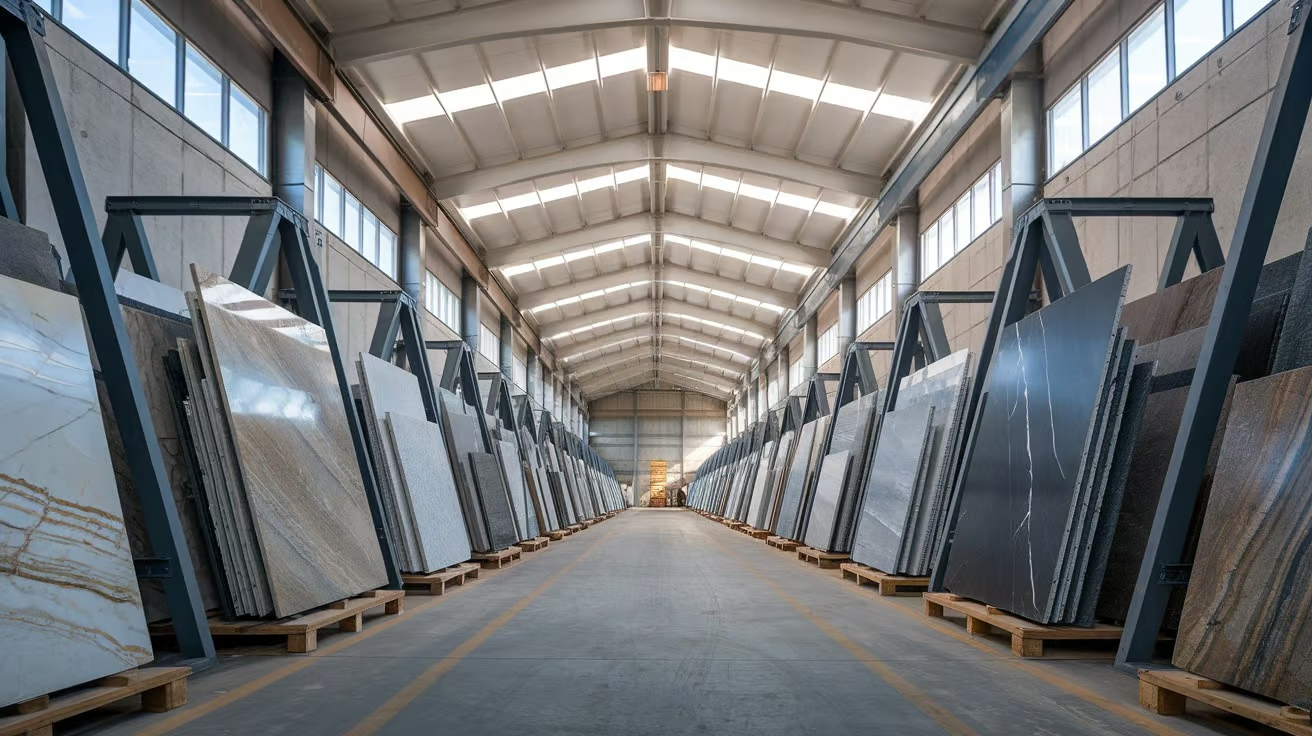
First, the homeowner sees the whole slab rather than a four-inch sample. Natural stone varies across a single slab and varies more between slabs from the same bundle, so the movement that looks subtle on a sample can read as a river running diagonally across a finished run. Second, we mark the slab with the layout so the most active veining lands where it will be seen and not under a wall cabinet. Third, we settle seam placement, because on any kitchen longer than about ten feet a seam exists and the only question is where the homeowner is going to look at it for the next twenty years.
Our designer brings the dimensioned drawing to the yard, so the conversation happens against real measurements instead of an estimate. The slab gets tagged and held that day. This is also where we confirm the material against the sun-exposure note that came out of the design phase, so a homeowner is not choosing a quartz color for a west-window kitchen with everyone nodding along.
Design-build does not eliminate every unknown inside a 40-year-old wall. It eliminates the expensive ones, and a counter material that fails against local conditions is an expensive one, since replacing a fabricated top means pulling the sink, the faucet, and usually the backsplash tile with it. Our design phase page walks through what else gets settled before construction starts, and the kitchen remodeling page covers the full scope a kitchen project includes.
Three Tests to Run in Your Own Kitchen This Week
All three take under fifteen minutes total and none of them require a contractor.
- Time the sun. Pick a clear day and look at your counters at 4pm, 5pm, and 6pm. Photograph where the direct sunlight actually falls each time. If a bright patch sits on a counter run for more than about two hours, write down which run and how long, and bring that note to any material conversation.
- Run the water-drop test on your current stone. Put a tablespoon of water on the counter in an out-of-the-way spot and leave it for thirty minutes. If the stone darkens where the water sat and the dark spot takes a while to fade, the sealer is spent. That tells you how absorbent your current material is and how much maintenance the same category would ask of you again.
- Scratch-test any slab labeled quartzite. Take a spare drinking glass to the yard and try to scratch it with a broken corner or the sample chip. Real quartzite marks the glass. If the glass wins, you are looking at marble, and you should decide whether you actually want marble.
Write the results on one sheet of paper along with the compass direction of every window in the room. That single page narrows four materials to one or two before you have looked at a single color, which is a better starting point than any inspiration folder. Our Remodel Book covers the rest of the sequence from first conversation to final walkthrough, and the questions page answers what homeowners most often ask us before a project starts.
A note on how this article was written: we use AI to help draft and research pieces like this, then a human on the team edits for accuracy and voice. Here’s how and why we use AI at PHR.