
Walk-in showers have become a defining feature in modern bathroom design, especially in homes across Phoenix where clean lines and open layouts are highly valued. Their combination of accessibility, style, and customization makes them a compelling choice for homeowners planning a renovation.
Walk-in showers offer a modern, accessible, and low-maintenance solution that enhances both functionality and aesthetics, but they may require more space, higher upfront investment, and thoughtful design to prevent water spillage and maintain comfort.
3 Key Takeaways:
- Walk-in showers can make a bathroom feel more open, accessible, and easier to maintain when drainage, glass placement, and layout are planned correctly.
- The main drawbacks are water containment, reduced privacy, cooler shower temperatures, space requirements, and higher planning complexity compared with traditional enclosed showers.
- A successful walk-in shower should balance design, safety, storage, material durability, drainage, and long-term usability before construction begins.
Many homeowners exploring upgrades alongside a shower remodel services project find that walk-in showers align perfectly with contemporary living. They create a seamless transition between spaces and elevate the overall feel of the bathroom.
Overview Of Walk-in Showers
Walk-in showers represent a shift toward simplicity and usability. Unlike traditional enclosures that rely on tubs or framed doors, these showers are designed with openness in mind. The absence of barriers creates a fluid experience that feels both modern and practical.
In thoughtfully designed homes, such as those found in Silverleaf and DC Ranch, walk-in showers often serve as a centerpiece rather than just a functional necessity. Their clean design integrates easily with both minimalist and luxury interiors, making them adaptable to a wide range of preferences.
A defining feature of walk-in showers is their curbless or low-threshold entry. This makes them particularly appealing for multi-generational households or anyone planning for long-term accessibility. The ability to step directly into the shower without navigating a raised edge improves safety while maintaining a sleek appearance.
From a design perspective, these showers allow for creative expression. Whether through large-format tiles, frameless glass panels, or natural stone finishes, the possibilities are extensive. Homeowners can customize layouts, drainage systems, and fixtures to suit their exact needs.
Homeowners comparing layout and finish options can explore walk-in shower ideas to see how tile, glass, drainage, and fixture choices can shape the final design.

Advantages of Walk-In Showers
Walk-in showers offer more than just visual appeal. Their benefits extend into daily usability, maintenance, and long-term value.
One of the most noticeable advantages is the sense of openness they bring. Bathrooms feel larger and more breathable without bulky enclosures interrupting the visual flow. This is especially valuable in homes where maximizing space is a priority.
In communities like Grayhawk and Troon North, homeowners often prioritize designs that blend indoor comfort with a spa-like atmosphere. Walk-in showers contribute to this by creating an environment that feels calm, uncluttered, and refined.
Accessibility is another major benefit. Without steps or barriers, these showers accommodate users of all ages. This makes them a practical choice for families, aging homeowners, or anyone thinking ahead about long-term usability.
Maintenance is also significantly simplified. With fewer corners, tracks, and frames, cleaning becomes easier and faster. Mold and moisture buildup are reduced due to improved airflow, helping maintain a healthier environment over time.
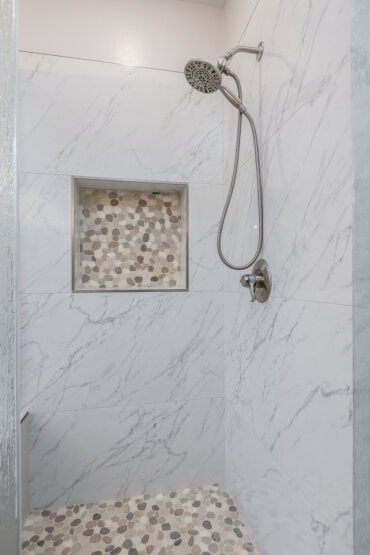
Customization plays a key role in their popularity. Walk-in showers can include features such as rainfall showerheads, built-in benches, recessed niches, and multi-jet systems. These elements transform a standard shower into a personalized experience.
Homeowners who want more comfort and organization can explore seating and storage in walk-in showers to see how benches, niches, and shelving can improve daily use.
Energy efficiency can also improve when paired with modern fixtures. Low-flow showerheads and efficient drainage systems help conserve water without compromising performance.
Additionally, walk-in showers can contribute to increased home value. Buyers often view them as a premium feature, especially when they are well-designed and integrated into a cohesive bathroom layout.

Disadvantages of Walk-In Showers
Despite their many benefits, walk-in showers are not without challenges. Understanding these limitations is essential before committing to the design.
One of the primary concerns is cost. Compared to traditional shower-tub combinations, walk-in showers often require a higher initial investment. Custom tile work, waterproofing, and specialized drainage systems can increase overall expenses.
Installation complexity is another factor. Proper slope, drainage, and sealing are critical to ensure long-term performance. This often requires experienced professionals to execute correctly, which can extend timelines and budgets.
Water containment can present challenges if not properly planned. Without a full enclosure, water may escape onto the bathroom floor. This is why layout, glass placement, and drain positioning must be carefully considered.
Homeowners concerned about splash control can learn whether a walk-in shower without a door makes sense based on drainage, showerhead placement, glass positioning, and bathroom layout.
Temperature control is another consideration. The open design can allow heat to dissipate more quickly, making the shower feel cooler, especially during colder months. Strategic placement of fixtures and partial enclosures can help mitigate this issue.
Privacy may also be reduced. In shared bathrooms, the lack of doors or curtains can be less comfortable for some users. This is often addressed through thoughtful design choices such as frosted glass or strategic positioning.
Space requirements can limit feasibility in smaller bathrooms. While walk-in showers can be adapted to compact layouts, they still need sufficient room to function effectively without causing water issues.
In some cases, the absence of a bathtub can impact resale appeal. Families with young children or buyers who prefer traditional bathing options may see this as a drawback.
Comparative Analysis Between Walk-in Showers And Traditional Showers
When comparing walk-in showers to traditional setups, the differences become clear across several key areas.
Design-wise, walk-in showers emphasize openness and minimalism. Traditional showers, often combined with tubs, offer a more enclosed and conventional appearance. The choice ultimately depends on whether the priority is modern aesthetics or classic functionality.
Space utilization varies depending on layout. Walk-in showers typically require more planning and open space, while traditional units can fit more easily into compact bathrooms. However, the visual openness of a walk-in shower can make even smaller spaces feel larger.
Accessibility is where walk-in showers excel. Their barrier-free design makes them safer and easier to use. Traditional showers, with raised edges or tubs, can pose challenges for some users.
Installation and cost also differ significantly. Traditional showers are generally simpler and more affordable to install. Walk-in showers require more customization and precision, which increases both cost and complexity.
Before choosing custom tile, glass, or added shower features, homeowners should review the cost of walk-in showers to understand how size, materials, and layout affect the project.
Water containment is naturally stronger in traditional designs due to full enclosures. Walk-in showers rely on careful planning to achieve the same level of control.
In terms of resale value, walk-in showers are often seen as a modern upgrade, while traditional setups offer broader appeal due to their versatility.

Design Considerations for Phoenix Homes
In Phoenix, design choices are often influenced by climate, lifestyle, and architectural trends. Walk-in showers align well with these factors, offering a cool, open feel that complements desert living.
Homes in areas like Paradise Valley and Arcadia frequently incorporate spa-inspired bathrooms where walk-in showers become a focal point. Natural stone, neutral tones, and open layouts create a cohesive and calming environment.
Ventilation and airflow are particularly important in this region. Walk-in showers support better air circulation, which helps manage moisture and maintain comfort.
Material selection also plays a role. Porcelain tiles, quartz surfaces, and non-slip flooring are commonly used to ensure durability and safety while maintaining a high-end appearance.
Additional Considerations Before Choosing a Walk-In Shower
Before committing to a walk-in shower, it is important to evaluate how it fits into your overall lifestyle and home design.
Think about how the bathroom is used daily. For households that prioritize quick, efficient routines, a walk-in shower can be ideal. For those who value soaking and relaxation, retaining a tub might still be important.
Once homeowners understand how the shower should function, a guide to designing your dream walk-in shower can help with layout, materials, fixtures, storage, and comfort-focused details.
Budget planning should include not just installation but long-term maintenance and potential upgrades. Investing in quality materials and professional installation can prevent costly repairs later.
Future needs should also be considered. Accessibility, aging-in-place, and resale potential all play a role in making a well-informed decision.
Walk-In Showers vs. Traditional Showers
Choosing between a walk-in shower and a traditional shower is not simply about aesthetics. It directly impacts how a bathroom functions on a daily basis. Walk-in showers emphasize openness, accessibility, and modern design, while traditional showers and shower-tub combinations focus on enclosure, versatility, and familiarity.
Walk-in showers create a seamless, open environment that visually expands the bathroom. This makes them especially appealing in contemporary homes where clean lines and minimalism are prioritized. The absence of bulky enclosures allows natural and artificial light to flow freely, making the entire space feel brighter and more inviting. In homes located in Ahwatukee Foothills and Ocotillo, this openness often complements modern architectural styles and enhances overall spatial perception.
Traditional showers, on the other hand, offer a more contained experience. The presence of doors or curtains ensures better water containment, reducing the risk of splashing outside the shower area. This makes them particularly practical for households concerned about maintenance or water management. They also tend to retain heat more effectively, creating a warmer and more enclosed bathing experience.
From a layout perspective, walk-in showers generally require more thoughtful planning. Proper drainage, slope, and positioning of fixtures are critical to prevent water spillage. Traditional showers are more forgiving in this regard, as their enclosed design naturally manages water flow.
Accessibility is another key distinction. Walk-in showers provide barrier-free entry, making them ideal for aging homeowners or individuals with mobility challenges. Traditional showers often involve stepping over a threshold or tub edge, which can present limitations over time.
Ultimately, the decision between the two depends on lifestyle, design preferences, and long-term needs. Both options can be highly functional when designed correctly, but they cater to different priorities.
Pros and Cons Review: Walk-in Showers
Walk-in showers present a compelling combination of modern design and practical functionality, but they are not without trade-offs. Their advantages lie in accessibility, ease of maintenance, and visual appeal. They create open, airy spaces that align well with contemporary living and support long-term usability.
However, they also require careful planning and investment. Improper installation can lead to water management issues, and the open design may not provide the same level of warmth or privacy as enclosed showers. Additionally, initial costs can be higher, especially when custom features or high-end materials are involved.
Homes in Paradise Valley and Gainey Ranch often showcase how well-executed walk-in showers can elevate both functionality and design. When thoughtfully integrated, they enhance the bathroom experience and contribute to long-term value.
The decision ultimately comes down to priorities. If accessibility, modern aesthetics, and ease of maintenance are key considerations, walk-in showers are a strong choice. If privacy, warmth, and cost efficiency are more important, traditional options may still hold their place.
Balancing these factors ensures that the final choice aligns with both your lifestyle and your home's design vision.
Final Words
Open-concept showers represent more than just a visual upgrade. They reflect a shift toward bathrooms that feel more connected, functional, and aligned with how you actually live. By removing barriers and simplifying layouts, these designs create a sense of openness that traditional showers cannot match.
In Phoenix, this approach works especially well because it balances modern aesthetics with practical performance. Features like seamless flooring, efficient drainage, and durable materials ensure that the space remains easy to maintain while still delivering a refined look. When planned correctly, an open-concept shower can make the entire bathroom feel larger, more comfortable, and easier to use every day.
The key to success is not just choosing the right design, but making sure every detail is thought through before construction begins. Layout, materials, lighting, and water management all need to work together to create a cohesive result. When these elements are aligned, the shower becomes more than just a functional feature. It becomes a central part of how the space feels and performs.
Open-concept showers continue to gain popularity because they offer a balance of simplicity, accessibility, and long-term value. Whether the goal is to modernize a compact bathroom or create a spa-like retreat, this design approach provides a flexible solution that adapts to different needs.
A well-executed open-concept shower is not about following a trend. It is about creating a space that feels intentional, efficient, and built to last. Working with a structured design-build team like Phoenix Home Remodeling ensures that every detail is planned with precision, helping you achieve a result that performs as well as it looks.

FAQs About Walk-In Showers
Are walk-in showers a good investment for Phoenix homeowners?
Walk-in showers are a strong investment in the Phoenix metro area when they are designed with proper planning, drainage, and material selection to match both daily use and long-term needs. In neighborhoods like Scottsdale and Paradise Valley, homeowners are choosing walk-in showers because they improve accessibility, reduce maintenance, and create a more modern, open bathroom layout.
The value comes from how the shower functions, not just how it looks. A well-designed walk-in shower makes the bathroom easier to use every day while also appealing to future buyers who prefer updated, barrier-free spaces.
Phoenix Home Remodeling approaches this during the feasibility and design phase, where layout, water containment, and material performance are all defined before construction begins. This ensures the investment delivers both comfort and durability.
The right decision is not just installing a walk-in shower. It is planning one that performs correctly in your specific home.
What are the biggest downsides of walk-in showers in Phoenix homes?
The biggest downsides of walk-in showers in the Phoenix metro area are water containment challenges, higher upfront costs, and the need for precise planning to ensure proper drainage and comfort. In areas like Chandler and Mesa, these issues typically arise when the design is not fully thought through before construction.
Without proper planning, homeowners may experience:
Water spreading beyond the shower area
Cooler temperatures due to open layouts
Increased installation costs from custom work
Phoenix Home Remodeling eliminates these risks by completing a full planning and design phase before construction. This includes defining slope, drain placement, and glass positioning to ensure water stays contained and the shower remains comfortable.
Walk-in showers are not inherently problematic. They only become problematic when they are not planned correctly.
Do walk-in showers work well in smaller bathrooms in the Phoenix area?
Walk-in showers can work well in smaller Phoenix metro bathrooms when they are designed to maximize openness and manage water effectively. In neighborhoods like Tempe and Ahwatukee, homeowners are using walk-in designs to replace bulky enclosures and create a more spacious feel.
The benefit comes from removing barriers. Without doors or frames, the shower blends into the rest of the bathroom, making the entire space feel larger.
However, smaller bathrooms require careful planning. Drain placement, slope, and fixture positioning must all be coordinated to prevent water issues.
Phoenix Home Remodeling evaluates this during the design phase to ensure the layout supports both openness and functionality. This prevents the common issue of a walk-in shower looking great but not performing well.
The success of a walk-in shower in a small space depends entirely on how it is designed before construction begins.
Is a walk-in shower better than a traditional shower-tub combo?
A walk-in shower is better than a traditional shower-tub combo in the Phoenix metro area when your priority is accessibility, modern design, and daily convenience. In areas like Gilbert and Queen Creek, many homeowners are replacing tub combos because they no longer match how the bathroom is used.
Walk-in showers offer:
Easier entry and exit
More open layouts
Simplified maintenance
However, tub-shower combos still provide versatility, especially for households that need a bathtub for children or resale considerations.
Phoenix Home Remodeling helps homeowners make this decision during the planning phase by evaluating how the bathroom is used, whether another tub exists in the home, and how the layout supports each option.
The right choice is not about which option is better overall. It is about which option fits your lifestyle and long-term goals.
How do you prevent water from escaping a walk-in shower?
Preventing water from escaping a walk-in shower in the Phoenix metro area depends on precise design elements such as floor slope, drain placement, and strategic layout planning. In homes across Mesa and Scottsdale, water containment is one of the most critical factors in making a walk-in shower successful.
Effective solutions include:
Properly sloped flooring toward the drain
Linear drains positioned to capture water flow
Partial glass panels or subtle barriers
Strategic showerhead placement
Phoenix Home Remodeling plans these details during the feasibility and design phase, ensuring the shower is engineered to contain water before construction begins.
Water containment is not solved during installation. It is solved during planning.
Do walk-in showers add value to a home in Phoenix?
Walk-in showers can add value in the Phoenix metro area when they are designed to match the home’s overall style, layout, and buyer expectations. In higher-end communities like DC Ranch and Troon North, walk-in showers are often seen as a premium feature that enhances both functionality and visual appeal.
Buyers are increasingly looking for:
Modern, open layouts
Accessible designs
Low-maintenance features
However, value depends on balance. Removing the only bathtub in a home may limit appeal for some buyers, especially families.
Phoenix Home Remodeling evaluates resale impact during the planning phase by considering the entire home, not just one bathroom. This ensures the remodel improves both current usability and future marketability.
The goal is not just adding value. It is adding the right kind of value for your specific home.
What is the best way to plan a walk-in shower remodel in Phoenix?
The best way to plan a walk-in shower remodel in the Phoenix metro area is to complete a structured feasibility, planning, and design phase before construction begins. In neighborhoods like Arcadia and Biltmore, homeowners who follow this approach avoid the common issues that lead to delays, cost overruns, and performance problems.
A successful plan includes:
Confirming layout and space requirements
Designing proper drainage and slope
Selecting materials suited for Phoenix conditions
Finalizing all design decisions upfront
Phoenix Home Remodeling uses a planning-first design-build process where you approve the full design, selections, and pricing before construction starts.
Walk-in showers require precision. The more detailed the plan, the smoother the project and the better the result.
Video of this post:
PDF version:
Why Homeowners Trust Phoenix Home Remodeling
Shower remodeling involves more coordinated decisions than most homeowners anticipate. Waterproofing specifications, fixture selections, tile choices, and glass configurations all need to be resolved before construction begins or the project becomes reactive.
Phoenix Home Remodeling completes the full design and selection phase before any demolition is scheduled.
- Rated Best Phoenix Bathroom Remodeler by Trust Analytica
- Honored as Best Bathroom Remodeling Contractor in Phoenix by The Phoenix Review
- Rated 4.9 Stars Across 200+ Verified Public Reviews
- Featured Among Arizona’s Best Bathroom Remodeling Contractors by Home Builder Digest
- Rated #1 out of 106 bathroom remodeling companies in Arizona by Contractor Lists HQ
- Member of the National Association of the Remodeling Industry (NARI)
- Member of the National Kitchen and Bath Association (NKBA)
- Named a Top Contractor in Arizona by Ranking Arizona (2024)
- Voted a Nextdoor Neighborhood Favorite (2022, 2023, 2024, 2025)
- Founder authored Remodel Without Regret, an Amazon bestselling homeowner remodeling guide
Each shower project begins with a detailed planning session covering waterproofing specifications, fixture selections, and layout decisions before construction is scheduled. Tile choices, pan configurations, and glass enclosure options are finalized during the design phase so pricing can be confirmed before demolition begins. A dedicated project manager coordinates trade sequencing and daily communication to keep the installation phase on track from start to finish.
Homeowners who finalize shower layout and selections before construction begins typically experience cleaner installation sequencing, fewer material delays, and a finished shower that reflects the original design intent.
Do you live in Phoenix, Scottsdale, Chandler, Gilbert, Mesa, Tempe, Sun Lakes, Ahwatukee, Laveen, or Queen Creek?
Ready to talk about your remodeling needs?
Take the next step...