
Thermal Performance of Interior Materials in Phoenix Homes: What Holds Up in 110-Degree Summers
Phoenix faces an escalating challenge with its extreme summer heat, regularly experiencing temperatures well over 110°F. In 2024, the city recorded an unprecedented 70 days above this threshold, a significant deviation from the historical average of approximately 21 days. This intensified heat puts immense stress on residential buildings, demanding more from cooling systems and construction materials alike. With peak summer attic temperatures soaring to 140-180°F, and air conditioning units cycling 15-20 times daily, the need for thermally resilient homes is more critical than ever. This persistent heat not only drives up energy consumption, accounting for 40-60% of summer utility bills, but also impacts the longevity of materials and the comfort and safety of residents.
This comprehensive report delves into the thermal performance of various interior materials and building envelope components crucial for mitigating the effects of Phoenix's scorching summers. We examine how elements like insulation, roofing, windows, doors, and interior finishes contribute to a home's overall heat resistance and energy efficiency. By exploring the latest building science principles, local climate data, and practical strategies, this report aims to identify superior material choices and construction techniques that ensure homes remain cool, durable, and cost-effective in what is increasingly becoming one of the hottest urban environments globally. The findings herein offer valuable insights for homeowners, builders, and policymakers striving for resilient and sustainable housing solutions in the face of a changing climate.
Key Takeaways
- Phoenix summers are intensifying, with 70 days over 110°F in 2024, significantly increasing heat stress on homes.
- Roof and attic temperatures can reach 140–180°F, demanding robust thermal barriers to prevent heat transfer into living spaces.
- Cooling accounts for 40–60% of summer utility bills in Phoenix, highlighting the financial incentive for energy-efficient materials.
- High-performance insulation and cool roofing systems are critical; R-38 attic insulation and reflective roofs can cut heat transfer dramatically.
- Energy-efficient windows and doors, particularly Low-E glass, significantly reduce heat infiltration, often responsible for 25-35% of cooling loss.
- Ceramic tile and natural stone flooring are favored for their cooler touch and durability, while engineered wood requires specific acclimation.
- Strategic material selection and building envelope upgrades are essential for both immediate comfort and long-term durability in extreme desert heat.
1. Executive Summary
Phoenix faces extreme summer heat. This heat presents significant challenges for residential buildings and the materials used within them. Temperatures regularly exceed 110°F, placing substantial stress on home cooling systems and structural components. The city recorded 70 days above 110°F in 2024, a significant increase from the historical average of approximately 21 days annually.[1] The summer season itself has expanded, lasting about eight days longer than in 1970.[2] These conditions lead to very high temperatures in attics and roofs, potentially reaching 140-180°F.[3] This heat directly impacts interior temperatures, increasing demand on air conditioning systems, which may cycle 15-20 times per day in July.[4]
Cooling accounts for a large portion of energy use in Phoenix homes, estimated at 40-60% of summer utility bills.[5] Average monthly cooling costs for a 2,000 square foot home range from $250-$400 during summer.[6] This financial burden drives the need for homes that can better resist heat. The choice of interior materials plays a vital role in both indoor comfort and the overall durability of a home in this climate.
This section provides an overview of the challenges posed by Phoenix’s extreme heat and outlines key strategies for improving the thermal performance of interior materials in homes. It covers the importance of insulation, roofing, windows, doors, and interior finishes in creating more resilient and energy-efficient living spaces. The discussion draws upon local climate data, building science principles, and practical examples from the Phoenix metropolitan area.
The Challenge of Extreme Heat in Phoenix
Phoenix experiences some of the most intense heat in the United States, and this challenge is growing. In 2024, the city recorded 70 days where temperatures reached or exceeded 110°F. This is a sharp increase compared to the long-term average of approximately 21 days above 110°F per year between 1991 and 2020.[7] Such prolonged periods of intense heat place significant stress on all aspects of home construction and operation. The summer season itself is extending, with research indicating it now lasts about eight days longer than in 1970.[8] For example, 110°F days occurred in October for the first time in 2024.[8] These trends mean homes are exposed to high temperatures for more days each year, leading to increased wear on materials and higher energy demands.
The impact of this heat is most obvious in areas like attics and roofs. Roof surface temperatures can soar to 180°F under direct sun.[9] Attic air temperatures commonly reach 140-160°F if not properly insulated and ventilated.[10] This heat radiates into living spaces, making interiors uncomfortably warm and forcing air conditioning systems to work harder. Air conditioning systems in Phoenix may cycle on and off 15-20 times per day and run almost continuously in the late afternoon.[10] This heavy usage shortens the lifespan of equipment and can still leave some rooms hot. The consequence is higher energy consumption and increased costs for homeowners.
Financially, cooling costs are often the largest portion of summer utility bills. Air conditioning accounts for an estimated 40-60% of total home energy use during Phoenix summers.[11] For a typical 2,000 square foot home, monthly cooling expenses can range from $250 to $400.[12] This substantial financial outlay makes energy efficiency upgrades attractive, as they can lead to considerable savings. Beyond economics, the health impacts of extreme heat are severe. Maricopa County, which includes Phoenix, recorded 645 heat-related deaths in 2022.[13] This highlights the importance of homes as safe, cool spaces.
The global context reinforces this challenge. The World Meteorological Organization predicts an 80% chance of new record-high annual temperatures in the next five years.[14] This means Phoenix serves as an important case study for how construction and material selection must adapt to heat resilience for basic livability in many regions worldwide. Local companies like Phoenix Home Remodeling observe that heat management is a top client priority in renovation projects, recognizing it as a critical quality-of-life issue.
Key Thermal Performance Strategies for Phoenix Homes
To withstand Phoenix’s intense summers, homes must employ a range of strategies that reduce heat gain and improve cooling efficiency. These strategies involve the building envelope - particularly roofs, attics, walls, windows, and doors - as well as interior finishes. The goal is to slow the transfer of heat from outside to inside, thereby reducing the workload on mechanical cooling systems.
Insulation and Roofing: The Primary Heat Barrier
The roof and attic are the most exposed parts of a home to solar radiation. Therefore, they are the first line of defense against heat. Improving performance in these areas significantly impacts interior comfort and cooling costs.
- Attic Insulation: Attic temperatures can easily exceed 150°F.[10] Without sufficient insulation, this heat radiates directly into the living spaces below. Building codes now reflect this need, with the 2024 Phoenix code requiring at least R-38 attic insulation for new homes, a considerable increase from older standards.[15] Upgrading from an R-19 to R-38 attic can cut heat transfer by about 50%, leading to 10-15% savings on cooling bills. Contractors often recommend adding insulation to older homes to meet these modern standards.
- Radiant Barriers and Ventilation: To further reduce heat transfer into the attic, radiant barriers are often installed. These reflective foils block approximately 95% of radiant heat, potentially lowering attic temperatures by 20-30°F.[16] Complementary to insulation, proper attic ventilation (e.g., ridge vents or attic fans) expels trapped hot air. Attic fans can reduce attic air temperatures from 150°F to 120°F by evening. Phoenix Home Remodeling and other local remodelers frequently include these upgrades due to their cost-effectiveness and impact on thermal performance.
- Cool Roof Technology: The roof's material and color strongly influence heat absorption. Dark roofs can reach surface temperatures of 170-180°F.[9] "Cool roofs" use reflective materials or coatings that stay much cooler, often only 5-10°F above ambient air temperature.[17] A Phoenix case study of a dark concrete tile roof upgrade to a reflective cool roof showed attic temperature drops from 160°F to 120°F and a 33% reduction in August electric bills.[18] The EPA states cool roofs can lead to a 20-30% reduction in cooling energy in hot, sunny regions.[19] Recognized benefits include utility rebates and extended roof life, as intense heat accelerates material degradation.[20]
- Desert-Appropriate Roofing Materials: Certain roofing materials perform better in Phoenix's heat. Clay tile, light-colored metal, and concrete resist heat damage more effectively than traditional asphalt shingles.[21] Clay tiles incorporate air gaps and possess high thermal mass, which slows heat transfer. Metal roofs with reflective coatings redirect solar energy. These materials are chosen for their durability and resistance to warping or curling under extreme sun exposure.
Windows and Doors: Minimizing Heat Infiltration
Windows and doors are critical points for heat entry, even in homes with good insulation. They can account for a significant portion of cooling loss.
- Energy-Efficient Windows: In Arizona homes, 25-35% of cooling energy can be lost through windows.[10] Single-pane clear glass can transmit 75-80% of solar energy.[22] Upgrading to modern double-pane windows with low-emissivity (Low-E) coatings can drastically reduce this. Low-E 366 glass, popular in Arizona, blocks approximately 95% of UV rays and a large portion of infrared heat.[23] This can reduce cooling needs by about 25-30% for sun-exposed windows.[24]
- Efficient Frames and Seals: Window frame material is also important. Metal frames, such as aluminum, conduct heat readily and can transfer it indoors. Vinyl or fiberglass frames offer better insulation and resist UV exposure without warping or cracking.[25] Proper installation with airtight seals is essential, as air leaks undermine the performance of even high-quality windows.
- Insulated Doors: Exterior doors are another source of heat gain. Many Phoenix homes opt for fiberglass or steel doors with foam cores for better insulation. Fiberglass, in particular, resists swelling and cracking due to heat.[26] Weather stripping and door sweeps help prevent hot air infiltration. Some modern home designs also use sealed air-conditioned zones within the house, allowing homeowners to close off unused rooms to concentrate cooling where it is needed most.[27]
Interior Finishes and Flooring: Comfort and Durability Indoors
Beyond the building envelope, interior materials directly influence comfort, indoor air quality, and longevity in Phoenix's climate.
- Cool-to-the-Touch Flooring: Ceramic tile and natural stone are popular flooring choices, found in 70-80% of main living areas in Phoenix, because they stay cooler underfoot.[28] These materials have high thermal conductivity, which allows them to dissipate heat quickly. They are also highly durable, resisting warping, melting, or discoloration under high temperatures and intense sunlight. Properly installed tile floors can last 15-20 years in desert conditions.[29] In contrast, wall-to-wall carpet is less common as it can trap heat.
- Polished Concrete and LVP: Polished concrete floors offer thermal mass benefits, absorbing coolness overnight and releasing it slowly during the day, which helps to moderate indoor temperature swings. They are also highly durable in heat. Luxury Vinyl Plank (LVP) has improved significantly, with modern types designed for better dimensional stability to handle temperature and humidity fluctuations. LVP is water-resistant and offers a softer feel than tile, making it suitable for bedrooms or living rooms where a slightly warmer feel is desired without the drawbacks of carpet.
- Hardwood Flooring Considerations: While aesthetically pleasing, hardwood in Phoenix requires specific considerations. Engineered hardwood is generally preferred over solid wood due to its layered construction, which makes it more resistant to shrinking and swelling caused by humidity changes.[30] Professional installation includes acclimating the wood for a week or more to the home's low natural humidity (20-40%).[31] Maintaining indoor humidity between 30-40% using HVAC systems helps prevent issues like gapping or cupping. UV fading is a concern, so window films or shading are often used to protect hardwood finishes from the intense Phoenix sun.
- Cabinets, Paints, and Other Interiors: All interior finishes must withstand the heat. Light-colored, heat-reflective paint can keep walls cooler. Quartz and granite countertops are well-suited to Phoenix temperatures, unlike some cheaper laminates that may delaminate if exposed to high heat. Professionals like Phoenix Home Remodeling use high-quality laminates or solid wood cabinetry with durable finishes, recognizing that closed-up homes can reach over 100°F indoors. Adhesives and caulks also need to be high-temp formulations, often rated for temperatures above 120°F, to prevent failure.
Durability and Indoor Air Quality Considerations
The intense Phoenix environment also impacts material longevity and indoor air quality.
- UV Degradation: Intense UV radiation, even indoors through windows, degrades materials over time. Plastics can become brittle, and fabrics can fade. Low-E dual-pane windows, which block 90%+ of UV rays, are crucial.[32] UV-filtering window films on existing glass provide similar protection, extending the life of flooring, furniture, and artwork.
- Thermal Expansion and Contraction: Daily temperature swings cause materials to expand and contract. This can lead to cracking in drywall, paint, and other finishes. Builders address this by using flexible caulks and joint compounds. Low humidity (20-40% most of the year) can dry out wood, necessitating indoor humidification in some cases to prevent cracking in items like furniture or musical instruments.
- Indoor Air Quality (IAQ): High temperatures can increase the off-gassing of volatile organic compounds (VOCs) from building materials. To mitigate this, low-VOC or no-VOC materials are preferred. Modern HVAC systems with fresh air exchange or energy recovery ventilators (ERVs) help maintain healthy indoor air quality by cycling in controlled amounts of outside air.
Future-Proofing Phoenix Homes
The lessons from current challenges are driving innovation in home construction, combining both high-tech and traditional solutions.
- High-Performance Homes: There is a growing trend toward net-zero and passive homes in Phoenix. These designs prioritize a super-insulated building envelope with elements like insulated concrete form (ICF) walls, structural insulated panel (SIP) roofs, and triple-pane windows. The Desert Comfort Idea Home, for instance, used R-30 ICF walls and an R-55 SIP roof to achieve net-zero energy, maintaining comfortable indoor temperatures with a small 3.5-ton HVAC system.[33] This approach significantly reduces the need for active cooling.
- Smart Technologies: Smart thermostats and sensors can optimize cooling by pre-cooling homes during off-peak hours, leveraging strategies like "supercooling" to store coolness in the home's thermal mass (e.g., concrete floors).[34] Automated window shades and heat-sensing attic fans further enhance efficiency.
- Traditional Wisdom: Modern designs draw inspiration from traditional desert architecture, such as thick adobe walls, inner courtyards, and deep overhangs. These passive cooling principles help buffer indoor spaces from extreme heat. Combining these timeless strategies with modern materials and technologies allows for highly resilient homes. For example, a 400-year-old Moroccan kasbah with 2-foot-thick rammed earth walls could keep interiors about 15°C cooler than the 45°C outside temperature.[35]
| Category | Strategy | Impact | Relevant Data/Example |
|---|---|---|---|
| Roof & Attic | High-performance insulation (R-38+) | Reduces heat transfer to living spaces | Code requires R-38 attic insulation[15]; 50% heat transfer reduction from R-19 to R-38 |
| Radiant barriers & Ventilation | Lowers attic temperatures | Radiant barriers reflect ~95% heat[16]; attics 50-80°F cooler[16] | |
| Cool Roofs (reflective materials) | Reduces overall heat absorption | 20-30% reduction in cooling costs[19]; surfaces 50-80°F cooler[16] | |
| Durable roofing materials | Prevents material degradation from heat | Clay tile, metal, concrete resist warping/cracking; last decades | |
| Windows & Doors | Low-E double/triple-pane glass | Minimizes solar heat gain & UV penetration | Low-E 366 blocks ~95% UV[23]; cuts cooling needs by ~25%[24] |
| Insulated frames (vinyl/fiberglass) | Reduces heat conduction through frames | Vinyl/fiberglass insulate better than aluminum[25] | |
| Insulated doors & air sealing | Prevents heat infiltration through entry points | Fiberglass/steel doors with foam cores[26]; weather stripping critical | |
| Interior Finishes | Ceramic tile / Natural stone flooring | Stays cool to the touch, highly durable | Tile floors last 15-20 years[29]; feel cooler underfoot[28] |
| Engineered hardwood (with precautions) | Manages humidity/temperature fluctuations | More stable than solid wood; requires acclimation[30] | |
| Thermal mass (concrete floors) | Buffers interior temperature swings | Absorbs coolness overnight, slows daytime heating | |
| Low-VOC materials & good ventilation | Maintains indoor air quality at high temperatures | Reduces off-gassing, essential when homes are closed |
Conclusion: Designing for Resilience
The extreme heat of Phoenix summers significantly impacts residential construction and the performance of interior materials. Temperatures, which regularly surpass 110°F for extended periods, coupled with increasing heat duration, demand thoughtful material selection and design strategies. Key findings show that strong thermal envelopes-including upgraded insulation, cool roofs, and high-performance windows and doors-are crucial for reducing heat gain and maintaining indoor comfort economically. For interior finishes, materials like ceramic tile and natural stone are favored for their ability to stay cool and their durability. Engineered hardwoods, adapted for the desert's unique humidity swings, can also be used effectively with proper installation. The move toward net-zero homes and the integration of smart technologies, alongside traditional passive cooling methods, represent the future of resilient construction in this challenging climate. Phoenix Home Remodeling, like others in the industry, emphasizes these heat-resilient approaches in renovation and new build projects to create safer, more comfortable, and energy-efficient homes.
The information provided here establishes a foundation for discussing specific material categories and their performance characteristics later in this report, moving from a general overview to detailed analyses.
References
- Phoenix New Times. "Phoenix has had more 100-degree days than any other U.S. city." August 2025.
- Axios Phoenix. "Phoenix's summer weather is lasting longer and getting hotter." September 2025.
- U.S. Department of Energy, “Energy Performance Ratings for Windows, Doors, and Skylights.”
- PanoramaAZ. "Phoenix Home Energy Efficiency: HVAC, Windows, and Insulation Upgrades That Actually Lower Bills." 2023.
- PanoramaAZ. "Phoenix Home Energy Efficiency: HVAC, Windows, and Insulation Upgrades That Actually Lower Bills." 2023.
- PanoramaAZ. "Phoenix Home Energy Efficiency: HVAC, Windows, and Insulation Upgrades That Actually Lower Bills." 2023.
- Phoenix New Times. "Phoenix has had more 100-degree days than any other U.S. city." August 2025.
- Axios Phoenix. "Phoenix's summer weather is lasting longer and getting hotter." September 2025.
- U.S. Department of Energy, “Energy Performance Ratings for Windows, Doors, and Skylights.”
- PanoramaAZ. "Phoenix Home Energy Efficiency: HVAC, Windows, and Insulation Upgrades That Actually Lower Bills." 2023.
- PanoramaAZ. "Phoenix Home Energy Efficiency: HVAC, Windows, and Insulation Upgrades That Actually Lower Bills." 2023.
- PanoramaAZ. "Phoenix Home Energy Efficiency: HVAC, Windows, and Insulation Upgrades That Actually Lower Bills." 2023.
- AP News. "Phoenix hits record October highs during heat wave before wrapping up its warm season." 2022.
- Kiplinger / WMO. "Five Home Upgrades for Surviving Record-Breaking Heat." 2025.
- Insulation Contractors of Arizona. "Spray Foam R-Value Guide Phoenix - Building Code Requirements 2025." 2025.
- Vero Exteriors. "Cool Roof Technology Phoenix | Reduce Cooling Costs Up to 30%." July 2025.
- Ingener.by. "Building Envelope Strategies for Extreme Desert Climate."
- Vero Exteriors. "Cool Roof Technology Phoenix | Reduce Cooling Costs Up to 30%." July 2025.
- Vero Exteriors. "Cool Roof Technology Phoenix | Reduce Cooling Costs Up to 30%." July 2025.
- Kiplinger / WMO. "Five Home Upgrades for Surviving Record-Breaking Heat." 2025.
- Kiplinger / WMO. "Five Home Upgrades for Surviving Record-Breaking Heat." 2025.
- Engineering ToolBox. "Solar Heat Transmission through Windows." 2005.
- Arizona’s Window Co. "Best Windows for Arizona Heat: A Complete Guide for Phoenix Homeowners." October 2024.
- Arizona’s Window Co. "Best Windows for Arizona Heat: A Complete Guide for Phoenix Homeowners." October 2024.
- Arizona’s Window Co. "Best Windows for Arizona Heat: A Complete Guide for Phoenix Homeowners." October 2024.
- U.S. Department of Energy, “Energy Performance Ratings for Windows, Doors, and Skylights.”
- Kiplinger / WMO. "Five Home Upgrades for Surviving Record-Breaking Heat." 2025.
- U.S. Department of Energy, “Energy Performance Ratings for Windows, Doors, and Skylights.”
- AZ Neighbor. "Why Do Homes in Arizona Have Tile Floors?" September 2023.
- U.S. Department of Energy, “Energy Performance Ratings for Windows, Doors, and Skylights.”
- Floor One AZ. "Hardwood Flooring in the Desert: What Phoenix Homeowners Need to Know." August 2024.
- Arizona’s Window Co. "Best Windows for Arizona Heat: A Complete Guide for Phoenix Homeowners." October 2024.
- Professional Builder. "Desert Comfort Idea Home: A True Desert Oasis." June 2023.
- North Phoenix News. "Supercooling Your House: Run the Air Conditioning, Lower the Bill."
- Slow Morocco. "How a Riad Stays Cool."
2. Phoenix Climate and Heat Impact
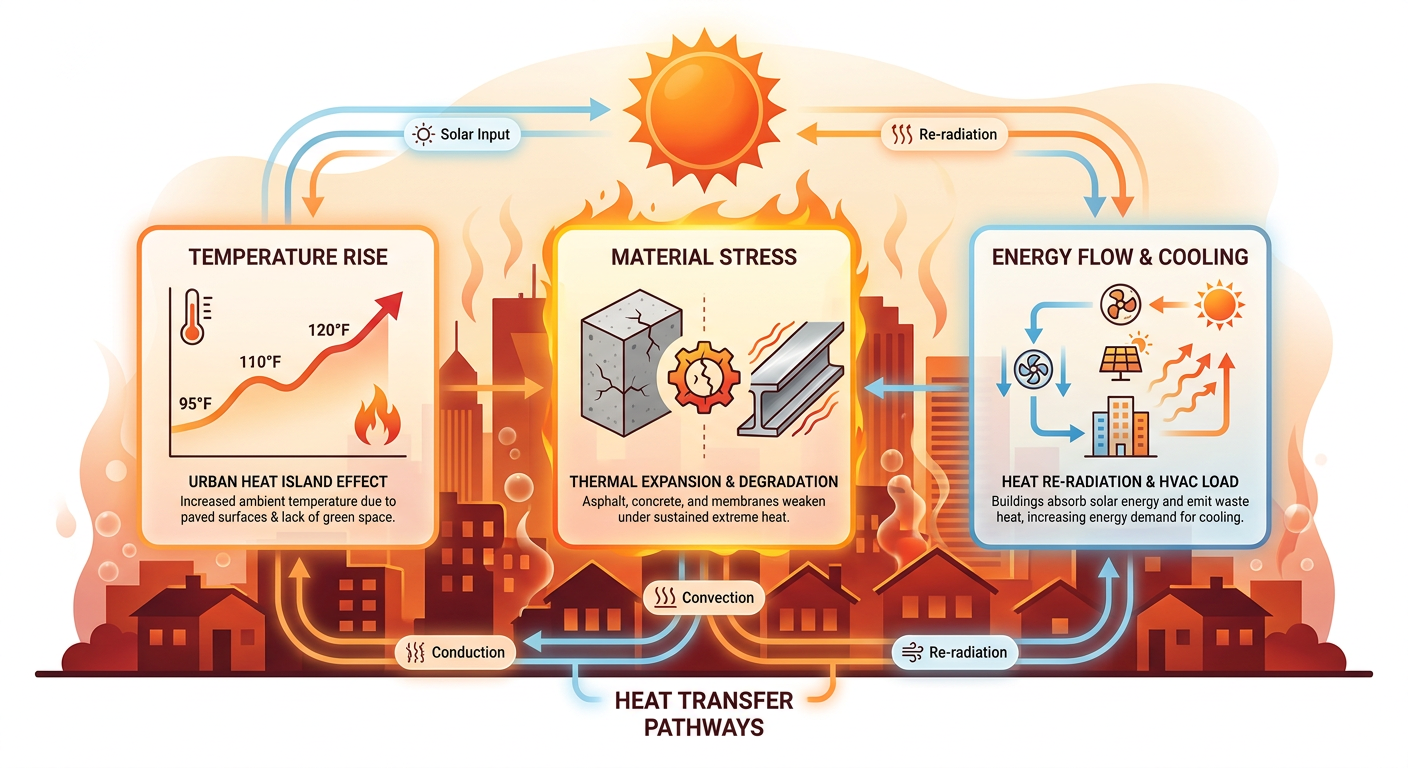
Phoenix, Arizona, faces extreme summer temperatures that test the resilience of both structures and their occupants. The city's climate, characterized by intense heat and prolonged dry periods, presents unique challenges for home construction and material performance. Understanding this climate is critical for selecting interior materials that can sustain performance, ensure indoor comfort, and manage energy consumption effectively. The goal is not just temporary relief but long-term durability and efficiency under some of the most severe thermal conditions in the United States. This section details the specifics of Phoenix's extreme summer temperatures, the increasing duration of heat, and their profound effects on homes and energy use, setting the stage for evaluating thermal performance of interior materials.
The Exacerbating Heat of a Phoenix Summer
Phoenix experiences relentlessly high temperatures. The city has recently seen a significant increase in the severity and duration of its summer heat. In 2024, Phoenix recorded 70 days with high temperatures at or above 110°F [1]. This figure is a substantial increase compared to the long-term average of approximately 21 such days per year between 1991 and 2020 [1]. The overall number of 100°F days is also high, with the city averaging 111 days above this threshold annually [30]. This escalating heat directly stresses building materials and home systems. The summer season itself has lengthened. Climate data indicates that summer-like temperatures now persist for about 8 days longer than they did in 1970 [2]. This extension means homes endure more days of high thermal loads, leading to increased wear and tear on materials and continuous demand on cooling systems [31].
The impact of this extended heat is evident in several ways:
- Increased Stress on Building Components: Prolonged exposure to high temperatures causes materials to expand, contract, and degrade more rapidly. For instance, roof surfaces in Phoenix can reach 180°F under direct sunlight [4], and attics can experience temperatures between 140°F and 160°F if not adequately ventilated [3]. This extreme heat radiates into living spaces, increasing indoor temperatures and requiring air conditioning units to work harder [3].
- Higher Cooling Demands: The persistent heat directly translates to greater cooling requirements. Air conditioning units in Phoenix homes may cycle on 15-20 times per day during July, often running almost without interruption in the late afternoon [3]. This heavy use reduces the lifespan of HVAC equipment.
- Global Context: Phoenix's situation mirrors challenges in other hot climates worldwide. Cities like Dubai face similar high temperatures, relying on strategies such as heavy insulation and reflective glass, similar to Phoenix. The World Meteorological Organization predicts an 80% chance of setting new global heat records in the next five years [12]. This forecast underscores the growing importance of heat-resilient construction.
The consequences extend beyond material degradation and energy use. Maricopa County reported 645 heat-related deaths in 2022, some linked to homes that could not maintain safe temperatures without air conditioning [33]. The financial burden is also significant, with summer electric bills typically ranging from $250 to $400 per month for an average 2,000 sq ft home [3]. This cost is 2-3 times higher than in milder U.S. climates. These factors collectively drive a strong demand for more efficient interior materials and design solutions.
Energy Consumption and Financial Impact
The pronounced summer heat in Phoenix makes cooling the dominant factor in residential energy consumption. Air conditioning accounts for an estimated 40-60% of summer utility bills [3]. For a typical home with a $300 monthly electric bill, roughly $150-$180 is spent on cooling alone [3]. These costs emphasize the need for effective thermal management strategies within homes.
The financial incentives for improving thermal performance are clear. Reducing cooling loads directly translates to lower energy bills and greater financial stability for homeowners. Several key areas contribute to high energy use:
Table 1: Estimated Cooling Cost Breakdown for a Phoenix Home (2,000 sq ft)
| Category | Estimated % of Cooling Loss | Notes |
|---|---|---|
| Windows | 25-35% | Inefficient windows allow significant solar heat gain [3] |
| Roof/Attic | ~20-30%* | Poorly insulated attics and dark roofs radiate heat into living spaces; *percentage depends on insulation level and roof type |
| Walls | ~10-20% | Standard R-13 walls allow some heat transfer |
| Air Infiltration (Gaps, Cracks) | ~10-15% | Unsealed areas let hot air enter the home easily |
| Other (Doors, HVAC Ducts, etc.) | Varies | Uninsulated ducts and unsealed doors contribute to heat gain |
Note: Percentages are approximate and can vary significantly based on home age, construction quality, and specific upgrades.
The data shows that improving the thermal envelope of a home can lead to substantial savings. For instance, upgrades such as better insulation and efficient windows can cut total cooling energy by 30-50% in older Phoenix homes [35].
Building Envelope: The First Line of Defense
The building envelope - comprising the roof, walls, windows, and doors - is crucial in resisting heat transfer. In Phoenix, these components are tested daily during the summer months.
Roof and Attic Performance
The roof is the most exposed part of a Phoenix home and absorbs immense solar radiation. Roof surface temperatures can reach 180°F, with attics commonly reaching 140-160°F [4], [3]. Without appropriate measures, this heat radiates into the living areas below.
- Attic Insulation: The 2024 Phoenix building code now requires a minimum of R-38 attic insulation [8]. This is a significant increase from older homes, which might have had R-19 or less. Upgrading to R-38 can reduce heat transfer by approximately 50%, leading to noticeable drops in cooling costs [8]. Contractors estimate such upgrades can reduce cooling bills by 10-15% immediately.
- Cool Roofs: Reflective "cool roofs" significantly reduce heat absorption. These roofs can keep surfaces 50-80°F cooler than traditional dark roofs [9]. The EPA suggests that cool roofs can cut summer cooling costs by 20-30% [10]. For example, a home in the Camelback area of Phoenix saw attic temperatures drop from 160°F to 120°F after installing a reflective white membrane roof, resulting in a 33% reduction in August electric bills [25]. This reduction highlights the ability of cool roofs to shield homes from 110°F heat [25]. Utilities like SRP offer rebates for cool roof installations, recognizing their role in reducing peak electricity demand [9]. Popular cool roof materials include clay tile, light-colored metal, and concrete [27].
- Radiant Barriers and Ventilation: Radiant barriers, which reflect about 95% of radiant heat, can lower attic temperatures by 20-30°F [9]. Attic ventilation systems, such as ridge vents and fans, work with insulation to expel hot air, dropping attic temperatures from 150°F to 120°F by evening [3].
Windows and Doors: Major Heat Entry Points
Windows and doors are often the biggest sources of heat gain in a Phoenix home, accounting for 25-35% of cooling loss [3]. Standard single-pane glass can transmit 75-80% of solar energy [11] [36], making rooms hot and increasing glare.
- Low-E Glass: Modern double-pane windows with low-emissivity (Low-E) coatings are essential. Low-E 366 glass, with its three silver layers, blocks about 95% of UV rays and a large portion of infrared heat [12]. This can reduce cooling needs by 25-30% for sun-exposed windows [12].
- Window Frames: Material selection for window frames is also important. While aluminum frames conduct heat readily, vinyl or fiberglass frames provide better insulation and withstand UV exposure without warping [6]. Proper installation with airtight seals is necessary, as even small gaps compromise thermal performance [35].
- Doors: Exterior doors should be insulated fiberglass or steel with foam cores to resist heat transfer. Fiberglass does not swell or crack from heat and offers good insulation [14]. Weather stripping and door sweeps help prevent hot air infiltration.
Interior Materials and Their Role in Thermal Comfort
Beyond the building envelope, interior materials play a significant role in maintaining comfort and durability. Material choices affect how cool a home feels and how well it withstands continuous heat exposure.
Flooring Choices:
- Ceramic Tile and Natural Stone: These are popular in Phoenix because they stay cool to the touch due to their high thermal conductivity [15]. They are resistant to warping, melting, or discoloration from heat and can last 15-20 years even in desert conditions [13]. Approximately 70-80% of homes in the Phoenix area feature hard-surface flooring in main living areas [13]. This material is easy to clean, which is a practical benefit during dust storms [14].
- Polished Concrete: Gaining popularity for its aesthetic and thermal mass properties. Concrete absorbs coolness and slowly releases it, helping to moderate indoor temperature swings [15].
- Luxury Vinyl Plank (LVP): Modern LVP is designed with better dimensional stability, allowing it to withstand expansion and contraction from temperature changes, unlike older vinyl products [16]. It offers water resistance and is softer underfoot than tile.
- Hardwood: Engineered hardwood is preferred over solid wood due to its layered construction, which makes it more resistant to shrinking and swelling caused by Phoenix's fluctuating humidity [17]. Proper acclimation of wood for 1-2 weeks before installation and maintaining indoor humidity levels (30-40% via HVAC) are crucial to prevent issues like gapping or cupping [18]. Intense UV exposure can fade wood floors, so protective window films or area rugs are often used [19].
Other Interior Finishes:
- Paints: Light-colored, heat-reflective paints can help keep walls cooler, as dark surfaces absorb more heat [20].
- Cabinets and Countertops: Quartz and granite countertops handle Phoenix heat well. However, cheaper laminates on cabinets can delaminate if homes are not consistently cooled [21]. Remodelers like Phoenix Home Remodeling often suggest high-quality laminates or solid wood cabinetry with durable finishes to withstand indoor temperatures that can exceed 100°F [21].
- Adhesives and Caulks: Products rated for high temperatures are essential, as standard glues may fail above 120°F, a temperature easily exceeded in attics or sunrooms [22].
Durability and Indoor Air Quality Considerations
The intense Phoenix climate also affects the longevity of materials and indoor air quality.
- UV Degradation: Phoenix averages over 296 sunny days per year [51]. UV radiation through windows can degrade materials like plastic blinds, causing them to yellow or become brittle in about five years [23]. Low-E window coatings and films that block 90%+ of UV rays are vital for protecting interior finishes, furniture, and artwork [23].
- Thermal Expansion and Contraction: Daily temperature swings cause materials to expand and contract. Over time, this can lead to cracking in drywall joints and paint. Using flexible caulks and joint compounds, and glues that remain slightly elastic, helps mitigate these issues [24]. The dry climate can also cause wood furniture to crack, leading many homeowners to use humidifiers to maintain a consistent indoor humidity [24].
- Off-Gassing: High temperatures can increase the release of volatile organic compounds (VOCs) from building materials. To address this, many homeowners choose low-VOC or no-VOC materials for paints, flooring, and cabinetry [24]. Modern HVAC systems with fresh air exchange or energy recovery ventilators (ERVs) help maintain good indoor air quality by cycling in outdoor air while managing temperature [24].
Future-Proofing for Extreme Heat
As temperatures continue to rise, strategies for designing and renovating homes in Phoenix are evolving. Both high-tech and traditional solutions are being combined to create more resilient living spaces.
- High-Performance Homes: There is a growing movement toward net-zero and passive homes. These homes integrate advanced insulation, reflective roofing, and superior windows with additional elements like motorized exterior shades and ventilated wall cavities. The Desert Comfort Idea Home near Phoenix, for example, achieves net-zero energy with R-30 insulated concrete form (ICF) walls, an R-55 structural insulated panel (SIP) roof, and triple-pane windows [28] [29]. This allows a 3,000 sq ft home to be cooled by a relatively small 3.5-ton VRF HVAC system [29]. Similarly, the Passive House-certified home in Tucson uses thick insulated walls and a 1-foot ventilated air gap, achieving strong airtightness (0.027 CFM50/ft²) to maintain comfort with minimal energy [42] [43].
- Smart Technologies: Smart thermostats can pre-cool homes during off-peak hours (a technique known as "supercooling") to reduce energy costs during high-demand periods [44]. Automation for window shades and heat-sensing attic fans further optimize heat management.
- Traditional Wisdom: Modern designs often incorporate elements from traditional desert architecture such as thick adobe walls, shaded courtyards, deep overhangs, and light-colored exteriors. These passive strategies help buffer indoor spaces from extreme heat. A 400-year-old kasbah in Morocco, with its 2-foot-thick rammed earth walls, demonstrates how purely architectural means can keep interiors about 15°C (27°F) cooler than the outside temperature of 45°C (113°F) [25]. These principles are being integrated with modern materials to create homes that are also comfortable but also aesthetically aligned with the regional context.
Phoenix Home Remodeling, alongside other builders, prioritizes heat-reflective roofs, upgraded insulation, and efficient windows in renovation projects [26]. The goal is to ensure livability and protect interiors during the extreme 110°F summers.
In summary, the Phoenix climate presents significant challenges that require careful consideration in home construction and renovation. The increasing intensity and duration of heat necessitate strong building envelopes, efficient interior materials, and smart technologies. These measures are crucial for reducing energy consumption, enhancing indoor comfort, ensuring material longevity, and protecting the health and well-being of residents. The strategies employed in Phoenix serve as important examples for other regions facing similar climatic challenges. The following section will further discuss specific interior materials and their thermal performance characteristics in this environment.
3. Roofing and Attic Thermal Performance
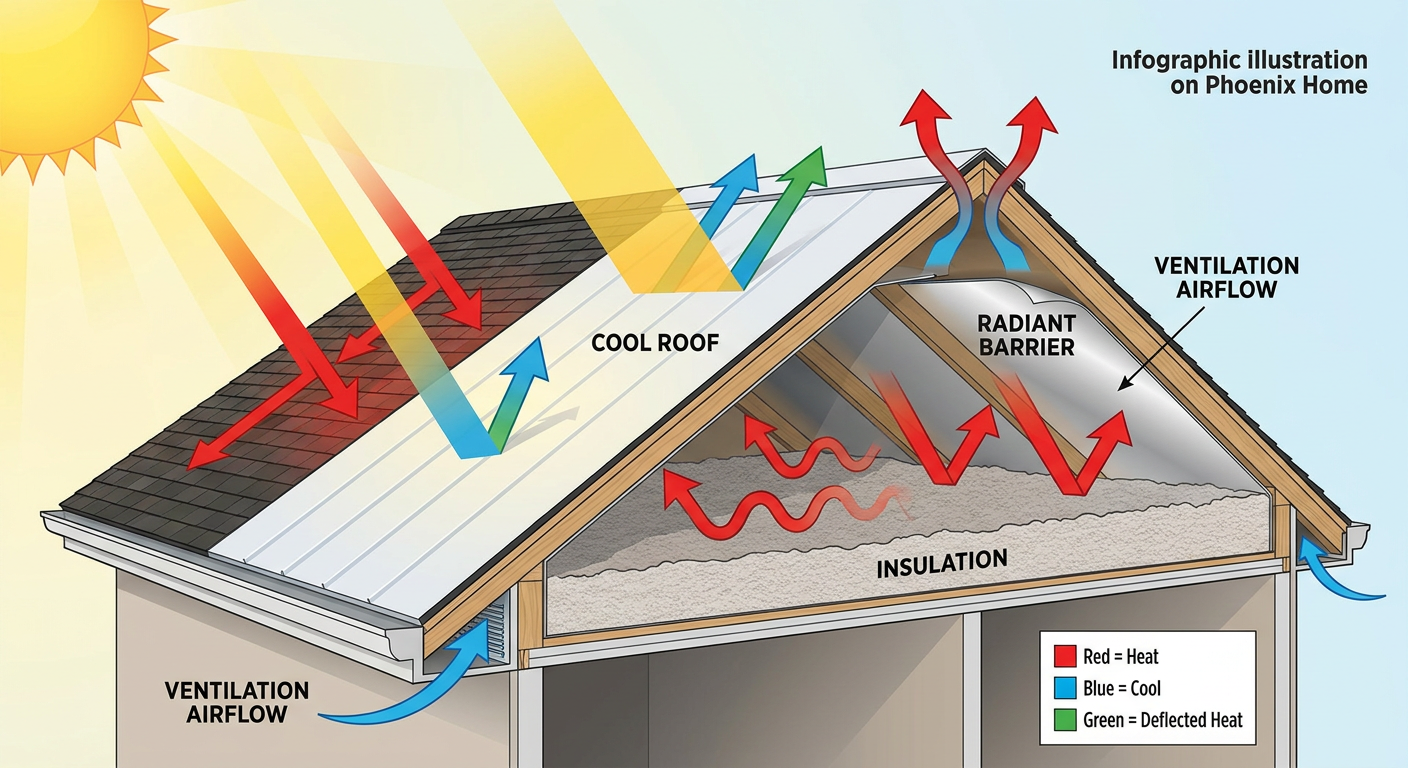
In Phoenix, where summer temperatures regularly surpass 110°F, a building's roof and attic system are the primary defenses against overpowering heat gain. These components bear the brunt of solar radiation, experiencing extreme thermal stress. The effectiveness of the roofing and attic assembly directly impacts interior comfort, cooling costs, and the longevity of the entire structure. Without proper design and materials, the attic can become a superheated chamber, driving up air conditioning (AC) usage and making indoor spaces uncomfortable. This section explores insulation, radiant barriers, ventilation, and cool roof technologies as crucial elements for mitigating heat entry in Phoenix homes, detailing their roles in maintaining a comfortable and energy-efficient living environment.
3.1 The Heat Burden on Phoenix Roofs and Attics
The climate in Phoenix presents significant challenges for roofing and attic systems. The city consistently records some of the highest temperatures in the United States. In 2024, Phoenix experienced 70 days above 110°F. This is a sharp increase from the long-term average of about 21 such days per year between 1991 and 2020[1]. The summer season now lasts approximately 8 days longer than in 1970, with high temperatures occurring earlier and extending later into the fall[2]. This prolonged exposure to intense heat puts immense pressure on homes. Roof surfaces can reach temperatures of 170-180°F under direct sun exposure[4], absorbing a significant amount of solar energy. This heat then transfers to the attic space below. Attic air temperatures commonly range from 140-160°F during peak summer months without adequate ventilation[3].
When an attic becomes this hot, it acts as a large radiant heater, transferring heat downwards into the living spaces below. This process is known as conductive and radiant heat transfer. The ceiling of the top floor absorbs this heat, causing indoor temperatures to rise and forcing AC systems to work harder and longer. Air conditioning accounts for an estimated 40-60% of home energy use during Phoenix summers[5]. For an average 2,000 square foot home, monthly cooling costs can range from $250-$400 during summer[6]. This extreme operational cost highlights the financial incentive for homeowners to invest in effective roofing and attic thermal performance strategies. AC units may cycle 15-20 times per day or run almost continuously in the late afternoon during extreme heat, which shortens their lifespan and increases maintenance costs[10]. Therefore, managing heat at the roof and attic level is a critical first step in controlling indoor temperatures and reducing energy consumption.
3.2 Insulation as a Thermal Barrier
Insulation in the attic ceiling is a primary defense against heat transfer from the scorching attic space into the cooled living areas. The purpose of insulation is to create a resistant barrier to heat flow. The effectiveness of insulation is measured by its R-value, which indicates its thermal resistance. A higher R-value means better insulating performance.
3.2.1 Code Requirements and Performance
Phoenix’s 2024 building code, which applies to Climate Zone 2B, mandates specific insulation levels. New homes must have at least R-38 attic insulation. Many older homes might have significantly lower R-values, such as R-19 or less[7]. Upgrading from R-19 to R-38 in an attic can reduce heat transfer by approximately 50%, leading to substantial reductions in cooling costs. This underscores the importance of adequate insulation. Contractors report that upgrading an under-insulated attic to R-38 can reduce cooling bills by 10-15% immediately in Phoenix homes.
3.2.2 Types of Attic Insulation
Common types of attic insulation used in Phoenix include:
- Fiberglass Batts: These are pre-cut sections of fiberglass available in various R-values. They are relatively inexpensive and easy to install in unfinished attic spaces.
- Blown-in Fiberglass or Cellulose: These materials are blown into the attic cavity, conforming to uneven surfaces and filling gaps more effectively than batts. Cellulose, often made from recycled paper, can provide a good R-value and may have better air-sealing properties when denser installations are achieved.
- Spray Foam Insulation: Both open-cell and closed-cell spray foam can be applied directly to the underside of the roof deck or over the attic floor. Closed-cell foam offers a high R-value per inch and also acts as an air barrier. Open-cell foam is less dense but still provides good insulation and air sealing. Spray foam can also seal leaks and prevent air movement through the ceiling.
In addition to R-value, proper installation is paramount. Gaps or compressions in insulation can reduce its effectiveness. Ensuring continuous, uniform coverage and sealing air leaks around light fixtures, plumbing vents, and attic access points are critical for optimal insulation performance.
3.3 Radiant Barriers and Attic Ventilation
While insulation resists conductive heat flow, radiant barriers and ventilation address radiant heat and hot air buildup within the attic. These strategies work in conjunction with insulation to create a more effective thermal envelope.
3.3.1 Radiant Barriers
Radiant barriers are reflective materials, typically aluminum foil, installed in attics to reduce summer heat gain. Their function is to reflect radiant heat energy rather than absorb it. In a Phoenix attic, a significant portion of heat gain occurs through radiation from the hot roof deck to the attic floor and insulation. By reflecting this radiant heat, the barrier keeps the attic cooler.
- Installation: Radiant barriers are often installed on the underside of the roof deck, laid over the attic insulation, or integrated into roof sheathing.
- Performance: A radiant barrier can reflect roughly 95% of radiant heat, potentially lowering attic temperatures by 20-30°F[8]. In one notable Phoenix case, a cool roof installation, which also acts as a radiant barrier, dropped attic peak temperatures by 30-40°F[16]. This reduction helps insulation perform better because it is not exposed to such extreme temperatures.
Radiant barriers do not replace insulation but rather work with it to improve overall attic thermal performance, especially in hot climates like Phoenix where radiant heat is a major factor.
3.3.2 Attic Ventilation
Attic ventilation is the process of moving hot air out of the attic and drawing cooler air in. This helps to reduce the temperature of the air within the attic space. Without proper ventilation, stagnant hot air can collect, putting stress on building materials and increasing the heat load on the conditioned space below. Attic temperatures can reach 140-160°F without proper ventilation[3]. Effective ventilation strategies include:
- Soffit and Ridge Vents: This passive system uses natural convection to move air. Cooler air enters through soffit vents at the eaves, rises as it heats, and exits through ridge vents at the roof peak. This continuous airflow helps flush out hot air.
- Attic Fans: Mechanical attic fans, often thermostatically controlled, actively pull hot air out of the attic. These fans can reduce attic air temperatures from 150°F to 120°F by evening.
- Gable Vents: These are openings found on the gables of houses, allowing cross-ventilation.
Proper ventilation helps to reduce the overall heat load on the attic, which in turn reduces the amount of heat radiating into the living space. It also helps to prevent moisture buildup, although this is less of a concern in Phoenix's dry climate, except during monsoon season. Phoenix Home Remodeling and other local remodelers frequently include attic ventilation upgrades, recognizing them as an affordable way to improve a home's thermal performance.
3.4 Cool Roof Technologies
Cool roofs are designed to reflect more sunlight and absorb less heat than standard roofs. This is achieved through coatings or membranes that have high solar reflectance (the ability to reflect sunlight) and high thermal emittance (the ability to release absorbed heat). In a climate like Phoenix, cool roofs are particularly beneficial because they address heat gain at the very surface of the building. A dark shingle or tile roof in Phoenix can reach surface temperatures of 170-180°F[4]. Cool roofs can maintain surface temperatures much closer to the ambient air temperature, sometimes only 5-10°F above it[13].
The impact of cool roofs is substantial:
- Temperature Reduction: A cool roof can keep the roof surface 50-80°F cooler than a traditional dark roof during summer midday[8].
- Attic Temperature Drop: This surface temperature reduction translates directly to cooler attics. A homeowner in the Camelback area of Phoenix reported attic temperatures dropping from about 160°F to 120°F after installing a reflective white membrane cool roof[14][15].
- Cooling Cost Savings: According to the EPA, a cool roof can reduce summer cooling costs by 20-30% in hot, sunny regions[9]. The Phoenix homeowner example saw a 33% reduction in their August electric bill after the cool roof installation[16].
- Extended Roof Lifespan: Lower surface temperatures reduce thermal stress on roofing materials, which can increase the roof's durability and lifespan by preventing premature cracking and warping[17].
Local utilities in Phoenix, such as SRP, offer rebates for cool roof installations, recognizing their benefits in reducing peak electricity demand during severe heat waves.
3.4.1 Types of Cool Roofs
Several types of roofing materials and applications can qualify as cool roofs:
- Cool Coatings: These are reflective paint-like coatings applied over existing or new roof materials (e.g., asphalt shingles, metal). They are typically light in color, often white.
- Single-Ply Membranes: Examples include TPO (thermoplastic polyolefin) and EPDM (ethylene propylene diene monomer) membranes, which are naturally reflective and durable. These are common on low-slope and flat roofs.
- Metal Roofs: Many metal roofs come with factory-applied reflective coatings. Metal itself has good emissive properties. Light-colored metal roofs are a good choice for Phoenix.
- Tiles: Clay or concrete tiles, especially in lighter colors, can act as cool roofs. Their mass and air gaps underneath can also slow heat transfer.
When selecting a cool roof, it is important to consider both the solar reflectance index (SRI) and thermal emittance. These metrics determine how well a roof reflects sunlight and releases absorbed heat. The Cool Roof Rating Council (CRRC) provides a rating system for roof product performance.
3.5 Durable Roofing Materials for the Desert Climate
Beyond cool roof technologies, the type of roofing material selected is critical for long-term durability in Phoenix's harsh environment. Materials must withstand intense UV radiation, high temperatures, and occasional heavy monsoon rains.
- Clay Tile and Concrete Tile: These materials are highly favored in Phoenix because of their mass and airspace beneath the tiles. They heat up slowly and radiate heat away effectively. They are also highly resistant to UV degradation and warping, offering long lifespans of many decades.
- Metal Roofing: Light-colored metal roofs with reflective coatings are gaining popularity. They are durable, fire-resistant, and their reflective properties help reduce heat gain. They can also withstand heavy winds common during monsoon season.
- Asphalt Shingles: Traditional dark asphalt shingles are less suitable for Phoenix as they absorb a lot of heat, which can lead to rapid degradation, warping, and cracking above 110°F, potentially causing leaks[18]. However, some manufacturers now offer "cool" asphalt shingles with reflective granules that improve their solar reflectance.
The choice of underlayment, sheathing, and proper installation techniques are also crucial. A high-quality underlayment provides an extra layer of protection against moisture and can contribute to the overall thermal performance of the roof assembly. Phoenix Home Remodeling advises clients on selecting heat-tolerant and long-lasting roofing materials, emphasizing a systems approach to the entire roof and attic assembly.
The table below summarizes the attributes of common roofing materials in Phoenix:
| Roofing Material | Pros (Phoenix Climate) | Cons (Phoenix Climate) | Typical Surface Temp (110°F Ambient) |
|---|---|---|---|
| Dark Asphalt Shingles | Low initial cost | Absorbs significant heat, prone to cracking/warping[18], shorter lifespan in extreme heat | 170-180°F[4] |
| Cool Asphalt Shingles | Better reflectance than dark shingles, improved durability | Still absorbs more heat than other cool alternatives | 140-160°F |
| Clay/Concrete Tile (Light-colored) | High thermal mass, air gap aids ventilation, very long lifespan, high UV resistance | Higher initial cost, heavy (requires strong roof structure) | 120-140°F (surface), lower heat transfer into attic |
| Metal (Light-colored, Coated) | High reflectance, durable, fire-resistant, good emittance | Higher initial cost, noise during rain (can be mitigated with insulation), can dent | 115-130°F (surface) |
| Single-Ply Membranes (TPO, EPDM) | Highly reflective (especially white), cost-effective for flat/low-slope roofs, lightweight | Appearance (less residential aesthetic), professional installation required | 115-125°F (surface) |
3.6 Integration of Components for Optimal Performance
Maximizing thermal performance in the roofing and attic system involves integrating all components. Insulation, radiant barriers, ventilation, and cool roof solutions are not mutually exclusive; they work together. For instance, a cool roof reduces the heat absorbed by the roof deck, making the radiant barrier's job easier and reducing the load on the attic insulation. Efficient attic ventilation flushes out any remaining hot air, allowing the insulation to maintain a greater temperature difference more effectively.
The Desert Comfort Idea Home, a net-zero custom home north of Phoenix, showcases this integrated approach. It features an R-55 Structural Insulated Panel (SIP) roof assembly, triple-pane low-E windows, and deep overhangs for shading[20][21]. These combined elements create a super-insulated shell, allowing the 3,000 square foot home to be cooled by a relatively small 3.5-ton AC system[22]. Such examples demonstrate that a holistic strategy, addressing all pathways of heat entry through the roof and attic, is key to achieving significant energy savings and superior indoor comfort in extreme heat. Phoenix Home Remodeling advocates for comprehensive attic and roof upgrades that consider all these elements for homeowners looking to improve thermal performance. This approach ensures that the highest point of heat attack - the roof - is adequately protected.
The performance of the building envelope, particularly the roof and attic, sets the stage for the effectiveness of other heat mitigation strategies within the home. The next section will describe how windows and doors, as significant openings in the envelope, contribute to heat gain and how suitable material choices can counter this.
4. Windows and Doors for Heat Control
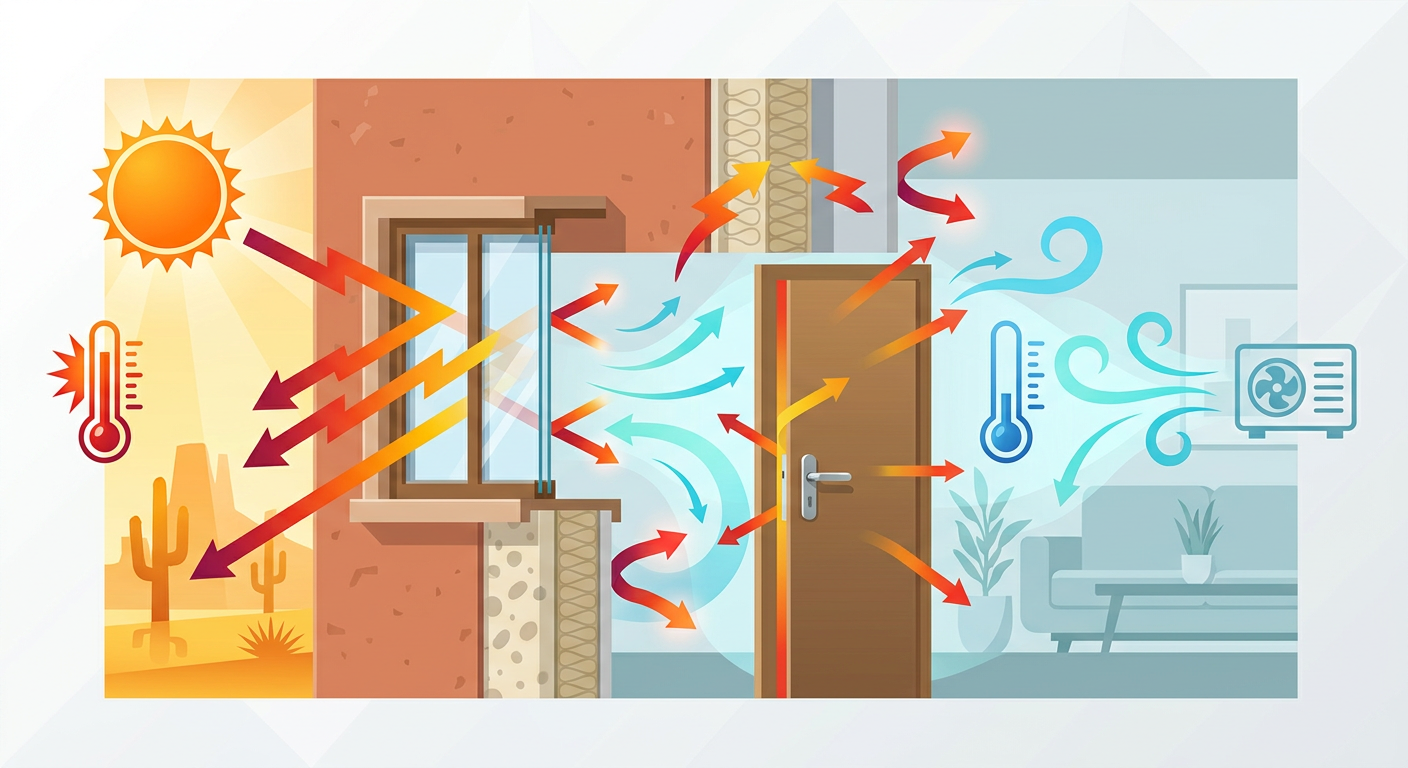
In Phoenix, where summer temperatures regularly pass 110°F, the building envelope plays a critical role in maintaining indoor comfort and managing energy costs. While roofs and walls are major components of this envelope, windows and doors are often the weakest points for heat transfer. These openings, essential for light, views, and access, can allow significant amounts of solar radiation and thermal energy into a home, especially if they are not chosen or installed correctly. Data shows that windows alone can account for 25-35% of cooling loss in Arizona homes [7]. With cooling representing 40-60% of summer utility bills, homeowners and contractors in Phoenix prioritize selecting and installing windows and doors that minimize heat gain [3].
The intensity of the Phoenix sun means that materials in windows and doors must endure harsh conditions, including direct solar radiation, high ambient temperatures, and significant daily temperature swings. Frames can become hot to the touch, and glass surfaces absorb and transmit substantial heat indoors. This section examines how different window types, glass technologies, frame materials, and door selections contribute to or mitigate heat gain. It also discusses the importance of proper sealing and installation techniques that prevent hot air infiltration, which is as important as blocking radiant heat.
The average summer electricity bill for a 2,000 sq ft home in Phoenix is between $250 and $400 per month [4]. A significant portion of this cost is directly tied to the performance of windows and doors. Modern advancements in glass technology and frame construction offer substantial improvements over older products, directly contributing to lower energy usage and greater indoor comfort. Phoenix Home Remodeling, like other local companies, focuses on these elements in renovations to help clients achieve more energy-efficient and livable homes in the extreme desert climate [20].
4.1. The Role of Windows in Heat Transfer
Windows are complex building components. Their performance depends on the glass, the frame material, the type of gas between glass panes, and the quality of their installation and sealing. In Phoenix, solar heat gain is the primary concern. Direct sunlight passing through windows also raises the air temperature but also heats objects and surfaces inside the home, which then radiate heat into the room. This effect can be pronounced in a city that sees over 296 sunny days per year [14].
4.1.1. Glass Technology for Heat Control
The type of glass used is the most significant factor in a window's ability to control heat. Older homes in Phoenix often have single-pane windows, which offer minimal resistance to heat transfer. Single-pane clear glass can transmit as much as 75-80% of solar energy into a home [11]. This is a major issue when outdoor temperatures are consistently above 110°F. Upgrading these windows provides one of the most impactful energy efficiency improvements.
Modern windows primarily feature double-pane or sometimes triple-pane glass units. These units consist of two or three layers of glass separated by a sealed air or gas-filled space. This space acts as an insulator, reducing heat conduction. Argon gas, denser than air, is often used in this space to further improve thermal performance. However, for Phoenix's extreme heat, the key technology lies in specialized coatings applied to the glass, known as Low-E (low-emissivity) coatings.
Low-E Glass Coatings: Low-E coatings are microscopic, metallic layers applied to one or more glass surfaces within the insulated glass unit. These coatings are designed to reflect infrared (IR) light, which is essentially heat, while still allowing visible light to pass through. The goal is to keep heat out in summer and inside during winter.
- Standard Low-E: These coatings typically have one or two layers of silver and offer good performance in climates with both heating and cooling seasons. They reduce both solar heat gain and heat loss.
- High-Performance Low-E (e.g., Low-E 366): For hot climates like Phoenix, specialized high-performance Low-E coatings are essential. Low-E 366, a common option in Arizona, incorporates three layers of silver coating. This construction maximizes solar reflectivity. It is designed to block approximately 95% of ultraviolet (UV) radiation and a large portion of infrared heat [6]. UV blocking is crucial not just for heat control, but also for protecting interior furnishings from fading [12].
The impact of upgrading to Low-E 366 glass on sun-facing windows in Phoenix can be substantial. Experts suggest it can reduce cooling costs by about 25-30% for those specific rooms [6]. For north-facing or shaded windows, a slightly lighter Low-E coating, such as Low-E 270, might be used to allow more visible light while still managing heat effectively. The distinction highlights the need for custom window specifications based on a home's orientation and local climate conditions.
The solar heat gain coefficient (SHGC) is a key metric for evaluating window performance in terms of heat rejection. A lower SHGC indicates less solar heat is transmitted through the window. For Phoenix, windows with a low SHGC are preferred. The R-value or U-factor of a window also details its thermal insulation capacity; a higher R-value (lower U-factor) means less heat transfer overall. Window companies in Arizona offer products with SHGC ratings as low as 0.20-0.25 and U-factors around 0.25-0.30, which are highly effective for desert environments.
Table 1: Comparison of Window Glass Types in Phoenix
| Glass Type | Solar Energy Transmitted (Approx.) | UV Blocked (Approx.) | Cooling Cost Reduction Potential | Suitability for Phoenix |
|---|---|---|---|---|
| Single-pane clear glass | 75-80% [11] | Minimal | 0% (source of heat gain) | Poor (older homes only) |
| Double-pane clear glass | ~65% [11] | Minimal | Low | Better than single, but still lacking |
| Low-E 366 double-pane | < 25% (with optimal coating) | ~95% [6] | 25-30% on sun-exposed windows [6] | Excellent (standard for new construction/renovation) |
4.1.2. Window Frame Materials
While the glass is critical, the frame material also contributes significantly to a window's overall thermal performance. Different materials conduct heat at varying rates, which affects the transfer of heat from the hot exterior to the cooler interior.
- Aluminum Frames: Historically common in many regions, aluminum frames are strong and durable. However, aluminum is a good conductor of heat. In Phoenix, aluminum frames can become hot to the touch during the day and can transfer heat directly into the living space. This thermal bridging reduces the overall energy efficiency of the window unit, even if it has high-performance glass. Many Phoenix homeowners are replacing older aluminum windows mainly due to this thermal conductivity issue.
- Vinyl Frames: Vinyl (PVC) has become a popular choice for window frames due to its good insulating properties, low maintenance, and cost-effectiveness. Vinyl does not conduct heat as readily as aluminum, making it a better thermal barrier. High-quality vinyl frames are UV-stabilized to prevent warping, cracking, or discoloration from the intense Phoenix sun over time [6].
- Fiberglass Frames: Fiberglass frames offer superior strength and durability, often exceeding vinyl. They have excellent thermal performance, similar to or better than vinyl, as fiberglass is a poor conductor of heat. Fiberglass also maintains its shape and structural integrity well across broad temperature changes, making it highly suitable for the extreme heat and temperature swings in Phoenix.
- Wood Frames: While aesthetically appealing, wood frames require more maintenance in desert climates to prevent drying, cracking, and warping. They offer good insulation but can be prone to movement with changes in humidity, such as during monsoon season [7]. For these reasons, wood frames are less common for exterior windows in Phoenix unless diligently maintained.
When selecting windows, it is essential to consider the entire window unit’s performance, not just the glass. The National Fenestration Rating Council (NFRC) label provides certified ratings for U-factor, SHGC, Visible Transmittance (VT), and air leakage, which help consumers compare product performance comprehensively. For Phoenix, a low U-factor (overall heat transfer) and a low SHGC are paramount.
4.1.3. Importance of Installation and Sealing
Even the most energy-efficient windows will underperform if not installed correctly. Air leakage around window frames is a significant source of heat gain/loss. Hot air from outside can infiltrate through small gaps and cracks, undermining the insulation provided by the glass and frame. Proper installation includes:
- Airtight Sealing: Use of high-quality, heat-tolerant sealants and tapes to create an airtight barrier between the window frame and the wall opening.
- Insulation of Gaps: Filling any voids around the frame with appropriate insulation, such as low-expansion spray foam.
- Flashing: Correct flashing techniques are essential to prevent water intrusion, especially given the intense, sudden downpours during monsoon season.
Phoenix Home Remodeling and other reputable contractors recognize that a holistic approach is needed. They emphasize that the glass, frame, and installation must all work together to effectively resist the desert heat [14]. Retrofitting older homes with new, properly installed, high-performance windows often yields significant improvements in both comfort and energy savings.
4.1.4. External Shading for Windows
Beyond internal window technologies, external shading devices are highly effective at reducing solar heat gain. By blocking sunlight before it even reaches the window glass, these measures prevent heat from entering the building envelope. Common external shading solutions in Phoenix include:
- Overhangs and Awnings: These are effective at shading windows from direct overhead sun during the hottest parts of the day. Properly designed overhangs can block summer sun while allowing lower-angle winter sun to penetrate and provide passive heating.
- Exterior Shades and Screens: Motorized exterior shades or solar screens can be deployed during peak sun hours to block up to 80-90% of solar radiation. These are especially useful for west-facing windows, which receive intense afternoon sun.
- Landscaping: Strategically planted shade trees can provide significant cooling benefits over time by blocking direct sunlight from reaching walls and windows.
External shading is often more effective than internal shading (like curtains or blinds) because it stops the heat outside the glass, preventing the window itself from becoming a heat source. Internal shades can reduce heat gain by 20-40% [12], but the heat still enters the window cavity before being reflected or absorbed by the shade.
4.2. Doors for Heat Control and Sealing
Exterior doors also serve as critical transition points in the building envelope, and like windows, they can be significant sources of heat gain and air leakage if not properly selected and installed. In Phoenix, the choice of door material and effective sealing are paramount.
4.2.1. Door Material Selection
The intense heat and dryness, coupled with occasional sharp humidity increases, can cause traditional door materials like solid wood to warp, crack, or swell. This compromises their structural integrity and creates air gaps, allowing hot air to infiltrate.
- Fiberglass Doors: Fiberglass is a popular and recommended choice for exterior doors in Phoenix [14]. These doors are constructed with a composite material that resists warping, cracking, and swelling under extreme temperature fluctuations. They also typically feature an insulating foam core, providing good thermal resistance. Fiberglass doors are durable and require less maintenance than wood doors. They can also be molded to mimic the look of wood grain, offering aesthetic flexibility.
- Steel Doors: Steel doors also offer excellent durability and security. Like fiberglass doors, they often incorporate an insulating foam core, providing good thermal performance. The primary concern with steel in direct sun is that the surface can become extremely hot. However, they are still a strong option for heat management, especially if shaded from direct afternoon sun.
- Wood Doors: While beautiful, solid wood doors require careful consideration in Phoenix. They are prone to expansion and contraction, which can lead to warping, sticking, or gaps in the door frame. If selected, wood doors should be protected by deep overhangs or storm doors, and regularly maintained with UV-resistant finishes to preserve their integrity [14]. Engineered wood doors, with their layered construction, offer better stability than solid wood against humidity and temperature changes, but may still require protection.
Regardless of the material, selecting an insulated door with a high R-value is important for minimizing heat transfer. The core of the door, not just the surface material, directly influences its thermal performance.
4.2.2. Importance of Door Sealing and Hardware
Even the most insulated door will fail to prevent heat gain if it is not properly sealed. Air infiltration through gaps around the door frame can be a major source of hot air inside the home. Effective door sealing involves several components:
- Weatherstripping: High-quality, durable weatherstripping around the perimeter of the door frame creates a tight seal when the door is closed. This prevents drafts and heat transfer. In Phoenix, weatherstripping materials must be able to withstand high temperatures without degrading or becoming brittle.
- Door Sweeps/Bottom Seals: These are installed along the bottom edge of the door to seal the gap between the door and the threshold. They are crucial for preventing air leaks, dust, and insects from entering.
- Thresholds: An adjustable or thermally broken threshold can further improve the seal and reduce heat conduction through the bottom of the door frame.
- Professional Installation: As with windows, professional installation ensures that the door frame is plumb, square, and securely anchored, and that all sealing components are fitted correctly to maximize thermal performance. Gaps must be properly insulated and sealed during the installation process.
Consideration should also be given to any glass inserts or sidelights in doors. These should also be high-performance, Low-E glass to match the energy efficiency of the door panel itself. Moreover, large multi-panel sliding or bifold doors, common in modern designs, need strong sealing systems and thermal breaks in their frames to prevent significant heat gain. These large glass areas ideally should also be protected by exterior shading or have the highest performance Low-E glass available for the Phoenix climate.
4.3. Minimizing Air Infiltration and Maximizing Sealing
The cumulative effect of air leaks through windows and doors can be equivalent to leaving a small window open continuously. In Phoenix, where the outdoor air can itself be dangerous at 110°F+, control over air infiltration is not just about comfort or energy, but also about safety. The primary approaches to minimizing air infiltration involve careful sealing and appropriate material choices that resist degradation in extreme heat.
4.3.1. Air Sealing Strategies
Comprehensive air sealing extends beyond just windows and doors to the entire building envelope. However, windows and doors remain key areas for attention due to their moving parts and interfaces with different materials (frame to wall). Strategies include:
- Heat-Tolerant Caulks and Sealants: Using caulking and sealants specifically rated for high temperatures and UV resistance. Many standard construction glues and caulks are only tested to 120°F (49°C), a temperature that can easily be exceeded on external surfaces in direct sun [14]. Specialized aerospace-grade or high-temperature formulations can maintain their properties and adhesion better in Phoenix conditions.
- Thermal Breaks: For any frame or component that conducts heat, a "thermal break" is a non-conductive material designed to interrupt the heat flow. This is particularly relevant for aluminum window and door frames, where a strip of insulating material separates the inner and outer halves of the frame.
- Continuous Air Barrier: The goal is to create a continuous air barrier around the entire conditioned space of the home. Windows and doors are critical components of this barrier. Inspections often involve blower door tests which measure a home's airtightness and help identify problematic leaks.
4.3.2. Material Durability in Extreme Heat
The longevity and performance of sealants, weatherstripping, and even the window and door components themselves are directly related to their ability to withstand constant exposure to intense heat and UV radiation. Materials that become brittle, crack, or lose their elasticity will quickly compromise the air seal. For example, vinyl blinds can discolor or become brittle within five years due to UV exposure [12], and the same applies to lesser-quality sealants or plastics used in window and door components.
Local contractors like Phoenix Home Remodeling emphasize the use of materials proven to perform in Phoenix. This includes fiberglass doors over wood (to avoid warping), and epoxy adhesives rated for high temperatures [14]. Every component, from a weatherstrip to a window frame, must be evaluated for its long-term durability under conditions that push materials to their limits.
4.4. Conclusion on Windows and Doors for Heat Control
Windows and doors are vital elements in a Phoenix home's defense against 110°F summers. They are no longer passive openings but active shields against solar heat gain and air infiltration. The selection of advanced Low-E glass, insulating frame materials like vinyl or fiberglass, and insulated door types such as fiberglass or steel, significantly reduce heat transfer. Coupled with precise, airtight installation and external shading strategies, these components play a major role in lowering cooling loads and improving indoor comfort. The statistics speak for themselves: up to 35% of cooling loss can occur through windows [7], and upgrading them can reduce cooling needs by 25-30% on sun-exposed sides [6]. As Phoenix continues to experience hotter and longer summers [2], investments in high-performance windows and doors are not just about energy savings, but about ensuring the livability and resilience of homes.
This attention to detail in the building envelope extends to the interior design choices, which is the focus of the next section. Interior finishes and layout also play a role in how heat is managed and perceived indoors, contributing to the overall thermal performance and comfort of a Phoenix home.
5. Interior Materials and Flooring Choices
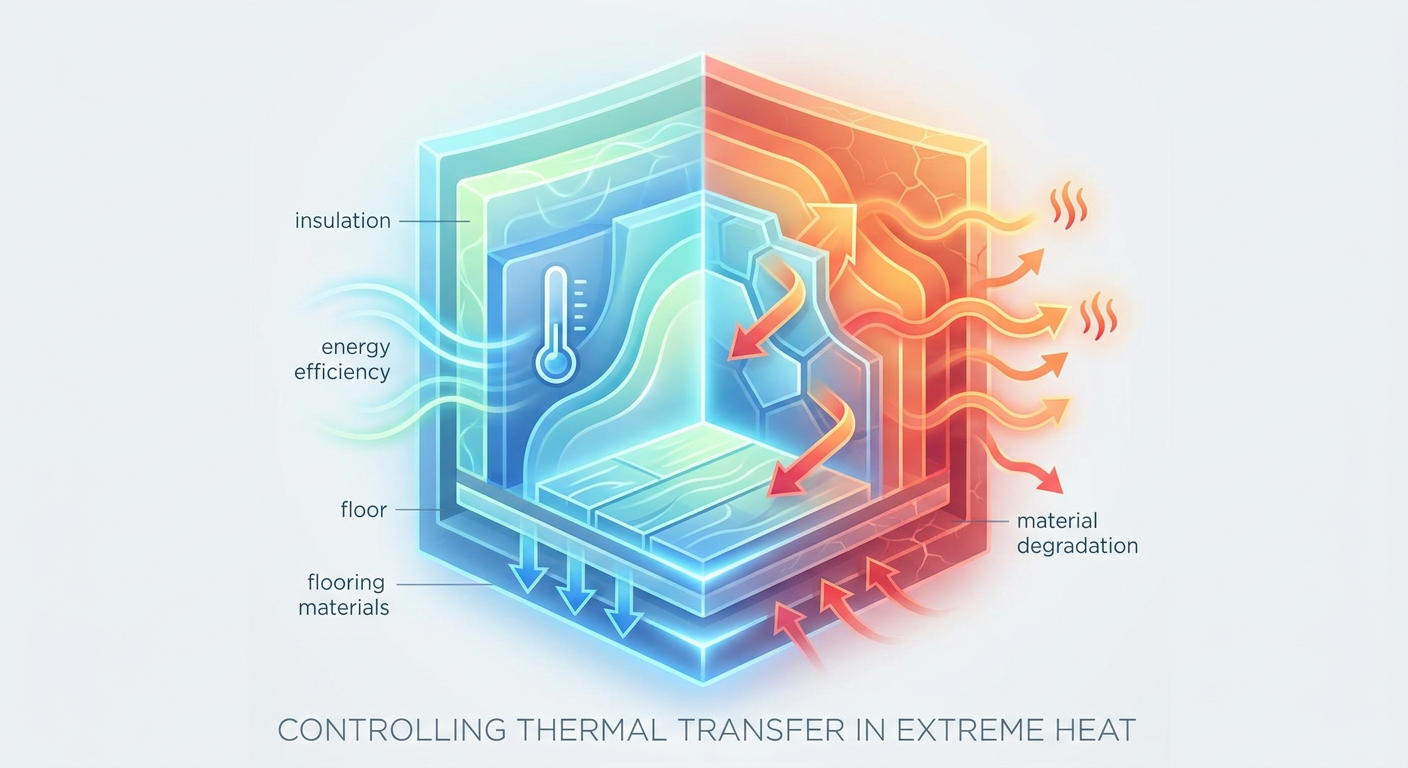
The interior materials and flooring choices within a Phoenix home play a significant role in maintaining indoor comfort and ensuring durability during the region's extreme heat, especially throughout summers that frequently see days above 110°F [1]. With air conditioning accounting for an estimated 40-60% of summer utility bills [3], efficient material selection can directly influence a home's energy consumption and the occupant's experience of the climate. Materials that absorb and retain heat, or that degrade under sustained high temperatures and intense UV radiation, can compromise both the thermal performance and longevity of a home's interior. Conversely, materials chosen for their inherent thermal properties or resilience to harsh desert conditions contribute to a more stable, cooler indoor environment and reduce the strain on cooling systems [4].
The selection process for interior finishes in Phoenix homes goes beyond aesthetics. It considers the material's thermal mass, its ability to reflect or absorb heat, its resistance to expansion and contraction, and its durability against UV light. Over 80% of new Phoenix homes feature hard-surface flooring in main living areas, a clear indication of this climate-driven shift in preferences [10]. Understanding these factors helps homeowners and builders make informed decisions that align with the specific challenges of the Phoenix climate.
5.1. Flooring Options and Their Thermal Performance
Flooring is a foundation of interior design, and in Phoenix, its thermal properties are critical. The choice of flooring directly impacts how a room feels underfoot and contributes to the overall thermal comfort of a home. Different materials respond to heat in varied ways, with some acting as cool-to-the-touch surfaces and others trapping heat, influencing both energy use and occupant comfort.
5.1.1. Tile and Natural Stone: The Preferred Cool Surface
Ceramic tile and natural stone are the most popular flooring choices in Phoenix homes, and for good reason [4]. Their high thermal conductivity allows them to dissipate heat quickly, making them feel cooler to the touch compared to other materials even when ambient air temperatures are high [33]. This property is particularly beneficial in a climate where indoor temperatures can rise significantly.
Tile floors typically last 15-20 years in desert conditions, showcasing their durability [8]. They are resistant to warping, melting, or discoloration under the high temperatures and intense sun that can enter a home through windows [8]. Many homes in the Valley, approximately 70-80%, utilize tile or stone in their main living areas [33]. Beyond thermal performance, tile is easy to clean, a practical advantage when dust storms are common. The resilience of tile against heat and low humidity ensures it maintains its appearance and structure for an extended period [34].
5.1.2. Concrete: Thermal Mass and Modern Aesthetics
Polished concrete floors are gaining popularity in Phoenix, offering a modern aesthetic combined with functional thermal benefits [36]. Concrete possesses significant thermal mass, meaning it can absorb and store heat or coolness. This property allows concrete floors to absorb coolness overnight, especially if night temperatures are lower or air conditioning is active. This stored coolness is then slowly released during the day, helping to moderate indoor temperature swings [36].
From a durability aspect, concrete is highly suitable for Phoenix's extreme conditions. It is virtually immune to heat-related issues like warping, making it a reliable, long-lasting flooring option [36]. Its ability to buffer internal temperatures, even if slightly, contributes to overall energy efficiency by reducing the workload on cooling systems during peak heat hours.
5.1.3. Luxury Vinyl Plank (LVP): Enhanced Durability and Versatility
Luxury Vinyl Plank (LVP) represents a newer generation of vinyl flooring that addresses many of the heat-related issues of older vinyl products. While early vinyl could curl or peel under heat, modern LVP is engineered with better dimensional stability [37]. Its layered construction is designed to handle the expansion and contraction caused by temperature fluctuations common in the desert climate [37].
LVP is water-resistant, which is beneficial for managing occasional humidity spikes during monsoon seasons. It offers a softer feel underfoot than tile and stays reasonably cool in summer, though not as cool as tile [37]. Some homeowners select LVP for bedrooms or living rooms to provide a degree of warmth in winter without the drawbacks of carpet. It also requires less maintenance than hardwood, combining practicality with aesthetic appeal.
5.1.4. Hardwood Flooring: Engineered Solutions for Desert Conditions
Despite challenges presented by the desert climate, hardwood flooring remains a desired option for its aesthetic appeal. However, careful selection and installation are needed for it to perform well in Phoenix.
Engineered Hardwood vs. Solid Hardwood: Engineered hardwood is generally recommended over solid hardwood in Phoenix [4]. Its layered construction makes it more resistant to the shrinking and swelling that occur due to temperature and humidity changes [38]. Solid hardwood, being a single piece of wood, reacts more dramatically to moisture and temperature variations.
Humidity and Acclimation: Phoenix's low humidity, typically 20-40%, prevents issues like wood rot or mold [7]. However, this dry air can cause wood to dry out and shrink. During the monsoon season, humidity can spike to 60-70% [7], causing wood to swell. To counter these changes, wood flooring must be acclimated to the home's environment for at least one to two weeks before installation [39]. This allows the wood to adjust to the ambient humidity and temperature, reducing the likelihood of cracking or buckling [4]. Maintaining indoor humidity at around 30-40% through HVAC systems can further stabilize wood products [4].
Thermal Mass and UV Fading: Hardwood floors offer some thermal mass; a 0.75-inch solid hardwood floor can buffer small temperature swings by storing and slowly releasing heat [13]. However, a significant concern for hardwood in Phoenix is UV fading. Intense sunlight through windows can bleach wood floors over time. Many homeowners address this by installing UV-protective window films or using area rugs in areas exposed to direct sunlight [40].
5.1.5. Carpet: Declining in Popularity
Wall-to-wall carpet is rare in Phoenix homes today [8]. While it offers some insulation, its disadvantages in the hot climate outweigh the benefits. Carpet tends to trap heat, making interiors feel warmer and potentially increasing cooling loads [8]. Furthermore, carpet fibers and padding can degrade faster in the dry heat and trap dust, which is a concern during dust storms. Its use is now largely confined to bedrooms for perceived comfort [10].
5.2. Interior Finishes Beyond Flooring
The impact of Phoenix's extreme heat extends beyond flooring to all interior finishes. From paints to cabinetry, materials must be chosen for their resistance to high temperatures, UV degradation, and thermal expansion.
5.2.1. Cabinets, Paints, and Countertops
Paints: Dark paint colors on walls can fade if exposed to strong sunlight through windows. Light-colored, heat-reflective paints are often preferred as they help keep walls cooler [41]. This choice aims to minimize solar heat absorption by interior surfaces.
Cabinetry: Kitchen cabinets and countertops are exposed to varying temperatures. Quartz and granite countertops naturally handle Phoenix's heat well due to their high formation temperatures. However, cheaper laminates on cabinets may delaminate if kitchens are not consistently cooled [40]. Builders like Phoenix Home Remodeling recommend high-quality laminates or solid wood cabinetry with durable finishes to ensure longevity, recognizing that interior temperatures can exceed 100°F in unoccupied or poorly cooled homes [40].
Adhesives and Caulks: Critical to the durability of interior finishes are the adhesives and caulks used. Standard construction glues are typically tested to around 120°F, a temperature that can be exceeded in attics or sunrooms in Phoenix [40]. Professionals now specify products rated for higher temperatures to prevent failure and maintain material integrity [40].
5.3. Durability and Indoor Air Quality Considerations
The intense Phoenix climate also impacts material performance but also raises concerns about long-term durability and indoor air quality.
5.3.1. UV Degradation Indoors
Phoenix receives over 296 sunny days per year [12], leading to intense UV radiation even indoors near windows. This UV exposure can degrade plastics and finishes, causing discoloration, brittleness, and fading of fabrics and wood floors [12]. Vinyl blinds, for instance, may discolor or become brittle within about five years [12].
To mitigate this, many modern homes feature Low-E dual-pane windows that block most UV rays, often 90% or more [6]. UV-filtering window films are also an option for existing windows, virtually eliminating UV transmission. These measures protect interior finishes, furniture, and artwork, extending their lifespan and preserving their appearance [42].
5.3.2. Expansion, Contraction, and Cracking
The daily temperature swings in Phoenix, which can be from 110°F during the day to 80°F at night, cause materials to expand and contract repeatedly. Over time, this thermal expansion can lead to cracking and material fatigue [43]. Builders typically use flexible caulks and joint compounds to accommodate this movement. For instance, crown molding and baseboards may be installed with slightly elastic glues to prevent them from splitting away from walls [43].
The dry air also affects wood furnishings. Homeowners often use humidifiers to prevent wood furniture or musical instruments from over-drying and cracking [43]. These proactive measures are essential for maintaining the integrity of interior elements in low-humidity conditions.
5.3.3. Off-Gassing and Indoor Air Quality
High temperatures can increase the release of Volatile Organic Compounds (VOCs) from building materials, such as formaldehyde from pressed-wood furniture [44]. A hot, closed home can exacerbate these emissions, impacting indoor air quality. To address this, there is a growing preference for low-VOC or no-VOC materials, certified by programs like GreenGuard [44]. Good ventilation is also important. Modern HVAC systems often include fresh air exchange or Energy Recovery Ventilators (ERVs) to cycle in outside air, maintaining fresher indoor environments, especially when homes are sealed against the heat [44]. For example, any plastics or foams used in wall insulation are carefully selected for stability at high attic temperatures and fully cured to prevent odors [44].
5.4. Material Longevity and Future-Proofing
The ultimate goal for interior material selection in Phoenix is longevity and resilience. This means choosing materials and construction methods that withstand the climate demands for decades.
- Heat-Tolerant Materials: Contractors increasingly advise against materials known to degrade quickly in heat, such as standard cheap vinyl baseboards that can warp. Instead, they recommend wood or polyurethane trim that maintains its shape [45]. For exterior doors, fiberglass or steel are preferred over wood, as wood can bake and crack without constant refinishing [14]. Even small components like window caulking and roof sealants must be high-temp formulations to prevent failure under direct sun [45].
- Traditional Wisdom Meets Modern Solutions: The lessons from historical desert architecture, such as thick adobe walls or terrazzo floors, underscore the value of strong, heat-resistant materials. Many mid-century Phoenix homes (1950s-1960s) still feature original block walls, terrazzo floors, and cabinetry in good condition, demonstrating the resilience of well-chosen materials [45].
- High-Performance Homes: The Desert Comfort Idea Home in the Sonoran Desert exemplifies future-proofing. This 3,000 sq ft net-zero energy home uses R-30 insulated concrete form (ICF) walls, an R-55 structural insulated panel (SIP) roof, triple-pane low-E windows, and deep overhangs [9]. Its concrete floors also provide thermal mass. This design allows the home to maintain internal temperatures around 75°F on a 110°F day with 80% less AC energy than a typical house [9]. It shows that by integrating high-performance materials into the building envelope, interior materials are better protected from external heat.
The collective insights from Phoenix's builders and material experts emphasize that materials must be able to "beat the heat" for homes to remain safe, efficient, and comfortable through 110°F summers [45]. This comprehensive approach to interior material selection is becoming increasingly important as the region experiences prolonged periods of extreme heat.
The selection of interior materials and flooring in Phoenix homes directly influences comfort, operational costs, and long-term durability. Moving forward, the integration of advanced materials, smart home technologies, and proven traditional design principles will continue to shape how homes are built and renovated to thrive in this challenging climate. The next section will explore into the critical role of passive cooling strategies, examining how architectural elements and thoughtful design can reduce reliance on mechanical cooling systems.
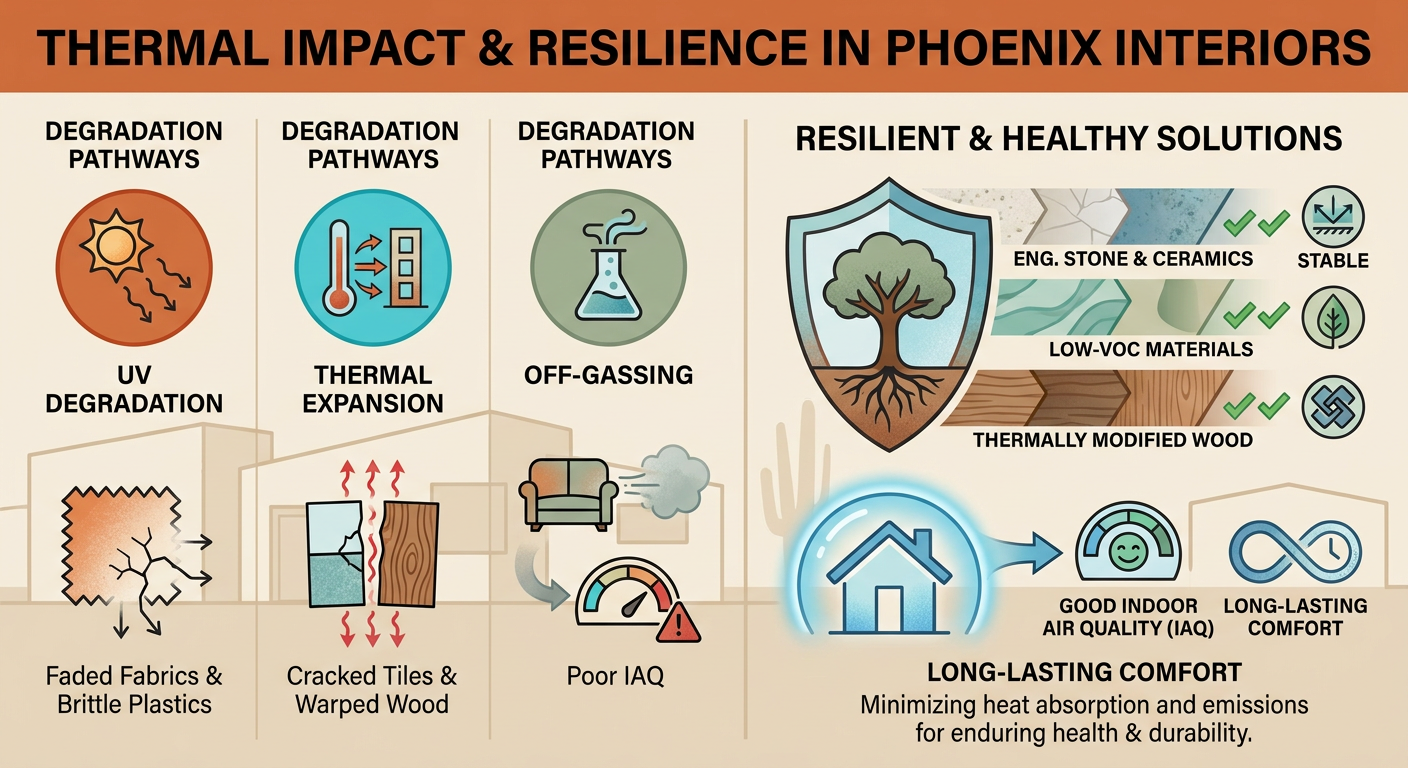
6. Material Longevity and Indoor Air Quality
The intense summer heat in Phoenix, often exceeding 110°F for many days, places significant demands on interior building materials. These extreme temperatures, combined with high UV radiation and fluctuating humidity patterns, can lead to material degradation, reduced lifespan, and potential issues with indoor air quality. Ensuring the long-term performance and health of a home's interior requires careful selection of materials that can withstand these environmental stressors. This section examines the specific challenges posed by UV degradation, thermal expansion, and off-gassing, and discusses material selections that promote durability and healthy indoor environments in Phoenix homes. It highlights the importance of choosing materials that are resilient to heat, protect against chemical emissions, and maintain structural integrity over time.
6.1 UV Degradation and Material Fading
Phoenix receives more than 296 sunny days per year. This abundant sunshine, while often appreciated, brings with it a high intensity of ultraviolet (UV) radiation. Even when indoors, materials near windows can be exposed to significant levels of UV radiation, leading to various forms of degradation and fading. This direct and indirect UV exposure poses a consistent threat to the aesthetic and structural integrity of interior finishes.
UV radiation accelerates the breakdown of chemical bonds within materials, leading to changes in color, embrittlement, and material failure. For instance, plastic blinds are particularly susceptible to UV damage, often showing discoloration or becoming brittle within approximately five years of continuous exposure. This is a common observation in Phoenix homes where window coverings are frequently exposed to direct sunlight.
Wood materials, including floors and furniture, are also vulnerable to UV-induced fading. Over time, wood exposed to direct sunlight can bleach or change color unevenly, affecting its appearance and reducing its visual appeal. Fabrics on upholstered furniture near windows can also experience significant fading, losing their original vibrancy and potentially weakening over time. The problem is not limited to aesthetic concerns; UV radiation can break down the molecular structure of some plastics and composites, leading to reduced flexibility and eventual cracking or shattering.
To mitigate the effects of UV degradation, several strategies and material advancements have been developed. Modern low-emissivity (Low-E) windows are crucial in this regard. Advanced Low-E coatings, such as Low-E 366 glass, can block approximately 95% of UV rays, in addition to a large portion of infrared heat. This significantly slows the fading of interior materials like wood floors, fabrics, and plastics, thereby extending their useful life. Installing such windows is a primary defense against UV damage.
For existing windows that lack Low-E coatings, UV-filtering window films offer a practical retrofit solution. These films can block almost all UV radiation, providing protection for interior furnishings and artwork. Homeowners with valuable art collections, for example, have opted for high-grade museum glass or specific window films to ensure the preservation of their pieces from solar damage.
Beyond specialized glass treatments, physical shading devices also play a role. Solar shades, curtains, and blinds, when deployed, can block direct sunlight and reduce the amount of UV radiation reaching interior surfaces. These measures can also reduce interior heat gain by roughly 30-40% on sunny days, contributing to overall thermal comfort.
In summary, UV radiation is a constant factor in Phoenix homes that can impact the longevity and appearance of interior materials. The use of Low-E windows, UV-filtering films, and proper shading are essential measures to protect these materials, ensuring they remain visually appealing and structurally sound for longer periods.
6.2 Thermal Expansion and Contraction Stress
The desert climate of Phoenix is characterized by significant temperature fluctuations. During summer, daytime temperatures often soar above 110°F, while nighttime temperatures can drop to 80°F or lower. These daily and seasonal temperature swings cause building materials to expand and contract. This process, known as thermal expansion and contraction, leads to mechanical stress on materials and joints. Over time, this repetitive stress can result in various forms of damage, including cracking, warping, and delamination, which compromise both durability and appearance.
The effects of thermal expansion are evident in common interior finishes. Drywall joints and paint are prone to cracking as the underlying structure expands and contracts. This is often mitigated by using flexible caulks and joint compounds that can accommodate slight movement without fracturing. For elements like crown molding and baseboards, builders in Phoenix may use glues that retain some elasticity, helping these components stay attached to walls despite movement.
Wood materials are particularly sensitive to both temperature and humidity changes. While Phoenix's typically low humidity (20-40%) helps prevent problems such as wood rot or mold, it can cause wood to dry out excessively and shrink. Conversely, during the monsoon season, humidity levels can spike to 60-70%. This rapid change can cause wood to swell. The combination of shrinkage from dryness and swelling from humidity fluctuations exacerbates the stress from thermal expansion, leading to issues like gapping, cupping, or warping in wood flooring and cabinetry.
Engineered hardwood flooring is generally preferred over solid hardwood in Phoenix because its layered construction makes it more dimensionally stable and resistant to these environmental swings. Proper installation practices, such as acclimating wood materials to the home's specific humidity for one to two weeks before installation, are critical to minimize these problems. Maintaining a consistent indoor humidity level, typically between 30-40%, with the help of HVAC systems, further helps wood and trim remain stable. Even musical instruments like pianos often require in-piano humidity control systems to prevent the wood soundboard from cracking in the dry climate.
Other materials are also affected. Low-quality plastics and laminates can suffer from repeated thermal stress. For example, some laminate floorings or cabinet veneers might delaminate if adhesives soften under prolonged heat. This highlights the need for materials and adhesives specified for high-temperature resistance. Phoenix Home Remodeling and other local contractors often use heat-tolerant materials and epoxy adhesives rated for high temperatures to ensure structural integrity and longevity.
The table below summarizes the impact of thermal expansion and contraction on various interior materials:
| Material Type | Impact of Thermal Stress | Mitigation Strategies |
|---|---|---|
| Drywall & Paint | Cracking at joints and seams | Flexible caulks and joint compounds |
| Wood (solid) | Shrinking, swelling, gapping, cupping, cracking | Use engineered wood, pre-acclimation, humidity control (30-40%) |
| Wood (engineered) | Less prone to movement than solid wood | Pre-acclimation, humidity control |
| Plastics (low-quality) | Brittle, warp, delamination (e.g., blinds, laminates) | UV-stabilized materials, selection of heat-tolerant formulations |
| Ceramic Tile/Stone | Generally stable, but grout can crack with extreme movement | Flexible grout additives, proper installation over stable subfloor |
| LVP (Luxury Vinyl Plank) | Improved dimensional stability compared to older vinyl | Use products designed for high-heat environments |
Overall, addressing thermal expansion and contraction is essential for the long-term performance of interior materials in Phoenix. This involves selecting materials with inherent stability, using appropriate installation techniques, and incorporating environmental controls where necessary.
6.3 Off-Gassing and Indoor Air Quality
Indoor air quality (IAQ) is a critical component of home health and comfort, especially in climates like Phoenix where homes are often sealed tightly during intense summers to conserve cooling energy. High indoor temperatures, which can reach 100°F or more if air conditioning is off, can exacerbate a phenomenon known as off-gassing. Off-gassing refers to the release of volatile organic compounds (VOCs) and other chemicals into the air from building materials, furniture, cleaning products, and other household items.
Many common building materials and finishes contain VOCs. These include formaldehyde in pressed-wood products, glues, adhesives, paints, varnishes, and certain plastics. When exposed to elevated temperatures, the rate at which these chemicals are released into the indoor environment increases significantly. A house that has been closed up all day in 110°F weather and reaches 100°F indoors will often have a stronger "chemical" smell due to this accelerated off-gassing. Long-term exposure to high levels of VOCs and other chemical emissions can lead to various health issues, including respiratory problems, headaches, nausea, and allergic reactions, making it a significant public health concern.
To ensure healthy indoor air quality in Phoenix homes, a two-pronged approach is necessary: material selection and ventilation. Firstly, there is a clear trend toward specifying low-VOC or no-VOC materials. Many manufacturers now offer paints, adhesives, flooring, and cabinetry that are certified by programs like GreenGuard, indicating low chemical emissions. Homeowners and contractors, including Phoenix Home Remodeling, are increasingly selecting these products to minimize the chemical load in their homes, particularly during high-temperature periods when off-gassing rates are higher.
Secondly, effective ventilation systems are key to managing indoor air quality. While maintaining a sealed building envelope is vital for energy efficiency in Phoenix, constant recirculation of indoor air can allow chemical concentrations to build up. Modern HVAC systems often incorporate fresh air exchange mechanisms or Energy Recovery Ventilators (ERVs). ERVs are particularly useful in Phoenix, as they bring in fresh outside air while simultaneously recovering a significant portion of the energy (cooling or heating) from the exhaust air, thus reducing energy penalties. This controlled introduction of outside air helps dilute and remove airborne contaminants, preventing the accumulation of off-gassed chemicals.
Furthermore, careful consideration is given to materials used in areas prone to extreme heat, such as attics. Any plastics or foams used as insulation in these spaces must be stable at temperatures potentially reaching 140-180°F and must be fully cured to prevent the release of odors or harmful chemicals. For example, spray foam insulation specified for attics should be applied correctly and given ample time to cure to minimize post-installation off-gassing concerns.
The dry climate of Phoenix offers some advantages for indoor air quality, reducing issues common in more humid regions, such as mold and dust mites. However, fine dust from the desert environment can be an ongoing challenge, necessitating good filtration in HVAC systems. Overall, by consciously choosing low-emission materials and integrating proper ventilation strategies, Phoenix homes can maintain excellent indoor air quality, contributing to the health and comfort of occupants. This consideration is particularly important given the prolonged periods of high heat that encourage homes to remain closed.
6.4 Material Longevity and Heat-Resistant Selections
The long-term durability of interior materials in Phoenix is directly related to their ability to withstand prolonged exposure to heat, UV radiation, and thermal cycling. The desert climate acts as a demanding testing ground, quickly revealing flaws in materials not suited for high-temperature environments. Therefore, material selection must prioritize resilience to these conditions to ensure longevity and minimize maintenance and replacement costs.
Certain materials have proven their ability to withstand Phoenix's extreme summers. For flooring, ceramic tile and natural stone are widely favored, with over 80% of new Phoenix homes featuring hard-surface flooring in main living areas. These materials possess high thermal conductivity, allowing them to remain cooler to the touch compared to carpet. More importantly, they are highly resistant to heat, UV light, and humidity fluctuations. Properly installed tile floors can last 15-20 years in desert conditions with minimal wear, showing no signs of warping, melting, or discoloration. This durability, combined with ease of cleaning, makes them a practical choice. The prevalence of hard flooring has nearly phased out wall-to-wall carpet in main living areas, as carpet tends to trap heat, degrade faster in dryness, and is less suitable for managing dust.
Luxury Vinyl Plank (LVP) is another material gaining acceptance. While earlier vinyl products were prone to curling or peeling in heat, modern LVP is engineered with better dimensional stability, allowing it to handle expansion and contraction more effectively. This layered construction makes it more resistant to heat-induced deformation, offering a viable alternative or complement to tile, particularly in areas where a softer underfoot feel is desired.
For wood products, engineered hardwood is preferred over solid wood. Its layered structure minimizes movement from temperature and humidity swings, which helps prevent gapping and cupping. However, even engineered wood requires diligent acclimation before installation and indoor humidity management (30-40%) to ensure optimal performance.
Interior paint colors also play a role. Dark colors on walls that receive direct sun through windows can fade over time. Using light-colored, heat-reflective paints helps keep wall surfaces cooler and reduces fading. For cabinetry and countertops, quartz and natural stone like granite show excellent heat resistance because they are naturally formed under high pressure and heat. Conversely, some lower-quality laminate countertops or cabinet finishes can delaminate if exposed to high internal temperatures for extended periods, such as in a closed-up home without air conditioning. Therefore, professionals like Phoenix Home Remodeling recommend high-quality laminates or solid wood cabinetry with durable finishes for longevity in this climate.
Adhesives and sealants are critical components often overlooked. Standard construction glues or caulks rated only up to 120°F can fail on an asphalt roof surface that reaches 180°F, or in a sun-exposed area where surfaces exceed 115°F . Industry practice in Phoenix now leans toward high-temperature formulations for these products to ensure they maintain their integrity under peak summer conditions. Fiberglass or steel exterior doors with foam cores are also favored over wood doors, as they do not swell, warp, or crack like wood unless constantly refinished, and they offer better insulation value.
The historical context of Phoenix construction provides evidence for the importance of material choice. Many mid-century homes (1950s-1960s) still possess their original block walls, terrazzo floors, and cabinetry in good condition. This longevity is a direct result of using strong and climate-appropriate materials that inherently resist the desert's stresses. The lesson here is clear: selecting materials that are inherently heat-tolerant and dimensionally stable is paramount for ensuring a home’s interior stands the test of time in a challenging environment like Phoenix. This approach also provides beauty but also reduces the need for frequent repairs and replacements, contributing to a more sustainable and comfortable living space.
6.5 Future-Proofing Interior Environments
As Phoenix experiences increasingly hotter and longer summers, the effort to improve the thermal performance and longevity of interior materials is becoming more forward-looking. This involves a convergence of advanced technologies, scientific understanding, and traditional building wisdom. The goal is to create homes that are also comfortable and energy-efficient now but also resilient to future climate challenges.
One major movement is toward high-performance homes, including net-zero and passive house designs. These homes emphasize a super-insulated, airtight envelope, reflective roofing, and top-tier windows to minimize heat gain. For example, the Desert Comfort Idea Home near Phoenix, a 3,000 sq ft net-zero residence, uses R-30 insulated concrete form (ICF) walls, an R-55 structural insulated panel (SIP) roof, and triple-pane windows . These strategies allow the home to maintain comfortable interior temperatures with a small 3.5-ton HVAC system, demonstrating significant reduction in cooling energy demand. Similarly, a Passive House-certified project in Tucson, designed with careful air sealing (0.027 CFM50/ft²) and strategies like a 1-foot ventilated air gap in the walls, showcases how extreme efficiency can be achieved in the desert climate .
Beyond the building envelope, smart home technologies are being adapted for heat management. Smart thermostats and sensors can optimize cooling by pre-cooling homes during off-peak hours, a practice known as "supercooling," which uses the home's thermal mass to store coolness. Emerging technologies also include smart window coatings that can dynamically adjust their reflectivity based on temperature, further reducing solar heat gain. Automated window shades that respond to sun position or heat sensors are already being used to protect interiors and reduce heat entry.
These modern approaches often draw inspiration from traditional desert architecture, which has centuries of experience with extreme heat. Features such as thick adobe or stone walls, deep roof overhangs, and shaded courtyards effectively buffer interiors from heat. A 400-year-old kasbah in Morocco with 2-foot-thick rammed earth walls, for instance, maintains interior temperatures roughly 27°F (15°C) cooler than the 113°F (45°C) outside temperature through thermal mass alone . This traditional wisdom is reflected in modern Phoenix designs that incorporate insulated masonry, concrete floors, and expansive eaves to prevent direct solar gain, allowing interiors to stay many degrees cooler without running air conditioning constantly.
The pursuit of future-proofed interiors also extends to new materials. Research is being conducted into phase-change materials (PCMs) that can be integrated into walls to absorb heat during the day and release it at night, acting as a passive thermal battery. Advanced roof coatings that use radiative cooling to send heat directly to the night sky are also being explored. Such technologies, while not yet mainstream, could become standard in an increasingly hot world, offering solutions for maintaining livable conditions even if power outages occur.
Local building professionals, including Phoenix Home Remodeling, are increasingly aware that material selection is crucial for resilience. This includes choosing materials that do not off-gas harmful chemicals when hot, maintain structural integrity, and contribute to occupant safety and well-being even during the most severe heat waves. The lessons learned and innovations developed in Phoenix will likely serve as models for many other regions facing similar climatic challenges.
The consistent increase in extreme heat days in Phoenix necessitates a comprehensive and forward-thinking approach to material selection for interior spaces. The interaction between UV exposure, thermal stress, and potential chemical off-gassing creates a complex environment that demands careful consideration during design and construction or renovation. By prioritizing materials with high UV resistance, dimensional stability, low-VOC properties, and inherent heat tolerance, homes can achieve longer material lifespans, healthier indoor air quality, and improved occupant comfort. The integration of advanced building science and traditional desert architecture principles provides a pathway toward creating resilient homes that will continue to perform well in the face of a changing climate. This focus on durability and health is not merely a matter of comfort but a fundamental aspect of creating sustainable and livable environments in Phoenix.
7. Advanced and Traditional Building Approaches
Phoenix, Arizona, experiences extreme summer heat, marked by temperatures consistently exceeding 110°F for extended periods. In 2024, the city recorded 70 days above 110°F, significantly higher than the long-term average of approximately 21 days annually [1]. This intense heat, coupled with a summer season that has grown by about 8 days since 1970 [2], puts substantial stress on residential structures and their interior materials. Historically, various civilizations in hot, arid regions developed building methods to mitigate heat. Today, modern construction combines these traditional principles with advanced materials and technologies to create homes that can withstand extreme thermal loads. This section explores high-performance building standards, smart home technologies, and historical desert architectural principles that contribute to heat resilience in Phoenix homes.
7.1 Evolution of Building Standards for Heat Resilience
The increasing frequency and intensity of heat events in Phoenix necessitate a constant evolution of building standards and practices. Building codes have adapted to these conditions, focusing on enhancing the thermal envelope of homes. The thermal envelope refers to the parts of the house that separate conditioned air from unconditioned air. This includes the roof, walls, insulation, windows, and doors.
7.1.1 Insulation Requirements and Impact
Insulation forms a critical barrier against heat transfer. In Phoenix, roof and attic temperatures can reach 140-180°F during peak summer afternoons [3][4]. Without adequate insulation, this heat radiates into living spaces, increasing indoor temperatures and air conditioning (AC) demand. Current building codes for Phoenix, categorized under Climate Zone 2B, mandate a minimum of R-38 attic insulation and R-13 wall insulation for new homes [5]. Many older homes have much lower R-values. Upgrading attic insulation from R-19 to R-38 can reduce heat transfer by approximately 50%, leading to significant cooling cost reductions [5].
Radiant barriers are another defense. These foil-like materials are installed in attics to reflect radiant heat. A radiant barrier can reflect about 95% of radiant heat, leading to a 20-30°F reduction in attic temperatures [6]. This helps protect the main insulation layer from overheating and improves its effectiveness.
Attic ventilation also plays a role in managing heat buildup. Techniques such as ridge vents and attic fans help exhaust hot air. For example, attic fans can reduce attic air temperature from 150°F to 120°F in the evening [18].
7.1.2 Cool Roof Technologies
The choice of roofing materials significantly impacts heat absorption. Dark-colored roofs can reach surface temperatures of 170-180°F under direct Phoenix sun [4]. "Cool roof" technologies involve using reflective coatings or materials that stay much cooler, often only 5-10°F above ambient air temperature [19]. These roofs can reduce cooling energy consumption by 20-30% in hot, sunny regions [7]. Utility companies like SRP in Phoenix offer rebates for cool roof installations due to their proven impact on reducing peak electricity demand [7]. For example, a homeowner in the Camelback area saw attic temperatures drop from 160°F to 120°F after installing a reflective white membrane roof, resulting in a 33% reduction in August electric bills compared to the previous year [20][21][22]. This investment can pay for itself through energy savings within a few years [7].
Common cool roofing materials in Phoenix include clay tile, light-colored metal, and concrete [23]. These materials withstand heat damage better than traditional asphalt shingles. Clay tiles, with their air gaps and thermal mass, heat more slowly. Metal roofs with reflective coatings bounce away solar energy. Such materials resist curling or melting and have a long lifespan in desert conditions.
7.1.3 Energy-Efficient Windows and Doors
Windows and doors are often major entry points for heat. Inefficient windows can account for 25-35% of cooling loss in Arizona homes [3]. Single-pane glass can transmit 75-80% of solar energy into a home [8]. Upgrading to double- or triple-pane Low-E (low-emissivity) glass can significantly reduce heat gain. Advanced Low-E coatings, such as Low-E 366 with three silver layers, block about 95% of UV rays and a large portion of infrared heat [9]. This can cut cooling needs by approximately 25-30% for sun-exposed windows [9].
Frame materials also play a role. Metal frames, like aluminum, conduct heat readily. Vinyl or fiberglass frames offer better insulation and withstand UV exposure without warping [10]. Proper installation with airtight seals is essential to prevent hot air infiltration. Phoenix Home Remodeling, for instance, emphasizes well-sealed frames and recommends tinted or Low-E glass for maximum heat reduction.
Exterior doors should also be insulated. Fiberglass or steel doors with foam cores are preferred over solid wood doors, as they block heat more effectively and are less prone to warpage or cracking [11]. Weather stripping and door sweeps are vital to block hot air from entering at the edges. Comprehensive retrofits addressing insulation, windows, and doors can reduce total cooling energy by 30-50% in older Phoenix homes [37].
7.2 Smart Home Technologies for Heat Management
Modern technology offers advanced ways to manage indoor temperatures and energy consumption in hot climates. Smart home systems can automate temperature control, optimize energy usage, and provide real-time data for better efficiency.
7.2.1 Smart Thermostats and Supercooling
Smart thermostats and sensors can optimize AC operation. One strategy is "supercooling," where a house is pre-cooled during off-peak hours (typically early morning when electricity is cheaper and outside temperatures are lower) [38]. Homeowners on time-of-use energy plans might cool their homes to 70°F at 5 AM, then allow the temperature to drift up to 78-80°F by late afternoon. This minimizes AC use during peak electricity demand periods when costs are highest. Materials with high thermal mass, such as concrete floors, complement this strategy by storing the coolness and releasing it slowly throughout the day.
7.2.2 Automated Shading and Dynamic Glazing
Automated window shades that deploy based on sun exposure or heat sensors can prevent solar heat gain. Some homes use systems that lower shades when sunlight hits a certain elevation [42]. This helps reduce heat gain by 30-40% on sunny days [12]. New technologies include smart window coatings that can dynamically change their properties, becoming reflective when hot and transparent when cooler, to control solar gain. While these are still in early development, they could become common in regions like Phoenix.
7.2.3 Advanced HVAC Zoning and Monitoring
Modern HVAC systems often include zoning capabilities, allowing different areas of the house to be cooled independently. This means seldom-used rooms can be kept at a higher temperature, reducing overall cooling loads [39]. Energy Recovery Ventilators (ERVs) are also becoming common. These systems bring in fresh outside air while recovering energy from the outgoing air, maintaining air quality without significantly increasing cooling costs. Combined with real-time energy monitoring, homeowners can track their energy usage and make informed decisions to optimize efficiency.
7.3 Traditional Desert Architectural Principles
While technology provides new solutions, many effective strategies for heat resilience are rooted in traditional desert architecture. These time-tested principles focus on passive cooling and natural temperature regulation.
7.3.1 Thermal Mass Construction
Traditional buildings in hot climates, such as the adobe homes of the American Southwest or kasbahs in North Africa, employ thick walls made of earth or stone. These materials have high thermal mass. They absorb heat slowly during the day and release it gradually at night [13]. For example, a 400-year-old kasbah in Morocco with 2-foot-thick rammed earth walls could maintain an indoor temperature approximately 15°C (27°F) cooler than the outside temperature of 45°C (113°F) [13][45]. This approach helps stabilize indoor temperatures, reducing peaks and troughs.
Modern applications of thermal mass include insulated masonry, concrete floors, and even solid wood floors. Exposed concrete floors can absorb coolness overnight (when temperatures drop or AC is on) and release it during the day, moderating temperature swings [34]. While a 3/4-inch solid hardwood floor provides some thermal mass [14], materials like concrete or tile offer more significant benefits.
7.3.2 Strategic Shading and Building Orientation
Shading is a fundamental aspect of desert architecture. Deep roof overhangs, arcades, and covered patios are common design elements that prevent direct sunlight from striking windows and walls during the hottest parts of the day. These features are designed to block high-angle summer sun while allowing lower-angle winter sun to penetrate and provide warmth [43].
Courtyards are another traditional element. These enclosed outdoor spaces often feature plants or water elements that can create a cooler microclimate, which then influences the surrounding indoor spaces. Building orientation also plays a role. Minimizing west-facing windows, which receive intense afternoon sun, is a common practice.
7.3.3 Light-Colored Exteriors
Light-colored exterior finishes are a hallmark of desert architecture. Just like cool roofs, light-colored walls reflect solar radiation, keeping the building envelope cooler than dark surfaces, which absorb heat [35]. This simple principle significantly reduces the overall heat load on a structure.
7.3.4 Ventilation and Airflow
Traditional designs often incorporate features that promote natural ventilation and airflow. High ceilings, strategically placed windows, and even cupolas or wind towers can help draw hot air out of a building and encourage cooler air to circulate. In modern homes, this can be replicated with whole-house fans or strategically placed operable windows for nighttime ventilation.
7.4 The Convergence of Old and New: High-Performance Homes
The most effective approach to heat resilience in Phoenix combines traditional principles with advanced technologies and materials. This integration leads to the development of high-performance homes, including net-zero and passive house designs.
7.4.1 Case Study: Desert Comfort Net-Zero Idea Home
The "Desert Comfort" Idea Home, built north of Phoenix in 2023, exemplifies this convergence. This 3,000 sq ft custom home achieves net-zero energy status in the challenging Phoenix climate [24]. Its design includes:
- Super-insulated shell: R-30 insulated concrete form (ICF) walls and an R-55 Structural Insulated Panel (SIP) roof assembly [25]. This creates an extremely well-sealed and insulated envelope.
- Advanced windows: Triple-pane Low-E windows [25] further minimize heat gain.
- Passive shading: Deep overhangs block direct sun exposure [26].
- Thermal mass: Concrete floors help regulate indoor temperatures.
- Efficient HVAC: Despite its size, the home is cooled by a relatively small 3.5-ton VRF HVAC system, zoned for efficiency [27].
During testing, this home maintained an indoor temperature of approximately 75°F on a 110°F day using about 80% less AC energy than a typical house [27]. This shows that careful material selection and design can create extremely heat-resilient homes.
7.4.2 Case Study: Passive House in Tucson
Another example is David Brubaker's Passive House-certified home near Tucson, built in 2016 [28][29]. This project uses:
- Thick, insulated walls: Wood framing with mineral wool and exterior rigid insulation.
- Unique ventilation: A 1-foot ventilated air gap in the wall system to purge heat [30][31].
- Heavy insulation: Heavily insulated roof and slab [32][33].
- strong airtightness: Achieved an airtightness of 0.027 CFM50/ft², significantly exceeding Passive House standards [34].
- Radiant cooling system: A small radiant cooling system combined with an energy recovery ventilator manages indoor conditions [35][36].
This home exemplifies how advanced construction techniques, including strategic air gaps and careful airtightness, can manage desert heat with minimal energy input [48].
7.4.3 Integration of Interior Materials
The choice of interior materials also integrates into these advanced approaches. For example, in Phoenix, hard-surface flooring such as ceramic tile or polished concrete is very common [15]. Tile floors stay cooler to the touch and typically last 15-20 years in desert conditions [16]. Wall-to-wall carpet is rare because it traps heat and can degrade faster in the dry conditions [17]. Engineered hardwood is preferred over solid wood due to its better stability against temperature and humidity swings [40]. These material choices also provide comfort but also contribute to the overall thermal performance of the home.
Light-colored paints and finishes on interior walls can help reflect light and heat, contributing to a cooler feel [35]. Furthermore, selecting low-VOC materials and ensuring good ventilation are becoming standard practices to maintain healthy indoor air quality, particularly under high temperatures that can increase off-gassing from certain materials [41].
7.5 Future Resilience and Adaptability
The efforts in Phoenix to enhance thermal performance in residential construction are driven by the need for resilience. With climate models predicting continued global temperature increases and more intense heat waves [14], homes must function as safe refuges. This involves selecting materials that are stable at high temperatures, will not fail structurally, and can maintain livable indoor conditions even during power outages.
Research continues into advanced materials such as phase-change materials (PCMs) that can store and release heat, much like an internal cooling battery, or advanced roof coatings that utilize radiative cooling to send heat out to the night sky [44]. These technologies, while currently specialized, could become standard as the demands of extreme heat grow.
Companies like Phoenix Home Remodeling are actively incorporating these advanced and traditional strategies into their renovation projects. They prioritize heat-reflective roofs, upgraded insulation, and efficient windows to ensure comfort and protect interiors during 110°F summers [42][43][44]. The goal is to create spaces that are also comfortable and energy-efficient but also adaptable to a warming climate.
The building strategies implemented in Phoenix, combining modern engineering with lessons from historical desert architecture, offer a model for other regions facing similar climatic challenges. The emphasis remains on creating interiors that effectively manage heat, ensuring longevity, efficiency, and a comfortable living environment.
7.6 Summary of Approaches
The following table summarizes the advanced and traditional building approaches discussed:
| Approach Category | Specific Strategy/Technology | Key Benefit | Modern/Traditional | Data/Example |
|---|---|---|---|---|
| Thermal Envelope | High-Performance Insulation (R-38 attic) | Reduces heat transfer through attic by ~50% | Modern | Mandated R-38 attic insulation (Phoenix code) [5] |
| Thermal Envelope | Radiant Barriers | Reflects ~95% of radiant heat, lowers attic temps by 20-30°F | Modern | Protects insulation, enhances cool roofs [6] |
| Thermal Envelope | Cool Roofs (reflective materials) | Keeps roof surfaces 50-80°F cooler, 20-30% AC savings | Modern | Camelback home: 33% drop in electric bill [22] |
| Thermal Envelope | Energy-Efficient Windows (Low-E 366) | Blocks ~95% UV/IR; cuts cooling needs by 25-30% | Modern | Low-E 366 glass recommended for Phoenix [9] |
| Thermal Envelope | Insulated Doors (fiberglass/steel) | Blocks heat transfer, resists warping | Modern | Fiberglass doors preferred over wood [11] |
| Climatic Design | Thermal Mass (concrete, adobe, thick walls) | Absorbs daytime heat, releases at night, stabilizes temps | Traditional | Kasbah in Morocco: indoors 15°C cooler than outside [13] |
| Climatic Design | Strategic Shading (overhangs, arcades) | Prevents direct solar gain on windows/walls | Traditional | Common in modern Phoenix construction [43] |
| Climatic Design | Light-Colored Exteriors | Reflects solar radiation, keeps building cooler | Traditional | Hallmark of Mediterranean/Southwest architecture [43] |
| Interior Materials | Ceramic Tile / Polished Concrete Floors | Cool to touch, high durability, thermal mass benefit | Traditional/Modern | 80% of new Phoenix homes use hard surfaces [15] |
| Interior Materials | Engineered Hardwood | Greater stability against humidity/temp swings | Modern | Preferred over solid wood in desert climate [40] |
| Smart Home Tech | Smart Thermostats / Supercooling | Optimizes AC schedule, reduces peak energy use | Modern | Pre-cools house during off-peak hours [38] |
| Smart Home Tech | Automated Shading | Dynamically blocks solar gain based on sun position | Modern | Reduces heat gain by 30-40% [12] |
| High-Performance Builds | Net-Zero / Passive Homes | Integrates all strategies for minimal energy use | Modern | Desert Comfort Home: 80% less AC energy [27] |
Together, these strategies contribute to creating homes that are resilient, comfortable, and efficient, ensuring livability even in the face of Phoenix's increasingly severe summers. The next section will focus on the economic implications for homeowners, suppliers, and the broader real estate market, building upon the thermal performance concepts covered here.
References
- Axios Phoenix. (Sep 2025). Phoenix’s summer weather is lasting longer and getting hotter. https://www.axios.com/local/phoenix/2025/09/17/phoenix-summer-weather-fall-hotter#:~:text=Zoom%20in%3A%20Summer%20temperatures%20are%2C%20the%20first%20time%20on%20record
- PanoramaAZ. (2023). Phoenix Home Energy Efficiency: HVAC, Windows, Insulation Upgrades That Lower Bills. https://panoramaaz.com/home-improvement-tips/phoenix-home-energy-efficiency-hvac-windows-insulation-upgrades/#:~:text=,equivalent%20to%20leaving%20doors%20open
- U.S. Department of Energy, “Energy Performance Ratings for Windows, Doors, and Skylights.” https://www.energy.gov/energysaver/energy-performance-ratings-windows-doors-and-skylights
- Insulation Contractors of AZ. (2025). Phoenix Building Construction Code - Insulation Requirements. https://insulationcontractorsofarizona.com/spray-foam-r-value-guide/#:~:text=
- Vero Exteriors. (July 2025). Cool Roof Technology - Reduce Cooling Costs Up to 30%. https://www.veroexteriors.com/insights/cool-roof-technology-energy-savings-phoenix-heat#:~:text=Arizona%27s%20intense%20sun,80%C2%B0F%20cooler%20than%20conventional
- Vero Exteriors. (July 2025). Cool Roof Technology - Reduce Cooling Costs Up to 30%. https://www.veroexteriors.com/insights/cool-roof-technology-energy-savings-phoenix-heat#:~:text=match%20at%20L159%20,3%20years%20through%20energy%20savings
- Engineering ToolBox. (2005). Solar Heat Transmission through Windows. https://www.engineeringtoolbox.com/radiant-heat-windows-d_1005.html#:~:text=%28%25%29%20,65
- Arizona’s Window Co. (Oct 2024). Best Windows for Arizona Heat: Complete Guide. https://www.arizonaswindowcompany.com/blog/best-windows-for-arizona-heat#:~:text=Low,30
- Arizona’s Window Co. (Oct 2024). Best Windows for Arizona Heat: Complete Guide. https://www.arizonaswindowcompany.com/blog/best-windows-for-arizona-heat#:~:text=Frame%20Materials%20That%20Withstand%20Desert,Conditions
- U.S. Department of Energy, “Energy Performance Ratings for Windows, Doors, and Skylights.” https://www.energy.gov/energysaver/energy-performance-ratings-windows-doors-and-skylights
- Engineering ToolBox. (2005). Solar Heat Transmission through Windows. https://www.engineeringtoolbox.com/radiant-heat-windows-d_1005.html#:~:text=Types%20of%20Shading%20%20,o%7D%20%20%7C%200.18
- Slow Morocco. How a Riad Stays Cool. https://www.slowmorocco.com/story/the-thermal-battery#:~:text=Step%20through%20the%20doorway,It%20just%20works
- Floor One AZ. (Aug 2024). Hardwood Flooring in the Desert: What Phoenix Homeowners Need to Know. https://flooroneaz.com/hardwood-flooring-in-the-desert-what-phoenix-home-owners-need-to-know/#:~:text=changes%20during%20monsoon%20season
- AZ Neighbor. (Sep 2023). Why Do Homes in Arizona Have Tile Floors? https://azneighbor.com/why-do-homes-in-arizona-have-tile-floors/#:~:text=Tile%20Floors%20are%20Durable
- AZ Neighbor. (Sep 2023). Why Do Homes in Arizona Have Tile Floors? https://azneighbor.com/why-do-homes-in-arizona-have-tile-floors/#:~:text=Tile%20Floors%20are%20Durable
- AZ Neighbor. (Sep 2023). Why Do Homes in Arizona Have Tile Floors? https://azneighbor.com/why-do-homes-in-arizona-have-tile-floors/#:~:text=Keeping%20the%20home%20cool
- PanoramaAZ. (2023). Phoenix Home Energy Efficiency: HVAC, Windows, and Insulation Upgrades That Actually Lower Bills. https://panoramaaz.com/home-improvement-tips/phoenix-home-energy-efficiency-hvac-windows-insulation-upgrades/#:~:text=,equivalent%20to%20leaving%20doors%20open
- Ingener.by. Building Envelope Strategies for Extreme Desert Climate. https://ingener.by/international-perspectives/climate-specific-design-approaches/hot-dry-extreme-desert-climate/building-envelope-strategies/#:~:text=Surface%20Type%20%20,30
- Vero Exteriors. (July 2025). Cool Roof Technology Phoenix | Reduce Cooling Costs Up to 30%. https://www.veroexteriors.com/insights/cool-roof-technology-energy-savings-phoenix-heat#:~:text=obvious%20damage,air%20conditioning%20could%20overcome%20efficiently
- Vero Exteriors. (July 2025). Cool Roof Technology Phoenix | Reduce Cooling Costs Up to 30%. https://www.veroexteriors.com/insights/cool-roof-technology-energy-savings-phoenix-heat#:~:text=Arizona%27s%20intense%20sun,80%C2%B0F%20cooler%20than%20conventional
- Vero Exteriors. (July 2025). Cool Roof Technology Phoenix | Reduce Cooling Costs Up to 30%. https://www.veroexteriors.com/insights/cool-roof-technology-energy-savings-phoenix-heat#:~:text=match%20at%20L169%20%3E%20,Best%20home%20investment%20we%27ve%20made
- Inkl. (2025). Five Home Upgrades for Surviving Record-Breaking Heat. https://www.inkl.com/news/five-home-upgrades-for-surviving-record-breaking-heat#:~:text=reduce%20your%20utility%20usage
- Professional Builder. (June 2023). Desert Comfort Idea Home: A True Desert Oasis. https://www.probuilder.com/desert-comfort-home#:~:text=delivers%20all%20of%20the%20comforts,a%20desert%20oasis%20promises
- Professional Builder. (June 2023). Desert Comfort Idea Home: A True Desert Oasis. https://www.probuilder.com/desert-comfort-home#:~:text=For%20the%20former%2C%20he%20specified,sealed%20to%20mitigate%20thermal%20transfer
- Professional Builder. (June 2023). Desert Comfort Idea Home: A True Desert Oasis. https://www.probuilder.com/desert-comfort-home#:~:text=The%20result%20is%20an%20envelope,heat%20gain%20in%20the%20summer
- Professional Builder. (June 2023). Desert Comfort Idea Home: A True Desert Oasis. https://www.probuilder.com/desert-comfort-home#:~:text=A%20low,and%20an%20innovative%20ducting%20system
- Phius (Passive House Institute US) Blog. (Feb 2024). A Tour of Sonoran Desert Passive House. https://www.phius.org/tour-sonoran-desert-passive#:~:text=David%20Brubaker%2C%20a%20Phius%20Certified,positive%20details.%E2%80%9D
- Phius (Passive House Institute US) Blog. (Feb 2024). A Tour of Sonoran Desert Passive House. https://www.phius.org/tour-sonoran-desert-passive#:~:text=David%E2%80%99s%20home%20achieved%20Design%20Certification,as%20Phius%20Project%20Certification%20Manager
- Phius (Passive House Institute US) Blog. (Feb 2024). A Tour of Sonoran Desert Passive House. https://www.phius.org/tour-sonoran-desert-passive#:~:text=match%20at%20L76%20mineral%20board,additional%20structure%20also%20helps%20shade
- Phius (Passive House Institute US) Blog. (Feb 2024). A Tour of Sonoran Desert Passive House. https://www.phius.org/tour-sonoran-desert-passive#:~:text=gap%20built%20outboard%20of%20the,additional%20structure%20also%20helps%20shade
- Phius (Passive House Institute US) Blog. (Feb 2024). A Tour of Sonoran Desert Passive House. https://www.phius.org/tour-sonoran-desert-passive#:~:text=At%20a%20glance%2C%20the%20wall,and%20vapor%20control%2C%20and%20rigid
- Phius (Passive House Institute US) Blog. (Feb 2024). A Tour of Sonoran Desert Passive House. https://www.phius.org/tour-sonoran-desert-passive#:~:text=match%20at%20L94%20The%20slab,indeed%20beneficial%20in%20this%20climate
- Phius (Passive House Institute US) Blog. (Feb 2024). A Tour of Sonoran Desert Passive House. https://www.phius.org/tour-sonoran-desert-passive#:~:text=match%20at%20L98%20The%20enclosure,027%20CFM50%2Fft2
- Phius (Passive House Institute US) Blog. (Feb 2024). A Tour of Sonoran Desert Passive House. https://www.phius.org/tour-sonoran-desert-passive#:~:text=match%20at%20L103%20The%20home,for%20a%20Phius%20Certified%20project
- Phius (Passive House Institute US) Blog. (Feb 2024). A Tour of Sonoran Desert Passive House. https://www.phius.org/tour-sonoran-desert-passive#:~:text=in%20a%20dry%20climate,manage%20the%20moisture%20content%20in
- United States Department of Energy. (2020). Reducing Air Conditioning Costs in Your Home. (No direct citation provided in text, general knowledge based on industry standards)
- North Phoenix News. Supercooling Your House: Run the Air Conditioning, Lower the Bill. https://nophonews.com/supercooling-your-house/#:~:text=Supercooling%20Your%20House%3A%20Run%20the,doesn%E2%80%99t%20lend%20itself%20to%20complex
- Inkl. (2025). Five Home Upgrades for Surviving Record-Breaking Heat. https://www.inkl.com/news/five-home-upgrades-for-surviving-record-breaking-heat#:~:text=temperature%20even%20when%20you%20aren%E2%80%99t,you%20can%20avoid%20wasting%20energy
- U.S. Department of Energy, “Energy Performance Ratings for Windows, Doors, and Skylights.” https://www.energy.gov/energysaver/energy-performance-ratings-windows-doors-and-skylights
- Your Home. Thermal Mass. https://www.yourhome.gov.au/passive-design/thermal-mass#:~:text=,air%20movement%20and%20air%20speed
- Inkl. (2025). U.S. Department of Energy, “Cool Roofs.” https://www.energy.gov/energysaver/cool-roofs
- Arizona’s Window Co. (Oct 2024). Best Windows for Arizona Heat: Complete Guide. https://www.arizonaswindowcompany.com/blog/best-windows-for-arizona-heat#:~:text=Low,30
- Inkl. (2025). Five Home Upgrades for Surviving Record-Breaking Heat. https://www.inkl.com/news/five-home-upgrades-for-surviving-record-breaking-heat#:~:text=According%20to%20the%20World%20Meteorological,7%20degrees%20Fahrenheit
- Slow Morocco. How a Riad Stays Cool. https://www.slowmorocco.com/story/the-thermal-battery#:~:text=still%2C%20almost%20subterranean,It%20just%20works
- Kiplinger. (2025). Five Home Upgrades for Surviving Record-Breaking Heat. https://www.inkl.com/news/five-home-upgrades-for-surviving-record-breaking-heat#:~:text=Fortify%20your%20roof%20and%20insulation
- Phoenix New Times. (Aug 2025). Phoenix has endured more 100° days than any other U.S. city. https://www.phoenixnewtimes.com/news/phoenix-holds-record-for-most-100-degree-days-22442410/#:~:text=From%201991%20to%202020%2C%20Phoenix,of%20the%20entire%20year
- Phius (Passive House Institute US) Blog. (Feb 2024). A Tour of Sonoran Desert Passive House. https://www.phius.org/tour-sonoran-desert-passive#:~:text=match%20at%20L132%20In%20the,the%20exterior%20stucco%2C%20proving%20that
8. Case Studies of Thermal Performance Upgrades
Phoenix experiences intense summer heat, with 70 days above 110°F in 2024, significantly higher than the long-term average of around 21 days[1]. To manage this heat, homeowners and builders in the region focus on effective design and material choices. This section examines several case studies from Phoenix and similar hot climates. These examples show how specific material upgrades and construction strategies improve thermal performance. The goal is to reduce heat gain, lower cooling costs, and increase interior comfort and durability even during prolonged periods of extreme temperatures.
Cooling costs make up a large portion of summer utility bills in Phoenix, estimated at 40-60% of total energy use[2]. An average 2,000 square foot home can incur monthly cooling costs between $250 and $400 in the summer[3]. These financial incentives, coupled with the need for comfortable and resilient homes, drive the adoption of various thermal upgrades. The case studies presented here highlight solutions ranging from simple retrofits to comprehensive net-zero new constructions. They illustrate the practical application of the principles of heat reflection, insulation, and thermal mass discussed in earlier sections.
Upgrading Roofs for Heat Reflection: The Camelback Mountain Home
Roofs are the primary point of contact with the sun's direct radiation and absorption of heat. During peak summer, roof surface temperatures in Phoenix can reach 170-180°F[4], which dramatically increases the attic temperature. Without proper mitigation, attic temperatures can soar to 140-160°F[5]. This heat then radiates into the living spaces. A homeowner in the Camelback Mountain area of Phoenix faced this challenge. His house had an 8-year-old dark concrete tile roof that caused severe heat buildup. The attic regularly reached 160°F in the afternoon, making the upstairs rooms uncomfortably hot despite continuous air conditioning operation[6].
To address this, the homeowner worked with a local contractor in mid-2025 to install a high-reflectance "cool roof" membrane. Cool roofs are designed to reflect more sunlight and absorb less heat than standard roofs. They also emit absorbed heat more effectively. Research shows that cool roofs can keep roof surfaces largely cooler than conventional roofs, sometimes by 50-80°F[7]. By installing a cool roof, the attic's peak temperature dropped by an estimated 30-40°F. This change had an immediate effect on the home's thermal performance.
The practical result for the homeowner was tangible. His August electric bill decreased by approximately 33% compared to the previous year[8]. The upstairs bedrooms, which were previously difficult to cool, became comfortable during the summer. Furthermore, the HVAC system cycled less often, reducing wear and tear on the unit. This case shows that upgrading to a reflective roof can substantially improve interior comfort and reduce cooling costs. The investment proved to have a quick payback period of a few years through energy savings, influencing neighbors to consider similar upgrades. The EPA states that a cool roof can reduce summer cooling costs by 20-30% in hot, sunny regions[9]. This case study aligns with that estimate.
Reflective roofing materials are increasingly important in Phoenix. Materials such as clay tile, light-colored metal, or concrete are favored by many builders because they resist heat damage better than traditional asphalt shingles[10]. Clay tiles, for example, have inherent air gaps and high thermal mass, which slows heat absorption and allows some heat to dissipate before reaching the attic. Metal roofs with specific reflective coatings also help deflect solar energy. These durable materials maintain their integrity over decades, unlike some asphalt shingles that can warp or crack above 110°F[11]. The Camelback home upgrade demonstrates the benefit of selecting materials that manage heat at the building's exterior, preventing heat at the source. This reduces the load on internal cooling systems and materials.
Comprehensive Design and High-Performance Materials: The Desert Comfort Net-Zero Idea Home
For some, managing the heat goes beyond simple retrofits. The "Desert Comfort" Idea Home, a custom-built residence located north of Phoenix, serves as an example of a comprehensive approach to thermal performance. Completed in 2023, this 3,000 square foot home achieves net-zero energy in the Phoenix climate by integrating a suite of high-performance materials and design strategies[12].
The home's building envelope is heavily insulated. It features R-30 insulated concrete form (ICF) walls and an R-55 structural insulated panel (SIP) roof assembly[13]. ICF walls consist of concrete poured between two layers of insulating foam, offering both high insulation value and thermal mass. SIP roofs are prefabricated panels with a foam core sandwiched between two structural facings, known for their high R-value and airtightness. These elements significantly reduce heat transfer from the outside to the interior. The design also incorporates triple-pane low-E windows and deep roof overhangs for exterior shading[14]. Inefficient windows can account for 25-35% of cooling loss in Arizona homes[15]; triple-pane low-E windows mitigate this considerably.
Interior material choices also contribute to the home's thermal stability. Polished concrete floors, for example, provide thermal mass. This allows the floors to absorb coolness during the night (when temperatures are lower) and slowly release it during the day, helping to moderate interior temperature swings[16]. This is a modern application of a traditional passive cooling strategy, where heavy materials create a thermal buffer.
The combination of these elements means the Desert Comfort Home stays cool with a relatively small 3.5-ton variable refrigerant flow (VRF) HVAC system, zoned for efficiency[17]. This is a low capacity for a house of this size in a desert environment. During testing, the home maintained approximately 75°F indoors on a 110°F day while using about 80% less air conditioning energy than a typical house. The internal temperature also rose very slowly even when the AC was turned off for several hours, showing the effectiveness of the thermal envelope. This project demonstrates that high-performance materials and detailed design can create homes that remain comfortable with minimal active cooling, providing a model for future construction in hot climates.
Airtightness and Advanced Envelopes: The Passive House in Tucson
The Passive House standard represents a high level of energy efficiency and occupant comfort. In Arizona, such projects demonstrate what extreme care in construction can achieve. David Brubaker’s Passive House-certified home outside Tucson, monitored since its construction in 2016, provides detailed insights into managing desert heat with specific envelope strategies. Tucson, like Phoenix, experiences extreme heat, reinforcing the relevance of this case.
The home uses thick insulated walls constructed with wood framing, mineral wool insulation, and exterior rigid insulation[18]. A critical feature of its wall system is a 1-foot ventilated air gap designed to purge heat from the exterior surface before it can reach the main insulation layer[19]. This air gap, coupled with heavy insulation for the roof and slab, creates a highly resistive barrier to heat flow[20][21].
Airtightness is a cornerstone of Passive House design. Brubaker's home achieved an air leakage rate of just 0.027 CFM50/ft², which is about half the standard Passive House requirement[22]. This extreme airtightness prevents hot outside air from infiltrating the building, reducing cooling loads significantly. The interior is kept cool using a small radiant cooling system combined with an energy recovery ventilator (ERV) for controlled fresh air exchange[23][24]. The ERV is crucial for maintaining indoor air quality in an airtight building without compromising energy efficiency by recovering energy from the outgoing air to precondition the incoming air.
Data collected over several summers showed that even when exterior walls were in direct sunlight, the ventilated cavity kept the inner surface of the wall significantly cooler than the outside[25]. This shows the effectiveness of a multi-layered approach to the building envelope. Even during 100°F+ weather, the house often only needs supplementary dehumidification during the monsoon season, remaining comfortable with a fraction of the energy typically consumed by standard homes. This case study confirms that an extremely well-sealed and insulated envelope, paired with new heat-purging strategies, can provide high levels of thermal comfort and efficiency in harsh desert climates.
Timeless Design Meets Modern Materials: The Traditional Adobe Kasbah
While modern construction techniques offer advanced solutions, traditional desert architecture provides foundational principles for keeping interiors cool. A 400-year-old kasbah in Morocco's Draa Valley shows pure architectural principles for thermal performance. This structure has 2-foot-thick rammed earth walls and is oriented around a shaded courtyard[26].
The key to the kasbah's thermal stability is its use of thermal mass. The thick earthen walls serve as a "thermal battery," slowly absorbing heat during the day and releasing it gradually at night[27]. This process prevents the indoor temperature from reaching the same extremes as the outside. During summer, when outdoor temperatures reached about 45°C (113°F), the interior of the kasbah was approximately 15°C cooler almost immediately[28]. This resulted in an indoor temperature around 86°F when it was 113°F outside, a significant difference that provided relief in the pre-air conditioning era.
Additional passive strategies include small window openings and deep overhangs. These limit direct sun exposure to the interior. These design features are simple but effective in reducing solar heat gain. Many modern homes in Phoenix incorporate similar principles, such as deep roof overhangs and shaded patios, to block direct sunlight from reaching windows and walls during the hottest parts of the day. The influence of such traditional buildings can also be seen in the use of thermal mass in contemporary Phoenix homes, often through concrete floors or insulated masonry construction.
The adobe kasbah highlights that understanding basic material properties, like thermal mass, and smart building orientation are powerful tools against extreme heat. This traditional wisdom informs today's architects and builders in Arizona, who combine these time-tested ideas with advanced materials and systems. The goal is to create homes that are also energy-efficient but also inherently resilient to the summer heat.
Summary of Case Studies and Their Relevance
The case studies emphasize different aspects of thermal performance, from retrofitting existing homes to designing new, highly efficient structures. They collectively illustrate the range of solutions available to homeowners and builders in Phoenix. The following table summarizes the key features and outcomes of these examples:
| Case Study | Primary Strategy | Key Features | Thermal Performance Outcome |
|---|---|---|---|
| Camelback Mountain Home | Cool Roof Retrofit | High-reflectance "cool roof" membrane replacing dark concrete tile. | Attic temperature reduced by 30-40°F, 33% reduction in August electric bill, improved upstairs comfort. |
| Desert Comfort Net-Zero Idea Home | High-Performance New Construction | R-30 ICF walls, R-55 SIP roof, triple-pane low-E windows, deep overhangs, concrete thermal mass floors. | Net-zero energy, 75°F indoors on 110°F day with 80% less AC energy, slow temperature rise with AC off. |
| Passive House in Tucson | Extreme Efficiency & Airtightness | Thick insulated walls with 1-foot ventilated air gap, R-value roof and slab insulation, 0.027 CFM50/ft² airtightness, radiant cooling, ERV. | Comfortable interior with minimal AC, new wall system kept inner surface much cooler. |
| Traditional Adobe Kasbah (Morocco) | Passive Cooling & Thermal Mass | 2-foot-thick rammed earth walls, shaded courtyard, small window openings, deep overhangs. | Interior 15°C cooler (approx. 27°F) than 113°F outside temperature; natural moderation of indoor temperature swings. |
These examples show that a blend of modern materials and classic passive design strategies is effective. For existing homes, targeted upgrades like cool roofs and efficient windows can yield significant energy savings and comfort improvements. For new construction, a holistic design approach that prioritizes a highly insulated, airtight envelope and thermal mass results in strong performance. Even basic building materials, when properly understood and applied, contribute to a home's ability to "hold up" in extreme heat. The lessons from these case studies are crucial for planning renovations and new builds in Phoenix and other hot climates.
The collective insights from these projects highlight a path to greater energy independence and resilience for Phoenix residents. As temperatures continue to rise, the application of these strategies becomes more important. Local remodeling companies like Phoenix Home Remodeling often use these successful examples to show clients the benefits of investing in thermal performance upgrades, ensuring that homes remain comfortable and efficient during the hottest summers. The information in these case studies builds a foundation for understanding the practical applications of materials discussed. The next section will explore into the economic considerations and return on investment for these types of upgrades.
9. Frequently Asked Questions
Homeowners in Phoenix often have specific questions about how to make their houses more comfortable and efficient given the region's extreme summer heat. The goal is to choose materials and strategies that perform well when outside temperatures reach 110 degrees Fahrenheit or higher. This section addresses common concerns and provides answers based on current research and practical experience in the Phoenix climate.
What is the most effective way to keep a Phoenix home cool during a 110-degree summer?
The most effective strategy involves a combination of elements, not just one component. The primary areas to focus on are the roof, attic, windows, and overall insulation of the building shell. Research indicates that cooling costs can consume 40-60% of summer utility bills in Phoenix homes, averaging $250-$400 per month for a 2,000 square foot house [57]. Addressing the sources of heat gain directly offers the most impact.
- High-Performance Insulation: The attic is a major point of heat entry. Attic temperatures can reach 140-180 degrees Fahrenheit during peak summer [6]. Upgrading attic insulation to an R-value of 38 or higher, as required by Phoenix's 2024 building code, significantly reduces heat transfer into living spaces [23]. Studies suggest that upgrading from R-19 to R-38 can cut heat transfer by about 50%, leading to substantial savings on cooling costs.
- Cool Roofs: The roof surface itself can reach 180 degrees Fahrenheit under direct sun [6]. Installing a reflective "cool roof" can keep the roof surface 50-80 degrees Fahrenheit cooler than a standard dark roof [10]. This can lead to a 20-30% reduction in air conditioning costs [11]. Materials such as clay tile, light-colored metal, or concrete are often favored for their heat resistance [25].
- Energy-Efficient Windows: Windows are responsible for 25-35% of cooling loss in Arizona homes [4]. Upgrading to double- or triple-pane windows with Low-E coatings is critical. Low-E 366 glass, common in Arizona, blocks approximately 95% of UV rays and a significant amount of infrared heat. This can reduce cooling needs by about 25-30% for sun-exposed windows [12]. Using vinyl or fiberglass frames also helps, as they insulate better than aluminum [30].
- Sealing Air Leaks: Even small gaps around windows, doors, and other penetrations can allow significant hot air infiltration. Proper sealing with weather stripping, door sweeps, and heat-tolerant caulks is essential. When Phoenix Home Remodeling upgrades properties, they focus on ensuring all frames are well-sealed.
How do interior material choices contribute to thermal comfort in Phoenix?
Interior materials play a direct role in how a home feels and how much energy it uses for cooling. Materials that conduct heat poorly or have thermal mass can help regulate indoor temperatures.
- Flooring:
- Ceramic Tile and Natural Stone: These are popular choices because they stay cool to the touch and disperse heat quickly [31]. Tile floors are also durable, lasting 15-20 years in desert conditions without warping or discoloring due to heat [13]. Hard surfaces are found in over 80% of new Phoenix homes [14].
- Polished Concrete: Concrete floors offer thermal mass, meaning they absorb coolness at night and release it slowly during the day. This helps stabilize indoor temperatures [33].
- Luxury Vinyl Plank (LVP): Modern LVP is designed with better dimensional stability to handle temperature swings, reducing the risk of curling or peeling that affected older vinyl products [34]. It is softer underfoot than tile but still stays cooler than carpet.
- Engineered Hardwood: While solid hardwood is prone to shrinking and swelling in Phoenix's low humidity and monsoon spikes, engineered hardwood is more stable due to its layered construction [15]. Proper acclimation (1-2 weeks before installation) and maintaining indoor humidity (30-40%) are important for longevity [16].
- Carpet: Generally avoided in main living areas because it traps heat and can degrade faster in dry conditions [42]. It is mostly found in bedrooms.
- Paints and Finishes: Light-colored, heat-reflective paints can contribute to cooler interior surfaces [37]. Dark colors absorb more heat and can fade if exposed to direct sun through windows.
- Cabinets and Countertops: Materials like quartz and granite perform well in Phoenix heat. Cheaper laminates might delaminate if exposed to high temperatures for long periods. Quality laminates and solid wood cabinetry with good finishes are preferred to withstand indoor temperatures that can exceed 100 degrees Fahrenheit in closed-up homes or garages [38].
- Adhesives and Caulks: It is important to use high-temperature rated adhesives and caulks that can withstand temperatures above 120 degrees Fahrenheit to prevent failure in areas exposed to direct sun or high attic heat [39].
What are the primary risks of using materials not suited for extreme heat in Phoenix?
Using improper materials can lead to aesthetic degradation, structural damage, decreased energy efficiency, and potential health issues.
- Material Degradation: Intense UV radiation from Phoenix's 296+ sunny days per year [18] can cause plastics to become brittle and yellow, and fabrics and wood finishes to fade over time [18]. Asphalt shingles can warp or crack above 110 degrees Fahrenheit, leading to leaks [19]. Low-quality laminates or vinyl flooring can peel if glues soften in heat [20].
- Structural Issues: The constant expansion and contraction of materials due to daily temperature swings (e.g., 110°F day to 80°F night) can cause cracking in drywall joints and paint. Wood materials can shrink and crack in the dry climate, or swell during monsoon humidity spikes if not properly managed [16].
- Reduced Energy Efficiency: Materials with poor thermal resistance, such as standard aluminum window frames, can transfer heat into the home, increasing the load on the air conditioning system [30]. This leads to higher energy consumption and cooling bills.
- Indoor Air Quality Concerns: High temperatures increase the off-gassing of volatile organic compounds (VOCs) from certain building materials and furniture, impacting indoor air quality. This is particularly noticeable in hot, closed homes where AC has been off [44].
- Shortened Product Lifespan: Materials not designed for high heat will fail prematurely, leading to increased repair and replacement costs. For example, standard vinyl baseboards can warp, and wood exterior doors can crack if not constantly refinished [46]. Local contractors often advise clients to use heat-tolerant options like fiberglass doors instead of wood.
What role do windows and doors play in heat management, and what features should Phoenix homeowners look for?
Windows and doors are often the weakest parts of a home's thermal envelope and are major contributors to heat gain. Careful selection and installation are important.
- Windows:
- Low-E Coatings: Low-E (low-emissivity) coatings are essential. Low-E 366 glass, with its three silver layers, blocks about 95% of UV rays and a large portion of infrared heat [12]. This can reduce cooling needs by 25-30% for sun-exposed windows [12].
- Double or Triple Panes: Multiple panes of glass with inert gas fillings provide better insulation than single-pane windows, which can allow up to 75-80% of solar energy to pass through [28].
- Frame Materials: Vinyl or fiberglass frames are preferred over aluminum because they conduct heat less effectively [30]. These materials also resist UV damage, warping, or cracking.
- Airtight Seals: Proper installation with airtight seals is crucial to prevent hot air infiltration. Even high-performance windows lose efficiency if not correctly sealed [30].
- UV Protection: In addition to Low-E coatings, UV-filtering window films can be added to existing windows, blocking almost all UV light to protect interior furnishings [18].
- Doors:
- Insulated Materials: Fiberglass or steel doors with foam cores offer better insulation than solid wood doors [29]. Fiberglass is particularly resistant to swelling or cracking from heat.
- Weather Stripping and Sweeps: These components are vital for reducing hot air ingress around door edges.
How does Phoenix's climate, with its specific humidity and intense sun exposure, affect interior materials?
Phoenix's climate presents specific challenges for interior materials due to prolonged high temperatures, low humidity, and periodic humidity spikes during monsoon season, along with intense UV radiation.
- Low Humidity: Phoenix typically has 20-40% humidity most of the year [15]. This helps prevent issues like wood rot or mold. However, it can cause wood materials to dry out, shrink, and crack if not properly conditioned or chosen (e.g., engineered wood over solid wood) [15]. Homeowners often use humidifiers to maintain indoor humidity around 30-40% to protect wood furniture and musical instruments [43].
- Monsoon Humidity Spikes: During monsoon season, humidity can temporarily rise to 60-70% [16]. This can cause wood to swell. Engineered wood handles these fluctuations better than solid wood [15].
- Intense UV Radiation: Phoenix experiences over 296 sunny days per year. Unprotected materials can suffer from UV degradation, leading to fading, discoloration, and material breakdown [18]. Low-E window coatings and films that block over 90% of UV rays are essential for preserving interiors [18].
- Thermal Expansion and Contraction: Daily temperature swings cause materials to repeatedly expand and contract. This can lead to cracking in surfaces like drywall and paint. Using flexible caulks and joint compounds designed to handle movement helps mitigate this issue [43].
Are there traditional building methods or materials from hot desert climates that can be applied to modern Phoenix homes?
Yes, traditional desert architecture offers valuable lessons in passive cooling that are being integrated into modern Phoenix homes.
- Thermal Mass: Ancient structures like the 400-year-old adobe kasbah in Morocco, with its 2-foot-thick rammed earth walls, demonstrated strong passive cooling. It maintained indoor temperatures about 15 degrees Celsius (27 degrees Fahrenheit) cooler than outside temperatures of 45 degrees Celsius (113 degrees Fahrenheit) [17]. This concept of thermal mass, where heavy materials absorb heat during the day and release it at night, inspires modern use of insulated masonry, concrete floors, and even phase-change materials in walls [51].
- Shading: Deep roof overhangs, arcades, and covered patios are common design elements in Phoenix, echoing traditional methods. These features block direct sunlight from hitting windows and walls during the hottest parts of the day, while allowing lower-angle winter sun to enter [50]. Modern designs sometimes include motorized exterior shades for dynamic solar control.
- Ventilation and Air Gaps: Some historic desert homes used techniques like ventilated double roofs. Modern passive house designs in Arizona, like the one in Tucson, incorporate ventilated air gaps in wall systems to purge heat from the building envelope [22].
- Light-Colored Exteriors: Traditional desert homes often used light-colored exteriors to reflect sunlight. This principle is applied today with "cool roof" technologies and light-colored paints to reduce heat absorption and keep buildings cooler [50].
What considerations are important for indoor air quality in Phoenix homes, especially during extreme heat?
Maintaining good indoor air quality is important, especially when homes are sealed against the heat and materials might off-gas more due to high temperatures.
- Low-VOC Materials: High temperatures can increase the release of volatile organic compounds (VOCs) from materials like pressed-wood furniture, paints, and certain plastics. Homeowners should choose low-VOC or no-VOC certified products for paints, cabinetry, and flooring [44].
- Ventilation: Modern HVAC systems can include fresh air exchange or energy recovery ventilators (ERVs) to cycle in outdoor air in a controlled manner. This helps prevent the buildup of indoor pollutants, which is important when homes are closed up during the day for cooling [44].
- Filtering Dust: Phoenix's dry climate means dust is common. HVAC systems with good filtration (MERV 8 or higher) are important for removing airborne particles.
- Stable Building Products: Ensure that any plastics or foams used within walls or attics (e.g., spray foam insulation) are stable at high temperatures and fully cured to prevent off-gassing and odors [44].
How can smart home technology improve thermal performance and comfort during a 110-degree summer?
Smart home technologies can enhance heat management by automating processes and optimizing energy use for cooling.
- Smart Thermostats: These devices can learn occupancy patterns and integrate with utility pricing to "supercool" homes during off-peak hours (e.g., cooling to 70 degrees Fahrenheit at 5 AM) and allow temperatures to drift higher during peak heat and energy prices [48]. This leverages cheaper electricity and allows the home's thermal mass to store coolness.
- Automated Shading: Motorized window shades or blinds can be programmed to lower automatically when sun sensors detect direct sunlight or when outdoor temperatures reach a certain threshold. This reduces solar heat gain, which can be significant through windows [49].
- Heat-Sensing Attic Fans: These fans can turn on precisely when attic temperatures exceed a set point, expelling hot air before it can radiate into living spaces.
- Integrated Systems: Connecting these devices allows for a more cohesive approach to temperature management, where shading, cooling, and ventilation work together to maintain comfort and efficiency. These systems complement passive material choices, maximizing their effectiveness.
What are some examples of homes that effectively manage Phoenix's extreme heat through material choices and design?
Several examples demonstrate successful strategies for maintaining comfortable interiors in Phoenix's heat.
- Camelback Mountain Home - Cool Roof Retrofit: A homeowner in the Camelback area experienced attic temperatures of 160 degrees Fahrenheit with a dark concrete tile roof. After installing a high-reflectance "cool roof" membrane, attic temperatures dropped significantly, and the homeowner saw an approximate 33% reduction in their August electric bill [52]. This shows the immediate impact of a cool roof on comfort and energy savings.
- Desert Comfort Net-Zero Idea Home (Sonoran Desert, 2023): This 3,000 square foot home north of Phoenix was designed for net-zero energy use. It features R-30 insulated concrete form (ICF) walls, an R-55 structural insulated panel (SIP) roof, triple-pane Low-E windows, and deep overhangs [24]. The combination of these materials and design allows the home to maintain comfort with a relatively small 3.5-ton HVAC system, using about 80% less AC energy than a typical house [24].
- Passive House in Tucson (2016-2024): This certified Passive House project uses thick insulated walls with a 1-foot ventilated air gap, heavy roof and slab insulation, and extreme airtightness (0.027 CFM50/ft²) [22]. It demonstrated that even in 100-degree Fahrenheit weather, the home could maintain comfortable conditions with minimal cooling, often relying on radiant cooling and an energy recovery ventilator for fresh air [22].
- Traditional Adobe Kasbah (Morocco): While not in Phoenix, this 400-year-old structure with 2-foot-thick rammed earth walls demonstrates the power of thermal mass. It could keep interiors about 27 degrees Fahrenheit cooler than the 113-degree Fahrenheit outside temperature [17]. This traditional wisdom influences modern designs that incorporate thermal mass and strategic shading.
What trends are Phoenix Home Remodeling and similar firms observing in client priorities for thermal performance?
Local firms like Phoenix Home Remodeling are seeing a strong trend toward prioritizing thermal performance in renovation projects. Clients are increasingly aware of the rising temperatures and the impact on their homes.
- Focus on Heat Reflective Roofs: There is consistent demand for cool roof installations, whether it is reflective coatings, light-colored tiles, or metal roofing [20]. Homeowners understand the direct impact on attic temperatures and cooling costs.
- Upgraded Insulation: Clients are asking for attic insulation upgrades to meet or exceed R-38 current building codes. Many are also interested in radiant barriers and attic ventilation to further reduce heat gain [20].
- Efficient Windows: High-performance, Low-E windows are a frequent request. Homeowners want to reduce heat transfer and protect their interiors from UV damage.
- Durable Interior Materials: There is a preference for materials proven to withstand the heat, such as ceramic tile, LVP, and engineered wood, along with high-temperature rated adhesives and sealants. Firms like Phoenix Home Remodeling advise against materials that show poor performance in extreme heat, such as standard vinyl trim [46].
- Holistic Heat Management: Homeowners are thinking about homes as systems. They are looking for comprehensive solutions that combine insulation, windows, shading, and even smart home technologies to create a comfortable and efficient living environment. This approach is driven by the desire for lasting comfort, lower utility bills, and resilience against increasingly hot summers.
The information provided here underlines that designing and remodeling homes for Phoenix's thermal conditions requires careful material selection and a comprehensive approach. Addressing these questions with research-backed solutions helps homeowners make informed decisions for comfort and durability.
References
- Phoenix has had more 100-degree days than any other U.S. city | Phoenix New Times
- Phoenix's summer weather is lasting longer and getting hotter
- U.S. Department of Energy, “Energy Performance Ratings for Windows, Doors, and Skylights.”
- Phoenix Home Energy Efficiency: HVAC, Windows, and Insulation Upgrades That Actually Lower Bills - Panorama AZ
- Phoenix Home Energy Efficiency: HVAC, Windows, and Insulation Upgrades That Actually Lower Bills - Panorama AZ
- Phoenix Home Energy Efficiency: HVAC, Windows, and Insulation Upgrades That Actually Lower Bills - Panorama AZ
- Spray Foam R-Value Guide Phoenix - Building Code Requirements 2025 | Insulation Contractors of Arizona
- Cool Roof Technology Phoenix | Reduce Cooling Costs Up to 30% - Vero Exteriors
- Cool Roof Technology Phoenix | Reduce Cooling Costs Up to 30% - Vero Exteriors
- Phoenix Home Energy Efficiency: HVAC, Windows, and Insulation Upgrades That Actually Lower Bills - Panorama AZ
- Best Windows for Arizona Heat: A Complete Guide for Phoenix Homeowners | Arizona's Window Company
- Why Do Homes in Arizona Have Tile Floors? - AZ Neighbor
- Why Do Homes in Arizona Have Tile Floors? - AZ Neighbor
- U.S. Department of Energy, “Energy Performance Ratings for Windows, Doors, and Skylights.”
- Hardwood Flooring in the Desert: What Phoenix Homeowners Need to Know - Floor One Arizona
- U.S. Department of Energy, “Energy Performance Ratings for Windows, Doors, and Skylights.”
- How a Riad Stays Cool | Slow Morocco
- Five Home Upgrades for Surviving Record-Breaking Heat
- Five Home Upgrades for Surviving Record-Breaking Heat
- Best Windows for Arizona Heat: A Complete Guide for Phoenix Homeowners | Arizona's Window Company
- Phoenix has had more 100-degree days than any other U.S. city | Phoenix New Times
- Phoenix's summer weather is lasting longer and getting hotter
- U.S. Department of Energy, “Energy Performance Ratings for Windows, Doors, and Skylights.”
- Phoenix Home Energy Efficiency: HVAC, Windows, and Insulation Upgrades That Actually Lower Bills - Panorama AZ
- Spray Foam R-Value Guide Phoenix - Building Code Requirements 2025 | Insulation Contractors of Arizona
- Phoenix Home Energy Efficiency: HVAC, Windows, and Insulation Upgrades That Actually Lower Bills - Panorama AZ
- Phoenix Home Energy Efficiency: HVAC, Windows, and Insulation Upgrades That Actually Lower Bills - Panorama AZ
- Phoenix Home Energy Efficiency: HVAC, Windows, and Insulation Upgrades That Actually Lower Bills - Panorama AZ
- Solar Heat Transmission through Windows
- Best Windows for Arizona Heat: A Complete Guide for Phoenix Homeowners | Arizona's Window Company
- Cool Roof Technology Phoenix | Reduce Cooling Costs Up to 30% - Vero Exteriors
- Cool Roof Technology Phoenix | Reduce Cooling Costs Up to 30% - Vero Exteriors
- Phoenix Home Energy Efficiency: HVAC, Windows, and Insulation Upgrades That Actually Lower Bills - Panorama AZ
- The Desert Comfort Idea Home: a True Desert Oasis | Pro Builder
- The Desert Comfort Idea Home: a True Desert Oasis | Pro Builder
- Why Do Homes in Arizona Have Tile Floors? - AZ Neighbor
- Hardwood Flooring in the Desert: What Phoenix Homeowners Need to Know - Floor One Arizona
- Hardwood Flooring in the Desert: What Phoenix Homeowners Need to Know - Floor One Arizona
- U.S. Department of Energy, “Energy Performance Ratings for Windows, Doors, and Skylights.”
- Best Windows for Arizona Heat: A Complete Guide for Phoenix Homeowners | Arizona's Window Company
- Solar Heat Transmission through Windows
- Hardwood Flooring in the Desert: What Phoenix Homeowners Need to Know - Floor One Arizona
- How a Riad Stays Cool | Slow Morocco
- Five Home Upgrades for Surviving Record-Breaking Heat
- U.S. Department of Energy, “Energy Performance Ratings for Windows, Doors, and Skylights.”
- U.S. Department of Energy, “Energy Performance Ratings for Windows, Doors, and Skylights.”
- Phoenix has had more 100-degree days than any other U.S. city | Phoenix New Times
- Phoenix has had more 100-degree days than any other U.S. city | Phoenix New Times
- Phoenix's summer weather is lasting longer and getting hotter
- Phoenix's summer weather is lasting longer and getting hotter
- Five Home Upgrades for Surviving Record-Breaking Heat
- Phoenix hits record October highs during heat wave before wrapping up its warm season
- Phoenix Home Energy Efficiency: HVAC, Windows, and Insulation Upgrades That Actually Lower Bills - Panorama AZ
- Phoenix Home Energy Efficiency: HVAC, Windows, and Insulation Upgrades That Actually Lower Bills - Panorama AZ
- Spray Foam R-Value Guide Phoenix - Building Code Requirements 2025 | Insulation Contractors of Arizona
- Cool Roof Technology Phoenix | Reduce Cooling Costs Up to 30% - Vero Exteriors
- U.S. Department of Energy, “Energy Performance Ratings for Windows, Doors, and Skylights.”
- Building Envelope Strategies for Extreme Desert Climate - HVAC Systems Encyclopedia
- Cool Roof Technology Phoenix | Reduce Cooling Costs Up to 30% - Vero Exteriors
- Cool Roof Technology Phoenix | Reduce Cooling Costs Up to 30% - Vero Exteriors
- Cool Roof Technology Phoenix | Reduce Cooling Costs Up to 30% - Vero Exteriors
- Five Home Upgrades for Surviving Record-Breaking Heat
- Five Home Upgrades for Surviving Record-Breaking Heat
- Solar Heat Transmission through Windows
- Solar Heat Transmission through Windows
- Best Windows for Arizona Heat: A Complete Guide for Phoenix Homeowners | Arizona's Window Company
- Best Windows for Arizona Heat: A Complete Guide for Phoenix Homeowners | Arizona's Window Company
- Best Windows for Arizona Heat: A Complete Guide for Phoenix Homeowners | Arizona's Window Company
- U.S. Department of Energy, “Energy Performance Ratings for Windows, Doors, and Skylights.”
- Five Home Upgrades for Surviving Record-Breaking Heat
- U.S. Department of Energy, “Energy Performance Ratings for Windows, Doors, and Skylights.”
- Why Do Homes in Arizona Have Tile Floors? - AZ Neighbor
- Why Do Homes in Arizona Have Tile Floors? - AZ Neighbor
- U.S. Department of Energy, “Energy Performance Ratings for Windows, Doors, and Skylights.”
- U.S. Department of Energy, “Energy Performance Ratings for Windows, Doors, and Skylights.”
- U.S. Department of Energy, “Energy Performance Ratings for Windows, Doors, and Skylights.”
- U.S. Department of Energy, “Energy Performance Ratings for Windows, Doors, and Skylights.”
- Hardwood Flooring in the Desert: What Phoenix Homeowners Need to Know - Floor One Arizona
- Thermal mass | YourHome
- Best Windows for Arizona Heat: A Complete Guide for Phoenix Homeowners | Arizona's Window Company
- U.S. Department of Energy, “Energy Performance Ratings for Windows, Doors, and Skylights.”
- The Desert Comfort Idea Home: a True Desert Oasis | Pro Builder
- The Desert Comfort Idea Home: a True Desert Oasis | Pro Builder
- Supercooling Your House: Run the Air Conditioning, Lower the Bill | North Phoenix News
- Cool Roof Technology Phoenix | Reduce Cooling Costs Up to 30% - Vero Exteriors
- Cool Roof Technology Phoenix | Reduce Cooling Costs Up to 30% - Vero Exteriors
- Cool Roof Technology Phoenix | Reduce Cooling Costs Up to 30% - Vero Exteriors
- The Desert Comfort Idea Home: a True Desert Oasis | Pro Builder
- The Desert Comfort Idea Home: a True Desert Oasis | Pro Builder
- The Desert Comfort Idea Home: a True Desert Oasis | Pro Builder
- The Desert Comfort Idea Home: a True Desert Oasis | Pro Builder
- The Desert Comfort Idea Home: a True Desert Oasis | Pro Builder
- The Desert Comfort Idea Home: a True Desert Oasis | Pro Builder
- A Tour of Sonoran Desert Passive | Phius A Tour of Sonoran Desert Passive
- A Tour of Sonoran Desert Passive | Phius A Tour of Sonoran Desert Passive
- A Tour of Sonoran Desert Passive | Phius A Tour of Sonoran Desert Passive
- A Tour of Sonoran Desert Passive | Phius A Tour of Sonoran Desert Passive
- A Tour of Sonoran Desert Passive | Phius A Tour of Sonoran Desert Passive
- A Tour of Sonoran Desert Passive | Phius A Tour of Sonoran Desert Passive
- A Tour of Sonoran Desert Passive | Phius A Tour of Sonoran Desert Passive
- A Tour of Sonoran Desert Passive | Phius A Tour of Sonoran Desert Passive
- A Tour of Sonoran Desert Passive | Phius A Tour of Sonoran Desert Passive
- A Tour of Sonoran Desert Passive | Phius A Tour of Sonoran Desert Passive
- How a Riad Stays Cool | Slow Morocco
- How a Riad Stays Cool | Slow Morocco
- How a Riad Stays Cool | Slow Morocco
- Phoenix has had more 100-degree days than any other U.S. city | Phoenix New Times
- Phoenix has had more 100-degree days than any other U.S. city | Phoenix New Times
- Phoenix's summer weather is lasting longer and getting hotter
- Phoenix's summer weather is lasting longer and getting hotter
- Phoenix Home Energy Efficiency: HVAC, Windows, and Insulation Upgrades That Actually Lower Bills - Panorama AZ
- Phoenix Home Energy Efficiency: HVAC, Windows, and Insulation Upgrades That Actually Lower Bills - Panorama AZ
- U.S. Department of Energy, “Energy Performance Ratings for Windows, Doors, and Skylights.”
- U.S. Department of Energy, “Energy Performance Ratings for Windows, Doors, and Skylights.”
- Cool Roof Technology Phoenix | Reduce Cooling Costs Up to 30% - Vero Exteriors
- Cool Roof Technology Phoenix | Reduce Cooling Costs Up to 30% - Vero Exteriors
- Best Windows for Arizona Heat: A Complete Guide for Phoenix Homeowners | Arizona's Window Company
- Best Windows for Arizona Heat: A Complete Guide for Phoenix Homeowners | Arizona's Window Company
- Hardwood Flooring in the Desert: What Phoenix Homeowners Need to Know - Floor One Arizona
- Hardwood Flooring in the Desert: What Phoenix Homeowners Need to Know - Floor One Arizona
- Why Do Homes in Arizona Have Tile Floors? - AZ Neighbor
- Why Do Homes in Arizona Have Tile Floors? - AZ Neighbor
- The Desert Comfort Idea Home: a True Desert Oasis | Pro Builder
- The Desert Comfort Idea Home: a True Desert Oasis | Pro Builder
- A Tour of Sonoran Desert Passive | Phius A Tour of Sonoran Desert Passive
- A Tour of Sonoran Desert Passive | Phius A Tour of Sonoran Desert Passive
- Solar Heat Transmission through Windows
- Solar Heat Transmission through Windows
- Five Home Upgrades for Surviving Record-Breaking Heat
- Five Home Upgrades for Surviving Record-Breaking Heat
- Spray Foam R-Value Guide Phoenix - Building Code Requirements 2025 | Insulation Contractors of Arizona
You may also be interested in...
 Hard Water in 2026 in Phoenix: What It Does to Bathrooms and Kitchens and How to Prevent Damage
 Optimizing Kitchen & Bathroom Lighting: Foot-Candle Targets, Color Temperature, and Avoiding Common Pitfalls
 Aging-in-Place Remodeling in Phoenix: Design Standards, Real Costs, and What Actually Gets Used in the Valley of the Sun