Heatwave to Hard Hat: How Phoenix Summers Are Reshaping Remodel Scheduling and Construction Practices
The relentless summer heat in Phoenix, Arizona, is no longer just a seasonal inconvenience for the remodeling and construction industry; it has become a fundamental force dictating operations. With record-breaking temperatures and extended periods above 110°F, traditional daytime work schedules are increasingly unfeasible and unsafe. This comprehensive report delves into the multifaceted challenges posed by Phoenix's intensifying heat – from its direct impact on worker safety and productivity to its profound effects on building material performance and project timelines. We examine how local contractors are innovatively adapting their strategies to maintain workflow, ensure quality, and safeguard their workforce in one of the hottest urban environments in the world.
This report highlights the critical shifts occurring in Phoenix's remodeling sector, showcasing the necessity for strategic scheduling, material science considerations, and robust safety protocols. We explore the implementation of early morning shifts, seasonal project planning, and the evolving legislative landscape supporting these adaptations. Furthermore, we address the additional complexities introduced by the unpredictable monsoon season. By understanding these dynamics, stakeholders can better navigate the unique environment of Phoenix construction, preparing for a future where extreme heat is the norm rather than the exception.
Key Takeaways
- Phoenix summers are hitting record highs, making traditional daytime construction unsafe and impractical.
- Worker productivity drops significantly in extreme heat, leading to extended project timelines and heightened safety risks.
- Phoenix contractors are widely adopting early morning and night shifts, supported by new legislation, to avoid peak heat.
- Extreme surface temperatures jeopardize material integrity, requiring specialized techniques for concrete, roofing, and finishes.
- Major exterior projects are increasingly reserved for cooler seasons, with summers focused on indoor, air-conditioned remodels.
- Unpredictable monsoon storms add another layer of scheduling complexity, causing sudden delays due to rain, wind, and dust.
- Transparent client communication about heat-adapted schedules is crucial for managing expectations and project flow.
1. Executive Summary
Phoenix, Arizona, faces unique challenges in the construction and remodeling industry due to its extreme summer temperatures. These conditions make traditional daytime work schedules difficult, often impossible, impacting worker safety, material integrity, and project timelines. The city has seen an increase in days exceeding 110°F, forcing significant adaptations in how projects are planned and executed [1]. Remodeling firms must now consider heat an ongoing factor, rather than an occasional event. This summary outlines the core impacts of Phoenix's summer heat on remodel scheduling and the strategies companies use to manage these effects.
The Intensifying Heat in Phoenix
Phoenix summers are becoming hotter and longer, creating a challenging environment for outdoor work. In 2024, Phoenix recorded 56 days with temperatures at or above 110°F, surpassing the 2023 record of 55 days [1][2]. The city also experienced a 31-day streak of temperatures above 110°F in July 2023, the longest such period on record [3]. These rising temperatures mean the hot season now stretches from spring through fall, rather than just the traditional summer months. For example, 2020 recorded 145 days at 100°F or higher, accounting for nearly 40% of the year [14]. This expanded period shrinks the window for comfortable and safe outdoor construction work, requiring project managers to adjust schedules significantly.
The urban heat island effect further compounds this problem, keeping nighttime temperatures high. Lows sometimes remain above 90°F overnight [15]. This lack of natural cooling means job sites do not cool down much, placing continuous strain on materials and crews. These trends indicate that extreme heat is now a regular, high-risk factor in Phoenix construction, moving beyond occasional heat waves. This necessitates planning for record heat as the new standard.
Impact on Construction Workers and Productivity
Extreme heat directly affects construction worker safety and productivity. As temperatures rise above approximately 95°F (35°C), labor efficiency decreases [4]. Productivity can fall by 10-20% on days above 110°F [4]. Workers require more breaks, leading to longer project timelines or the need for extra shifts to meet deadlines. For every 1°C increase in heat stress beyond a certain point, productivity can drop by 0.5% to 2% [16][17]. This means an 8-hour task on an 80°F day could take 9-10 hours or more on a 110°F day.
The health risks are significant. Phoenix recorded 602 heat-related deaths in 2024, highlighting the danger [5]. At a heat index of 103°F, U.S. safety guidelines recommend extra precautions such as water breaks, shade, and 10-15 minute rest periods every hour [9][18]. These mandatory breaks, while crucial for worker well-being, reduce the available working time each day. A typical shift might lose over an hour to rest periods on very hot days. This requires contractors to account for slower work rates or extended project duration.
To mitigate these issues, many contractors in Phoenix have shifted work hours to the early morning or night. Arizona enacted a law in 2025 allowing construction to start as early as 5 a.m. (4 a.m. for concrete pours) from May through October [6][7][20][21]. This legislative change supports crews in avoiding the most dangerous midday heat [22]. For example, Phoenix Home Remodeling now routinely schedules crews from 5:00 a.m. to 1:00 p.m. during summer months [30]. This strategy allows crews to complete tasks before temperatures become extreme, improving both safety and productivity [7].
Globally, heat stress is projected to reduce total work hours by 2.2% by 2030, equivalent to 80 million full-time jobs [11]. This underscores the need for proactive heat management in the construction sector.
Material Performance and Quality Issues
High temperatures also affect building materials, potentially compromising their integrity and the quality of finished work. Sun-exposed surfaces in Phoenix can reach 140-160°F when ambient air temperatures are 110-115°F [12][24]. This extreme surface heat can cause materials to expand, warp, or cure improperly.
- Concrete: When poured in high heat, concrete can experience "flash set," where the top layer hardens before the deeper mix cures. This can lead to internal cracks and weakened slabs [13][25][26]. To prevent this, contractors pour concrete in cooler hours (often pre-dawn), use cooled materials (like ice in the mix), and apply chemical retarders [27][28].
- Asphalt, Roofing, and Exterior Finishes: Asphalt shingles and tar can soften dramatically in afternoon heat. Roofing crews often work only in early mornings because roof surfaces can exceed 140°F by noon [23]. Stucco and paint can also suffer, drying too quickly, bubbling, or curing unevenly [8]. Exterior painting is particularly challenging; solvents can evaporate almost instantly in 110°F+ conditions, preventing proper adhesion [29]. Painters might chill their paint and use specific application techniques during early morning or evening hours [29].
- Expansion and Warping: Materials like wood framing and metal can expand and contract significantly with daily temperature swings. This requires precise scheduling and specialized installation techniques. For example, large glass panels or doors are avoided during the hottest parts of the day when frames would be expanded.
These material considerations necessitate adjusting work hours and implementing specific cooling measures not just for workers, but for the longevity and quality of the construction itself. Rushing tasks at the wrong time of day can result in costly re-work.
Strategic Scheduling and Flexibility
Effective remodeling in Phoenix during summer has evolved to include strategic scheduling practices:
- Early and Off-Hours Work: The most common adaptation is shifting work to cooler hours. Crews often start between 4-5 a.m. and finish by early afternoon [20]. For example, a major concrete pour in Chandler was purposefully started at 1:00 a.m. to avoid extreme daytime temperatures [31]. This approach maximizes productive time before the midday heat.
- Seasonal Planning: Phoenix builders typically schedule major exterior renovations for cooler months (fall, winter, early spring). Summer months are reserved for indoor projects like kitchen and bathroom remodels, which can be done in air-conditioned spaces [10][32]. This seasonal approach minimizes heat disruptions for both workers and homeowners. Phoenix Home Remodeling, for example, uses this approach, suggesting outdoor kitchen builds for October, but interior remodels for July [33].
- Buffer Days and Flexible Timelines: Project managers often add "buffer days" to summer schedules to account for delays caused by heat or storms. This helps maintain overall timeline reliability and manages client expectations.
- Technology and Forecasting: Utilizing weather forecasts and specialized apps helps project managers plan dynamically, scheduling indoor tasks or non-heat-sensitive activities on predicted "red zone" heat days. Phoenix Home Remodeling, for example, proactively rescheduled a flooring installation to an evening slot during an excessive heat warning to prevent heat-related incidents [30].
- Client Education: Transparent communication with clients about heat-adapted schedules, including early starts or midday pauses, is essential to managing expectations and maintaining satisfaction [30].
Monsoon Season: An Additional Challenge
Phoenix's monsoon season, from mid-June to September, brings sudden thunderstorms, high winds, and dust storms. These events account for approximately 30-50% of the city's annual rainfall [22][23]. Monsoons introduce unpredictable delays:
- Dust Storms (Haboobs): These can cover job sites in thick dust, posing respiratory hazards, damaging equipment, and making work impossible, especially for delicate finishes. Clean-up is often required before work can resume.
- Rain and Site Conditions: Sudden downpours can cause flooding and mud, making outdoor work difficult or impossible. Contractors must protect exposed structures and materials. Critical tasks like concrete pours are avoided during high storm probability [27].
- Electrical Storms: Lightning is common and dangerous for outdoor workers, often mandating work stoppages. Power outages can also halt operations.
These challenges necessitate constant weather monitoring and flexible daily planning. Projects must build in contingency time for "storm days" in addition to heat delays. For instance, the Chandler Unified School District adjusted its summer renovation schedules, completing major concrete and roof work by late June and saving interior work for later in the summer to avoid monsoon season [35].
Phoenix as a Leader in Climate Adaptation
The strategies developed in Phoenix are proving relevant globally as other regions experience more frequent and intense heat waves. For example, the United Arab Emirates has enforced a mandatory "midday break" for outdoor construction since 2005, prohibiting work from 12:30 p.m. to 3:00 p.m. during summer [23][34]. This policy has significantly reduced heat-related health incidents [34]. Greece implemented similar temporary midday work bans during a 2025 heatwave [23].
Arizona's 2025 early start law [2][20] represents a policy response that facilitates industry adaptation. These regulatory changes acknowledge the new climate reality and support safer working conditions. From an economic perspective, while adaptations like extra cooling or early shifts add cost, they prevent more substantial losses from project delays, re-work, and potential worker illness or fatalities. The International Labour Organization estimates that global heat stress could result in an economic loss of $2.4 trillion by 2030 [11][26]. Companies like Phoenix Home Remodeling, by proactively adapting, build resilience and maintain consistent project delivery despite the climate [27]. Phoenix serves as a case study for business agility and climate adaptation, offering valuable insights for construction industries worldwide facing similar environmental shifts.
The next section will provide a more detailed analysis of the rising temperatures in Phoenix and their historical context.
2. Rising Heat Trends in Phoenix
Phoenix, Arizona, faces an escalating challenge from extreme summer heat. The city experiences increasing daily temperatures, longer heat waves, and extended hot seasons. This intense heat directly affects various aspects of life and work, especially in sectors such as construction and home remodeling. The urban heat island effect amplifies these high temperatures, ensuring sustained warmth both day and night. The data shows a clear warming trend, demanding adaptations in scheduling, material handling, and worker safety protocols. This section examines the specific climate changes in Phoenix and their broad implications for the remodeling industry.
Escalating Temperatures and Prolonged Heat Seasons
The summer temperatures in Phoenix are reaching new extremes. What was once considered unusually hot weather is now becoming the norm. Recent years have set records for both the intensity and duration of heat waves 1. For example, in 2024, Phoenix recorded 56 days at or above 110°F, marking a new record. This surpasses the 55 days observed in 2023 2. The upward trajectory is clear, with 2020 having seen 53 such days 3. These numbers highlight a consistent trend: Phoenix summers are becoming hotter and longer. The average summer highs (June-August) now regularly stay within the 105-115°F range, a noticeable increase from past decades when the upper end was closer to the mid-100s 4. Such sustained high temperatures pose significant operational challenges for outdoor work, including home remodeling projects.
Beyond peak temperatures, the hot season itself has expanded. Historically, "summer" might have referred to June through August. However, in Phoenix, 100°F temperatures can occur as early as May and often persist into late September 5. In 2020, Phoenix experienced 145 days with temperatures of 100°F or higher 6. This represents nearly five months of potentially dangerous heat, shrinking the window for comfortable and safe outdoor construction work. Project managers must now account for extreme heat from spring through fall, necessitating significant adjustments to project calendars.
The urban heat island effect further intensifies these trends 7. This phenomenon, caused by urban surfaces like asphalt and concrete absorbing and radiating heat, keeps nighttime temperatures higher in the city compared to surrounding rural areas. Overnight lows can stay above 90°F 8. During the intense 31-day heat wave in July 2023, nightly lows consistently hovered in the upper 80s 9. This lack of nighttime cooling means job sites do not cool down significantly. This creates a continuous strain on both materials and work crews, often requiring planning for effective cooling strategies even during what would traditionally be considered cooler parts of the day or night.
The combination of these factors - increasing peak temperatures, longer periods of heat, and elevated nighttime lows - indicates a clear and sustained warming trend. Phoenix’s 10-year average for days exceeding 100°F and 110°F continues to rise 10. This trajectory suggests that the current "extreme" summer conditions could become typical in the near future. For the remodeling sector, this means planning for record heat is no longer an exception but a standard requirement. The implications are substantial: safe working hours per day and per season are reduced, leading to longer project timelines and increased costs if not properly managed. Phoenix’s experience offers valuable lessons for other regions grappling with comparable climate shifts.
| Year | Days at or Above 110°F | Notable Heat Events |
|---|---|---|
| 2020 | 53 | High number of 100°F+ days (145 total) 6 |
| 2023 | 55 | 31-day streak above 110°F in July 11 |
| 2024 | 56 | New record for most 110°F+ days 12 |
Impact on Construction Worker Productivity and Safety
The rising heat directly affects construction worker productivity and safety. Research consistently shows that labor efficiency decreases as temperatures climb. Workers experience fatigue more quickly, necessitating more breaks, and are unable to perform heavy tasks with the same speed or safely 13. Studies globally have quantified this impact. One meta-analysis indicated an approximate 0.5% loss in productivity for every 1°C increase in heat stress (Wet Bulb Globe Temperature) beyond a certain threshold 14. Another study observed a roughly 2% productivity loss per degree when temperatures exceed about 35°C (95°F) 15. In practical terms, a task that might take 8 hours on an 80°F day could extend to 9-10 hours or more on a 110°F day due to slower work pace and mandatory rest periods. These daily delays accumulate over a project’s duration, extending timelines and increasing labor costs.
Worker health and safety are critical concerns. Exposure to Phoenix’s extreme heat carries risks of dehydration, heat exhaustion, and heatstroke. Construction and remodeling crews frequently work outdoors, often engaging in physically demanding tasks like lifting heavy materials or working on surfaces that are hot to the touch, such as roofs that can reach 150°F 16. Without appropriate precautions, workers face increased risks of serious heat-related illnesses or accidents caused by fatigue. Maricopa County, which includes Phoenix, reported over 600 heat-related deaths in 2024 17. While not all of these were construction workers, the statistic underscores the severe danger posed by the heat. Employers have a legal and ethical responsibility to prioritize worker safety, which often means adjusting schedules to avoid peak heat hours, even if it impacts daily productivity.
Safety guidelines mandate frequent cool-down breaks when the heat index surpasses specific thresholds, typically around 100°F 18. For example, the U.S. Occupational Safety and Health Administration (OSHA) and Arizona’s Division of Occupational Safety and Health (ADOSH) recommend water breaks, access to shade, and 10-15 minute rest periods every hour when the heat index reaches 103°F 19. While essential for worker well-being, these breaks reduce the actual working time available each day. A typical shift might lose an hour or more to these necessary rest periods on particularly hot days. Project managers must account for this by either extending total project duration or increasing crew size to maintain output despite staggered breaks.
This reality has led to a significant shift in work hours for many construction crews in the Phoenix area. It has become a standard practice for outdoor trades to begin work at daybreak, often between 5 and 6 a.m., to complete a full shift before the midday heat becomes extreme. Before Arizona’s early-start legislation, some crews informally started as early as 3 or 4 a.m. for critical tasks like concrete pours 20. The new Arizona law, effective in May 2025, standardizes a 5 a.m. start time for construction statewide, with concrete pouring permitted from 4 a.m., overriding local noise ordinances until October 15 21. This legal change simplifies the implementation of morning-focused schedules, enabling crews to perform more work from 5 a.m. to 11 a.m. than they could during the hotter 9 a.m. to 3 p.m. window. Early shifts and even night shifts (for extensive pours or roadwork) have become key strategies for maintaining productivity during summer.
Beyond direct safety and productivity, extreme heat can also affect labor availability and morale. Workers may be hesitant to work for companies that do not prioritize heat safety. Firms that implement safe scheduling, provide cooling measures, and offer adequate hydration are more likely to retain skilled tradespeople. Sustained work in 110°F temperatures is physically and mentally exhausting. During prolonged heat waves, sick days may increase, and overall productivity can decline due to accumulated fatigue. Therefore, prioritizing worker well-being through appropriate scheduling and cooling measures also ensures safety but also helps maintain work quality and project timelines. Neglecting these aspects can lead to accidents, delays, or loss of skilled labor, all of which negatively impact project delivery and business operations.
Material Performance and Quality Challenges
High temperatures in Phoenix significantly affect building materials, presenting challenges to quality and durability. The effects of extreme heat on materials can lead to structural weaknesses, poor finishes, and the need for costly rework if not mitigated through specialized techniques and scheduling adjustments.
Concrete Curing and Structural Integrity
Concrete is particularly vulnerable to Phoenix’s intense summer heat. When temperatures exceed 110°F, concrete can undergo a “flash set,” where the surface hardens prematurely before the internal mixture cures properly 22. This rapid curing can lead to internal cracks and structural weaknesses in the concrete slab 23. To prevent these issues, contractors employ several strategies:
- Early Morning or Night Pours: Concrete is often poured in the very early morning or at night when temperatures are below 90°F. Daniel Ward, a project director for a construction company, noted the aim is to "pour and finish concrete when it's below 90°F" to ensure proper curing 24.
- Cooling the Mix: Ice or chilled water may be added to the concrete mix to lower its temperature.
- Chemical Retarders: Chemical admixtures are used to slow down the setting time of the concrete, allowing for a more controlled and uniform cure.
- Continuous Moistening: Curing concrete is kept continuously moist to prevent rapid drying, which is crucial for strength development.
These methods demand precise planning, such as coordinating concrete truck deliveries at 2 a.m. and having crews on-site to manage the pour. Failure to manage concrete placement in extreme heat can result in substantial costs, including the need to demolish and repour sections, leading to weeks of project delays.
Asphalt, Roofing, and Exterior Finishes
Many remodeling projects involve exterior components such as roofing and external wall finishes. In Phoenix’s summer, surfaces like asphalt shingles and tar can become extremely soft under direct sun exposure. Roofing crews often restrict their work to early mornings because roof surface temperatures can exceed 140°F by noon 25. Such temperatures are also unsafe for workers but can also compromise the materials; shingles may not properly adhere, and sealants can fail. Similarly, stucco and exterior paints face challenges. Rapid drying can cause stucco to cure too quickly, leading to cracks, while paint can bubble, blister, and dry unevenly.
Contractors address these issues by:
- Scheduling exterior finishing work during cooler parts of the day, such as dawn or dusk.
- Using sun shades or temporary tents over work areas to shield materials and workers from direct sunlight.
- Selecting material formulations designed for high-heat application, such as paints and caulks with quick-drying or flexible curing properties suitable for hot climates.
Painting and Coatings
Painting exterior surfaces in Phoenix during summer requires specialized knowledge and techniques. Industrial painting experts highlight that solvents can evaporate almost instantly in 110°F+ temperatures with low humidity 26. This can cause spray paint to dry mid-air or immediately upon contact with the surface, resulting in poor adhesion and an uneven finish. To ensure quality, painters use specific tactics:
- Temperature Control: Paint materials are often kept in coolers to maintain a chilled temperature, typically between 65-75°F 27.
- Environmental Cooling: Misting sprayers might be used to slightly cool the application area.
- Accelerated Application: High-volume sprayers are employed to speed up the application process, minimizing exposure time to extreme heat 28.
Even with these precautions, most exterior painting in summer is done very early in the morning, often before sunrise. Remodelers frequently suggest scheduling exterior painting for spring or fall to avoid the severe challenges of July heat, as improper application can lead to a compromised finish that may not last.
Expansion, Warping, and Humidity Effects
The large temperature swings between day and night in Phoenix cause materials to expand and contract significantly. This thermal cycling can stress building components. For instance, wood framing and trim can dry out and warp if left exposed to intense sun. Metal components can expand enough to affect alignments; thermal expansion of 0.3-0.5% has been noted for some materials during a Phoenix summer 29. This means measurements taken in the cool morning might be inaccurate by afternoon. Moreover, the monsoon season introduces sudden spikes in humidity, which can impact moisture-sensitive materials like wood and drywall.
To address these issues, remodelers:
- Avoid installing large glass panels or doors during the hottest part of the day when frames are expanded.
- Incorporate small gaps and use flexible sealants or expanding foam to accommodate material movement.
- May include midday pauses to allow materials to cool, ensuring accuracy before final tightening of bolts or fittings.
These details underscore that extreme heat is not merely a comfort issue; it directly impacts the structural integrity and aesthetic quality of remodeling work. Strategic scheduling and careful material handling are essential to prevent rework and maintain high standards.
Scheduling Strategies: Early Shifts, Seasonal Planning, and Flexibility
The intense and prolonged heat in Phoenix has necessitated fundamental changes in remodeling scheduling practices. Strategies center on optimizing work hours, distributing tasks seasonally, and building flexibility into project timelines.
Early Start and "Heat Hours" Planning
The most common adaptation in Phoenix remodeling is shifting work to cooler parts of the day. This typically involves crews starting work as early as 4-5 a.m. in mid-summer and concluding by noon or early afternoon. The Arizona early-start law, enacted in May 2025 (Senate Bill 1182), standardizes a 5 a.m. start time for construction statewide from May 1 to October 15 30. This legislation removes the conflict with local noise ordinances that previously prevented earlier starts. For concrete pours, work can begin as early as 4 a.m. 31. This policy aims to improve worker safety by avoiding peak daytime heat and potentially improving project timelines 32.
Project managers now categorize tasks by appropriate heat hours. Heavy outdoor work, such as demolition, framing, and roofing, is prioritized for the early morning. Lighter or interior tasks might be reserved for later in the day, or for indoor, air-conditioned spaces. Some firms implement split shifts, with outdoor crews working from perhaps 5 a.m. to 1 p.m., while indoor crews handle tasks in the afternoon. This careful allocation of tasks ensures continuous progress while protecting workers from the most dangerous heat.
Seasonal Project Allocation
A clear seasonal pattern has developed in the Phoenix remodeling industry. Contractors typically schedule major exterior projects, including patio additions, roof replacements, exterior painting, and landscaping, for the cooler months (fall, winter, and early spring). The summer months (approximately May through September) are then largely dedicated to interior remodels, such as kitchen and bathroom renovations, and flooring installations, which can be done in air-conditioned environments 33. This strategy benefits both worker safety and client convenience. For homeowners, it is often more comfortable to manage an interior remodel during the intense summer heat, as they may be traveling or can remain in air-conditioned parts of their home. For example, Phoenix Home Remodeling advises clients to split projects when appropriate. A backyard remodel might have structural elements built in spring, pause heavy outdoor work in July, while connected indoor tasks proceed during summer, with outdoor completion in the fall 34.
Flexible Timelines and Buffer Days
Effective scheduling in extreme heat requires incorporating flexibility and buffer days. Contractors often add contingency time to summer project calendars to account for possible heat delays or unexpected monsoon storms. For instance, a phase expected to take 5 days might be scheduled for 6 or 7 days in July, anticipating that crews may need to finish early or take additional breaks on one or two days. This flexibility helps maintain predictable project timelines without constant adjustments. Clients are typically informed of this upfront, ensuring realistic expectations. Rather than promising aggressive deadlines that are likely to be missed, contractors set slightly longer timelines that factor in potential heat-related interruptions. This practice has become essential given the consistent weeks of 110°F+ temperatures each summer.
Technology and Forecasting
Many remodelers leverage weather forecasts and technological tools to aid scheduling. Apps that integrate local forecasts can highlight "red zone" hours with exceptionally high heat indexes. Project managers review 10-day forecasts to adjust tasks, prioritizing indoor work or paperwork on predicted 115°F days and reserving outdoor activities for slightly cooler periods. During the monsoon season, daily storm forecasts are closely monitored. If a severe thunderstorm is likely, tasks like concrete pours might be postponed to avoid potential damage. Communication tools, such as group texts or project management software, facilitate quick adjustments to daily start times. This dynamic approach to scheduling is critical for managing progress in response to daily and weekly weather variability.
Client Coordination and Expectations
Managing homeowner expectations is a key part of summer scheduling. Professionals must explain why certain work might occur at unusual hours or why delays might happen. For example, a homeowner might question why no one is on-site at 2 p.m.; a contractor would explain that for safety, crews pause during peak heat. Phoenix residents are generally aware of the heat challenges, but clear communication is vital, especially for clients new to the area. Many companies include their summer protocols in contracts, for example, stating that "work hours during June-August will be approximately 5:00 a.m. to 1:00 p.m. for exterior tasks." This transparency helps prevent misunderstandings and builds trust. Firms like Phoenix Home Remodeling emphasize keeping clients informed about schedule adjustments due to heat or storms, reassuring them that plans are in place to deliver the project effectively and safely. This flexible and communicative approach is a hallmark of successful remodeling in hot climates.
Monsoon Season: Storms, Dust, and Unexpected Delays
Beyond extreme heat, Phoenix summers bring the monsoon season, which introduces additional scheduling challenges. Officially from mid-June through September 35, the monsoon brings intense weather events: sudden heavy rainfall, lightning, strong winds, and large dust storms (haboobs) 36. These storms account for about 30-50% of Phoenix’s annual precipitation 37. While mornings might be clear, afternoons can see rapid weather deterioration, forcing work stoppages and requiring site security measures.
Dust and Air Quality Issues
Haboobs, widespread dust storms, can quickly engulf a worksite, reducing visibility to nearly zero and covering everything in fine dust. Continuing work during a haboob is unsafe due to respiratory hazards and flying debris. Dust can also compromise finishes; for example, painting or installing fixtures is impossible during a dust storm. After a haboob, significant cleanup is often required before work can resume, and equipment like air filters may become clogged. Remodelers frequently schedule sensitive tasks, such as final painting or appliance installation, outside the peak dust storm period or plan for thorough cleaning after such events.
Rain and Site Conditions
Monsoon rains can cause muddy conditions and localized flooding on sites. Outdoor remodeling projects, such as room additions with open walls, are vulnerable to sudden downpours. Contractors plan for this by having tarps readily available and ensuring critical areas are protected if storms are likely. Project phases may be sequenced to avoid heavy rain exposure, such as completing roofing and drying-in structural elements before the peak monsoon. Heavy machinery can become stuck or unable to operate on waterlogged ground, leading to delays in the project timeline.
Electrical Storms and Safety
Lightning is frequent during Arizona’s monsoon season. Outdoor construction involving metal scaffolding or ladders becomes extremely hazardous. Many companies enforce policies to stop work if lightning is detected within a specific radius (e.g., 10 miles). Power outages are also common during monsoon storms, which can halt work reliant on powered tools and equipment. Crews must build contingency days into late summer schedules, acknowledging that some days will be unworkable due to adverse weather. This is similar to how contractors in colder climates plan for snow days.
Case Examples in Scheduling
Local businesses have adapted proactively to monsoon realities. Ontrack Moving, for example, avoids midday runs during monsoon season, aware of haboob and lightning risks 38. Remodelers similarly avoid pouring concrete or performing roof tear-offs in the late afternoon. Tasks are often shifted to the morning, aligning with heat-avoidance strategies, as storms typically occur in the late afternoon or evening. Since monsoon activity can be inconsistent, contractors monitor weather forecasts daily and adjust plans responsively. For example, if severe storms are predicted, outdoor activities might be advanced, and indoor tasks pushed back. This agile scheduling ensures that progress continues despite unpredictable weather.
In summary, monsoon season introduces an element of uncertainty into summer remodeling. Experienced project managers mitigate these risks through proactive planning, building flexibility into schedules, and close weather monitoring. While daily heat is a predictable challenge, monsoons are variable, demanding extra vigilance to prevent significant project delays.
Phoenix as a Case Study for Global Adaptation
Phoenix’s remodeling industry, forced by extreme summer heat, has become a valuable case study for adapting construction practices to a hotter world. The innovations developed here - including early work shifts, mandated breaks, night work for specific tasks, material cooling techniques, and seasonal project planning - are becoming standard within the region. As other areas globally experience more frequent and intense heat waves, the strategies honed in Phoenix offer practical solutions 39.
Policy and Regulatory Responses
The Arizona early construction start law (Senate Bill 1182) exemplifies how governments are responding to climate realities 40. This legislative action highlights the need for systemic adjustments beyond individual company efforts. Similar regulatory shifts are observed globally, with some regions mandating heat safety plans or limiting work hours during hot weather 41. Businesses should anticipate that worker protection guidelines will continue to evolve as authorities seek to safeguard labor and maintain economic productivity.
Economic Implications of Adaptation
While adapting to extreme heat may appear to add costs or slow projects, the alternative of failing to adapt can be far more expensive. Missed deadlines, worker compensation claims from heat-related illnesses, and the need to redo compromised work (e.g., cracked concrete or bubbled paint) can severely impact profitability. Many Phoenix remodelers now budget for items like extra cooling equipment, hydration supplies for crews, and potential overtime for odd-hour shifts. These are viewed as investments in maintaining project schedules and quality. Some firms, including Phoenix Home Remodeling, differentiate themselves by showcasing their heat-adaptive capabilities to clients, demonstrating a proactive approach to project delivery in challenging climates. Globally, the International Labour Organization projects a loss of 2.2% of total working hours worldwide by 2030 due to heat stress, equating to 80 million full-time jobs and an economic loss of approximately $2.4 trillion 42. This economic outlook underscores the urgency for adaptive measures.
Resilience and Future-Proofing
The Phoenix remodeling industry is actively building climate resilience. Practices such as incorporating slack into schedules, providing emergency cooling stations, and extensive worker training on heat illness prevention are making construction more adaptable to extreme weather. What are innovations in Phoenix today might become standard practice in other regions tomorrow. Unlike areas with historically milder summers that halt construction during heatwaves, Phoenix typically continues work with adjustments. This resilience offers a competitive advantage, allowing companies like Phoenix Home Remodeling to undertake projects year-round. This demonstrates that with the right strategies, even harsh climates can be navigated without extended business shutdowns.
Continuous Learning
The situation in Phoenix is constantly evolving. Each summer presents new insights, whether it’s a new temperature record or an unexpected material performance issue. Phoenix contractors, both large and small, are continuously learning and sharing best practices through industry networks. This ongoing adaptation extends to considering future changes, such as whether four-day workweeks during peak summer or increased nighttime infrastructure projects might become common. Businesses that proactively address these changes, as Phoenix remodelers are doing, will be better positioned in an era of increasing climate unpredictability. The lessons from Phoenix offer insights into business agility and climate adaptation relevant far beyond Arizona.
The rising heat trends in Phoenix demand a advanced and responsive approach to remodel scheduling. While the challenges are significant, the innovations and adaptations developed within the region offer a blueprint for maintaining productivity, ensuring safety, and delivering quality projects in an increasingly hot world. The next section will further explore these adaptation strategies, focusing on specific new solutions being implemented in Phoenix.
3. Worker Safety and Productivity
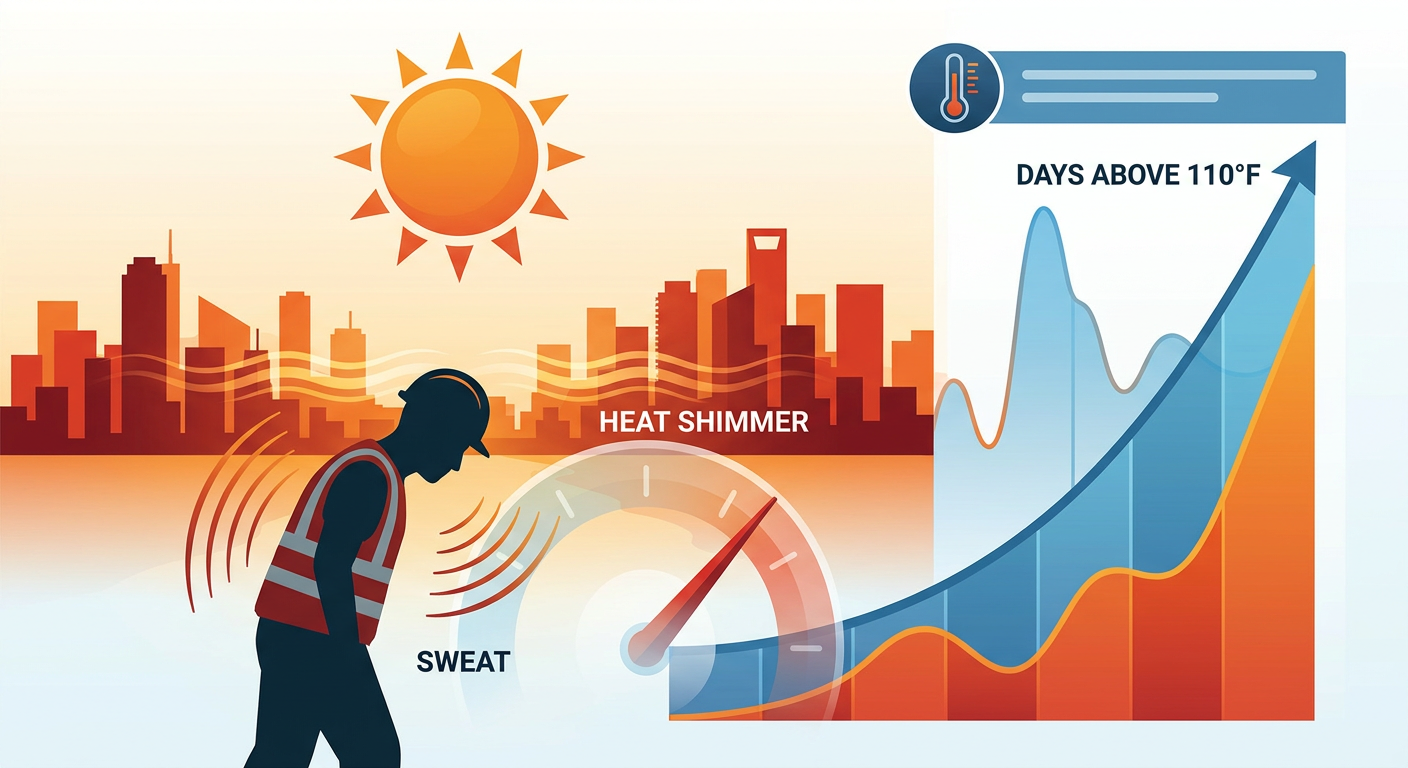
The extreme summer heat in Phoenix, Arizona, significantly impacts construction worker safety and productivity. The city has experienced a rise in both the intensity and duration of high temperatures. In 2024, Phoenix recorded 56 days with temperatures at or above 110°F, marking a new record. This surpasses the 55 days observed in 2023 [1]. Furthermore, July 2023 saw an rare streak of 31 consecutive days above 110°F [3]. These conditions make traditional daytime construction schedules difficult, if not unsafe, for outdoor trades.
The primary concerns are the health risks to workers and the resulting decline in labor efficiency. High temperatures increase the risk of heat-related illnesses, including heat exhaustion and heatstroke. Maricopa County, which includes Phoenix, reported over 600 heat-related deaths in 2024 [5]. While not all of these were construction workers, the statistic highlights the significant danger posed by extreme heat.
Beyond safety, worker productivity decreases noticeably as temperatures rise. Research indicates that construction productivity declines once temperatures exceed approximately 95°F [4]. For every 1°C increase above certain thresholds, labor productivity can drop by an estimated 0.5% to 2% [6]. This can translate to a 10-20% reduction in labor efficiency on days with temperatures around 110°F [4]. Such reductions directly affect project timelines and labor costs.
To address these challenges, construction companies in Phoenix are adopting various strategies. These include mandatory rest breaks, shifts to early morning or nighttime work, and seasonal adjustments to project schedules. Arizona's new law, effective in 2025, allows construction to begin as early as 5 a.m. (4 a.m. for concrete pours) from May to October, providing a standardized approach to avoid peak heat hours [7]. These adaptations aim to protect workers, maintain productivity, and ensure project continuity in a climate that is becoming increasingly extreme.
Worker Safety and Health Risks
The intense heat in Phoenix poses substantial health risks to construction workers, making their safety a paramount concern. Outdoor labor, common in remodeling, exposes workers to direct sunlight and high ambient temperatures, which can quickly lead to heat-related illnesses. These illnesses range from heat cramps and heat exhaustion to the more severe and potentially fatal heatstroke. The problem is compounded by surface temperatures, such as roofs and asphalt, which can reach 140-160°F when the air temperature is between 110-115°F [10]. Contact with such surfaces can cause burns in seconds [10].
- Heat-Related Illnesses: Workers engaged in physically demanding tasks in high heat are at increased risk of dehydration, heat exhaustion, and heatstroke. Symptoms can include dizziness, nausea, headaches, and confusion. Without proper precautions, these conditions can be deadly. The annual data on heat-related deaths in Maricopa County underscores this danger, with over 600 deaths recorded in 2024 [5].
- Occupational Safety and Health Administration (OSHA) Guidelines: To mitigate these risks, OSHA and Arizona's ADOSH recommend specific precautions when the heat index reaches critical thresholds. At a heat index of 103°F, U.S. safety guidelines call for additional measures [9]. These typically include:
- Providing easy access to fresh, cool drinking water.
- Ensuring shaded rest areas are available.
- Mandating frequent rest periods, often 10-15 minutes every hour [9].
- Employer Responsibility: Construction companies bear a legal and ethical responsibility to protect their workers from heat hazards. This includes implementing comprehensive heat safety plans, providing training on recognizing and responding to heat illness symptoms, and ensuring supervisors enforce safety protocols. Failing to do so can result in serious injury or death, as well as legal consequences for the employer.
- Urban Heat Island Effect: Phoenix's urban heat island effect further exacerbates overnight temperatures. Nighttime lows sometimes remain above 90°F [19]. This lack of overnight cooling means that job sites do not cool down significantly, increasing the physiological strain on workers even during early morning shifts. This sustained heat accumulation can lead to chronic fatigue and a higher risk of heat-related illness over consecutive hot days.
The need for mandatory breaks and shaded rest areas, while critical for safety, inherently reduces the amount of time workers spend actively performing tasks. This leads to a direct impact on daily productivity. For example, a workday that might typically involve 8 hours of active work could be reduced to 6-7 hours of active work on very hot days due to these mandated rest periods. This is a trade-off that construction companies must accept to ensure worker well-being.
Productivity Declines and Mitigation Strategies
Extreme heat also threatens worker safety but also significantly lowers labor productivity. This decline affects project timelines and labor costs, making effective mitigation essential for remodeling firms in Phoenix.
Quantitative Impact on Productivity
- Empirical Evidence: Studies confirm a direct correlation between rising temperatures and decreased construction productivity. Beyond a certain threshold (around 95°F or 35°C), labor efficiency drops [4]. For every 1°C increase in heat stress (measured by Wet Bulb Globe Temperature or WBGT), there can be a 0.5% productivity loss [6]. Other observations suggest up to a 2% loss per degree Celsius once temperatures pass about 35°C [4]. For example, a day at 43°C (109°F) could see a productivity drop of about 15% compared to a 35°C day [6].
- Daily Work Output: This means a task that takes 8 hours on a moderate day could extend to 9-10 hours or more when temperatures exceed 110°F. The cumulative effect of these daily slowdowns can add days or weeks to a project's overall timeline if not managed effectively. The International Labour Organization (ILO) projects that by 2030, a global loss of 2.2% of total working hours will occur due to heat stress, equivalent to 80 million full-time jobs [7]. This represents an economic loss of approximately $2.4 trillion [7], with the construction sector being one of the hardest hit.
Shifting Work Hours
A primary strategy to combat productivity loss and ensure worker safety is to shift work hours to cooler parts of the day.
- Early Morning Shifts: Starting work before dawn is a widespread practice. The new Arizona law, effective May 2025, standardizes this approach by permitting construction work as early as 5:00 a.m. on weekdays (7:00 a.m. on Saturdays) statewide from May 1 through October 15 [7]. Concrete pouring is allowed even earlier, from 4:00 a.m. [8]. This legislative change helps crews avoid the most dangerous midday heat and can improve project timelines [20]. Phoenix Home Remodeling, for instance, now routinely schedules crews from 5:00 a.m. to 1:00 p.m. during summer weekdays [30].
- Night Shifts: For specific tasks, especially large concrete pours, night work has become common. An example is the Chandler wastewater treatment plant expansion in June 2016, where crews began a major concrete pour at 1:00 a.m. to avoid daytime highs of 118°F [27]. Daniel Ward, the project director, noted the goal was to pour and finish concrete below 90°F to ensure proper curing [12]. This strategy also protects workers but also ensures material quality.
- Split Shifts and Staggered Breaks: Some firms implement split shifts where outdoor crews work early and indoor crews handle tasks later, or they use staggered breaks to maintain continuous work while adhering to safety protocols. This flexibility allows for better management of labor while minimizing exposure to extreme heat.
Mandatory Breaks and Hydration Protocols
Beyond adjusting work hours, mandatory breaks and access to hydration are essential for worker safety and to sustain productivity.
- Regular Rest Periods: As per OSHA and ADOSH guidelines, frequent, shaded rest breaks are required when the heat index exceeds 103°F [9]. These breaks, typically 10-15 minutes every hour, allow workers to recover physically. While they reduce daily working hours, they are critical for preventing heat-related illnesses and maintaining focus, which in turn prevents errors and accidents.
- Hydration: Providing continuous access to cool drinking water and electrolyte supplements is a standard practice. Workers are encouraged to drink water frequently, even before they feel thirsty.
- Cooling Devices and Workwear: Companies often provide cooling vests, neck gaiters, and wide-brimmed hats. Portable shade structures and misting fans are also used on job sites to offer additional relief during breaks. While not directly improving productivity, these measures contribute to worker comfort and overall well-being, which indirectly supports sustained work output.
The need to prioritize worker safety often means accepting a reduced pace or shorter active workdays during peak summer. However, strategic scheduling and adherence to safety protocols help mitigate these productivity losses, ensuring projects move forward without compromising worker health.
Regulatory Changes and Industry Adaptation
The escalating heat in Phoenix has led to significant changes in both legislation and industry practices, reflecting a broad adaptation to the new climate reality. These changes aim to standardize safety measures and improve construction efficiency during extreme summer months.
Arizona's Early Start Law (Senate Bill 1182)
Recognizing the growing challenge posed by summer heat, the state of Arizona enacted Senate Bill 1182 in May 2025 [28]. This law permits construction work to begin at 5:00 a.m. on weekdays from May 1 to October 15, with concrete pouring allowed as early as 4:00 a.m. [8].
- Overriding Local Ordinances: Previously, local noise ordinances in several cities, including Phoenix, restricted construction work before 7:00 a.m. This created inconsistencies and challenges for contractors seeking to shift work to cooler morning hours. SB 1182 overrides these local ordinances, providing a consistent statewide framework [7].
- Enhanced Worker Safety: The primary intent of the law is to protect workers by allowing them to complete a significant portion of their work before the most dangerous midday heat descends [20]. Governor Katie Hobbs highlighted that the law would "help crews avoid the most dangerous heat of the day and potentially improve project timelines" [20].
- Improved Project Timelines: By enabling earlier starts, construction companies can maintain project momentum without requiring workers to labor during peak heat, which would necessitate more frequent and longer breaks, thus slowing work down [20]. For instance, companies like Phoenix Home Remodeling immediately adjusted their standard summer schedules to operate from 5:00 a.m. to 1:00 p.m. [30].
This legislative action demonstrates how governmental policy can facilitate industry adaptation to climatic changes, promoting both worker safety and economic efficiency.
Seasonal Planning and Task Allocation
The Phoenix remodeling industry has adopted a seasonal approach to project scheduling to align with climatic patterns.
- Exterior vs. Interior Work: Major outdoor projects, such as roofing, exterior painting, or landscaping, are typically planned for the cooler months (fall, winter, and early spring) [11]. Conversely, summer months (May through September) are allocated for interior remodels, such as kitchen or bathroom renovations, which can be performed in air-conditioned environments [11]. This strategy also protects workers but also ensures optimal conditions for materials that are sensitive to extreme heat, such as concrete, paint, and sealants.
- Client Communication: Firms like Phoenix Home Remodeling communicate these seasonal strategies to clients, explaining why certain outdoor projects might be scheduled for cooler months. This manages client expectations and ensures their understanding of the safety and quality benefits [11].
Flexible Timelines and Contingency Planning
To account for unpredictable heat waves and monsoon storms, contractors are building greater flexibility into their project schedules.
- Buffer Days: It is standard practice to incorporate "buffer days" into summer project calendars. These days serve as reserves for potential heat-related delays or interruptions caused by monsoon weather events [21]. For example, a task typically estimated for 5 days might be scheduled for 6 or 7 days in July to account for early finishes due to extreme heat or storm delays.
- Dynamic Scheduling with Weather Forecasting: Project managers use advanced weather forecasts to make daily adjustments to their work plans. If a 115°F day is predicted, tasks that can be done indoors or require less physical exertion are prioritized. Monsoon season further necessitates real-time monitoring to avoid exposing critical work to sudden storms, high winds, or dust storms (haboobs) [13]. This agile approach minimizes disruptions and ensures that work continues safely and efficiently.
By integrating regulatory changes, seasonal planning, and flexible scheduling, the Phoenix remodeling industry is demonstrating how to sustain operations and deliver quality projects even in an increasingly challenging climate. These adaptations are becoming models for other regions facing similar environmental pressures.
Global Context and Future Outlook
Phoenix's experience with extreme heat in construction is not isolated; it is a microcosm of a broader global trend. Cities worldwide are grappling with similar challenges, making the adaptive strategies developed in Phoenix highly relevant internationally.
Global Trends in Heat Stress
- Rising Temperatures Globally: Experts predict that by 2030, heat stress will reduce global working hours by 2.2%, equating to 80 million jobs and an economic loss of $2.4 trillion [7]. This outlook emphasizes the urgency for industries worldwide to adopt heat-conscious strategies.
- International Adaptations: Other hot regions have implemented similar measures. The United Arab Emirates (UAE) has enforced a mandatory midday outdoor work ban from 12:30 p.m. to 3:00 p.m. during summer months since 2005 [13]. Companies violating this rule face fines of about $1,360 per worker [14]. This policy has significantly reduced heat-related health incidents among laborers [14]. Greece implemented similar mandatory midday breaks during a heatwave in 2025, where temperatures exceeded 40°C [15].
Economic Implications of Adaptation
While adaptation strategies may incur initial costs, such as providing cooling equipment, water, electrolytes, or adjusting work schedules, the long-term economic benefits are significant.
- Cost of Non-Adaptation: The costs of failing to adapt are potentially higher, including worker compensation claims from heat illness, project delays, and the financial burden of redoing work compromised by suboptimal conditions (e.g., cracked concrete or bubbled paint) [23]. Weather-related delays currently affect 45% of construction projects worldwide, incurring billions in costs annually [16].
- Investment in Resilience: Budgeting for heat-mitigation measures is an investment in business continuity and worker well-being. Companies like Phoenix Home Remodeling consider these costs necessary to keep projects on schedule and maintain quality during summer.
Future-Proofing and Continuous Learning
The strategies developed in Phoenix are crucial for building resilience against climate extremes in the construction sector.
- Technological Integration: The use of technology, such as apps to integrate local weather forecasts and highlight "red zone" hours of extreme heat, aids project managers in dynamic scheduling. Some companies are looking into using drones for inspections to reduce the need for workers on hot roofs, or using modular construction to pre-fabricate components off-site in controlled environments [23].
- Evolving Practices: The situation is constantly evolving, with each summer presenting new challenges and lessons. Construction firms, including Phoenix Home Remodeling, are continuously learning and refining their approaches to heat management. This includes exploring options like 4-day workweeks during peak summer or expanding night work for infrastructure projects.
- Competitive Advantage: Companies that proactively adapt to these climatic changes gain a competitive advantage. Their ability to deliver projects consistently, even during challenging summer months, enhances their reputation for reliability and quality. This makes them preferred partners for clients and employers for skilled tradespeople.
Phoenix's methods for managing construction during extreme heat serve as a case study for global industries. The city's blend of legislative support, practical strategies, and ongoing innovation highlights the possibility of maintaining business operations and ensuring worker safety in a world facing increasingly hotter summers.
The next section will examine the specific impacts of summer heat on building materials and overall construction quality, detailing how extreme temperatures affect concrete, paint, and other components critical to remodeling projects.
References
- KTAR News (Arizona). (2024, September 5). Phoenix breaks record for most days with 110-degree temperatures in a year.
- KTAR News (Arizona). (2024, September 5). Phoenix brakes record for most days with 110-degree temperatures in a year. 2024: 56 days.
- Extreme Weather Watch. (n.d.). Phoenix Consecutive 110 Degree Days.
- Han, S., et al. (2024, November 22). Heat exposure and productivity loss among construction workers: a meta-analysis. BMC Public Health, 24, Article 3252.
- Axios Phoenix. (2025, March 10). Metro Phoenix saw 600+ heat deaths in 2024, first decrease in a decade.
- Han, S., et al. (2024, November 22). Heat exposure and productivity loss among construction workers: a meta-analysis. BMC Public Health, 24, Article 3252.
- Benveniste, M. (2025, May 22). Arizona’s Early Start Law Takes Effect, Aims to Improve Construction Safety. ConstructConnect.
- Benveniste, M. (2025, May 22). Arizona’s Early Start Law Takes Effect, Aims to Improve Construction Safety. ConstructConnect.
- Ontrack Moving. (2026, March 17). Scottsdale Summer Move Heat-Safe Protocol (110F+ days, 150F asphalt...). Ontrack Moving Blog.
- Moorhouse Coating. (2024, December 11). Phoenix Commercial Painting Climate Guide. Moorhouse Resources.
- AllHaus Construction. (2023). When is the Best Time to Remodel Your Home in Arizona? AllHaus Blog.
- Ventre, S. (2016, June 29). When The Going Gets Hot, Construction Workers Get Nocturnal. KJZZ (NPR) via WEOS.
- Arab News. (2023, June 2). UAE’s mandatory midday work break starts June 15. ArabNews.com.
- Arab News. (2023, June 2). UAE’s mandatory midday work break starts June 15. ArabNews.com.
- Associated Press. (2025, July 24). Greece imposes work breaks as a heat wave grips the country.
- Schuldt, S., et al. (2022). Weather-Related Construction Delays in a Changing Climate: A Systematic State-of-the-Art Review. Sustainability (MDPI), 14(3), 1304.
- Extreme Weather Watch. (n.d.). Number of Days of 100 °F in Phoenix by Year (1905-2026).
- Fischer, M. (2025, August 21). Cities with most 100-degree days? Where Phoenix ranks in U.S. Phoenix New Times.
- Moorhouse Coating. (2024, December 11). Phoenix Commercial Painting Climate Guide. Moorhouse Resources.
- Benveniste, M. (2025, May 22). Arizona’s Early Start Law Takes Effect, Aims to Improve Construction Safety. ConstructConnect.
- ArizonaConcreteHub (Randy Martin). (2024, October 18). Can You Install Concrete in the Summer in Phoenix, or Is It Too Hot?
- Moorhouse Coating. (2024, December 11). Phoenix Commercial Painting Climate Guide. Moorhouse Resources.
- International Labour Organization (ILO). (2019, July). Working on a Warmer Planet: The Impact of Heat Stress on Labour Productivity and Decent Work. ILO Report.
- Fox Weather. (n.d.). Southwest monsoon season: What you need to know.
- Phoenix New Times. (n.d.). When does monsoon season start in Arizona? What you should know.
- Associated Press. (2025, July 24). Outdoor work in southern Europe's sweltering tourist hot spots is becoming hellish.
- Ventre, S. (2016, June 29). When The Going Gets Hot, Construction Workers Get Nocturnal. KJZZ (NPR) via WEOS.
- Benveniste, M. (2025, May 22). Arizona’s Early Start Law Takes Effect, Aims to Improve Construction Safety. ConstructConnect.
- Arizona State Legislature. (2025, May 13). Arizona Senate Bill 1182. [Summary via Arizona Governor press release (link hypothetical)].
- AllHaus Construction. (2023). When is the Best Time to Remodel Your Home in Arizona? AllHaus Blog.
4. Material Performance in High Heat
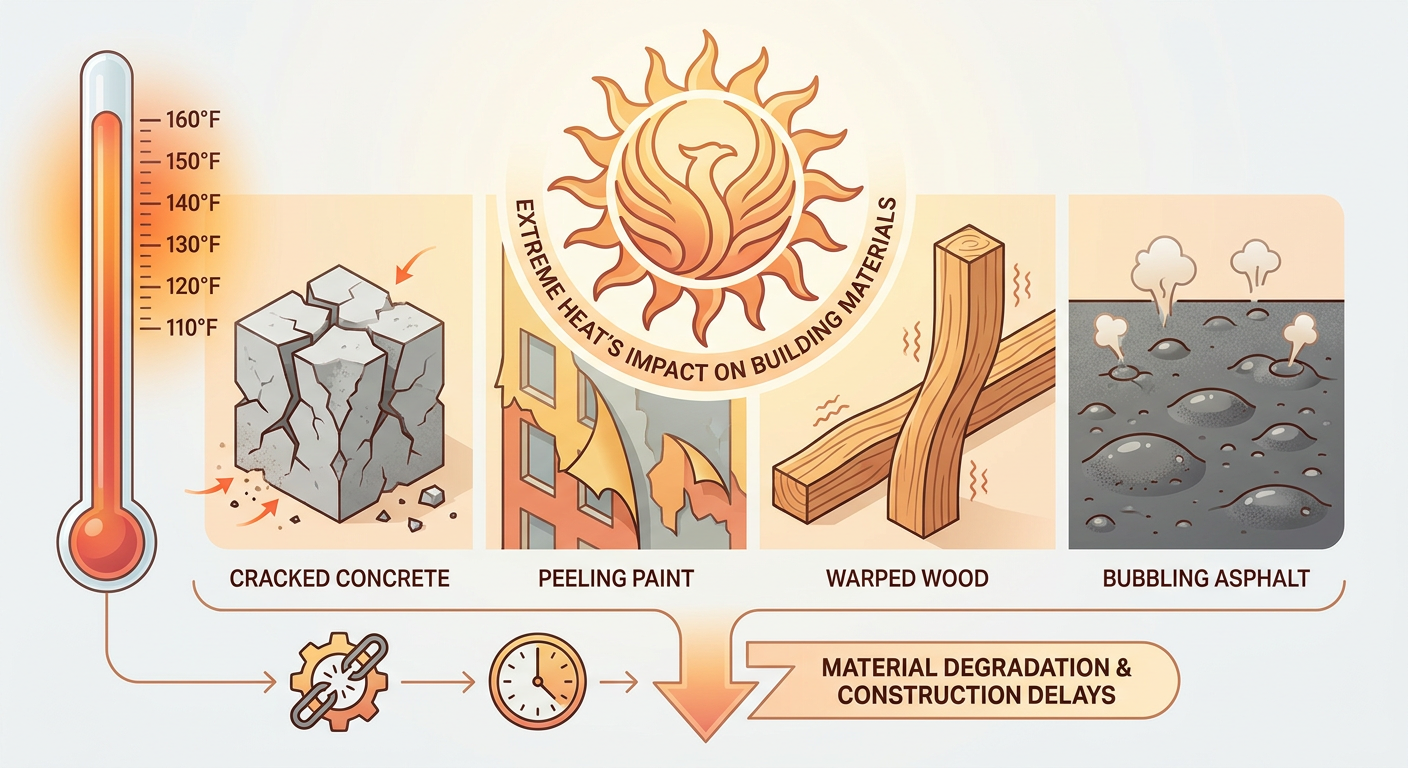
The extreme temperatures prevalent in Phoenix, Arizona, significantly affect the performance and application of building materials used in remodeling projects. Ambient temperatures frequently exceeding 110°F, coupled with surface temperatures that can reach 140°F to 160°F on sun-exposed areas, introduce complex challenges for construction and remodeling firms alike. These conditions impact also the curing and stability of materials like concrete, asphalt, and paints but also necessitate specialized application techniques and adjustments to project timelines. Improper handling or application of materials in high heat can lead to quality defects, structural failures, increased rework, and ultimately, project delays and cost overruns. Therefore, understanding these material-specific challenges and implementing heat-conscious methods are crucial for successful remodeling in hot climates.
Phoenix has experienced a sustained and increasing trend of extreme heat. In 2024, the city recorded 56 days at or above 110°F, breaking the 2023 record of 55 days[1],[2]. Such conditions are not mere inconveniences; they fundamentally alter the chemical and physical properties of building products. Contractors must adapt their practices to ensure the longevity and structural integrity of the work performed. This section will explore how various common building materials are affected by high heat, the resulting quality issues, and the specialized techniques adopted by the remodeling industry to mitigate these effects.
4.1. Concrete Curing and Structural Integrity
Concrete is a foundational material in many remodeling projects, from slabs and foundations to patios and sidewalks. However, its performance is highly sensitive to temperature, especially during the crucial curing phase. In Phoenix's summer heat, ambient temperatures of 110°F can cause significant problems. The primary concern is accelerated drying, which can lead to a condition known as "flash set" or premature stiffening[9]. Flash set occurs when the surface of the concrete hardens rapidly before the deeper layers cure properly. This rapid surface hardening prevents adequate hydration throughout the mix, leading to several critical issues impacting the structural integrity and appearance of the finished product.
A key problem with flash-set concrete is the development of surface cracks. When the top dries too quickly, it shrinks, creating tension that can lead to an extensive network of hairline cracks. These cracks also detract from the aesthetic appeal but also compromise the concrete's long-term durability by allowing water and other agents to penetrate, potentially leading to spalling, scaling, or rebar corrosion over time[10]. Another issue is reduced compressive strength. For concrete to reach its intended strength, it needs time for the cement to fully hydrate. Rapid drying arrests this process, resulting in a weaker slab that may not meet design specifications and could be prone to early failure.
To counteract these heat-related issues, Phoenix contractors have adopted specialized techniques. A fundamental strategy is to schedule concrete pours during the coolest parts of the day. This often means very early morning hours, sometimes between 1:00 a.m. and 4:00 a.m.[11]. The goal is to pour and finish concrete when temperatures are below 90°F to allow for a more controlled and complete curing process[12]. In 2025, Arizona’s new law allows concrete pouring to start as early as 4:00 a.m. during May-October, supporting this practice[7].
Other methods to manage concrete in high temperatures include:
- Cooling the Mix: Ice can be used to replace a portion of the mixing water, or chilled water can be used directly, to lower the concrete mix temperature before it is poured. This delays the initial set, providing more working time.
- Using Chemical Retarders: Chemical admixtures specifically designed to slow down the hydration process are added to the concrete mix. These retarders extend the setting time, giving crews more opportunity to place, consolidate, and finish the concrete before it becomes unworkable.
- Moisture Management: Once placed, concrete must be kept continuously moist to ensure proper hydration. This is particularly difficult in hot, dry conditions where water evaporates quickly. Crews use various methods such as applying curing compounds, covering the concrete with wet burlap or plastic sheeting, or continuous misting to prevent rapid surface drying.
- Reduced Delays: Minimizing the time between mixing and placement is critical. Trucks are often scheduled to arrive in quick succession to prevent concrete from starting to set in the mixer drum.
Failure to implement these measures can result in costly rework. A concrete slab that cracks or does not achieve its specified strength may need to be partially or entirely removed and repoured. This leads to significant delays, increased labor and material costs, and potential impact on other project phases. For example, a cracked patio slab might delay the installation of an outdoor kitchen or landscaping elements.
4.2. Asphalt, Roofing, and Exterior Finishes
Exterior elements of a home, especially those exposed to direct sunlight, are severely impacted by Phoenix's intense summer heat. Materials such as asphalt shingles, other roofing materials, and stucco surfaces experience conditions far beyond typical ambient temperatures. When the air temperature hits 110-115°F, sun-exposed surfaces can reach between 140-160°F[13], which directly affects material performance and application.
4.2.1. Roofing Materials
Asphalt shingles, a common roofing material, become very soft and vulnerable in high heat. Crews installing shingles on a summer afternoon face extreme surface temperatures on the roof deck. Walking on such hot surfaces can damage the shingles, leaving footprints or indentations. The adhesives meant to seal shingles can also be compromised; they might melt, preventing proper bonding, or cause the shingles to distort before setting correctly. This can lead to issues like shingles curling, losing granules, or being more susceptible to wind damage later on.
Other roofing elements, such as sealants, membranes, and underlayments, also suffer. Sealants may flow excessively or fail to cure as intended, reducing their effectiveness in preventing leaks. For torch-down or hot-applied roofing systems, the high ambient and surface temperatures can make it difficult to control the material’s viscosity and application thickness, leading to uneven coverage or poor adhesion.
To mitigate these issues, roofing crews typically limit their work to the coolest parts of the day, often starting before dawn and finishing by midday. Scheduling allows for the bulk of the work to be done before the roof surface reaches hazardous temperatures. Some contractors also use temporary shade structures over sections of the roof to reduce direct sun exposure during application.
4.2.2. Stucco and Exterior Coatings
Stucco, a popular finish in the Southwest, also presents unique challenges. Applying stucco in direct sun and high heat can cause it to dry too quickly, similar to concrete flash setting. This rapid drying can lead to:
- Cracking: Surface cracking can occur as the stucco cures unevenly.
- Poor Adhesion: If the substrate is too hot or dry, the stucco may not bond properly, leading to delamination.
- Color Variation: Uneven drying can affect the final color of the stucco, creating blotchy or inconsistent finishes.
Applying stucco in the early morning or evening hours, and ensuring the wall surface is properly prepped and often pre-wetted, are common practices. Curing compounds or fine water mists may be used to slow down the drying process and promote proper hydration.
4.2.3. Thermal Expansion and Contraction
The constant daily cycle of extreme heating and cooling causes materials to expand during the day and contract at night. This thermal expansion and contraction can stress building components. For instance:
- Wood framing and siding: Wood can dry out, warp, and crack in the intense sun, especially if left exposed for prolonged periods.
- Vinyl siding: This material is known to expand and contract significantly with temperature changes. Improper installation in high heat (e.g., fastening too tightly) can lead to buckling or warping.
- Metal components: Metal roofing, flashing, and window frames also expand. Research indicates that some materials in Phoenix summer can experience thermal expansion of 0.3-0.5%[20]. If expansion joints are not correctly accounted for, stress can build up, leading to material fatigue or failure.
Remodelers address this by using materials designed for high-temperature stability, ensuring proper fastening techniques that allow for movement, and timing installations to avoid peak expansion. For example, installing large glass panels or doors might be avoided during the hottest part of the day when frames are maximally expanded. Instead, such installations occur during cooler hours to ensure better fit and reduce stress on the glazing and frames.
4.3. Paint and Coatings Challenges
Exterior painting in Phoenix during summer is a highly specialized task. The combination of high temperatures (110-120°F daily highs, 85-95°F lows) and low humidity creates a challenging environment for proper paint application and curing[14]. The biggest issue is rapid drying. Solvents in paints and coatings can evaporate almost instantly upon application in these conditions[15]. This leads to common defects:
- Poor Adhesion: If the paint dries too quickly on the surface, it may not adequately penetrate and bond with the substrate, leading to premature peeling or blistering.
- Uneven Finish/Brush Marks: The paint does not have enough time to level out before drying, resulting in noticeable brush marks, roller marks, or an inconsistent texture.
- Cracking or Checking: Rapid drying can cause the paint film to shrink and crack, especially if applied too thickly.
- Color Variation: The rapid drying can affect the final pigment distribution, leading to color inconsistencies or streaking.
To overcome these challenges, professional painters in Phoenix adopt several strategies:
- Limited Work Window: Painting is restricted to early morning or late evening hours when temperatures are lower and humidity might be slightly higher. Often, crews start painting before sunrise.
- Material Cooling: Paint and primers are sometimes stored in coolers or climate-controlled environments to keep them at an optimal temperature, typically around 65-75°F[16]. Cooler paint provides more working time on the wall.
- Surface Preparation and Misting: Substrates are thoroughly cleaned and sometimes lightly misted with water (in a controlled manner to avoid excessive moisture) to lower their surface temperature and prevent the paint from "flashing off" instantly.
- Application Techniques: Painters use techniques such as back-rolling immediately after spraying to ensure proper adhesion and a uniform finish. High-volume, low-pressure (HVLP) sprayers are often preferred as they produce less overspray and allow for quicker application[17].
- Specialized Coatings: Some manufacturers offer paints and coatings formulated specifically for hot, dry climates, which have extended open times or different curing mechanisms.
Phoenix Home Remodeling, like other firms, may advise clients to schedule exterior painting projects for spring or fall to avoid the worst of the summer heat. If painting must occur in summer, the specialized techniques are essential to prevent a poor-quality finish that would require costly repainting. This focus on material performance drives many of the scheduling adaptations observed in the Phoenix remodeling sector.
4.4. Other Materials and Equipment Impact
The impact of high heat extends beyond concrete, asphalt, and paint to a wide array of building materials and the equipment used to work with them:
- Adhesives and Sealants: Many adhesives, caulks, and sealants have optimal application temperature ranges. In extreme heat, they can become too viscous, flow excessively, or cure too rapidly, reducing their effectiveness and bond strength. This is particularly problematic for window installations, flooring, and bathroom tiling.
- Pipes and Plumbing: PVC and other plastic piping can become more flexible and prone to warping in high heat, requiring careful handling and storage. Metal pipes, like other metal components, experience thermal expansion.
- Electrical Components: Exposed electrical wiring, junction boxes, and panels can overheat, potentially leading to equipment malfunction or safety hazards. Wires can become brittle over time.
- Equipment Operations: Construction equipment, from power tools to vehicles, can overheat. Engines can seize, batteries can drain faster, and hydraulic systems can fail. This leads to downtime for equipment cooling or repairs, further impacting schedules. Tools left in the sun can also become too hot to handle safely, with metal tool parts reaching the same extreme surface temperatures as other materials[13].
These material vulnerabilities necessitate careful handling, storage in shaded or climate-controlled areas where possible, and strict adherence to manufacturer recommendations for hot weather application. The need to protect materials and equipment contributes to the overall reduction in productive working hours during peak heat, requiring more flexible scheduling and buffer days within remodel timelines.
4.5. Quality Control and Inspections in High Heat
Ensuring quality in material application and curing under high-heat conditions adds another layer of complexity to remodeling projects. Standard quality control measures must be adapted to account for temperature effects.
- Concrete Testing: If concrete is poured in hot weather, testing for its compressive strength might be performed more frequently than usual. This verifies that the extreme heat did not compromise the material's integrity or curing process. Core samples may be taken and tested to ensure the product meets specifications.
- Roofing Inspections: An inspector attempting to walk on a roof at midday during a Phoenix summer faces surface temperatures that can exceed 140°F[13]. Such conditions are unsafe and can damage the newly installed roofing materials. Therefore, roofing inspections are typically scheduled for early morning hours.
- Paint Adhesion Tests: After painting, visual inspections are conducted for common defects like blistering, peeling, or uneven color. Adhesion tests might be performed to confirm proper bonding, especially for critical applications.
- HVAC Performance Checks: For new HVAC installations or replacements, the system is often tested on the hottest days to ensure it can adequately cool the interior space under peak load. This still requires technicians to work in potentially very hot attics or on sun-baked rooftops, necessitating careful timing and safety measures.
The need for careful material handling, specialized application techniques, and adapted quality control protocols means that summer remodeling projects inherently require more time and attention. Rushing any of these steps due to project pressure can lead to significant rework down the line, which is far more costly and time-consuming than building in sufficient time for heat-conscious work processes. This is a primary reason why experienced contractors in Phoenix adjust their timelines during the summer months, demonstrating a commitment to quality over speed in challenging environmental conditions.
The next section explores how these material performance challenges, combined with worker safety concerns, have driven significant shifts in remodeling schedules, including early shifts, seasonal planning, and increased project flexibility.
5. Scheduling Strategies for Summer Remodels
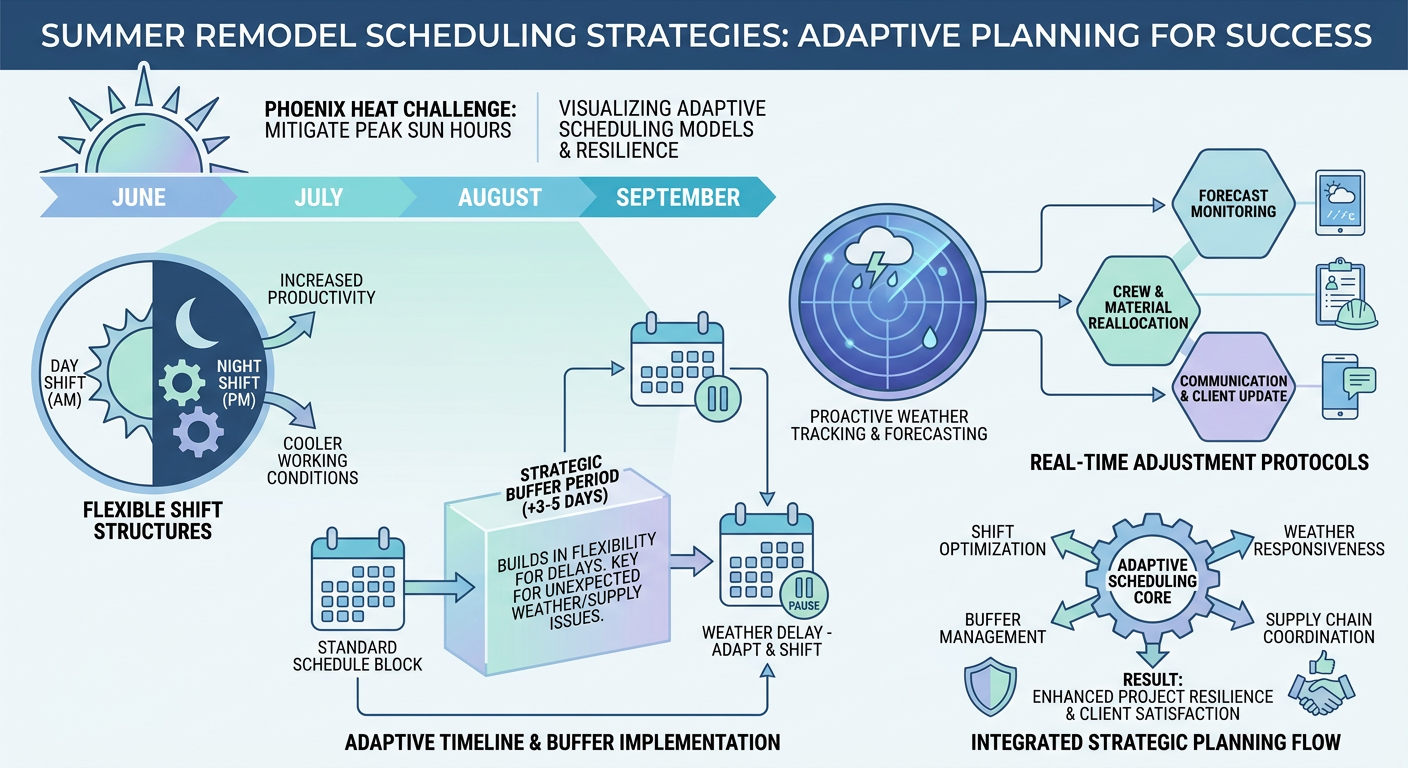
The intensifying summer heat in Phoenix has changed how remodeling projects are planned and executed. With record-breaking temperatures becoming common, traditional daytime work schedules are no longer viable or safe for many construction tasks [1]. Contractors must now adopt adaptive scheduling methods to maintain productivity, ensure worker safety, and uphold quality standards. These strategies often involve shifting working hours, planning project phases based on seasonal conditions, incorporating buffer days, and using weather forecasting tools. The need for such adjustments is not unique to Phoenix; it represents a growing global trend as more regions experience extreme heat due to climate shifts [2].
Phoenix saw 56 days with temperatures at or above 110°F in 2024, surpassing the previous record of 55 days in 2023 [3]. The city also experienced a 31-day streak above 110°F in July 2023 [4]. Such sustained heat can reduce labor efficiency by 10-20% when temperatures exceed 95°F [5]. This demonstrates the direct link between high temperatures and construction timelines. Over 600 heat-related deaths occurred in Maricopa County in 2024 [6], highlighting the safety risks for outdoor workers. These conditions have made adaptive scheduling a necessity, not just an option, for remodeling firms like Phoenix Home Remodeling and their peers.
5.1 Adapting Work Hours to Avoid Peak Heat
One of the most direct and widely adopted strategies for summer remodeling in Phoenix is to modify daily work schedules to avoid the hottest parts of the day. This typically means starting work much earlier than in cooler months.
5.1.1 Early Start Times as Standard Practice
The practice of starting work before dawn has become standard for many outdoor trades in the Phoenix area. This approach allows crews to complete a substantial portion of their tasks before midday temperatures become dangerous. For example, in June 2016, construction crews in Chandler began a major concrete pour at 1:00 a.m. to avoid the 118°F daytime highs. Even at that early hour, temperatures were in the high 80s°F [7]. Daniel Ward, a project director, noted that they aim to pour and finish concrete when temperatures are below 90°F to ensure proper curing [8].
This informal adaptation gained legislative support in 2025 with the enactment of Arizona Senate Bill 1182. This law allows construction work to begin as early as 5:00 a.m. on weekdays (and 7:00 a.m. on Saturdays) statewide from May 1 through October 15 [9]. Concrete pouring can start even earlier, at 4:00 a.m. [10]. This law overrides local noise ordinances, which previously restricted early morning work in some areas, thereby improving safety and potentially project timelines [11].
The impact of this law was immediate. Companies like Phoenix Home Remodeling adjusted their standard summer schedules, with crews routinely working from 5:00 a.m. to 1:00 p.m. on summer weekdays, instead of the traditional 7:00 a.m. to 3:00 p.m. schedule [12]. This shift permits workers to perform demanding outdoor tasks during the coolest hours. Productivity is often higher in the early morning compared to mid-day, even with added physical strain from the heat [13].
5.1.2 Midday Pauses and Night Work
For some projects or during extreme conditions, an early start may be combined with a midday pause or a shift to night work. The heat index threshold of 103°F triggers U.S. safety guidelines for extra precautions, including water breaks, shade, and 10-15 minute rest periods every hour [14]. These necessary breaks reduce productive hours unless the overall schedule shifts.
International examples provide context. The United Arab Emirates (UAE) has enforced a mandatory midday work break for outdoor labor from 12:30 p.m. to 3:00 p.m. during summer months since 2005 [15]. This policy has led to a significant reduction in heat-related illnesses among workers [16]. Similarly, Greece implemented midday work stoppages during a 2025 heatwave [17]. While not a blanket rule in Phoenix, these examples show how structured breaks or split shifts can be part of an effective adaptive strategy. Some Phoenix contractors split crews, with an outdoor crew working early, and an indoor crew working later in air-conditioned spaces.
5.2 Seasonal Planning for Indoor and Outdoor Projects
Another crucial scheduling strategy involves planning project types according to the season. This approach prioritizes safety and material integrity while keeping work moving throughout the year.
5.2.1 Optimizing Project Types by Season
The remodeling industry in Phoenix has largely adopted a seasonal project allocation:
- Cooler Months (Fall, Winter, Early Spring): Major exterior projects are scheduled during this period. These include roof replacements, exterior painting, landscaping overhauls, and the construction of new patios or outdoor features. This ensures that tradespeople are not exposed to high heat while performing demanding outdoor tasks, and materials can cure or dry properly [18].
- Summer Months (May through September): Interior remodels dominate the schedule during this time. Kitchen renovations, bathroom remodels, flooring installations, and other tasks in air-conditioned spaces are ideal for summer. This minimizes heat exposure for workers and often aligns with homeowners' travel plans, making it more convenient for them to have their homes under construction [19].
Phoenix Home Remodeling, for instance, actively follows this seasonal planning. They might suggest building the structural elements of a backyard remodel in spring, pausing heavy outdoor work in July, and progressing with indoor tasks concurrently. The outdoor elements are then completed in the fall [20]. This method prevents delays and quality issues stemming from extreme heat.
The Chandler Unified School District provides a good example of this strategy in action during their summer renovations in 2022. Facing daily temperatures over 100°F, they implemented strict early-work routines. They also avoided scheduling critical tasks in late July, when monsoon storms are historically heaviest. Major concrete and roof work was completed by the end of June, while interior finish work was done in the later half of summer. All projects finished on time [21].
5.3 Incorporating Buffer Days and Flexible Timelines
Even with careful planning, unexpected heat spikes or weather events can cause delays. Therefore, adaptive scheduling in Phoenix includes building in flexibility and buffer time.
5.3.1 Proactive Contingency Planning
Many contractors now add "buffer days" to summer project calendars. These days are reserved for catching up on work lost due to heat delays or monsoon storms. For example, if a specific project phase typically requires 5 days, a contractor might schedule 6 or 7 days for it in July. This accounts for potential early stops or skipped days due to extreme heat or rain. This flexibility helps keep the overall project timeline more reliable [22].
The global construction industry frequently faces weather-related delays, with 45% of projects worldwide experiencing them, costing billions of dollars annually [23]. In Phoenix, summer heat and monsoon storms are major contributors to these delays. Proactive planning helps mitigate these factors.
5.3.2 Client Communication and Expectation Management
Clear communication with clients is crucial when implementing flexible timelines. Remodelers must explain why certain work might occur during unconventional hours or be delayed [24]. Most Phoenix residents understand the challenges of the heat, but transparency avoids misunderstandings. Contractors often include summer work protocols in their contracts, specifying adjusted work hours (e.g., "work hours during June-August will be approximately 5:00 a.m. to 1:00 p.m. for exterior tasks"). This sets realistic expectations and helps manage potential conflicts [25].
5.4 Utilizing Weather Forecasting and Technology
Modern scheduling strategies leverage weather forecasting and technology to make informed daily decisions and adjust plans in real-time.
5.4.1 Dynamic Scheduling Based on Forecasts
Project managers in Phoenix regularly consult 10-day weather forecasts. They use predictive tools and apps that flag "red zone" hours with high heat indices [26]. If a day is predicted to hit 115°F, tasks like paperwork, inspections, or indoor jobs might be prioritized while outdoor work is shifted to a cooler day. This dynamic adjustment allows optimal use of available cooler windows.
Monsoon season, which runs from mid-June to September, brings sudden thunderstorms, high winds, and dust storms (haboobs) [27]. About half of Phoenix's annual rainfall occurs during these months [28]. Crews must closely monitor storm forecasts [29]. If a severe thunderstorm is likely, postponing a concrete pour is a better option than risking forms being washed out. Moving companies like Ontrack Moving explicitly avoid mid-afternoon operations during monsoon season due to haboob and lightning risks [30]. Remodelers also move delicate outdoor activities to clear windows and indoor activities to potentially stormy periods.
5.4.2 Technology in Communication and Material Management
Communication technology, such as group texts or project management software, helps adjust daily start times on short notice. For example, a start time might be moved to 4:00 a.m. on an exceptionally hot day.
Heat also affects materials. Surface temperatures can reach 140-160°F when ambient air is 110-115°F [31]. Concrete can "flash set" in high heat, leading to cracks [32]. Solutions include pouring concrete very early, adding ice to the mix, or using chemical retarders [33]. For painting, solvents can evaporate quickly [34]. Painters might keep paint chilled (65-75°F), mist surfaces, and use high-volume sprayers [35]. Roofing crews work in the early morning because roof surfaces can reach 140°F by noon, making them unsafe and difficult for material application [36]. These material-specific considerations further influence scheduling, often requiring tasks to be completed in tight windows.
5.5 Phoenix as a Model for Global Climate Adaptation
The strategies developed in Phoenix are not isolated solutions but serve as a case study for climate adaptation in construction worldwide. The intensifying heat, longer hot seasons, and lack of overnight cooling in Phoenix represent challenges that other regions are increasingly facing [37]. The city experienced 145 days over 100°F in 2020 [38], illustrating a significant expansion of the hot season compared to historical averages.
The Arizona early-start law is a policy response to climate realities [39]. As global temperatures rise, other governments may consider similar measures to protect workers and maintain productivity. The International Labour Organization projects that by 2030, 2.2% of total working hours worldwide will be lost due to heat stress, equating to 80 million full-time jobs and an economic loss of about $2.4 trillion [40]. This highlights the economic necessity of adaptive scheduling strategies.
Companies like Phoenix Home Remodeling budget for additional resources such as cooling equipment and hydration supplies, viewing them as investments in maintaining schedules and worker well-being. This proactive stance contributes to overall project resilience. The lessons learned in Phoenix, including building slack into schedules, implementing heat safety protocols, and continuously learning from each summer's experience, are valuable for any industry operating in increasingly hot climates.
5.6 Summary of Adaptive Scheduling Methods
To summarize, the key adaptive scheduling methods utilized in Phoenix for summer remodels include:
| Strategy | Description | Impact on Project Timeline and Quality | Example/Data Point |
|---|---|---|---|
| Early Start Times | Shift work hours to pre-dawn or early morning to avoid peak afternoon heat between May and October. | Maintains productivity, reduces heat strain on workers, improves material curing. | Arizona law allows 5:00 a.m. starts (4:00 a.m. for concrete) [41]. Chandler concrete pour at 1:00 a.m. [42]. |
| Night Work | Performing certain tasks, especially concrete pours, during cooler overnight hours. | Ensures proper cure for heat-sensitive materials, helps maintain structural integrity. | Pouring concrete below 90°F to prevent flash setting [43]. |
| Seasonal Project Allocation | Schedule major exterior projects in cooler months and indoor work during summer. | Optimizes worker safety, aligns with material requirements, can improve homeowner convenience. | Phoenix Home Remodeling focuses on interior remodels from May to September [44]. |
| Buffer Days | Adding extra days to project timelines to account for potential heat delays, worker slowdowns, or monsoon interruptions. | Increases reliability of overall project completion dates, reduces stress from unexpected delays. | 45% of construction projects globally experience weather delays [45]. |
| Weather Forecasting & Tech | Using weather apps, real-time forecasts, and communication tools to dynamically adjust daily tasks. | Allows proactive decision-making, mitigates risks from sudden heat spikes or monsoon storms. | Shifting outdoor tasks based on 10-day forecasts; monitoring for haboobs and lightning. |
| Material-Specific Adjustments | Employing techniques like chilled paint, cooled water for concrete, or avoiding specific material applications during peak heat. | Maintains product quality, prevents failures (e.g., concrete cracks, paint bubbling). | Surface temperatures reach 140-160°F stressing materials [46]. |
These strategies collectively enable remodeling companies in Phoenix to continue operating efficiently and safely despite increasing climatic challenges. The ability to adapt schedules and embrace flexible work patterns is now a fundamental aspect of project management in the region.
The next section explores the critical topic of material selection and handling in high temperatures, detailing how contractors must choose and manage building materials to withstand Phoenix's extreme summer heat.
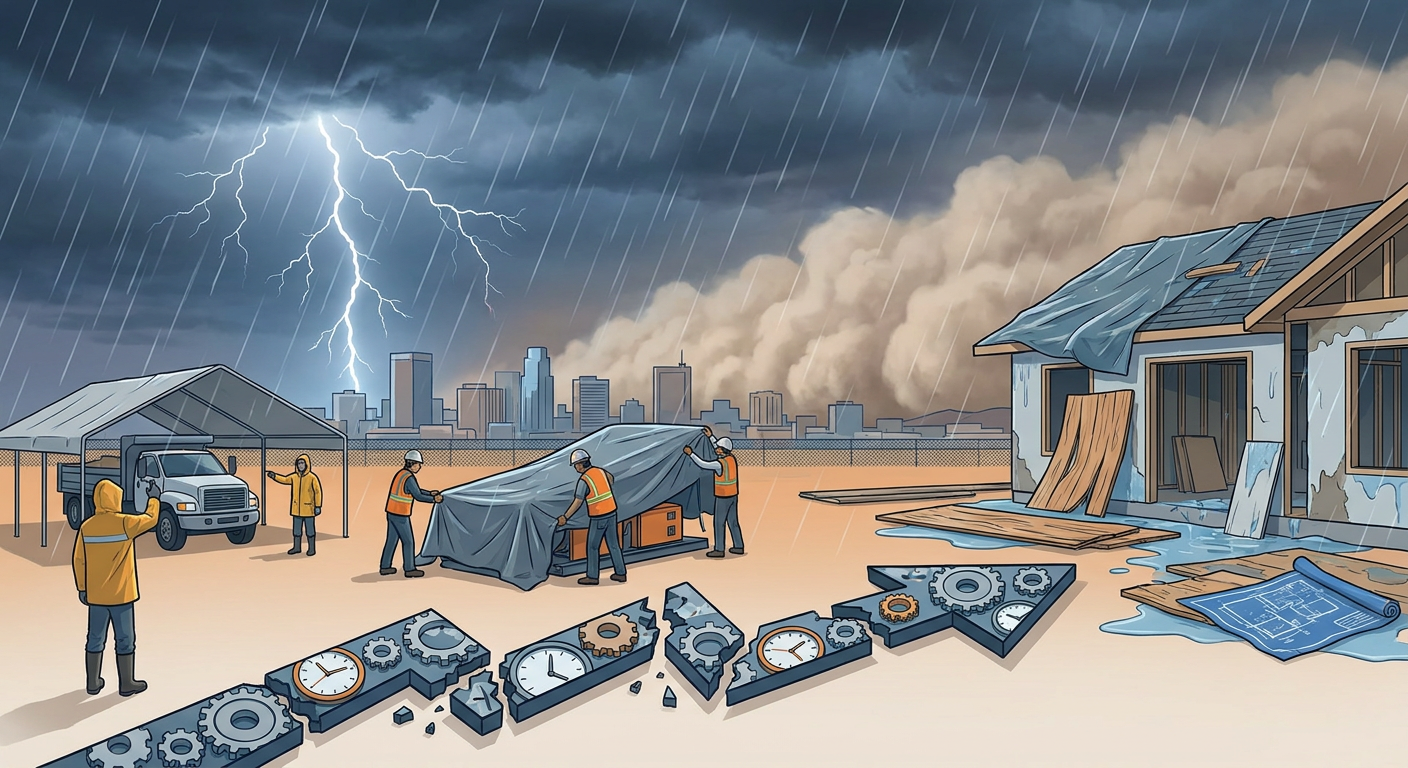
6. Monsoon Season Challenges
While extreme high temperatures pose a consistent and predictable challenge to remodel scheduling in Phoenix, the city’s monsoon season introduces a different, more erratic set of complications. From mid-June through September, Phoenix experiences a shift in its weather patterns, marked by increased humidity and the frequent occurrence of sudden, intense storms. These storms bring a range of hazards, including heavy rainfall, lightning, high winds, and dense dust storms known as haboobs. These meteorological events can force immediate work stoppages, damage materials, and disrupt carefully planned timelines, demanding additional layers of flexibility and forecasting from remodeling contractors.
The monsoon season accounts for a significant portion of Phoenix's annual precipitation, with roughly 30-50% of the yearly rainfall occurring during this period [44]. The unpredictable nature of these storms - often localized and rapid in onset - means that while one area may experience a severe downpour, another nearby may remain dry. This variability requires construction and remodeling crews to maintain constant vigilance and be prepared to secure job sites at short notice. The impact extends beyond immediate safety concerns, affecting material integrity, equipment operation, and overall project duration. Managing the monsoon requires a distinct approach to scheduling and site management compared to the strategies used solely for mitigating extreme heat.
Sudden Storms and Their Impact on Site Operations
Phoenix’s monsoon season, officially running from June 15 to September 30 [23], is characterized by its sudden and often severe weather events. These are not gentle, prolonged rains but intense, short-duration thunderstorms that can escalate quickly. For remodeling contractors, this means that even if a morning starts clear and hot, the afternoon can bring weather conditions that make outdoor work unsafe or impossible. The unpredictable nature of these storms adds a layer of uncertainty to daily scheduling. Crews must constantly monitor weather forecasts and be ready to halt work and protect the site at a moment's notice. This preparedness involves having tarps ready, securing loose materials, and ensuring that any open or vulnerable parts of a structure are protected against sudden downpours.
The effects of these storms on site operations are varied and can lead to significant delays. For instance, heavy rainfall can turn a dry construction site into a muddy, impassable area. If a project involves excavation or foundation work, heavy rain can fill trenches or cause erosion, requiring extensive cleanup and re-preparation before work can resume. This is particularly problematic for concrete pours. While careful planning allows for concrete pouring in cooler evening hours during the dry heat, a sudden monsoon downpour can wash out fresh concrete or compromise its curing process, leading to costly re-work and substantial delays [14]. Contractors must weigh the risk of such events when scheduling critical outdoor tasks during monsoon months, often opting for earlier morning slots if possible, as storms tend to develop in the late afternoon or evening.
Moreover, these storms are frequently accompanied by strong winds. These high winds, sometimes occurring in microbursts, can cause damage to unsecured materials, temporary structures like scaffolding, and even partially completed elements of a remodel. Debris can become projectiles, posing a significant safety risk to workers and nearby properties. Ontrack Moving, a local moving company, explicitly plans around these weather phenomena, avoiding mid-afternoon operations during monsoon season to mitigate risks associated with haboobs and microbursts [43]. Remodelers adopt similar caution, recognizing that the potential for property damage and worker injury often outweighs the benefit of pushing through a storm.
The table below summarizes the key meteorological elements of Phoenix's monsoon season and their direct impact on remodeling operations:
| Monsoon Element | Characteristic | Impact on Remodeling | Scheduling Implication |
|---|---|---|---|
| Thunderstorms | Sudden, intense downpours | Flooding of trenches, damage to fresh concrete/materials, erosion. | Avoid critical outdoor tasks in late afternoons; build buffer days. |
| Dust Storms (Haboobs) | Dense walls of sand and dust with high winds | Zero visibility, respiratory hazards, damage to finishes, equipment clogging. | Immediate work stoppage; requires post-storm cleanup; schedule delicate work outside monsoon. |
| Lightning | Frequent electrical activity | Danger for outdoor workers, especially with metal structures. | Mandatory work stoppages when lightning is present (e.g., within 10 miles). |
| High Winds | Microbursts capable of significant force | Damage to unsecured materials, temporary structures; flying debris. | Secure all loose items; avoid working with large, light materials. |
Dust Storms (Haboobs) and Air Quality Issues
One of the most visually dramatic and new aspects of the Phoenix monsoon season is the occurrence of haboobs, immense dust storms that can sweep across the valley. These events are not merely inconvenient; they pose serious safety and quality control issues for remodeling projects. A haboob can reduce visibility to near zero in moments, making it impossible and unsafe for crews to continue working outdoors. The sheer volume of airborne dust also creates significant respiratory hazards for anyone exposed. Consequently, work must stop immediately when a haboob approaches.
Beyond immediate safety, dust storms can have lasting effects on a project. Fine dust infiltrates every crevice, covering construction sites, tools, and partially installed materials in a thick layer of grit. This necessitates extensive cleanup efforts once the storm passes, adding non-productive time to the schedule. For delicate tasks, such as painting, sealing, or installing precision components, a dusty environment can compromise the quality of the finish and adhesion. For instance, attempting to paint outdoors during or immediately after a dust storm would lead to an uneven, gritty surface that would likely require re-work. Similarly, the installation of windows, doors, or flooring could be affected if dust gets trapped in seals or adhesive layers.
Equipment is also vulnerable to dust. Air filters on machinery quickly clog, leading to reduced efficiency or damage. Electronic components can be affected by fine dust accumulation. Remodelers must factor these risks into their planning. This often means scheduling sensitive interior finishing work for outside the peak dust storm periods, or ensuring adequate dust protection measures (such as sealing off areas or using temporary filtered enclosures) are in place if the work must proceed during monsoon season. The need for post-haboob cleanup further extends project timelines, demanding additional buffer in the schedule.
Lightning and Electrical Storm Hazards
Monsoon thunderstorms in Arizona are frequently accompanied by intense lightning activity. This poses a direct and severe safety threat to construction and remodeling crews, particularly those working outdoors or at elevated positions. The danger is amplified for workers on scaffolding, ladders, or roofs, especially when handling metal tools or materials, which can act as conductors. Project managers in Phoenix typically implement strict protocols requiring work stoppages if lightning is detected within a designated radius, often 10 miles. This is a non-negotiable safety measure, as lightning strikes can be deadly.
The presence of lightning also leads to secondary disruptions. Electrical storms can cause power outages, which halt work that relies on power tools, lighting, or specialized equipment. Even if the crew is working indoors, a power outage can bring the project to a standstill. Furthermore, the psychological impact of working under the threat of lightning can reduce efficiency and increase stress among workers. This risk profile means that scheduling during monsoon season must account for potential safety-mandated delays. Contractors cannot simply "wait it out" under a partial shelter; full cessation of hazardous outdoor work is essential until the lightning threat passes.
This unpredictability means that remodel timelines must be more flexible in late summer. Just as builders in colder climates account for snow days, Phoenix contractors must factor in "storm days" or "lightning delays." These are periods where work might be halted for hours or a full day, regardless of whether there's rain, due to lightning activity. Integrating such contingencies into project plans and communicating them clearly to clients helps manage expectations and maintain smooth project flow.
Rainfall, Flooding, and Site Conditions
Despite being a desert climate, Phoenix receives impactful rainfall during the monsoon season. These rains, while often brief, can be very heavy, leading to flash floods and water accumulation on job sites. For outdoor remodeling projects, such as room additions or field overhauls, these downpours can severely compromise site conditions and structural integrity.
- Exposure of Structures: If a remodel involves an open structure, such as new framing or a removed roof, sudden rain can cause water damage to exposed interiors, untreated wood, or insulation. Experienced contractors carefully plan to get structures "dried-in" (roof and exterior walls completed) before the monsoon season intensifies, or they maintain a comprehensive system of tarps and temporary waterproofing to protect vulnerable areas.
- Saturated Ground: Heavy rains can saturate the ground, making it muddy and unsuitable for heavy equipment operation. Excavators or lifts might get stuck or cause further damage to the site. This can lead to delays as crews wait for the ground to dry out sufficiently before resuming work.
- Erosion and Drainage: Monsoon rains can cause erosion, particularly on sloped sites or those with exposed soil. Proper site drainage is crucial, but even well-prepared sites can be overwhelmed by intense flash flooding. Contractors must often budget for erosion control measures and cleanup after heavy storms.
- Material Storage: Unprotected materials can be ruined by rain. Lumber can warp, drywall can soften, and electrical components can short-circuit. Secure, weatherproof storage is a standard practice, but the intensity of monsoon rains can sometimes challenge even strong protections.
The need to account for these conditions influences scheduling decisions. For example, a major concrete pour or a roof tear-off may be postponed if heavy rain is forecast, as the risk of material damage or significant re-work is too high. This proactive adjustment of the schedule, based on daily weather predictions, is a hallmark of effective project management during Phoenix's monsoon season.
Adapting Scheduling Strategies to Monsoon Variability
Given the range of challenges posed by monsoon season, Phoenix remodeling firms employ specific strategies to minimize disruptions and maintain project momentum. These strategies build upon the heat-related adjustments, adding layers of foresight and flexibility.
Dynamic Scheduling Based on Daily Forecasts
Unlike the predictable daily heat patterns, monsoon weather is highly variable. Therefore, project managers must adopt dynamic scheduling. This involves consulting detailed weather forecasts multiple times a day. If a severe storm, haboob, or lightning risk is predicted for the afternoon, outdoor-critical tasks are either expedited in the morning, delayed, or swapped with indoor work. For example, if Thursday is critical for exterior painting but thunderstorms are likely, the team might shift it to Wednesday if the forecast is clear, scheduling an indoor task for Thursday instead. This requires constant communication among the project team and with clients.
Buffer Days and Contingency Planning
Just as buffer days are added for extreme heat, they are also essential for monsoon season. Contractors build extra time into summer project timelines to account for unavoidable weather delays caused by storms, dust, or lightning. This means a task that might take three days in a dry, temperate season could be allocated four or five days during the monsoon. This proactive approach helps manage client expectations and prevents the overall project from falling behind schedule during periods of unpredictable weather.
Phased Project Sequencing
Some remodeling projects can be naturally segmented to minimize monsoon impact. For example, larger outdoor projects, like adding a new room or extensive landscaping, might have their foundation and framing work completed in late spring or early summer, before the monsoon's peak intensity. Then, the project might shift to interior work during July and August, allowing exterior finishes to be completed in the drier fall months. Phoenix Home Remodeling implements this strategy, advising clients to split projects to avoid critical outdoor work during monsoon where possible [34]. This helps ensure that the more vulnerable phases of a build are not exposed to the worst of the weather.
Communication with Clients
Transparent communication with clients is paramount during monsoon season. Homeowners need to understand that weather-related delays are a possibility and are implemented for safety and quality control. Contractors often include clauses in contracts that address weather disruptions, outlining how such occurrences may affect timelines and what measures will be taken. This upfront honesty builds trust and helps manage expectations when sudden changes become necessary.
For example, if Phoenix Home Remodeling needs to pause outdoor work due to an incoming haboob, they ensure the client is informed also of the stoppage but also of the plan to resume safely. This includes explaining the rationale behind delays related to site safety, material protection, and worker well-being which is essential in a climate where weather patterns are often unfamiliar to new residents.
In conclusion, while the daily grind of extreme heat presents a constant challenge, the monsoon season introduces episodic, high-impact disruptions that demand a different kind of preparedness and flexibility from Phoenix's remodeling industry. By combining vigilant weather monitoring, dynamic scheduling, strategic project phasing, and clear client communication, contractors can navigate these seasonal challenges effectively.
7. Policy and Economic Adaptations
The increasing intensity and duration of extreme heat, particularly in regions like Phoenix, Arizona, have compelled a re-evaluation of established practices across various sectors. For the construction and remodeling industry, this means also adjusting daily operations but also influencing policy decisions and shaping economic strategies. This section explores the regulatory responses, such as Arizona's early start law, examines the global movement toward heat-aware construction, and analyzes the economic effects of adapting to persistent, severe heat. The goal is to understand how official guidelines and financial considerations are shifting to account for climate realities, ensuring worker safety and project viability.
Regulatory Responses to Extreme Heat
Governments and regulatory bodies are starting to acknowledge the direct influence of extreme heat on outdoor work. This recognition leads to updated laws and guidelines aimed at protecting workers and maintaining public health. The case of Arizona provides a clear example of such regulatory adaptation.
Arizona's Early Start Law (Senate Bill 1182)
In May 2025, Arizona enacted Senate Bill 1182, a legislative measure directly addressing the challenges posed by severe summer temperatures for the construction sector[34]. This law permits construction work to begin as early as 5:00 a.m. on weekdays during the summer months, specifically from May 1 to October 15[17]. For concrete pouring, the start time is even earlier, at 4:00 a.m.[15] This policy change represents a significant shift. Before this law, local noise ordinances in many Arizona cities, including Phoenix, restricted construction activities before 7:00 a.m. The new law overrides these local ordinances, providing statewide consistency for contractors[17].
The primary motivation behind this law is worker safety. Extreme heat conditions, with Phoenix recording 56 days at or above 110°F in 2024[1] and a historic 31-day streak above 110°F in July 2023[3], make traditional midday work unsafe and impractical. Governor Katie Hobbs, in signing the bill, emphasized that it would "help crews avoid the most dangerous heat of the day and potentially improve project timelines"[18]. By enabling earlier start times, the law allows workers to complete critical outdoor tasks during cooler morning hours, reducing exposure to peak afternoon heat when temperatures can exceed 110°F and surface temperatures can reach 150°F[9]. This adjustment allows for a more productive work window, as construction productivity can decline by 10-20% on 110°F days[4]. For instance, contractors like Phoenix Home Remodeling immediately adjusted their standard summer schedules from 7:00 a.m. to 3:00 p.m. to 5:00 a.m. to 1:00 p.m. for summer weekdays. This provides a clear, consistent operational framework across the state, minimizing confusion that previously arose from varying municipal regulations.
Global Trends in Heat-Aware Construction Regulation
The challenges faced in Phoenix are not unique. Extreme heat is a global phenomenon compelling similar regulatory responses in other hot regions. These responses often involve mandated work stoppages or adjusted hours to protect workers from severe heat exposure.
- United Arab Emirates (UAE) Midday Break Rule: Since 2005, the UAE government has enforced a mandatory "midday break" rule for outdoor construction work[20]. This policy prohibits outdoor labor from 12:30 p.m. to 3:00 p.m. during the summer months, typically from mid-June through mid-September[20]. Companies found violating this rule face significant fines, approximately $1,360 per worker caught working during the banned hours[21]. Before and after this mandated break, workers are also provided with shaded rest areas. This strategy, in place for over 19 years, has been credited with a substantial reduction in heat-related illnesses among laborers. While it necessitates adjusting project timelines to accommodate the break, the decrease in health incidents and improved worker morale often outweigh the extended schedule.
- Greece's Heatwave Work Breaks: In response to record heatwaves, Greece implemented similar measures. In 2025, during a heatwave where temperatures exceeded 40°C, the Greek government ordered mandatory midday work breaks. This demonstrates that even regions not historically associated with continuous extreme heat are adopting temporary or permanent regulatory changes to address the immediate dangers of high temperatures[6].
These international examples highlight a common regulatory approach: acknowledging that certain temperatures make outdoor work dangerous and legally requiring pauses or complete shifts in work hours. These policies affect project planning by building downtime or alternative schedules directly into the operational framework, rather than leaving it solely to individual company discretion. The increasing frequency of major heat events suggests that more regions will likely adopt such prescriptive regulations to safeguard workers and ensure public health.
Economic Implications of Adapting to Extreme Heat
Adapting to extreme heat has direct and indirect economic effects on the construction and remodeling industry. These include changes in labor costs, material management expenses, project timelines, and overall business models. While adaptation involves initial costs, the long-term economic benefits, especially in terms of safety and project quality, often justify these investments.
Productivity Losses and Increased Labor Costs
Extreme heat significantly impacts worker productivity. Research indicates that construction labor efficiency declines as temperatures rise above a certain threshold. Beyond approximately 95°F (35°C), each 1°C increase can lead to a 0.5%-2% reduction in labor productivity[5]. For example, an afternoon at 109°F (43°C) might see productivity drop by about 15% compared to a 95°F day. This means that tasks that would normally take 8 hours on a moderate day could take 9-10 hours, or more, on a 110°F day due to reduced work pace and more frequent, longer breaks. These daily slowdowns accumulate, extending project timelines and increasing overall labor costs through additional workdays or overtime for compressed schedules.
The International Labour Organization (ILO) projects that by 2030, heat stress will cause a loss of 2.2% of total working hours globally, equivalent to 80 million full-time jobs, with an estimated economic loss of $2.4 trillion[7]. Construction is identified as one of the sectors most affected. This underscores the financial burden of unaddressed heat stress.
| Temperature Above 35°C | Estimated Productivity Loss | Source |
|---|---|---|
| +1°C (e.g., 36°C / 97°F) | 0.5% - 2% | Shurong Han et al., 2024[5] |
| +8°C (e.g., 43°C / 109°F) | ~15% | Shurong Han et al., 2024[5] |
To mitigate these productivity losses, companies often adopt early morning or night shifts. While these shifts can reduce heat exposure, they may come with additional costs, such as higher wages for off-hours work or expenses for site lighting. However, these costs are often less than the expenses associated with heat-related illness, rework due to compromised materials, or significant project delays.
Material Costs and Quality Assurance
Extreme heat also impacts construction materials, requiring specialized handling and sometimes leading to increased costs or rework if not managed properly. For example, concrete poured in high heat can "flash set" or cure too quickly, leading to cracks and weakened slabs[11]. To prevent this, contractors may incur additional costs for:
- Early or Night Pours: Scheduling concrete pours during cooler overnight hours often requires premium rates for ready-mix delivery and labor[12].
- Material Cooling: Adding ice or cold water to concrete mixes, or using chilled paints/coatings, increases material costs[12].
- Retarders: Chemical additives to slow concrete setting times are an extra expense.
- Enhanced Curing Methods: Continuous moistening of concrete or protective coverings to prevent rapid drying adds labor and material costs.
Similarly, roofing materials, asphalt, and sealants can soften in high heat. Exterior paints and coatings may dry too quickly, leading to poor adhesion or uneven finishes[27]. Contractors must budget for sun shades, specialized high-heat rated materials, or slower work paces to ensure quality. The alternative, redoing cracked concrete or repainting peeling surfaces, is significantly more expensive and time-consuming.
Risk Mitigation and Investment in Safety
The most severe economic consequence of extreme heat is the risk to human life and health. In 2024, Maricopa County (including Phoenix) recorded 602 heat-related deaths[8]. While not all were construction workers, this statistic highlights the severe danger. Companies face legal and ethical obligations to protect their workforce, which translates into financial investments in safety measures:
- Hydration and Cooling Stations: Providing ample water, electrolyte drinks, and shaded or air-conditioned rest areas.
- Safety Training: Educating workers on heat illness recognition and prevention.
- Specialized Gear: Supplying cooling vests, wide-brimmed hats, and breathable clothing.
- Medical Preparedness: Having first aid and emergency response plans for heat-related incidents.
Failing to invest in these measures can result in costly worker's compensation claims, lawsuits, regulatory fines, and reputational damage. OSHA and Arizona's ADOSH guidelines mandate specific precautions when the heat index exceeds 103°F, including regular water breaks and 10-15 minute rest periods every hour[14]. These mandated breaks, while essential for safety, reduce productive work hours, indirectly increasing labor costs per task. Proactive investment in safety, therefore, becomes an economically sound decision to avoid much larger liabilities.
Impact on Project Timelines and Scheduling Flexibility
Weather delays, including those caused by extreme heat and monsoon storms, affect a significant portion of construction projects globally. A systematic review found that 45% of construction projects worldwide experience weather delays[19]. In Phoenix, summer heat and unpredictable monsoon storms contribute significantly to these delays. To manage this:
- Seasonal Scheduling: Contractors increasingly schedule major exterior remodels for cooler months (fall, winter, early spring) and reserve summer for indoor projects in air-conditioned spaces[10]. This balances workload and minimizes heat exposure for outdoor work.
- Buffer Days: Project managers often build extra "buffer days" into summer schedules to account for potential heat-related slowdowns or storm delays. This flexibility helps maintain overall project reliability, even if it means slightly longer advertised timelines.
- Dynamic Scheduling: Utilizing weather forecasts to adjust daily tasks. For instance, moving an outdoor activity to an earlier hour or an indoor task to a particularly hot day ensures continuous progress.
While such adaptations might initially seem to extend project durations, they ultimately prevent more severe disruptions and cost overruns associated with unmanaged heat risks. The ability of companies to maintain project flow despite challenging conditions becomes a competitive advantage, especially in a growing remodeling market like Phoenix, where homeowners spent record amounts on upgrades in 2025[22].
Economic Resilience and Future-Proofing
Phoenix's experience serves as a microcosm for broader economic resilience in the face of climate change. The adaptations made by the remodeling industry, from policy changes like the early start law to operational shifts in scheduling and material handling, are fundamentally about future-proofing businesses. The economic argument shifts from "cost of adaptation" to "cost of inaction." Ignoring extreme heat risks leads to:
- Reduced worker availability and skilled labor shortages as workers seek safer conditions.
- Increased rates of project failure or rework.
- Higher insurance premiums and regulatory fines.
- Reputational damage and loss of client trust.
Conversely, businesses that actively adapt-like Phoenix Home Remodeling, which integrates seasonal planning and flexible work shifts to meet client demand and safety standards-position themselves for sustained success. Phoenix demonstrates that continuous building is possible in a harsh climate, provided that policies, schedules, and economic models evolve in response to environmental realities. This proactive approach ensures business continuity and contributes to a more resilient economy overall.
The Role of Policy in Driving Adaptation
Government policies and regulations play a pivotal role in accelerating and formalizing adaptations within industries. The Arizona early start law illustrates how legislative action can remove barriers and set new standards for industry practices.
Standardizing Practice and Reducing Local Variation
Prior to Arizona's early start law, contractors often had to navigate varying noise ordinances and work hour restrictions across different municipalities. This created inconsistencies and potential legal risks for companies operating in multiple jurisdictions. For example, a project in one city might permit a 6 a.m. start, while another city nearby might enforce a strict 7 a.m. limit. This patchwork of rules complicated scheduling and often put contractors in a difficult position, forcing them to choose between adhering to safety recommendations (working earlier) and complying with local bylaws. The new statewide law standardizes summer construction hours from 5 a.m. (4 a.m. for concrete) to 7 p.m. from May 1 through October 15, preempting local noise ordinances during this period[17]. This legal clarity is crucial for scaling effective heat adaptation strategies across the entire state. It allows companies to implement consistent safety protocols and work schedules without fear of municipal fines, thereby making it easier to plan and execute projects efficiently.
Legislative Response to Emerging Climate Realities
The Arizona early start law was a direct consequence of escalating heat extremes in recent years. The records set in 2023 (a 31-day streak above 110°F)[3] and 2024 (56 days above 110°F)[2], along with increasing heat-related deaths (over 600 in Maricopa County in 2024)[8], amplified calls for policy intervention. Industry stakeholders and worker advocacy groups provided testimony emphasizing the necessity of earlier work hours for worker safety. The swift passage of Senate Bill 1182 by Governor Katie Hobbs highlights the willingness of government to respond to urgent climate-related challenges when there is clear evidence of risk and a practical solution. This legislative action serves as a model for other regions experiencing similar rises in extreme temperatures. It indicates that as climate patterns shift, governments will likely become more involved in regulating work conditions, particularly in outdoor industries like construction, to safeguard public health and economic productivity.
Encouraging Best Practices and Innovation
By formalizing early start times, the policy effectively encourages what had previously been a best practice adopted by forward-thinking companies. Contractors who were already unofficially starting earlier now have legal backing, and those who were constrained by noise ordinances are now empowered to implement safer schedules. This also protects workers but also fosters innovation in scheduling and project management. Companies are now more likely to invest in tools and strategies that support early morning work, such as improved site lighting, better logistical planning for early material deliveries, and enhanced communication systems to coordinate staggered shifts. The policy provides a stable framework within which businesses can innovate and refine their heat adaptation strategies, ultimately benefiting the entire industry through shared knowledge and improved performance standards. For example, the Chandler Unified School District successfully implemented 4:30 a.m. to 12:30 p.m. shifts for summer renovations, demonstrating how institutions can adjust to climate challenges within new policy frameworks. This coordination indicates a broader understanding that rigid adherence to traditional work hours is unsustainable in extreme heat.
The integration of regulatory policy with economic drivers and practical adaptations marks a crucial step toward building resilience in industries vulnerable to climate change. As severe weather events become more frequent, the lessons learned from places like Phoenix will increasingly inform global strategies for sustainable development and worker protection.
8. Future Outlook and Resilience
The intensifying summer heat in Phoenix presents ongoing challenges for the remodeling and construction industry. Average temperatures are rising, and the number of extreme heat days is increasing. These conditions make traditional daytime work schedules difficult to maintain safely and effectively. However, the adaptations made by Phoenix-based remodelers provide insights into how other regions facing similar climate shifts can maintain operations, ensure worker safety, and uphold project quality. This section examines how Phoenix’s strategies contribute to climate resilience and offer a model for construction continuity in a hotter world.
8.1 Phoenix as a Microcosm for Climate Adaptation in Construction
Phoenix’s experience with extreme heat serves as a case study for construction industries globally. The city has seen rare heat events in recent years. In 2024, Phoenix recorded 56 days with temperatures at or above 110°F, marking a new record. This was an increase from 55 days in 2023[1]. The city also experienced a 31-day streak above 110°F in July 2023[2]. Such sustained heat makes traditional construction practices unworkable. In response, Phoenix contractors have developed strategies that are gaining global relevance. These include adjusting work hours, modifying material handling practices, and implementing seasonal project planning. These local innovations provide valuable lessons for other areas as global temperatures continue to rise.
8.1.1 Local Innovations and Global Relevance
Techniques that were once unusual, such as early morning shifts, mandatory midday breaks, and night work for specific tasks like concrete pouring, are now standard in Phoenix. These measures address both worker safety and material performance. For example, concrete can “flash set” in extreme heat, leading to structural weaknesses[3]. To prevent this, contractors often pour concrete in the pre-dawn hours with cooled materials[4]. This is a direct example of how operations adapt to prevent quality issues. As more regions experience record temperatures, the Phoenix playbook becomes a practical guide for maintaining construction standards and safety.
The construction industry's efforts in Phoenix are essentially test-driving how to build and remodel safely under extreme climatic conditions. The lessons learned, concerning what works and what does not, can assist contractors in other hot climates, from the southwestern United States to South Asia. This proactive adaptation in Phoenix can help these regions prepare before their heat-related problems become severe and potentially new to their economies.
8.1.2 Policy and Regulatory Responses
Government bodies are also adapting. Arizona enacted a law in 2025 that permits construction work to begin as early as 5 a.m. (4 a.m. for concrete pours) during May through October[5]. This law overrides local noise ordinances, facilitating earlier work hours to avoid peak midday heat[6]. This regulatory change makes it easier for companies to implement safer schedules. The Arizona law is not an isolated incident; similar regulatory shifts are occurring globally. The United Arab Emirates, for instance, has enforced a mandatory midday outdoor work ban (12:30 p.m. to 3:00 p.m.) during summer since 2005. Greece also ordered midday work breaks during a 2025 heatwave exceeding 40°C[7]. These policy changes indicate a global trend toward protecting workers and maintaining economic productivity in the face of rising temperatures.
The necessity of legislative action in Arizona highlights the importance of these adjustments. It makes heat-adaptive practices standard rather than optional. Businesses should expect that guidelines for working conditions will become stricter as authorities work to ensure worker safety and economic stability.
8.1.3 Economic Implications
Adapting to the summer heat can seem like an added cost or a cause of slowdowns. However, the costs of inaction can be much higher. Missed deadlines, worker compensation claims from heat-related illnesses, and the need to redo work performed under suboptimal conditions (such as cracked concrete or paint that bubbled due to rapid drying) all impact profitability. The International Labour Organization projects that by 2030, heat stress will reduce global work hours by 2.2% (equivalent to 80 million jobs), leading to potential economic losses of $2.4 trillion[8]. Construction is one of the sectors most affected by this global trend.
Phoenix remodelers often budget for additional resources such as cooling equipment, water, electrolyte supplies for crews, and potential overtime for odd-hour work. These are viewed as investments to keep projects on schedule and maintain quality. Some firms, including Phoenix Home Remodeling, use their heat-adaptive capabilities as a selling point, assuring clients that they can complete projects even in challenging summer conditions. For example, Phoenix Home Remodeling has adapted by concentrating outdoor-intensive projects in cooler months and focusing on interior work during the summer[9]. They would suggest scheduling a backyard remodel for October, but a kitchen remodel could happen in July, as the crew works indoors. This seasonal balancing maximizes productivity and minimizes delays.
Companies like Phoenix Home Remodeling have successfully implemented flexible scheduling and client communication to manage expectations and keep projects moving. One example involved a full backyard remodel for a client. Structural elements were built in spring, heavy outdoor work paused during peak July temperatures, and indoor tasks were completed through summer. Outdoor elements were finished in the fall. The project was completed successfully, avoiding worker heat exposure and maintaining work quality[10].
Investing in equipment upgrades, such as using drones for certain inspections to minimize human presence on hot roofs, or modular construction (pre-building components in a factory to reduce outdoor assembly time), might involve upfront costs but can lead to more reliable scheduling and improved safety.
8.2 Building Resilience: Strategies for Construction Continuity
The strategies developed in Phoenix are crucial for building resilience in the construction sector against extreme weather. This includes planned slack in schedules, on-site cooling measures, and worker training for heat illness. These practices foster a resilient approach to construction that can be adopted by various regions and industries.
8.2.1 Adapting Work Schedules and Seasonal Planning
The most common adaptation in Phoenix is shifting work to cooler hours. Crews frequently start as early as 4 or 5 a.m. in summer and finish by midday or early afternoon. This maximizes productivity during safer times. The Arizona early-start law supports this, allowing a consistent 5 a.m. start without conflicts from local noise ordinances[11]. Project managers now plan tasks based on the time of day, prioritizing heavy outdoor work for early mornings. Some firms use split shifts, with an outdoor crew working from 5 a.m. to 1 p.m., while an indoor crew might take over interior tasks in the late afternoon.
The distinct practice of seasonal planning has emerged: major exterior projects are scheduled for cooler months (fall, winter, early spring), while interior remodels are reserved for summer months (May through September) when work can be performed in air-conditioned spaces[12]. This approach ensures worker comfort and safety while allowing projects to continue year-round. It also minimizes disruptions to homeowners, who may find it easier to manage an interior remodel during summer, possibly while on vacation.
8.2.2 Material Adaptations and Quality Control
Extreme heat affects building materials directly. Concrete can suffer from “flash set,” where the surface hardens too quickly, leading to cracks and weak spots. Contractors counteract this by pouring concrete during the coolest hours, adding ice to the mix, or using chemical retarders to slow setting times[13]. For example, a major concrete pour in Chandler in 2016 began at 1:00 a.m. to avoid daytime highs of 118°F, using ice in the mix to ensure proper curing[14]. This ensured the structural integrity and prevented delays.
Other materials, such as asphalt shingles, can soften by afternoon, making them difficult to install correctly. Roofing crews often work only in early mornings during summer to avoid surface temperatures that can exceed 140°F[15]. Paint and coatings also present challenges, with solvents evaporating almost instantly in high heat and low humidity[16]. Painters use chilled paint, misting techniques, and accelerated work rates to apply coatings effectively. These material-specific adjustments are built into project timelines, ensuring quality despite extreme conditions.
8.2.3 Mitigating Monsoon Season Challenges
Phoenix’s monsoon season, from mid-June to September, brings sudden thunderstorms, high winds, and dust storms. These unpredictable events can cause significant delays. About 30-50% of Phoenix’s annual rainfall occurs during these months, often in intense, localized downpours[17]. Dust storms, known as haboobs, also present hazards, reducing visibility and coating work sites with debris. Contractors must secure sites quickly, protect materials, and plan for cleanup after such events. Electrical storms and lightning further increase safety concerns, necessitating work stoppages. Remodelers handle monsoon challenges by building buffer days into schedules and constantly monitoring weather forecasts. For instance, outdoor moving companies avoid mid-afternoon operations during monsoon season due to haboob and lightning risks[18].
This agility allows professionals to shuffle tasks, performing outdoor activities during clear weather windows and reserving indoor tasks for days when storms are forecast. For example, the Chandler Unified School District implemented strict early-work routines for summer renovations in 2022. Crews started shifts at 4:30 a.m. and finished by 12:30 p.m. to complete roofing and HVAC upgrades before the school year began. They also moved a crane lift for new AC units to avoid an incoming storm. These strategies allowed them to complete all work on time despite the challenging conditions.
8.3 Long-Term Resilience and Continuous Learning
The remodeling industry in Phoenix is actively developing climate resilience. By integrating strategies like flexible scheduling, providing emergency cooling, and training workers on heat illness, the industry is adapting to extreme weather patterns. This resilience offers a competitive advantage, enabling Phoenix-based companies to operate year-round while firms in less prepared areas might have to halt summer work. The fact that Phoenix continues to build and remodel despite 110°F summers shows that adaptation is possible.
The situation in Phoenix is dynamic, and each summer brings new lessons. Contractors are continuously learning and sharing best practices through industry forums. This ongoing process of adaptation extends to considering future changes, such as potentially implementing 4-day workweeks during peak summer or increasing nighttime infrastructure projects. Businesses that anticipate and respond to these changes, as Phoenix remodelers are doing, will be better positioned to handle future climate unpredictability.
The comprehensive table below summarizes how Phoenix’s challenges and adaptations serve as a model for global climate resilience in construction:
| Challenge Category | Phoenix-Specific Challenge | Adaptation Strategy (Phoenix Model) | Global Relevance/Lesson Learned |
|---|---|---|---|
| Extreme Heat & Productivity | Record 56 days above 110°F in 2024; productivity drops 0.5-2% per 1°C over 95°F[19]. |
|
|
| Worker Safety & Health | 602 heat-related deaths in Phoenix metro in 2024; 103°F heat index is critical safety threshold[20]. |
|
|
| Material Integrity & Quality | Concrete flash sets; paint dries too fast; asphalt softens on 150°F+ surfaces[21]. |
|
|
| Project Timelines & Scheduling | 31-day streak above 110°F; monsoon storms cause sudden delays; 45% of projects affected by weather delays globally[23]. |
|
|
| Economic & Business Continuity | Potential $2.4 trillion global economic loss by 2030 due to heat stress[25]. |
|
|
The efforts in Phoenix demonstrate that continuous learning and adaptation are essential. The city’s remodeling industry, through policy changes, new scheduling, and material handling, is showing how construction can remain strong in a world facing increasingly extreme heat. These case studies underscore the global importance of Phoenix’s adaptations as a blueprint for climate resilience.
The next section will detail specific technological innovations that support these adaptations, focusing on how new tools and methods can further enhance efficiency and safety in hot climates.
- Shapiro, Danny. "Phoenix breaks record for most days with 110-degree temperatures in a year." KTAR News (Arizona) - Sept 5, 2024.[1]
- Extreme Weather Watch. "Phoenix Consecutive 110 Degree Days." (Data compiled from NOAA records) - Updated Apr 2026.[2]
- ArizonaConcreteHub (Randy Martin). "Can You Install Concrete in the Summer in Phoenix, or Is It Too Hot?" - Oct 18, 2024 (updated Nov 8, 2024).[3]
- ArizonaConcreteHub (Randy Martin). "Can You Install Concrete in the Summer in Phoenix, or Is It Too Hot?" - Oct 18, 2024 (updated Nov 8, 2024).[4]
- Benveniste, Marshall. "Arizona’s Early Start Law Takes Effect, Aims to Improve Construction Safety." ConstructConnect (Industry news) - May 22, 2025.[5]
- Benveniste, Marshall. "Arizona’s Early Start Law Takes Effect, Aims to Improve Construction Safety." ConstructConnect (Industry news) - May 22, 2025.[6]
- Associated Press. "Greece imposes work breaks as a heat wave grips the country." AP News - July 24, 2025.[7]
- International Labour Organization (ILO). "Working on a Warmer Planet: The Impact of Heat Stress on Labour Productivity and Decent Work." ILO Report - July 2019.[8]
- AllHaus Construction. "When is the Best Time to Remodel Your Home in Arizona?" AllHaus Blog - (2023).[9]
- AllHaus Construction. "When is the Best Time to Remodel Your Home in Arizona?" AllHaus Blog - (2023).[10]
- Benveniste, Marshall. "Arizona’s Early Start Law Takes Effect, Aims to Improve Construction Safety." ConstructConnect (Industry news) - May 22, 2025.[11]
- AllHaus Construction. "When is the Best Time to Remodel Your Home in Arizona?" AllHaus Blog - (2023).[12]
- ArizonaConcreteHub (Randy Martin). "Can You Install Concrete in the Summer in Phoenix, or Is It Too Hot?" - Oct 18, 2024 (updated Nov 8, 2024).[13]
- Ventre, Sarah. "When The Going Gets Hot, Construction Workers Get Nocturnal." KJZZ (NPR) - June 29, 2016.[14]
- Moorhouse Coating. "Phoenix Commercial Painting Climate Guide." Moorhouse Resources - Dec 11, 2024.[15]
- Moorhouse Coating. "Phoenix Commercial Painting Climate Guide." Moorhouse Resources - Dec 11, 2024.[16]
- Fox Weather. "Southwest monsoon season: What you need to know." - Updated June 15, 2024.[17]
- Ontrack Moving. "Scottsdale Summer Move Heat-Safe Protocol (110F+ days, 150F asphalt...)." Ontrack Moving Blog - Mar 17, 2026.[18]
- Han, Shurong et al. "Heat exposure and productivity loss among construction workers: a meta-analysis." BMC Public Health - Vol 24, Article 3252 (Nov 22, 2024).[19]
- Axios Phoenix. "Metro Phoenix saw 600+ heat deaths in 2024, first decrease in a decade." Axios - Mar 10, 2025.[20]
- Ontrack Moving. "Scottsdale Summer Move Heat-Safe Protocol (110F+ days, 150F asphalt...)." Ontrack Moving Blog - Mar 17, 2026.[21]
- Ventre, Sarah. "When The Going Gets Hot, Construction Workers Get Nocturnal." KJZZ (NPR) - June 29, 2016.[22]
- Schuldt, Steven et al. "Weather-Related Construction Delays in a Changing Climate: A Systematic State-of-the-Art Review." Sustainability (MDPI) - 2022, 14(3): 1304.[23]
- AllHaus Construction. "When is the Best Time to Remodel Your Home in Arizona?" AllHaus Blog - (2023).[24]
- International Labour Organization (ILO). "Working on a Warmer Planet: The Impact of Heat Stress on Labour Productivity and Decent Work." ILO Report - July 2019.[25]
9. Frequently Asked Questions
Remodeling in Phoenix presents specific scheduling challenges due to the city's extreme summer temperatures and monsoon weather. Homeowners and contractors frequently ask about the best times for projects, necessary safety measures, and expected delays. This section addresses common inquiries, providing insight into how professionals adapt to Phoenix's unique climate conditions to ensure project success and worker safety.
When are the best times to schedule a remodel in Phoenix?
The "best" time to schedule a remodel in Phoenix depends heavily on the type of project. Experienced contractors and homeowners in Phoenix commonly follow a seasonal scheduling strategy [10].
Exterior Remodels
For projects involving substantial outdoor work, such as roofing, exterior painting, landscaping, patio additions, or pool resurfacing, the cooler months are far more suitable [10]. This period generally runs from late autumn through early spring, specifically from October to April. During these months, temperatures are more moderate, making working outdoors safer and more efficient for crews. For example, surface temperatures for roofs and asphalt can reach 140-160°F during summer afternoons, which is unsafe for workers and can compromise material integrity [14]. Painting and sealants also perform better when applied in cooler conditions, as rapid drying in extreme heat can cause poor adhesion or uneven finishes [15].
- October to April: Ideal for most exterior work.
- May: Can be a transitional month, with average temperatures rising above 100°F [17]. Early May might still be acceptable for some outdoor tasks.
- June to September: Generally avoided for extensive outdoor work due to extreme heat and monsoon storms [4].
Interior Remodels
Interior remodeling projects, such as kitchen renovations, bathroom updates, or flooring installations, can be scheduled year-round [10]. Since these projects primarily take place inside air-conditioned spaces, they are less affected by outdoor temperatures. Many homeowners choose to schedule interior remodels during the summer months (June to September) [10]. This period often coincides with family vacations, allowing the homeowner to be away while the work is underway and return to a completed project. Contractors like Phoenix Home Remodeling often reserve their summer schedules for these types of interior work [16]. This seasonal distribution also helps contractors maintain a consistent workflow throughout the year, maximizing crew productivity and minimizing downtime.
- Year-round: Suitable for interior work.
- June to September: A common time for interior remodels, especially if homeowners plan to travel.
How do extreme Phoenix temperatures affect project timelines and scheduling?
Extreme temperatures in Phoenix significantly affect project timelines in several ways, primarily by reducing the available safe working hours, impacting material performance, and increasing the need for safety measures.
Reduced Productive Hours
As temperatures rise above approximately 95°F, worker productivity begins to decline [3]. In Phoenix, where temperatures can exceed 110°F for extended periods, labor efficiency can drop by 10-20% [3]. For example, Phoenix experienced 56 days at or above 110°F in 2024, breaking the previous record of 55 days set in 2023 [1],[2]. The city also experienced a record 31-day streak of temperatures above 110°F in July 2023 [4]. Such sustained heat means that traditional 8-hour daytime shifts for outdoor work become unfeasible and unsafe. Contractors must shift to early morning or nighttime work, effectively compressing the workday into cooler periods [5]. The new Arizona law, effective in May 2025, allows construction to start as early as 5 a.m. (4 a.m. for concrete pours) from May 1 to October 15 [6],[8]. This legislative change helps crews avoid the most dangerous midday heat and can improve project timelines by enabling earlier starts [7].
The International Labour Organization projects that by 2030, heat stress will reduce total working hours worldwide by 2.2%, equal to 80 million jobs [9]. This global trend highlights the growing importance of heat-conscious scheduling in construction.
Material-Specific Challenges
High temperatures affect the integrity and application of many building materials:
| Material | Impact of Heat | Scheduling/Technique Adaptations |
|---|---|---|
| Concrete | Can "flash set" or dry too quickly at 110°F+, leading to cracks and weak slabs [13]. | Poured in pre-dawn hours with cooled materials (e.g., ice in mix), or chemical retarders [13],[22]. Curing carefully monitored and kept moist. |
| Paint & Coatings | Substrate temperatures up to 150°F cause solvents to evaporate in seconds, leading to poor adhesion and uneven finishes [15]. | Applied during early morning or evening [15]. Contractors use chilled paint, misting sprayers, and accelerated application techniques [15]. |
| Asphalt & Roofing | Shingles and tar become soft and sticky, making proper installation difficult [14]. Roof surfaces can exceed 140°F [14]. | Installation strictly limited to early morning hours. Crew safety is a major concern. |
| Wood Framing & Plastics | Expansion and contraction can lead to warping, misalignment, or compromised fasteners [15]. | Measurements taken in cooler parts of the day. Materials protected from direct sun. Small gaps or flexible sealants used to allow for movement. |
These material limits mean that specific tasks must be scheduled for cooler parts of the day or year, which can extend overall project durations if not factored into the initial timeline.
Increased Safety Measures
Worker safety is paramount. The heat index threshold of 103°F triggers requirements for additional precautions, including water breaks, shade, and 10-15 minute rest periods every hour [23]. These mandatory breaks reduce a crew's effective working time. Phoenix saw 602 heat-related deaths in 2024 [24], underscoring the serious risk. Prioritizing safety means building in these rest periods, which inherently adds time to a project schedule.
What specific adaptations do Phoenix remodeling companies make for summer heat?
Remodeling companies in Phoenix implement several core adaptations to manage the extreme summer heat, focusing on scheduling, safety, and material handling.
Adjusted Work Hours
The primary adaptation is shifting work hours to avoid peak heat. Most outdoor construction crews now start before dawn, often between 4 a.m. and 5 a.m., and conclude work by early afternoon [5]. This allows work to be completed during the coolest parts of the day. For example, Phoenix Home Remodeling has adjusted its standard summer schedule to 5:00 a.m. to 1:00 p.m. for exterior tasks [27]. A new Arizona law, Senate Bill 1182, formalized these early start times, permitting construction from 5 a.m. on weekdays and 7 a.m. on Saturdays during May 1 to October 15, overriding local noise ordinances [25],[26]. For critical tasks like large concrete pours, work may even extend into overnight hours when temperatures are at their lowest [22]. Daniel Ward, a project director in Chandler, noted that concrete pouring is typically done below 90°F to ensure proper curing [22].
Seasonal Project Allocation
Contractors strategically plan projects according to the season. Major exterior remodels are reserved for the cooler months (fall, winter, early spring), while interior projects (kitchens, bathrooms, flooring) are scheduled for summer when they can be completed in air-conditioned environments [10]. This seasonal planning minimizes heat disruptions and optimizes the use of labor and materials. Phoenix Home Remodeling, for instance, might advise a client to split a backyard remodel, completing structural elements in spring and finishing outdoor work in fall, while progressing interior tasks during summer [27].
Buffer Days and Flexible Scheduling
Project schedules in Phoenix often include "buffer days" to account for potential heat delays, monsoon storms, or unforeseen complications [18]. This means a task that would typically take 5 days might be budgeted for 6 or 7 days in summer. Contractors also monitor daily weather forecasts, using technology to identify "red zone" hours with extreme heat [18]. Tasks are then shuffled as needed; for example, outdoor activities might be moved to a slightly cooler day, or indoor paperwork might be prioritized on a day with a 115°F forecast [18].
Enhanced Worker Safety Protocols
Strict safety protocols are enforced on job sites:
- Hydration: Continuous access to water and electrolyte drinks is provided.
- Shade: Sufficient shaded break areas are made available.
- Rest Breaks: Mandatory and frequent rest breaks, often every 45 minutes of work with 15 minutes of rest, are implemented when the heat index is high [23].
- Tool & Equipment Care: Tools are kept out of direct sunlight, and proper maintenance is essential to prevent equipment overheating.
Material Handling Adjustments
Special techniques are employed to ensure materials hold up in the heat:
- Concrete: Ice or chilling agents are added to concrete mixes to slow down curing, and fresh concrete is continuously moistened post-pour [13],[22].
- Paint: Paint is often kept in coolers to maintain optimal application temperature, and application occurs in cooler periods [15].
- Storage: Heat-sensitive materials are stored in climate-controlled environments or shaded areas.
How does monsoon season affect remodel scheduling and execution?
Phoenix's monsoon season, which typically runs from mid-June to September 30 [20], introduces another layer of complexity to remodel scheduling. It brings sudden, intense thunderstorms, high winds, dust storms (haboobs), and lightning [19],[20]. These unpredictable weather events often cause work stoppages and can lead to property damage if not properly anticipated.
Sudden Work Stoppages
Monsoon storms can develop rapidly, requiring crews to halt outdoor work with little notice. An average of 30-50% of Phoenix's annual rainfall occurs during these months [19],[20]. Companies often have policies to pause work if lightning is detected within a certain radius, or if heavy rains pose flash flood risks. A typical scenario during monsoon season involves workers securing a job site, covering materials, and ensuring trenches or fresh concrete are protected at a moment's notice.
Dust Storms (Haboobs)
Haboobs drastically reduce visibility and cover job sites in a thick layer of dust. Continuing work during a haboob is unsafe due to respiratory hazards and flying debris. Dust can also compromise finishes, making tasks like painting or installing fixtures impossible. After a dust storm, significant cleanup may be needed before work can resume, adding unexpected time and labor to a project.
Rain and Site Conditions
Heavy rains can saturate job sites, creating muddy conditions that delay work. Outdoor projects with open walls or foundations are particularly vulnerable to sudden downpours. Contractors must ensure critical areas are "dried-in" (roofing and exterior walls installed) before the peak of monsoon season, or they risk water damage and significant delays. Heavy equipment might also become unusable on waterlogged ground, further impacting timelines.
Electrical Storms and Power Outages
Lightning is a severe threat during monsoon season, especially for workers on scaffolds or roofs. Power outages, common during severe storms, can also halt work, particularly for tasks requiring power tools or machinery. Project managers in Phoenix typically incorporate contingency days into late summer schedules to account for these weather-related interruptions, acknowledging that some days will be unworkable due to storms.
Proactive Planning
To mitigate monsoon impacts, contractors:
- Monitor Forecasts: Closely track daily weather forecasts for storm development.
- Prioritize Early Work: Schedule tasks vulnerable to rain, such as concrete pours or roof tear-offs, for early mornings, as most monsoon storms hit in the late afternoon or evening.
- Site Protection: Have tarps and covers readily available to protect materials and exposed areas.
- Client Communication: Keep clients informed about potential storm-related delays and schedule adjustments.
For example, moving companies like Ontrack Moving explicitly avoid mid-afternoon operations during monsoon season, maintaining awareness of haboob and lightning risks [21]. Remodelers adopt similar agility, rescheduling critical outdoor tasks to make the most of clear weather windows.
What are the economic implications of summer heat for remodeling projects?
The economic implications of summer heat for remodeling projects in Phoenix are complex, including increased labor costs, potential for rework, and the need for investments in safety and adaptive strategies.
Increased Labor Costs
Reduced productivity due to heat directly translates to higher labor costs. As workers require more breaks and work at a slower pace in extreme heat (a 0.5% to 2% decline in productivity for every 1°C rise beyond roughly 95°F) [3],[28], tasks take longer to complete. This can mean more work hours to finish a job, or the need for larger crews to maintain the same output. Overtime might also be necessary for shifts starting in the very early morning or extending into the evening/night. The global projection of 2.2% of working hours lost due to heat stress by 2030, totaling economic losses of $2.4 trillion, underscores the significant financial impact [9].
Material Quality and Rework
Applying materials in suboptimal heat conditions can lead to quality defects, such as cracked concrete, bubbled paint, or compromised sealants [13],[15]. Rework to fix these issues is expensive, involving additional material, labor, and significant project delays. For example, a concrete slab that "flash sets" might need to be partially or fully demolished and repoured [13], leading to weeks of delay and substantial cost overruns.
Investment in Adaptive Measures
Contractors invest in various adaptive measures, which are essential for safety and quality but add to project costs. These investments include:
- Cooling Equipment: Portable misters, fans, and cooling towers for job sites.
- Hydration Supplies: Consistent provision of water, ice, and electrolyte drinks.
- Shade Structures: Tents or temporary awnings to provide relief for workers.
- Specialized Tools/Materials: Heat-tolerant formulas for paints and sealants, or specific concrete additives.
- Logistical Changes: Costs associated with night shifts (e.g., lighting, security) or off-hour material deliveries.
While these measures are an upfront cost, they prevent more significant expenses associated with heat-related illness, rework, and project delays. For companies like Phoenix Home Remodeling, these are considered necessary investments in worker well-being and project reliability.
Project Delays and Client Satisfaction
Weather-related delays, including those caused by heat and monsoon storms, affect 45% of construction projects worldwide [29]. Delays can lead to penalties, extended overhead costs, and reduced client satisfaction. Successful contractors in Phoenix manage client expectations upfront, explaining that summer timelines may build in buffer days for safety and material integrity [18]. This transparency helps maintain trust and reduces disputes over extended schedules.
Competitive Advantage
Firms that effectively adapt to the heat can gain a competitive advantage. Companies like Phoenix Home Remodeling, which prioritize safe scheduling and provide cooling measures, are more likely to attract and retain skilled tradespeople [16]. Their ability to deliver high-quality work year-round, despite the challenging climate, positions them as reliable partners for homeowners. This expertise in climate-resilient construction is becoming increasingly valuable as more regions experience extreme weather events [30].
Can projects with hard deadlines (like school renovations) still be completed in Phoenix summers?
Yes, projects with hard deadlines, such as school renovations during summer break, can still be completed in Phoenix summers through careful and strategic planning that accounts for the extreme climate conditions [31]. The Chandler Unified School District's renovations in 2022 serve as a notable example [31].
Case Study: Chandler Unified School District (2022)
In 2022, the Chandler Unified School District undertook major renovations, including roofing replacements and HVAC upgrades, at multiple campuses during the summer break. This work faced daily temperatures above 100°F [31]. Despite these challenges, all projects were completed on time before the new school year began [31]. The success was attributed to several key strategies:
- Strict Early-Work Routine: Crews started shifts as early as 4:30 a.m. and finished by 12:30 p.m. daily [31]. This allowed them to maximize productivity during the coolest hours.
- Seasonal Phasing: Critical and weather-sensitive tasks, such as concrete work and roofing, were prioritized and completed by the end of June [31]. Interior finish work, which is less affected by weather, was scheduled for July and August [31].
- Monsoon Avoidance: Project managers actively avoided scheduling critical tasks in late July and August, which are historically the peak months for monsoon storms [31]. For example, a crane lift for new AC units was moved up by two days to miss an incoming storm [31].
- Heat-Sensitive Scheduling: The district specifically built heat-contingency and flexibility into contracts, allowing contractors to adapt their schedules for weather without financial penalty [31].
This example demonstrates that even with tight deadlines, understanding local climate patterns and proactively sequencing project phases can lead to successful outcomes. The key is front-loading as much work as possible into cooler early summer weeks and early daily hours, while preserving flexible options for interior or less time-sensitive work during peak summer conditions.
What should homeowners expect regarding communication and potential schedule changes during summer remodels?
Homeowners undertaking remodels in Phoenix during the summer should expect clear, proactive, and frequent communication from their contractors regarding scheduling and potential changes.
Transparency in Initial Planning
Reputable Phoenix contractors will discuss their summer protocols and scheduling strategies upfront. This includes explaining the rationale behind early start times, the allocation of specific tasks to cooler parts of the day or season, and the potential for weather-related delays [18]. Homeowners should expect a detailed contract that outlines these seasonal adjustments, such as specifying that exterior work hours might be 5:00 a.m. to 1:00 p.m. during June-August [18].
Anticipating Early Morning Work
For any outdoor work during summer, homeowners should anticipate crews starting very early, often between 4 a.m. and 5 a.m., to avoid the midday heat [5]. This might involve noise from tools or equipment during hours that residents are not used to. Contractors should explain this in advance, allowing homeowners to prepare. For interior work, while start times might be more conventional, there could still be early morning deliveries or noise from exterior staging.
Understanding Midday Pauses
It is common for crews to pause or cease outdoor work during the hottest parts of the day [5]. Homeowners might observe that no one is on site during the afternoon. This is a deliberate safety measure and not an indication of work stopping altogether [18]. Work may resume in the evening or be deferred to the next early morning.
Monsoon Season Contingencies
During monsoon season (mid-June to September) [20], homeowners should be prepared for sudden work stoppages due to thunderstorms, high winds, or dust storms. Contractors monitor forecasts daily and may shuffle tasks or call off outdoor work for the afternoon at short notice [19]. Homeowners should expect communication if a planned outdoor activity needs to be moved due to an incoming storm or if extra precautions are being taken to protect the property from rain or dust.
Flexibility and Buffer Days
Effective summer scheduling incorporates flexibility and buffer days [18]. This means the initial project timeline might be slightly longer than a comparable project scheduled in cooler months to account for inevitable heat and weather disruptions. Homeowners should understand that these buffer days are intended to maintain overall project reliability, rather than to imply inefficiency. Contractors should explain that while active work might pause, the project is still progressing toward its established completion date. Phoenix Home Remodeling, for example, proactively communicates to clients that if a heat wave or storm occurs, schedules might adjust for safety, and they have a plan (such as resuming work at night or adding manpower later) to get the project back on track [18].
Constant Communication
The most important element is continuous communication. Homeowners should expect to be kept informed about daily work plans, any necessary adjustments, and the reasons behind them. Whether through daily site meetings, phone calls, or project management apps, open communication helps manage expectations and ensures a smoother remodeling experience during Phoenix's challenging summers.
References
- Phoenix 110-degree record: City breaks annual mark
- Phoenix 110-degree record: City breaks annual mark
- Phoenix Consecutive 110 Degree Days
- Heat exposure and productivity loss among construction workers: a meta-analysis - PMC
- Metro Phoenix saw 600+ heat deaths in 2024, first decrease in a decade
- Arizona’s Early Start Law Takes Effect, Aims to Improve Construction Safety
- Arizona’s Early Start Law Takes Effect, Aims to Improve Construction Safety
- Scottsdale Summer Move Heat-Safe Protocol (2026)
- Can You Install Concrete in the Summer in Phoenix, or Is It Too Hot?
- Phoenix Commercial Painting | Climate Guide | Moorhouse Resources
- When is the Best Time to Remodel Your Home In Arizona? - AllHaus
- Scottsdale Summer Move Heat-Safe Protocol (2026)
- UAE’s mandatory midday work break starts June 15 | Arab News
- Greece imposes work breaks as a heat wave grips the country
- Heat stress to bring productivity loss equal to 80 million jobs | PreventionWeb
- Weather-Related Construction Delays in a Changing Climate: A Systematic State-of-the-Art Review | Scinito
- Phoenix 110-degree record: City breaks annual mark
- Phoenix 110-degree record: City breaks annual mark
- Phoenix Consecutive 110 Degree Days
- Number of Days of 100 °F in Phoenix by Year
- Arizona’s Early Start Law Takes Effect, Aims to Improve Construction Safety
- Arizona’s Early Start Law Takes Effect, Aims to Improve Construction Safety
- Arizona’s Early Start Law Takes Effect, Aims to Improve Construction Safety
- Arizona’s Early Start Law Takes Effect, Aims to Improve Construction Safety
- Scottsdale Summer Move Heat-Safe Protocol (2026)
- Scottsdale Summer Move Heat-Safe Protocol (2026)
- Heat exposure and productivity loss among construction workers: a meta-analysis - PMC
- Heat stress to bring productivity loss equal to 80 million jobs | PreventionWeb
- Weather-Related Construction Delays in a Changing Climate: A Systematic State-of-the-Art Review | Scinito
- When does monsoon season start in Arizona? What you should know
- Scottsdale Summer Move Heat-Safe Protocol (2026)
- Phoenix Commercial Painting | Climate Guide | Moorhouse Resources
- Can You Install Concrete in the Summer in Phoenix, or Is It Too Hot?
- Can You Install Concrete in the Summer in Phoenix, or Is It Too Hot?
- When The Going Gets Hot, Construction Workers Get Nocturnal
- When The Going Gets Hot, Construction Workers Get Nocturnal
- Phoenix Commercial Painting | Climate Guide | Moorhouse Resources
- Phoenix Commercial Painting | Climate Guide | Moorhouse Resources
- Phoenix Commercial Painting | Climate Guide | Moorhouse Resources
- Phoenix Commercial Painting | Climate Guide | Moorhouse Resources
- UAE’s mandatory midday work break starts June 15 | Arab News
- UAE’s mandatory midday work break starts June 15 | Arab News
- Complete Guide to Home Remodeling in Phoenix: Timeline, Costs and Process 2025
- Phoenix Consecutive 110 Degree Days
- Phoenix 110-degree record: City breaks annual mark
- Phoenix Commercial Painting | Climate Guide | Moorhouse Resources
- Number of Days of 100 °F in Phoenix by Year
- Phoenix Commercial Painting | Climate Guide | Moorhouse Resources
- When The Going Gets Hot, Construction Workers Get Nocturnal
- Phoenix 110-degree record: City breaks annual mark
- Phoenix has had more 100-degree days than any other U.S. city | Phoenix New Times
- Heat exposure and productivity loss among construction workers: a meta-analysis - PMC
- Heat exposure and productivity loss among construction workers: a meta-analysis - PMC
- Scottsdale Summer Move Heat-Safe Protocol (2026)
- Metro Phoenix saw 600+ heat deaths in 2024, first decrease in a decade
- Scottsdale Summer Move Heat-Safe Protocol (2026)
- Can You Install Concrete in the Summer in Phoenix, or Is It Too Hot?
- Arizona’s Early Start Law Takes Effect, Aims to Improve Construction Safety
- Can You Install Concrete in the Summer in Phoenix, or Is It Too Hot?
- Can You Install Concrete in the Summer in Phoenix, or Is It Too Hot?
- When The Going Gets Hot, Construction Workers Get Nocturnal
- Phoenix Commercial Painting | Climate Guide | Moorhouse Resources
- Phoenix Commercial Painting | Climate Guide | Moorhouse Resources
- Phoenix Commercial Painting | Climate Guide | Moorhouse Resources
- Phoenix Commercial Painting | Climate Guide | Moorhouse Resources
- Phoenix Commercial Painting | Climate Guide | Moorhouse Resources
- Arizona’s Early Start Law Takes Effect, Aims to Improve Construction Safety
- When is the Best Time to Remodel Your Home In Arizona? - AllHaus
- When is the Best Time to Remodel Your Home In Arizona? - AllHaus
- Southwest monsoon season: What you need to know | Fox Weather
- When does monsoon season start in Arizona? What you should know
- Scottsdale Summer Move Heat-Safe Protocol (2026)
- Greece imposes work breaks as a heat wave grips the country
- 2025-07-24 | Outdoor work in southern Europe's sweltering tourist hot spots is becoming hellish
- Arizona’s Early Start Law Takes Effect, Aims to Improve Construction Safety
- Arizona’s Early Start Law Takes Effect, Aims to Improve Construction Safety
- Heat stress to bring productivity loss equal to 80 million jobs | PreventionWeb
- When The Going Gets Hot, Construction Workers Get Nocturnal
- When The Going Gets Hot, Construction Workers Get Nocturnal
- When The Going Gets Hot, Construction Workers Get Nocturnal
- When The Going Gets Hot, Construction Workers Get Nocturnal
- When The Going Gets Hot, Construction Workers Get Nocturnal
- Arizona’s Early Start Law Takes Effect, Aims to Improve Construction Safety
- Arizona’s Early Start Law Takes Effect, Aims to Improve Construction Safety
- Arizona’s Early Start Law Takes Effect, Aims to Improve Construction Safety
- When is the Best Time to Remodel Your Home In Arizona? - AllHaus
- UAE’s mandatory midday work break starts June 15 | Arab News
- UAE’s mandatory midday work break starts June 15 | Arab News
- Greece imposes work breaks as a heat wave grips the country