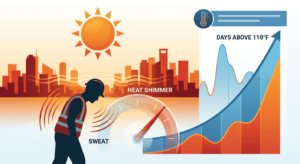
Phoenix Attic Heat: What Homeowners Need to Know About Remodeling and Heat Load
Home remodeling in Phoenix, Arizona, presents unique challenges due to the extreme desert climate, especially the intense attic heat load. This pervasive heat directly impacts a home's interior comfort, energy consumption, and the long-term performance of cooling systems. Understanding these critical factors is vital for any homeowner planning renovation projects, particularly those involving modifications to walls, ceilings, or the building envelope. This comprehensive report provides an overview of the issues caused by Phoenix's unparalleled attic heat, its implications for electrical costs and indoor comfort, and effective strategies to address these problems strategically during interior remodels.
The urgency to manage attic heat has intensified significantly in recent years. With Phoenix experiencing a record 70 days at or above 110°F in 2024, far exceeding historical averages, attics are hotter for longer periods, placing unprecedented strain on residential cooling systems. Older homes, often built with inadequate insulation levels (R-11 to R-19) compared to today's recommended R-38 to R-60, are particularly vulnerable. This report delves into how poorly insulated attics act as massive radiant heaters, contributing up to 80% of a home's cooling energy consumption and leading to uncomfortably hot interior spaces and exorbitant utility bills. By recognizing these challenges, homeowners can make informed decisions to create more comfortable, energy-efficient, and resilient living spaces during their renovation journeys.
Key Takeaways: Navigating Phoenix's Extreme Attic Heat
- Phoenix attics regularly hit 160°F or more, acting as a massive radiant heater for living spaces below.
- The city saw a record 70 days over 110°F in 2024, intensifying and prolonging attic heat stress on homes.
- Cooling accounts for 70-80% of annual HVAC energy in Phoenix; managing attic heat is critical for cost savings.
- Many older homes have sub-standard R-11 to R-19 insulation; R-38 to R-60 is now recommended.
- Interior remodels, especially when opening walls, can expose new heat pathways if not properly insulated.
- Effective upgrades like radiant barriers and ventilation can reduce heat gain by 33-50% and lower attic temps by 10-25°F.
- Investing in proper attic insulation often has a quick 3-5 year payback period through reduced energy bills.
Home remodeling in Phoenix, Arizona, presents challenges due to the extreme desert climate, especially the intense attic heat load. This heat directly impacts a home's interior comfort, energy consumption, and the performance of cooling systems. Understanding these factors is vital for homeowners planning renovation projects, particularly those involving modifications to walls or ceilings. This section provides an overview of the issues caused by attic heat, its implications for electrical costs and indoor comfort, and strategies to address these problems during interior remodels.
Phoenix's Extreme Attic Heat: A Major Household Challenge
Attics in Phoenix reach very high temperatures during the summer months. When outside temperatures hit 115°F, attic air can rise to about 160°F (71°C)[2]. This creates an oven-like environment directly above living spaces, radiating heat downward and forcing air conditioning units to work much harder to keep the home cool. The intense summer heat in Phoenix is increasing, placing more strain on homes. In 2024, Phoenix experienced 70 days with temperatures at or above 110°F, marking the highest number ever recorded in a single year[1]. In contrast, the average number of such days between 1991 and 2020 was only about 21 per year[3]. This significant rise in extreme heat means attics are hotter for longer periods, increasing the cooling demand on homes and highlighting the importance of better insulation and design.
The attic is a primary source of heat intrusion. Without sufficient insulation, an attic heated to 130-160°F acts as a large radiant heater, warming the ceiling and rooms below continuously[11]. Homeowners often report that inadequate attic insulation leads to uneven room temperatures and air conditioning units running without pause on hot days to maintain comfort. For instance, in poorly insulated two-story homes, upstairs rooms can be 5-15°F hotter than lower floors during summer[4]. This temperature difference shows that heat from the attic is making the upper level much warmer.
The impact of this heat is most apparent in energy consumption. Air conditioning is the largest energy expense for Phoenix homes, accounting for an estimated 70-80% of annual HVAC energy use for cooling[10]. During peak summer months, cooling can make up 40-60% of a home’s electricity bill[5]. Attic heat directly contributes to these high costs by requiring air conditioning units to operate harder and for longer periods.
Many older homes in Phoenix are not equipped to handle current heat levels. Houses built before 2000 often have only R-11 to R-19 attic insulation. Current recommendations for this climate are R-38 to R-60[4]. This means older attics often have less than half the recommended insulation, allowing more heat to enter living areas. The attic is often the primary source of energy loss in homes, particularly in Phoenix’s desert climate[12].
Ductwork and air leaks exacerbate the problem. Many Phoenix homes have air conditioning ducts in the attic. If these ducts leak or are not insulated, 25-40% of the cooled air can be lost to the attic before reaching the rooms[6]. This inefficiency, common in older homes, results in higher indoor temperatures and wasted energy. Sealing ducts and improving insulation during a remodel can significantly improve air conditioning performance.
Interior remodels can also expose new heat issues. When walls are opened or ceilings are raised, this can bring attic space into the living area. If this space is not insulated to at least R-38 at the roofline, the larger exposed roof area can increase cooling needs[14]. Any remodel that changes the building envelope in Phoenix must include a plan for managing intense attic heat. Otherwise, the newly renovated space may become difficult to keep cool.
Effective upgrades can reduce heat gain. Radiant barriers, which are foil insulation installed under the roof, can reduce heat flow from the attic to the house by up to 50% in summer[7]. Improving attic ventilation, such as adding ridge vents or solar attic fans, can lower attic air temperatures by 10-25°F[8]. These measures help keep the home cooler and reduce the strain on air conditioning units.
Upgrading attic insulation provides immediate benefits. The main utility in Phoenix, SRP, estimates that proper attic insulation can cut cooling and heating costs by about 10%[9]. Local contractors suggest that a ~$2,000 attic insulation project often pays for itself within 3-5 years through lower energy bills[13]. This short payback period indicates the long-term benefits.
Building codes now require better insulation. Phoenix’s 2024 building code mandates R-38 or higher attic insulation for new construction and major renovations[15]. Previous codes often only required R-19 insulation. City studies show that increasing attic insulation from R-19 to R-38 cuts heat transfer by roughly half and lowers cooling costs by 10-15%[16]. For homeowners remodeling older properties, bringing insulation up to code can significantly reduce air conditioning use and improve comfort. This aligns homes with current efficiency standards.
Key Data and Findings on Attic Heat
Research provides specific data points that highlight the severe attic heat problem in Phoenix and the benefits of mitigation strategies. These figures underscore why homeowners should prioritize attic heat management during remodels.
The table below summarizes key data:
| Metric | Value/Observation | Source | Implication |
|---|---|---|---|
| Peak Attic Temperature | 160°F on a 115°F day | Arizona Air Cleaners[2] | Attics act as a "furnace" above living spaces, requiring high R-value insulation. |
| Days over 110°F (2024) | 70 days (record high) | AP News[1] | Attics are exposed to extreme heat for far longer periods than historically, stressing AC systems. |
| Old Attic Insulation (1970s-1990s) | R-11 to R-19 | Arizona Attic Pros[4] | Significantly less than today's recommended R-38 to R-60, meaning high heat penetration. |
| Upstairs vs. Downstairs Temp Difference | 5-15°F hotter upstairs | Arizona Attic Pros[4] | A strong indicator of attic heat problems and inadequate insulation. |
| Cooling % of HVAC Energy Use | 70-80% in Phoenix | Arizona HVAC Authority[10] | Minimizing attic heat directly addresses the largest portion of home energy consumption. |
| Duct Leakage Losses | 25-40% of cooled air wasted | Insulation Contractors of AZ[6] | Significant energy loss and reduced cooling efficiency due to unsealed ducts in hot attics. |
| Radiant Barrier Heat Reduction | 33-50% less heat flow through ceiling | DOE Study via AtticFoil[7] | Radiant barriers can significantly decrease the amount of heat entering the home from the attic. |
| Attic Ventilation Temp Drop | 10-25°F in attic air | Arizona Attic Pros[8] | Improved ventilation reduces the "oven effect" in attics, leading to cooler ceilings. |
| AC Cycling Rate (Summer) | 15-20 cycles per day | Phoenix Home Remodeling[17] | Frequent cycling indicates the AC struggles against heat gain, causing wear and high costs. |
| Summer Energy Bills (Cooling) | ~50% of total electricity bill | Phoenix Home Remodeling[5] | Attic heat directly translates to high cooling costs; upgrades offer substantial savings. |
| Insulation Upgrade Payback | 3-5 years | Insulation Contractors of AZ[13] | Quick return on investment for attic insulation, making it a cost-effective upgrade. |
| New Code Requirement (2024) | R-38 attic insulation | City of Phoenix Building Code[15] | Mandates higher insulation levels for new construction and major renovations, reflecting its importance. |
| Roof Surface Temperature (Black Shingle) | 170-180°F | Phoenix Home Remodeling[18] | Extreme roof temperatures drive increased attic heat, emphasizing cool roof strategies. |
Main Insights: Critical Aspects of Attic Heat
1. Phoenix’s Attic Heat Load: Why It’s a Big Deal
In Phoenix, attics become extremely hot during summer. Temperatures can reach 140-160°F by midday[2], as the desert sun heats roof surfaces to over 170°F[18]. To put this in perspective, 160°F is hot enough to cook food slowly. This extreme heat creates a constant high-temperature layer above living spaces, and it continually tries to transfer heat downward. This is a challenge specific to hot climates. Without proper insulation, an attic at 150°F radiates heat through ceilings and walls, raising indoor temperatures[11]. A warm ceiling on a summer afternoon directly indicates heat entering the living space from the attic. This turns the attic into a radiant heater, leading to stifling conditions, especially in rooms below it.
Attic temperatures peak in the late afternoon (3-5 PM) at around 150-160°F[19]. This timing coincides with peak outdoor temperatures and sun exposure, meaning air conditioning systems battle heat from both the outside and the attic simultaneously. This attic heat load contributes directly to afternoon air conditioning spikes, straining both home HVAC systems and the electrical grid during peak hours.
Phoenix summers are becoming longer and hotter. Climate data show about 8 extra days of extreme heat compared to 1970[20]. For example, 2024 saw 70 days over 110°F, a record[21]. More hot days mean attics act as furnaces for more hours and days. Attics do not cool much at night, often remaining above 100°F into the evening. This extended heat exposure makes attic insulation and ventilation more critical than in years past. Without upgrades, older homes, designed for shorter heat waves, are now under-insulated for the current Phoenix climate.
The attic is identified as the single largest source of unwanted heat gain in homes[12]. In Phoenix, heat descends from the attic, unlike in winter when heat escapes. Of all potential areas of heat loss or gain, the attic is usually the top concern in this climate. Addressing attic heat provides the most significant improvement for the cost. If a homeowner experiences high cooling bills or hot rooms, the attic is the first area to examine. Phoenix Home Remodeling, and other local contractors, recognize the importance of attic fixes during renovations. Ignoring the attic means comfort and efficiency problems will likely remain, even after other remodeling work.
2. Effects on Interior Comfort, AC Performance, and Bills
An overheated attic leads directly to uncomfortably hot indoor rooms, particularly on upper floors. Upstairs bedrooms can be 5-10°F warmer than downstairs rooms during summer[22]. This temperature difference happens because the attic radiates heat into the space below. For example, a master bedroom ceiling might be 85°F if the attic above it is 150°F, even if the thermostat is set to 77°F. Vaulted ceilings or rooms directly under the roof also receive the most heat. This leads to comfort issues, with certain rooms being consistently hot and failing to reach the set air conditioning temperature. Without addressing attic heat, an interior remodel could worsen these hot spots if it increases exposure to the attic or roof.
A poorly insulated attic makes the air conditioner struggle. The AC may run almost constantly on hot days and still not keep up. Indicators include the AC failing to reach the set temperature or cycling on and off repeatedly. In Phoenix, air conditioners can cycle 15-20 times a day during a heat wave[17]. This constant operation signals that the home is gaining heat faster than the AC can remove it, often due to ceiling heat from the attic. Even a strong AC unit will struggle if new heat enters the house through the ceiling every minute. This results in discomfort, extreme wear on the HVAC system, and very high electricity bills.
Attic heat directly causes high energy bills and wasted cooling. If a house cannot retain cool air, the AC consumes more electricity. Approximately half of a typical Phoenix home’s summer power bill is for air conditioning[5]. An improperly insulated or sealed attic allows cool air to escape and heat to enter. Leaky attic ducts can cause 25-40% of cooled air to be lost into the attic[6], which means money is wasted. Many homeowners pay to cool their attics without realizing it. If attic conditions are not improved during an interior remodel, a larger, newly opened space might require even more cooling, leading to higher bills than before. Neglecting attic heat can negate the efficiency gains of other improvements and result in much higher electricity costs.
Heat from the attic often causes uneven cooling within the house. For example, one end of the house might be cool while the other is warm. A Phoenix homeowner once noted that front rooms reached 81°F while back rooms stayed at 76°F with the same air conditioning settings[13]. This can also happen in single-story homes, where a family room with a vaulted ceiling might be warmer than a bedroom. In open-concept remodels, these uneven temperatures can spread. Homeowners might lower the AC setting to compensate, increasing energy use. Addressing attic insulation and airflow is crucial for consistent comfort after remodeling. Otherwise, a newly renovated space might be uncomfortable during peak summer.
Constant high attic heat causes long-term problems for cooling systems. When an air conditioner runs continuously in 110°F-plus conditions, it operates under extreme stress. Components like the compressor and fan work overtime, leading to faster wear and potential overheating. Air conditioning technicians in Phoenix often attribute mid-summer breakdowns to attic heat. Also, if an attic is not properly ventilated, trapped heat can warm AC ducts and mechanical equipment. This means the AC delivers air that is already warm from the attic, or the equipment operates less efficiently. Reducing attic temperatures and insulating ducts creates a more favorable environment for the HVAC system, leading to fewer service calls and a longer lifespan for the AC unit.
3. The Insulation Gap in Phoenix Homes (and How to Fix It)
Many Phoenix homes built before 2000 have insufficient insulation for today's climate. Houses from the 1960s, 70s, or even 80s often have only 2-4 inches of attic insulation, corresponding to R-11 to R-19[23]. In the past, energy codes were less strict in hot climates, and energy was cheaper. This meant builders did not always prioritize thick insulation. However, R-15 or R-19 is not enough to resist Phoenix heat effectively. The U.S. Department of Energy now recommends R-38 or higher for attics in this climate zone[24], which is about 12-14 inches of fiberglass. Many older homes have half or even a quarter of the insulation needed for current extreme temperatures. Sparse or degraded insulation in an attic found during a remodel signals that an upgrade is overdue.
Energy experts in Arizona confirm that R-19 insulation is not enough for summers with temperatures above 110°F[25]. A home with R-19 insulation will still experience significant heat transfer. Upgrading to R-38 or R-49 slows this process dramatically. A study showed that doubling attic insulation from approximately R-19 to R-38 can reduce heat flow by about 50% and significantly lower air conditioning use[16]. The term "R-19 fails" means that even though it was a past code minimum, it does not keep homes comfortable or efficient in Phoenix conditions. Therefore, upgrading attic insulation to modern levels is a wise decision during a remodel. This invisible improvement provides noticeable comfort every summer afternoon.
Even if a home had good insulation when built, it can settle, compress, or degrade over decades. Blown-in insulation can lose depth, and fiberglass batts might shift or be poorly installed after other work. Rodents or pests can also damage insulation, reducing its effectiveness. Insulation professionals state that residential insulation 20-30 years old may perform at a much lower R-value due to compression and gaps[26]. For remodels, this means existing insulation should not be assumed to be adequate. It might be performing at half its original capacity or less. During a remodel, assessing the insulation condition is important. Often, adding a new layer or replacing old, damaged material is the best course of action to restore full insulating power.
While attics are the main focus, other areas may also lack insulation. Many older block homes in Phoenix had no wall insulation. If a renovation involves opening an exterior wall, adding insulation there is an opportunity to improve overall thermal performance. Cathedral ceilings and skylight shafts are also trouble spots. These areas are part of the roof structure directly exposed to the living space and require high insulation levels. Older homes often have thin insulation in these areas. Remodels offer a chance to upgrade the home's "thermal envelope." By addressing insulation wherever walls or ceilings are accessible, homeowners ensure that the new space is thermally upgraded to handle Phoenix heat. This is much easier to do during a renovation than as a later retrofit.
The 2024 Phoenix building code now requires R-38 in attics for new construction and major renovations[15]. Even without this mandate, choosing R-38 or higher provides significant benefits. The difference between a poorly insulated attic and a well-insulated one is substantial for interior comfort. Homeowners who upgraded report their homes stay cooler longer, and the air conditioner runs less often. The house can be, for instance, 5°F cooler inside by 3 PM after an R-38 upgrade. This leads to considerable savings; utility data suggest increasing insulation from R-19 to R-38 can reduce cooling costs by 10-15%[16]. Over several Phoenix summers, this amounts to significant savings. Modern insulation types, like spray foam or blown-in cellulose, can also improve air sealing, further reducing heat intrusion. In essence, closing the insulation gap during remodels is crucial for mitigating attic heat by slowing heat flow into the home.
4. Ventilation and Radiant Barriers: Attic Cooling Strategies
Improving attic ventilation is an important strategy to reduce attic heat. Many older homes in Phoenix have poor ventilation, such as blocked soffit vents. This causes attic air to become stagnant and hot. Increasing ventilation, through added vents or continuous ridge vents, can lower peak attic temperatures. While not a complete solution, a 10-20°F drop in attic air temperature can significantly improve conditions[8]. Attic fans, either electric or solar-powered, actively remove hot air and draw in cooler outside air. Solar attic fans are popular in Phoenix because they operate most effectively when the sun is brightest and heat is highest. Case studies show that a solar attic fan combined with good vents reduced attic temperatures by about 15°F, making upstairs rooms cooler[8]. Proper installation is critical to prevent drawing conditioned air from the house. When done correctly, ventilation significantly reduces the "oven effect" in the attic by constantly exchanging hot air.
Radiant barriers are another effective tool in hot climates. These are typically foil-faced materials installed under the roof deck or rafters. Instead of resisting heat conduction, radiant barriers reflect infrared heat from hot roof materials. The sun heats the roof, and much of this heat radiates inward. A foil barrier can reflect approximately 90% of this radiation upward, preventing it from heating the attic air. Department of Energy tests found that attics with foil radiant barriers experienced about 30-50% less heat flow through the ceiling on sunny days[7]. Homeowners in Phoenix who have added radiant barriers report noticeable improvements, with attics being less intensely hot and houses feeling cooler. One homeowner observed a drop in attic temperatures from 145°F to 106°F after installing a radiant barrier[13]. Combining radiant barriers with good insulation provides a dual defense against heat: the barrier reflects heat, and the insulation slows heat that penetrates. During Phoenix remodels, especially if the roof is accessible, installing a radiant barrier can be a smart, cost-effective upgrade to significantly reduce attic heat.
The concept of a "cool roof" is related to radiant barriers. Cool roofs use materials that reflect more sunlight and absorb less heat, such as white coatings or reflective shingles. A dark asphalt roof might absorb 90% of solar energy, while a cool roof can reflect half of it. In Phoenix, this can lower the roof surface temperature by over 30°F, which in turn reduces attic temperatures. Homes with cool roofing materials have noticeably cooler attics. During an interior remodel, if re-roofing is part of the project, choosing high-reflectance roofing is an excellent heat mitigation step. It addresses the heat problem before it enters the attic, can extend the roof’s life, and may qualify for utility rebates.
Air sealing complements insulation and ventilation by plugging leaks that allow hot attic air to enter the home. Common leak points include recessed light fixtures, electrical penetrations, and attic access hatches. Recessed lights can act as small chimneys for hot air. During a remodel, new or existing penetrations should be properly sealed, or insulation-contact airtight (ICAT) fixtures should be used. Even small gaps can collectively create a significant opening for heat. Sealing these openings with caulk, foam, or weatherstripping prevents heat convection from the attic into the living space. Air sealing, combined with insulation, ensures the full benefit of attic upgrades. Otherwise, even high R-value insulation can be undermined by a few unsealed holes. In Phoenix remodels, it is important to make the attic airtight in addition to insulating it. Many contractors, including Phoenix Home Remodeling, integrate air-sealing into their renovation processes to ensure conditioned air stays within the living space.
Attached garages and ancillary spaces are often overlooked. An attached garage in Phoenix can become a source of extreme heat. If not insulated from the living areas, it can transfer heat into the house through shared walls or the attic. Remodels involving the garage should treat the interface between the garage and home as an exterior wall, insulating and air-sealing it thoroughly. Similarly, if an attic extends over both conditioned and unconditioned parts of the house, an air barrier is needed over the conditioned space. The principle is to fully contain the cooled space from any uncooled areas. Attic heat will exploit any gaps, so every boundary, whether a ceiling or an attic knee-wall, needs attention in a hot climate renovation.
5. Remodeling with Attic Heat in Mind: Best Practices for Phoenix Homeowners
Homeowners should plan for insulation upgrades as part of any interior remodel. If drywall is removed or new rooms are added, an attic insulation check should be an early step. Budget for upgrading insulation to at least R-38, which is now code in Phoenix[15]. This cost is relatively small compared to a major remodel, and it is much easier to do when areas are already accessible. Phoenix Home Remodeling finds that many clients are surprised by the minimal or absent insulation in walls and attics once opened. Addressing this during construction avoids rework later. This could involve blowing in insulation after electrical and HVAC rough-ins, or installing batts before drywall. The goal is to ensure the renovated interior is also thermally prepared for Phoenix’s heat.
Attic solutions should be integrated into the design process. Homeowners should work with designers or contractors who understand the local climate specifics. For instance, if vaulting a ceiling or adding a skylight, discuss insulation and ventilation strategies. A good design-build contractor in Phoenix might suggest spray foam insulation at the roofline for vaulted ceilings to achieve high R-value in limited spaces, or light tubes with heat-reflective coatings instead of traditional skylights. For open-concept living areas, HVAC implications should be considered, such as adding an extra air conditioning return or relocating a thermostat to account for altered airflow patterns. Smart remodeling combines aesthetics with energy efficiency to ensure the space is both appealing and comfortable. Homeowners should openly discuss attic heat and insulation during planning; knowledgeable contractors will appreciate this proactive approach.
Remodels offer an opportunity to fix existing hot spots. If a master bedroom was always hot or a section of the house struggled to cool, these issues should be addressed during renovation. Solutions might include adding another air vent, upsizing a duct, or installing a return vent for better circulation. Installing a radiant barrier over specific attic sections or increasing insulation above problem rooms can also help. For example, a family in Chandler performing a kitchen remodel also had additional insulation blown over their west-facing bedrooms, solving a long-standing heat problem. The low incremental cost of these fixes during renovation, when areas are exposed, provides a large payoff in comfort during peak summer. This means a remodel also changes the home's appearance but also significantly improves its livability in Phoenix’s heat.
Phoenix homeowners can use energy rebates and incentives to offset costs. Utilities like SRP and APS offer programs for energy-efficient upgrades. SRP provides an insulation rebate program that covers up to $600 of attic insulation upgrade costs[9]. They estimate about 10% cooling cost savings from proper insulation. Rebates are also available for high-efficiency air conditioning units, smart thermostats, and sometimes radiant barriers. Checking these programs during remodel planning can reduce costs. An extra $500 from a rebate could allow for better insulation or a solar attic fan. These incentives help reduce upfront costs for efficiency improvements, providing both immediate and long-term savings. Many contractors, including Phoenix Home Remodeling, assist clients in applying for these rebates.
A professional home energy evaluation before starting renovations can be beneficial. Energy auditors in Phoenix use tools like blower door tests and thermal imaging to identify areas of heat leakage in attics or walls. This information is valuable for targeting specific problem areas during a remodel. Some audit programs are subsidized by utilities. Identifying issues in advance allows for precise fixes during renovation. After the remodel, a follow-up energy test can measure the improvements. Treating a remodel as a chance to improve overall home performance results in a more comfortable, efficient, and valuable home. The best practices involve insulating well, sealing tightly, and ventilating correctly. Homeowners in Phoenix who follow these principles find their homes stay cooler, their air conditioning runs less, and their energy bills decline, even as summers become hotter.
Understanding and addressing attic heat load is central to successful interior remodels in Phoenix. By implementing comprehensive strategies for insulation, ventilation, and air sealing, homeowners can create spaces that are also aesthetically pleasing but also significantly more comfortable and energy-efficient against the region's extreme heat.

2. Phoenix Attic Heat: A Unique Problem
Phoenix is a city defined by its heat. The desert climate presents specific challenges for residential buildings, particularly for managing heat intrusion from attics. During the long summer months, an attic in Phoenix does not simply get warm; it transforms into a heat reservoir, exerting constant thermal pressure on the living spaces below. This section explores the specifics of this problem, detailing the extreme temperatures involved, the historical and projected increase in intense heat days, and the significant impact this attic heat load has on indoor comfort, air conditioning performance, and household energy costs. Understanding these dynamics is crucial for any homeowner considering an interior remodel, as changes to the home's structure can either worsen or mitigate this heat transfer. Ignoring the attic in Phoenix is akin to ignoring the foundation of a home; it may not be visible, but its condition dictates the integrity and liveability of the entire structure.
The Extreme Environment of a Phoenix Attic
The temperatures inside Phoenix attics during the summer months are remarkably high, often far exceeding outdoor air temperatures. When outside temperatures reach 115°F, attic air can soar to approximately 160°F (71°C) [2]. This creates an oven-like environment directly above residential living areas. The primary cause of this extreme heat is the intense solar radiation absorbed by the roof surface. Dark shingle roofs, common in Phoenix, can reach surface temperatures of 170-180°F under direct sunlight [14]. This heat then transfers into the attic space through conduction and radiation. The enclosed nature of an attic, combined with inadequate ventilation, traps this heat, preventing it from dissipating effectively. This constant layer of super-heated air effectively turns the attic into a giant radiant heater, continuously pushing heat downward into the home's conditioned spaces [11].
This situation is further intensified by the growing number of extreme heat days experienced in Phoenix. In 2024, the city recorded a record 70 days with temperatures at or above 110°F [1]. This represents a substantial increase over the historical average of around 21 such days per year between 1991 and 2020 [3]. This threefold rise means that attics are subjected to extreme heating conditions more frequently and for longer durations. These extended periods of high heat stress air conditioning systems and underline the importance of strong thermal protection [3]. As a result, homes that were built to withstand historical climate patterns are now often under-insulated for the current reality of Phoenix summers.
The impact of this attic heat is not abstract; it directly affects energy consumption. Air conditioning represents the single largest energy expense for Phoenix homes, accounting for an estimated 70-80% of annual HVAC energy use [10]. During peak summer months, cooling alone can constitute 40-60% of a household's electricity bill [4]. High attic temperatures increase the cooling load, forcing air conditioners to work harder and run longer to maintain desired indoor temperatures. This constant battle against heat intrusion leads to higher energy bills, increased wear and tear on HVAC equipment, and reduced indoor comfort.
The attic is recognized by experts as the primary source of energy loss in homes within Phoenix's desert climate [12]. Without sufficient insulation, an attic maintaining temperatures of 130-160°F acts as a persistent radiant heat source, warming ceilings and rooms below continuously [11]. This often results in uneven room temperatures and air conditioning units running non-stop on hot days to merely keep pace with the heat gain.
The Insulation Gap: Older Homes vs. Modern Needs
A significant factor contributing to Phoenix's attic heat problem is the age of much of its housing stock. Many homes constructed before 2000 feature attic insulation levels that are inadequate by today's standards. Historically, common insulation levels ranged from R-11 to R-19 [3]. In contrast, current recommendations for this climate zone (2B) are R-38 to R-60 [3]. This means older homes frequently possess less than half the ideal insulation required to effectively resist the intense heat of Phoenix summers [3]. The direct consequence of this insulation shortfall is that more heat permeates the living spaces, leading to warmer indoor temperatures and increased reliance on air conditioning.
The disparity in insulation levels often manifests as noticeable temperature differences within the home, particularly in multi-story residences. Upstairs rooms in poorly insulated homes can be 5-15°F warmer than lower floors during summer [3]. This temperature differential serves as a clear indicator that attic heat gain is overwhelming the home's thermal defenses and the cooling system. One Phoenix homeowner reported that even with a thermostat set to 76°F, the front rooms of their 1970s ranch house would reach 81-82°F during summer afternoons [13]. This stratification of heat diminishes comfort and increases cooling demands.
| Construction Era | Typical Attic R-Value | Approximate Insulation Depth (Fiberglass) | Effectiveness in Phoenix Summer |
|---|---|---|---|
| Before 2000 (e.g., 1970s-1990s) | R-11 to R-19 [3] | 3.5 to 6 inches | Poor; "fails in Arizona" [4] |
| Current Recommendation (DOE) | R-38 to R-60 [3] | 12 to 18 inches | Good; significantly reduces heat transfer |
| 2024 Phoenix Code | R-38 minimum [8] | 12 inches minimum | Improved; cuts heat flow by ~50% from R-19 [8] |
The construction standards reflected evolving understanding and energy costs. When energy was less expensive, and extreme heat days were fewer, builders did not prioritize thick insulation. However, energy professionals in Arizona now state that R-19 insulation is simply not sufficient for the current climate, especially with outside temperatures routinely exceeding 110°F [4]. Doubling attic insulation from R-19 to R-38 can reduce heat flow through the attic floor by roughly 50% and significantly lower AC usage [5].
Beyond initial installation levels, existing insulation can degrade over time. Blown-in insulation may settle, reducing its effective R-value, while fiberglass batts can become compressed, shifted, or damaged by various factors, including pest activity or poor installation during subsequent home repairs [2]. This means that even if a home’s insulation was originally adequate, it might be performing at a fraction of its capacity decades later. Any interior remodel that exposes the attic or ceiling offers a prime opportunity to assess and upgrade insulation, ensuring that the living space is adequately protected from the intense conditions above.
Impact on Home Comfort, AC Performance, and Energy Bills
The ramifications of high attic heat directly permeate the daily experience of Phoenix homeowners:
- Reduced Interior Comfort: Overheated attics directly lead to uncomfortably hot indoor rooms, particularly on upper floors. It is common for upstairs bedrooms to be 5-10+°F warmer than downstairs areas [3]. Ceilings can feel warm to the touch, and rooms directly under the roof may feel stifling, even when the thermostat is set to a comfortable temperature. This uneven heating means certain areas remain persistently warm, leading to discomfort and complaints.
- Constant AC Operation: A poorly insulated attic causes the air conditioning system to work continuously, often struggling to reach or maintain the set temperature. Indications of this struggle include the AC running nearly non-stop and cycling on and off 15-20 times per day during heatwaves [5]. This signifies that the home is gaining heat faster than the AC can remove it, placing enormous stress on the HVAC system and shortening its lifespan.
- Elevated Energy Bills and Wasted Cooling: The constant operation of air conditioning units to counter attic heat results in significantly higher electricity bills. In Phoenix, approximately half of a home’s summer electricity bill is attributed to air conditioning [4]. Heat and air leaks from the attic can be a major source of wasted energy. For example, leaky ductwork running through a hot attic can lose 25-40% of cooled air before it ever reaches the living spaces [4]. This means homeowners are effectively paying to cool their attics.
- Uneven Temperatures: Attic heat often causes inconsistent cooling throughout the house. One section of the home might be cool, while another portion (e.g., west-facing rooms, rooms with vaulted ceilings) remains warm [13]. This can lead to occupants turning the AC thermostat lower to cool the warm areas, which then overcools other parts of the house and drives up energy use.
- HVAC System Strain: The persistent demand placed on air conditioning units by high attic heat contributes to accelerated wear and tear on components like compressors and fans. Operating under extreme stress in 110°F+ conditions can lead to more frequent breakdowns and a reduced lifespan for the entire HVAC system [5]. If air handlers or ductwork are located in the attic, the efficiency of the system is also compromised, as it delivers air that has been warmed by the attic environment.
Mitigating Attic Heat: Solutions for Phoenix Remodels
Addressing attic heat during a remodel is a critical investment in a home’s long-term comfort and efficiency. Several proven strategies can significantly reduce heat transfer:
Attic Insulation Upgrades
Upgrading attic insulation is the most fundamental step. Many older homes have only R-11 to R-19 insulation [3], which is grossly insufficient for Phoenix. The 2024 Phoenix building code now mandates a minimum of R-38 insulation for new construction and major renovations [8]. This increase is projected to reduce heat flow through the ceiling by approximately 50% and lower cooling costs by 10-15% compared to R-19 [8]. Investing in R-38 or higher (up to R-60 recommended by the DOE [3]) insulation provides a quick return on investment, with typical payback periods of 3-5 years through energy savings [4]. For example, Salt River Project (SRP) estimates that proper attic insulation can cut cooling and heating costs by 10% [9] and offers rebates of up to $600 for insulation upgrades [9].
Attic Ventilation
Adequate attic ventilation helps purge hot air, reducing overall attic temperatures. Many older homes suffer from blocked soffit vents or insufficient exhaust ventilation, leading to stagnant, superheated air. Improving ventilation through solutions like continuous ridge vents or solar-powered attic fans can lower attic air temperatures by 10-25°F [3]. In one notable case, a Phoenix homeowner significantly reduced their attic peak temperatures from 145°F down to 102°F by combining a radiant barrier, additional insulation, and a solar attic fan [13]. Active ventilation, particularly solar fans, work most effectively during peak sun, when attic temperatures are highest [3].
Radiant Barriers
Radiant barriers, typically foil-faced materials installed under the roof deck or rafters, work by reflecting infrared heat. They prevent the radiant heat from the sun-baked roof from transferring into the attic air and downward into the living space. Studies by the U.S. Department of Energy have shown that a foil radiant barrier can reduce heat flow from the attic floor into the house by approximately 33-50% on sunny days [7]. Combining a radiant barrier with good insulation creates a layered defense against heat, with the barrier reflecting a large portion of heat away and the insulation slowing down any heat that manages to pass through.
Air Sealing
Beyond insulation, air sealing is critical to prevent hot attic air from infiltrating the conditioned living spaces. Common points of air leakage include recessed light fixtures, gaps around electrical and plumbing penetrations, and poorly sealed attic access hatches. These openings act as direct pathways for hot air. Sealing these gaps with caulk, foam, or weatherstripping prevents convective heat transfer, enhancing the effectiveness of insulation. Ignoring air sealing can negate the benefits of even high R-value insulation [4].
Cool Roof Materials
While not strictly an attic component, cool roof materials directly impact attic heat load. These materials, such as light-colored coatings or reflective shingles, absorb less sunlight and reflect more solar radiation than traditional dark roofs. This can reduce roof surface temperatures by 30°F or more [14], which in turn significantly lowers the heat entering the attic. Homeowners undertaking a re-roofing project as part of a remodel should consider cool roof options as an upfront heat mitigation strategy.
The Pulte Homes Attic Design Experiment in Las Vegas demonstrated the effectiveness of advanced attic designs. By converting a conventional vented attic to an unvented, sealed, and insulated (cathedralized) attic, cooling energy use was reduced by approximately 10% compared to a conventional attic with typical duct leakage [6]. In the sealed attic design, the attic air temperature stayed closer to indoor temperatures, highlighting the benefits of bringing the thermal envelope to the roofline, especially when HVAC ducts are located in the attic.
Remodeling with Thermal Performance in Mind
Interior remodels provide a unique opportunity to address these thermal deficiencies. When walls or ceilings are opened, access to the attic, wall cavities, and ductwork becomes much easier than during a retrofit. This is the ideal time to inspect existing insulation, identify air leaks, and install upgrades. For example, if a homeowner plans to vault a ceiling, it becomes imperative to properly insulate the new roofline with an appropriate high R-value material, such as spray foam, to prevent a significant increase in cooling load [14]. Projects that do not account for attic heat during structural alterations risk creating new hot spots or exacerbating existing comfort and energy issues [5].
Phoenix Home Remodeling, alongside other local contractors, understands that successful remodels in this climate go beyond aesthetics. They often integrate home performance assessments into their planning process to ensure that new interiors are also visually appealing but also comfortable and energy-efficient. This includes advising clients on the current R-value requirements, identifying areas for air sealing, and recommending strategic ventilation improvements or radiant barrier installations.
Ultimately, a deep understanding of Phoenix’s unique attic heat challenges is fundamental for any homeowner contemplating renovations. By acknowledging that the attic is a major determinant of a home’s thermal performance and by proactively integrating heat mitigation strategies into remodel plans, homeowners can achieve lasting comfort, lower energy bills, and a more resilient living environment. The focus on "Opening a Wall" should extend to "Closing the Heat Gap" while that wall is open, transforming a potentially problematic part of the home into a well-protected space.

3. Impact on Home Comfort, AC Performance, and Energy Bills
In Phoenix, the attic is not merely a storage space; it functions as a critical thermal buffer between the intense desert sun and the home's living areas. When this buffer fails, the consequences directly affect indoor comfort, the performance of air conditioning systems, and household energy expenses. The extreme heat experienced in Phoenix attics creates a substantial heat load that infiltrates living spaces, forcing cooling systems to operate continuously, driving up electricity costs, causing uneven temperatures throughout the home, and placing significant strain on HVAC equipment. Understanding this interaction is key for homeowners, especially when planning interior remodels that might affect the home's thermal envelope.
Phoenix's climate presents a unique challenge: during summer, outdoor temperatures can reach 115°F, but attic temperatures commonly soar to 160°F (71°C)[2]. Dark shingle roofs can heat up even further, reaching 170-180°F under direct sun[14]. This creates an oven-like environment directly above the occupied spaces. The record 70 days with temperatures above 110°F in 2024, compared to a historical average of 21 days annually, shows a clear trend of increasing heat intensity and duration[1][5]. This extended period of high heat means attics are hotter for longer, and homes must resist heat gain more persistently than in previous decades.
Air conditioning is the largest energy consumer in Phoenix homes, accounting for 70-80% of annual HVAC energy use[10]. During peak summer months, cooling can make up 40-60% of a home's electricity bill[5]. Attic heat directly contributes to these costs by making AC units run harder and longer. Many older homes, built before 2000, have only R-11 to R-19 attic insulation, far below the current recommendation of R-38 to R-60 for the Arizona climate[3]. Some homes have less than half the insulation needed, allowing significant heat transfer into living areas. This often results in upstairs rooms being 5-15°F hotter than lower floors during summer[3], a direct symptom of inadequate attic insulation.
Beyond insulation, other factors contribute to the problem. Leaky or uninsulated ductwork in attics can lose 25-40% of cooled air before it reaches living spaces[4]. Furthermore, interior remodels that open up walls or raise ceilings can expose more living space to attic heat if thermal barriers are not properly planned. The following sections will analyze these impacts in detail and examine specific solutions.
The Overheated Attic: A Primary Source of Discomfort and Energy Waste
In Phoenix, the attic serves as the primary barrier against the summer heat. However, inadequate insulation and ventilation often turn this barrier into a heat source itself. The data clearly shows that attics in this region frequently become extremely hot, creating a substantial burden on homes. Peak attic temperatures can reach 160°F (71°C) on a 115°F day[2], and roof surfaces can be even hotter, at 170°F or more[5]. This extreme heat above living spaces acts like a massive radiant heater, continuously transferring heat downwards into the home. For Energy, an energy upgrade company, notes that attics can reach 140-180°F without proper ventilation, radiating intense heat into the living areas and causing AC systems to work much harder[11].
This heat transfer happens through conduction and radiation. The hot attic air heats the ceiling materials (drywall, joists), which then radiate heat into the rooms below. Homeowners often report feeling their ceilings warm to the touch, a clear sign of this thermal bypass. The problem is exacerbated in older homes, which frequently lack the necessary insulation levels. Many homes built before the 2000s in Phoenix were constructed with as little as R-11 to R-19 attic insulation[3]. Current recommendations, however, are R-38 to R-60 for this climate zone[3]. This means older homes typically have less than half the insulation coverage needed to combat today's extreme heat effectively.
The impact of this "attic oven" is profound:
- Uncomfortable Indoor Temperatures: The most immediate effect is that rooms become uncomfortably hot, especially on upper floors. Arizona Attic Pros reported that poorly insulated two-story homes can have upstairs rooms that are 5-15°F hotter than downstairs areas in summer[3]. This temperature difference often renders upstairs bedrooms unusable during peak heat without excessive AC usage.
- AC Overload and Continuous Operation: When heat constantly radiates from the attic, the air conditioning system struggles to maintain the desired indoor temperature. It operates nearly non-stop during hot days and may still fail to reach the thermostat setting. Phoenix Home Remodeling research indicates that AC units can cycle 15 to 20 times in a single day during a heat wave[5]. Such frequent and prolonged operation puts immense stress on the unit.
- Elevated Energy Bills: The non-stop operation of the AC directly translates into higher electricity consumption. Cooling is already the largest energy expense for Phoenix homes, often accounting for 40-60% of summer bills[5]. Attic heat directly inflates these costs by increasing the cooling load the AC must overcome.
- Uneven Temperatures: Even in single-story homes, an overheated attic can lead to uneven cooling. Certain rooms, particularly those under areas of the roof with higher solar exposure or thinner insulation, may remain noticeably warmer than others. This creates "hot spots" that compromise overall home comfort.
- HVAC System Strain: The constant demand and cycling caused by high heat loads shorten the lifespan of AC units. Components like compressors and fans wear out faster under extreme operating conditions, leading to more frequent repairs and earlier replacement costs. Hot attics also affect any ductwork or air handler units located within them. If ductwork is uninsulated or leaky, cooled air can be lost into the hot attic, requiring the AC to work even harder[4].
The severity of this issue is growing. Phoenix experienced a record 70 days over 110°F in 2024, far surpassing the historical average of about 21 days annually[1]. This trend means attics are exposed to extreme temperatures more often and for longer durations, intensifying the cooling challenge for homes. As Callway Cooling (a local HVAC contractor) notes, the attic is often the number one source of energy loss in Phoenix homes[12]. Addressing attic heat is therefore paramount for achieving comfort and energy efficiency.
The Insulation Gap: Why Older Homes Struggle and What Modern Standards Demand
The core of Phoenix's attic heat problem lies in the significant disparity between historical and current insulation standards. Many homes in the region were built decades ago when energy codes were less stringent and energy costs were much lower. Consequently, these homes are now thermally unprepared for Phoenix's increasingly hot and prolonged summers.
Evolution of Insulation Standards
Insulation is measured by its R-value, which indicates its resistance to heat flow. A higher R-value means better insulating performance.
| Time Period (Approx.) | Typical Attic R-value in Phoenix Area Homes | Implication |
|---|---|---|
| Pre-2000s | R-11 to R-19[3] | Common in many older homes; insufficient for current climate. |
| Current Recommendation (DOE) | R-38 to R-60[3] | Federal recommendation for hot climates like Phoenix. |
| 2024 Phoenix Building Code | R-38 minimum for new construction/major renovations[5] | Legal minimum for new projects, reflecting current knowledge of heat mitigation. |
This table clearly highlights the "insulation gap." Many older homes possess less than half the recommended or legally mandated insulation needed today. For example, Insulation Contractors of Arizona explicitly states that "R-19 fails in Arizona (need R-38+ for 115°F+)"[4]. This means that even if a home’s insulation met the code when built, it is no longer adequate for energy efficiency and comfort in the current climate.
Consequences of Under-Insulation
- Increased Heat Transfer: Lower R-values mean less resistance to heat flow. A thin layer of R-11 or R-19 insulation does little to slow the transfer of heat from a 160°F attic into a 75°F living space. The heat simply conducts through the ceiling more rapidly. A study showed that going from R-19 to R-38 insulation can cut heat flow through the ceiling by about 50%[5].
- Degradation Over Time: Even insulation that was initially R-19 may no longer perform at that level. Blown-in insulation can settle and compress over decades, reducing its effective R-value and creating voids. Fiberglass batts can become displaced, leaving gaps and pathways for heat[3]. Pests or rodents can also damage or contaminate insulation, further lowering its performance. Insulation professionals suggest that after 20-30 years, effective R-value can be significantly reduced due to these factors[2].
- Thermal Bridging: Gaps, air leaks, and areas where insulation is incomplete create "thermal bridges" where heat can easily bypass the insulation. Recessed light fixtures, attic access hatches, plumbing vents, and electrical penetrations are common culprits for air leakage, allowing hot attic air to enter the conditioned space directly, even if the surrounding insulation is adequate.
- Code Compliance During Remodels: With the 2024 Phoenix building code requiring R-38 for major renovations[5], homeowners undertaking significant interior remodels will likely be required to upgrade their attic insulation. This ensures regulatory compliance but also delivers substantial benefits in terms of comfort and energy savings. Phoenix Home Remodeling notes that an upgrade from R-19 to R-38 can lower cooling costs by 10-15%[5].
For homeowners in Phoenix, addressing the insulation gap is often the most impactful step in mitigating attic heat. It directly reduces the amount of heat entering the home, providing a better thermal barrier against the extreme external conditions.
AC Performance and Energy Bills: The Direct Financial and Operational Burden
The impact of attic heat on AC performance and energy bills in Phoenix is significant and quantifiable. Air conditioning is not just a comfort amenity; it is a necessity for health and safety during the long, hot summers. The inefficiency caused by attic heat directly affects homeowner finances and HVAC system longevity.
High Energy Consumption and Costs
- Cooling Dominance: In the Phoenix area, cooling accounts for roughly 70-80% of annual HVAC energy use[10]. This is a dramatic asymmetry compared to national averages, highlighting how the climate dictates energy demand. This means that reducing the cooling load has the largest potential impact on a home's overall energy consumption.
- Summer Bill Proportions: During peak summer months, cooling can make up 40-60% of a home’s electricity bill[5]. For a typical summer bill of $300, $120-$180 could be attributed to running the AC. This substantial portion of the bill is directly influenced by how effectively a home resists heat gain, with the attic being the primary point of entry for heat.
- Wasted Cooling: Poor attic insulation and leaky ductwork mean the AC system is effectively cooling spaces that are not part of the living area. Leaky AC ductwork located in hot attics can waste 25-40% of cooled air[4]. This means that if 100 cubic feet per minute (CFM) of air is leaving the AC unit, 25-40 CFM might be lost into the hot attic before it reaches the rooms. This lost air is energy for which the homeowner pays but receives no benefit in cooling the interior.
HVAC System Overwork and Reduced Lifespan
- Continuous Run Times: When the home continuously gains heat from the attic, the AC unit must run almost constantly to try and maintain the set temperature. Phoenix Home Remodeling's thermal report notes that AC units can cycle 15-20 times in a single day during a heat wave[5]. This sustained operation is taxing on mechanical components.
- Increased Wear and Tear: The constant starting and stopping (cycling) and prolonged operation under extreme outdoor conditions accelerate wear and tear on the AC compressor, motors, and other moving parts. This leads to a shorter operational lifespan for the unit and increases the frequency of breakdowns and maintenance calls.
- Delivering Pre-Heated Air: If AC ducts run through an unconditioned attic, the ducts themselves (even if sealed) can absorb heat from the surrounding 160°F attic air. This means the cooled air traveling through the ducts effectively gets "pre-heated" before it reaches the vents, reducing its cooling capacity and forcing the AC unit to work even harder to compensate.
- Effect on AC Efficiency: Air conditioners operate most efficiently when they can run for longer, steady cycles. Frequent short-cycling is less efficient because the unit uses more energy on start-up than during sustained operation. An AC unit battling high attic heat will often short-cycle, further reducing its efficiency and increasing energy consumption.
The financial return on investment for improving attic performance is often quick. SRP, a major utility in Phoenix, estimates that proper attic insulation can cut cooling and heating costs by about 10% overall[9]. Furthermore, local contractors estimate that an attic insulation job, costing around $1,500-$5,000, typically pays for itself within 3-5 years through energy savings[4]. Given that insulation can last for decades, the long-term savings are substantial. This rapid payback makes attic improvements one of the most cost-effective home energy upgrades in a desert climate.
Solutions to Mitigate Attic Heat During Remodels
Interior remodels offer a prime opportunity to address attic heat issues. Because walls and ceilings may already be open, accessing and upgrading the attic is much more feasible and cost-effective than as a standalone project. Focusing on insulation, ventilation, radiant barriers, and air sealing can lead to significant improvements.
1. Insulation Upgrades
The first and most direct step is to bring attic insulation up to modern standards. Phoenix’s 2024 building code mandates R-38 (roughly 12-14 inches of fiberglass) for new construction and major renovations[5].
- Raising R-value: For homes with R-11 or R-19 insulation, adding new insulation to reach R-38 or R-49 will substantially reduce heat transfer. This can involve blowing in loose-fill fiberglass or cellulose over existing insulation, or installing new batt insulation. A direct benefit is a 10-15% reduction in cooling costs when upgrading from R-19 to R-38[5].
- Addressing Vaulted Ceilings: If an interior remodel includes vaulting a ceiling, this directly exposes the living space to the roof structure. In such cases, insulation must be applied directly to the underside of the roof deck. High-density materials like spray foam insulation are often used to achieve high R-values in the shallower cavity of a vaulted ceiling. Energy Vanguard notes that while more volume doesn't inherently mean more load, a larger exposed roof area can increase cooling loads if not insulated to higher levels[13].
2. Attic Ventilation
Improving attic ventilation helps reduce the temperature of the air trapped in the attic, lessening the overall heat load on the ceiling.
- Traditional Ventilation: This involves ensuring adequate soffit (intake) and ridge or gable (exhaust) vents. Many older homes have blocked soffit vents or insufficient vent area. Part of a remodel can involve clearing soffits and installing continuous ridge vents.
- Active Ventilation: Solar-powered attic fans are effective in Phoenix. They operate when the sun is brightest (and the attic is hottest), actively pulling hot air out and drawing cooler outside air in. Arizona Attic Pros reported that solar attic fans, combined with insulation upgrades, could lower attic temperatures by 10-25°F[3]. This reduces heat radiating into the home and lessens AC run times.
3. Radiant Barriers
Radiant barriers work by reflecting the sun's radiant heat, rather than insulating against conducted heat. This is especially effective in hot climates where a significant amount of heat transfer occurs via radiation from the hot roof into the attic.
- Installation: Radiant barriers, typically foil-faced materials, are installed on the underside of roof rafters. The Department of Energy found that a foil radiant barrier could reduce heat flow from the attic floor by almost 50%[7].
- Complementary to Insulation: While not a replacement for insulation, radiant barriers work effectively with it. The barrier reflects much of the radiant heat, preventing it from ever reaching the insulation, which then deals with the remaining heat. This "double-teaming" strategy significantly reduces the heat load on the living space.
4. Air Sealing
Insulation and ventilation are less effective if hot attic air can directly infiltrate the living space through penetrations in the ceiling.
- Common Leakage Points: Recessed light fixtures, electrical boxes, plumbing and electrical penetrations, and poorly sealed attic access hatches are all common sources of air leaks. These act as direct conduits for hot, unconditioned attic air to enter the home.
- During a Remodel: When engaging in ceiling work, all penetrations can be properly sealed with caulk, expanding foam, or airtight covers for recessed lighting. Ensuring the attic access door or pull-down stairs are properly weatherstripped and insulated is also crucial. Air sealing complements insulation by preventing convection, where hot air physically moves into the cooler interior.
5. Ductwork Improvement
If ductwork runs through the attic, addressing its condition is vital for AC performance.
- Sealing and Insulation: Leaky ducts can lose 25-40% of cooled air into the hot attic[4]. During a remodel, sealing all duct seams and connections with mastic or specialized tape, and then insulating the ducts to prevent heat gain, will drastically improve AC efficiency.
- Relocation (if feasible): In some extensive remodels, it may be possible to relocate ductwork out of the attic and into conditioned spaces (e.g., within dropped ceilings or chases). This completely removes the ducts from the extreme attic environment. The Pulte Homes experiment in Las Vegas showed that encapsulating the attic and including ducts within the conditioned envelope resulted in a 10% reduction in cooling energy use[6].
By integrating these solutions, particularly during a remodel when access is easier, homeowners can transform their home's thermal performance. The resulting improvements include consistent indoor temperatures, reduced AC run times, lower energy bills, and a longer lifespan for their HVAC system.
The extensive impact of attic heat in Phoenix homes makes addressing it a priority for any remodeling project. Understanding how attic heat compromises comfort, strains AC systems, and inflates energy bills is the first step toward creating a truly resilient and comfortable living space. The following section will further detail specific strategies and materials that can be employed within Phoenix homes to combat these heat challenges effectively.

4. The Attic Insulation Gap in Older Homes
The intense summer heat in Phoenix creates a unique set of challenges for residential buildings. While many factors contribute to a home's overall thermal performance, the attic plays a significant role in heat transfer. Older homes in Phoenix, specifically those built before the year 2000, commonly feature insulation levels that are no longer adequate for today's climate conditions. This section will examine the historical context of attic insulation in Phoenix homes, compare those levels to current recommendations and code requirements, and detail how insulation degrades over time, creating a substantial gap in thermal protection.
Historical Insulation Standards Versus Current Needs
A large number of homes in Phoenix were constructed during periods when energy costs were lower and building codes were less stringent regarding thermal performance. Consequently, many houses built from the 1970s through the 1990s have attics with significantly lower R-values than what is considered necessary today. Historically, these homes often received only R-11 to R-19 insulation in their attics[2]. The R-value is a measure of thermal resistance; a higher R-value indicates better insulating properties. For comparison, current recommendations from the Department of Energy (DOE) for the Phoenix climate zone (2B) suggest R-38 to R-60 for attics[2]. This means many older Phoenix homes possess less than half the ideal amount of insulation needed to combat the region's extreme heat effectively.
The inadequacy of R-19 insulation in Arizona summers is a point of frequent discussion among energy experts. They explicitly state that R-19 "fails in Arizona" when faced with temperatures exceeding 110°F[4]. In such conditions, even R-19 insulation can quickly become saturated with heat by early afternoon, allowing significant thermal penetration into the living spaces below. Upgrading to R-38 or R-49 meaningfully slows this heat transfer. For example, doubling attic insulation from R-19 to R-38 can reduce heat flow through the ceiling by approximately 50% and lead to noticeable drops in air conditioning usage[19].
The impact of this insulation gap is evident in home comfort and energy consumption. Homes with insufficient attic insulation frequently experience upstairs rooms that are 5-15°F hotter than the lower levels during summer months[3]. This temperature disparity is a clear indicator that the attic's thermal barrier is failing, allowing the super-heated attic air to significantly influence interior temperatures. The attic, often reaching 160°F (71°C) on a 115°F (46°C) day, acts as an oven, radiating heat downward and forcing air conditioning units to operate continuously[1].
Phoenix has experienced a dramatic increase in extreme heat days. In 2024, the city recorded 70 days with temperatures at or above 110°F, marking the highest number ever in a single year[20]. This contrasts sharply with the historical average of approximately 21 such days per year between 1991 and 2020[21]. This trend means that attics are exposed to extreme temperatures more frequently and for longer durations, intensifying the heat load on homes. Older homes, designed for shorter and less intense heat waves, are particularly ill-equipped for this new climatic reality. Without insulation upgrades, these homes face prolonged periods where their attics act as active heat sources above the living space.
Energy consumption data for Phoenix homes highlights the disproportionate impact of cooling. Cooling accounts for roughly 70-80% of annual HVAC energy use in the Phoenix area[10]. During peak summer months, air conditioning can consume 40-60% of a household's electricity bill[5]. The attic represents the primary source of energy loss in homes, particularly in the desert climate[12]. Therefore, addressing the attic insulation gap directly targets the largest component of home energy expenditure.
Insulation Degradation Over Time and Contributing Factors
Beyond initial low R-values, insulation effectiveness diminishes over time due to various factors:
- Settling and Compression: Blown-in insulation materials, such as fiberglass or cellulose, can settle and compact over decades. This reduction in loft decreases the material's thickness and, consequently, its effective R-value. Fiber batt insulation, if incorrectly installed, can also compress, losing its insulative properties.
- Movement and Gaps: During maintenance, electrical work, plumbing repairs, or HVAC installations, insulation is often moved or disturbed. If not carefully repositioned, these disturbances create gaps and voids where heat can easily bypass the insulation layer. These gaps act as thermal bridges, allowing direct heat transfer from the hot attic into the conditioned space.
- Moisture Damage: While less common in the dry Phoenix climate, roof leaks or condensation issues can saturate insulation. Wet insulation loses its ability to trap air, which is fundamental to its insulating capacity, leading to a drastic reduction in R-value.
- Pest Infestation: Rodents, insects, and other pests can nest in attic insulation, compacting it, creating tunnels, and contaminating the material. This physical alteration reduces the insulation's thermal performance and can introduce health hazards.
- Dust and Contamination: Over many years, insulation can accumulate dust and debris, which can impact its performance by filling air pockets or creating denser layers that conduct heat more readily.
Insulation professionals estimate that insulation that is 20-30 years old may perform at half or less of its original stated capacity due to these degradation factors[29]. Therefore, even if an older home theoretically had R-30 insulation when built, its effective thermal resistance today could be significantly lower due to these issues. When a remodel involves opening up attic spaces or ceilings, exposed, sparse, or flattened insulation is a common sight and a clear signal that an upgrade is necessary.
Current Recommended R-Values and Building Code Requirements
To combat the significant heat load in Phoenix attics, current recommendations and building codes now require much higher levels of insulation:
- Recommended R-Values: The Department of Energy recommends an attic R-value between R-38 and R-60 for climate zone 2B, which includes Phoenix[2]. Achieving R-38 typically requires about 12-14 inches of fiberglass or cellulose insulation. Going above R-38 offers diminishing returns but still provides additional protection in extreme conditions.
- Phoenix Building Code Updates (2024): As of 2024, the City of Phoenix building code mandates a minimum of R-38 attic insulation for new construction and major renovations[13]. This is a significant increase from previous standards that often only required R-19 or R-30[13]. This code change reflects a stronger emphasis on energy efficiency and acknowledges the severe heat challenges faced by homes in the region. Any owner undertaking a major renovation that impacts the attic or ceiling structure will likely be required to bring their insulation up to this R-38 standard. Adhering to this standard also ensures compliance but also provides notable benefits, including a roughly 50% reduction in heat transfer through the ceiling and 10-15% lower cooling costs compared to R-19[19].
The table below summarizes the comparison between older insulation levels, current recommendations, and building code requirements for attics in Phoenix:
| Category | Typical R-Value Range | Implications for Phoenix Homes |
|---|---|---|
| Pre-2000 Homes (Attics) | R-11 to R-19[2] | Inadequate for current extreme heat. Leads to high energy bills and uncomfortable indoor temperatures (5-15°F hotter upstairs)[3]. |
| Current DOE Recommendations (Attics) | R-38 to R-60[2] | Considered the ideal range for effective heat mitigation in the Phoenix climate. Dramatically reduces heat transfer. |
| Phoenix 2024 Building Code (Attics) | Minimum R-38[13] | Mandatory for new construction and major renovations. Aims to cut heat flow by ~50% and cooling costs by 10-15% compared to R-19[19]. |
The Impact of the Insulation Gap on Remodels
For homeowners planning interior remodels in Phoenix, the attic insulation gap presents both a challenge and an opportunity:
- Exacerbated Heat Problems: Remodels that open walls, raise ceilings, or create vaulted spaces can increase the surface area exposed to attic heat. If the attic above these new spaces is not adequately insulated, the remodel can unintentionally worsen existing heat problems or create new hot spots in the home. For example, transforming a flat ceiling into a vaulted one without properly insulating the new roofline to at least R-38 can increase cooling loads because of the larger exposed roof area[11].
- Ductwork and Air Sealing Issues: Many older Phoenix homes have air conditioning ductwork running through the hot attic. If these ducts are leaky or poorly insulated, 25-40% of the cooled air can be lost to the attic before reaching the living spaces[7]. This inefficiency also wastes energy but also makes it harder to cool renovated areas. Remodeling provides an ideal opportunity to seal and insulate ducts, or even re-route them out of the attic if possible. Air leaks around penetrations like recessed lights, electrical boxes, and pull-down attic stairs also allow hot attic air to enter the home. Air sealing these gaps is a crucial step to maximize the effectiveness of new insulation.
- Opportunity for Comprehensive Upgrades: A major interior remodel often involves opening up ceilings and walls, providing convenient access to the attic space that is typically difficult to reach. This makes it an ideal time to address insulation deficiencies without significant additional demolition costs. Integrating insulation upgrades, radiant barriers, and possibly improved attic ventilation into the remodel plan ensures that the home's thermal envelope is significantly improved alongside aesthetic changes. Phoenix Home Remodeling and other local contractors often perform home performance reviews as part of their remodeling process, assessing attics and insulation to ensure that the final result is both visually appealing and thermally efficient.
- Return on Investment: Upgrading attic insulation to modern standards offers a quick return on investment. The main utility in Phoenix, SRP, estimates that proper attic insulation can cut cooling and heating costs by about 10% overall[14]. Local contractors suggest that an attic insulation job, typically costing $1,500-$5,000, can pay for itself within 3-5 years through energy savings[15]. Moreover, utilities like SRP offer rebate programs, such as one covering 75% of attic insulation costs up to $600[9], making these upgrades even more affordable.
In conclusion, the attic insulation gap in older Phoenix homes represents a critical vulnerability in the face of escalating summer temperatures and increasing energy costs. Homeowners undertaking interior remodels have a unique opportunity to address these long-standing issues. By upgrading attic insulation to current R-value standards (R-38 or higher), integrating air sealing, and considering heat mitigation strategies like radiant barriers or enhanced ventilation, they can transform their living spaces into more comfortable, energy-efficient, and resilient environments. Addressing this gap is not just about meeting code; it is about future-proofing a home against the growing challenge of desert heat.

Attic Cooling Solutions: Ventilation and Radiant Barriers
Phoenix homes face a significant challenge during the summer months due to the extreme heat. Attics can reach temperatures of around 160°F when the outside temperature is 115°F[2]. This intense heat turns the attic into an oven, radiating heat into the living spaces below and forcing air conditioning systems to operate continuously[2]. With Phoenix recording 70 days over 110°F in 2024, a notable increase from the historical average of 21 days per year, the need for effective attic heat mitigation strategies has become more urgent[1][3]. Air conditioning comprises the largest energy cost for Phoenix homeowners, accounting for 70-80% of annual HVAC energy and 40-60% of electricity bills in peak summer months[4][5]. The attic is frequently identified as the primary source of energy loss in these homes[12]. This section will explore various solutions designed to reduce heat gain in attics, focusing on improved ventilation, radiant barriers, cool roof technologies, and air sealing. These strategies are important for reducing cooling loads, improving indoor comfort, and cutting energy costs in the demanding Phoenix climate.
The Role of Attic Ventilation in Heat Mitigation
Attic ventilation is a fundamental strategy for managing heat gain in homes, particularly in hot climates like Phoenix. The basic principle involves creating a pathway for hot, stagnant air to escape the attic, replacing it with cooler outside air. This process reduces the overall temperature within the attic space.
Understanding Natural and Powered Ventilation
Traditional attic ventilation systems rely on passive airflow. This includes:
- Soffit vents: These are intake vents located under the eaves of the roof. They allow cooler exterior air to enter the attic.
- Ridge vents or gable vents: These are exhaust vents placed at the highest point of the roof (ridge) or on gable walls. They allow hot, lighter air to escape.
The effectiveness of passive ventilation depends on proper sizing and unobstructed airflow. In many older Phoenix homes, ventilation systems may be inadequate or compromised. For instance, soffit vents can become blocked by insulation or debris, restricting the flow of cooler air into the attic. When ventilation is insufficient, attic air stagnates and can heat up to extreme levels, often reaching 140-160°F[11].
Powered ventilation systems provide a more active approach to removing hot attic air. These systems include:
- Electric attic fans: These fans are wired into the home's electrical system and activate when attic temperatures reach a set point.
- Solar attic fans: These fans operate using solar power, making them especially suitable for Phoenix. They run most powerfully when the sun is brightest and the attic is hottest, helping to reduce reliance on grid electricity.
Studies and homeowner experiences demonstrate that improved ventilation can significantly lower attic temperatures. Homeowners who have upgraded their ventilation have reported attic temperature drops of 10-25°F[9]. For example, a solar-powered attic exhaust fan, when combined with new insulation, lowered attic temperatures from approximately 140°F to 120°F in mid-afternoon[9]. This reduction in attic temperature results in cooler ceiling surfaces in the rooms below, reducing the heat radiant load on the living space. Many homeowners in Tucson and Phoenix observed that after installing a solar attic fan and upgrading insulation to R-38, their upstairs rooms felt cooler and their air conditioning units ran for shorter periods to maintain set temperatures[9].
A Phoenix homeowner's retrofit of a 1970s ranch house provides a notable example. After installing a radiant barrier, adding 12 inches of blown insulation (to about R-38), and integrating a solar-powered attic exhaust fan, attic peak temperatures dropped from 145°F to 106°F after the radiant barrier, and further to 102°F with the fan[13]. This demonstrates how a multi-pronged approach, including active ventilation, can profoundly affect attic temperatures and indoor comfort. The homeowner reported that interior rooms that were previously hot (81°F) became more temperate (79°F), and the air conditioning unit could finally keep pace with the cooling demand[13].
It is important to ensure that any powered attic fan is sized and installed correctly. An improperly installed or oversized fan can depressurize the attic, potentially drawing conditioned air from the living space into the attic, which would be counterproductive to energy efficiency.
Radiant Barriers: Reflecting Heat Away
Radiant barriers offer a different mechanism for mitigating heat transfer compared to traditional insulation and ventilation. While insulation slows conductive heat flow and ventilation removes hot air, radiant barriers block radiant heat transfer. In the context of a Phoenix attic, where roof surfaces can reach 170-180°F under direct sunlight[14], a significant portion of heat entering the attic is in the form of infrared radiation.
How Radiant Barriers Function
A radiant barrier typically consists of a reflective material, often aluminum foil, installed in the attic. It works by reflecting radiant heat away from the living space. When the sun heats the roof, the roof materials radiate heat inward into the attic space. A radiant barrier installed under the roof deck or across the attic floor (above the insulation) can reflect up to 90% of this radiant heat back toward the roof, preventing it from radiating down into the insulation and the ceiling below.
Research conducted by the U.S. Department of Energy (DOE) demonstrated the effectiveness of radiant barriers. A study showed that a foil radiant barrier stapled under the roof rafters reduced heat flow through the attic floor by roughly 49.8% compared to an attic without a barrier[8]. Even a perforated foil on OSB roof decking could reduce heat flow by approximately 33%[8]. These results indicate that radiant barriers can reduce between one-third and one-half of the heat entering a home from the attic. Homeowners in Phoenix who have added radiant barriers consistently report a noticeable difference in attic temperatures and overall home comfort. For instance, a homeowner observed attic temperatures dropping from 145°F to 106°F after installing a radiant barrier, making the attic cooler than the outdoor air at peak times[13].
Radiant barriers complement traditional insulation. Insulation works by resisting conductive and convective heat flow, while radiant barriers address radiant heat. By combining both, homeowners can achieve a more comprehensive defense against heat intrusion. The Phoenix homeowner example previously mentioned showed that while the radiant barrier significantly lowered attic air temperatures, it was only after adding insulation that the interior rooms saw substantial comfort improvements, underscoring the synergistic effect of these technologies[13].
Cool Roof Technologies
While radiant barriers are installed inside the attic, cool roof technologies focus on preventing heat absorption at the roof surface itself. A cool roof is designed to reflect more sunlight and absorb less heat than a standard roof. This distinction is critical in Phoenix, where dark shingle roofs can reach surface temperatures of 170-180°F during peak summer conditions[14].
Principles of Cool Roofs
Cool roofs utilize materials with two key properties:
- High solar reflectance: This measures how much solar energy is reflected away from the roof surface. Lighter colors like white or light gray have higher solar reflectance than darker colors.
- High thermal emittance: This measures how effectively a surface radiates absorbed heat back into the atmosphere. Materials with high thermal emittance release heat quickly rather than holding it.
By combining these properties, cool roofs can maintain significantly lower surface temperatures compared to conventional roofs. For example, a dark asphalt roof may absorb 90% of solar energy, while a cool roof can reflect half. This difference can lead to a 30°F or greater reduction in roof surface temperature on hot days[14]. This reduction in roof surface temperature directly translates to a cooler attic space, even before considering internal attic solutions. Test homes that switched from dark shingles to reflective white membranes saw midday attic air temperatures drop by approximately 20°F.
When considering exterior renovations or re-roofing as part of an interior remodel, selecting a cool roof material is a strategic decision for heat mitigation. This could involve:
- Applying reflective coatings to existing roofs.
- Installing shingles or tiles with reflective granules or pigments.
- Choosing lighter-colored roofing materials for new installations.
Beyond reducing attic temperatures and cooling loads, cool roofs can offer additional benefits, such as extending the lifespan of the roof by reducing thermal stress and potentially qualifying for utility rebates.
The Importance of Air Sealing
Even with excellent insulation, effective ventilation, and radiant barriers, heat can still enter the living space through air leaks. Air sealing is the process of closing these unintended openings and gaps in the building envelope to prevent unwanted air movement. In a hot climate like Phoenix, air sealing prevents hot attic air from moving into the cooled interior and prevents cooled indoor air from escaping into the hot attic.
Common Air Leakage Pathways in Attics
Many homes have numerous small gaps and penetrations in the ceiling and attic floor that allow considerable air exchange. Common areas for air leaks include:
- Recessed light fixtures: These fixtures can act as miniature chimneys, allowing significant amounts of hot air to bypass insulation and enter the room below.
- Attic access hatches/pull-down stairs: These are often uninsulated and unsealed, creating large openings for heat transfer.
- Electrical penetrations: Gaps around wiring passing through the ceiling.
- Plumbing vents and exhaust fan ducts: Openings around these elements where they penetrate the ceiling.
- Dropped soffits or knee walls: In areas where ceilings are dropped or attic spaces are partitioned, air barriers are often incomplete.
Individually, these leaks might seem small. Collectively, however, they can accumulate to the equivalent of a large open window in the ceiling, substantially compromising the R-value of the insulation and increasing heat gain[15]. Energy audits in Phoenix indicate that leaky AC ductwork in attics alone can waste 25-40% of cooled air before it reaches the living spaces[7]. This represents a direct loss of cooling energy and contributes to higher utility bills.
Air Sealing During Remodels
An interior remodel provides a prime opportunity to address air leakage. When walls or ceilings are open, these hidden pathways become accessible. Air sealing measures homeowners can take include:
- Caulking and foaming: Using high-quality caulk or expanding foam sealants to close gaps around pipes, wires, and other penetrations.
- Sealing recessed lights: Replacing old recessed lights with Insulation-Contact Air-Tight (ICAT) fixtures or constructing sealed boxes around existing ones.
- Weatherstripping attic hatches: Applying weatherstripping around attic access doors and ensuring they are insulated.
- Duct sealing: Sealing gaps and joints in HVAC ductwork located within the attic to prevent cooled air from escaping.
By effectively air sealing, homeowners can ensure that the improved insulation and radiant barriers perform at their best. This creates a tighter thermal envelope, preventing hot air from bypassing the installed thermal barriers. Many contractors, including Phoenix Home Remodeling, integrate air sealing into their renovation processes due to its significant impact on overall home performance.
Comprehensive Approach: Combining Solutions
The most effective strategy for mitigating attic heat in Phoenix homes involves a comprehensive, multi-layered approach that integrates all available solutions. No single solution is a magic bullet, but their combined efforts create a powerful defense against extreme desert heat.
Consider the synergies:
- Radiant barrier + Insulation: A radiant barrier reflects a large portion of radiant heat, reducing the amount of heat that reaches the insulation. The insulation then slows the conductive heat that makes it through the barrier. This "double-teaming" effect is far more effective than either solution alone[13].
- Ventilation + Air Sealing: Ventilation lowers the overall temperature of the attic air. Air sealing ensures that this lowered-temperature air does not mix with the conditioned air in the living space. It also prevents hot air from bypassing insulation.
- Cool Roof + Attic Solutions: A cool roof reduces the heat entering the attic in the first place. This makes the job of radiant barriers, insulation, and ventilation easier, resulting in an even cooler attic and living space.
The case study of a Tucson home illustrates the power of a combined approach. The homeowners addressed a persistent problem of upstairs rooms being 10-15°F hotter than downstairs rooms. They upgraded their attic insulation to R-38 and installed a 30W solar attic fan. This resulted in a 20°F drop in attic temperatures and cooled the upstairs rooms to match the downstairs temperatures[16]. The air conditioning unit also experienced shorter cycles, indicating improved efficiency and reduced strain. This shows how multiple targeted improvements in the attic can solve long-standing comfort issues.
When planning an interior remodel in Phoenix, integrating these attic cooling solutions is not just an efficiency upgrade, but an investment in the long-term comfort and resilience of the home. The 2024 Phoenix building code mandates a minimum of R-38 insulation in attics for new construction and major renovations[13]. This code change reflects the recognition that proper attic insulation is essential for energy efficiency. Upgrading from R-19 to R-38 can cut heat transfer by roughly 50% and reduce cooling costs by 10-15%[13]. Furthermore, the quick payback period for insulation upgrades, often 3-5 years for a $1,500-$5,000 investment[17], makes these improvements financially sound. Utility companies like SRP also offer rebates, such as up to $600 for attic insulation upgrades, further reducing the upfront cost and emphasizing the value of these improvements[18].
Considerations for Remodeling
During interior remodels, especially those involving ceiling work, opening walls, or adding new spaces, homeowners have an optimal opportunity to implement these attic cooling solutions. It is significantly easier and more cost-effective to install insulation, radiant barriers, or air seal penetrations when areas are already exposed. Ignoring the attic during a remodel can lead to continued discomfort and high energy bills, potentially undermining other aesthetic improvements.
Phoenix Home Remodeling and similar contractors often conduct home performance reviews as part of their remodeling process, assessing attic conditions and insulation levels. This ensures that the remodeled space is also visually appealing but also thermally efficient and comfortable. Homeowners are encouraged to discuss attic heat mitigation strategies with their contractors early in the planning phase. This includes planning for insulation upgrades to at least R-38 where necessary, integrating heat-reflective materials for vaulted ceilings or skylights, and thoroughly air sealing all penetrations. These practices ensure that the home is well-suited to handle the ongoing challenges of the Phoenix climate.
The next section of this report will discuss the impact of hot attics on indoor air quality, a factor that is often overlooked but important for comprehensive home health and comfort.

6. Building Codes and Modern Insulation Standards
Building codes reflect a community's standards for safety, health, and energy performance in construction. In Phoenix, a region with exceptionally high cooling demands, these codes are especially important for managing internal temperatures and energy use in homes. The 2024 update to Phoenix's building code marks a significant change, specifically targeting attic insulation requirements. This update acknowledges the growing challenge of extreme heat and its effect on residential properties. Understanding these code changes and modern insulation standards is important for homeowners planning any interior remodel, particularly those that involve changes to the building's outer shell or attic access. Failing to meet current standards can lead to future problems with energy costs and comfort. Conversely, compliance, and even exceeding code, offers benefits for the homeowner and the community.
The historical context reveals a gap between older construction practices and current needs. Many homes built in Phoenix before 2000 have attic insulation levels significantly lower than what is now recommended or required [3]. This difference contributes to higher cooling loads and reduced comfort. As Phoenix experiences longer and hotter summers, the role of insulation and its regulation through building codes becomes more important [1].
The Phoenix 2024 Building Code Update and R-38 Attic Insulation
The City of Phoenix adopted the 2021 International Energy Conservation Code (IECC) standards in 2024. A key change in this update is the mandate for a minimum of R-38 insulation in attics for new construction and major renovations [13]. This is a substantial increase compared to older codes. Historically, Phoenix homes often had much less insulation. Many houses built in the 1970s and 1980s, and even later, included R-11 to R-19 insulation in their attics [3]. The new R-38 standard aims to reduce heat transfer from the attic into living spaces, thereby lowering cooling costs and improving indoor comfort.
For homeowners, this change means any renovation project that involves opening a wall, ceiling, or otherwise affecting the building envelope may trigger the requirement to upgrade attic insulation to R-38. This applies to major remodels, even if the primary focus is not on the attic directly. For instance, if an interior remodel includes creating a vaulted ceiling or an addition, the insulation at the roofline or in the new attic space must meet the R-38 minimum [13]. The intent is to ensure that significant investments in home improvements do not result in a home that is less energy-efficient or comfortable. Phoenix Home Remodeling's internal analysis indicates that upgrading from R-19 to R-38 insulation in an attic can cut heat flow through the ceiling by about 50% and reduce cooling costs by 10-15% [14]. This data underscores the practical benefits behind the code update.
The R-value measures thermal resistance; a higher R-value means better insulating performance. To achieve R-38, about 12 to 14 inches of fiberglass insulation is typically needed [3]. This stands in contrast to the 2 to 4 inches often found in older homes. The difference in thermal protection is significant, recognizing the extreme temperatures common in Phoenix attics, which can reach 160°F (71°C) on a 115°F (46°C) day [1].
The Insulation Gap: Older Homes Versus Modern Standards
Many Phoenix homes were built when energy codes were less strict and energy costs were lower. This has led to a significant "insulation gap" in homes constructed before 2000. As mentioned, these older properties often have R-11 to R-19 insulation, far below the current R-38 requirement and the recommended R-38 to R-60 for the local climate zone [3]. This means many older homes have less than half the insulation needed to adequately protect against intense summer heat [3].
The consequences of this insulation gap are clear:
- Higher Cooling Bills: Air conditioning accounts for 70-80% of annual HVAC energy use in Phoenix [5]. In peak summer months, cooling can represent 40-60% of a home’s electricity bill [6]. Inadequate insulation means AC units must run longer and harder to maintain comfort, directly leading to higher energy consumption and costs.
- Reduced Comfort: Homes with insufficient attic insulation often experience uneven temperatures, particularly on upper floors. Upstairs rooms can be 5-15°F hotter than downstairs rooms during summer [4]. This happens because heat rises and radiates downward from a superheated attic.
- AC Strain and Shorter Lifespan: When an AC system constantly battles high heat gain, it operates under stress. This can lead to frequent cycling, increased wear and tear, and a shorter lifespan for the unit [10].
Expert opinions from local contractors highlight that R-19 insulation "fails in Arizona," emphasizing that it is insufficient for local temperatures and energy demands [4]. This perspective aligns with the Department of Energy's recommendations, which consistently advise higher R-values for attics in hot climates.
Degradation of Existing Insulation Over Time
Even if an older home had adequate insulation when built, its performance may have degraded over decades. Insulation can settle, compress, or become damaged, reducing its effective R-value. Blown-in insulation naturally settles, losing some of its initial depth and density. Fiberglass batts can be disturbed, shifted, or poorly reinstalled during subsequent work like electrical repairs or plumbing, creating gaps and thermal bridges. Pests and rodents are also a documented problem in Phoenix attics, as they can compact, destroy, or contaminate insulation [4].
Local insulation professionals suggest that insulation 20 to 30 years old may perform at half its original capacity or even less due to compression and gaps [11]. This degradation is a key factor when considering insulation during a remodel. Homeowners should not assume existing insulation is performing as intended. Instead, during any interior remodel, especially those affecting ceilings or walls, it is wise to assess the current state of the attic insulation. Often, the most cost-effective and beneficial approach is to add a fresh layer of insulation, or in cases of severe damage or contamination, to remove and replace the old material entirely.
The impact of historical and current insulation standards is summarized in the table below:
| Factor | Older Homes (Pre-2000) | Modern Standards (2024 Code) | Impact on Home |
|---|---|---|---|
| Attic R-Value | R-11 to R-19 typical [3] | R-38 minimum [13] (R-38 to R-60 recommended [3]) | Older homes have less than half the recommended insulation, leading to heat intrusion. |
| Attic Air Temperature (115°F outside) | Can reach 160°F+ [1] | Lower with modern insulation, radiant barriers, and ventilation (e.g., 102-120°F with upgrades) [16] | Extreme attic heat in older homes acts like an oven, radiating heat downward. |
| Cooling Costs | 40-60% of summer electricity bill for AC [6] | Reduced by 10-15% with R-38 insulation [14] | Older homes incur higher energy bills due to inefficient cooling. |
| Interior Comfort | Upstairs 5-15°F hotter than downstairs [4], uneven room temperatures. | More consistent and comfortable temperatures throughout the home. | Significant comfort issues in older homes, leading to hot spots. |
| AC Cycling | 15-20 on/off cycles per day [10], constant running. | Reduced cycling, longer run times, improved lifespan. | Higher wear and tear on AC unit in older homes. |
Mandatory Upgrades During Major Renovations
The 2024 Phoenix building code update requiring R-38 attic insulation for major renovations [13] is a direct response to the heat load challenge. This means that when a homeowner undertakes a significant remodel, they are likely to be required to bring their attic insulation up to this new standard. This applies even if the remodel primarily focuses on interior aesthetics rather than energy efficiency.
For example, if a project involves structural changes to the roof, an addition that creates new attic space, or opening up ceilings to create vaulted spaces, the code will likely require an insulation upgrade. This requirement serves several important purposes:
- Ensures Public Safety and Comfort: By setting a minimum R-value, the code aims to improve the overall thermal performance of homes, reducing the risk of heat stress and making homes more livable during extreme heat events.
- Reduces Energy Consumption: Higher insulation standards directly contribute to lower energy bills for homeowners and a reduced load on the electrical grid during peak demand. This is increasingly important as Phoenix summers become hotter and longer [2].
- Future-Proofs Homes: Meeting current building codes ensures that renovated properties are better equipped to handle future climate challenges and remain valuable assets.
Some types of interior remodels might specifically trigger these insulation requirements. For instance, creating a vaulted ceiling from a flat ceiling changes the thermal envelope dramatically [9]. The former attic space becomes part of the cooled living area, requiring insulation at the roofline rather than just on the attic floor. In such cases, meeting R-38 through spray foam insulation at the underside of the roof deck or other methods is critical to prevent a massive increase in cooling load.
Beyond Code: Maximizing Thermal Performance
While meeting the R-38 code requirement is a baseline, homeowners in Phoenix can often achieve greater benefits by going above and beyond. The Department of Energy recommends R-38 to R-60 for attics in this climate [3]. Several strategies can complement insulation to maximize a home's thermal performance:
Attic Ventilation
Proper attic ventilation helps purge hot air, lowering attic temperatures. This is achieved through a combination of soffit vents (intake) and ridge or gable vents (exhaust) [16]. Many older Phoenix homes have inadequate ventilation due to blocked soffit vents or insufficient vent area. Improving ventilation, possibly by adding continuous ridge vents or solar-powered attic fans, can lower attic air temperatures by 10-25°F [3]. Solar attic fans are popular as they operate most effectively during peak heat without using household electricity [16].
Radiant Barriers
Radiant barriers are foil-faced materials installed under the roof deck or rafters. Rather than resisting conductive heat flow like insulation, they reflect radiant heat coming from the hot roof materials. The U.S. Department of Energy found that a foil radiant barrier can reduce heat transfer through the attic floor by up to 50% on sunny days [7]. Combining a radiant barrier with R-38 (or higher) insulation provides a comprehensive defense, reflecting a significant portion of heat before it even reaches the insulation layer.
Air Sealing
Insulation and ventilation are most effective when coupled with air sealing. Many homes have small openings in the ceiling, such as around recessed light fixtures, electrical boxes, or plumbing vents, that allow hot attic air to enter the living space. An unsealed attic access hatch is also a common problem. Air sealing these penetrations with caulk, foam, or weatherstripping prevents heat transfer by convection [18]. Without proper air sealing, even well-insulated attics can still allow significant heat intrusion.
Cool Roofs
The choice of roofing material also plays a part. "Cool roofs" use materials like light-colored coatings or reflective shingles that reflect more sunlight and absorb less heat [19]. Dark shingle roofs in Phoenix can reach 170-180°F directly under the sun [15]. A cool roof can lower the roof surface temperature by 30°F or more, which directly translates to cooler attic temperatures [19]. For homeowners replacing their roof as part of a major remodel, choosing a cool roof is an effective way to address heat at its source.
These measures, while not all explicitly mandated by the R-38 code, are often considered best practices for homeowners in Phoenix aiming to create the most comfortable and energy-efficient homes possible. Projects like Phoenix Home Remodeling often integrate these solutions into their renovation plans to provide lasting benefits to their clients.
Economic Benefits and Payback Period
Investing in higher insulation levels, even beyond the code minimum, offers a strong economic return. Upgrading attic insulation to modern standards leads to immediate comfort improvements and energy savings. Salt River Project (SRP), a major Phoenix utility, estimates that proper attic insulation can cut cooling and heating costs by about 10% overall [8]. They even offer rebates, covering up to $600 of the cost for attic insulation upgrades [8].
Local contractors estimate that a typical attic insulation job, ranging from $1,500 to $5,000, can pay for itself through energy bill savings within 3 to 5 years [4]. Given that insulation lasts for decades, the return on investment is substantial and continuous. After the initial payback period, the savings contribute directly to the homeowner's budget. This quick payback period makes insulation upgrades a wise financial decision, especially when integrated into a larger remodel where access and labor costs might be improved.
For example, a Phoenix homeowner who upgraded their 1985-built home from R-19 to R-60 insulation saw their July-August electricity usage drop by about 12% compared to the previous summer [17]. This example, highlighted by SRP, demonstrates the tangible savings achievable through comprehensive attic insulation.
Integration with Interior Remodels
An interior remodel offers a unique opportunity to address these issues. When walls or ceilings are opened, it becomes significantly easier and more cost-effective to upgrade insulation, apply radiant barriers, improve ventilation, and conduct air sealing. Contractors like Phoenix Home Remodeling often perform home performance reviews as part of their remodeling process, checking attics and insulation to ensure the final product is both aesthetically pleasing and thermally efficient [20].
- Opening Walls: If exterior walls are opened during a renovation, it presents an chance to add insulation, particularly in older block homes that might have hollow walls without any insulation [12].
- Vaulted Ceilings and Skylights: Projects that involve vaulting ceilings or adding skylights must carefully consider insulation at the roofline. These areas become direct interfaces between the interior and the hot attic/roof, requiring high R-values to manage heat gain [9].
- Ductwork in Attics: Many Phoenix homes have AC ducts running through the attic. These ducts are exposed to extreme heat, and if they are leaky or uninsulated, 25-40% of cooled air can be lost [4]. A remodel provides an excellent opportunity to seal and insulate these ducts, or even relocate them to a conditioned space if feasible, significantly improving AC efficiency.
The 2024 building code updates for Phoenix are a clear signal that energy efficiency, particularly regarding attic heat, is a top priority. For homeowners planning renovations, understanding and adhering to these standards is not just a matter of compliance but a prudent investment in comfort, energy savings, and the long-term value of their home.
7. Strategic Remodeling: Addressing Attic Heat During Renovations
Home remodeling in Phoenix offers more than just aesthetic improvements. It provides a significant opportunity to enhance a home's thermal performance, especially when considering the intense attic heat common in the region. Phoenix attics can reach temperatures of around 160°F when outside temperatures are 115°F [1]. This extreme heat radiates downward, forcing air conditioning systems to work harder to maintain indoor comfort [1]. With Phoenix experiencing a record 70 days over 110°F in 2024 [2], compared to an average of 21 days annually from 1991 to 2020 [3], the need for effective attic heat mitigation has grown. This section details best practices for Phoenix homeowners to integrate insulation upgrades, attic solutions, and air sealing into interior remodel plans. It emphasizes how opening walls or modifying ceilings during a renovation creates a prime chance to address thermal inefficiencies at their source, leading to a more comfortable, energy-efficient, and valuable home.
The Critical Role of Attic Heat Mitigation in Phoenix Remodels
The attic is recognized as a primary source of heat gain in homes, particularly in the desert climate of Phoenix [4]. Air conditioning comprises a large portion of annual HVAC energy use, estimated at 70-80% in the Phoenix area [5]. During peak summer months, cooling can account for 40-60% of a home's electricity bill [6]. Remodeling provides a natural point to address this. For example, many homes built before 2000 have R-11 to R-19 attic insulation, far below the current recommendation of R-38 to R-60 for this climate [7]. This insulation gap means older homes often have less than half the necessary insulation, leading to significant heat transfer into living areas. Poorly insulated homes can have upstairs rooms that are 5-15°F hotter than lower floors [8].
When interior remodels involve opening walls, raising ceilings, or creating vaulted spaces, they can expose parts of the building envelope to the attic or exterior. For instance, converting a flat ceiling to a vaulted one means the roofline becomes part of the conditioned space envelope. Without proper insulation, such changes can increase cooling loads [9]. A remodel offers a chance to integrate thermal improvements that are difficult or more costly to implement at other times. Incorporating strategic insulation upgrades, improved ventilation, and diligent air sealing during renovation can reduce heat gain by a significant margin. Radiant barriers, for instance, can reduce heat flow from the attic by up to 50% in summer [10]. These upgrades improve comfort, lower energy bills, and create an opportunity to fulfill new building code requirements.
Insulation Upgrades: Bridging the R-Value Gap
Many existing Phoenix homes feature attic insulation levels that are insufficient for today's climate conditions. Historically, homes constructed in the 1970s through the 1990s often contained only R-11 to R-19 attic insulation [7]. Current recommendations from the Department of Energy (DOE) for this climate zone are R-38 to R-60 [7]. This represents a substantial gap, with many older homes having as little as one-quarter to one-half of the recommended R-value. This deficiency means that a significant amount of heat from a 150°F attic can penetrate the living space below [11]. Local experts note that R-19 insulation "fails" in Arizona's 115°F+ summers [12].
The 2024 Phoenix building code now requires a minimum of R-38 attic insulation for new construction and major renovations [13]. This update reflects the understanding that higher R-values are essential for energy efficiency. Data shows that upgrading an attic from R-19 to R-38 can reduce heat transfer by approximately 50% and lower cooling costs by 10-15% [14]. Homeowners undertaking interior remodels, especially those involving ceiling work, should plan to meet or exceed these modern insulation standards. It is a cost-effective improvement; a typical $1,500-$5,000 attic insulation job can pay for itself in energy savings within 3-5 years [15]. This fast return on investment makes it a practical upgrade during any substantial renovation.
Insulation can also degrade over time. Blown-in insulation may settle and lose effective depth, while fiberglass batts can get compressed, shift, or be damaged by tradespeople or pests [16]. An assessment during a remodel might reveal that existing insulation is performing at a lower-than-expected R-value. Therefore, even if a home initially had adequate insulation, adding a fresh layer or replacing old material can restore its full insulating power.
Beyond attics, remodels are opportunities to address other uninsulated areas. Many older block homes in Phoenix, for instance, were built without wall insulation. If exterior walls are opened during a renovation, adding insulation to these cavities can further improve the home's thermal envelope. Similarly, cathedral ceilings or skylight shafts, which are direct connections to the roof structure, require high R-value insulation to prevent significant heat gain. Phoenix Home Remodeling, alongside other contractors, often includes a home performance review to identify these areas during the planning phase, ensuring that renovations improve both aesthetics and thermal comfort.
Ventilation and Radiant Barriers: Enhancing Attic Performance
Beyond insulation, strategic ventilation and the use of radiant barriers are key components for cooling attics in Phoenix. Together, these methods work to reduce the amount of heat that builds up in the attic and transfers to the living space.
Attic Ventilation
Proper attic ventilation aims to cycle hot, stagnant air out of the attic and replace it with cooler outside air. Many older homes have inadequate ventilation due to clogged soffit vents or insufficient exhaust capacity. This allows heat to accumulate, turning the attic into an oven [11]. Improving ventilation, by adding or clearing soffit vents and installing ridge or gable vents, can lower peak attic temperatures by 10-25°F [17]. For example, a homeowner in Tucson saw attic temperatures drop by about 20°F (from ~140°F to 120°F) after adding insulation and a solar attic fan [18].
Solar-powered attic fans are particularly useful in Phoenix, as they operate most effectively when the sun is brightest and the attic is hottest, without drawing on the home's electricity supply. These fans actively pull hot air out, creating a slight negative pressure that draws in cooler air through intake vents. While effective, proper installation is important to ensure the fan does not draw conditioned air from the living space, which would reduce efficiency.
Radiant Barriers
Radiant barriers are materials, typically foil-faced, installed in the attic to reflect radiant heat. When sunlight strikes the roof, it warms the roofing material, which then radiates heat into the attic space. A radiant barrier works by reflecting up to 90% of this infrared heat back toward the roof, preventing it from heating the attic air or the insulation below [10]. The U.S. Department of Energy (DOE) conducted studies showing that a foil radiant barrier stapled under roof rafters could reduce heat transfer through the attic floor by almost 50% compared to an attic without one [10]. Even perforated foil on OSB roof decking cut heat flow by approximately 33% [19]. This significantly lessens the radiant heat load on the ceiling. A Phoenix homeowner reported attic temperatures dropping from 145°F to 106°F after installing a radiant barrier [20]. The combination of a radiant barrier with effective insulation provides a powerful two-pronged approach, reflecting a large portion of the heat and slowing the rest that manages to penetrate.
Table 1 summarizes the impact of various attic improvements:
| Attic Improvement | Impact on Attic Temperature | Impact on Heat Flow to Home | Sources |
|---|---|---|---|
| Upgrade from R-19 to R-38 Insulation | N/A (primarily reduces heat transfer) | ~50% reduction in heat flow through ceiling[14] | Phoenix Home Remodeling[14] |
| Improved Ventilation (e.g., solar fan + vents) | 10-25°F drop in attic air temp[17] | Improved AC performance, reduced run times[17] | Arizona Attic Pros[17] |
| Radiant Barrier | Attic air temp drops (e.g., 145°F to 106°F in one case)[20] | 30-50% less heat flow through ceiling[10] | AtticFoil[10], City-Data Forum[20] |
Cool Roofs and Air Sealing
While not strictly part of the attic, "cool roofs" contribute significantly to reducing attic heat. These roofs use materials that reflect more sunlight and absorb less heat, such as light-colored coatings or reflective shingle granules. A dark shingle roof in Phoenix can reach 170-180°F under direct sun [21]. A cool roof can lower the roof surface temperature by 30°F or more, which directly translates to lower attic temperatures. If a remodel includes re-roofing, choosing a high-reflectance material can provide substantial heat mitigation at the source.
Finally, air sealing is essential for maximizing the effectiveness of insulation and ventilation. Gaps and penetrations in the ceiling, such as those around recessed light fixtures, electrical boxes, plumbing vents, and attic access hatches, allow hot attic air to leak into the living space. These small openings can collectively amount to a significant breach in the thermal envelope. Properly sealing these gaps with caulk, foam, or weatherstripping prevents heat convection and conditioned air loss. Many contractors, including Phoenix Home Remodeling, incorporate air-sealing steps during renovations as standard practice. This ensures that the cool air stays inside the home and the hot attic air does not infiltrate through unintended paths.
Best Practices for Incorporating Attic Solutions into Renovations
For Phoenix homeowners, integrating attic heat solutions into a renovation plan requires foresight and strategic planning. These steps ensure that the remodel also updates the home's appearance but also its thermal performance.
1. Plan for Insulation Upgrades Early in the Remodel Process
When walls or ceilings are opened during a remodel, it is the ideal time to assess and upgrade insulation. It is far more cost-effective to add insulation when the structure is exposed than to retrofit it later. Homeowners should budget for insulation upgrades to at least R-38 in the attic, in line with current Phoenix building codes [13]. Many older homes reveal minimal or no insulation in certain cavities once opened [22]. This access also allows for thorough air sealing around new and existing penetrations, such as electrical wiring, plumbing, and recessed lighting fixtures (which should be insulation-contact and airtight, or ICAT, rated). Phoenix Home Remodeling advises clients to take advantage of this accessibility to enhance the thermal envelope, ensuring the renovated space functions efficiently.
2. Integrate Attic Solutions into Design Decisions
Engage with designers and contractors who understand the unique climate challenges of Phoenix. If a remodel includes vaulted ceilings or skylights, discuss specific insulation and ventilation strategies. For vaulted ceilings, spray foam insulation at the roofline might be recommended due to its high R-value in limited space and its air-sealing properties. For skylights, consider options like light tubes with heat-reflective coatings to bring in natural light without significant heat gain. Open-concept remodels, while aesthetically popular, can alter airflow and thermal zones, making it important to ensure HVAC systems are adapted with additional returns or thermostat relocation if needed. This integrated approach ensures the renovated space is both visually appealing and comfortable.
3. Address Known Hot Spots During Renovation
Remodels offer a chance to resolve pre-existing comfort issues. If specific rooms were always hotter or cooler than others, the renovation provides an opportunity to target these "hot spots." This could involve adding extra insulation directly above a problematic room, upsizing a duct run, installing a return air vent to improve circulation, or integrating a radiant barrier over specific sun-exposed sections of the attic. Taking these steps during construction adds minimal cost while areas are accessible, but yields significant comfort improvements once the project is complete. For example, a family in Chandler added extra insulation over west-facing bedrooms during a kitchen remodel, which solved a long-standing heat issue in those rooms.
4. Utilize Available Energy Rebates and Incentives
Phoenix homeowners can often reduce the cost of energy-efficient upgrades through utility programs. Salt River Project (SRP), a major utility in Phoenix, offers an insulation rebate program that covers up to $600 of the cost for attic insulation upgrades [23]. This program exists because SRP recognizes that proper insulation can cut cooling and heating costs by about 10% overall [23], reducing strain on the electrical grid. Similar rebates may be available for high-efficiency AC units or smart thermostats. Incorporating these incentives into the remodel budget can make desirable upgrades more affordable, providing a win-win for homeowners through lower upfront costs and ongoing energy savings. Phoenix Home Remodeling helps clients identify and apply for these rebates.
5. Consider a Professional Home Energy Evaluation
Before beginning a major renovation, a professional home energy audit can provide valuable data. Auditors can use tools like blower door tests to measure air leakage and thermal imaging to identify areas of heat gain or loss in the attic or walls. This detailed information allows homeowners and contractors to prioritize specific problem areas, such as uninsulated sections of an attic, excessive air leakage around recessed lights, or an uninsulated garage attic hatch. An audit provides a data-driven approach to addressing energy inefficiencies, making the remodel more effective in achieving thermal comfort and energy savings. This transforms the remodel from a purely cosmetic project into a comprehensive upgrade of the home's function and performance.
In summary, interior remodels in Phoenix are significant opportunities to enhance a home's ability to withstand extreme heat. By diligently upgrading attic insulation, improving ventilation, installing radiant barriers, and focusing on air sealing, homeowners can create spaces that are also beautiful but also cool, comfortable, and energy-efficient. These strategic interventions during renovations lead to reduced energy bills, longer HVAC system life, and a more pleasant living environment, even as Phoenix summers continue to intensify.
The next section will explore specific material choices for interior remodels, evaluating their thermal performance and durability in the context of Phoenix's climate.
References
- [1] "The Complete Insulation Guide for Arizona Homes" - Arizona Air Cleaners (Feb 10, 2026). URL: https://arizonaaircleaners.com/blog/insulation-guide-arizona-homes
- [2] "Phoenix hits record October highs during heat wave before wrapping up its warm season" - Associated Press (Oct 18, 2024). URL: https://apnews.com/article/5dad0ae8a049dc00d5d9061da24e1377
- [3] "Thermal Performance of Interior Materials in Phoenix Homes: What Holds Up in 110-Degree Summers" - Phoenix Home Remodeling (late 2024). URL: https://phxhomeremodeling.com/thermal-performance-of-interior-materials-in-phoenix-homes-what-holds-up-in-110-degree-summers/
- [4] "Attic Insulation & Home Performance - FAQs" - Callway Cooling (2022). URL: https://www.callwaycool.com/attic-insulation-home-performance-faqs
- [5] "Arizona Climate and HVAC System Demands" - Arizona HVAC Authority (2023). URL: https://arizonahvacauthority.com/arizona-climate-and-hvac-system-demands
- [6] "Thermal Performance of Interior Materials in Phoenix Homes: What Holds Up in 110-Degree Summers" - Phoenix Home Remodeling (late 2024). URL: https://phxhomeremodeling.com/thermal-performance-of-interior-materials-in-phoenix-homes-what-holds-up-in-110-degree-summers/
- [7] "Why Is My Upstairs So Hot in Tucson? (And How to Fix It)" - Arizona Attic Pros (Mar 2026). URL: https://arizonaatticpros.com/blog/why-upstairs-hot-tucson
- [8] "Why Is My Upstairs So Hot in Tucson? (And How to Fix It)" - Arizona Attic Pros (Mar 2026). URL: https://arizonaatticpros.com/blog/why-upstairs-hot-tucson
- [9] "Does More Volume Mean More Heating and Cooling Load?" - Energy Vanguard (May 11, 2017). URL: https://www.energyvanguard.com/blog/does-more-volume-mean-more-heating-cooling-load/
- [10] "US Department of Energy Attic Radiant Barrier Study Results" - AtticFoil (n.d.). URL: https://www.atticfoil.com/pages/us-department-of-energy-study-results
- [11] "Signs Your Attic Insulation Is Causing High Energy Bills in Phoenix" - For Energy (2021). URL: https://www.forenergy.com/posts/signs-your-attic-insulation-is-causing-high-energy-bills-in-phoenix
- [12] "7 Arizona Insulation Problems (And How to Fix Them)" - Insulation Contractors of Arizona (Jan 3, 2025). URL: https://insulationcontractorsofarizona.com/blog/2025-01-03-common-insulation-problems-arizona/
- [13] City of Phoenix Building Code Update - (June 2024 City Council Minutes). (Referenced in Phoenix Home Remodeling’s blog). URL: https://phxhomeremodeling.com/thermal-performance-of-interior-materials-in-phoenix-homes-what-holds-up-in-110-degree-summers/
- [14] "Thermal Performance of Interior Materials in Phoenix Homes: What Holds Up in 110-Degree Summers" - Phoenix Home Remodeling (late 2024). URL: https://phxhomeremodeling.com/thermal-performance-of-interior-materials-in-phoenix-homes-what-holds-up-in-110-degree-summers/
- [15] "7 Arizona Insulation Problems (And How to Fix Them)" - Insulation Contractors of Arizona (Jan 3, 2025). URL: https://insulationcontractorsofarizona.com/blog/2025-01-03-common-insulation-problems-arizona/
- [16] "The Complete Insulation Guide for Arizona Homes" - Arizona Air Cleaners (Feb 10, 2026). URL: https://arizonaaircleaners.com/blog/insulation-guide-arizona-homes
- [17] "Why Is My Upstairs So Hot in Tucson? (And How to Fix It)" - Arizona Attic Pros (Mar 2026). URL: https://arizonaatticpros.com/blog/why-upstairs-hot-tucson
- [18] "Why Is My Upstairs So Hot in Tucson? (And How to Fix It)" - Arizona Attic Pros (Mar 2026). URL: https://arizonaatticpros.com/blog/why-upstairs-hot-tucson
- [19] "US Department of Energy Attic Radiant Barrier Study Results" - AtticFoil (n.d.). URL: https://www.atticfoil.com/pages/us-department-of-energy-study-results
- [20] City-Data Forum - "Attic energy saving/insulation complete...now let's see if it makes a difference" (Phoenix thread, 2012). URL: https://www.city-data.com/forum/phoenix-area/1626412-attic-energy-saving-insulation-complete-now.html
- [21] "Thermal Performance of Interior Materials in Phoenix Homes: What Holds Up in 110-Degree Summers" - Phoenix Home Remodeling (late 2024). URL: https://phxhomeremodeling.com/thermal-performance-of-interior-materials-in-phoenix-homes-what-holds-up-in-110-degree-summers/
- [22] "Thermal Performance of Interior Materials in Phoenix Homes: What Holds Up in 110-Degree Summers" - Phoenix Home Remodeling (late 2024). URL: https://phxhomeremodeling.com/thermal-performance-of-interior-materials-in-phoenix-homes-what-holds-up-in-110-degree-summers/
- [23] Salt River Project (SRP) - "Insulation Rebate" - SRP official website (2025). URL: https://www.srpnet.com/energy/rebates/home/insulation
8. Return on Investment for Attic Upgrades
Investing in attic upgrades in Phoenix homes, such as improved insulation and heat mitigation measures, offers substantial financial and comfort advantages. In a climate where attic temperatures can reach 160°F (71°C) on a 115°F day, the area above the living space acts like an oven, radiating heat downward and forcing air conditioners to work overtime[2]. With Phoenix enduring a record 70 days over 110°F in 2024, far exceeding the historical average of 21 days annually, the need for effective heat control in attics is more urgent than ever[3][4]. This section examines the specific data on energy savings, the rapid payback period, and the lasting benefits that homeowners can achieve by investing in proper attic heat control, particularly when combined with an interior remodel.
8.1 The Financial Impact of Attic Heat on Energy Bills
The relationship between attic heat and a homeowner's energy bill in Phoenix is direct and significant. Air conditioning is the single largest energy cost for homes in the area. An estimated 70-80% of annual HVAC energy in Phoenix goes to cooling[5]. During peak summer months, cooling alone can account for 40-60% of a homeowner’s electricity bill[6]. This means that reducing the burden on the AC system through attic upgrades directly addresses the largest portion of household energy expenses.
Attic heat intrusion forces AC units to run harder and longer. A typical Phoenix air conditioner might cycle 15 to 20 times in a single day during the hottest parts of summer[10]. Such frequent cycling indicates the AC system is struggling against constant heat gain, often from the attic and roof. Each on/off cycle consumes electricity and puts stress on the compressor, which can shorten the unit’s lifespan. By mitigating attic heat, homeowners can reduce AC cycling, leading to less energy consumption and potentially extending the life of their HVAC system.
The impact of inadequate insulation is clear in older homes built before 2000, many of which have only R-11 to R-19 attic insulation. Current recommendations for the Phoenix climate range from R-38 to R-60[7]. This shortfall means older attics often possess less than half the ideal insulation, allowing significantly more heat to enter living areas. Consequently, upstairs rooms in poorly insulated homes can be 5-15°F hotter than lower floors during summer, a strong indicator of overwhelming attic heat gain[8].
Moreover, leaky or uninsulated AC ducts running through the attic worsen the problem. Research shows that 25-40% of cooled air can be lost in the attic before reaching the living spaces if ducts are compromised[9]. This waste means the HVAC system must operate longer to compensate, directly increasing electricity bills:
- Wasted Cooling: Homeowners are essentially paying to cool the attic space, not just their living areas.
- Increased Run Times: The AC runs longer to achieve and maintain desired indoor temperatures, leading to higher energy consumption.
- Discomfort: Despite the AC running continually, some rooms may remain warm due to the lost air.
Fixing duct leaks and improving insulation during a remodel can dramatically boost AC performance and reduce energy waste.
The magnitude of this energy waste is considerable. If a household spends $300 on an electric bill in the summer, about $120-$180 of that may be due to air conditioning costs alone[11]. Even a 10% reduction in cooling needs can save homeowners dozens of dollars per month during peak summer, accumulating to substantial savings over the long Phoenix summer season.
8.2 Quick Payback Periods for Attic Insulation Upgrades
One of the most compelling aspects of investing in attic upgrades in Phoenix is the relatively fast return on investment (ROI). Upgrading attic insulation to modern standards also provides immediate improvements in comfort but also leads to rapid energy savings that quickly recoup the initial cost.
8.2.1 Insulation Upgrade Cost and Payback Table
| Upgrade Type | Typical Cost Range | Estimated Annual Savings | Payback Period |
|---|---|---|---|
| Attic Insulation (R-19 to R-38+) | $1,500 - $5,000[12] | 10-15% of cooling costs[13] | 3-5 years[12] |
| Radiant Barrier (under roof) | Dependent on roof area, often bundled | Reduces heat flow by 33-50%[14] | Variable, often 2-7 years based on bundled installation |
| Attic Ventilation (fans, ridge vents) | $500 - $1,500 (solar fans higher) | Attic temp drops 10-25°F[15], shorter AC cycles | Often 3-6 years depending on specific installation |
| Duct Sealing/Insulation | $500 - $2,000 | Recovers 25-40% lost cool air[9] | 1-3 years (due to direct capture of wasted energy) |
Local contractors estimate that a typical $2,000 attic insulation job can pay for itself within 3-5 years through reduced energy bills[12]. This is a very short payback period when considering that insulation can last for decades. After the initial investment is recouped, the ongoing energy savings become a "free" financial benefit for the homeowner.
8.2.2 Case Study: Phoenix Homeowner Attic Retrofit
An illuminating example comes from a Phoenix homeowner who chronicled their attic retrofit on an online forum[16]. Facing summer afternoon temperatures of 81-82°F in the front half of their 1970s ranch house despite the AC being set to 76°F, they undertook a comprehensive attic upgrade. This involved installing a radiant barrier under the roof, adding 12 inches of blown insulation (to achieve approximately R-38), and installing a solar-powered attic exhaust fan[16]. The results were notable:
- Attic peak temperatures dropped from around 145°F to 106°F after the radiant barrier was installed[17].
- With the addition of the solar fan, attic temperatures further decreased to 102°F[18].
- Inside, the previously hot rooms became more temperate, with the front living room dropping from 81°F to about 79°F, and the back of the house holding at 77°F, evening out the home's climate[19].
This homeowner specifically mentioned that their AC could finally keep up, and even their water heater became more efficient after being wrapped. While the radiant barrier alone initially did not make the house feel cooler until insulation was added, this case highlights that a combination of measures can yield significant comfort and efficiency gains, validating the investment in a multi-pronged approach.
8.3 Long-Term Benefits and Value Enhancement
Beyond immediate energy savings and quick payback, attic upgrades provide several long-term benefits that enhance a home's value, comfort, and durability in the challenging Phoenix climate.
8.3.1 Enhanced Comfort and Livability
The primary long-term benefit for many homeowners is a consistently more comfortable living environment. By reducing attic heat gain, rooms, especially upstairs ones, maintain desired temperatures more easily. This eliminates the common Phoenix complaint of 5-15°F temperature differences between floors[8]. A home that is uniformly cool and comfortable is more livable, particularly during the extended extreme heat periods Phoenix now experiences, like the 70 days over 110°F in 2024[3].
8.3.2 Extended HVAC System Lifespan
An AC system that cycles less frequently and operates under reduced thermal load experiences less wear and tear. This can prolong the lifespan of expensive HVAC equipment. Considering the cost of replacing an AC unit (often several thousands of dollars), extending its operational life by even a few years represents significant savings. The "Tucson Two-Story Cooling Rescue" example showed that after attic improvements, the AC system switched from running nearly non-stop to cycling off periodically, indicating a reduction in strain[20].
8.3.3 Compliance with Modern Building Codes
As of 2024, Phoenix's building code mandates a minimum of R-38 insulation in attics for new construction and major renovations[13]. This is a considerable increase from older standards that often required only R-19 or R-30. Upgrading to R-38 also ensures compliance but also significantly reduces heat flow through the ceiling (by about 50%) and lowers cooling costs by 10-15%[13]. For homeowners remodeling older properties, bringing insulation up to code means they are aligning their homes with today's efficiency standards, which translates into better performance.
8.3.4 Increased Home Resale Value
Energy-efficient homes are increasingly attractive to buyers, especially in a climate like Phoenix where cooling costs are a major concern. When a home has modern insulation, an updated HVAC system (partially due to less strain on the unit), and lower energy bills, it holds greater appeal and often commands a higher resale value. These "invisible" upgrades contribute to the overall quality and sustainability of the property.
8.3.5 Environmental Benefits
Reduced energy consumption translates to a smaller carbon footprint, which is an important consideration for environmentally conscious homeowners. Utilities like SRP also benefit from these upgrades, as they alleviate strain on the electrical grid during peak summer demand, reducing the chances of brownouts and the need for new power generation.
8.4 The Role of Utility Rebates and Incentives
Phoenix homeowners are encouraged to explore energy-efficient upgrade programs offered by local utilities. For example, Salt River Project (SRP), a major utility in Phoenix, offers an insulation rebate program. This program covers 75% of attic insulation installation costs, up to $600[21]. SRP estimates that proper attic insulation could cut overall cooling and heating costs by about 10%[21]. The availability of such rebates further lowers the upfront investment, making the payback period even shorter and the overall ROI more attractive.
Phoenix Home Remodeling and other reputable contractors often assist clients in identifying and applying for these rebates. They understand that such programs make energy-efficient upgrades more accessible and are essentially "free money" for homeowners committed to improving their home's thermal performance. Incorporating these incentives into remodel budgeting can allow homeowners to opt for higher-quality materials or additional measures, such as solar attic fans, at a reduced out-of-pocket cost.
The success of these rebate programs demonstrates their effectiveness. One homeowner who increased attic insulation from R-19 to R-60 reported a 12% drop in July-August electricity usage compared to the previous summer, along with shorter AC run times[22]. This tangible evidence reinforces the value of such investments.
8.5 Strategies for Maximizing ROI during Remodels
Interior remodels provide a unique opportunity to address attic heat load efficiently and cost-effectively. With walls and ceilings already open, the incremental cost and disruption of implementing attic upgrades are significantly reduced compared to retrofitting these elements later.
8.5.1 Prioritize Comprehensive Solutions
While individual upgrades like insulation or radiant barriers offer benefits, combining strategies yields the best results. A comprehensive approach might include:
- Upgrading insulation to R-38 or higher[13].
- Installing a radiant barrier to reflect heat from the roof[14].
- Improving attic ventilation with continuous ridge vents or solar attic fans[15].
- Sealing all air leaks and ductwork in the attic space[9].
Working with professionals who understand the specifics of Phoenix's climate is crucial. Phoenix Home Remodeling, for instance, focuses on integrating thermal performance reviews into their renovation process, ensuring that aesthetic changes are supported by functional, energy-efficient improvements.
8.5.2 Address Underlying Issues
Before any remodel, a professional home energy audit can identify specific areas of heat loss or gain. Tools like blower door tests and thermal imaging can pinpoint where an attic or walls are leaking heat, allowing the remodel to surgically address these trouble spots. For example, an audit might reveal that recessed lights are creating significant air leakage into the living space, a problem easily fixed when the ceiling is open.
8.5.3 Consider Advanced Solutions for Specific Areas
For vaulted ceilings or rooms directly under the roof, spray foam insulation at the roofline can provide a high R-value in limited spaces. For skylights, opting for light tubes with heat-reflective coatings can bring in natural light without the heat gain associated with traditional skylights. These advanced but targeted solutions can have a disproportionately positive impact on comfort and energy efficiency in sensitive areas.
8.6 Conclusion
The investment in attic upgrades for Phoenix homes offers a clear and substantial return. With cooling dominating 70-80% of household energy consumption and extreme summer temperatures becoming the norm, mitigating attic heat directly impacts a homeowner's wallet and peace of mind. The relatively quick payback periods for insulation upgrades (3-5 years)[12], combined with long-term benefits such as increased comfort, extended HVAC lifespan, compliance with modern building codes, and enhanced resale value, make these investments highly justifiable. Leveraging available utility rebates further sweetens the deal, ensuring that homeowners can achieve a more comfortable, efficient, and valuable home that is better equipped to handle the desert's extreme heat for decades to come. When undertaking an interior remodel, overlooking the attic is a missed opportunity to make a foundational improvement that will pay dividends every summer.
9. Frequently Asked Questions
Homeowners in Phoenix often face distinct challenges caused by the extreme summer heat. The attic, in particular, affects indoor comfort and energy costs. Many questions arise when considering renovation work, especially when it involves changing ceilings or walls that might affect the home's thermal performance. This section addresses common inquiries about attic heat, insulation, and the impact of remodels on energy efficiency in Phoenix homes. It provides detailed answers supported by local data and expert insights, helping homeowners make informed decisions.
What makes attic heat such a problem in Phoenix?
Phoenix attics become very hot. During summer, when outside temperatures reach 115°F, attic air can soar to about 160°F[2]. This makes the attic act like an oven above living spaces. This heat radiates downward, forcing air conditioners to work harder and longer to cool the home.
The number of extremely hot days in Phoenix has increased. In 2024, Phoenix recorded 70 days over 110°F, which is more than any previous year[1]. Historically, the city saw an average of 21 such days per year[3]. This rise in extreme heat means attics are exposed to high temperatures for longer periods. This increases the cooling load on homes and makes good insulation and design more important.
Roofs themselves absorb much heat. Dark shingle roofs in Phoenix can reach 170-180°F under direct sun in the afternoon[14]. This extreme roof temperature heats the attic air directly below and raises ceiling temperatures in the rooms beneath. This constant heat transfer from the roof to the attic creates a significant challenge for comfort and cooling efficiency.
How does attic heat affect my home's energy use and comfort?
Attic heat directly impacts comfort and energy bills. When an attic traps heat, it radiates downward into the living spaces. This makes rooms, especially upstairs rooms, feel much hotter. For instance, poorly insulated upstairs rooms can be 5-15°F hotter than downstairs rooms in summer[4]. This uneven temperature can make parts of the home unusable or very uncomfortable during the hottest parts of the day.
Air conditioning accounts for a large part of energy costs. About 70-80% of annual HVAC energy in Phoenix goes to cooling[5]. In peak summer months, cooling can account for 40-60% of a home’s electricity bill[6]. Attic heat intrusion contributes to these high costs because the AC unit runs harder and longer to compensate for the heat radiating from above. In some cases, AC units cycle 15 to 20 times per day during heat waves because they struggle to keep up with heat gain[10].
The attic is a major source of energy loss. Experts often state that the attic is the number one source of energy loss in homes, particularly in the desert climate of Phoenix[8]. Without enough insulation, an attic at 130-160°F constantly warms the ceiling and rooms below[9]. This means the AC works continuously and less efficiently.
What is the current insulation standard for Phoenix attics, and do older homes meet it?
Many Phoenix homes built before 2000 have R-11 to R-19 attic insulation[4]. Current recommendations for this climate call for R-38 to R-60[4]. This means older attics often have less than half the ideal insulation. This allows much more heat to enter living areas. The Phoenix building code for 2024 requires R-38 or higher attic insulation in new construction and major renovations[13].
The gap between old and new standards is significant. For example, upgrading an attic from R-19 to R-38 can reduce heat flow through the ceiling by about 50% and lower cooling costs by 10-15%[13]. Many older homes were built when energy was cheaper and codes were less strict. Their insulation levels are not enough to combat today’s hotter summers and higher energy prices. Insulation also settles and degrades over time, further reducing its effectiveness[23].
Should I upgrade my attic insulation during a home remodel?
Yes, upgrading attic insulation during a remodel in Phoenix is highly recommended. It is a cost-effective improvement with a quick return on investment. A typical attic insulation job (blown-in or spray foam to reach R-38) costs about $1,500-$5,000 and pays for itself within 3-5 years through energy savings[12]. The Salt River Project (SRP), a major utility in Phoenix, estimates that proper attic insulation can cut cooling and heating costs by about 10% overall and offers rebates up to $600 for insulation upgrades[11].
Remodels offer a chance to inspect and address hidden insulation issues. When walls or ceilings are opened, builders can easily add insulation to exposed cavities. This prevents future heat problems. For example, if you are vaulting a ceiling, spray foam insulation at the roofline can provide a high R-value in a limited space. Ensuring all accessible areas meet current insulation standards makes the remodeled space more comfortable and efficient. Phoenix Home Remodeling, for example, often conducts home performance reviews as part of their remodeling process to ensure the end result is both appealing and livable.
What other strategies can reduce attic heat besides insulation?
Beyond insulation, other methods can reduce attic heat effectively:
- Radiant Barriers: These foil-faced materials are installed under the roof deck or rafters. They reflect infrared heat coming from hot roof materials. A radiant barrier can reduce heat flow from the attic to the house by up to 50% in summer[7]. This significantly reduces how much heat enters the home. A Phoenix homeowner who installed a radiant barrier reported attic peak temperatures dropped from 145°F to 106°F[15].
- Attic Ventilation: Improving attic ventilation helps remove hot air. Adding soffit vents (intake) and ridge or gable vents (exhaust) increases airflow. Solar attic fans are popular in Phoenix because they run hardest when the sun is brightest, pulling hot air out and forcing cooler air in without using household electricity. These improvements can lower attic air temperatures by 10-25°F[16], which helps reduce the AC's workload.
- Cool Roofs: Using roofing materials that reflect more sunlight and absorb less heat can lower roof surface temperatures by 30°F or more compared to traditional dark roofs[14]. This directly translates to cooler attic temperatures. If a roof replacement is part of a renovation, choosing a high-reflectance roofing material is an effective heat-reduction step.
- Air Sealing: This involves plugging leaks that allow hot attic air into the conditioned space. Common culprits include recessed light fixtures, electrical penetrations, plumbing vents, and the attic access hatch. Sealing these gaps with caulk, foam, or weatherstripping prevents heat convection. This ensures that insulation works at its best and keeps cool air inside the living space.
How does removing interior walls or vaulting ceilings affect attic heat load?
Interior remodels that open up walls or raise ceilings can expose new areas to attic heat. For example, turning a flat ceiling into a vaulted one brings the attic space into the living area. If this new roofline is not insulated to at least R-38, the larger exposed roof area can increase cooling loads[17]. It is crucial to ensure that any altered parts of the building envelope are properly insulated and sealed to prevent heat intrusion.
Opening up a space can also change airflow patterns. This might lead to unexpected hot spots if the HVAC system is not adjusted. A comprehensive remodel should include reassessment of insulation, ductwork, and air sealing in these newly exposed areas. This ensures the remodeled space remains comfortable and energy-efficient. Energy Vanguard notes that while increasing conditioned air volume doesn’t inherently increase cooling load, a larger exposed roof area can if not properly insulated[17].
What are some examples of successful attic heat mitigation projects in Phoenix?
Several projects demonstrate the effectiveness of addressing attic heat:
- Phoenix Homeowner Attic Retrofit (2012): A Phoenix homeowner tackled significant attic heat in a 1970s ranch house. The front half of the house was reaching 81-82°F in summer afternoons. The homeowner installed a radiant barrier under the roof, added 12 inches of blown insulation (to about R-38), and put in a solar-powered attic exhaust fan. Attic peak temperatures dropped from 145°F down to 106°F after the radiant barrier was installed[15] and further to 102°F with the fan[15]. The homeowner also noted the AC could finally keep up, and previously hot rooms became more temperate[15].
- Tucson Two-Story Cooling Rescue (2023): A Tucson family had upstairs bedrooms 10-15°F hotter than downstairs rooms. They retrofitted their attic by blowing in fresh insulation to R-38 and installing a 30W solar attic fan. Attic temperatures dropped by about 20°F (from 140°F to 120°F) during peak heat[16]. Upstairs rooms cooled significantly, and the AC ran for shorter cycles[16].
- Pulte Homes Attic Design Experiment (Las Vegas, 1996): Pulte Homes built two similar houses, one with a standard vented attic and one with an unvented (sealed) attic where insulation was at the roof deck. The sealed attic home showed about a 10% reduction in cooling energy use[17]. The attic air in the sealed design stayed much closer to indoor temperatures, while the vented attic reached 150°F[17].
- Phoenix Utility Attic Insulation Rebate (2025): SRP offered rebates for attic insulation upgrades, covering up to $600. They identified a Phoenix homeowner who increased insulation from R-19 to R-60. Their July-August electricity usage dropped by about 12%, and the AC had shorter run times[11].
How can I get a professional assessment of my home's energy performance before remodeling?
Before any major renovation, consider getting a home energy audit. Energy auditors in Phoenix use tools like blower door tests and thermal imaging to find where your attic or walls might be losing heat. This information can pinpoint specific areas needing attention. For example, an audit might reveal uninsulated sections, excessive air leakage around recessed lights, or areas with insufficient insulation.
Many utility companies, like SRP, offer programs or subsidies for home energy evaluations. This makes the audit more accessible. By understanding your home's energy weaknesses beforehand, your remodel can be more targeted and effective. This ensures that the aesthetic changes are matched with improvements in comfort and efficiency, ultimately leading to a better-performing home.
Working with contractors who understand home performance, such as Phoenix Home Remodeling, can also help. They often integrate energy assessments into their planning process to ensure the remodel improves both the look and comfort of your home.
When planning an interior remodel in Phoenix, addressing attic heat load is a crucial step toward achieving a comfortable and energy-efficient home. The extreme summer temperatures mandate a proactive approach to insulation, ventilation, and air sealing. By considering these factors during a renovation, homeowners can create spaces that are also aesthetically pleasing but also livable and cost-effective throughout the year.
References
- Insulation Guide for Arizona Homes | Arizona Air Cleaners
- Phoenix hits record October highs during heat wave before wrapping up its warm season
- Thermal Performance of Interior Materials in Phoenix Homes: What Holds Up in 110-Degree Summers
- Arizona Climate and HVAC System Demands | Arizona HVAC Authority
- Thermal Performance of Interior Materials in Phoenix Homes: What Holds Up in 110-Degree Summers
- Why Is My Upstairs So Hot in Tucson? (And How to Fix It) | Arizona Attic Pros
- Why Is My Upstairs So Hot in Tucson? (And How to Fix It) | Arizona Attic Pros
- Attic Insulation & Home Performance – FAQs
- Signs Your Attic Insulation Is Causing High Energy Bills in Phoenix
- 7 Arizona Insulation Problems (And How to Fix Them) [2025 Guide] | Insulation Contractors of Arizona
- Does More Volume Mean More Heating and Cooling Load? - Energy Vanguard
- US Department of Energy Study Results – AtticFoil® Radiant Barrier
- Why Is My Upstairs So Hot in Tucson? (And How to Fix It) | Arizona Attic Pros
- Insulation rebate | SRP
- 7 Arizona Insulation Problems (And How to Fix Them) [2025 Guide] | Insulation Contractors of Arizona
- Thermal Performance of Interior Materials in Phoenix Homes: What Holds Up in 110-Degree Summers
- Thermal Performance of Interior Materials in Phoenix Homes: What Holds Up in 110-Degree Summers
- Insulation Guide for Arizona Homes | Arizona Air Cleaners
- Phoenix hits record October highs during heat wave before wrapping up its warm season
- Thermal Performance of Interior Materials in Phoenix Homes: What Holds Up in 110-Degree Summers
- Why Is My Upstairs So Hot in Tucson? (And How to Fix It) | Arizona Attic Pros
- Why Is My Upstairs So Hot in Tucson? (And How to Fix It) | Arizona Attic Pros
- Why Is My Upstairs So Hot in Tucson? (And How to Fix It) | Arizona Attic Pros
- Arizona Climate and HVAC System Demands | Arizona HVAC Authority
- RR-0917: Measurement of Attic Temperatures and Cooling Energy Use in Vented and Sealed Attics in Las Vegas, Nevada | buildingscience.com
- 7 Arizona Insulation Problems (And How to Fix Them) [2025 Guide] | Insulation Contractors of Arizona
- US Department of Energy Study Results – AtticFoil® Radiant Barrier
- US Department of Energy Study Results – AtticFoil® Radiant Barrier
- Why Is My Upstairs So Hot in Tucson? (And How to Fix It) | Arizona Attic Pros
- Why Is My Upstairs So Hot in Tucson? (And How to Fix It) | Arizona Attic Pros
- Thermal Performance of Interior Materials in Phoenix Homes: What Holds Up in 110-Degree Summers
- Thermal Performance of Interior Materials in Phoenix Homes: What Holds Up in 110-Degree Summers
- 7 Arizona Insulation Problems (And How to Fix Them) [2025 Guide] | Insulation Contractors of Arizona
- Thermal Performance of Interior Materials in Phoenix Homes: What Holds Up in 110-Degree Summers
- Thermal Performance of Interior Materials in Phoenix Homes: What Holds Up in 110-Degree Summers
- Thermal Performance of Interior Materials in Phoenix Homes: What Holds Up in 110-Degree Summers
- Insulation Guide for Arizona Homes | Arizona Air Cleaners
- Designing for Seasons You Don’t See: Samantha’s Hidden-Load Audit for – The Furnace Outlet
- Thermal Performance of Interior Materials in Phoenix Homes: What Holds Up in 110-Degree Summers
- Signs Your Attic Insulation Is Causing High Energy Bills in Phoenix
- Attic Insulation Services Phoenix | Insulation Contractors of Arizona
- Thermal Performance of Interior Materials in Phoenix Homes: What Holds Up in 110-Degree Summers
- Thermal Performance of Interior Materials in Phoenix Homes: What Holds Up in 110-Degree Summers
- Attic Insulation & Home Performance – FAQs
- Why Is My Upstairs So Hot in Tucson? (And How to Fix It) | Arizona Attic Pros
- Thermal Performance of Interior Materials in Phoenix Homes: What Holds Up in 110-Degree Summers
- Thermal Performance of Interior Materials in Phoenix Homes: What Holds Up in 110-Degree Summers
- 7 Arizona Insulation Problems (And How to Fix Them) [2025 Guide] | Insulation Contractors of Arizona
- Attic energy saving/insulation complete...now let's see if it makes a difference. (Phoenix: house, water heater) - Arizona (AZ) - City-Data Forum
- Why Is My Upstairs So Hot in Tucson? (And How to Fix It) | Arizona Attic Pros
- Why Is My Upstairs So Hot in Tucson? (And How to Fix It) | Arizona Attic Pros
- 7 Arizona Insulation Problems (And How to Fix Them) [2025 Guide] | Insulation Contractors of Arizona
- Thermal Performance of Interior Materials in Phoenix Homes: What Holds Up in 110-Degree Summers
- Insulation Guide for Arizona Homes | Arizona Air Cleaners
- Thermal Performance of Interior Materials in Phoenix Homes: What Holds Up in 110-Degree Summers
- Thermal Performance of Interior Materials in Phoenix Homes: What Holds Up in 110-Degree Summers
- Why Is My Upstairs So Hot in Tucson? (And How to Fix It) | Arizona Attic Pros
- Why Is My Upstairs So Hot in Tucson? (And How to Fix It) | Arizona Attic Pros
- US Department of Energy Study Results – AtticFoil® Radiant Barrier
- Attic energy saving/insulation complete...now let's see if it makes a difference. (Phoenix: house, water heater) - Arizona (AZ) - City-Data Forum
- Thermal Performance of Interior Materials in Phoenix Homes: What Holds Up in 110-Degree Summers
- Insulation rebate | SRP
- Attic energy saving/insulation complete...now let's see if it makes a difference. (Phoenix: house, water heater) - Arizona (AZ) - City-Data Forum
- Attic energy saving/insulation complete...now let's see if it makes a difference. (Phoenix: house, water heater) - Arizona (AZ) - City-Data Forum
- Attic energy saving/insulation complete...now let's see if it makes a difference. (Phoenix: house, water heater) - Arizona (AZ) - City-Data Forum
- Attic energy saving/insulation complete...now let's see if it makes a difference. (Phoenix: house, water heater) - Arizona (AZ) - City-Data Forum
- Attic energy saving/insulation complete...now let's see if it makes a difference. (Phoenix: house, water heater) - Arizona (AZ) - City-Data Forum
- Why Is My Upstairs So Hot in Tucson? (And How to Fix It) | Arizona Attic Pros
- Why Is My Upstairs So Hot in Tucson? (And How to Fix It) | Arizona Attic Pros
- RR-0917: Measurement of Attic Temperatures and Cooling Energy Use in Vented and Sealed Attics in Las Vegas, Nevada | buildingscience.com
- RR-0917: Measurement of Attic Temperatures and Cooling Energy Use in Vented and Sealed Attics in Las Vegas, Nevada | buildingscience.com
- RR-0917: Measurement of Attic Temperatures and Cooling Energy Use in Vented and Sealed Attics in Las Vegas, Nevada | buildingscience.com
- Insulation rebate | SRP
- Insulation rebate | SRP