
Tile Slip Resistance & Safety Ratings in Phoenix, AZ (2026): A Homeowner's Guide to Safe & Durable Flooring
As homeowners in Phoenix, Arizona prepare for remodeling or new construction in 2026, understanding tile slip resistance is paramount to ensuring both safety and longevity in their living spaces. This comprehensive guide demystifies complex industry metrics like DCOF, SCOF, and European R-ratings, providing practical, actionable insights for selecting the ideal floor tile for kitchens, bathrooms, entries, and other interior areas. Unlike other guides, we specifically address the unique environmental challenges of the Phoenix metro area, such as hard water scale, abrasive desert dust, and monsoon season moisture, that can significantly impact a tile's real-world traction over time.
Choosing the right floor tile goes beyond aesthetics; it's a critical safety decision that can prevent costly and painful slip-and-fall incidents. With millions of such accidents occurring annually across North America, leading to substantial injuries and financial burdens, prioritizing quantified slip resistance metrics is no longer optional. This report empowers homeowners and design professionals to confidently navigate manufacturer specifications, understand the influence of finishes and grout lines, and implement effective maintenance strategies that preserve a floor's slip-resistant properties, ensuring a secure and beautiful home for years to come.
Key Takeaways for Phoenix Homeowners & Designers
- DCOF is Your Metric: Prioritize Dynamic Coefficient of Friction (DCOF) values for all interior wet areas; a minimum of 0.42 is standard, but higher is safer for high-risk zones.
- Forget SCOF, Understand R-Ratings: Static COF (SCOF) is obsolete. Familiarize yourself with European R-ratings (R9-R13) for a broader understanding of tile friction.
- Room-Specific Safety: Select tiles with appropriate DCOF for each room – higher for kitchens, baths, and showers, where water, soap, and grease are common.
- Finish & Grout Matter: Matte or textured finishes and smaller tiles with more grout lines significantly enhance traction, especially in wet conditions. Avoid polished tiles in high-moisture areas.
- Phoenix Challenges: Be aware that hard water scale and fine desert dust common in Phoenix can reduce traction; regular, specific maintenance is crucial.
- Maintenance is Key: Proper cleaning protocols are essential to prevent buildup (scale, soap scum) that decreases actual slip resistance, even on high-DCOF tiles.
1. Executive Summary
Ensuring safety on tiled floors requires understanding how different factors affect slip resistance. Slips and falls are a major concern in homes and businesses, leading to significant injuries and costs. In 2026, homeowners and remodelers must prioritize slip resistance in flooring choices. This involves understanding technical ratings, selecting appropriate tiles for specific rooms, and dedicating attention to maintenance, especially in environments like Phoenix, Arizona, where hard water and dust present additional challenges.
Approximately 8 million slip-and-fall incidents occur each year in North America, resulting in over 500,000 hospitalizations and around 19,000 deaths[7]. Slips are the leading cause of home accidents and the second leading cause of all unintentional injuries in the U.S., after car crashes[7]. The average cost per slip injury in the United States is $28,000, covering medical bills, rehabilitation, and lost wages[8]. This financial impact underscores the importance of preventing these accidents through careful flooring choices and regular upkeep. This section provides an overview of the key factors involved in selecting and maintaining safe tile floors for Phoenix homes.
1.1. Understanding Slip Resistance Metrics: DCOF, SCOF, and R-Ratings
The tile industry has moved to more reliable measures for slip resistance. Understanding these metrics is fundamental for making informed decisions.
1.1.1. Dynamic vs. Static Friction: The Shift to DCOF
Modern standards for floor tile safety emphasize Dynamic Coefficient of Friction (DCOF). This metric measures how much friction a floor provides when a person is in motion on it[14]. For floors that may get wet, the industry standard is a minimum wet DCOF of 0.42[1]. This standard replaced older static friction measures, which were found to be less accurate in predicting actual slip safety[2].
Historically, Static Coefficient of Friction (SCOF) tests, such as ASTM C1028, were used. These tests measured the friction needed to start an object (like a foot) moving from rest on a surface. A wet SCOF of 0.60 was once considered the threshold for a "slip-resistant" title[2]. However, ASTM C1028 was withdrawn in 2014 because it often provided misleading "safe" ratings for floors that were, in fact, slippery[2]. The industry's shift to dynamic testing, specifically ANSI A326.3, improved the accuracy of slip risk prediction[20].
1.1.2. Interpreting DCOF Values
A higher DCOF value signifies more friction underfoot. For example, a tile with a DCOF of 0.20 is very slippery when wet (similar to polished stone), whereas a DCOF of 0.60 indicates high traction, often found in textured or matte tiles[14]. It is important to note that the 0.42 DCOF minimum is a benchmark under specific laboratory conditions (using a rubber slider and water). Real-world variables like shoe type, contaminants, and floor incline can influence actual slip risk. Therefore, safety margins are often employed, with higher DCOF values recommended for high-risk areas.
1.1.3. European R-Ratings
In Europe, "R" ratings (R9 through R13) classify tiles based on their slip resistance using a German ramp test (DIN 51130)[3]. In this test, a person walks on a tile sample coated in oil on an inclined ramp. The angle at which the person slips determines the rating:
- R9: Lowest grip, suitable for dry areas only (slip angle of 6°-10°)[3].
- R10: Moderate grip, suitable for moderately wet areas (e.g., entrance halls, home kitchens) (slip angle up to ~15°)[3].
- R11: Good grip, suitable for areas that frequently get wet (e.g., bathrooms, kitchens) (slip angle up to ~27°)[3].
- R13: Highest grip, for very wet or greasy conditions (e.g., commercial kitchens, industrial floors) (slip angle over 35°)[3].
While DCOF and R-ratings are not directly convertible, an R10 or R11 tile would typically meet or exceed the 0.42 DCOF standard[3]. For areas used barefoot with water and soap, such as shower floors or pool decks, European standards also include a barefoot ramp test (DIN 51097) with ratings A, B, and C, with C being the highest and most suitable for these specific situations. The Tile Council of North America (TCNA) guidelines also suggest highly textured or small-format tiles for such applications.
In 2026, reputable tile manufacturers provide these ratings. Understanding them allows homeowners and designers to move beyond vague marketing terms like "slip-proof" and focus on quantifiable safety performance.
1.2. Choosing Safe Floor Tiles by Room Type in Phoenix Homes
Matching the tile's slip rating to the room's specific use is critical for safety.
1.2.1. Kitchens and Laundry Rooms
These areas frequently encounter spills of water, oils, and detergents. A tile rated for "Interior, Wet" use (DCOF ≥ 0.42 when wet) is recommended[4]. Matte or lightly textured finishes are preferred over high-gloss, as a small oil spill on a polished tile can be very slippery. For households with children or older adults, a DCOF of 0.50 or higher provides an added safety margin. Phoenix Home Remodeling often advises using matte porcelain tiles in kitchens, as they offer good slip resistance and are better at hiding grease and dust[4].
1.2.2. Bathrooms and Powder Rooms
Bathrooms are consistently exposed to water from showers, splashing, and wet feet. Tiles designated for wet areas are essential. A DCOF of 0.42 or higher is the minimum, though many opt for 0.50-0.60 DCOF for increased safety[4]. Textured porcelain or subtly matte-finished tiles are popular choices. Small format tiles, such as mosaics (e.g., 2-inch hexagons), significantly improve traction due to the numerous grout lines that provide grip[6]. Polished stone or slick glazed tiles are not recommended for bathroom floors as they become extremely slippery when wet.
1.2.3. Showers and Wet Zones
Shower floors are continuously wet and often covered in soapy water, making them high-risk areas, especially for bare feet. Industry guidelines recommend small tiles (4 inches or less) with many grout lines or a textured surface for showers. Many products are specifically marketed as "shower pan mosaics - slip-resistant." Manufacturers like Crossville classify certain tiles as "Interior, Wet Plus" (IW+) for these frequently wet applications[4]. Phoenix Home Remodeling typically installs 2x2 inch or smaller matte textured mosaics on shower floors to ensure secure footing for clients.
1.2.4. Entryways and Mudrooms
Entryways can accumulate water from monsoon storms, and fine desert dust and sand from outdoors. Dust and sand can act like tiny ball bearings, reducing traction significantly[5]. Therefore, tiles rated for at least Interior Wet (DCOF ≥ 0.42) are suitable[4]. Textured porcelain or rustic stone-look tiles are effective. Placing commercial-grade doormats of 4-6 feet in length can trap most of the water and debris before it reaches the tiled floor. For Phoenix homes, a textured tile surface is particularly useful for handling tracked-in sand and small rocks.
1.2.5. Stairs and Landings
Tiled stairs require special attention. While commercial codes mandate non-slip nosings, residential applications should consider tiles with high DCOF or integrated treads. Many tile lines offer bullnose or stair-edge pieces with grooves. Strips of anti-slip tape can also be applied. For outer staircases or entryways, textured finishes or abrasive grit embedded in the tile are recommended. A fall on stairs can be more severe than on a flat surface, so extra precautions are necessary.
1.2.6. Living Areas and Bedrooms
For these typically dry areas, standard ceramic or porcelain tiles are sufficient, as their dry DCOF is usually above 0.60. However, if these areas connect to wet zones (like pools or bathrooms) and bare feet are common, extending a higher-traction tile can enhance overall home safety. In Phoenix, wood-look plank tiles with a mild wood grain texture are a popular choice for their aesthetic appeal and inherent slip resistance due to their texture. Polished tiles are still not advised in general living areas if they are likely to get wet, unless they are specifically engineered to pass wet DCOF tests.
1.3. Tile Finish, Texture, and Size: Preventing Slips
The physical characteristics of a tile significantly influence its slip resistance.
1.3.1. Polished vs. Matte and Textured Surfaces
Polished tiles, with their glossy finish, have minimal micro-texture and become highly slippery when wet or exposed to lubricants. Polishing can reduce a tile's slip resistance by one or more levels[6]. These are best reserved for dry, low-risk areas or vertical surfaces. Matte or satin-finish tiles offer more grip due to their less smooth surface, with many achieving the 0.42+ wet DCOF rating. Textured tiles, such as those with subtle grit or relief patterns (e.g., Daltile's StepWise™ technology, which is 50% more slip-resistant than regular tile), provide enhanced friction without feeling rough[13]. When choosing tile, a good practice is to feel the sample; a slightly gritty or draggy feel suggests better wet area performance. Modern textured tiles are also designed to be easy to clean to avoid dirt accumulation.
1.3.2. Glazed vs. Unglazed Tiles
Unglazed porcelain tiles often possess a fine, inherent texture, making them naturally slip-resistant, especially if they have a molded surface. Glazed tiles can be made slip-resistant through the addition of anti-slip glazes or micro-textures, or by keeping the finish matte. Glossy glazed tiles, however, are generally slippery when wet and are more suitable for walls. If a polished or high-gloss tile is considered for a floor, it is crucial to verify its DCOF rating; if it is below 0.42, it presents a significant risk in wet environments.
1.3.3. Tile Size and Grout Joints
Smaller tiles result in more grout lines, which enhances footing[10]. Grout is typically rougher and more porous than tile, acting as a brake. This is why 1-inch or 2-inch mosaics are popular for shower floors; the network of grout lines provides comprehensive grip. Large format tiles (24-inch or 36-inch), conversely, have vast smooth surfaces. If these are used in wet areas, they should have a textured finish or a high DCOF. Sanded grout, often used for floor tiles, also contributes to traction[10].
1.3.4. Texture vs. Cleanability
There is a balance between texture and cleanability. More texture generally means better slip resistance, but it can also trap dirt and soap scum, requiring more effort to clean[2]. Manufacturers are addressing this with "micro-textured" surfaces that achieve high DCOF values without excessive roughness. Selecting a tile that can be cleaned regularly is essential, as any tile can become slippery if contaminants accumulate[2].
1.3.5. Durability and Wear
Slip resistance can change over time due to wear. High-quality tiles with certified slip resistance tend to maintain their texture longer. In Phoenix, abrasive desert dust can subtly alter a tile's finish over years. Through-body porcelain tiles offer consistent texture throughout, minimizing changes from wear. Some tiles undergo "sustainable slip resistance" testing to ensure they retain adequate friction after simulated wear.
1.3.6. Anti-Slip Coatings and Treatments
For existing slippery floors, anti-slip treatments can be applied. These solutions create micro-textures on the surface, increasing wet DCOF without significantly altering appearance. Services like Sir Grout Phoenix offer such treatments, which can raise wet DCOF values, often from 0.35 to 0.50 or more[8]. These treatments typically last several years, but proper maintenance is still required to prevent contaminant buildup.
1.4. Environmental Factors in Phoenix Impacting Traction
Phoenix's specific environmental conditions add complexity to maintaining slip-resistant tile floors.
1.4.1. The Role of Water and Wetness
While Phoenix is arid, indoor spills from drinks, plants, pets, and bathroom use are common. The DCOF rating measures a tile's ability to maintain friction when wet. Smooth tiles can lead to hydroplaning, where water acts as a lubricant. Textured tiles provide channels for water to escape, enhancing grip. Proper DCOF selection is vital, especially in transition zones from pools or misted patios.
1.4.2. Soap, Bath Products, and Residue
Soapy water significantly reduces friction, making shower floors particularly hazardous. Soap scum, a combination of soap residue and hard water minerals, forms a slick film that can be extremely slippery when re-wetted[6]. Regular and thorough cleaning with appropriate cleansers (e.g., mildly abrasive or vinegar solutions) is necessary to remove this buildup. Squeegeeing shower floors after use and choosing liquid soaps that produce less residue can also help.
1.4.3. Hard Water Scale
Phoenix has notoriously hard water, which leaves behind mineral deposits as it evaporates. This hard water scale can fill in the tile's micro-textures, reducing its inherent slip resistance[6]. A 15% reduction in wet DCOF was observed on a Phoenix shower tile after months of scale accumulation[9]. Regular descaling with mildly acidic cleaners (being careful not to use them on acid-sensitive stones like marble) and ensuring grout is sealed can mitigate this issue. Weekly or bi-weekly mopping with a pH-neutral cleaner is a good practice.
1.4.4. Dust and Desert Debris
Fine desert dust is a significant slip factor in Arizona. It can act like tiny ball bearings underfoot, creating a slippery film on floors[5]. Polished tiles are particularly vulnerable. Frequent sweeping or vacuuming is essential in Phoenix to remove dust before it becomes a hazard or abrades the tile. Doormats can trap much of the tracked-in dust and sand. During dust storms (haboobs), keeping windows closed and performing thorough cleaning afterward is crucial.
1.4.5. Cleaning Agents and Residual Films
Many common cleaning practices can unintentionally reduce slip resistance. Using too much detergent or soap, or using agents like vinegar or dish soap, can leave a sticky or slick residue that attracts dust and reduces traction when wet[6]. pH-neutral, non-residue cleaners are recommended for tile floors. Thorough rinsing after cleaning is also vital. Homes with water softeners will experience fewer issues with mineral deposits.
1.5. Maintaining Slip Resistance Over Time Through Cleaning and Care
Proper maintenance is an ongoing commitment essential for preserving the safety of tile floors.
1.5.1. The Principle of "Clean = Safe"
A clean floor is a safe floor. Even a tile with strong initial slip resistance can become hazardous if dirt, soap residue, or cleaning film builds up on the surface. Regular sweeping or vacuuming helps remove loose debris, followed by damp-mopping with a suitable tile-safe cleaner. For areas where slip resistance matters, homeowners should also understand DCOF values and how surface conditions affect tile safety. Floors should be allowed to dry completely after cleaning to reduce temporary slickness.
1.5.2. Grout Care and Residue Removal
Grout lines can accumulate grime and soap, which become slick when wet. Sealing grout annually or bi-annually with a penetrating sealer makes it less porous and easier to clean. Deep cleaning, including scrubbing with a brush or using a steam cleaner, helps lift stubborn contaminants. For bathrooms, regularly removing soap scum and scale with appropriate cleaners (e.g., CLR or diluted vinegar solution for acid-safe tiles) restores the tile's original texture and grip.
1.5.3. Managing Hard Water
In Phoenix, installing a water softener significantly reduces mineral deposits. If a softener is not feasible, wiping down wet surfaces (like shower floors) after use, or not allowing standing water to evaporate on tile, can help. Addressing whitish film (scale) promptly with appropriate cleaners prevents it from hardening and reducing traction. Grout sealers also help prevent scale buildup in porous areas.
1.5.4. Avoiding Wax and Polish
Applying wax or polish to floor tiles to enhance shine is strongly discouraged for safety reasons. Such coatings drastically reduce friction and can create an extremely slick surface when wet. The ANSI A326.3 standard advises against coatings unless specifically approved for use in wet areas by the coating manufacturer[9]. Similarly, oil-based cleaners that promise shine should be avoided.
1.5.5. Maintaining Mats
Mats at entryways, kitchen sinks, and outside showers enhance safety, but they must be maintained. They should have non-slip backings and be kept clean and dry. Over time, rubber-backed mats in dry, hot conditions can harden, losing their grip, so they should be checked and replaced periodically.
1.5.6. Professional Treatments and Monitoring
Professional services, such as those offered by Sir Grout Phoenix or Slip Doctors, can apply treatments to existing floors to increase slip resistance by microscopically etching the surface. These treatments are often warranted for 5 years with proper maintenance[9]. While not every homeowner will perform scientific testing, paying attention to changes in foot feel or experiencing "near-misses" can signal a need for deep cleaning or a professional evaluation. Recognizing that proper tile care is an ongoing process is key to maintaining a safe home environment[2].
1.6. Notable Examples in Slip Resistance and Safety
Several examples demonstrate the impact of proactive slip resistance measures:
- Phoenix Bathroom Remodel: A Phoenix homeowner replaced slippery glossy ceramic tiles (DCOF ~0.1-0.2) with 2-inch matte porcelain mosaics (DCOF ~0.55) in her shower and larger matte tiles (DCOF 0.50) on the main floor after two slip incidents. One year post-renovation by Phoenix Home Remodeling, she reported no further slips, attributing this to the textured surfaces, numerous grout lines, and diligent maintenance including squeegeeing and vinegar rinses[15]. This highlights how targeted renovations significantly reduce the hazard, as nearly half of home accidents relate to slips and falls[7].
- Restaurant Kitchen Upgrade: A Phoenix restaurant experienced multiple staff injuries from slips in their kitchen. They replaced smooth quarry tile with a commercial-grade porcelain tile rated R12. This new, gritty surface provided secure footing even with oily water, measuring a wet DCOF of 0.58. After instituting stricter cleaning, reported slip accidents decreased to zero, validating the investment which costs an average of $28,000 per injury[8].
- Community Center Shower Facilities: A Phoenix community center renovated its locker room showers, replacing 4-inch tiles with 1x1 inch mosaic tiles with an embossed surface (rated Class C for barefoot slip tests and roughly DCOF 0.60). The facility reported no slips after the renovation, emphasizing the importance of abundant grout lines and textured surfaces in high-risk wet areas[10].
- McDonald’s Global Slip Testing: McDonald's implemented a global policy requiring flooring in customer areas to maintain "sustainable slip resistance," testing tiles after simulated wear with a British Pendulum Tester[11]. They set a benchmark of a Pendulum Test Value of 36 or higher for low slip risk. This proactive, scientific approach significantly reduced slip accidents despite the presence of wet areas due to self-service. Their standards align with those in regions like Australia and the UK, demonstrating how rigorous material selection and testing can prevent hazards globally[11].
The information presented in this executive summary confirms that understanding and applying slip resistance metrics, selecting appropriate tiles for specific residential areas, and adhering to consistent maintenance practices are critical for homeowner safety, especially within the unique environmental conditions of Phoenix, Arizona. The following sections of this report will expand on these findings, offering detailed guidance on each aspect to help homeowners and editors make informed decisions regarding tile flooring.

2. Slip Resistance Metrics Explained
Choosing floor tile for a home involves more than just aesthetics. Many factors influence daily comfort and safety, especially when water is present. Slip resistance is a critical safety factor in tile selection. This section explains the primary measurements used to evaluate how much friction a tile provides underfoot. It covers the modern Dynamic Coefficient of Friction (DCOF) standards and the historical Static Coefficient of Friction (SCOF) context in the United States, alongside the European R-ratings. Understanding these metrics helps homeowners and design professionals select appropriate tiles for different areas of a home, especially in an environment like Phoenix, Arizona, where hard water and dust can affect floor traction.
Understanding Slip Resistance Metrics (DCOF, SCOF, and R-Ratings)
The tile industry has evolved its methods for measuring slip resistance. This evolution reflects a better understanding of how slips occur. It also aims to provide more reliable information to consumers and professionals.
Dynamic Coefficient of Friction (DCOF)
Modern standards prioritize the Dynamic Coefficient of Friction (DCOF) [13]. DCOF measures how much friction exists when a moving object (like a foot) slides across a surface. This is a more realistic simulation of a person walking than older static tests. The standard is ANSI A326.3, which was incorporated into ANSI A137.1 in 2012 [13]. Tiles that meet a wet DCOF of 0.42 or higher are generally considered safe for level floors that may get wet [1]. This includes areas like kitchens, bathrooms, and entryways [1]. The DCOF test uses specific lab conditions, including a rubber slider and water, to ensure consistent measurement [14]. It is important to remember that a DCOF of 0.42 is a minimum. It represents an agreed baseline for manufacturer specifications [1]. Real-world conditions, such as the type of footwear, the presence of contaminants, and the slope of the floor, can still influence actual slip risk [14]. For these reasons, safety margins are often considered, and higher DCOF values (e.g., 0.50 or 0.60) may be sought for areas with higher slip potential.
Manufacturers classify tiles based on their DCOF values into categories such as "Interior Dry," "Interior Wet," "Interior Wet Plus," "Exterior Wet," and "Oils/Greases" [12]. This helps in selecting the right tile for its intended use [14].
Static Coefficient of Friction (SCOF) - Historical Context
Before DCOF, the tile industry often used the Static Coefficient of Friction (SCOF). The ASTM C1028 test was a common method, and a wet SCOF of 0.60 or greater was once considered the benchmark for "slip resistant" tiles [2]. However, this test was formally withdrawn in 2014 [2]. Research found that the static test did not accurately predict real-world slip risks [2]. It could sometimes label very slippery floors as safe [2]. This highlighted the need for a testing method that better simulated a foot in motion, leading to the adoption of DCOF.
European R-Ratings
In Europe, especially in Germany, slip resistance is often assessed using R-ratings (R9 through R13) [3]. This system comes from the German DIN 51130 ramp test. In this test, a person walks on a tiled surface on an inclined ramp, while the surface is coated with oil [8]. The angle at which the person slips determines the R-rating:
- R9: This is the lowest rating, suitable only for dry areas [3]. Slipping occurs at a shallow angle of 6-10 degrees [3].
- R10: Can handle inclines up to approximately 15 degrees.
- R11: Offers medium slip resistance, suitable for moderately wet areas like home kitchens or bathrooms [3]. Slipping occurs around 19-27 degrees [3].
- R12-R13: These are the highest ratings, designed for very wet or greasy environments, such as commercial kitchens, food processing plants, or car workshops [4]. R13 tiles can handle slopes over 35 degrees [4].
While DCOF and R-ratings are not directly interchangeable, an R10 or R11 rated tile would typically meet or exceed the 0.42 DCOF standard. The R-rating system also includes a barefoot ramp test (DIN 51097) with A, B, and C classifications, with Class C being the highest, suitable for shower floors or pool steps where bare feet and soapy water are common [8].
Key Takeaway on Metrics
When selecting tile, homeowners should look beyond general terms like "slip proof" and examine the specific numeric ratings [8]. For tiles sold in the US, look for the DCOF value according to ANSI A326.3. For European tiles, understand the R-rating. A higher number for DCOF and R-rating means more friction. It is also important to consider that a tile's rating is based on specific lab conditions. Real-world factors such as contaminants (water, soap, oil, dust), footwear, and cleaning practices can impact actual slip resistance [8]. Understanding these metrics helps make informed decisions for safety.
Choosing Safe Floor Tiles by Room
The recommended slip resistance rating for a tile depends on the specific room and its anticipated level of moisture and traffic. Properly matching the tile to its environment is crucial for safety.
Kitchens and Laundry Rooms
Kitchens and laundry rooms are prone to spills, including water, oils, and detergents. For these areas, a tile with a wet DCOF of at least 0.42 is recommended [1]. This rating is classified as "Interior Wet" use [1]. Many standard porcelain floor tiles meet this requirement. Matte or lightly textured finishes are preferred over high-gloss options, as slick surfaces become very hazardous with even small spills. For households with children or older adults, selecting tiles with a DCOF of 0.50 or higher can provide additional safety. Phoenix Home Remodeling, for instance, recommends at least 0.42 wet DCOF in kitchens and often suggests matte porcelain tiles which also effectively hide grease. Regular cleaning is essential in kitchens to remove grease and food spills, which can significantly reduce a tile's effective traction. Thus, a tile that is both slip-resistant and easy to clean is ideal.
Bathrooms and Powder Rooms
Bathrooms regularly introduce water to floors, from showers, splashes, and wet feet. Tiles in these areas should be explicitly rated for wet conditions. A minimum DCOF of 0.42 is recommended [1]. Many designers opt for higher DCOF values, often between 0.50 and 0.60, given the frequent presence of water and bare feet [8]. Textured porcelain tiles or those with a subtle matte finish are good choices because they retain friction even when soapy water is present. Polished and slick glazed tiles should be avoided on bathroom floors as they can become extremely slippery when wet. If a polished stone look is desired, using smaller format tiles, like 2-inch hexagon mosaics, is an option. The numerous grout lines in mosaic installations significantly increase overall traction, especially for bare wet feet [7]. Many Phoenix residents choose matte finished porcelain wood-look tiles for bathrooms, providing both aesthetic appeal and slip safety.
Showers and Wet Zones
Shower floors are consistently wet and often exposed to soap. These areas demand the highest level of slip resistance. Industry guidelines and organizations often recommend small tiles (4 inches or less) or textured surfaces [8]. Many specialized shower floor products are marketed as "shower pan mosaics - slip-resistant" [8]. These typically have an uneven or pebbled surface. Some manufacturers categorize tiles for these areas as "Interior, Wet Plus" to indicate their suitability for frequently wet zones like shower floors [1]. When selecting tile, a physical inspection of the sample is prudent: if it feels slightly gritty or has a relief pattern, it likely offers better traction. Phoenix Home Remodeling commonly installs mosaic sheets (2x2 inches or smaller) with a matte textured finish on shower floors to ensure client safety. The combination of texture and abundant grout lines contributes significantly to slip resistance, even on individual tiles that might not have a specific DCOF rating printed on them [7].
Entryways and Mudrooms
Entryways can accumulate tracked-in rainwater, and in arid climates like Phoenix, fine dust and sand. These contaminants can be just as slippery as water [5]. Tiles for these transition areas should have an "Interior Wet" rating, meaning a DCOF of at least 0.42 [1]. Textured outdoor porcelain tiles can effectively be used indoors in entryways for increased grip. Large format tiles with a honed or matte finish are suitable, offering fewer grout lines for easier cleaning while maintaining good friction. Additionally, using doormats (at least 4-6 feet long for residences, 15 feet for commercial settings) can effectively capture most water and grit before it reaches the tiled floor [8]. For Phoenix homes, where sand and small rocks can be tracked indoors, a textured porcelain tile (e.g., with a stone or wood grain texture) is more forgiving than a smooth surface.
Stairs and Step-downs
Tiled stairs, landings, or step-downs present a high-risk area for falls. Safety is paramount. While commercial spaces may mandate non-slip nosings, homeowners should proactively choose tiles with a high DCOF or incorporate abrasive treads. Many tile lines offer bullnose or stair-edge pieces with grooves. Anti-slip tape can also be applied. For Phoenix properties, where homeowners might prefer wood or carpet for stair traction, if tile is used, each step should feature a textured finish or embedded abrasive grit. Some natural stones can be sandblasted at the step edge for grip, or a contrasting textured tile can be used on the nosing. The key is to treat stairs as a high-priority area and combine appropriate tile selection with safety additions.
Living Areas and Bedrooms
These predominantly dry areas typically do not require specialized slip resistance. Standard ceramic or porcelain tiles usually offer sufficient dry DCOF (often 0.60 or higher) even for polished finishes. However, if the household routines involve damp feet (e.g., from a pool or spa) or if an open floor plan connects very wet areas to living spaces, extending higher-traction tiles can be a sensible safety choice. Wood-look plank tiles, popular in Phoenix for their cohesive aesthetic across large rooms, often have a mild inherent texture from their wood grain pattern, which adds some slip resistance. It's advisable to be cautious with very glossy tiles in these areas, as they can become slippery with even minimal moisture or sock-clad feet. If a polished look is desired, selecting a polished porcelain engineered to meet 0.42+ wet DCOF through micro-texture (even if visually smooth) can provide the desired appearance while maintaining safety.
Key Takeaway on Room-Specific Choices
Tailoring tile selection to a room's specific function and potential for wetness is fundamental. High-risk wet zones, such as showers, require small, textured tiles with proven anti-slip ratings. General living areas have more flexibility, but the presence of children, older adults, or activity patterns (like pool access) should always factor into the decision. By aligning tile selection with ANSI A326.3 categories and common sense for household usage, coupled with an awareness of local Phoenix environmental factors, homeowners can significantly reduce slip accidents.
Tile Finish, Texture, and Size - How They Affect Slip Safety
Beyond the inherent material, the surface finish, texture, and physical dimensions of a tile play a crucial role in its slip resistance.
Polished vs. Matte Surfaces
A tile's surface finish is arguably the primary factor in its slip resistance. Highly polished or glossy tiles possess a very smooth surface with little micro-texture [5]. When water or any lubricant is present, the friction on these surfaces drops significantly. Research indicates that polishing process can reduce a tile's slip resistance by one or more levels on ramp tests [6]. Polished tiles are generally safest for dry, low-traffic areas or vertical applications. In contrast, matte or satin-finish tiles have a less smooth surface, providing more inherent grip. Many matte porcelain tiles readily achieve DCOF values of 0.42 or higher. Textured tiles are designed with intentional surface relief, such as ridges, bumps, or embedded gritty particles. For example, Daltile's StepWise™ technology incorporates a subtle grit into the surface, increasing slip resistance by 50% compared to non-StepWise versions of the same tile [13]. Modern textured tiles are often designed to provide grip while remaining cleanable, unlike older rough textures that trapped dirt. When choosing, physically feeling the tile sample can be informative: a mirror-smooth surface signals caution for wet areas, while a slightly gritty or draggy feel is a positive indicator for slip resistance.
Glazed vs. Unglazed Tiles
Tiles can be glazed (coated with a glass-like layer) or unglazed. Unglazed porcelain tiles, being dense throughout, often have a naturally fine and consistent texture. Many offer inherently good slip resistance, especially if they feature a textured surface from their manufacturing mold. Glazed tiles can achieve slip resistance through modifications to the glaze itself, such as embedding micro-grit or formulating a matte finish. A glossy glazed tile is typically very slippery when wet, unless it is a small format tile that benefits from abundant grout lines. Matte glazes or specific anti-slip glazes are suitable for floors. Glossy glazes are best reserved for walls. When considering a "polished" or "high gloss" floor tile, always verify its DCOF rating; if it falls below 0.42, it presents a risk in any area prone to wetness.
Tile Size and Grout Joints
The physical size of a tile impacts slip safety, primarily through the prevalence of grout lines. Smaller tiles result in more grout lines, which can significantly enhance footing [7]. Grout is typically rougher and more porous than the tile itself, acting as a braking mechanism. In mosaic floors (e.g., 1-inch or 2-inch tiles), the high density of grout lines provides widespread grip [7]. If a foot begins to slip on a tile piece, it quickly encounters a grout joint, offering immediate friction. This is why small mosaics are a traditional and effective choice for shower floors. Conversely, large format tiles (e.g., 24-inch or 36-inch) span wide areas with fewer interruptions. If these large tiles are smooth and wet, there is less opportunity for friction until the next grout line, which may be far away. If large tiles are used in wet areas, they should have a textured finish or a confirmed high DCOF rating. Alternatively, mixing tile sizes, such as using large tiles for the main bathroom floor and small mosaics within the shower stall, can provide both aesthetic appeal and targeted safety. The type of grout also matters: sanded grout, commonly used for floor tiles, has a gritty texture that adds a bit of traction along the tile edges [7]. Unsanded grout is smoother and typically used for very narrow joints.
Texture and Cleanability Trade-off
There is often a balance between slip resistance and ease of cleaning [8]. Tiles with more texture generally offer greater slip resistance but can also be more challenging to clean, as their crevices may trap dirt, soap scum, and hard water deposits. Homeowners must consider their willingness and capacity for maintenance when selecting tile. A slightly textured tile might be ideal for a kitchen, offering safety without extreme cleaning demands. Heavily textured tiles, while providing maximum grip, can be frustrating to keep clean indoors. Many manufacturers now offer "micro-textured" surfaces that achieve high DCOF ratings without visible roughness or significant cleaning difficulty. It is crucial to remember that any tile can become slippery if a film of dirt or soap residue accumulates on its surface [8]. The chosen tile must be one that can be consistently cleaned. For Phoenix residents, where dust and mineral deposits are common, a tile with some texture can act as a natural defense against these contaminants making the floor slippery.
Durability and Wear
A tile's slip resistance can change over time due to wear. Prolonged foot traffic, especially with abrasive dirt, can smooth out a matte finish. This can reduce its friction over years. Some manufacturers test tiles for "sustainable slip resistance" by simulating wear to ensure they retain acceptable friction levels over time [8]. Through-body porcelain tiles tend to have consistent texture even if the surface wears slightly. Glazed tiles rely on their glaze; if this glaze wears down or is etched by chemicals, slip resistance can change. In Phoenix, abrasive desert dust can subtly alter tile finishes over years. Choosing high-quality, certified slip-resistant tiles that demonstrate good wear resistance is a proactive safety measure.
Coatings and Treatments
For existing floors that are slippery, anti-slip treatments can be applied. These typically involve etching solutions or clear abrasive coatings that create micro-textures on the surface. Manufacturers like SlipDoctors offer such products. While effective, these treatments can sometimes alter the tile's appearance and require ongoing maintenance. It is always preferable to select a tile that inherently possesses the required slip resistance. However, these treatments offer a remediation option for existing problematic floors.
Key Takeaway on Finish, Texture, and Size
Surface finish, texture, and tile size are as important as a numerical DCOF rating. Prioritizing matte, textured finishes, and choosing appropriate tile sizes for specific areas (smaller for highly wet zones) are effective strategies for enhancing safety. A tile’s safety is not solely based on its lab rating; it also depends on how it feels underfoot and how it interacts with common contaminants like water, soap, and dirt. In Phoenix, where dust and mineral deposits are prevalent, built-in texture provides an additional layer of safety.
Environmental Factors in Phoenix: Water, Soap, Scale, and Dust Impact Traction
Phoenix's arid climate and unique environmental conditions present specific challenges that can affect tile slip resistance. Understanding these factors is key to selecting and maintaining safe floors.
Water and Wetness
While Phoenix is a desert climate, water spills are still common in homes (e.g., from beverages, pet bowls, or indoor plants). The DCOF rating directly measures a tile's ability to maintain friction when wet. A tile with a low wet DCOF (e.g., 0.20) may be acceptable for a strictly dry area but hazardous where water is present. Water on a smooth, flat tile can cause hydroplaning, where a thin film of water acts as a lubricant, making the surface exceptionally slippery. Textured tiles help by providing channels for water to drain and elevated points for feet to grip. Homeowners should consider where water might be present and choose tiles accordingly, ensuring slip resistance in transition areas, especially near pools or outdoor play areas.
Soap and Bath Products
Soap, shampoo, and other bath products reduce friction. On shower floors, soapy water is a significant slip hazard. Even a tile that is safe with plain water can become dangerously slick with soap. Soap films left behind after drying, known as soap scum, can build up and, when re-wetted, become extremely slippery. In Phoenix, this problem is compounded by hard water scale [6]. The combination of soap scum and mineral deposits creates a persistent, slick film. To maintain traction, this film must be regularly removed with appropriate cleaners. Textured tiles offer some advantage as the texture provides micro-scale "tread" that can protrude through some film. However, no tile is safe if completely covered in thick grime. Using a squeegee after showers helps remove water and prevents soap scum buildup. Selecting liquid soap formulations that are less fatty and thoroughly rinsing shower floors are also beneficial practices.
Hard Water Scale
Phoenix is known for its hard water, meaning it contains high levels of dissolved minerals, primarily calcium and magnesium. As water evaporates from tile surfaces, these minerals are left behind, forming a white, crusty film called scale. On smooth tiles, this scale can diminish traction by filling in the tile's micro-texture [6]. When dry, scale might feel powdery. When wet, it can become slick, effectively reducing the tile's intended friction. Regular cleaning with descaling agents, such as vinegar-water solutions (for acid-safe tiles), is necessary to remove this buildup. Grout, being porous, can also accumulate hard water deposits; sealing grout helps reduce this. Field tests in Phoenix have observed a 15% drop in wet DCOF on shower tiles due to hard water scale accumulation [9].
Dust and Desert Debris
In Arizona, fine desert dust poses a considerable slip hazard. Scientific studies confirm that dry contaminants like fine sand or dust act like tiny ball bearings, significantly reducing friction underfoot [5]. Dust storms, known as haboobs, can rapidly deposit a layer of silt inside homes. Even on normal days, dust settles on floors. A tile that is otherwise safe can become slippery if covered with a layer of dust. Polished tiles are particularly vulnerable, as they lack texture to "trap" the dust, allowing feet to slide easily. Textured tiles offer some mitigation, as dust may settle in the valleys, leaving higher points for grip. Frequent vacuuming or sweeping is essential in Phoenix to remove dust. Entry mats help trap dust from shoes. After a dust event, thorough floor cleaning is crucial. This issue highlights why cleaning practices are critical for maintaining safety in an environment like Phoenix. Phoenix Home Remodeling often advises clients that regular dust removal is a key safety measure.
Cleaning Agents and Residues
Improper cleaning methods can also contribute to slippery floors. Using too much detergent or soap without thorough rinsing can leave a residue that attracts dust and feels slick when damp. In Phoenix, using dish soap or vinegar for routine mopping can lead to particular problems [6]. Dish soap combines with hard water to create soap scum on the floor, while vinegar can react with alkaline dust, also forming a film [6]. These residues can become tacky when dry and slick when wet. It is best to use pH-neutral, no-residue cleaners specifically designed for tile floors. Ensuring floors dry quickly after mopping also prevents water from acting as a temporary slip agent. Using a water softener can also reduce mineral deposit issues, simplifying cleaning and preserving slip resistance.
Key Takeaway on Phoenix Environmental Factors
Phoenix homeowners face specific environmental challenges from hard water and dust that demand careful consideration for tile selection and rigorous maintenance. Vigilant cleaning to remove dust, mineral, and soap buildup is essential. Even with a high-traction tile, its safety is compromised if it is not kept clean and free of contaminants. Awareness of these factors allows homeowners to be proactive in preventing slips, ensuring that their chosen tile remains safe over time.
Maintaining Slip Resistance Over Time (Cleaning and Care Practices)
Even the most slip-resistant tile can become a hazard if not properly maintained. Regular cleaning and appropriate care are fundamental to preserving a tile's intended friction.
"Clean = Safe" - The Importance of Cleaning
A fundamental principle is that a clean floor is a safe floor. Experts confirm that "dirty floors will cause a slip-resistant surface to be more slippery" [8]. Regular cleaning is therefore the first line of defense. This includes daily or weekly sweeping or vacuuming to remove loose debris, followed by consistent damp-mopping. In Phoenix, given the pervasive dust, a more frequent cleaning schedule may be necessary. Use pH-neutral, non-residue cleaning products specifically designed for tile and stone [6]. Avoid excessive use of cleaning agents, as residues can attract dirt and create a slick film. After mopping, ensure the floor dries completely to prevent temporary slip hazards.
Tackling Grout and Buildup
Grout lines can accumulate grime, soap, and mildew, all of which become slippery when wet. Sealing grout annually or every two years with a penetrating sealer can prevent it from absorbing contaminants and making it easier to clean. Periodic deep cleaning, such as quarterly scrubbing with a soft brush or a steam cleaner, helps remove embedded grime that regular mopping misses. For showers and bathrooms, regular removal of soap scum and hard water scale is crucial. Products like CLR or specific descaling tile cleaners can restore the tile’s original textured surface. Always rinse thoroughly after cleaning to prevent leaving any residue that might reduce traction.
Hard Water Strategy for Phoenix
Given Phoenix's hard water, proactive measures are key. Installing a water softener can significantly reduce mineral deposits, making cleaning easier and helping preserve the tile’s microtexture. If a softener is not an option, simply wiping down shower floors after use or preventing water from puddling and evaporating on tiles can help. Addressing visible scale buildup promptly is important; if left untreated, it will continue to smooth out the tile surface and reduce friction.
Do Not Polish or Wax Floor Tiles
A common mistake that severely compromises slip resistance is applying wax or polish to floor tiles to enhance shine. These coatings almost always reduce friction significantly, creating a slick surface when wet. The ANSI A326.3 standard explicitly advises against using such coatings in wet areas unless they are specifically designed and certified for slip resistance [9]. Similarly, avoid oil-based cleaners that promise a "shine," as they often leave a slippery residue.
Maintain and Replace Mats
Mats and rugs placed in high-risk areas (entries, in front of sinks, outside showers) can greatly aid safety. However, they must be maintained. Ensure mats have a non-slip backing to prevent them from sliding on the tile. Keep them clean; a waterlogged or dust-saturated mat loses its effectiveness. Regular washing or replacement of bath mats is necessary, as their non-slip backing can degrade over time.
Periodic Testing (Optional but Recommended)
For diligent homeowners, or for commercial properties, specialized services can test a floor's slip resistance over time using devices like a pendulum tester or drag-sled. While not a typical homeowner activity, it highlights the principle that slip resistance can change. A simpler "foot test" can provide anecdotal evidence: if the floor feels less grippy over time, it is a sign that deeper cleaning or re-evaluation is needed. Pay attention to near-misses; they often indicate a deteriorating safety condition that requires attention.
Professional Treatments
Professional services, such as those offered by Sir Grout Phoenix, can apply anti-slip treatments to existing tile or stone floors [8]. These treatments microscopically etch the surface, increasing its DCOF without significantly altering its appearance. While effective (potentially raising wet DCOF by 0.10 or more), they require continued maintenance. As SlipStop notes, neglecting cleaning will still reduce the effectiveness of such treatments [9]. These services can be a good option for floors that are not suitable for replacement but pose a slip risk.
Key Takeaway on Maintenance
Maintaining tile floors is a direct contributor to their ongoing slip safety. Regular cleaning to remove dust, mineral films, and soap residues is paramount. In Phoenix, the specific environmental factors of hard water and dust demand particular diligence. Choosing the correct tile is the first step, but consistent care and cleaning are necessary to ensure the floor remains safe for years. This proactive approach also preserves the tile's aesthetic but, more importantly, its safety performance.
Notable Examples
Phoenix Bathroom Remodel - Increasing Safety with Better Tile
In 2022, a Phoenix homeowner experienced several slip incidents on a glossy ceramic bathroom floor. To address this safety concern, Phoenix Home Remodeling renovated the bathroom. The project involved replacing the slick 18-inch glossy tiles with 2-inch matte porcelain mosaics (DCOF approximately 0.55) on the shower floor and a matching matte 12-inch tile (DCOF 0.50) on the main bathroom floor. The choice of smaller, textured mosaics for the shower, combined with numerous grout lines, greatly improved grip. One year post-renovation, the homeowner reported no further slip incidents, compared to monthly near-falls with the old flooring. Ongoing maintenance, including squeegeeing the shower floor and monthly vinegar rinses to counteract hard water, has been part of maintaining this safety improvement. This example highlights how a planned renovation with slip-resistant tile and consistent care can eliminate hazards in residential settings [10].
Restaurant Kitchen Upgrade - From Slips to Zero Incidents
In 2021, a Phoenix restaurant faced a problem with employee slips in its kitchen, resulting in five reported injuries over two years. The existing smooth quarry tile became particularly slick with grease and age. An overhaul replaced the old flooring with commercial-grade porcelain tile rated R12 for slip resistance. These new tiles featured a gritty surface and wider grout spacing for drainage. According to the German ramp test, an R12 tile provides secure footing even on a 30-degree incline when oiled, a significant upgrade over the previous R9-R10 floor [4]. Following installation, the restaurant implemented stricter cleaning protocols, including hourly spot mopping and nightly degreasing. In the subsequent year, slip accidents dropped to zero. Kitchen staff noted the floor felt consistently "grippy." An insurance inspector measured the new floor’s wet DCOF at 0.58 with oily water, well above the 0.42 residential threshold. This case illustrates the effectiveness of choosing tiles designed for high-risk environments and maintaining them [8]. The owner believed the investment paid for itself by preventing just one serious injury, which can cost an average of $28,000 [8].
Community Center Shower Facilities - Designing for Zero Slips
In 2023, a Phoenix community center renovated its locker room showers due to complaints about slippery floors. The original 4-inch tiles met code but were not ideal for real-world use. The center installed 1-inch by 1-inch mosaic tiles with an embossed surface, rated Class C in European barefoot slip tests and approximately DCOF 0.60 in lab tests. This change significantly improved safety. Over six months, no slips or falls were reported, compared to previous weekly reports. Maintenance staff also found the small tiles easier to clean due to the texture and the ability to scrub grout. The numerous grout lines in the mosaics provide channels for water and grip for feet, making the surface safer [7]. The center's director highlighted the increased feeling of security among users, especially older adults, seeing the project as a success in risk management.
McDonald’s Global Slip Testing - Proactive Prevention
McDonald's pioneered a proactive approach to flooring safety beginning around 2006. They adopted a policy requiring all customer area flooring to maintain specific slip resistance levels, even after years of wear. They used the British Pendulum Tester for "sustainable slip resistance" testing [11]. Tile samples were tested also when new but also after simulating years of foot traffic to ensure a Pendulum Test Value (PTV) of 36 or higher, which signifies a low slip risk [11]. If flooring materials failed to maintain this standard after simulated wear, they were not used. This led McDonald's to favor specific textured tiles and finishes, avoiding overly polished surfaces. This rigorous approach, which influenced global standards (e.g., Australia and the UK's PTV 36 benchmarks), significantly reduced slip-and-fall incidents, even in high-traffic, potentially wet areas. McDonald's demonstrates that a scientific, proactive approach to slip resistance, including material selection and long-term verification, can effectively mitigate hazards.
The information presented in this section clarifies the metrics and considerations for selecting and maintaining slip-resistant tile. The next section will explore into specific DCOF recommendations for various rooms within a residential setting in Phoenix, Arizona.

3. Selecting Safe Tile for Each Room Type
Choosing the correct floor tile for different areas within a home is a crucial step in preventing slips and falls. This is especially true in Phoenix, Arizona, where specific environmental factors like hard water and desert dust regularly challenge floor safety. This section outlines guidelines for selecting tile based on its slip resistance rating and the specific use of each room. It covers kitchens, bathrooms, showers, entryways, laundry rooms, and stairs, focusing on how tile properties, finishes, and sizes contribute to overall safety.
3.1 Understanding Slip Resistance Metrics (DCOF, SCOF, and R-Ratings)
To choose safe tile, homeowners and designers must first understand the metrics used to measure slip resistance. The industry has evolved, moving from older, less reliable tests to more accurate dynamic measurements.
3.1.1 Dynamic vs. Static Friction: The Shift in Standards
Modern standards for floor tile safety emphasize Dynamic Coefficient of Friction (DCOF). This metric measures how much friction a floor generates when a person or object is in motion on its surface [14]. The tile industry, in standards like ANSI A326.3, now requires a wet DCOF of at least 0.42 for floor tiles that might get wet [13]. This represents a significant change from older methods, primarily because DCOF tests better simulate how actual slips occur.
Historically, architects and builders often relied on Static Coefficient of Friction (SCOF) tests, such as ASTM C1028, which used a threshold of 0.60 wet to designate a tile as "slip resistant" [5]. However, this test method was officially withdrawn in 2014 without a replacement. Research found that static friction tests did not reliably predict real-world slip risks and could sometimes falsely label highly slippery floors as safe [2]. The industry's move to dynamic testing, formalized in ANSI A326.3 (incorporated into ANSI A137.1 in 2012), aimed to improve the accuracy of slip risk prediction using devices like the BOT-3000E tribometer [5].
3.1.2 What DCOF Numbers Mean
A higher DCOF value indicates greater friction and, therefore, better slip resistance. For instance, a tile with a DCOF of 0.20 when wet is very slippery, similar to polished stone [4]. In contrast, a tile with a DCOF of 0.60 suggests high traction, often found in textured or matte tiles. The DCOF test is conducted under specific laboratory conditions using a rubber slider and water. While 0.42 is the established minimum DCOF for wet areas, it is important to remember that this is a guideline. Factors such as shoe type, contaminants on the floor, and floor incline can still influence actual slip risk [1]. Therefore, using safety margins is advisable; for example, a commercial kitchen might seek a DCOF of 0.60 or higher, even if a home bathroom uses a tile that just meets the 0.42 minimum.
3.1.3 European R-Ratings Explained
In Europe, tile slip resistance is often indicated by R-ratings, ranging from R9 to R13. This system is derived from the German DIN 51130 ramp test. In this test, a person walks on a tile sample coated with oil on an inclined ramp until they slip [6]. The angle at which the slip occurs determines the R-rating:
- R9: Represents the lowest grip, with slips occurring at angles between 6 and 10 degrees [7]. R9 tiles are suitable for dry areas.
- R10: Handles inclines up to approximately 10 degrees [8].
- R11: Can withstand inclines up to approximately 27 degrees [7]. R11 tiles are often recommended for moderately wet areas like home kitchens or entrance halls [8].
- R12-R13: Provide the highest slip resistance, withstanding inclines over 35 degrees [9]. These are used in very demanding environments such as commercial kitchens, auto repair shops, and pool decks.
While DCOF and R-ratings are different tests, an R10 or R11 tile typically meets or exceeds the 0.42 DCOF standard [8]. For areas where bare feet are common and soapy water is present, such as swimming pool surrounds or communal showers, there is also the barefoot ramp test (DIN 51097), which classifies tiles as A, B, or C. A Class C rating indicates the highest slip resistance for barefoot wet areas. In the U.S., the DCOF test with a soft rubber slider provides a similar assessment for barefoot conditions. The Tile Council of North America (TCNA) recommends specialized tiles, often textured mosaics, for public showers and pool decks to meet these demanding conditions.
3.1.4 Key Takeaway on Metrics
When assessing tile safety, it is important to look beyond marketing claims like "slip proof." Instead, focus on the numerical DCOF rating (from ANSI A326.3) or the R-rating for European tiles. The context of use is also critical-a tile safe when dry can become much riskier when wet [10]. Understanding these metrics enables homeowners and editors to make informed decisions about flooring choices for specific areas.
3.2 Choosing Safe Floor Tiles by Room Type
Selecting appropriate tile for each room type involves considering the expected presence of water, soap, and other contaminants, as well as traffic patterns and the general safety needs of the occupants.
3.2.1 Kitchens and Laundry Rooms
These areas frequently experience spills from water, food, oils, and detergents. For home kitchens and laundry rooms, a tile with a wet DCOF of at least 0.42 is recommended, classified for "Interior, Wet" use [15]. Matte or lightly textured finishes are preferred over high-gloss options. This is because high-gloss tiles can become extremely slippery with even minor spills like oil. For homes with children or older adults, selecting tiles with a DCOF in the 0.50+ range provides an extra margin of safety. Local remodeling services, such as Phoenix Home Remodeling, often recommend matte porcelain tiles for kitchens, as they offer good slip resistance and are better at concealing grease buildup than polished surfaces. Regular cleaning is critical in kitchens, as grease and food debris combined with tile create a significant slip hazard. Therefore, a tile that is both slip-resistant and easy to clean is ideal.
3.2.2 Bathrooms and Powder Rooms
Bathrooms are high-risk areas due to consistent water presence from showers, baths, and splashes. Tiles chosen for bathrooms must be explicitly rated for wet environments. A minimum DCOF of 0.42 is recommended [15]. Many designers opt for tiles with a DCOF between 0.50 and 0.60 for bathroom floors to enhance safety. Textured porcelain or matte-finish tiles with a subtle stone appearance are popular choices because they maintain friction even when soapy water is present. Glazed ceramic tiles can be suitable if they feature an anti-slip glaze or micro-texture. Polished marble or highly glazed tiles should generally be avoided on bathroom floors, as they can become dangerously slick when wet. In Phoenix, many homeowners favor matte-finish porcelain wood-look tiles for their bathrooms, which combine style with improved slip safety. If a polished look is desired, using smaller format tiles (e.g., 2-inch hexagon mosaics of polished marble) can increase overall traction due to the numerous grout lines [16].
3.2.3 Showers and Wet Zones
Shower floors are particularly demanding. They are almost always wet, often covered in soapy residues, and typically used barefoot. Industry recommendations, such as those from the TCNA, suggest using small tiles (4 inches or less) with ample grout lines or tiles with a highly textured surface for showers. Many products specifically designed as "shower pan mosaics" are available, featuring uneven or pebbled surfaces that enhance grip. Manufacturers often classify tiles for these areas as "Interior, Wet Plus" to indicate suitability for consistently wet conditions like shower floors [17]. When selecting tile for a shower, physically feeling the sample for a slightly gritty or textured surface is a good indicator of slip resistance. Phoenix Home Remodeling, for example, frequently installs 2x2 inch, matte-textured mosaic tile sheets in showers to ensure stable footing for clients. These purpose-designed shower tiles often rely on their texture and the many grout lines for safety, rather than a specific DCOF number, with manufacturers confirming their suitability for shower use.
3.2.4 Entryways and Mudrooms
Entryways are transition zones that can bring water and outdoor debris inside. While Phoenix has an arid climate, monsoon storms can lead to tracked-in rainwater. Additionally, desert dust and sand frequently enter homes, creating a slippery layer on floors [18]. For these areas, a tile rated for at least "Interior Wet" use (DCOF 0.42 or higher) is essential [19]. Outdoor-rated porcelain tiles with improved texture work well in indoor entryways for added grip. Larger format tiles with a honed or matte finish can be practical here, as they are easier to clean while still offering decent friction. Using quality doormats (at least 4-6 feet long) can significantly reduce the amount of water and grit tracked onto tile. In Phoenix, where sand and small rocks are common, textured porcelain tiles (e.g., wood-grain or stone-textured) are more forgiving than smooth surfaces, as they resist wear from abrasive particles and maintain better grip.
3.2.5 Stairs and Step-downs
Tiling stairs, landings, or sunken living room steps requires careful consideration of safety. For tiled stairs, selecting a tile with a high DCOF or incorporating added treads is important. Many tile lines offer bullnose or stair-edge pieces with grooves for this purpose. Anti-slip tape strips can also be applied. While some Phoenix homeowners choose wood or carpet runners for traction on stairs, if tile is used, it must have a textured finish or abrasive grit. Options include natural stone with sandblasted strips at the step edge or visually contrasting textured tiles on the nosing. A fall on stairs can be more severe than on a flat floor, so stairs should be treated as a high-priority area for slip prevention.
3.2.6 Living Areas and Bedrooms
These typically dry areas do not usually require specialized high slip resistance. Standard ceramic or porcelain tiles are generally acceptable, provided they remain dry. However, in homes where residents frequently walk with damp feet (e.g., coming from a pool), or if the area is part of an open floor plan extending from a kitchen, selecting a tile with a higher traction rating is still advisable. Wood-look plank tiles are popular in Phoenix homes for their cohesive aesthetic and often possess a natural wood-grain texture that contributes to slip resistance. While polished tiles might be desired for appearance in living rooms, ensure they still meet a wet DCOF of 0.42 if there is any chance of moisture, or use area rugs in high-traffic zones. Some polished porcelains are engineered to achieve a 0.42 wet DCOF through micro-texturing, offering a balance of aesthetics and safety.
3.2.7 Key Takeaway on Room-Specific Selection
The core principle is to match the tile’s slip rating to the specific environmental and usage conditions of each room. Wet areas like showers, pool baths, and entryways demand the highest slip resistance through small tiles, textured finishes, and verifiable anti-slip ratings. General dry areas like bedrooms offer more flexibility for style choices, but homeowners should still consider overall safety. Phoenix residents should account for the unique local environmental challenges like dust and hard water, often making a slightly rougher tile a safer long-term choice for many areas.
3.3 Tile Finish, Texture, and Size - How They Affect Slip Safety
Beyond the inherent material, a tile's surface finish, the presence of texture, and its size all play significant roles in determining its slip resistance.
3.3.1 Polished vs. Matte Surfaces
The surface finish of a tile is a primary factor in slip risk. Highly polished tiles, with their glassy, smooth surfaces, have minimal micro-texture. This means that when water or any lubricating substance is present, friction can drop dramatically. Studies show that polishing a tile can reduce its slip resistance by one or more levels on the ramp test [20], and polished porcelain can have a wet DCOF as low as 0.1-0.2. These tiles are best reserved for dry, low-risk areas or vertical surfaces.
In contrast, matte or satin-finish tiles retain more grip because their surfaces are not entirely smooth. Many matte porcelain tiles easily achieve a wet DCOF of 0.42 or higher. Textured tiles take this a step further, featuring intentional surface irregularities like ridges, bumps, or embedded grit. For example, Daltile’s StepWise™ technology incorporates a subtle grit, making tiles 50% more slip-resistant than their standard counterparts [21]. Modern textured tiles are designed to be effective for grip while remaining cleanable, avoiding deep crevices that might trap dirt. When selecting tile, physically feeling the sample to determine its texture is a practical step: a mirror-smooth surface warrants caution for wet areas, while a slightly textured or "draggy" feel is a good indicator of better grip.
3.3.2 Glazed vs. Unglazed
Tile can be either glazed (covered with a glass-like coating) or unglazed. Unglazed porcelain often has a consistent texture throughout its body, offering consistent slip resistance, especially if molded with a textured surface. Glazed tiles can be made slip-resistant by incorporating anti-slip additives into the glaze or by ensuring a matte finish. However, a glossy glazed tile is typically slippery when wet unless it is very small, benefiting from the interruption of grout lines. Glossy glazes are generally more suitable for walls than for floors where moisture might be present. Always check the DCOF for any polished or high-gloss floor tile; if it is below 0.42, it presents a risk in wet conditions.
3.3.3 Tile Size and Grout Joints
The size of a tile directly affects the number of grout lines in a given area, which can influence slip safety. Smaller tiles mean more grout lines, and since grout is typically rougher and more porous than tile, it provides additional grip [22]. In mosaic floors (e.g., 1-inch or 2-inch tiles), the extensive grid of grout acts as a brake, helping to prevent slips. This is pourquoi small mosaics are a common and effective choice for shower floors, where even if individual tile pieces are somewhat smooth, the abundance of grout lines enhances overall slip resistance underfoot [23].
Conversely, large format tiles (e.g., 24-inch or 36-inch) have fewer grout lines, presenting larger uninterrupted surfaces. If these surfaces are smooth and wet, there is less interruption to "catch" a foot, increasing slip potential. If large tiles are desired for wet areas, they should have a textured finish and a high DCOF. The type of grout also matters: sanded grout, commonly used for floor tiles, has a gritty texture that can add slight traction at tile edges [24]. Using lighter colored grout can also serve as a visual indicator of dirt or residue buildup, prompting more frequent cleaning. Many homes in Phoenix use large plank tiles (e.g., 8x48 inches) for their aesthetic appeal. In kitchens or entries, it is important to choose such tiles with some surface texture to compensate for fewer grout lines.
3.3.4 Texture and Cleanability Trade-off
Generally, greater texture equals greater slip resistance, but this often comes with increased cleaning effort [25]. Highly textured tiles, while providing excellent grip, can trap dirt, soap scum, and hard water deposits. Homeowners must balance safety requirements with their willingness and ability to maintain the tile. For instance, a tile with a slight texture might be suitable for a kitchen: safe enough, but still easy to mop. Very rough tiles (like some R13 outdoor pavers) can be hard to keep clean indoors. Many manufacturers have developed micro-textured surfaces that achieve high DCOF values without obvious roughness. Cleanability is key, as even the most slip-resistant tile can become slick if contaminants build up [26].
3.3.5 Durability and Wear
Tile slip resistance can decrease over time due to wear. High-traffic areas, especially if exposed to abrasive dust or sand (a factor in Phoenix), can gradually smooth down a tile's surface. The concept of "sustainable slip resistance" involves testing tiles after simulated wear to ensure they maintain acceptable friction levels [27]. Through-body porcelain tiles are often preferred because their texture is consistent throughout, meaning wear has less impact on their slip properties. Glazed tiles, however, depend on the glaze for their slip resistance; if the glaze wears down or becomes chemically etched, the slip properties can change. In Phoenix, desert dust and sand are abrasive, which can affect tile finishes over years. Choosing high-quality, slip-rated tiles that undergo wear testing offers better assurance of long-term safety.
3.3.6 Coatings and Treatments
For existing slippery floors, anti-slip treatments are an option. These can be etching solutions or clear abrasive coatings that create micro-texture on the surface. For example, professional services can apply solutions that microscopically pit the tile, increasing its wet DCOF without significantly altering its appearance. While these treatments are effective, caution is needed as they can sometimes slightly dull the tile. It is always preferable to select a tile with inherent slip resistance, but treatments offer a remediation path for existing floors.
3.3.7 Key Takeaway on Surface Properties
The choice of surface finish, texture, and tile size is fundamental to ensuring slip safety. Prioritizing matte, textured surfaces and appropriately sized tiles (especially smaller ones for wet areas) are practical steps. A tile's safety extends beyond its lab rating to how it actually feels underfoot, particularly when wet or contaminated. Homeowners should physically evaluate tile samples and consider how different finishes will interact with water, soap, and, in Phoenix, dust and mineral deposits.
3.4 Environmental Factors in Phoenix: Water, Soap, Scale, and Dust Impact Traction
The unique environment of Phoenix, Arizona, presents specific challenges to maintaining tile floor safety. Homeowners must consider these local factors when selecting and maintaining their tile floors.
3.4.1 Water and Wetness
While Phoenix is arid, indoor spills, plant watering, plumbing leaks, and bathroom activity still introduce water to floors. Tile's performance varies significantly when wet. The DCOF rating measures a tile’s ability to provide friction in wet conditions. A highly smooth tile, particularly with a polished finish, can lead to hydroplaning, where water acts as a lubricant, making the surface extremely slippery. Textured tiles help mitigate this by providing channels for water, allowing it to escape and providing grip points. Phoenix homes often maintain warm, dry interiors, reducing condensation issues. However, activities like stepping onto a tiled floor after swimming emphasize the need for effective slip resistance in transitional areas.
3.4.2 Soap and Bath Products
Soaps and bath products are designed to reduce friction, making them significant slip hazards on shower floors. Even a tile that performs well with plain water can become dangerously slick with soapy water. Moreover, if not thoroughly rinsed, soap leaves a soap scum residue that, when re-wetted, is extremely slippery. In Phoenix, soap scum often combines with hard water scale to form a persistent, grimy film [28]. This buildup significantly reduces effective traction. Regular cleaning with a mild abrasive cleanser or vinegar solution can help remove this film; however, care is needed to avoid damaging certain tile types. Textured tiles offer some resistance to soap film by providing micro-tread, but no tile is completely immune if covered in a thick layer of soap. Using a squeegee on shower floors after each use and choosing liquid, lower-fat soap formulations can help prevent buildup.
3.4.3 Hard Water Scale
Phoenix’s water is notably hard, often exceeding 15 grains per gallon. As this water evaporates from floor surfaces, it leaves behind mineral scale deposits. These deposits can fill in the microscopic textures of tiles, effectively smoothing the surface and reducing friction. This "calcium film" can make tiles feel powdery when dry and slick when wet. To combat this, homeowners should regularly clean floors with a descaling agent, such as vinegar solution (if the tile is acid-safe) or commercial hard water tile cleaners. Weekly or biweekly mopping with a pH-neutral cleaner, and monthly descaling in bathrooms, are good practices. Sealing grout in damp areas also helps prevent mineral deposits from embedding in the porous material, enhancing slip resistance.
3.4.4 Dust and Desert Debris
Dust is a major slip factor in Phoenix. Fine desert dust and sand act like tiny ball bearings, creating a slippery layer on floors even without water [29]. Haboobs (dust storms) can deposit large amounts of silt, turning even high-friction tiles into hazards. Polished tiles are particularly vulnerable; without texture to "grab" the dust, feet slide freely. While textured tiles offer some advantage by trapping dust in valleys while leaving rough peaks exposed, regular cleaning is essential. Frequent vacuuming or sweeping is necessary to remove this abrasive and slick contaminant. Doormats at entryways also play a crucial role in preventing tracked-in dust and sand. During dust storms, keeping windows and doors closed minimizes indoor dust accumulation, and a thorough cleaning after such events is recommended.
3.4.5 Cleaning Agents and Residues
Improper cleaning methods can ironically reduce tile safety in Phoenix. Using too much detergent or soap in mop water, especially if not thoroughly rinsed, leaves a residue that attracts dust and forms a sticky-yet-slippery film [30]. Dish soap, when mixed with Phoenix's hard water, contributes to soap scum formation on floors [31]. Likewise, vinegar, while useful for descaling, can react with alkaline dust and hard water to form a film if not properly rinsed [32]. These residues make floors tacky when dry and slick when damp. Using a pH-neutral, non-residue cleaner specifically designed for tile is recommended. It is also important to use minimal cleaner and ensure proper rinsing to prevent film buildup. Water softeners can simplify cleaning by reducing mineral deposits.
3.4.6 Key Takeaway on Environmental Factors
Phoenix homeowners face unique environmental challenges that necessitate proactive measures. Hard water scale and pervasive dust can compromise a tile’s inherent slip resistance. Regular and correct cleaning practices-sweeping, vacuuming, and targeted scrubbing for mineral and soap buildup-are non-negotiable for maintaining floor safety. Selecting tiles with appropriate traction ratings and understanding how local environmental elements interact with different finishes ensures that floors remain safe over time.
3.5 Maintaining Slip Resistance Over Time (Cleaning and Care Practices)
The safety of a tiled floor is not static; it depends heavily on ongoing maintenance. Even a highly slip-resistant tile can become dangerous if not properly cared for. "Clean equals safe" is a fundamental principle in floor safety.
3.5.1 The Importance of Regular Cleaning
A clean floor is a safe floor [33]. Regular cleaning is the most important maintenance step. This includes daily or weekly sweeping/vacuuming of loose debris, particularly in dusty Phoenix. Damp-mopping should be done consistently. It is essential to use pH-neutral, non-residue cleaners. Harsh, overly acidic, or oily cleaners should be avoided, as some can dull glazes, react with dust to form films [34], or leave slippery residues. After mopping, ensure the floor dries completely to prevent slippery spots, perhaps using fans to speed the process.
3.5.2 Tackling Grout and Buildup
Grout lines are prone to accumulating grime, soap scum, and mineral deposits, which can become slippery when wet. Sealing grout every 1-2 years with a penetrating sealer makes it less porous, reducing its ability to trap contaminants. Quarterly deep cleaning using a soft brush or steam cleaner can remove embedded grime that regular mopping misses. For bathrooms and showers, removing stubborn soap scum and hard water scale is critical. Products like CLR or a thorough application of a dish soap and vinegar mix (followed by proper rinsing) can effectively restore the tile’s original texture. If a shower floor darkens unevenly when wet, it often indicates soap scum buildup. Always rinse thoroughly after cleaning to avoid leaving cleaner residues.
3.5.3 Hard Water Management
Given Phoenix's hard water, installing a water softener can significantly reduce mineral deposits, preserving tile texture and grip. If a softener is not an option, actively managing water on floors (e.g., squeegeeing shower floors, promptly wiping up spills) prevents excessive evaporation and scale formation. Addressing whitish films (scale) early is easier than dealing with thick, accumulated deposits.
3.5.4 Do Not Polish or Wax Floor Tiles
Applying wax or polish to floor tiles is a common but dangerous mistake. These coatings often significantly reduce friction and can become extremely slippery when wet, acting like an ice rink. The ANSI A326.3 standard specifically advises against using such coatings in wet areas unless explicitly approved by the coating manufacturer for that purpose [35]. If a polished look is desired, choose tiles that are factory-glazed to achieve that finish rather than applying aftermarket products.
3.5.5 Maintain and Replace Mats
Mats and rugs placed strategically at entryways, sinks, and outside showers enhance safety. Ensure all mats have non-slip backings. Keep them clean and dry, as saturated mats lose their effectiveness. Regular washing or replacement of bath mats is necessary, especially if their non-slip backing degrades or they become laden with soap residue.
3.5.6 Periodic Testing and Observation
While most homeowners will not perform scientific slip resistance testing, being attentive to floor conditions is important. If floors begin to feel less grippy, or if "near-slip" incidents increase, it signals a need for deep cleaning or further evaluation. This proactive observation can help prevent falls before they cause injury.
3.5.7 Professional Treatments
Professional services, such as those offered by Sir Grout Phoenix, can apply anti-slip treatments to existing tile floors [36]. These treatments microscopically etch the surface, improving grip without drastically changing appearance. They can significantly raise wet DCOF values and typically last several years, provided regular cleaning guidelines are followed. However, these treatments do not eliminate the need for ongoing maintenance; neglected treated floors will still lose slip resistance [37].
3.5.8 Key Takeaway on Maintenance
Maintenance is an active and ongoing component of tile floor safety. Regular cleaning, using appropriate products, and proactive management of factors like hard water and dust are crucial. In Phoenix, these measures are even more important due to the specific environmental conditions. Proper care also safeguards against slips but also preserves the tile's aesthetic appeal, making it a dual benefit for homeowners.
The next section of this report will discuss the long-term impact of these safety measures on homeowner well-being and property value, building upon the foundational knowledge of tile selection and maintenance.

4. How Tile Finish, Texture, and Size Impact Safety
Selecting tile for interior floors involves more than just aesthetics. The finish, texture, and even the size of a tile play a major role in its slip resistance and, therefore, the safety of a home. This is particularly important in areas prone to wetness or contaminants. Understanding these physical attributes of tile helps homeowners and designers make informed choices. This section explores how these characteristics influence a tile's ability to prevent slips, especially when considering the specific environmental factors present in Phoenix, Arizona.
Tile Finish: Polished, Matte, and Textured Surfaces
The surface finish of a tile is one of the most important factors affecting its slip resistance. This is because friction, which prevents slips, comes from the interaction between a foot (or shoe) and the floor. A smoother surface offers less resistance, while a rougher or more textured surface offers more. The difference between polished, matte, and textured tiles is significant.
Polished Tiles
Polished tiles, often seen in porcelain or natural stone, have a glossy, mirror-like finish. This look is achieved through a mechanical polishing process that smooths the tile surface after firing. While visually appealing, this process removes much of the micro-texture that typically provides grip. For example, a polished porcelain might have a Dynamic Coefficient of Friction (DCOF) as low as 0.1-0.2 when wet. This is far below the recommended minimum of 0.42 for floors that may get wet [13]. Research has shown that polishing can reduce a tile’s slip resistance by a full level or more on some European ramp tests [4]. This drastic reduction means that polished tiles can become extremely slippery when wet. The lack of microscopic roughness prevents water from being displaced quickly from under a foot, leading to a aquaplaning effect. For these reasons, polished tiles are generally suitable only for areas with a very low risk of wetness, such as bedrooms or formal dining rooms, or for vertical surfaces like wall tiles. If a polished look is desired in a high-risk area, it might necessitate a smaller tile size to increase grout line presence, or it should be limited to areas where walk-off mats are always used.
Matte and Satin-Finish Tiles
Matte and satin-finish tiles offer a balance between aesthetics and slip resistance. Unlike polished tiles, they do not undergo the intensive polishing process, retaining a subtle surface texture that provides better grip. Many matte porcelain tiles easily meet or exceed the 0.42 wet DCOF standard [13]. This makes them a more practical choice for most residential applications, including kitchens, bathrooms, and entryways. The slightly rougher surface allows for better water dispersion and provides more points of contact for footwear. Matte finishes obscure minor dirt and scratches better than polished surfaces, which can be an advantage in high-traffic areas. Phoenix homeowners often prefer matte finishes in areas like kitchens and bathrooms because they combine style with a degree of slip safety and are less prone to showing mineral scale buildup from hard water.
Textured Tiles
Textured tiles take slip resistance a step further by incorporating intentional surface relief. This relief can take many forms, such as raised patterns, grooves, or embedded particles that create a gritty feel. These features significantly increase the DCOF, making the tile safer in wet or contaminated conditions. For instance, technologies like Daltile’s StepWise™ use a subtle grit that is not easily seen but can be felt. This makes the tile 50% more slip-resistant than regular tiles [6]. Tiles with such enhanced textures often achieve wet DCOF values in the 0.50-0.65 range, offering a substantial safety margin for high-risk areas like showers or outdoor spaces. While highly textured tiles provide superior grip, they can be more challenging to clean, as dirt and contaminants can get trapped in the surface irregularities. Manufacturers are addressing this by developing micro-textured surfaces that are designed to be both slip-resistant and easy to maintain.
When selecting tile, homeowners should physically examine samples. Running a hand over the surface can give a good indication of its texture and potential for grip. A tile that feels completely smooth is likely to be slippery when wet, while one with a slightly rough or "draggy" feel will offer better traction.
Glazed vs. Unglazed Tiles
Another aspect of tile finish that affects safety is whether the tile is glazed or unglazed. This refers to the presence or absence of a vitreous (glass-like) coating on the tile surface.
Unglazed Tiles
Unglazed tiles, such as quarry tile or through-body porcelain, have no surface coating. Their color and texture extend throughout the entire tile body. Many unglazed porcelains offer excellent slip resistance, especially if they have a natural, slightly rough texture from the manufacturing process. These tiles are durable and often quite dense, making them suitable for heavy-traffic areas. Unglazed tiles can be molded with specific textures or grit for increased friction. Because there is no glaze to wear away or chip, their slip resistance properties tend to be consistent over the tile's lifespan, even with wear.
Glazed Tiles
Glazed tiles feature a liquid glass coating applied before firing, which gives them color, pattern, and a specific finish (glossy, matte, satin). The slip resistance of a glazed tile depends heavily on the properties of this glaze. A glossy glaze is typically very slippery when wet. If a glazed tile is intended for floor use, especially in wet areas, the glaze must be specifically formulated for slip resistance. This can be achieved by making the glaze matte, incorporating fine abrasive particles into the glaze, or creating a subtle surface relief in the glaze itself. For instance, anti-slip glazes are designed to maintain traction even when wet. It is critical to confirm the DCOF rating for any glazed tile intended for a floor, particularly if it has a visually smooth appearance. Glossy glazed tiles are usually best reserved for wall applications where slip resistance is not a concern, or for very small floor tiles where the grout lines provide compensating friction.
Tile Size and Grout Joints
The physical dimensions of a tile, particularly its size, and the resulting presence of grout joints, significantly impact overall floor safety. Grout, being inherently rougher and often more porous than the tile itself, provides supplementary friction.
Smaller Tiles and Increased Grout Lines
Small format tiles, such as mosaics (e.g., 1-inch by 1-inch or 2-inch by 2-inch), feature a high proportion of grout lines relative to the tile surface. These numerous grout lines greatly enhance overall traction in wet areas [10]. If a person's foot begins to slip on a smooth small tile surface, it quickly encounters a grout line, which can "catch" the foot and prevent a full-blown slip. This is a primary reason why small mosaics are almost universally recommended and installed in shower floors. Even if the individual mosaic pieces are somewhat smooth, the collective effect of the expansive grout grid makes the surface highly slip-resistant. For example, Phoenix Home Remodeling commonly installs 2-inch by 2-inch or smaller matte textured mosaics on shower floors for secure footing. In European standards, even some unrated small mosaics might be considered Class C for barefoot wet use, which is recommended for showers and pool steps. The presence of ample grout lines also aids in water drainage, as water can channel into the recessed grout lines, reducing the likelihood of hydroplaning.
Larger Format Tiles and Reduced Grout Lines
Conversely, large format tiles (e.g., 24-inch by 24-inch or 12-inch by 48-inch planks) cover vast areas with minimal interruption from grout lines. If the surface of a large tile is smooth and wet, there is less opportunity for friction, and a person's foot may not encounter a grout line until much later in a potential slip [10]. This does not mean large tiles should be avoided, but their slip resistance must be given extra consideration, especially in wet or transitional areas. If large format tiles are chosen for spaces where wetness is a concern, it is vital to select tiles with an inherently high DCOF value achieved through a textured or matte finish. Many modern wood-look plank tiles, popular in Phoenix homes, incorporate a mild wood grain texture that aids in slip resistance. Some design approaches use large tiles for the main floor but transition to smaller, more textured mosaics in high-risk zones like immediately inside a shower entrance or in a laundry room.
The Role of Grout Properties
The type of grout used also plays a role. Sanded grout, commonly used for floor tiles, has a gritty texture that can provide a bit of traction along the tile edges [10]. Unsanded grout, used for very narrow joints, is smoother and contributes less to overall slip resistance. Properly sealed grout also resists water penetration and buildup of residues like soap scum or hard water scale, which can make grout itself slippery if neglected.
A table summarizing the impact of tile finish and size on slip resistance:
| Feature | Type/Size | Impact on Slip Resistance (Wet Conditions) | Recommendations for Phoenix Homes |
|---|---|---|---|
| Finish | Polished/High Gloss | Very low DCOF (e.g., 0.1-0.2). Extremely slippery when wet. | Avoid on floors that may get wet. Reserve for dry areas or walls. |
| Matte/Satin | Moderate DCOF (e.g., 0.45-0.60). Good general purpose. | Suitable for most interior floors including kitchens, baths, entries. Good balance of grip and cleanability. | |
| Textured/Gritty | High DCOF (e.g., 0.60+). Superior grip, even with contaminants. | Ideal for showers, outdoor-to-indoor transitions, high-risk wet areas. May require more cleaning effort. | |
| Glaze | Glossy Glaze | Very low slip resistance when wet. | Only for walls or very small mosaics in dry areas. |
| Matte/Anti-Slip Glaze | Engineered for grip; good DCOF. | Recommended for floor applications in wet areas. | |
| Unglazed (e.g., through-body porcelain) | Often naturally textured, good DCOF. Uniform properties through tile. | Durable, excellent for high-traffic or wet areas. Texture can be engineered for high grip. | |
| Size & Grout | Small Format (e.g., 1"x1" to 4"x4" mosaics) | Significantly increased traction due to numerous grout lines. Grout aids water displacement. | Essential for shower floors. Recommended for active baths, pool surrounds inside. |
| Large Format (e.g., 24"x24", 12"x48" planks) | Reduced friction if smooth due to fewer grout lines. Requires inherently high DCOF. | Acceptable in wet areas if tile has strong DCOF (textured/matte). Good for main living areas. |
The Trade-off Between Texture and Cleanability
While textured tiles offer superior slip resistance, there is often a direct correlation between the degree of texture and the ease of cleaning [3]. A very rough or heavily profiled tile will provide excellent grip, but its irregular surface can trap dirt, soap scum, and hard water deposits. This makes cleaning more labor-intensive. Homeowners must consider their willingness and capacity for maintenance when choosing highly textured tiles.
Manufacturers are aware of this trade-off and have developed solutions. Many modern anti-slip tiles feature micro-textured surfaces that achieve high DCOF ratings without being overly rough or difficult to clean. These are often marketed as "easy to clean anti-slip tiles." Technologies like Daltile’s StepWise™ aim for high slip resistance while maintaining cleanability [13]. When selecting tile, it is important to balance the need for safety with practical considerations of cleaning. The best tile is one that remains safe also when new, but also throughout its lifespan, which requires consistent cleaning. If a tile is too difficult to clean, maintenance may be neglected, potentially compromising its slip resistance over time regardless of its initial rating [3].
Durability and Wear Over Time
Slip resistance of a tile can change with time and use. Foot traffic, especially with abrasive agents like sand or dirt, can alter the surface of a tile. For example, a matte tile might become slightly smoother in high-traffic pathways over many years, potentially reducing its DCOF. Conversely, a polished tile might develop micro-scratches that could marginally increase its friction, though this is not a reliable safety feature. In Phoenix, the presence of fine desert dust and sand can act as an abrasive, gradually affecting tile surfaces. Through-body porcelain tiles offer consistent properties because their texture extends throughout the material, meaning wear on the surface does not fundamentally change the composition of the tile itself. Glazed tiles rely on the integrity of their glaze; if the glaze wears down or is etched by chemicals, the slip resistance can be compromised. When evaluating tile, it prudent to consider its long-term performance and how its surface may respond to years of use and potential abrasion. Some tile manufacturers test for "sustainable slip resistance" by simulating wear and then re-testing slip properties [11]. Such certifications can provide assurance of long-term safety.
Post-Installation Treatments
If an installed tile floor is found to be slippery, or if safety needs change over time (e.g., an aging resident moving in), there are post-installation treatments available. These typically involve applying an etching solution or a clear abrasive coating that creates micro-texture on the surface. Companies like Sir Grout Phoenix offer "Slip Resistant Application" services that can significantly increase a tile's DCOF [8]. While these treatments can be effective, they can sometimes alter the tile's appearance (e.g., make it slightly duller). They also require regular maintenance to ensure the added texture does not become filled with dirt or scale. It is always ideal to select a tile that inherently meets the required slip resistance for its intended use, rather than relying on after-market treatments.
The Phoenix Environment: Special Considerations
The unique environmental conditions in Phoenix, Arizona, add another layer of consideration to tile selection and maintenance:
- Hard Water Scale: Phoenix water has high mineral content (often over 15 grains per gallon) [6]. When water evaporates, these minerals leave behind scale deposits on surfaces. On smooth tiles, this scale can fill in micro-textures, creating a slick film that reduces friction [6]. This effect is especially pronounced in bathrooms and showers. Regular cleaning with descaling agents is necessary to combat this buildup.
- Desert Dust and Sand: Fine desert dust and sand are prevalent in Phoenix. These dry contaminants act like tiny ball bearings underfoot, significantly reducing traction even on high-friction tiles [4]. Polished tiles are particularly vulnerable, as there is no texture to "grab" the dust. Frequent sweeping or vacuuming is crucial in Phoenix homes to remove this dust before it accumulates and creates a slip hazard. Walk-off mats at entryways are also highly recommended to trap tracked-in sand.
These environmental factors mean that selecting a tile with an adequate inherent DCOF and a texture that can cope with these contaminants is even more important in Phoenix than in other climates. A slightly more textured tile in a kitchen or entryway might be a better choice here than in a less dusty region, as it provides a buffer against the pervasive fine particles.
Conclusion
The choice of tile finish, texture, and size is a fundamental aspect of ensuring floor safety. Polished finishes should be avoided in areas prone to wetness, while matte and textured surfaces offer progressively higher levels of slip resistance, crucial for areas like kitchens, bathrooms, and showers. Small-format tiles significantly enhance safety in wet areas due to the abundance of grout lines. In the Phoenix environment, where hard water and desert dust are constant factors, selecting tiles with strong slip-resistant properties, combined with diligent cleaning and maintenance, is essential for creating safe and durable interior spaces. By prioritizing these attributes during the selection process, homeowners can proactively mitigate slip and fall risks.

5. Phoenix-Specific Environmental Factors and Their Effect on Traction
Phoenix, Arizona, presents a unique set of environmental conditions that affect the slip resistance of tiled floors. While indoor tiles are usually safe when kept dry and clean, specific factors prevalent in this desert climate - such as hard water, soap residues, and abundant dust - can reduce floor traction over time. Understanding these local influences helps homeowners and remodelers choose appropriate tiles and implement effective maintenance practices to maintain safety. This section explores how these Phoenix-specific elements impact tile slip resistance and outlines strategies to address them.
5.1. Water and Wetness in a Desert Climate
The presence of water on any hard flooring surface can reduce slip resistance. In Phoenix, even though rainfall is less frequent than in other regions, indoor water exposure is common. Sources include accidental spills, splashes from sinks or bathtubs, and water tracked in from outdoor activities like swimming pools or evaporative coolers. A tile that offers sufficient grip when dry can become hazardous when wet. The Dynamic Coefficient of Friction (DCOF) rating is critical here, as it measures a tile's ability to maintain friction when wet and in motion.
For instance, a tile with a DCOF of 0.20 might be acceptable in a powder room that rarely sees water, but it would be unsafe near a bathtub where water spills are expected. The DCOF indicates how much traction a tile provides with a thin film of water present on its surface. Smooth, polished tiles are particularly susceptible to becoming slick with water because they lack the micro-texture needed to channel water away from the foot, leading to a hydroplaning effect. Textured tiles, conversely, provide paths for water to escape and offer higher points that feet can grip, making them safer in wet conditions. While cold temperatures can sometimes cause condensation on floors, which may increase slipperiness, this is less common indoors in Phoenix due to generally warm and dry interior environments. However, water tracked in from outdoor activities, such as children exiting a pool, remains a common source of wetness that demands suitable tile choices and quick drying practices.
A specific data point shows that a tile designed for "Interior, Wet" use should have a DCOF of at least 0.42 when wet.1 This minimum standard is crucial for areas where water is expected. For example, Phoenix Home Remodeling recommends using tiles with at least a 0.42 wet DCOF in kitchens, and often suggests matte porcelain. Considering the presence of water is fundamental to ensuring safe tile installation in any part of a Phoenix home.
5.2. The Impact of Soap and Bath Products
Soap, shampoo, and other bath products pose a significant slip risk because they are designed to reduce friction. When mixed with water, they create an extremely slippery film on tiled surfaces, particularly in showers and bathrooms. A tile that performs adequately with plain water can become dangerously slick with soapy water. This makes surface texture and DCOF ratings especially important for these areas.
Beyond immediate slipperiness, soap residues can build up over time, forming what is commonly known as soap scum. This residue, a combination of soap and body oils, can become very slippery when rewetted. In Phoenix, the problem is compounded by the region's hard water. Soap scum combines with mineral deposits from hard water to create a persistent, grimy film that is difficult to remove with just water. This film makes the tile surface smoother, thereby reducing its intended slip resistance.6
To combat this, regular and thorough cleaning is essential. Using a mildly abrasive cleanser or a vinegar solution can help break down this combined film. For homeowners in Phoenix, squeegeeing shower floors after each use is a practical way to remove most water and prevent soap scum buildup. Additionally, selecting liquid soap formulations that leave less residue and rinsing shower floors well after using conditioning products can reduce the formation of slick films. Choosing tiles with some texture, such as small mosaics with ample grout lines, offers a slight advantage because the textured surface provides micro-scale grip that can reduce the effect of a thin soap film.
5.3. Hard Water Scale and Mineral Deposits
Phoenix is known for its hard water, often exceeding 15 grains per gallon in hardness.6 This means that as water evaporates from tiled surfaces, it leaves behind mineral deposits, primarily calcium and magnesium. These deposits form a whitish, crusty film, commonly called hard water scale. On smooth tiles, this scale can directly reduce traction by filling in the microscopic pits and grooves that contribute to slip resistance. It effectively smooths out the tile's surface, making it more slippery, even if the tile initially had a good DCOF rating.6
Field tests conducted in 2023 showed that a shower tile's wet DCOF dropped from about 0.44 to 0.38 after several months of hard water scale buildup, representing a 15% decrease in friction. This loss of traction made the tile effectively "unsafe" until proper cleaning restored its original slip resistance.9
To maintain safety, regular cleaning with descaling agents is necessary. Mildly acidic solutions like vinegar or commercially available tile cleaners formulated for hard water can dissolve these mineral deposits. However, it is crucial to ensure that such acidic cleaners are safe for the specific tile type; they should never be used on natural stones like marble or limestone. Frequent mopping, perhaps weekly or biweekly with a neutral cleaner, combined with monthly use of a vinegar-water solution for bathrooms, can prevent scale from accumulating to hazardous levels. Sealing grout is also important, as porous grout lines can trap hard water deposits and become slick. A penetrating sealer helps by making grout less susceptible to mineral and soap buildup.
5.4. Dust and Desert Debris as a Slip Hazard
While water is a clear slip hazard, Phoenix's arid environment introduces another significant factor: dust. Fine desert dust and sand are pervasive in Arizona. When tracked indoors or blown in by windstorms, these dry contaminants can act like tiny ball bearings on tile floors, significantly reducing friction. Even tiles with high DCOF ratings can become slippery if covered by a layer of dust or fine sand. Scientific studies confirm that dry contaminants like fine sand or drywall dust act like small spheres underfoot.4
The impact of dust is particularly pronounced on polished tiles, where the lack of surface texture allows dust to create a uniform, low-friction layer. Textured tiles offer some advantage as dust may settle in the valleys of the texture, leaving some higher points exposed for grip. However, the most effective strategy against dust-induced slips is regular removal. Frequent vacuuming or sweeping is vital in Phoenix homes. This also maintains safety but also protects the tile surface from abrasion caused by gritty dust underfoot.
For entryways, the use of commercial-grade walk-off mats is highly recommended. These mats can trap a significant amount of dust and grit before it reaches the main living areas, minimizing the spread of abrasive particles. Experts suggest using at least 15 feet of walk-off matting in commercial settings for effective dust control,2 and while this might be impractical for homes, even a smaller mat at each entry can provide substantial benefits. Adopting a policy of removing shoes inside the house further reduces the amount of dust tracked onto floors. After major dust events, such as haboobs, a thorough cleaning of all tiled floors is essential to restore proper traction.
5.5. Cleaning Agents and Residues
Improper cleaning practices can inadvertently contribute to reduced slip resistance, especially in Phoenix's unique environment. Using too much detergent or soap when mopping, and failing to rinse thoroughly, can leave a residue that attracts dust and forms a sticky or slippery film.6 Certain common cleaning agents can also react adversely with Phoenix's hard water and dust. For instance, combining dish soap with hard water can create a soap scum-like coating directly on the floor. Similarly, acidic cleaners like vinegar, if not used correctly and rinsed completely, can react with alkaline dust and hard water minerals to leave a film that becomes slippery when damp.6
To avoid these issues, it is recommended to use pH-neutral, residue-free cleaners specifically designed for tile and stone floors. These cleaners minimize adverse reactions with surface contaminants and help maintain the tile's original slip-resistant properties. Over-wetting the floor during mopping should also be avoided, as standing water can be slippery and promote water penetration into grout lines or under baseboards. Using a well-wrung mop and ensuring the floor dries completely is important for safety. If homeowners have water softeners, they will likely experience fewer mineral deposit issues, making cleaning easier. Otherwise, promptly drying floors after any water exposure helps minimize scale formation.
5.6. Maintaining Slip Resistance Over Time (Cleaning and Care Practices)
Maintaining tile slip resistance is an ongoing process that extends beyond initial tile selection. Even a tile with excellent slip safety features can become hazardous if proper care is neglected. The fundamental principle is that "clean equals safe."2 Contaminants like dust, hard water scale, and soap scum can accumulate, forming a film that reduces surface friction. A field test in Phoenix showed a 15% reduction in DCOF on a shower tile due to hard water scale buildup, which was restored to its original level after proper cleaning.9
- Regular Cleaning: Daily or weekly sweeping/vacuuming removes loose debris. Damp mopping with a pH-neutral, residue-free cleaner on a consistent schedule is crucial.
- Grout and Contaminant Removal: Grout lines can trap grime; sealing grout every 1-2 years makes it less porous and easier to clean. Deep cleaning, such as scrubbing with a soft brush or using a steam cleaner, should be done periodically to remove embedded contaminants. For bathrooms, soap scum and hard water scale should be removed regularly using appropriate cleansers, as these significantly decrease traction.
- Avoid Polishes and Waxes: Applying wax or polish to floor tiles creates a slippery film when wet and should be avoided. The ANSI A326.3 standard advises against such coatings in wet areas unless specifically approved by the coating manufacturer.9
- Maintain Mats: Mats or rugs in strategic areas (entries, in front of sinks) can help, but they must have non-slip backings and be kept clean. Water-logged or dust-saturated mats lose effectiveness.
- Professional Treatments: If existing floors are slippery and replacement is not desired, professional anti-slip treatments can be applied. Companies like Sir Grout Phoenix offer services that microscopically etch the tile surface to increase traction, often improving wet DCOF significantly.8 These treatments typically last several years, but ongoing maintenance is still required to prevent contaminant buildup from negating their effect.9
Homeowners should remain aware of potential "near-miss" slip incidents as cues that maintenance or further intervention is needed. Even a slight increase in perceived slipperiness can signal a change in floor conditions that needs to be addressed. As Phoenix Home Remodeling advises, selecting the right tile is the first step, and consistent care is the second, ensuring floors remain safe for years to come.
The unique environmental challenges of Phoenix - hard water leading to scale, pervasive dust, and accumulated soap residues - collectively demand a proactive approach to tile selection and maintenance. By understanding how these factors reduce traction, homeowners can make informed decisions when choosing tiles and commit to appropriate cleaning schedules, thereby enhancing safety within their homes.
This discussion of Phoenix-specific environmental factors transitions into understanding the critical role of maintenance schedules and sealing in preserving the long-term slip resistance of tiled floors, which will be covered in the next section.
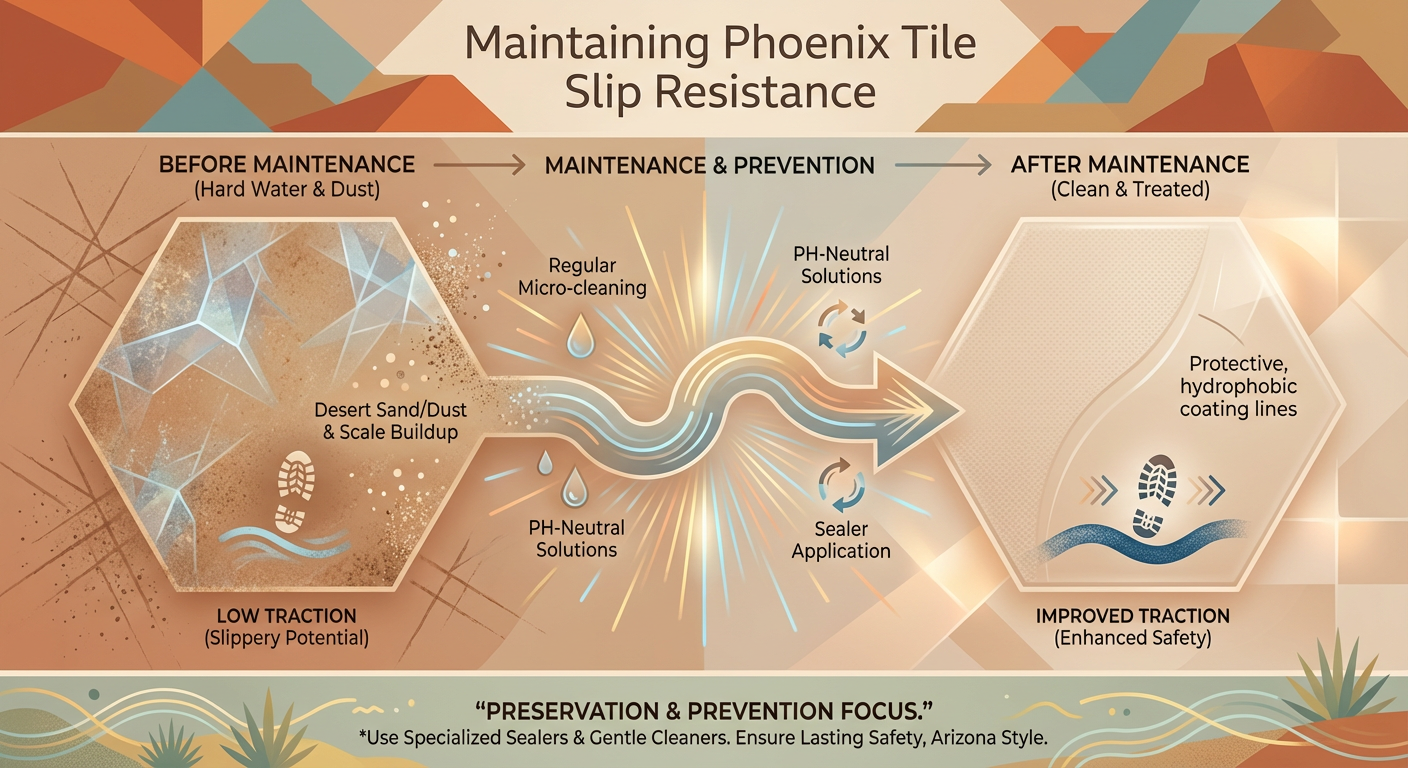
6. Maintaining Slip Resistance in Phoenix Homes
Selecting the correct tile for slip resistance is only one part of ensuring a safe home environment. The other critical component is consistent and proper maintenance. In Phoenix, homeowners face specific environmental challenges that can compromise a tile's slip-resistant properties over time. These include the area's hard water, which leaves mineral deposits, and fine desert dust and sand that can act as a lubricant underfoot. This section provides detailed recommendations for cleaning, descaling, sealing grout, and general upkeep to preserve the slip-resistant qualities of floor tiles against these local factors and for long-term safety.
The Critical Role of Cleaning in Preserving Slip Resistance
A clean floor is a safer floor. This statement holds true for all types of flooring, but it is especially important for tiled surfaces where contaminants can quickly reduce friction. Even tiles engineered with excellent slip resistance can become hazardous if not properly maintained [5]. The core principle of slip resistance maintenance is regular cleaning to remove substances that act as lubricants or ball bearings, altering the contact between shoe and floor.
Regular Cleaning Schedules
The frequency of cleaning depends on the area's foot traffic and exposure to contaminants. For general living areas and bedrooms, weekly sweeping or vacuuming followed by damp-mopping may be sufficient. However, in high-traffic zones or areas prone to wetness and dust, like kitchens, bathrooms, and entryways, more frequent cleaning is necessary. In Phoenix, the presence of fine desert dust means that even in normally dry areas, daily sweeping or vacuuming can be beneficial [4].
Damp-mopping should be performed with a pH-neutral, non-residue-forming cleaner [6]. Using too much detergent or soap can leave a sticky film that attracts dust and dirt, and becomes slippery when wet [6]. It is important to rinse the floor thoroughly after cleaning to remove any cleaning solution residue. After mopping, the floor should be allowed to dry completely before people walk on it, or fans should be used to speed up drying. Walking on a wet floor, even if it is clean, carries a slip risk.
Addressing Phoenix-Specific Contaminants
Two primary adversaries to tile slip resistance in Phoenix are hard water deposits and desert dust.
- Hard Water Scale: Phoenix water is known for its hardness, often exceeding 15 grains per gallon [6]. When this water evaporates, it leaves mineral deposits (scale) on tile surfaces. This scale can fill in the tile's micro-texture, creating a smoother, more slippery surface [8]. A study observed that hard-water scale accumulation could reduce wet DCOF by about 15% on a shower tile, from 0.44 to 0.38, until proper cleaning restored it [9]. To combat this, homeowners should regularly use descaling cleaners, such as those that are mildly acidic (like vinegar solutions). However, caution is advised: acidic cleaners should never be used on natural stone tiles like marble or limestone, as they can cause etching. For ceramic and porcelain, a monthly application of a vinegar-water solution can help dissolve scale. Promptly wiping down wet surfaces, especially in showers and around sinks, can also prevent scale buildup [13].
- Dust and Sand: Desert dust, particularly after events like haboobs, can cover floors with a fine, powdery layer. This dust acts like tiny ball bearings underfoot, significantly reducing traction. Even a tile with high friction can become slippery if a layer of dust or sand is present [4]. Regular and frequent dry cleaning methods are crucial. Sweeping with a good quality broom or using a vacuum cleaner with a hard floor attachment removes these abrasive particles before they can contribute to slips or slowly abrade the tile surface. Entryways should have walk-off mats to trap sand and dust before it tracks deeper into the home [14]. While the mats themselves require cleaning, they significantly reduce the amount of grit reaching the tiled floor.
The table below summarizes maintenance recommendations for various Phoenix-specific conditions:
| Condition / Contaminant | Impact on Slip Resistance | Recommended Maintenance Practice | Frequency / Notes |
|---|---|---|---|
| Dust and Fine Sand | Acts as tiny ball bearings; reduces COF on all finishes, especially polished [4]. | Sweep or vacuum thoroughly. Use walk-off mats at entries [14]. | Daily to weekly, more after wind events (haboobs). |
| Hard Water Scale (Phoenix) | Fills in micro-texture, smoothing the surface and reducing friction [8]. | Use descaling cleaners (e.g., vinegar solution for acid-safe tiles). Wipe down wet surfaces promptly. | Monthly descaling for bathrooms; daily wiping in wet zones. |
| Soap Scum & Residue | Creates a slick film, especially in showers and baths [8]. | Scrub with mild abrasive cleaner. Rinse floors well after showering. Use a squeegee in showers. | Weekly scrubbing in wet areas; daily rinse/squeegee for showers. |
| Grease & Oil | Creates a very slippery film, common in kitchens [5]. | Clean spills immediately. Use degreasing cleaner for routine kitchen floor mopping. | Immediately for spills; weekly for general cleaning. |
| Improper Cleaners | Leaves sticky, slippery residues (e.g., too much soap, oily cleaners, powdered cleaners). | Use pH-neutral, non-residue tile cleaners [6]. Rinse thoroughly. Avoid floor waxes [13]. | Always. Ensure cleaners are approved for tile. |
Grout Care and Sealing
Grout lines are an important component of slip resistance, especially with smaller tiles. The textured nature of sanded grout provides additional grip [10]. However, grout is porous and can absorb dirt, soap scum, and hard water minerals. This buildup can become slimy and slippery when wet [13].
To maintain grout, it is recommended to:
- Seal Grout Regularly: A penetrating grout sealer (every one to two years) makes the grout less porous, resisting the absorption of contaminants. This makes cleaning more effective and helps prevent the buildup of materials that can reduce friction.
- Deep Clean Grout: Periodically, especially in bathrooms and kitchens, grout lines need a deeper scrub. A stiff-bristle brush with an appropriate grout cleaner can lift embedded grime. Steam cleaners are also effective for sanitizing and cleaning grout.
Avoiding Practices That Compromise Slip Resistance
Some common homeowner practices, while well-intentioned, can severely reduce a tile's slip resistance:
- Applying Wax or Polish: Applying wax or polishing compounds to floor tiles is a major mistake [13]. These coatings often create a smooth, shiny film that significantly reduces friction, making the floor extremely slippery, especially when wet [13]. Unless the coating is specifically formulated and certified as an anti-slip treatment, it should be avoided on floor tiles. If a homeowner desires a shiny look, they should choose a tile that is glazed to that finish by the manufacturer, rather than adding a coating later.
- Using Oily or Residue-Leaving Cleaners: Cleaners that contain oils or leave a noticeable film, even if they claim to "shine" the floor, can compromise slip resistance. These residues act as lubricants. Always opt for cleaners specifically designed for tile and stone that state they are pH-neutral and leave no residue [6].
The Benefits of Professional Treatments and Anti-Slip Coatings
For existing floors that are identified as slippery, professional anti-slip treatments offer a solution without requiring tile replacement. Companies like Sir Grout Phoenix offer a "Slip Resistant Application" service that treats tile or stone floors to increase traction [8]. These treatments often work by microscopically altering the tile surface, creating small channels or pits that improve grip [8].
- Mechanism: Treatments typically involve chemical etching or applying a clear, abrasive coating. The etching process creates microscopic texture, while abrasive coatings embed fine particles into a clear resin on the surface.
- Effectiveness: Such treatments can raise the wet DCOF significantly, sometimes by 0.10 or more (e.g., from 0.35 to 0.50). This can render a previously unsafe floor compliant with safety standards.
- Maintenance for Treated Floors: Even treated floors require diligent cleaning. Manufacturers of anti-slip treatments, like SlipStop, warrant their products for five years of performance, provided strict cleaning guidelines are followed [9]. Neglecting maintenance, such as allowing soap scum or hard water to build up, will negate the treatment's benefits [3].
It is always preferable to select a tile with inherent slip resistance during the initial design phase. However, professional treatments provide a viable option for existing floors where replacement is not desired or feasible.
Recognizing Changes in Slip Resistance Over Time
Homeowners should be aware that a tile's slip resistance can change over its lifespan. Factors such as wear from foot traffic (especially with abrasive desert dust), chemical exposure, or improper cleaning can subtly alter the tile surface [13]. For example, a matte tile might become smoother in high-traffic paths after years of abrasive dirt [11]. While polished tiles might theoretically gain a tiny bit of micro-texture from scratching, this is not a reliable safety strategy. Quality tiles designed for floors are more likely to retain their slip resistance over time if properly cared for.
Observing the floor can provide clues:
- Visual Inspection: Look for haziness or films that appear on the tile surface, especially in wet areas after cleaning. This could indicate residue from cleaners, soap scum, or hard water deposits.
- The "Foot Test": Homeowners can often detect subtle changes in traction by walking on the floor, especially with bare or socked feet. If certain areas feel noticeably slicker than before, or compared to other parts of the floor, it is a clear sign that attention is needed.
- "Near Misses": An increase in minor slips, stumbles, or "almost fell" incidents is a significant warning sign that the floor's slip resistance has degraded. These incidents highlight areas that need immediate cleaning or further evaluation.
Conclusion: An Ongoing Commitment to Safety
Maintaining slip resistance in Phoenix homes is an ongoing commitment. It starts with selecting the right tile for each area, but it continues with a consistent and informed approach to cleaning and care. Given Phoenix's hard water and omnipresent dust, diligent cleaning to remove mineral buildup, soap scum, and fine particles is paramount. Using appropriate pH-neutral cleaners and avoiding waxes or oily polishes are fundamental practices. For existing slippery floors, professional anti-slip treatments offer a way to regain safety. Recognizing the signs of reduced traction and addressing them proactively protects residents from slip-and-fall accidents, which account for a large number of home injuries and hospitalizations annually [7]. By combining careful tile selection with a strong maintenance regimen, homeowners can ensure their tiled floors remain safe and functional for years to come. Phoenix Home Remodeling advises clients that ensuring safety is an ongoing process, with tile care forming a crucial step after initial selection and installation.
7. Slip and Fall Risks and Accident Statistics
Slip and fall accidents represent a significant safety problem in homes and businesses across North America. These incidents are not merely minor inconveniences; they lead to serious injuries, hospitalizations, and even fatalities every year. Understanding the frequency and impact of these accidents emphasizes the critical need for safe flooring choices, particularly tile, which is widely used in residential and commercial settings. This section provides data on the prevalence and consequences of slip and fall accidents, highlighting why selecting tiles with appropriate slip resistance ratings and maintaining them is essential for public health and individual well-being.
Prevalence and Economic Impact of Slip and Fall Accidents
The statistics surrounding slip and fall accidents clearly illustrate their severity and widespread nature. Approximately 8 million slip and fall incidents occur in North America each year[7]. These incidents result in substantial medical costs, lost productivity, and, in tragic cases, loss of life. Annually, over 500,000 hospitalizations are attributed to slip and fall accidents, with roughly 19,000 fatalities[7]. Such numbers position slip and fall accidents as a leading cause of unintentional injuries. In the United States, they are the number one cause of home accidents and the second leading cause of all unintentional injuries, surpassed only by car crashes[7].
The financial consequences of these accidents are also considerable. The average cost per slip injury in the United States is estimated at $28,000. This figure includes medical bills, rehabilitation expenses, and wages lost due to recovery periods[8]. Collectively, slip and fall accidents cost the U.S. economy an estimated $36 billion each year[8]. For individual homeowners and businesses, preventing a single serious fall can avoid tens of thousands of dollars in expenses and potential lawsuits. Beyond direct medical and legal costs, there is also the human cost to consider, including pain, suffering, and a reduced quality of life for those injured. For businesses, slip and fall incidents among employees contribute to an estimated 104 million workdays lost annually in North America[8]. This extensive loss of productivity underscores the economic arguments for investing in effective slip prevention measures, such as proper flooring selection and maintenance.
Vulnerable Populations and High-Risk Areas
While slip and fall accidents can affect anyone, certain demographic groups face a higher risk and more severe consequences. Older adults, for instance, are especially vulnerable. Falls account for approximately 66% of injuries and 75% of accidental deaths in seniors. Many of these falls occur on level surfaces, not just from heights[11]. This heightened risk for the elderly highlights the importance of non-slip flooring in residential settings, nursing homes, and other facilities frequented by older individuals. Bathrooms and showers are particularly dangerous for people with limited mobility, making the use of non-slip tile in these areas a critical safety measure.
Beyond age, other factors contribute to vulnerability, including certain medical conditions, medications that affect balance, and environmental hazards. The type of footwear, lighting, clutter, and distractions can all play a role. However, the flooring surface itself remains a primary factor that can be controlled and improved for safety.
Key high-risk areas within homes and commercial spaces include:
- Bathrooms: Water, soap, shampoo, and bath oils combine to create extremely slippery conditions. Smooth, polished tile in a shower or near a bathtub can become a severe hazard.
- Kitchens: Spills of water, grease, or food particles can quickly reduce traction on kitchen floors. The fast-paced nature of kitchens, both in homes and restaurants, increases the risk when floors are not safe.
- Entryways and Mudrooms: Tracked-in rain, snow, mud, or dust from outside can make these transition areas treacherous. In Phoenix, desert sand and dust are particular concerns.
- Laundry Rooms: Water spills from washing machines or sinks are common, making slip-resistant flooring vital.
- Stairs and Landings: Falls on stairs can be more devastating than falls on level ground. Proper traction on each step is crucial.
The presence of contaminants significantly increases the risk of slipping, regardless of the tile's inherent slip resistance. Water, soap, oil, and even fine dust can act as lubricants, creating a film between the foot and the floor surface, leading to a sudden loss of traction. This is particularly relevant in Phoenix, Arizona, where hard water leaves mineral scale and fine desert dust acts like tiny ball bearings on tile floors[9][25].
Evolution of Slip Resistance Standards
The tile industry has evolved its approach to measuring and ensuring floor safety. Historically, static coefficient of friction (SCOF) tests, such as ASTM C1028, were used to assess slip resistance. This test measured the force required to initiate movement of a stationary object on a surface[2]. A wet static COF of 0.60 or higher was often considered the benchmark for a "slip-resistant" floor[2].
However, the ASTM C1028 standard was officially withdrawn in 2014 without replacement[2]. This withdrawal occurred because research indicated that static COF tests often provided misleading "safe" ratings to floors that were, in practice, quite slippery[2]. Static measurements do not accurately reflect the forces at play when a person is in motion, which is when most slips occur. A person typically slips while walking, when their foot is already in motion relative to the floor. The foot slides forward, but the body keeps moving, resulting in a fall.
Today, the industry uses dynamic coefficient of friction (DCOF) as the primary safety metric. DCOF measures the force required to keep an object in motion across a surface. This dynamic measurement better simulates the actual interaction between a person's foot and the floor during walking, providing a more realistic assessment of slip risk[1]. The current standard, ANSI A326.3 (incorporated into ANSI A137.1 in 2012), sets a minimum wet DCOF of 0.42 for floor tiles that may get wet[13]. This standard applies to level interior floors in areas such as bathrooms, kitchens, and entryways. The measurement is typically performed using instruments like the BOT-3000E tribometer. Tiles that meet or exceed a DCOF of 0.42 are considered to have enough friction for these applications[13].
For more consistently wet areas, such as shower floors, experts recommend surfaces with even higher traction. The Tile Council of North America (TCNA) provides guidance for these "Interior Wet Plus" areas, often encouraging textured small-format mosaics or specific anti-slip tiles to enhance grip[4]. Some newer tile technologies, such as Daltile’s StepWise™ porcelain, claim to boost wet slip resistance by 50% compared to regular tiles, achieving DCOF values around 0.60-0.65[12]. This level offers a considerable safety margin for high-risk residential areas.
In Europe, a different system, known as "R" ratings, is often used. These ratings, ranging from R9 to R13, are based on the German DIN 51130 ramp test. In this test, a person walks on a tile sample coated in oil on an inclined ramp. The angle at which the person slips determines the R-rating[3]. R9 indicates the lowest grip (suitable only for dry areas), while R13 signifies the highest grip, designed for very wet or greasy conditions[4]. An R11 rating is commonly recommended for kitchens and bathrooms, suggesting it offers much better slip resistance than an R9 tile. While DCOF and R-ratings are not directly convertible, an R10 or R11 tile generally meets or exceeds the 0.42 DCOF standard.
The Role of Maintenance in Sustaining Slip Resistance
Even the most slip-resistant tile can become a hazard if not properly maintained. The build-up of dirt, hard water film, soap scum, or other contaminants can significantly lower a floor's effective traction[10]. Regular cleaning is therefore fundamental to maintaining slip safety. Field tests in 2023 showed that a shower tile's wet DCOF could decrease by about 15% (from 0.44 to 0.38) after months of hard-water scale accumulation, only to be restored by proper cleaning[10]. This demonstrates that a tile meeting safety standards can become effectively unsafe if neglected.
In Phoenix, the unique environmental factors, such as hard water and pervasive desert dust, make diligent maintenance even more crucial. Hard water leaves mineral scale that creates a slick film on smooth tile over time[9]. This scale can fill in the microscopic textures that provide grip. Additionally, fine desert dust, common in Arizona, acts like tiny ball bearings on tile floors[6]. Even on a tile with inherently high friction, a layer of dust or sand can drastically increase slip risk. Regular sweeping or vacuuming to remove dust and sand, along with periodic deep cleaning to remove mineral and soap buildup, is essential for preserving slip resistance.
Avoiding certain cleaning practices is also important. Using too much detergent or soap, or cleaners that leave a residue, can contribute to slippery films. Dish soap, in particular, can combine with hard water in Phoenix to create troublesome soap scum[10]. pH-neutral, non-residue-forming cleaners should be preferred for routine tile maintenance. Additionally, applying wax or polish to floor tiles, a common mistake attempting to achieve shine, can severely reduce friction and should be avoided in all but very specific dry areas. The ANSI A326.3 standard explicitly advises against such coatings unless they are specifically part of a certified anti-slip system[9].
For existing floors that are deemed slippery, professional anti-slip treatments are available. These treatments, offered by services like Sir Grout Phoenix, involve microscopically etching the tile surface or applying clear, abrasive coatings to enhance friction without changing the tile's appearance significantly[8]. Such treatments typically come with warranties (e.g., 5 years from SlipStop) provided that regular maintenance guidelines are followed[9].
Case Studies in Slip Prevention
Real-world examples demonstrate the effectiveness of prioritizing slip resistance:
- Phoenix Bathroom Remodel: A homeowner in Phoenix experienced multiple near-slips on a glossy ceramic bathroom floor. Phoenix Home Remodeling replaced these with 2-inch matte porcelain mosaics (DCOF approximately 0.55) in the shower and 12-inch matte tiles (DCOF 0.50) on the main floor. The combination of increased grout lines, textured surfaces, and improved maintenance habits resulted in zero slip events after the renovation, significantly enhancing household safety[15].
- Restaurant Kitchen Upgrade: A local Phoenix restaurant faced numerous employee slip injuries due to an old, smooth quarry tile floor near the fryer and dishwashing areas. By installing a commercial-grade porcelain tile with an R12 slip resistance rating and implementing stricter cleaning, the restaurant eliminated reported slip accidents in the year following the renovation. This showcases how targeted tile selection and maintenance in high-risk commercial environments directly prevent injuries and associated costs[15].
- Community Center Shower Facilities: A Phoenix community center upgraded its locker room showers from basic 4-inch tiles to 1-inch by 1-inch embossed mosaic tiles (rated Class C in barefoot slip tests, approximately 0.60 DCOF). This change, combined with enhanced maintenance, led to no recorded slips or falls in the renovated showers over six months. The ample grout lines and textured mosaic surface proved crucial in ensuring safety in this consistently wet and barefoot area[10][15].
- McDonald's Global Slip Testing: McDonald's implemented a proactive policy for flooring safety, requiring all customer area floors to maintain specific slip resistance even after simulated long-term wear. This involved rigorous testing (e.g., British Pendulum Test Value of 36 or higher) to ensure "sustainable slip resistance." This strategy has allowed McDonald's to minimize slip and fall accidents in their high-traffic restaurants globally, influencing broader industry standards for flooring safety[14].
These examples underscore that choosing the right tile, combined with diligent cleaning and maintenance, is a proactive and effective strategy for preventing slip and fall accidents. It is not just a technical detail but a fundamental aspect of creating safe living and working environments. For homeowners and remodelers in 2026, the trend is toward prioritizing slip resistance in design, selecting textured or matte finishes in wet areas, and adhering to routine maintenance schedules to reduce accidents.
Conclusion
Slip and fall accidents are a serious and costly public health concern, with millions of incidents annually resulting in severe injuries, hospitalizations, and deaths. Older adults are particularly susceptible, making safe flooring choices paramount in residential settings. The shift in industry standards from static to dynamic coefficient of friction (DCOF) testing provides a more accurate assessment of a tile's slip resistance, with a minimum wet DCOF of 0.42 now recommended for common wet areas. Considerations such as tile finish, size, and texture significantly impact slip safety, with matte, textured, and smaller-format tiles generally offering superior grip in wet conditions.
In Phoenix's unique environment, factors like hard water scale and pervasive desert dust can compromise even highly-rated tiles, highlighting the critical role of consistent and appropriate maintenance. Regular cleaning, using suitable non-residue cleaners, and addressing contaminants are essential to preserve a tile's inherent slip resistance. Proactive selection of safety-rated materials and thorough upkeep are not just about compliance but about safeguarding lives and well-being. Understanding these risks and the measures available to mitigate them empowers homeowners and professionals to make informed decisions that promote safety in every tiled space.
The next section will explore into the practical application of these safety ratings, providing detailed recommendations for selecting appropriate tile for different areas within a home.
8. New Technologies and Future Trends in Slip-Resistant Tile
The flooring industry constantly seeks ways to improve safety and performance, especially regarding slip resistance. As homeowners become more aware of the risks associated with slippery floors, and as accident statistics continue to highlight the financial and personal costs of slip-and-fall incidents, the demand for safer tile solutions is increasing. This section explores the modern developments in tile manufacturing and treatment that enhance slip resistance, alongside the evolving priorities of homeowners for safety in their flooring choices for 2026 and beyond. These advancements are critical, particularly in environments like Phoenix, Arizona, where specific environmental factors such as hard water, dust, and general dryness present additional challenges to maintaining safe floor traction.
Emerging Tile Technologies for Enhanced Slip Resistance
Tile manufacturers are developing new products and surface treatments to address slip risk without compromising aesthetics or cleanability. These innovations focus on engineering the tile surface at a microscopic level, creating textures that increase friction even when wet, greasy, or dusty.
Advanced Surface Engineering
- Micro-Textured Glazes: Historically, glazed tiles offered limited slip resistance unless they had a visibly rough surface. New glazes are formulated with microscopic particles or a patterned texture that is almost imperceptible to the eye but provides significant grip. These advanced glazes create a 'drag' effect that helps prevent slipping by increasing the contact area and channeling water away from the foot. They allow for a smoother look that is still highly slip-resistant. For example, some manufacturers achieve a DCOF of 0.50-0.60 on surfaces that appear relatively smooth.
- Integrated Abrasives: Some tile technologies embed fine, durable abrasive particles directly into the tile's surface during manufacturing. Daltile's StepWise™ technology is a notable example, which makes tile 50% more slip-resistant than regular tile [13]. These particles are often ceramic or carborundum, providing consistent friction even when the tile is wet. The key is that these particles are very small and evenly distributed, so they do not make the tile feel rough or difficult to clean. These tiles can often achieve wet DCOF values around 0.60-0.65, providing a significant safety upgrade for high-risk areas [6]. This approach offers sustained slip resistance that does not wear away easily.
- Structured and Embossed Surfaces: Through advanced molds and manufacturing processes, tiles can now feature subtle three-dimensional patterns or structures. These could be fine linear grooves, small dots, or even organic, stone-like textures. Such structures help by creating micro-channels that allow water to escape from under a foot, increasing the effective contact area between the shoe (or bare foot) and the tile surface. This is particularly effective in wet areas. While these surfaces might retain dirt more easily than perfectly smooth tiles, ongoing developments aim to optimize texture for both grip and ease of cleaning [39].
DCOF-Rated Polished Tiles
Traditionally, polished tiles posed a significant slip risk when wet. However, some manufacturers are now producing polished porcelain tiles that surprisingly meet the 0.42 wet DCOF standard. This is achieved through very carefully controlled manufacturing, sometimes incorporating microscopic surface treatments that are not visible but increase friction. These tiles allow homeowners to achieve the desired high-gloss aesthetic without sacrificing safety, though they typically require more rigorous cleaning protocols to maintain their DCOF.
Advanced Anti-Slip Treatments and Coatings
For existing installations or for tiles that do not inherently meet high slip resistance standards, new generations of anti-slip treatments and coatings offer a viable solution. These can be applied after installation to enhance safety.
- Micro-Etching Solutions: These chemical treatments create microscopic pores on the tile surface, increasing its roughness without altering its appearance. The tiny irregularities provide points of contact for improved grip when wet. Services like those offered by Sir Grout Phoenix involve treating tile or stone floors to increase traction [34]. These solutions are generally clear and durable, but their effectiveness depends on the tile material and proper application. They can often raise a tile's wet DCOF by 0.10 or more (e.g., from 0.35 to 0.50).
- Clear Abrasive Coatings: These are thin, transparent coatings that contain fine abrasive particles. They are applied as a liquid and cure to form a durable, slip-resistant layer. These coatings are designed to be thin enough not to impact aesthetics greatly, while providing a significant boost in friction. They are often used in commercial settings but are becoming more accessible for residential applications. Some anti-slip treatments, such as those from SlipStop, are warranted for 5 years of safe performance if cleaning guidelines are followed [10].
- UV-Cured Anti-Slip Finishes: Newer coatings utilize UV light for rapid curing, resulting in highly durable and wear-resistant anti-slip surfaces. These can be applied quickly and offer immediate use, making them suitable for renovations where downtime is a concern. The durability is a key advantage, ensuring consistent slip resistance over a longer period.
Smart Grout and Installation Techniques
Beyond the tile itself, innovations in grout and installation also contribute to future slip safety.
- High-Traction Grout: While grout naturally provides some grip, advancements in grout composition are introducing variants with enhanced friction. These grouts might incorporate subtle aggregates or polymers that improve their inherent slip resistance, complementing the safety features of the tiles.
- improved Grout Joint Design: The research emphasizes that smaller tiles with many grout lines provide much better slip resistance in wet zones [5]. This is especially true for mosaic tiles. The trend toward using smaller format tiles or mosaics in bathrooms, showers, and entries is not just for style but for safety. Installers are increasingly knowledgeable about appropriate grout joint widths for various applications to maximize this benefit. For shower floors, 1-inch or 2-inch mosaics are standard as the abundance of grout lines significantly increases overall traction for bare wet feet [5].
- Drainage-Enhancing Systems: While not strictly tile technology, integrating effective drainage systems (e.g., linear drains, sloped subfloors) is a crucial trend. By ensuring water quickly drains away, the time the tile surface remains wet and potentially slippery is reduced, supporting the effectiveness of slip-resistant tiles.
The Role of Homeowner Priorities and Awareness in 2026
Homeowners are becoming more educated about slip risks and actively seeking safer flooring options. This increased awareness is a significant driver of the market for slip-resistant tiles.
Increased Focus on Safety Metrics
- DCOF-Driven Decisions: In 2026, homeowners and remodelers are prioritizing specific safety ratings by room type [4]. Homeowners are less likely to rely on vague descriptions like "non-slip." They want to see the DCOF rating, especially for high-risk areas like bathrooms and kitchens. This shift from aesthetic-first to safety-metric-first is being driven by the availability of clear standards like ANSI A326.3, which mandates a wet DCOF of at least 0.42 for floors that may get wet [1].
- Understanding R-Ratings: For those choosing European tiles, understanding R-ratings (R9-R13) is also becoming more common. For instance, knowing an R11 rating is suitable for kitchens and bathrooms [3] provides another data point for informed decisions.
Design and Function Integration
- smooth Transitions: The modern home often features open floor plans and integrated indoor-outdoor living spaces. Homeowners want the aesthetic continuity while maintaining safety. This is leading to a demand for tile lines that offer matching indoor finishes (e.g., matte) and outdoor versions (with higher texture and DCOF) or tiles that can safely transition between both environments.
- Aging-in-Place Design: With an aging population, particularly in areas favored by retirees like Phoenix, designing homes for long-term safety and accessibility is a growing trend. Since slips account for roughly 66% of injuries and 75% of accidental deaths in seniors [8], non-slip flooring is a critical consideration. This includes selecting textured or matte finishes in wet areas [4] and installing small-format tiles in showers where bare feet are common. Many Phoenix homeowners are choosing proactive renovations, such as replacing glossy ceramic bathroom floors with matte porcelain mosaics, to eliminate slip hazards [36].
Maintenance as a Safety Priority
- Awareness of Contaminants: Homeowners are increasingly recognizing that even safe tiles can become slippery due to contaminants specific to the Phoenix environment: hard water scale, soap scum, and fine dust. This has led to a greater focus on proper and regular maintenance. For instance, the understanding that hard water creates mineral scale that can form a slick film [6] means homeowners are actively seeking easy-to-clean slip-resistant tiles and adopting routine maintenance schedules [4].
- Seeking Cleanability: While highly textured tiles offer excellent slip resistance, homeowners also prioritize ease of cleaning. This is pushing manufacturers to develop micro-textured surfaces that provide grip without trapping excessive dirt. The emphasis is on maintaining the slip-resistant properties through cleaning, which can be challenging if the tile texture is too aggressive.
Outlook for 2026 and Beyond in Phoenix
The Phoenix metropolitan area presents unique challenges and opportunities for slip-resistant tile technologies. The region's hard water needs tiles that can resist scale buildup or can be easily descaled without harming the surface's friction. The constant presence of fine desert dust means that tiles must perform well not just in wet conditions but also when dry particles are present, as dust can act like tiny ball bearings [7]. Future trends for Phoenix will likely focus on an integrated approach:
- Region-Specific Product Development: Manufacturers may introduce tile lines improved for low-maintenance in hard water zones, perhaps with anti-scale treatments integrated into the glaze.
- Dust-Resistant Textures: Tiles engineered to maintain grip even with a layer of fine dust will gain traction. These might feature specific texture geometries that allow dust to settle into valleys without completely compromising surface friction, or surfaces that are inherently easier to clean without generating static that attracts dust.
- Water Softeners and Filtration: Though not directly tile technology, the integration of whole-home water softening systems will indirectly improve floor safety by reducing hard water scale, thus preserving the tile's intended DCOF rating.
- Consumer Education: Campaigns emphasizing the importance of specific cleaning protocols for Phoenix conditions (e.g., addressing dust regularly, descaling monthly) will empower homeowners to maintain their safe floors. This includes advising against common mistakes such as using too much soap or inappropriate cleaners that leave slippery residues [44].
The evolution of tile technology in slip resistance is clearly moving toward a more informed, engineered, and homeowner-centric approach. With continued innovation in surface design, treatment options, and a growing understanding of safety metrics, homeowners in Phoenix in 2026 will have more effective choices than ever before to ensure their floors are both beautiful and safe. This comprehensive approach - from product selection to upkeep - effectively reduces slip accidents in places like Phoenix where water, dust, and hard minerals present ongoing challenges [4].
The next section of this report will present a quick reference guide, summarizing the DCOF thresholds and maintenance practices custom for typical Phoenix residential applications, providing practical tools for immediate use.
9. Frequently Asked Questions
Understanding tile slip resistance can feel complicated due to technical terms and changing standards. This section provides clear answers to common questions about tile safety ratings, selection, and maintenance in Phoenix homes. Our goal is to explain these concepts simply, allowing homeowners and editors to make safe and informed choices for flooring.
Slip and fall accidents are a serious concern. Approximately 8 million slip-fall incidents occur in North America each year. These incidents result in over 500,000 hospitalizations and about 19,000 deaths annually[7]. In the United States, the average cost per slip injury, including medical bills and lost wages, is around $28,000[8]. This makes floor slip resistance a critical safety factor for every home, not just a technical detail for industry experts. Older adults are at a particularly high risk; falls account for roughly 66% of injuries and 75% of accidental deaths in seniors[7]. Bathrooms and showers are especially hazardous for people with limited mobility, highlighting the need for non-slip tile in these areas.
The information below addresses key questions to help you choose and maintain safe tile floors, particularly considering the unique environmental conditions in Phoenix, Arizona.
What do DCOF, SCOF, and R ratings mean?
The tile industry uses specific measurements to rate how slippery a tile surface is. These measurements help consumers and professionals choose appropriate tiles for different areas of a home.
Dynamic Coefficient of Friction (DCOF)
DCOF is the current primary safety metric for floor tiles. It measures the friction available when a person is in motion on a floor surface, which is a more realistic way to assess slip risk than older static tests[2]. The industry standard, ANSI A326.3, sets a minimum wet DCOF of 0.42 for tiles used on horizontal surfaces that are wet with water[1]. A tile with a DCOF of 0.42 or higher is considered suitable for interior wet areas like kitchens and bathrooms[13].
A higher DCOF number indicates greater slip resistance. For example, a tile with a DCOF of 0.20 when wet is very slippery, similar to polished stone. Conversely, a DCOF of 0.60 indicates a high level of traction, often found in textured or matte tiles. The 0.42 DCOF threshold is an agreed-upon minimum for manufacturer specifications, but real-world factors like footwear, contaminants, or slopes can still affect safety. Therefore, for areas with increased risk, choosing a tile with a higher DCOF or additional safety features is wise[15].
Static Coefficient of Friction (SCOF)
Static Coefficient of Friction (SCOF) tests, such as ASTM C1028, were previously used to rate tile slip resistance. This test measured the force needed to begin moving an object across a static surface. A wet static COF of 0.60 was once used to label tiles as "slip resistant"[2]. However, ASTM formally withdrew its static test method (C1028) in 2014 because it often gave misleading "safe" ratings to floors that were actually slippery[2]. The industry shifted its focus to dynamic testing methods because they better simulate how slips happen when people are walking[2].
European "R" Ratings
European tiles often use an "R" rating system (R9 to R13), derived from the German DIN 51130 ramp test[3]. In this test, a person walks on an inclined tile sample coated in oil. The point at which they slip determines the rating:
- R9: Lowest grip, suitable only for dry areas. Slipping occurs at a shallow angle (6-10 degrees)[3].
- R10-R11: Suitable for moderately wet areas, such as home kitchens or entryways. An R11 tile can manage an incline up to about 27 degrees before a slip occurs[3].
- R12-R13: Highest grip, intended for very wet or greasy conditions like commercial kitchens or industrial floors. An R13 tile can handle inclines over 35 degrees[3].
While DCOF and R-ratings are not directly convertible, an R10 or R11 tile typically meets or exceeds the 0.42 DCOF standard. The R-ratings provide additional context, helping consumers understand a tile's performance in environments with more contaminants.
Barefoot vs. Shod Tests
There are also specialized European tests like the barefoot ramp test (DIN 51097) with A, B, C ratings, typically used for pools and showers. A rating of C is the highest and indicates suitability for shower floors or pool steps, meaning the surface is safe for bare feet on soapy water.
When selecting tile, focusing on the numeric rating (DCOF or R-rating) from ANSI A326.3 or European standards provides reliable information for safety. Do not rely only on descriptive terms like "slip proof" or "safe tile" that lack scientific backing. In 2026, reputable manufacturers provide these ratings to help consumers make choices.
What DCOF is recommended for kitchens, baths, and entries?
The appropriate DCOF rating depends on the specific use and potential wetness of each area in the home.
Kitchens and Laundry Rooms
These areas often experience spills of water, oils, and detergents. For safety, tiles in kitchens and laundry rooms should have a wet DCOF of at least 0.42[1]. Many standard porcelain floor tiles meet this requirement. Matte or lightly textured finishes are preferable to high-gloss surfaces, as oil spills on glossy tiles can be very slippery. For households with children or older adults, a DCOF of 0.50 or higher provides additional safety. Local remodeling companies like Phoenix Home Remodeling suggest using tiles with at least a 0.42 wet DCOF in kitchens and often recommend matte porcelain tiles, which also help conceal grease better than polished surfaces. Regular cleaning is critical to prevent grease buildup, which can create slip hazards.
Bathrooms and Powder Rooms
Bathrooms are consistently exposed to water from showers and baths, making slip resistance crucial. A minimum DCOF of 0.42 is required for bathroom floors[1]. However, many designers opt for tiles with a DCOF of 0.50 to 0.60 due to the frequent presence of water and soap. Textured porcelain tiles or those with a subtle matte finish offer better grip, even when soapy water is present. Avoid large, polished tiles in bathrooms; they can become very slippery when wet. Small mosaic tiles with numerous grout lines significantly increase traction, making them a common choice for shower floors[10]. Phoenix homeowners often choose matte porcelain wood-look tiles for bathrooms, balancing aesthetics with safety.
Showers and Wet Zones
Shower floors are especially high-risk areas because they are constantly wet and often exposed to slippery soap products. Industry guidelines recommend small tiles (4 inches or less) with many grout lines or textured surfaces for showers. These are often called "shower pan mosaics" and are designed for slip resistance. They may have an uneven or pebbled surface for better grip. Some manufacturers label tiles as "Interior, Wet Plus" to indicate their suitability for frequently wet areas like shower floors[1]. Phoenix Home Remodeling contractors typically install mosaic sheets (2x2 inches or smaller) with a matte textured finish in shower floors to ensure secure footing. The safety of these tiles often comes from the combination of texture and abundant grout lines, rather than a specific DCOF number.
Entryways and Mudrooms
Entryways can bring tracked-in moisture and fine dust from outside, both of which can reduce traction[4]. Even in Phoenix's dry climate, monsoon storms can introduce water, and fine desert dust acts like tiny ball bearings on floors[4]. For these areas, a tile rated for at least "Interior Wet" use (DCOF ≥ 0.42) is recommended[1]. Textured outdoor porcelain tiles can also be a good choice. Larger format tiles with a honed or matte finish can work well, as fewer grout lines might ease cleaning of tracked dirt, but the matte finish still provides good friction. Using high-quality doormats at entryways is critical. A 4 to 6-foot commercial-grade mat can trap most water and grit before it reaches the tile. For Phoenix homes, where sand and small rocks are common, textured porcelain tiles (such as those with a stone or wood grain texture) are more forgiving than smooth surfaces.
Stairs and Step-downs
Tiled stairs, landings, or steps require careful consideration for safety. If tiling a stair, choose a tile with a high DCOF or added abrasive treads. Many tile lines offer bullnose or stair-edge pieces with grooves. Anti-slip tape can also be used. A fall on stairs can be more severe than on a flat floor, so using the safest possible tile and considering additional safety features is important. Some natural stones can have sandblasted strips at the edge of each step for improved grip.
Living Areas and Bedrooms
These dry areas typically do not require special slip resistance. Standard ceramic or porcelain tiles are generally safe, provided they remain dry. However, if there's a risk of damp feet (e.g., from a pool) or spills, extending higher-traction tiles into these areas can be wise. Many Phoenix homeowners use wood-look plank tiles throughout their living spaces. These often have a mild wood grain texture that provides some inherent slip resistance. Be cautious with very glossy tiles in large areas, as they can be slippery even with sock feet. If a polished look is desired, consider using large area rugs or choosing a polished tile engineered to meet the 0.42 DCOF wet standard.
Matching the tile's slip rating to the room’s function is essential. Wet zones require the highest caution, using small, textured tiles with proven anti-slip ratings. For general floors, style can be a priority, but knowing that accidents can happen anywhere, selecting safer tiles offers peace of mind. Phoenix residents should also consider local environmental factors like dust and hard water, which can affect a floor's safety.
How do grout joints and tile size affect slip risk?
The size of a tile and the width of its grout joints significantly influence its overall slip resistance, particularly in wet environments.
Smaller Tiles and More Grout Lines
One primary way tile size affects slip risk is through the number of grout lines. Smaller tiles mean more grout lines, which generally improves footing[10]. Grout is typically rougher and more porous than the tile itself, acting as a brake underfoot. For example, a mosaic floor made of 1-inch or 2-inch tiles creates a grid of grout that provides grip at multiple points[10]. If a foot starts to slip on an individual tile, it quickly encounters a grout joint, offering increased friction. This is why shower floors often feature small mosaics; even if the individual mosaic pieces are somewhat smooth, the abundance of grout lines makes the entire floor slip-resistant. A good example comes from a Phoenix community center that replaced 4-inch shower tiles with 1x1-inch mosaic tiles with an embossed surface. This change, along with the increased grout lines, led to zero recorded slips over six months, compared to previous weekly reports of slips[17].
Large Format Tiles and Fewer Grout Lines
Conversely, large format tiles (e.g., 24-inch or 36-inch) have large, uninterrupted expanses of tile surface and fewer grout lines. If this surface is wet and smooth, there is less to "catch" a foot, increasing slip risk. This does not mean large tiles should be avoided entirely. However, if large tiles are used in a wet area, it is crucial to select a tile with an inherently high DCOF or a textured finish. Alternatively, one might use small mosaics in high-risk zones, such as a shower floor, while using larger tiles on the main bathroom floor.
Grout Type and Texture
The type of grout also plays a role. Sanded grout, commonly used for floor tiles, has a gritty texture that adds traction along the tile edges[10]. Unsanded grout, used for very narrow lines, is smoother. Lighter-colored grout can be beneficial as it shows dirt and slime more readily, indicating when cleaning is needed. Darker grout might mask soap buildup, which can be slippery.
How does water, soap, and hard water scale change traction over time?
Several environmental factors, particularly those common in Phoenix, can significantly affect tile slip resistance over time.
Water and Hydroplaning
Any hard floor can become slippery when wet. The DCOF rating measures a tile's ability to maintain friction under wet conditions. On very smooth tiles, water can cause hydroplaning, where the water acts as a lubricant, making the surface feel like ice. Textured tiles help prevent this by providing channels for water to escape and offering raised points for grip. Even in arid Phoenix, spills, splashed water from indoor plants, or shower and kitchen use can make floors wet. Therefore, selecting tiles with adequate wet DCOF is important for safety.
Soap and Bath Products
Soap, shampoo, and body wash drastically reduce friction. On shower floors, soapy water is a severe slip hazard. Soap films and soap scum can build up over time, creating a slick coating even when dry. When rewetted, this residue becomes extremely slippery. Phoenix homes often face a combined challenge of soap scum and hard water scale, which together form a persistent, slippery film[6]. Regular cleaning with appropriate products is vital to break down and remove this buildup.
Hard Water Scale in Phoenix
Phoenix's water is very hard, meaning it contains high levels of minerals. When water evaporates on tile, it leaves behind mineral deposits, or scale. On smooth tiles, this scale can fill in microscopic textures, effectively reducing the surface's grip. This chalky film can feel slick when wet. Regular cleaning with descaling agents, such as vinegar solution (if safe for the tile type), is necessary to prevent scale buildup. Sealing grout in damp areas can also help, as porous grout can trap hard water deposits, making it slippery.
Dust and Desert Debris
Fine dust acts like tiny ball bearings on floor surfaces, reducing friction[4]. In Phoenix, dust storms (haboobs) and everyday airborne dust can quickly cover floors. Polished tiles are particularly vulnerable because they lack the texture to "grab" the dust, allowing feet to slide. Textured tiles may offer a slight advantage as dust can settle in valleys, leaving some textured peaks for grip, but nothing replaces cleaning. Frequent vacuuming or sweeping is essential in Phoenix homes to remove this pervasive dust, which also improves safety but also protects the tile from abrasion.
Cleaning Agents and Residues
Some cleaning practices can inadvertently make floors more slippery. Using too much detergent or soap without thorough rinsing leaves a residue that attracts dust and creates a sticky, slippery film[6]. Dish soap or vinegar in mop water, combined with Phoenix’s hard water, can also form a slippery soap scum on the floor[6]. It is best to use pH-neutral, non-residue-forming tile cleaners and to rinse floors thoroughly after mopping. Water softeners can also mitigate mineral deposit issues, making cleaning easier.
In summary, Phoenix homeowners must combat both hard water and dust, which can degrade a tile's slip resistance. Proper tile selection, addressing the local environment, and diligent cleaning are critical to maintaining safe floors over time.
What maintenance keeps slip resistance stable?
Maintaining a tile floor's slip resistance is as important as choosing the right tile. Without proper care, even a highly slip-resistant tile can become a hazard. A clean floor is a safer floor[2].
Regular Cleaning
The foremost maintenance practice is regular cleaning. This means sweeping or vacuuming loose debris daily or weekly, depending on foot traffic, and damp-mopping on a consistent schedule. In dusty environments like Phoenix, more frequent mopping might be necessary. Use pH-neutral, non-residue-forming cleaners. Avoid harsh acids, oils, or excessive detergents, as these can leave slippery films or damage tile and grout. After mopping, ensure the floor dries completely. Wet spots from cleaning can be just as slippery as spills.
Grout and Buildup Management
Grout lines can collect grime, mildew, and soap scum, which become slippery when wet. Sealing grout periodically (every one to two years with a penetrating sealer) reduces porosity, making it less likely to absorb contaminants and easier to clean. Deep cleaning, such as scrubbing with a soft brush or a steam cleaner, should be performed quarterly to remove embedded grime. For bathrooms and showers, routinely remove soap scum and hard water scale using appropriate cleaners (e.g., CLR or a vinegar solution for acid-safe tiles)[6]. A significant improvement in traction can be seen after removing months of soap scum from a shower floor. Always rinse thoroughly after using cleaners to avoid leaving slippery residues.
One Phoenix homeowner, after experiencing slip issues, renovated her bathroom with Phoenix Home Remodeling. They installed matte porcelain mosaics and tiles with a DCOF of 0.50-0.55. She now consistently squeegees her shower floor and performs a quick monthly vinegar rinse to prevent hard water scale, resulting in zero slip events after one year[16].
Hard Water Management
In Phoenix's hard water environment, installing a water softener can significantly reduce mineral deposits on tile. If a softener is not feasible, regularly wiping down wet surfaces (like shower floors) after use, or not allowing water to puddle and evaporate, can help prevent scale buildup. Address any visible whitish film, which indicates scale formation, promptly.
Avoid Polishes and Waxes
Never apply wax or polish to floor tiles to enhance shine, as these coatings almost always reduce slip resistance significantly. They create a slick surface, especially when wet, negating the tile's inherent safety properties. The ANSI A326.3 standard advises against using such coatings in wet areas unless explicitly approved by the coating manufacturer[9]. If a shiny look is desired, choose tiles that are glazed to that finish by the manufacturer.
Maintain Mats and Rugs
Mats and rugs placed in strategic areas (entries, in front of sinks, outside showers) improve safety, but they also require maintenance. Ensure they have non-slip backings to prevent them from sliding on the tile. Keep them clean and replace them when their backing loses grip or they become saturated with contaminants. In Phoenix's dry climate, rubber-backed mats can harden over time, so regular checks are a good idea.
Professional Treatments
For existing floors that are slippery and cannot be replaced, professional anti-slip treatments can be applied. Companies like Sir Grout Phoenix offer services to microscopically etch tile surfaces, increasing traction without significantly altering appearance[8]. These treatments can raise the wet DCOF by 0.10 or more and typically last several years, assuming regular cleaning is maintained[9].
Maintenance is directly linked to slip safety. Regular cleaning, proper use of cleaning agents, and addressing environmental factors like hard water and dust are crucial. A tile floor's safety is preserved through care and attention. By understanding these practices, Phoenix homeowners can ensure their tile floors remain safe and functional for many years.
This section has addressed the most common questions regarding tile slip resistance and safety. The next section will offer practical application advice and recommendations for homeowners and professionals.
References
- Tile DCOF Ratings | Crossville
- Floor slip resistance testing - Alchetron, the free social encyclopedia
- Slip Ratings Explained | R10 R11 R12 Guide | Slip-Not® UK | Slip-Not®
- Slip Ratings Explained | R10 R11 R12 Guide | Slip-Not® UK | Slip-Not®
- Tile DCOF Ratings | Crossville
- Tile DCOF Ratings | Crossville
- (PDF) What Makes a Floor Slippery? A Brief Experimental Study of Ceramic Tiles Slip Resistance Depending on Their Properties and Surface Conditions
- Why Mosaic Tiles Aren't Slippery
- Tile Cleaning Mistakes | Barefoot Clean Floors
- What Makes a Floor Slippery? A Brief Experimental Study of Ceramic Tiles Slip Resistance Depending on Their Properties and Surface Conditions - PMC
- RESEARCH
- RESEARCH
- Cleaning Guidelines for Treated Floors | Slipstop
- Industry Standards | American Olean
- Tile DCOF Ratings | Crossville
- What is the criteria for specifying "slip resistant" ceramic floor tile? - CTASC.com
- Industry Standards | American Olean
- What is the criteria for specifying "slip resistant" ceramic floor tile? - CTASC.com
- What is the criteria for specifying "slip resistant" ceramic floor tile? - CTASC.com
- Floor slip resistance testing - Alchetron, the free social encyclopedia
- Slip Ratings Explained | R10 R11 R12 Guide | Slip-Not® UK | Slip-Not®
- Slip Ratings Explained | R10 R11 R12 Guide | Slip-Not® UK | Slip-Not®
- RESEARCH
- RESEARCH
- RESEARCH
- Residential Slip Resistant Application - Sir Grout Phoenix
- Residential Slip Resistant Application - Sir Grout Phoenix
- Industry Standards | American Olean
- Slip Ratings Explained | R10 R11 R12 Guide | Slip-Not® UK | Slip-Not®
- Slip Ratings Explained | R10 R11 R12 Guide | Slip-Not® UK | Slip-Not®
- Floor Slip Resistance Testing Standards | Safety Direct America
- Floor Slip Resistance Testing Standards | Safety Direct America
- Cleaning Guidelines for Treated Floors | Slipstop
- Cleaning Guidelines for Treated Floors | Slipstop
- RESEARCH
- RESEARCH
- Residential Slip Resistant Application - Sir Grout Phoenix
- Industry Standards | American Olean
- Floor slip resistance testing - Alchetron, the free social encyclopedia
- What is the criteria for specifying "slip resistant" ceramic floor tile? - CTASC.com
- Floor slip resistance testing - Alchetron, the free social encyclopedia
- What is the criteria for specifying "slip resistant" ceramic floor tile? - CTASC.com
- Tile DCOF Ratings | Crossville
- Slip Ratings Explained | R10 R11 R12 Guide | Slip-Not® UK | Slip-Not®
- Slip Ratings Explained | R10 R11 R12 Guide | Slip-Not® UK | Slip-Not®
- Slip Ratings Explained | R10 R11 R12 Guide | Slip-Not® UK | Slip-Not®
- Slip Ratings Explained | R10 R11 R12 Guide | Slip-Not® UK | Slip-Not®
- Slip Ratings Explained | R10 R11 R12 Guide | Slip-Not® UK | Slip-Not®
- Floor Slip Resistance Testing Standards | Safety Direct America
- Tile DCOF Ratings | Crossville
- Tile DCOF Ratings | Crossville
- Why Mosaic Tiles Aren't Slippery
- Tile DCOF Ratings | Crossville
- What Makes a Floor Slippery? A Brief Experimental Study of Ceramic Tiles Slip Resistance Depending on Their Properties and Surface Conditions - PMC
- Tile DCOF Ratings | Crossville
- What is the criteria for specifying "slip resistant" ceramic floor tile? - CTASC.com
- (PDF) What Makes a Floor Slippery? A Brief Experimental Study of Ceramic Tiles Slip Resistance Depending on Their Properties and Surface Conditions
- Industry Standards | American Olean
- Why Mosaic Tiles Aren't Slippery
- Why Mosaic Tiles Aren't Slippery
- Why Mosaic Tiles Aren't Slippery
- What is the criteria for specifying "slip resistant" ceramic floor tile? - CTASC.com
- What is the criteria for specifying "slip resistant" ceramic floor tile? - CTASC.com
- Floor Slip Resistance Testing Standards | Safety Direct America
- Tile Cleaning Mistakes | Barefoot Clean Floors
- Tile Cleaning Mistakes | Barefoot Clean Floors
- What Makes a Floor Slippery? A Brief Experimental Study of Ceramic Tiles Slip Resistance Depending on Their Properties and Surface Conditions - PMC
- Tile Cleaning Mistakes | Barefoot Clean Floors
- Tile Cleaning Mistakes | Barefoot Clean Floors
- Tile Cleaning Mistakes | Barefoot Clean Floors
- Tile Cleaning Mistakes | Barefoot Clean Floors
- What is the criteria for specifying "slip resistant" ceramic floor tile? - CTASC.com
- Tile Cleaning Mistakes | Barefoot Clean Floors
- Cleaning Guidelines for Treated Floors | Slipstop
- Residential Slip Resistant Application - Sir Grout Phoenix
- Cleaning Guidelines for Treated Floors | Slipstop
- RESEARCH
- Residential Slip Resistant Application - Sir Grout Phoenix
- Why Mosaic Tiles Aren't Slippery
- Floor Slip Resistance Testing Standards | Safety Direct America
- Floor Slip Resistance Testing Standards | Safety Direct America
- Floor Slip Resistance Testing Standards | Safety Direct America
- Tile DCOF Ratings | Crossville
- Tile DCOF Ratings | Crossville
- What is the criteria for specifying "slip resistant" ceramic floor tile? - CTASC.com
- What is the criteria for specifying "slip resistant" ceramic floor tile? - CTASC.com
- Slip Ratings Explained | R10 R11 R12 Guide | Slip-Not® UK | Slip-Not®
- Slip Ratings Explained | R10 R11 R12 Guide | Slip-Not® UK | Slip-Not®
- What Makes a Floor Slippery? A Brief Experimental Study of Ceramic Tiles Slip Resistance Depending on Their Properties and Surface Conditions - PMC
- (PDF) What Makes a Floor Slippery? A Brief Experimental Study of Ceramic Tiles Slip Resistance Depending on Their Properties and Surface Conditions
- Measurement of traction properties of ceramic tiles and its attention for preventing pedestrian falls - ScienceDirect
- Measurement of traction properties of ceramic tiles and its attention for preventing pedestrian falls - ScienceDirect
- Tile Cleaning Mistakes | Barefoot Clean Floors
- Tile Cleaning Mistakes | Barefoot Clean Floors
- RESEARCH
- RESEARCH
- RESEARCH
- Residential Slip Resistant Application - Sir Grout Phoenix
- Residential Slip Resistant Application - Sir Grout Phoenix
- Cleaning Guidelines for Treated Floors | Slipstop
- Cleaning Guidelines for Treated Floors | Slipstop
- Why Mosaic Tiles Aren't Slippery
- Floor Slip Resistance Testing Standards | Safety Direct America
- Floor Slip Resistance Testing Standards | Safety Direct America
- Dynamic Coefficient of Friction: Frequently Asked Questions | Tile Council of North America
- Dynamic Coefficient of Friction: Frequently Asked Questions | Tile Council of North America
- Industry Standards | American Olean
- Industry Standards | American Olean
- Dynamic Coefficient of Friction: Frequently Asked Questions | Tile Council of North America
- Dynamic Coefficient of Friction: Frequently Asked Questions | Tile Council of North America
- Dynamic Coefficient of Friction: Frequently Asked Questions | Tile Council of North America
You may also be interested in...
 Countertop Performance Under Intense UV and Heat: A Phoenix-Specific Analysis (2026)
 Optimizing Kitchen & Bathroom Lighting: Foot-Candle Targets, Color Temperature, and Avoiding Common Pitfalls
 Aging-in-Place Remodeling in Phoenix: Design Standards, Real Costs, and What Actually Gets Used in the Valley of the Sun