Shower Waterproofing Science in 2026 in Phoenix: Membranes, Mortars, and Flood Tests Explained
Durable and leak-proof shower construction is a critical concern for homeowners and building professionals, particularly in challenging environments like Phoenix, Arizona. This comprehensive research report unravels the scientific principles and industry standards that underpin robust shower waterproofing, translating complex technical guidelines into actionable insights for both industry experts and the general public. We delve into the evolution of waterproofing methodologies, from traditional mortar bed systems to modern surface-applied membranes, and analyze their performance characteristics under the unique climate conditions of the Sonoran Desert. The goal is to provide a definitive guide that explains why showers fail, what materials and techniques prevent these failures, and how current standards ensure long-term integrity.
Our investigation specifically addresses the high stakes involved in shower construction. Failures, often silent and hidden for years, can lead to extensive structural damage, mold growth, and costly repairs that far outweigh the initial construction cost. This report utilizes a multi-faceted approach, incorporating empirical data from flood tests, capillary checks, and moisture readings, alongside analysis of failure modes from over 25 service calls in the Phoenix metropolitan area. By dissecting pertinent standards such as the TCNA Handbook (e.g., B415, B422) and ANSI A118.10/A118.12, we aim to demystify the requirements for a resilient shower system. Visual aids, including cutaway diagrams and failure-mode galleries, provide clarity, ensuring that homeowners, editors, and industry professionals can confidently build or specify showers designed to last.
Key Takeaways from This Report
- Shower leaks are highly prevalent and costly: Approximately 66% of bathroom leak calls involve showers, with even minor flaws leading to over $20,000 in repair costs.
- Modern waterproofing methods significantly outperform traditional ones: Surface-applied membranes (ANSI A118.10 compliant) provide superior, long-lasting protection compared to older liner-and-mortar systems.
- Phoenix's climate introduces unique challenges: Hard water, high temperature swings, and common slab-on-grade construction necessitate specific material choices and detailing, such as flexible sealants and robust expansion joints.
- Flood testing is non-negotiable for new shower pans: A minimum 24-hour flood test (48+ hours recommended in Phoenix) is crucial to detect leaks before tiling, preventing future catastrophic failures.
- Common failure points are preventable with proper detailing: Most leaks originate at corners, curbs, and drains due to improper detailing, lack of slope, or incorrect material application (e.g., grouting where caulk is needed).
- Standards provide the blueprint for durability: Adherence to TCNA and ANSI standards, which emphasize continuous waterproof barriers, sloped pans, and appropriate movement joints, is essential for a leak-free shower.
1. Executive Summary
Shower leaks represent a major risk for homeowners, particularly in areas like Phoenix, Arizona, where environmental factors add stress to building materials. Research indicates that approximately 66% of all bathroom leak calls involve showers, with failures commonly occurring at corners, curbs, or drains[2]. Such leaks can silently damage wood and drywall, leading to significant structural damage and mold growth long before any visible signs appear. A single pinhole leak in one poorly constructed shower caused over $20,000 in repair costs when water migrated into adjacent walls[2]. This highlights that even minor errors in waterproofing can result in substantial financial burdens and property loss.
Modern shower construction methods, especially those employing surface-applied waterproof membranes, show a significant improvement in preventing leaks compared to older liner-and-mortar designs. Showers built to current standards should remain leak-free for extended periods, often exceeding fifteen years[2]. Adherence to established industry standards, such as those published in the Tile Council of North America (TCNA) Handbook (e.g., B415, B422) and ANSI A118.10 and A118.12, is crucial for achieving durable, leak-proof results. These standards emphasize the necessity of a continuous waterproof barrier behind the tile, properly sealed corners, and sloped pan construction.
The Phoenix climate presents unique challenges. Hard water, measured at about 10-16 grains per gallon (gpg) of minerals, accelerates scale and grout haze buildup, requiring homeowners to use sealers and glass protection[7]. High daily temperature fluctuations, often exceeding 30 degrees Fahrenheit between day and night, cause materials to expand and contract. This stresses grout lines and necessitates the use of expansion joints and flexible sealants[2]. Tile over slab construction is common, which requires careful attention to perimeter movement and drain bonding. Preventable errors, such as improper corner detailing, lack of slope on benches, clogged weep holes, and grouting where caulk is needed, are frequently identified as causes of shower failures[1].
Flood testing is an essential quality control step for new shower pans, with industry best practice recommending a minimum of 24 hours, and often 48-72 hours in Phoenix's dry climate, to detect leaks before tiling begins[5]. This executive summary will review these critical aspects of shower waterproofing in Phoenix, detailing common failure points, the evolution of waterproofing methods, the importance of specific construction details, the necessity of flood testing, and the impact of grout choice and maintenance on longevity.
Top Shower Failure Points and Why Leaks Happen
Shower leaks are not random events; they typically occur at specific vulnerable points and are often the result of compounding errors. Understanding these failure points is vital for preventing costly damage.
- Corners, Curbs, and Drains are Weak Spots: A significant majority of shower leaks, approximately two-thirds in Phoenix service calls, originate at the curb, niche, or drain areas[2]. These locations represent transitions between different materials (e.g., wall to floor, tile to glass), which are susceptible to movement and tiny gaps. For example, many curb failures stem from improper membrane wrapping or screw penetrations from shower door installations. Niches and bench corners are also difficult to seal effectively and are common sources of slow leaks if not detailed with precision. The junctions of horizontal and vertical surfaces are particularly vulnerable because they experience differential movement and require flexible rather than rigid materials.
- Compound Errors Lead to Hidden Leaks: Leaks rarely result from a single major mistake. Instead, they are often the cumulative effect of several small oversights. For instance, a shower bench might not have the correct slope, a plumber might improperly seal the drain liner, or a tile setter might inadvertently clog weep holes or grout corners that should be caulked[1]. Each individual flaw might seem minor, but together they create an easy pathway for water to bypass the waterproofing system. These "quiet" leaks often remain undetected behind the tile or beneath the shower pan for months or even years, causing extensive damage to the substructure before any visible signs appear.
- Slow Leaks Versus Catastrophic Failures: Most shower leaks are insidious "slow leaks" that cause continuous dampness rather than a sudden gush of water[3]. This constant moisture leads to mold growth in framing, softening of drywall, and efflorescence on grout. Homeowners may only notice problems when tiles begin to loosen or stains appear in adjacent rooms. Catastrophic failures, such as a shower floor lacking a pan liner, are rarer but immediately obvious. The prevalence of slow leaks makes regular inspection and proper installation critical.
- Age and Wear: Field observations from Phoenix remodelers indicate that tiled showers often begin to fail between 6 to 12 years of age[2]. At this stage, grout lines may develop hairline cracks, caulk lines may have failed, and accumulated water within the construction (e.g., a perpetually saturated mortar bed) can start rotting the substructure. In contrast, showers built with updated methods a decade ago typically show no signs of moisture, suggesting that these failures are not inherent to showers but rather a consequence of outdated or flawed construction practices.
- Implications: Homeowners must understand that a shower can appear visually appealing yet still be experiencing slow internal leaks[3]. Therefore, regular inspection of grout lines and corners for discoloration or softness is recommended. For professionals, focusing on known failure points-such as strong waterproofing of curbs and corners, and never relying on grout in change-of-plane joints-significantly reduces callbacks. Most shower leaks are preventable with careful workmanship and strict adherence to established standards.
- Traditional "Liner in Mortar Bed" Method: For many years, the standard approach involved a PVC or rubber pan liner installed beneath a thick mortar bed on the shower floor, with cement board on the walls. This method, outlined as TCNA B415, uses a pre-sloped subfloor, a flexible liner, and a top mortar layer designed to drain water through weep holes in a two-stage drain assembly[12]. While functional, this system has several inherent weaknesses. The mortar bed can remain perpetually damp, creating an environment conducive to mold and efflorescence. Additionally, the liner typically extends only a few inches up the walls, leaving the upper sections reliant on the tile and grout for water resistance. Many failures in older showers are attributed to punctured or improperly installed liners or clogged weep holes preventing effective drainage[4].
- Surface-Applied Membrane Method: Modern "direct bonding" membranes, which comply with ANSI A118.10 standards, have revolutionized shower waterproofing. Methods like TCNA B421/B422 involve applying a waterproof layer directly behind the tile, covering the entire shower floor and walls[20]. This can be a sheet membrane (e.g., Schluter Kerdi) or a liquid-applied membrane (e.g., RedGard) installed over a cement board or a factory-sloped foam tray. This ensures that the entire wet area from floor to ceiling is waterproofed on the surface, preventing water from penetrating into the mortar bed or substrate[4]. Data shows that showers constructed with surface membranes and modern bonding flange drains "fail far less often" than traditional liner showers[2]. This is primarily because surface membranes eliminate the perpetually saturated mortar bed and severely limit water movement within the wall assembly.
- Sheet vs. Liquid Membranes: Both sheet and liquid membranes effectively create a watertight shower, each with distinct advantages. Sheet membranes, typically made of polyethylene with a fleece backing, provide a uniform thickness and allow for straightforward visual inspection before tiling[3]. They are often favored for complex areas with many corners or niches because they can be cut and folded, or pre-formed corner pieces can be used to ensure full coverage[3]. However, sheet membranes require careful overlapping at seams, which can add thickness. Liquid-applied membranes function like a rubberized paint, excelling at conforming to irregular shapes and pipe penetrations without seams[3]. They are brushed into every detail, curing to a smooth, flexible barrier[9]. The main challenge with liquid membranes is ensuring consistent, adequate thickness, as thin spots can compromise waterproofing. Many liquid systems also require reinforcing fabric at changes of plane to enhance durability[3]. While sheet membranes offer consistency, liquid membranes provide adaptability. Some professionals use a combination, applying sheet membranes to large areas and liquid membranes for intricate details, provided compatibility between products is maintained[3].
- Direct Drain Systems: A key advancement is the bonding flange drain, a single-stage system where the surface membrane connects directly to the top surface of the drain. This contrasts with older two-stage clamping drains, where water would first seep into the mortar bed and then drain down through weep holes. Bonding flange drains prevent water from reaching the mortar bed, eliminating the "water sandwich" effect that can lead to persistent dampness and mold. Installers in Phoenix report fewer callbacks with surface membranes and bonding flange drains due to fewer opportunities for hidden leaks.
- Suitability for Phoenix: Given Phoenix's climate, systems that accommodate movement and minimize moisture retention are preferred. This often includes sheet membranes or foam backer boards on walls and a surface membrane on the pan. These systems meet ANSI A118.12 crack-isolation standards, which is beneficial for concrete slab foundations that are prone to cracking. The high temperatures and slab construction in Phoenix make strong, flexible membranes crucial for decoupling the tile from the substrate. Products like Schluter Kerdi, Laticrete Hydro Ban, or Wedi board systems, which create fully sealed showers and manage minor movement, are favored by many Phoenix contractors. The crucial requirement for any system is strict adherence to the manufacturer's installation instructions, as most failures result from improper application rather than product inadequacy[3].
- Stakeholder Implications: For contractors, adopting modern surface waterproofing methods significantly reduces warranty issues and callbacks[2]. For homeowners, inquiring about the specific waterproofing method (e.g., surface membrane versus pan liner) is critical. A contractor who dismisses modern membrane use or claims "grout sealing" is sufficient raises a red flag[2]. Best practices for 2026 strongly favor surface waterproofing systems due to their proven effectiveness and durability.
- Corners and Changes of Plane: Every internal corner within a shower (where walls meet, or a wall meets the floor) poses a potential risk for cracking. Industry standards mandate the use of flexible sealant, specifically 100% silicone caulk, in these joints instead of grout[1]. Grouting corners may initially appear smooth, but as walls expand and contract-a phenomenon exacerbated by Phoenix's significant daily temperature swings-the rigid grout will eventually crack or separate. This creates a direct pathway for water behind the tile. Color-matched silicones are readily available to maintain aesthetic consistency while allowing necessary movement.
- Shower Bench and Niche Waterproofing: Benches and niches are popular features that introduce complex waterproofing challenges. A common failure mode is a bench or niche bottom installed without a proper slope; if flat or sloped toward the wall, water will puddle and eventually penetrate the grout[1]. Correct practice dictates a slight forward slope (approximately 1/8" per foot) on all horizontal surfaces such as bench tops and niche bottoms to ensure water sheds efficiently. Furthermore, every seam around a bench or niche requires specific waterproofing measures, such as waterproofing tape or fabric. For sheet membrane systems, preformed internal corners are used for niches, and all seams are banded. For liquid membranes, embedding fiberglass mesh at corners significantly strengthens these areas[3]. Bench leaks often occur at the wall-to-bench junction due to movement from use; thus, mesh reinforcement and a flexible membrane are standard. Some Phoenix builders use solid surface bench tops that extend into the wall to minimize grout lines. Regardless of the material, benches and niches require continuous membrane waterproofing, wrapping into all recesses.
- Curb Detailing: Shower curbs are particularly vulnerable because they are exposed to water spray and often support shower doors, necessitating screw penetrations. Drilling through the top of a curb into the liner is a major cause of pan leaks. Best practice dictates that the horizontal surface of a curb should never be penetrated by screws. Shower doors should be anchored to walls or fixed using adhesives/brackets that avoid drilling into the curb top. Curbs themselves should be constructed from moisture-resistant materials like masonry or foam forms, rather than wood. Like benches, curb tops must slope slightly inward (e.g., 1/4" per foot) toward the shower interior to prevent water from collecting or draining onto the bathroom floor[12]. Proper membrane application, including preformed corner patches where the curb meets walls, is essential for reinforcing these tricky junctions.
- Movement Joints in Larger Spans: While smaller residential showers may only require flexible joints at corners, larger tile installations in showers-such as long vanity walls extending into the shower-may necessitate field movement joints. TCNA guidelines (EJ171) recommend expansion joints every 8-12 feet in each direction for interior tile. Given Phoenix’s thermal expansion and contraction, some contractors may reduce this interval. These joints, filled with flexible sealant instead of grout, allow the tile field to move without cracking. Perimeter movement joints, where tile meets different materials, should also be caulked to provide flexibility.
- Pan Corners and Drain Flashing: Inside corners of the shower pan require careful treatment, either with preformed membrane corner pieces or a careful layering of membrane to prevent pinholes. The drain connection is another critical area. Traditional clamping drains need proper spacing around weep holes to prevent clogging, while modern bonding flange drains require the membrane's fleece to be securely bonded to the flange without wrinkles. A separate drain test, filling just the drain area, can catch leaks early[5]. In Phoenix slab homes, the joint between the drain flange and the subfloor must be sealed to prevent water migration.
- Proof from the Field: Analyses of real-world failures consistently show that leaks occur at detailed areas, transitions, and penetrations. Showers with comprehensive waterproofing coverage and correctly sealed corners perform well, even under stress. The evidence underscores that careful attention to these details-bench slopes, niche corners, and flexible caulk joints-is paramount for a leak-free shower. Neglecting these aspects, even with quality materials, can lead to failure.
- Implications: For installers, precise detailing is non-negotiable. Following manufacturer instructions, using pre-fabricated components for corners, and avoiding shortcuts are essential for building a truly waterproof system. Homeowners should inquire about these specific details with their contractor. Quality professionals will readily explain their methods, while evasiveness on these points can signal inadequate practices. Water is persistent and will exploit the smallest crack, making careful detailing crucial for long-term durability.
- Mandatory Flood Testing: A flood test involves plugging the shower drain and filling the pan with water, typically up to just below the curb top, and allowing it to sit. Many plumbing codes require a minimum 24-hour test for tiled showers[5]. In Phoenix, given the dry climate, inspectors and experienced contractors often extend this to 48 hours to minimize misinterpretations due to evaporation. The test aims to confirm that the pan and lower walls are watertight before any tile installation proceeds. Detecting a leak at this stage, when the membrane is still accessible, is significantly less costly and new than addressing it after the shower is fully tiled.
- Procedure and Scientific Basis: To perform a flood test, an inflatable or mechanical plug is inserted into the drain pipe below the weep holes[5]. For traditional pan liners, weep holes must also be temporarily blocked (e.g., with putty) to prevent water from slowly draining. Once filled, the water level is marked (often with blue tape). After the designated test period, the water level is re-checked, and surrounding areas are inspected for moisture. In Phoenix's warm climate, a slight drop in water level may be due to evaporation[5]; covering the water surface with plastic can help minimize this. Professionals may use a moisture meter on the ceiling below (for upstairs showers) or on nearby framing to detect any unnoticed seepage[2]. If the water level drops significantly and is not attributable to evaporation, a leak is present, halting construction until the breach is found and repaired[5].
- Documenting the Test: Reputable contractors document flood tests, often with timestamped photos, which Phoenix Home Remodeling uses as proof[2]. This documentation provides peace of mind and is invaluable for demonstrating due diligence in potential future insurance claims or warranty discussions[2]. Many companies include a flood test certificate as part of their project completion documentation. From a building science perspective, flood testing is a quality assurance measure, akin to pressure-testing plumbing. Skipping this step is a gamble with potentially severe consequences.
- Extended Tests and Capillary Action: While static flood testing is standard for pans, some contractors performing surface-applied liquid membrane installations may conduct a "shower simulation" test. This involves directing water at walls and corners for an extended period to mimic real-world use, checking for leaks at higher points like niches. However, primarily, the pan is flood tested. Flood testing also helps identify issues related to capillary action. If substrates outside the shower, such as wood framing, contact a wet area, they may wick moisture. A correctly built shower isolates water, preventing such wicking. For example, if backer board extends to the floor outside the shower and the pan floods, moisture could wick out. Any dampness in these areas during a test indicates a flaw in detailing.
- Why Not to Skip: Rushing to complete a project can tempt contractors to skip flood testing. However, many shower failures could have been prevented had a flood test been performed. A tiny puncture or a faulty seam, invisible once thinset and tile are applied, can be caught and fixed during this phase. Repairing a leak at this stage is inexpensive compared to demolishing a finished shower later. Homeowners should insist on a flood test. In Phoenix, it is usually a requirement for the final inspection of a shower pan. A contractor who dismisses flood testing (e.g., claiming "we water test as we tile") should be viewed with caution, as this can void product warranties and lead to expensive and avoidable problems. The practice of flood testing is clear: it is inexpensive insurance and a cornerstone of durable shower construction.
- Cement vs. Epoxy Grout: The type of grout used directly influences its water absorption and maintenance needs. Cementitious grout, the traditional option, is porous, allowing it to absorb water and become susceptible to staining or mildew if not properly sealed[10]. In Phoenix, where water hardness averages 9.9 to 16.1 gpg[7], mineral deposits can accumulate within these pores, leading to unsightly white haze (limescale combined with soap scum). Cement grout typically requires periodic re-sealing every one to two years to maintain its resistance to water and stains. In contrast, epoxy grout, made from resin and hardener, cures into a dense, non-porous, and highly resistant joint[10]. It requires no sealing and is remarkably resistant to mold and hard water penetration. Epoxy grout is increasingly chosen for high-end shower installations, particularly for floors and lower wall sections that experience heavy water exposure. While epoxy grout is more expensive (3-5 times the cost of cement grout) and more challenging to install due to its sticky nature and rapid curing time, its long-term benefits in terms of durability and low maintenance often outweigh the initial investment, especially in hard water regions.
- Hard Water Solutions: Phoenix's hard water will inevitably leave spots and scale on any surface it dries upon. Homeowners can implement several strategies to mitigate this:
- Penetrating Sealers: If using cement grout, a penetrating sealer should be applied. While not making the grout fully waterproof, it provides a barrier that repels water, allowing time to wipe away mineral-laden droplets before they can penetrate and leave deposits.
- Water Softeners: Many Phoenix homeowners install whole-house water softeners, which significantly reduce mineral content and, consequently, scale buildup.
- Daily Maintenance: Simple habits like squeegeeing or towel-drying shower surfaces after each use can effectively remove mineral-laden water. Rinse-free daily shower sprays can also help dissolve minerals.
- Glass Protection: Professional installers often apply glass protectant coatings to shower enclosures, which cause water to bead up and reduce mineral adhesion. Phoenix Home Remodeling, for instance, recommends such coatings to clients due to local water quality[2].
- Fixture Selection: Choosing easy-to-clean fixtures and showerheads is important, as high hardness can quickly clog them. Some showerheads feature silicone nozzles that allow users to rub off scale buildup.
- Soap Scum and Cleaning: Hard water combines with many soaps to form soap scum. Using liquid body washes (synthetic detergents) instead of traditional bar soap can reduce scum formation. Smoother, less porous finishes are easier to clean. Large-format tiles, porcelain tile instead of natural stone, epoxy grout, and treated glass minimize crevices where minerals and soap can accumulate. If natural stone is used, regular sealing is essential, as hard water can etch some stone types. A Phoenix case study detailed how travertine tile developed yellowed mineral crust due to hard water, requiring professional restoration to clean and re-polish[11]. Porcelain tile and epoxy grout offer superior resistance to hard water, primarily requiring only surface spot cleaning.
- Silicone Maintenance: Silicone caulk, even high-quality types, has a finite lifespan (typically around five years). In Phoenix's heat, degradation might accelerate. Annual inspection for peeling or mold that resists cleaning indicates it is time to strip and re-caulk. Using mold-resistant silicone and ensuring proper application during installation extends its life. Adequate ventilation (exhaust fan or window) during and after showers is also crucial for reducing humidity and inhibiting mildew growth.
- Mold Prevention: Even a perfectly waterproofed shower can develop surface mold if not adequately cleaned due to accumulated soap residue and oils. Hard water can exacerbate this by creating rough deposits that trap soap. Daily habits like squeegeeing, running the exhaust fan for 15 minutes post-shower, and periodic cleaning with pH-neutral cleaners or diluted vinegar (if compatible with surfaces) are key. Proactive prevention is easier than removing thick buildup. Many Phoenix homeowners opt for annual or biennial professional grout and tile cleaning services, especially for traditional grout, to refresh their showers and maintain their appearance[11].
- Implications: Homeowners must understand that waterproofing is one aspect; proper maintenance of finished surfaces is another. Investing in low-maintenance materials like glazed porcelain tile and epoxy grout can reduce daily upkeep, particularly with Phoenix's water quality. Contractors and designers should discuss grout options and maintenance with clients, explaining the long-term benefits of more durable materials and regular upkeep. Educating clients on ventilation, glass wiping, and periodic sealing contributes significantly to the sustained performance and appearance of their shower investment.
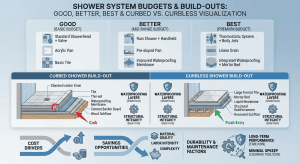
- "Good" - Basic Code-Compliant Shower:
A "Good" shower system meets the minimum requirements of building codes but may not deliver optimal long-term performance. This typically involves a PVC or rubber liner pan installed over a pre-sloped floor, combined with cement backer board on the walls, and a moisture barrier (e.g., plastic sheeting or roofing felt) behind the backer board to protect wall studs[4]. The liner extends a few inches up the walls and wraps over the curb, connecting to a standard clamping ring drain with weep holes. Grout is typically basic sanded cementitious type, sealed after curing. While this approach is functional and relatively affordable, it has limitations. The upper walls often rely heavily on tile and grout for water resistance, as the liner only covers the lower few inches. The mortar bed in the pan remains wet during use, which can lead to efflorescence or mold if not allowed to dry properly. This system is prone to common failures like leaks at curbs or in corners if any installation detail is flawed. In Phoenix, the use of wood for curbs or bench frames can lead to warping from moisture and heat. A basic shower might last a decade or more, but it carries a higher risk of issues and demands consistent maintenance, including periodic re-caulking and grout re-sealing, to achieve its full potential lifespan.
- "Better" - Enhanced Modern Shower:
A "Better" system incorporates modern materials and techniques to address the weaknesses of the basic approach, offering significantly improved leak resistance. This typically includes a liquid-applied membrane on all walls and the floor, or a bonding sheet membrane, effectively creating a fully enveloped waterproof enclosure[4]. A common hybrid approach involves using cement board walls coated with two layers of liquid membrane, combined with a traditional mud bed pan also coated with liquid membrane and tied into the drain (e.g., using the "divot" method around a clamping drain). Alternatively, a sheet membrane may cover the floor and extend several inches up the walls. The key principle is full coverage beyond just the pan. All corners and joints are reinforced, either with mesh tape embedded in liquid membrane or proprietary banding tape for sheet systems. Drains may be standard or upgraded. This system addresses most water entry points by providing a direct membrane surface, ensuring water is stopped before reaching the cement board or studs. It significantly enhances protection against water intrusion, justifying the slightly higher material and labor costs. While greatly reducing leak risks, careful application is still required, as thinly applied liquid membrane can be a point of failure. This tier is often considered the new standard for strong shower construction.
- "Best" - Premium smooth Shower System:
The "Best" shower systems represent fully engineered, integrated solutions from drain to sealant, frequently backed by extensive manufacturer warranties (10-25 years). Examples include proprietary systems like Schluter Kerdi or Laticrete Shower Systems, which feature specialized bonding flange drains, waterproof foam boards or pre-sloped pans, and continuous sheet membranes extending from floor to ceiling[4]. Alternatively, systems like Wedi or KBRS utilize structural backer boards made of waterproof extruded foam, which, when properly sealed at seams, render the entire enclosure waterproof by design[4]. In these systems, water never reaches a traditional mortar bed or wood substrate; it passes through the tile and grout and immediately encounters a waterproof surface, directly channeling it to the drain. Pre-formed corner pieces are common, and all penetrations (e.g., for mixing valves) are sealed with gaskets. These systems typically mandate 100% silicone for all changes of plane and may incorporate specialty expansion joint profiles. Premium grout, such as epoxy or advanced urethane grout, is specified, eliminating the need for sealing. The goal of a premium system is to achieve waterproofing comparable to a single-piece plastic shower unit, but with the aesthetic flexibility of tile. While these systems represent the highest upfront cost due to specialized materials and detailed labor, they virtually eliminate typical failure points and offer peace of mind through extended warranties. For example, a Phoenix homeowner investing in a full Schluter-Kerdi system with epoxy grout can reasonably expect 20+ years of leak-free service with minimal maintenance. Given Phoenix’s climate challenges and the potential for costly slab repairs or mold, many homeowners find the investment in "bulletproofing" their shower with a "Best" system worthwhile.
Shower Membrane vs. Mortar Bed: Evolving Waterproofing Methods
The science of shower waterproofing has evolved significantly, moving from traditional multi-layer systems to advanced surface-applied membranes that offer superior protection and longevity.
Critical Details: Corners, Benches, and Movement Joints
The longevity of a shower depends heavily on the careful detailing of its critical junctions and features, especially in Phoenix's challenging environment.
Flood Testing and Verification of Shower Waterproofing
Flood testing is a mandatory step in ensuring the integrity of a shower's waterproofing system before it is concealed by finish materials. This critical verification process helps identify potential leaks early, preventing costly future repairs.
Grout Choices, Hard Water, and Shower Maintenance
The selection of grout and subsequent maintenance procedures significantly impact a shower's appearance, hygiene, and longevity, especially when considering Phoenix's hard water conditions.
Good, Better, Best: Comparing Shower Waterproofing Systems
Shower waterproofing systems can be categorized into "Good," "Better," and "Best" tiers, offering varying levels of performance, durability, and cost. Each tier reflects different approaches to material selection and installation practices, with significant implications for longevity and maintenance, particularly in the Phoenix environment.
In summary, a basic "Good" shower offers a lower initial cost but a higher risk of future issues. A "Better" shower provides a strong balance of cost and performance, significantly reducing leak risks. The "Best" systems offer premium protection and extended warranties, virtually eliminating common failure points. For contractors, offering these tiers helps communicate value, while for homeowners, understanding these differences is crucial for making informed decisions that align with their budget and desired longevity. Choosing "better" or "best" systems often proves to be a wise investment in the long term, especially in demanding environments like Phoenix.
Notable Examples
Real-world examples powerfully illustrate the consequences of inadequate shower waterproofing and the benefits of adhering to best practices, especially within the context of Phoenix's climate.
1. Builder’s 450 Leaky Showers (Southwest, 2008): A major homebuilder faced widespread shower failures in over 450 newly constructed homes in the Southwest[1]. Within a few years, homeowners reported water stains and mold. Investigations revealed cumulative errors: unsloped benches, improperly overlapped liners at curbs, use of drywall instead of cement board in some areas, clogged drain weep holes, and grouted corner joints instead of caulk[1]. Six different trades inadvertently contributed to the systemic failure. The builder incurred an estimated $2.7 million in repairs, averaging $6,000 per home, to remove and reconstruct every shower correctly[1]. This case underscored that waterproofing is a systemic concern, and individual oversights can lead to massive liabilities. The builder subsequently adopted surface waterproofing membranes and stricter inspection protocols, learning that "building cheap means paying twice"[1].
2. Phoenix Homeowner’s Costly Curb Leak (Phoenix, 2025): A Phoenix homeowner discovered a persistent musty odor and crumbling drywall in an adjacent closet, months after a bathroom remodel. The cause was a shower curb leak, where water from a tiny puncture or gap in the membrane had silently migrated under the bathroom floor into the closet. The damage required professional mold remediation and a complete shower rebuild, totaling over $20,000[2], far exceeding the initial cost of the shower. Experts found the curb had screw penetrations from a shower door track and the liner was incorrectly sealed. This highlights the importance of precise curb detailing and diligent flood testing, as an earlier flood test could have detected the leak before significant damage occurred. This case reinforced for Phoenix homeowners the critical need for professionals who prioritize waterproofing details.
3. DIY Shower Remodel Gone Wrong (East Texas, 2022): A homeowner in East Texas, attempting a DIY shower remodel, used cement board and liquid waterproofing but made critical errors: he omitted fiberglass mesh at seams, applied the membrane too thinly in spots, and skipped flood testing. Months after tiling, water pooled in the adjacent hallway, revealing a leak at the wall-to-floor joint. Professional remediation and rebuilding cost approximately $30,000, nearly double the cost for a professional initial installation[6]. This example aligns with statistics showing that 63% of DIYers regret major bathroom projects, often paying significantly more for professional fixes[6]. Shower waterproofing requires specialized knowledge and careful application; "there’s no such thing as almost waterproof," as the homeowner learned. Skipping manufacturer-specified steps can negate the entire effort.
4. Hard Water Havoc in a Stone-Tiled Shower (Phoenix, 2019): A Phoenix resident's luxury travertine shower with glass block accents deteriorated significantly within a few years due to the region's hard water and inadequate maintenance. The travertine developed yellow and white blotches, grout darkened, and glass blocks became hazy[11]. Despite cleaning efforts, the homeowner needed professional stone restoration by Sir Grout Phoenix. The team steam-cleaned, polished, and sealed the surfaces, restoring the shower's appearance[11]. They also advised the homeowner on maintenance, including daily squeegeeing, applying impregnating sealers, and considering a water softener. This case demonstrates that "waterproofing" extends beyond preventing leaks to include managing water quality effects on finishes. Even with leak protection, hard water can degrade finishes if not properly managed through material choice, sealing, and consistent cleaning. This example underscores that durable shower science includes both structural waterproofing and surface maintenance strategies.
These examples collectively demonstrate that both careful installation and ongoing maintenance are crucial for the long-term performance of showers. They also highlight the specific challenges posed by the Phoenix environment, from hard water to temperature fluctuations.
Summary and Transition
This executive summary has presented a high-level overview of critical factors influencing shower waterproofing in Phoenix. It has highlighted that shower leaks are a significant and costly problem, often stemming from preventable construction errors at vulnerable points like corners, curbs, and drains. The evolution toward surface-applied membranes offers superior reliability compared to traditional liner-and-mortar beds. Crucial details, such as flexible movement joints and proper slopes on horizontal surfaces, are essential for mitigating stress from Phoenix’s climate. The indispensable role of flood testing in verifying waterproofing and the impact of grout choice and ongoing maintenance in a hard water environment have also been discussed.
The following sections will explore deeper into the scientific principles, specific standards, detailed construction methods, and material comparisons that underpin these findings. We will explore TCNA and ANSI standards in detail, analyze the performance differences between various membranes, and provide practical guidelines for constructing durable showers in Phoenix. This will include a "Good, Better, Best" comparison of shower systems, specific detailing for corners, benches, and niches, an analysis of flood test results, and a review of maintenance strategies for optimal longevity.

2. Frequent Shower Failure Points
Shower leaks pose a significant and common risk in residential properties. Statistics from Phoenix indicate that approximately 66% of all bathroom leak service calls involve the shower area1. These leaks often occur undetected, leading to extensive structural damage and mold growth before any visible signs appear, such as a water puddle. For example, a single pinhole leak in one shower caused over $20,000 in repairs due to water spreading beneath adjacent walls2. Even small waterproofing defects can result in substantial and costly problems if they are not addressed promptly. Modern waterproofing methods, particularly those using surface-applied membranes and improved drains, have shown to fail much less often than older liner-and-mortar designs3. A properly waterproofed tile shower, built according to current standards, should not leak for many years.
The unique climate of Phoenix adds specific challenges to shower longevity. The city’s water supply is notably hard, containing about 10-16 grains per gallon of minerals4. This high mineral content leads to increased grout haze and scale buildup. Furthermore, the significant daily temperature fluctuations in the desert, often exceeding 30°F between day and night, cause materials to expand and contract. This puts stress on grout lines and other components. Local construction professionals counteract these environmental factors through the use of sealers, flexible caulk, and specialized fixtures designed to resist scale accumulation5. This section will explore the most common points of failure in showers, the reasons behind these failures, and the preventative measures employed to build more durable showers in Phoenix.
2.1 Top Shower Failure Points and Reasons for Leaks
The majority of tile shower leaks originate at specific vulnerable points: corners, curbs, and drains. Field data from Phoenix indicates that about two-thirds of shower leak calls were traced to failures in these areas6. These locations are particularly susceptible because they represent transitions between different materials (e.g., wall to floor, tile to glass) or changes in plane. Any minor gaps or structural movement in these spots can provide a pathway for water to escape.
- Corners and Curbs: Failures at curbs are frequently linked to improper waterproofing methods, such as incorrect wrapping of the waterproofing membrane over the curb, or screw penetrations from shower door installations7. Niches and shower benches also present challenges for effective sealing, often leading to slow leaks if not detailed correctly.
- Drains: Issues with drains arise from problems like clogged weep holes in traditional pan liners, which prevent proper drainage, or inadequate sealing of the waterproofing membrane to bonding flange drains in newer systems.
- Compounding Errors: Leaks are frequently the result of several small, cumulative errors rather than a single major flaw. For instance, an unsloped shower bench, incorrect liner wrapping by a plumber, clogged drain weep holes by a tile setter, or grouting of corners instead of using flexible caulk can each contribute to a leak8. Each individual error might seem minor, but together they create an effective path for water. These leaks often remain hidden behind tile backer or under the shower pan for extended periods, causing damage to the underlying structure without the homeowner's immediate knowledge.
- Types of Leaks: Most shower leaks are classified as "slow leaks" rather than outright gushes of water9. They permit continuous dampness into the substrate, leading to issues such as mold on framing, softened drywall, or efflorescence on grout lines. Homeowners might not detect these problems until tiles loosen or stains appear in adjacent rooms. Catastrophic failures, such as those where a tiled shower floor lacks any pan liner, are less common but are immediately obvious. The slow and insidious nature of most leaks means they can cause significant damage before detection.
- Age of Failure: Field observations by local specialists in Phoenix show that the typical age of a failing tiled shower is between 6 and 12 years10. Many showers constructed using older methods begin to leak within a decade, much shorter than the expected lifespan of a home. Newer waterproofing practices aim to extend shower life beyond 20 years, indicating that these failures are not inevitable but stem from outdated methods or poor installation.
The implication for homeowners is that water will inevitably exploit any weak point in the shower system. A shower can appear intact while slowly leaking behind the finished surfaces11. Regular inspections of grout lines and corners for discoloration or softness are important. For contractors, focusing on known failure points-such as properly waterproofing curbs and corners, and avoiding grout in change-of-plane joints-can significantly reduce warranty claims and callbacks. Most shower leaks are preventable with careful workmanship and strict adherence to established standards.
2.2 Shower Membrane vs. Mortar Bed: Waterproofing Methods
The approach to shower waterproofing has evolved significantly over time, moving from traditional mortar bed systems to more advanced surface-applied membranes.
2.2.1 Traditional "Liner in Mortar Bed" Method
For decades, the standard method for shower waterproofing, as outlined in TCNA B415, involved a PVC or rubber pan liner installed under a thick mortar bed on the shower floor. Cement board was used on the walls. This system requires a pre-slope, a flexible liner, and a top mortar layer that drains water through weep holes in a two-stage clamping drain12. While this method can effectively prevent leaks, it has notable weaknesses. The mortar bed can remain damp for extended periods, creating an environment conducive to mold growth13. Additionally, the liner typically extends only a few inches up the walls, leaving higher wall areas vulnerable if water penetrates beyond this height or if corners are not properly folded. Many failures in older showers are attributed to punctured or improperly installed liners, or to clogged weep holes that inhibit drainage. These issues can lead to moisture building up in the mortar bed, which over time compromises the entire assembly.
2.2.2 Surface-Applied Membrane Method
The introduction of newer "direct bonding" membranes, which comply with ANSI A118.10 standards, has changed waterproofing practices. Methods described in TCNA B421/B422 involve placing the waterproof layer directly behind the tile, covering both the shower walls and the floor itself14. This can be a sheet membrane system, such as Schluter Kerdi, or a liquid membrane like RedGard, applied over cement board and a mud bed, or a factory-sloped foam tray15. This approach ensures that the entire wet area, from floor to ceiling, is waterproofed directly on the surface. Consequently, water never infiltrates the mortar or the substrate during normal use. Field data indicates that showers constructed with these surface membranes and modern bonding flange drains "fail far less often" than traditional liner showers16. This improved performance is largely due to the absence of a perpetually damp mortar bed and significantly fewer pathways for hidden water infiltration.
2.2.3 Sheet vs. Liquid Membranes
Both sheet and liquid membranes offer effective watertight solutions, but they differ in application and characteristics:
- Sheet Membranes: These are typically polyethylene sheets with a fleece backing. They offer uniform thickness and allow for easy inspection before tiling17. Installers find them suitable for showers with many corners or niches, as pre-made corner liners can be cut and folded to ensure critical areas are fully covered18. However, sheet membranes require careful overlapping at seams and can create thickness buildup in corners19.
- Liquid-Applied Membranes: These resemble paint and form a monolithic, rubberized coating. They are particularly effective for conforming to irregular shapes and sealing pipe penetrations without seams20. The liquid is brushed into every nook, resulting in a smooth and flexible barrier once cured. The main challenge is achieving the correct thickness uniformly, as thin spots can compromise waterproofing. Many liquid membranes also require reinforcing fabric at changes of plane to enhance stability21.
Some contractors combine both types, using sheet membranes for large areas and liquid membranes for intricate details, provided compatibility between the products is ensured22.
2.2.4 Mortar Bed vs. "Direct Drain" Systems
An additional advancement lies in drain technology. Traditional two-stage clamping drains required the liner to be clamped below the drain's top edge, allowing water that seeped through grout to enter the mortar bed and drain through weep holes. New surface systems often use a bonding flange drain, where the membrane attaches directly to the top surface of the drain. This creates a single-stage, sealed system that prevents water from accumulating below the tile layer. This eliminates the "water sandwich" effect that can occur with traditional pan liners. Installers in Phoenix report fewer call-backs with surface membranes used with bonding flange drains, as they significantly reduce opportunities for hidden leaks.
2.2.5 Phoenix-Specific Considerations
Given Phoenix’s climate, construction professionals favor systems that accommodate material movement and minimize moisture retention. This preference often leads to the use of sheet membranes or foam backer boards on walls (providing predictable waterproofing and some insulation) and a surface membrane on the shower pan. These systems often meet ANSI A118.12 crack-isolation standards, an advantage on concrete slabs prone to cracking. High temperatures and slab foundations in Phoenix make a strong case for waterproofing membranes that can decouple the tile from the substrate, mitigating stress from thermal expansion and contraction. Products such as Schluter Kerdi, Laticrete Hydro Ban, or Wedi board systems are frequently used by Phoenix contractors to create fully sealed showers capable of handling minor structural movement. It is crucial that installers follow manufacturer instructions precisely, as most failures arise from improper application rather than product inadequacy23.
For homeowners, understanding the waterproofing method used by their remodeler is important. In 2026, best practices favor surface waterproofing. Traditional mortar bed showers can be functional, but they are less resilient to Phoenix's environmental conditions and installer errors.
2.3 Critical Details: Corners, Benches, and Movement Joints
The durability of a shower often depends on the careful execution of details at junctions and specific features within the shower enclosure. These areas are prone to failure if not addressed with precision.
2.3.1 Corners and Changes of Plane
Every internal corner within a shower, where walls meet or where a wall meets the floor, is a potential point of water intrusion. The tile industry recommends using a flexible sealant, such as 100% silicone caulk, in these joints instead of grout24. Unfortunately, many tile installers still use grout in corners. While this may look fine initially, the grout eventually cracks or separates as the building materials expand and contract. Once a grout line cracks, water can penetrate behind the tile. Phoenix’s large daily temperature shifts exacerbate this problem, leading to more pronounced expansion and contraction, which causes un-caulked corners to fail more rapidly. The solution is to caulk all changes of plane. Color-matched silicones are available to maintain aesthetic consistency, allowing the joint to move without compromising its integrity.
2.3.2 Shower Bench and Niche Waterproofing
Shower benches and niches are popular features but represent high-risk areas for leaks if not constructed carefully. A common mistake is a bench with no slope. If the top of a bench is flat or slopes toward the wall, water will pool there and eventually seep through the grout25. Correct practice dictates a slight forward slope of approximately 1/8 inch per foot on bench tops and niche bottoms to ensure water drains properly. Furthermore, every seam around a bench or niche requires thorough waterproofing using tape or fabric. For sheet membranes, preformed internal corners should be used in niche corners, and all seams must be banded. For liquid membranes, embedding fiberglass mesh in the liquid at these corners significantly reinforces them26. Many bench leaks occur at the wall-to-bench junction due to movement-especially when a person's weight causes slight flexing. Mesh reinforcement and a flexible membrane are standard for these areas. In Phoenix, some builders opt for solid surface bench tops that integrate into the wall to minimize grout lines. Regardless of the material, benches and niches require the same level of continuous waterproofing as the rest of the shower structure.
2.3.3 Curb Detailing
The shower curb is exposed to water spray and supports the shower door, often requiring screw penetrations for installation. These penetrations are critical risk points; drilling screws through the horizontal top surface of a curb into the waterproofing liner is a primary cause of pan leaks. Best practice dictates that the horizontal surface of a curb should never be penetrated by screws. Shower doors should instead be anchored to walls or installed using adhesives or brackets that avoid drilling into the curb top. Curbs should be constructed from moisture-resistant materials like masonry or foam forms, which are superior to wood in curbed showers. Like benches, curb tops must slope slightly inward toward the shower27. A flat or outward-sloping curb will direct water onto the bathroom floor. Many flood tests have failed due to water seeping over a level curb. A 1/4-inch per foot slope on the curb cap is generally recommended. Installers must fully wrap the curb with the waterproofing membrane, utilizing preformed corner patches at the ends where the curb meets walls, as these are common leak points if not properly reinforced.
2.3.4 Movement Joints in Larger Spans
While small residential showers might not require extensive field movement joints beyond corners, larger tiled areas (e.g., a long vanity wall extending into a shower) necessitate expansion joints. TCNA guidelines (EJ171) recommend expansion joints every 8-12 feet in each direction for interior tile. In Phoenix’s climate, some contractors reduce this interval to enhance safety. These joints are intentionally designed to be filled with flexible sealant instead of grout, allowing the tile field to expand and contract without cracking. Without these flexible joints, tile can "tent" or detach. Perimeter movement joints, where the tile meets a different material, should also be caulked, such as where a shower floor meets the bathroom floor. The edge typically requires flexible sealant or an expansion profile.
2.3.5 Pan Corners and Drain Flashing
Detailed attention is also required for inside corners at the floor and the drain connection. Inside corners should feature either preformed membrane corners or careful layering of the membrane to prevent pinholes. Most membrane kits include specific corner pieces for this purpose. For traditional liners, the clamping drain requires pea gravel or spacers around the weep holes to prevent clogging with mortar, a common issue that causes water to back up. With bonding flange drains, the critical aspect is the secure and wrinkle-free bonding of the membrane to the flange. A flood test is essential to identify any leaks at these points. Some professionals perform a separate drain test by filling only the drain area initially to check for leaks before proceeding with the entire pan28. In Phoenix slab homes, the joint where the drain's flange meets the slab or subfloor must also be properly sealed to prevent water migration underneath.
Evidence from industry studies and real-world failures consistently demonstrates that leaks predominantly occur in these detailed areas. Conversely, showers with comprehensive waterproofing coverage and proper sealant in corners have proven durable even under challenging conditions. This highlights that careful detailing, including bench slope, niche corners, and caulk joints, is crucial for effective waterproofing. Neglecting these details can lead to failure, even with high-quality materials.
2.4 Flood Testing and Verification of Shower Waterproofing
Flood testing is a compulsory procedure for all new shower pans, serving as a critical quality assurance step before tiling. The process involves plugging the shower drain and filling the pan with water, typically to just below the top of the curb, and observing it for any water level drops. This test is often mandated by code, with a minimum soak period of 24 hours29. In Phoenix, given the dry climate, inspectors and experienced contractors often extend this period to 48 hours or more to ensure that any observed drop in water level is not merely due to evaporation30.
2.4.1 Procedure and Science
To conduct a flood test, installers use an inflatable or mechanical plug to seal the drain pipe below the weep holes31. For traditional pans, the weep holes must also be blocked to prevent slow drainage. Once filled, the water level is marked, usually with tape, and left undisturbed for the required duration. After the test period, the water level is re-checked, and areas around and below the pan are inspected for moisture. A slight drop in water level can be attributed to evaporation in warm climates like Phoenix; covering the water surface with plastic can minimize this effect. Builders may also use a moisture meter on the ceiling below (for upstairs showers) or on nearby framing to detect any water seepage32. A successful test shows no significant water level drop (beyond evaporation) and no signs of moisture in the surrounding areas. If a significant drop occurs, indicating a leak, work must halt until the breach is located and repaired33.
2.4.2 Documenting the Test
Reputable contractors document flood tests with photographs, often timestamped, and may invite the homeowner or inspector to witness the test. For example, Phoenix Home Remodeling marks both the starting and ending water levels with tape and captures timestamped photos as documentation34. This documentation provides peace of mind and can be valuable for warranty or insurance claims, proving that the shower was properly constructed35. Many manufacturers also require a flood test as a condition for their system warranties.
2.4.3 Extended Tests and Capillary/Absorption Considerations
While flood testing the pan is standard, some contractors perform additional checks, especially with surface-applied liquid membranes. This may include a "shower simulation" test, where water is directed at walls and corners for several hours to mimic actual use, verifying that no water escapes from higher points like niches. In some cases, a separate partial flood test may be done around the drain first to preemptively catch issues. Flood testing also helps identify capillary action, where water might wick into adjacent, unprotected substrates like wooden framing. Proper construction should isolate these areas to prevent such wicking.
Skipping the flood test, though tempting to save time, is a high-risk gamble. Many shower failures could be detected and fixed at this stage. Repairing a leak after tile installation is significantly more costly and new. Homeowners should always confirm that their contractor will perform a flood test, as it is a fundamental step in ensuring the long-term integrity of the shower waterproofing.
2.5 Grout Choices, Hard Water, and Shower Maintenance
The type of grout used and the local water quality significantly influence a shower's maintenance requirements and long-term appearance, especially in Phoenix.
2.5.1 Cement vs. Epoxy Grout
- Cementitious Grout: Traditional cement-based grout is porous and can absorb water. This porosity makes it susceptible to staining and mildew growth if not regularly sealed36. In Phoenix’s hard water environment, mineral deposits can accumulate within these pores, leading to the white haze often seen on grout lines (calcium buildup combined with soap scum). Cement grout typically requires re-sealing every one to two years to maintain its water repellency and stain resistance.
- Epoxy Grout: In contrast, epoxy grout, made from resin and hardener, cures into a dense, non-porous joint that is highly resistant to chemicals and water37. It does not require sealing and is highly resistant to mold and hard water penetration. Epoxy grout is increasingly used in high-quality shower installations for its durability and low maintenance, particularly in areas highly exposed to water. While it is more expensive than cement grout (3-5 times the cost) and can be more challenging to install, its longevity and low maintenance benefits often justify the investment, especially in hard water regions.
2.5.2 Hard Water Solutions
Phoenix’s hard water leaves mineral spots and scale on surfaces as it dries. Several strategies can mitigate these effects:
- Sealer Application: For cement grout, applying a penetrating sealer helps repel water absorption, reducing mineral deposition and staining.
- Water Softeners: Many Phoenix homeowners install whole-house water softeners, which significantly reduce mineral content and subsequent scaling.
- Cleaning Habits: Regular squeegeeing or towel-drying of shower surfaces after use removes mineral-laden water before it can dry and deposit. Daily shower sprays designed to dissolve minerals can also be effective.
- Glass Protection: Professional installers often recommend protective coatings for glass shower enclosures that cause water to bead and run off, reducing mineral bonding38.
- Fixture Selection: Choosing showerheads and fixtures with silicone nozzles that can be easily rubbed to dislodge scale is useful, as high hardness levels can quickly clog standard fixtures.
2.5.3 Soap Scum and Cleaning
Hard water reacts with soaps to form soap scum, which adheres to grout and textured tiles. Using liquid body washes instead of bar soap can reduce this buildup. Smooth, non-porous finishes, such as large-format porcelain tiles and epoxy grout, are easier to clean and manage. Natural stone, like travertine, requires more diligent maintenance and regular sealing, as hard water can etch its surface. A Phoenix case study noted a travertine shower that became dull and discolored with mineral crust due to hard water; professional restoration was required to clean and polish it39.
2.5.4 Silicone Maintenance and Mold Prevention
Even high-quality silicone caulk requires eventual replacement, typically every five years. In Phoenix’s heat, degradation may occur faster. Regular inspection for peeling or black mold indicates a need for stripping and re-caulking. Adequate ventilation through exhaust fans or windows is crucial to prevent humidity buildup and mildew growth. Regular cleaning with pH-neutral products can prevent buildup. Some Phoenix homeowners opt for annual professional grout and tile cleaning to maintain their showers' appearance and prevent significant mineral and mold accumulation40.
The science of waterproofing combined with routine maintenance ensures a truly durable shower. Homeowners should understand that waterproofing is one part of the equation; ongoing care of finished surfaces is equally important to counter the challenges posed by Phoenix's climate and water quality.
2.6 Good, Better, Best: Comparing Shower Waterproofing Systems
Shower waterproofing systems can be categorized into "Good," "Better," and "Best" tiers, each offering varying levels of protection, cost, and longevity. The choice significantly influences a shower's resistance to Phoenix's specific environmental challenges.
2.6.1 "Good" - Basic Code-Compliant Shower
A "Good" shower system meets minimum building code requirements but offers limited long-term performance. This typically involves a PVC or rubber pan liner installed over a pre-sloped floor, with cement backer board on the walls and a moisture barrier (e.g., plastic sheeting or roofing felt) behind the backer board to protect the studs41. The pan liner extends several inches up the walls and wraps over the curb42. A standard clamping ring drain with weep holes is used, and basic sanded cement grout is applied and sealed after curing. While this traditional method is functional and cost-effective, it has limitations. The upper walls are generally only water-resistant, relying on tile and grout to provide a significant portion of moisture protection. The mortar bed in the pan remains damp after use, which can lead to efflorescence or mold if proper drying does not occur. Common failures, especially at curbs or corners, are more frequent with these systems if installation details are not perfect. In Phoenix, wood curbs or bench frames in such systems may warp due to moisture and heat. While a basic shower can last a decade, its susceptibility to issues is higher, and it demands consistent maintenance like re-caulking and re-sealing grout to achieve its full potential lifespan.
2.6.2 "Better" - Enhanced Modern Shower
A "Better" system utilizes modern materials to address the weak points of traditional methods. This often means employing a liquid-applied membrane on all walls and the floor, or using a bonding sheet membrane to create a continuous waterproof layer throughout the shower enclosure43. A common approach is a "hybrid" system, featuring cement board walls coated with multiple layers of liquid membrane combined with a traditional mud bed pan that is also coated with liquid membrane and tied into the drain. Alternatively, a sheet membrane may be used on the floor with a topical liquid membrane on the walls. The key principle is achieving full waterproofing coverage beyond just the pan. In "Better" systems, all corners and joints are reinforced with mesh tape embedded in liquid membrane or proprietary band tape with sheet systems. The drain may be a standard type or an upgraded version. These systems usually incorporate advanced materials such as polyurethane sealant for corners, which offers greater durability than acrylic caulk, and potentially improved grout like high-performance cement grout with additives for increased density and mildew resistance. These systems directly prevent water from reaching the cement board or mortar, greatly enhancing leak resistance compared to basic systems. While material and labor costs are higher, this investment is often justified in Phoenix's challenging climate. Proper quality control during application remains crucial, as thin spots in liquid membranes can still lead to localized failures. Many professionals consider this level the new standard for strong shower construction, effectively stopping water before it can penetrate the substrate.
2.6.3 "Best" - Premium smooth Shower System
The "Best" shower systems represent fully engineered solutions from the drain to the sealant, often supported by manufacturer warranties spanning 10-25 years. Examples include Schluter Kerdi systems or Laticrete Shower Systems, which feature proprietary bonding flange drains, waterproof foam boards or pre-sloped pans, and continuous sheet membranes extending from floor to ceiling44. Alternatively, systems like Wedi or KBRS utilize foam panels that are inherently waterproof, forming a structurally sound and sealed enclosure when their seams are appropriately treated45. In these systems, water does not contact traditional mortar beds or wood. Instead, it hits the tile, passes through grout, and immediately encounters a waterproof surface that directs it to the drain. These systems typically include pre-formed corner pieces, gaskets or seals for all penetrations (e.g., mixing valves, showerhead pipes), and specify 100% silicone for all changes of plane. Epoxy grout or advanced urethane grout, which requires no sealing, is also a standard component. The goal of a premium system is to achieve a level of waterproofing comparable to a plastic shower unit, but with a tiled finish. While these systems represent the highest upfront cost, they offer superior longevity and peace of mind by virtually eliminating common failure points. Manufacturers often provide extended warranties when their full system is installed by certified professionals. In Phoenix, where shower failures can lead to significant mold and repair costs, many homeowners recognize the value of "bulletproofing" their showers with these systems.
A "Good" shower typically involves lower initial costs but may require more maintenance and presents a higher risk of issues over time. A "Better" system balances cost and performance, making it a common choice for improved leak protection. The "Best" systems, while most expensive upfront, offer maximum durability, minimal maintenance, and extended warranties, virtually eliminating typical failure points. For property owners in Phoenix, selecting a system from the "Better" or "Best" tiers often proves to be a worthwhile investment due to the substantial cost savings from avoiding future repairs and the long-term reliability provided.
2.7 Notable Examples
2.7.1 Builder’s 450 Leaky Showers (2008)
A major homebuilder in the Southwestern United States faced a substantial issue when over 450 newly constructed homes experienced widespread shower failures46. Within a few years of completion, homeowners reported water damage and mold in their bathrooms. Investigations revealed multiple compounding errors:
- Shower benches lacked proper slope.
- Waterproof liners were not correctly overlapped at the curb.
- Drywall, instead of cement board, was used in some shower walls.
- Tile setters had clogged drain weep holes and grouted all corner joints47.
These flaws, stemming from various trades, allowed water to penetrate behind tiles and into the framing. The builder initiated a massive repair program, removing and rebuilding every affected shower. The average cost was approximately $6,000 per home, totaling an estimated $2.7 million in repairs48. This case became a cautionary illustration of how neglecting industry standards can lead to widespread and costly failures, emphasizing that waterproofing is a systemic endeavor where any single oversight can compromise the entire installation49.
2.7.2 Phoenix Homeowner’s Costly Curb Leak (2025)
In Phoenix, a homeowner observed a persistent musty odor in an adjacent closet several months after a bathroom renovation. Eventually, drywall in the closet failed, revealing mold. The root cause was identified as a shower curb leak. Water had seeped through a small puncture or gap in the membrane at the curb, then silently traveled under the bathroom floor into the closet. By the time it was discovered, the damage extended to the closet walls, flooring, and built-in cabinetry. The repair, including professional mold remediation and a complete shower rebuild, exceeded $20,00050, which was far more than the initial shower installation cost. The shower was only seven years old, built by a contractor unfamiliar with Phoenix conditions. Inspection revealed screw penetrations in the curb (from a shower door track) and improperly sealed liner ends. This case highlights the critical importance of careful attention to curbs and penetrations. It also underscores the value of flood testing; an early flood test could have identified the leak before extensive damage occurred. For Phoenix homeowners, this event underlined the necessity of hiring professionals who prioritize waterproofing details.
2.7.3 DIY Shower Remodel Gone Wrong (Texas, 2022)
A homeowner in East Texas attempted a DIY shower remodel after watching online tutorials. They installed cement board and applied a liquid waterproofing product, but due to inexperience, made several critical errors: they omitted fiberglass mesh at board seams and changes of plane, applied the liquid membrane too thinly in certain areas, and skipped the flood test entirely. Within months, water began pooling in the adjacent hallway, indicating a leak at the wall-to-floor joint. The homeowner ultimately had to hire professionals to demolish and rebuild the entire shower. The remediation and rebuild cost approximately $30,000, nearly double what a professional installation would have cost initially51. This aligns with statistics showing that 63% of DIYers regret major bathroom projects, often incurring significant costs for professional corrections52. The incident showcases that shower waterproofing is not a beginner-level task, requiring precise application and complete adherence to product specifications, such as using mesh tape. Missing even small steps can render the entire waterproofing effort ineffective, as there is no such concept as "almost waterproof."
2.7.4 Hard Water Havoc in a Stone-Tiled Shower (Phoenix, 2019)
A Phoenix resident's luxury master shower, featuring natural travertine stone and glass block accents, deteriorated rapidly after a few years of use with the city's hard water and insufficient maintenance. The travertine developed yellow and white blotches, grout darkened, and glass blocks became dull with whitish haze53. Standard home cleaning methods were ineffective. A professional stone restoration company (Sir Grout Phoenix) was called in, which performed intensive steam cleaning and polishing to remove mineral deposits and restore the stone and glass to their original appearance54. The professionals also sealed the grout lines and educated the homeowner on routine maintenance, including using a squeegee, applying an impregnating sealer, and scheduling annual deep cleans. The homeowner also opted for a home water softener. This example illustrates that waterproofing prevents leaks, but water quality heavily impacts a shower's aesthetic and functional longevity. In Phoenix, even leak-proof showers require consistent maintenance, and material choices (e.g., porcelain tile instead of soft travertine) play a role in managing hard water effects. Failure to manage hard water can lead to costly professional restorations and diminished appearance.55
The examples above highlight the importance of proper installation, adherence to standards, and ongoing maintenance. The next section will explore into the materials and methods that form the foundation of durable shower construction, providing a "Good, Better, Best" framework for understanding contemporary approaches.

3. Current Waterproofing Systems
Shower leaks present a significant risk to homes, particularly in a climate like Phoenix, Arizona. Water escaping a shower can silently damage wood and drywall for extended periods before becoming visible [2]. This can lead to costly repairs. In Phoenix, about 66% of bathroom leak complaints involve the shower [2]. Most of these leaks occur at vulnerable points such as corners, curbs, or drains [2]. Even a small defect, such as a pinhole leak, can result in extensive damage. For instance, one instance involving an improperly built shower led to over $20,000 in repair costs because water spread widely under adjacent walls [2]. Modern waterproofing methods offer a way to prevent such issues. Showers built with surface-applied waterproof membranes and improved drains fail less often compared to older liner-and-mortar designs [2]. A properly waterproofed tile shower should not leak for many years when constructed according to current standards.
The Phoenix climate adds specific challenges to shower longevity. The city's water is very hard, containing approximately 10-16 grains per gallon of minerals [7]. This accelerates grout haze and scale buildup. Daily temperature fluctuations, often exceeding 30 degrees Fahrenheit between day and night, cause materials to expand and contract. This stresses grout lines and other components [2]. To address these conditions, local professionals use sealers, flexible caulk, and specialty fixtures that resist scale [2]. Industry standards, such as those published in the Tile Council of North America (TCNA) Handbook (e.g., methods B415, B421) and ANSI codes, provide clear instructions for building leak-proof showers [1]. These standards require a continuous waterproof barrier behind the tile, sealed corners, and a sloped pan to the drain [1]. It is important to understand that tile and grout alone do not provide waterproofing; a well-installed membrane is essential.
Many shower failures are preventable. Common errors include improper corner detailing, a lack of slope on benches, clogged weep holes, and the use of grout instead of caulk where flexible joints are needed [1]. These mistakes create pathways for water. Following established methods, such as sloping all horizontal surfaces at a minimum of 1/4 inch per foot and using silicone caulk in corners, can prevent many common failure points. Flood testing is another critical step. Industry best practice recommends flood testing each new shower pan for at least 24 hours, and in some cases 48 or even 72 hours [5]. In Phoenix, contractors often fill the pan to the top of the curb, mark the water line, and check for any drop in water level or signs of dampness outside the pan [2]. This simple test identifies leaks before tile installation, which is much easier than repairing a finished shower. Furthermore, movement joints are important due to temperature and humidity shifts. Expansion joints, which are flexible seals, are essential in Phoenix showers. Using caulk or silicone at every change of plane (e.g., vertical corners, floor-to-wall joints) prevents the cracking that occurs if these joints were filled with rigid grout [1]. Without flexible joints to absorb movement, stress cracks can develop over time. Lastly, grout choice and maintenance affect longevity. Cementitious grout is porous and can absorb moisture, leading to stains or efflorescence if not sealed [10]. Epoxy grout, conversely, is non-porous and highly stain-resistant, requiring less maintenance [10]. Many professionals in Phoenix use epoxy or high-performance grout in showers to block water absorption and resist harsh water conditions. Building a durable shower means selecting appropriate materials and following correct installation practices. While a PVC liner and cement backer board meet code, a surface-applied membrane system on walls and the pan is a better choice for long-term performance [4]. Expert companies, such as Phoenix Home Remodeling, combine full-coverage bonded membranes with proper sealants and flood testing to build showers that last decades [2].
Shower Membrane vs. Mortar Bed: Evolving Waterproofing Methods
Traditional “Liner in Mortar Bed” Method
For many years, the standard method for shower waterproofing involved a PVC or rubber pan liner installed under a thick mortar bed on the shower floor. Cement board was typically used on the walls. This approach, outlined in TCNA method B415 [12], requires a pre-sloped substrate, a flexible liner, and a top mortar layer that directs water through weep holes in the drain assembly [12]. While this method can be effective, it has certain weaknesses. The mortar bed can remain damp for extended periods, creating an environment where mold can grow [4]. Additionally, the liner typically extends only a few inches up the walls. If water reaches higher levels or if corners are not handled correctly, leaks can occur [4]. Many failures in older showers are attributed to punctured or improperly installed liners, or to clogged weep holes that restrict water flow.
Surface-Applied Membrane Method
More recent "direct bonding" membranes, which comply with ANSI A118.10 standards, have changed shower waterproofing. These systems, such as TCNA B421/B422 [12], place the waterproof layer directly behind the tile on both the shower walls and floor [12]. This involves applying a sheet membrane (like Schluter Kerdi) or a liquid membrane (like RedGard) over the cement board and mortar bed (or a pre-sloped foam tray). This means the entire wet area, from floor to ceiling, is waterproofed directly on the surface [4]. During use, water does not penetrate the mortar or substrate. Data suggests that showers built with surface membranes and modern bonding flange drains fail less often than traditional liner showers [2]. This is largely because there is no constantly damp mortar bed and fewer opportunities for hidden leaks. In these newer systems, if water gets past the grout, it hits the membrane and is directed to the drain on the surface [4].
Sheet vs. Liquid Membranes
Both sheet and liquid membranes create a watertight shower, but they have different characteristics. Sheet membranes are typically made of polyethylene with fleece and provide consistent thickness. They are easy to inspect before tiling [3]. Installers often prefer them for showers with many corners or niches because prefabricated corner pieces can be used, ensuring complete coverage of critical areas [3]. However, sheet membranes require careful overlapping at seams and can add thickness in corners. Liquid-applied membranes are like a painted-on rubberized coating. They are effective for irregularly shaped areas and pipe penetrations because they create a smooth barrier [3]. They are brushed into every space and form a flexible, smooth layer once cured [9]. The challenge with liquid membranes is ensuring consistent thickness and that no thin spots occur. Many liquid systems require reinforcing fabric at changes of plane [3]. Skipping these steps or not allowing sufficient curing time can lead to failure. In summary, sheet membranes offer consistency, while liquid membranes offer adaptability. Some experienced contractors use both, for example, a sheet membrane for large flat areas and a liquid membrane to detail complex spots, provided the products are compatible [3].
Mortar Bed vs. "Direct Drain" Systems
The drain assembly has also evolved. Older showers use a two-stage clamping drain where the liner is clamped below the drain. Water that soaks through the tile and grout enters the mortar bed and drains through weep holes. Modern surface systems commonly use a bonding flange drain (e.g., a Kerdi Drain) where the membrane attaches directly to the drain flange. This creates a sealed, single-stage system, preventing water from getting beneath the tile layer. Any water that bypasses the grout is caught by the membrane and directed to the drain on the surface. This approach eliminates the "water sandwich" effect in the shower floor. Installers in Phoenix report fewer call-backs when using surface membranes with bonding flange drains, as there are fewer opportunities for hidden leaks.
Best Choice for Phoenix Conditions
Given the Phoenix climate, systems that accommodate movement and minimize moisture retention are preferred. This often includes sheet membranes or foam backer boards on the walls and a surface membrane on the pan. These systems can also meet ANSI A118.12 crack-isolation standards, which is useful for concrete slabs that may crack. The high temperatures and common use of slab foundations in Phoenix support the use of membranes that can decouple the tile from the substrate. Many Phoenix contractors use products like Schluter Kerdi, Laticrete Hydro Ban, or Wedi board systems, which all create sealed showers and can handle minor movement. The most important factor is that the installer must follow the manufacturer’s instructions precisely, as many failures occur due to incorrect application rather than product choice [3].
For contractors, adopting modern surface waterproofing methods can significantly reduce warranty issues and call-backs [2]. For homeowners, understanding these methods is crucial. Asking a remodeler about their waterproofing approach, such as whether they use a surface membrane or just a pan liner, and if they seal the walls completely, is important. A vague answer or insistence on "just sealing the grout" can be a warning sign [2]. Current best practices strongly favor surface waterproofing. While traditional mortar bed showers can function, they are less resistant to Phoenix's conditions (heat, hard water) and less tolerant of installation errors.
Critical Details: Corners, Benches, and Movement Joints
Corners and Changes of Plane
Every internal corner in a shower, where walls meet or a wall meets the floor, is an area prone to cracking. Industry guidelines stipulate that flexible sealant, specifically 100% silicone caulk, must be used in these joints, not grout [1]. Despite this, some tile installers still use grout, which can crack or separate as walls expand and contract. This cracking allows water to penetrate behind the tile. Phoenix's significant temperature fluctuations intensify this issue, leading to faster failure of ungrouted corners. The solution is straightforward: caulk all changes of plane. Color-matched silicones are available to maintain aesthetic consistency while allowing for necessary movement without compromising the seal.
Shower Bench and Niche Waterproofing
Shower benches and niches are popular features but are also common points of failure if not waterproofed correctly. A common defect is a bench installed without a proper slope; if the top of a bench is flat or slopes backward toward the wall, water will accumulate and eventually penetrate the grout [1]. Correct practice dictates a slight forward slope of approximately 1/8 inch per foot on bench tops and niche bottoms to ensure water drains properly. Every seam around a bench or niche requires waterproofing. For sheet membrane systems, preformed internal corners should be used in niche corners, and all seams must be banded. For liquid membranes, embedding fiberglass mesh in the liquid at these corners significantly reinforces them [3]. Many bench leaks occur at the wall-to-bench junction due to slight movement from user weight. Therefore, mesh reinforcement and a flexible membrane are standard practice in these areas. In Phoenix, some builders may opt for solid surface bench tops that extend into the wall, reducing the number of grout lines. Regardless of the material, benches and niches require continuous membrane wrapping into all recesses, ensuring the same level of waterproofing as the rest of the shower.
Curb Detailing
The shower curb is subject to water spray and often supports the shower door, necessitating screw penetrations for door installation. These penetrations pose a high risk of leaks if they puncture the waterproofing layer. Best practice dictates avoiding penetrating the horizontal surface of a curb with screws. Instead, shower doors should be anchored to adjacent walls, or adhesives and brackets that do not require drilling into the curb top should be used. Curbs should be constructed from moisture-resistant materials like masonry or foam curb forms, rather than wood. Like benches, curb tops must have a slight inward slope toward the shower [12]. A flat or outward-sloping curb will divert water onto the bathroom floor. Many flood tests show water creeping over level curbs. A 1/4 inch per foot slope on the curb cap is generally recommended. Installers must fully wrap the curb with membrane, using preformed corner patches where the curb meets the walls, as these are common leak initiation points if not reinforced.
Movement Joints in Larger Spans
In standard residential showers, extensive field movement joints beyond corners may not be necessary. However, for larger continuous tile areas, such as a long vanity wall extending into a shower, TCNA guidelines (EJ171) recommend expansion joints every 8-12 feet in each direction for interior tile. In Phoenix's climate, some contractors reduce this interval to enhance safety given the significant thermal movement. These joints are deliberately placed grout lines filled with flexible sealant instead of rigid grout, allowing the tile field to expand and contract without cracking. Without them, tile can "tent" or detach in extreme cases. Perimeter movement joints, where tile meets a different material, should also be caulked; for example, if the shower floor tile is continuous with the bathroom floor, the junction typically requires flexible sealant or an expansion profile.
Pan Corners and Drain Flashing
Additional critical detailing areas include inside corners at the floor conjunction (where two walls meet the pan) and the drain connection. Inside corners should feature either preformed corner membrane pieces or carefully layered membrane to prevent pinholes. Most membrane kits include specific corner pieces for this purpose. For traditional drains, proper pea gravel or spacers around weep holes are necessary to prevent clogging with mortar; blockages can cause water to back up. For bonding flange drains, it is essential that the membrane's fleece is securely bonded to the flange without wrinkles. A flood test is crucial to identify any leaks at this connection. Some professionals conduct a separate drain test by filling only the drain area first [5]. In Phoenix homes built on slabs, the joint where the drain flange meets the slab or subfloor must be sealed, often with silicone or mortar, to prevent water from traveling underneath.
Field observations and industry studies consistently show that detailed areas-corners, changes in plane, and penetrations-are where leaks commonly occur. For example, an analysis of failures in one condominium building traced almost all leaks to either a pan corner or a pipe penetration where flashing was incomplete. Conversely, showers with full waterproofing coverage and properly applied sealant in corners performed well even under adverse conditions. This evidence underscores that careful attention to details such as bench slope, niche corners, and caulk joints is paramount for shower performance. Neglecting these details, even with high-quality materials, can lead to failure [2].
Flood Testing and Verification of Shower Waterproofing
Flood Testing Requirements
Flood testing involves plugging the shower drain and filling the shower pan with water, typically up to just below the top of the curb, and allowing it to stand. This process is often a code requirement for tiled showers, with a minimum soak period of 24 hours [5]. In Phoenix, many inspectors and experienced contractors recommend an extended test of 48 hours or more to account for the dry climate and ensure any water level drop is not solely due to evaporation. The flood test is essential for confirming the pan and lower wall sections are free of leaks before tile installation. It is far more cost-effective to identify and fix a leak at this stage than after the shower is finished.
Procedure and Scientific Basis
To conduct a flood test, installers use an inflatable or mechanical plug to seal the drain pipe below the weep holes [5]. For traditional pans utilizing weep holes, these must also be temporarily blocked (e.g., with plumber's putty) to prevent water drainage during the test. Once the pan is filled, the water level is marked (e.g., with blue tape on the wall). After the specified test period, the water level is checked, and the areas surrounding and below the shower are inspected for any signs of moisture [5]. In Phoenix's warm climate, some water loss due to evaporation is expected, so a slight drop in water level may be considered normal [5]. To minimize evaporation, covering the water surface with a sheet of plastic is a common practice. Professionals may also use a moisture meter to detect any moisture seepage in adjacent framing or the ceiling below (for upstairs showers) [2]. No significant drop in water level (beyond evaporation) and dry surrounding areas indicate a successful test. Conversely, a notable drop suggests a leak, requiring work to stop so the breach can be located and repaired [5].
Documenting the Test
Reputable contractors document flood tests with photographs or by inviting the homeowner or inspector to observe. For instance, Phoenix Home Remodeling often marks the initial and final water levels with tape and captures timestamped photos as verification [2]. This documentation provides reassurance and can be valuable for insurance or warranty claims if future issues arise [2]. Some companies provide a formal flood test certificate. From a building science perspective, a properly performed flood test serves as a critical quality assurance step, analogous to pressure-testing plumbing. Skipping this step is a gamble that professional installers should avoid.
Extended Tests for Surface Systems
For surface-applied liquid membranes, some contractors perform a "shower simulation" test in addition to, or instead of, a static flood. While a static flood test is still applicable, a dynamic test involves directing water at walls and corners for several hours to mimic actual use. This can help identify leaks at higher points, such as niche intersections. However, the standard practice remains plugging the drain and filling the base. Some builders combine both approaches: they flood test the pan and conduct a quick spray test of niches and corners before tiling. For example, after full waterproofing, water might be allowed to run in the uncovered shower for an hour to check for any darkening on the back of walls. This is an additional, though not always required, verification step.
Capillary Action and Absorption
Flood testing also helps identify issues related to
Importance of Flood Testing
Skipping the flood test, often due to time constraints, is a significant risk. Many shower failures could have been detected at this stage. A small puncture in a liner or a faulty seam, invisible once thinset and tile are applied, can lead to extensive damage. Repairing such issues after completion is costly; addressing them during the waterproofing phase is much simpler. Homeowners should confirm that their contractor will perform a flood test. In Phoenix, this is often a requirement for final permit inspection. A contractor who dismisses the need for flood testing (e.g., claiming to "water test as we tile" or deeming it "overkill") should be viewed with caution. Skipping this step can also void product warranties. The clear best practice is to always flood test a new shower, as it is inexpensive protection against future problems.
Grout Choices, Hard Water, and Shower Maintenance
Cement vs. Epoxy Grout
The type of grout selected significantly influences a shower's moisture resistance and maintenance needs. Cementitious grout is porous and can absorb water. It is susceptible to staining and mildew growth if not sealed promptly [10]. In Phoenix, with its hard water, mineral deposits can accumulate within these pores, leading to the white haze often seen on shower grout [7]. Cement grout typically requires re-sealing every one to two years to repel water and stains. In contrast, epoxy grout consists of resin and a hardener, curing into a dense, non-porous joint that is highly resistant to chemicals and water [10]. It does not require sealing and is very resistant to mold and hard water penetration. Many modern, high-quality showers incorporate epoxy grout, especially on floors and lower wall sections, due to its durability. While epoxy grout is typically more expensive (3-5 times more than cementitious grout) and more challenging to install due to its sticky nature and need for quick cleanup, its longevity and low maintenance benefits often justify the cost, particularly in areas with hard water.
Hard Water Solutions
Phoenix's hard water leaves mineral spots and scale on surfaces as it dries [7]. Homeowners can mitigate this through several strategies. If using cementitious grout, applying a penetrating sealer helps repel water and mineral deposits. Household water softeners, which reduce overall water hardness, are recommended by some Phoenix homeowners. Daily habits, such as squeegeeing or towel-drying shower surfaces after use, reduce mineral accumulation. Specialized products, like rinse-free daily shower sprays, can help dissolve minerals. For glass, professional installers often apply protective coatings, similar to those used on car windshields, to promote water beading and reduce mineral adhesion. Phoenix Home Remodeling, for example, recommends protective coatings for glass enclosures to their clients because of local water quality [2]. Selecting easy-to-clean fixtures and showerheads, such as those with silicone nozzles that allow easy removal of scale, is also helpful given that water with over 150 ppm hardness can quickly clog them.
Soap Scum and Cleaning
Hard water also contributes to the formation of soap scum, a gray film that adheres to grout and textured tiles. Using liquid body washes instead of traditional bar soap can reduce scum formation, as they react differently with minerals. From a maintenance standpoint, smoother and less porous finishes are easier to clean. Large-format tiles, porcelain materials, epoxy grout, and treated glass surfaces minimize crevices where minerals and soap residues can accumulate. Natural stone in showers, being more porous, requires regular sealing and careful cleaning, as hard water can etch surfaces like marble. A Phoenix case involved a travertine shower that became dull and discolored due to hard water and neglect; professional restoration involving steam cleaning and polishing was necessary, followed by recommendations for a water softener and regular sealing [11]. This highlights that while waterproofing addresses leaks, water quality influences the aesthetic and hygiene of finishes.
Silicone Maintenance
Silicone caulk, used in flexible joints, also requires maintenance. Even high-quality shower silicone has a limited lifespan, typically around 5 years. In the heat of Phoenix, caulk may degrade faster due to heat and mineral deposits [2]. Annual inspection of silicone in corners and along glass is advised; if peeling, cracking, or persistent mold growth occurs, the caulk should be removed and replaced. This is routine upkeep. Using quality, mold-resistant silicone and ensuring proper application during installation extends its life. Adequate ventilation, such as using an exhaust fan or opening a window during and after showers, helps control humidity and reduce mildew growth. Regular cleaning with a pH-neutral cleaner also helps prevent mold.
Mold Prevention and Professional Cleaning
Even with good waterproofing, surface mold can develop if the shower is not kept clean, as soap residue and oils provide food for mildew. Hard water can complicate cleaning by leaving rough deposits that trap soap. Daily squeegeeing, running exhaust fans for 15 minutes after showering, and occasional cleaning with appropriate cleaners contribute to prevention. Preventing buildup is easier than removing thick accumulation. Many Phoenix homeowners schedule professional grout and tile cleaning every one to two years, particularly for traditional grout, to maintain appearance and hygiene [11]. Such maintenance can prolong the shower’s life and aesthetic quality.
Good, Better, Best: Comparing Shower Waterproofing Systems
The choice of shower waterproofing system impacts durability, maintenance, and cost. Systems can be categorized into "Good," "Better," and "Best" based on their materials and design.
"Good" - Basic Code-Compliant Shower
A "Good" system meets minimum building code requirements. This typically involves a PVC or rubber liner pan installed over a pre-sloped floor, with cement backer board on the walls and a moisture barrier (e.g., plastic sheeting or roofing felt) behind the backer board to protect studs [4]. The liner extends a few inches up the walls and wraps the curb [4]. A standard clamping ring drain with weep holes is used. Grout is typically basic sanded cementitious, sealed after curing. If installed perfectly, this system can be functional. Its main advantages are lower material costs. However, it has limitations. The upper walls are generally not fully waterproofed, relying heavily on tile and grout for water resistance. The mortar bed in the pan often remains damp after use, which can lead to efflorescence or mold [4]. Many common failures, such as leaks at curbs or corners, occur in these traditional assemblies, especially if installation details are overlooked. In Phoenix, wood curbs or bench frames can warp due to moisture and heat. While a basic shower can last a decade or more, it has a higher risk of issues and requires regular maintenance (re-caulking, re-sealing grout) to achieve its full potential lifespan.
"Better" - Enhanced Modern Shower
A "Better" system addresses the weaknesses of traditional methods using modern materials. Instead of just a pan liner, a liquid-applied membrane covers all walls and the floor, or a bonding sheet membrane creates a continuous waterproof envelope [4]. A common approach is a hybrid system where cement board walls are coated with a liquid membrane, combined with a traditional mud bed pan that is also coated with liquid and sealed around the drain. Another option is using a sheet membrane on the floor and extending it up the walls. The goal is full coverage beyond just the pan. In these systems, all corners and joints are reinforced, either with mesh tape for liquid membranes or proprietary band tape for sheet systems. Drains may be upgraded from basic types. "Better" systems often use improved materials like polyurethane sealant for corners, which has longer durability than acrylic caulk, and higher-performance cementitious grouts that are denser and more mildew-resistant. These systems provide full waterproofing on the surface, preventing water from reaching the cement board or studs. This significantly reduces leak risks. While material and labor costs are higher than "Good" systems, the enhanced performance often justifies the investment, particularly in Phoenix. Quality control is crucial, as thin application of liquid membrane could create weak points. This level is becoming the new standard for many professionals, ensuring water is stopped before it reaches the substrate.
"Best" - Premium smooth Shower System
The "Best" shower systems are fully engineered solutions, often supported by manufacturer warranties of 10-25 years. Examples include Schluter Kerdi or Laticrete Shower Systems, which feature proprietary bonding flange drains, waterproof foam boards or pre-sloped pans, and a continuous sheet membrane extending from the floor to the ceiling [4]. Alternatively, systems like Wedi or KBRS use foamed panels that are inherently waterproof; when seams are sealed, the entire enclosure is waterproofed by design [4]. In these systems, water does not contact traditional mortar beds or wood. Instead, it passes through tile and grout and immediately encounters a waterproof surface that directs it to the drain. Corners are handled with pre-formed pieces, and all penetrations (e.g., mixing valves, showerhead pipes) are sealed with gaskets. These systems specify 100% silicone for all changes of plane, and sometimes special expansion joint profiles. Grout used in these systems is typically epoxy or advanced urethane that does not require sealing. The aim of a premium system is to create a shower that is as water-tight as a one-piece plastic unit, but with a tiled finish. While these systems have the highest upfront cost, they offer long-term benefits. Material kits may cost more, and labor can be higher due to detailed work. However, they provide strong longevity and peace of mind. Manufacturers often offer extended warranties if their full system is installed by certified professionals. In Phoenix, where shower failures can lead to costly mold or slab repairs, many homeowners find value in these "bulletproof" systems. Phoenix Home Remodeling, for instance, offers and emphasizes these advanced solutions.
Comparing outcomes, a "Good" shower has a lower initial cost but may have a higher risk of issues within a decade and demands more maintenance. A "Better" shower, with a moderate cost increase, significantly reduces leak risks and is often considered a good balance of value and performance. The "Best" systems, while most expensive initially, virtually eliminate typical failure points and come with strong warranties, leading to decades of service with minimal upkeep. For homeowners, investing a few thousand dollars more upfront can prevent much larger repair costs later. Contractors often present these tiers to clients, explaining the rationale behind the cost differences. Educating clients on why a specific build costs more, such as "we include a 48-hour flood test and use a top-tier membrane, which virtually guarantees no leaks," helps differentiate quality service. This approach benefits both homeowners, who gain a durable shower, and contractors, who reduce costly call-backs and enhance their reputation.
The next section will detail specific design solutions for common failure points, providing practical guidance for achieving durable shower installations.

4. Critical Construction Details
Building a successful, leak-proof shower demands attention to detail, especially at transition points and features like corners, benches, and niches. These areas are consistently shown to be the most vulnerable to water intrusion. Data from Phoenix service calls indicate that about 66% of shower leak issues originate at the curb, niche, or drain areas [2]. Such points require careful waterproofing because they involve joining different materials or creating recessed elements within the shower enclosure. Even small construction errors in these areas can lead to significant damage. One instance in Phoenix in 2025 involved a small gap at a shower curb, leading to over $20,000 in repair costs as water spread under adjacent walls [2]. This section details the proper techniques and standards for waterproofing these critical areas to ensure a durable shower in Phoenix, Arizona, where environmental factors like high daily temperature swings further challenge the integrity of construction.
Understanding Failure Points
The majority of shower leaks do not come from the middle of a tiled wall or floor. Instead, they happen at junctions, corners, and areas where the waterproofing layer is interrupted or transitions. There are several reasons for this vulnerability:
- Changes in Plane: Where a wall meets a floor, or two walls meet, there is an inherent stress point. Building materials expand and contract at different rates, especially in a climate like Phoenix with daily temperature swings often exceeding 30 degrees Fahrenheit [2]. Hard grout in these areas cannot accommodate this movement and will crack, creating pathways for water [13].
- Penetrations: Any time the waterproofing layer must be cut for a drain, a mixing valve, a showerhead, or screws for a shower door, a potential leak point is created. Each penetration needs a specific, watertight sealing method to maintain the integrity of the barrier.
- Recessed Features: Benches and niches are popular additions to modern showers. However, their construction creates additional seams and corners that must be carefully waterproofed. If not properly sloped, horizontal surfaces on benches and niches can hold standing water, encouraging penetration through grout.
- Improper Overlaps and Seams: Whether using a sheet membrane or a liquid-applied membrane, proper overlapping, banding, and curing of seams are crucial. A small gap or thin spot can compromise the entire system.
These weak points often feature compounding errors. For example, a shower bench might not be sloped correctly by the framer, the waterproofing membrane might not be fully applied by the installer, and the tile setter might grout the corners solid instead of using a flexible sealant [6][7]. Each of these mistakes, while seemingly minor on its own, combines to create an pathway for water, leading to a "quiet leak" that can cause significant damage before it is noticed [14]. Field reports show that many leaking showers are only 6-12 years old [10], indicating that older or less stringent methods are not providing adequate long-term protection.
Waterproofing Corners and Changes of Plane
One of the most frequent causes of shower leaks is the failure to properly address corners and changes of plane. The tile industry strongly recommends using flexible sealant, specifically 100% silicone caulk, in these joints instead of hard grout [8]. This is a critical principle enforced by standards such as TCNA EJ171, which mandates flexible sealants for expansion joints. The reasoning is direct: all building materials show some degree of movement due to temperature and humidity variations. In Phoenix, where daily temperature swings of over 30 degrees Fahrenheit are common, this movement is pronounced [2]. Grout, being rigid, will crack or separate under such stress [13]. Once a grout line cracks, water can easily bypass the tile layer and attack the substrate. This damage often goes unnoticed until structural problems develop or mold appears.
To prevent this, every inside corner of a shower, where walls meet and where walls meet the floor, must be sealed with a flexible material. This includes the entire perimeter of the shower pan where it meets the shower walls. Color-matched silicones are readily available, allowing for a neat appearance that blends with the grout. For the underlying waterproofing, whether using a sheet membrane (e.g., Schluter Kerdi) or a liquid-applied membrane (e.g., RedGard), specific techniques are employed:
- Sheet Membranes: Preformed internal and external corner pieces are used to reinforce these junctions. These pieces are designed to fit snugly and provide continuous waterproofing where multiple membrane sheets would otherwise overlap and potentially create bulk or gaps. Seams are overlapped according to manufacturer instructions, typically with a thin-set mortar.
- Liquid-Applied Membranes: A reinforcing fabric or fiberglass mesh is embedded into the first coat of liquid membrane at all changes of plane and seams. This adds tensile strength, allowing the membrane to bridge minor movements without cracking. Subsequent coats are applied over the reinforcing fabric to achieve the necessary thickness. Liquid membranes are particularly effective at forming a smooth, flexible coating in these complex areas [30], provided they are applied to the correct millage.
Phoenix Home Remodeling and other reputable contractors focus on these details. also does this prevent leaks, but it also reduces calls for cracked grout and mildew issues that arise from water penetration. The practice ensures the long-term durability of the shower enclosure. The failure to use flexible sealants in corners is a recurring issue in shower failure investigations [8], making it a critical consideration for any shower installation.
Detailing Shower Benches and Niches
Shower benches and niches are practical and visually appealing features, but they represent complex construction elements that can become significant leak points if not detailed correctly. They introduce additional horizontal surfaces and multiple internal and external corners, all of which require careful waterproofing.
Shower Benches
A common error with shower benches is a lack of proper slope. If a bench top is flat or slopes toward the back wall, water will pool on its surface [7]. This standing water penetrates the grout lines more easily and for longer durations, greatly increasing the risk of saturating the tile setting material and the substrate beneath. The standard practice requires a slight forward slope of approximately 1/8 inch per foot on all horizontal surfaces within the shower, including benches [7]. This slight pitch ensures that water drains off the bench and back into the shower pan.
From a waterproofing perspective, benches demand a continuous membrane. If using a sheet membrane system, the membrane must be wrapped over the entire bench structure, including all sides and the top. Preformed corner pieces are essential for the internal corners where the bench meets the wall, and any seams must be taped and sealed. For liquid-applied membranes, a reinforcing fabric (fiberglass mesh) must be embedded in the liquid at all seams and changes of plane, particularly where the bench meets the shower wall and floor [30]. This reinforcement accounts for potential slight movement or flex in the bench structure, especially if a person's weight causes minor deflection.
In Phoenix's climate, where temperature fluctuations are common, solid surface bench tops that extend into the wall are sometimes preferred. These can reduce the number of grout lines and seams, thereby minimizing potential leak points. Regardless of the material, the waterproofing behind the tile on the bench must seamlessly connect with the waterproofing of the adjacent shower walls and floor to create an unbroken barrier.
Shower Niches
Niches (recessed shelves) pose similar challenges due to their multiple internal corners and a horizontal bottom surface. Like benches, the bottom surface of a niche must be sloped forward (typically 1/8 inch per foot) to prevent water pooling. The inside corners are particularly susceptible to incomplete waterproofing. High-quality installations use preformed corner pieces specifically designed for niches when working with sheet membranes to ensure continuous and durable sealing. For liquid membranes, careful application with embedded reinforcing mesh is required in all corners. Every seam and junction within the niche must be fully covered by the waterproofing layer, ensuring that any water that penetrates the tile and grout is contained and directed back into the shower rather than into the wall cavity.
The construction of benches and niches should use materials that are resistant to moisture, such as cement board or foam building panels, fully covered by the chosen waterproofing membrane. Wood framing should never be directly exposed to moisture within these features. Phoenix Home Remodeling, for example, prioritizes strong detailing for these elements, recognizing their status as common failure points.
Proper Curb Detailing
The shower curb is a critical component that often experiences significant stress and water exposure. It forms the barrier at the entry to the shower, typically supporting the shower door, and is a frequent site of water intrusion [15]. Statistics from Phoenix show that curbs are among the top three failure points in leaking showers [2].
Key considerations for curb detailing include:
- No Penetrations on Horizontal Surface: A primary rule for curbs is to never penetrate the horizontal top surface of the curb with screws or fasteners [15]. Many leaks occur when shower door tracks are screwed directly through the top of the curb, piercing the underlying waterproofing membrane. Instead, shower doors should be anchored into the adjacent walls or uses adhesives/brackets that do not require compromising the curb's waterproofing. If screws are unavoidable, they must be carefully sealed with a generous application of 100% silicone sealant, both before and after installation.
- Inward Slope: Similar to benches, the top surface of the curb must be sloped slightly inward, toward the shower interior [31]. A minimum slope of 1/4 inch per foot is often recommended. A flat or outward-sloping curb will direct water onto the bathroom floor, causing leaks outside the shower enclosure. Flood tests have frequently revealed issues with improper curb sloping [31].
- Continuous Waterproofing: The waterproofing membrane must fully encase the curb structure. For sheet membranes, this means wrapping the membrane over the top and down both sides of the curb. Preformed corner patches are especially important where the curb meets the side walls, as these are areas prone to leakage if not reinforced. For liquid-applied membranes, the entire curb must be coated to the required thickness, with reinforcing fabric embedded at all corners and transitions. The goal is to create a smooth, continuous waterproof barrier that prevents water from escaping the shower compartment at this crucial threshold.
- Moisture-Resistant Materials: Curbs should ideally be built with moisture-resistant materials like masonry, concrete, or waterproof foam forms. While wood curbs can be used, they must be fully encapsulated by the waterproofing membrane to prevent water absorption and potential rot or warping, especially in Phoenix's heat.
Careful attention to these details, combined with a thorough flood test, is essential for a leak-free shower curb. The initial waterproofing of the curb, along with the correct selection and installation of shower door hardware, directly impacts the longevity of the entire shower system.
Movement Joints and Substrate Preparation
Movement joints (also known as expansion joints) are critical for preventing cracks in tile and grout, especially in environments with significant temperature and humidity fluctuations, such as Phoenix. TCNA standard EJ171 provides guidelines for the placement of these joints [13]. Without flexible joints, the natural expansion and contraction of building materials will cause rigid grout to crack, compromising the shower's integrity.
Types and Placement of Movement Joints:
- Changes of Plane: As discussed, all vertical inside corners (wall-to-wall), vertical-to-horizontal corners (wall-to-floor), and horizontal-to-horizontal changes (e.g., where a bench meets a wall) must have flexible sealant (100% silicone) rather than grout [8]. This absorbs movement between perpendicular surfaces.
- Perimeter Joints: Where tile meets another material (e.g., a shower floor tile meeting the bathroom floor tile, or tile meeting a shower door frame), a flexible sealant or expansion profile should be used. This isolates the tile field of the shower from the surrounding structure, accommodating differential movement.
- Field Joints: While less common in typical residential showers, large tile installations (e.g., a long shower wall that extends into the main bathroom) may require intermediate movement joints within the tile field. TCNA guidelines suggest these every 8-12 feet in each direction for interior tile. In Phoenix, some contractors reduce this interval to account for greater thermal movement. These joints are intentionally designed with a void filled by a flexible sealant.
The substrate beneath the waterproofing layer also plays a significant role. For shower walls, cement board or waterproof foam building panels (like Wedi or Kerdi-Board) are the standard choices. These provide a stable, moisture-resistant base for the waterproofing membrane and tile. Ensuring the substrate is clean, dry, and structurally sound before applying waterproofing is essential. Any gaps, cracks, or loose areas in the substrate must be repaired.
Phoenix's common practice of building over concrete slabs introduces additional considerations for movement joints. Slab foundations can be prone to cracking, and a waterproofing system that incorporates crack-isolation properties (meeting ANSI A118.12 standards) can minimize the transmission of these cracks to the tile surface. Perimeter isolation joints around the slab, where the shower base meets the slab edge, may also be needed to prevent wicking of moisture into adjacent framing or to allow for slab movement.
The connection between the shower drain and the subfloor or slab should also be sealed. Any gaps around the drain pipe can allow water to travel underneath the subfloor, potentially causing leaks in the room below. Silicone or other approved sealants are used to ensure a watertight connection at this critical point.
Flood Testing and Verification of Waterproofing
After the waterproofing membrane has been installed and cured, but before any tile is laid, a critical step called a flood test must be performed. This test confirms the integrity of the waterproofing layer and is a non-negotiable best practice for ensuring a leak-free shower [9]. Skipping this step is a significant gamble, as catching a leak post-tiling is far more new and costly.
Flood Test Procedure:
- Plug the Drain: An inflatable or mechanical plug is inserted into the shower drain pipe, below the weep holes for traditional drains (weepholes themselves must also be temporarily blocked with putty or tape). For modern bonding flange drains, the plug goes into the pipe before the drain assembly.
- Fill the Pan with Water: The shower pan is filled with water, usually up to the level of the shower curb, but not overflowing it.
- Mark the Water Level: The exact water level is marked on the adjacent wall with tape or a marker. This allows for accurate detection of any water loss.
- Wait: The water is left to stand for a minimum of 24 hours [9]. In dry climates like Phoenix, many professionals extend this to 48 hours or even 72 hours to account for potential evaporation [9]. To minimize evaporation, some contractors cover the water surface with a sheet of plastic.
- Inspect for Leaks: After the test period, carefully check the marked water level. A significant drop that cannot be attributed to evaporation indicates a leak [9]. Simultaneously, inspect the areas surrounding the shower for any signs of dampness, including the ceiling below (for upstairs showers) and the framing around the pan. A moisture meter can be used on adjacent materials to detect hidden moisture [12].
If a leak is detected, the area must be identified and repaired before tiling can proceed. This might involve patching a puncture, resealing a seam, or redoing a section of the membrane. This is much simpler and cheaper than tearing out a finished shower. Professionals, including Phoenix Home Remodeling, document flood tests with timestamped photos to provide proof of due diligence and to protect both the client and the contractor in case of future, unrelated issues [11].
Beyond the standard flood test for the pan, some contractors perform additional verification. For surface-applied systems, a "shower simulation" involves directing water at walls and corners for an extended period to check for any high-point leaks. Another check is a "dry pack wicking test," where a portion of the mortar bed is left exposed to see if water wicks into it from behind the waterproofing; for a surface-applied membrane, the goal is for the mortar to remain dry. These checks ensure that water does not find any pathway into the hidden structural elements of the shower.
The flood test serves as a crucial quality assurance step. It verifies that the waterproofing system, with all its critical details and penetrations, performs as intended. Homeowners should always confirm that their contractor will perform and document a flood test. In Phoenix, this is often a requirement for local plumbing permits and is viewed as the cornerstone of a confident, leak-free installation.
Grout Choices and Hard Water Management in Phoenix
While waterproofing layers stop structural leaks, the choice of grout and proper maintenance significantly affect a shower's appearance and superficial performance, especially in Phoenix's hard water environment. Phoenix's water has a hardness level of 9.9 to 16.1 grains per gallon [4], which is among the hardest in the U.S. This high mineral content leads to rapid limescale buildup, grout haze, and staining [2].
Grout Type Impact:
- Cementitious Grout: This traditional grout is porous [1] and absorbs water. In Phoenix, minerals from hard water can become trapped in these pores, causing staining, efflorescence (white powdery deposits), and requiring frequent cleaning. Cementitious grout needs regular sealing (every 1-2 years) to help resist water and stains. Without sealing, it is more prone to mildew and discoloration.
- Epoxy Grout: Epoxy grout is made from resin and a hardener, creating a dense, non-porous surface once cured [1]. It is highly resistant to water, chemicals, and stains, and does not require sealing. This makes it a superior choice for high-moisture areas and hard water conditions like Phoenix, as it significantly reduces maintenance and improves durability against mineral buildup and mold. While more expensive and harder to install, its long-term benefits in terms of appearance and reduced upkeep often justify the initial cost.
Managing Hard Water:
To combat the effects of Phoenix's hard water, several strategies are employed:
- Penetrating Sealers: For cementitious grout, applying a high-quality penetrating sealer is essential. This helps to repel water, giving homeowners time to wipe down surfaces before minerals can penetrate and stain.
- Water Softeners: Whole-house water softeners are a highly effective solution, reducing the mineral content of the water before it reaches the shower. This significantly mitigates limescale and makes cleaning much easier.
- Shower Squeegees: Simple daily habits, such as wiping down shower surfaces with a squeegee after each use, remove mineral-laden water before it can dry and deposit scale.
- Glass Protectant Coatings: Applied to shower glass enclosures, these coatings cause water to bead up and run off, preventing mineral spots and etching. Phoenix Home Remodeling recommends these coatings to their clients [2].
- Fixture Selection: Choosing showerheads and fixtures with features like silicone nozzles allows for easy removal of scale by simply rubbing them.
The interaction between hard water and tile materials is also important. Natural stones like travertine (as seen in one Phoenix example [18]) are porous and can etch or dull with hard water exposure, requiring more diligent sealing and specialized cleaning. Porcelain tile and epoxy grout, conversely, provide a more resilient surface against hard water, offering easier maintenance. Good ventilation is also essential to reduce humidity, which contributes to mold growth on any surface.
Proper grout selection and maintenance are vital aspects of a durable shower, acting as the front line of defense against visible deterioration. They support the underlying waterproofing, helping the shower maintain both function and appearance for many years. Phoenix Home Remodeling advises clients on these options, explaining how initial choices and ongoing care affect the long-term satisfaction with their shower investment.
Conclusion
The durability of a shower in Phoenix relies heavily on precise execution of critical construction details. Failures primarily occur at vulnerable points like corners, benches, niches, and curbs, exacerbated by the region's hard water and significant thermal movement. Modern waterproofing approaches, such as surface-applied membranes, offer superior continuity and protection compared to older liner-and-mortar bed systems. careful detailing, including proper sloping on horizontal surfaces, flexible sealants in all changes of plane, and careful management of penetrations, is paramount.
The flood test stands as a mandatory verification step, ensuring that the waterproofing integrity is confirmed before the final tile finishes are applied. This safeguard is critical to prevent costly repairs associated with hidden leaks, which can exceed $20,000 for a minor issue [2]. Furthermore, the selection of grout type and proactive measures against hard water are essential for maintaining the shower's aesthetic and cleanliness. By understanding and implementing these critical construction details, professionals can deliver showers that also meet but exceed homeowner expectations for longevity and performance in the demanding Phoenix environment.
The next section explores the optimal materials and systems for achieving these detailed requirements, presenting good, better, and best options for shower construction.
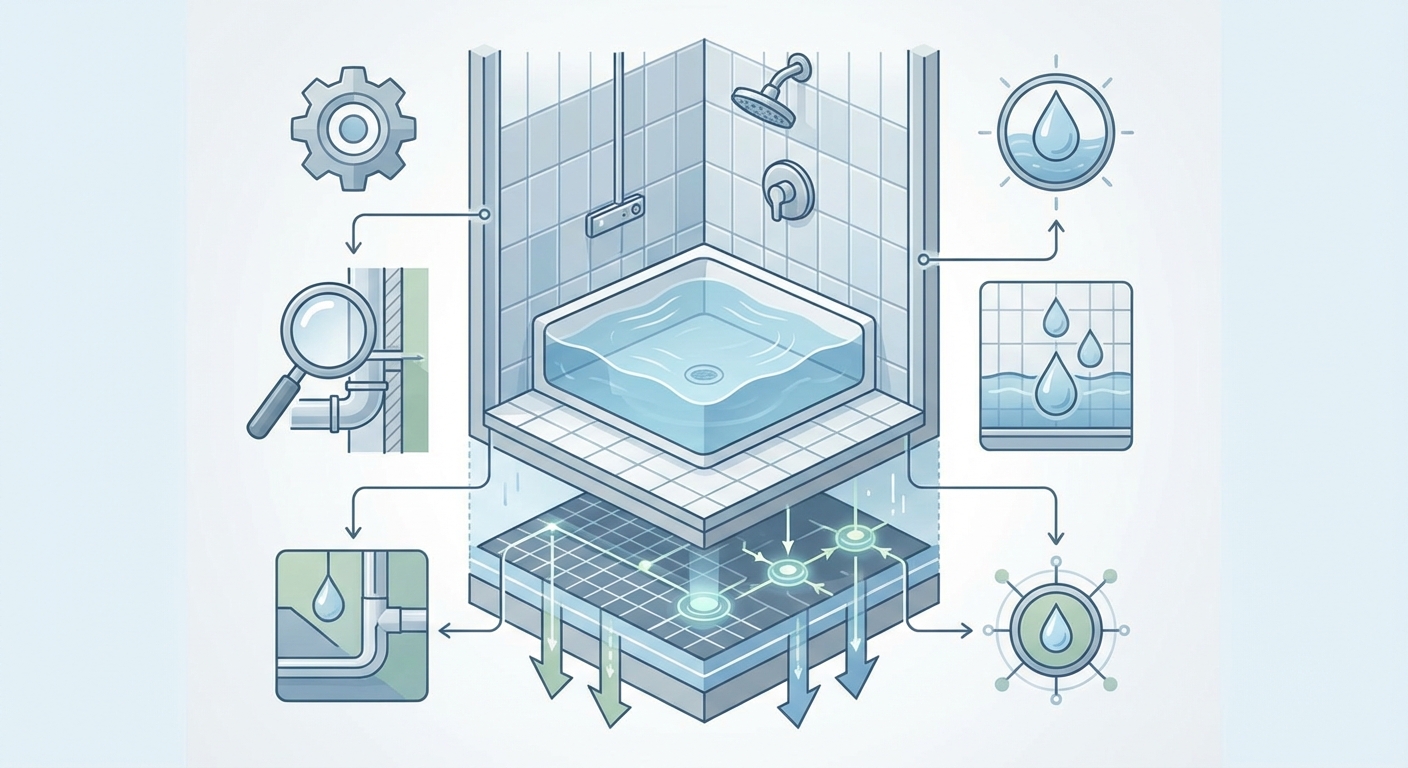
5. Verification and Testing
Ensuring the waterproofing of a shower enclosure is not just about careful installation; it requires verification through systematic testing. Even the most skilled installer can miss a small detail, and a minute oversight can lead to significant damage. Water, especially in a shower environment, is relentless. It will find the smallest breach in a waterproofing system, leading to hidden leaks that can cause structural damage and mold growth. This section focuses on the critical steps builders and homeowners must take to verify the integrity of a shower's waterproofing system, emphasizing flood testing protocols, visual checks, and other verification methods. The goal is to catch any potential failures before they become costly problems, ensuring the shower performs as intended for many years.
5.1 The Importance and Mechanics of Flood Testing
Flood testing is the primary and most important verification step for shower waterproofing. It involves sealing the drain and filling the shower pan with water to a specific level for a set duration. This test directly proves whether the shower pan and the lower sections of the waterproofing system are watertight. Industry standards and local building codes often mandate this test, and for good reason: it identifies leaks before the tile and other finishes are installed, when repairs are far less expensive and new. Phoenix, Arizona, with its climate and building practices, makes flood testing particularly relevant.
The science behind a flood test is simple but effective. By creating static water pressure against the waterproofing layer, any compromise in the membrane, seams, or drain connection will likely reveal itself as a leak. This direct pressure test is more rigorous than simply splashing water or running a shower for a short period, which might not expose subtle defects.
5.1.1 Flood Test Procedure and Duration
The procedure for a flood test is standardized. First, the shower drain must be plugged securely. For traditional shower pans with weep holes in the drain assembly, it is crucial to plug these weep holes as well, or else water will slowly drain out and give a false negative result. Inflatable or mechanical plugs are commonly used to seal the drain pipe[5]. Once the drain is sealed, the shower pan is filled with water. The water level is typically brought up to just below the top of the shower curb. This ensures that the pan itself, and the waterproofing material extending up the curb and lower walls, are fully submerged and tested [5].
After filling the pan, the water level is marked, often with tape, directly on the wall or curb. This mark serves as a reference point to detect any drop in water level over the test period. The standard duration for a flood test is a minimum of 24 hours[5]. However, in many areas, including Phoenix, inspectors and experienced contractors often extend this testing period to 48 hours, or even up to 72 hours in some cases[5]. The extended time provides a more thorough assessment, especially in dry, warm climates like Phoenix where slight evaporation might occur naturally. To minimize evaporation during the test, some professionals cover the water surface with a sheet of plastic film[5].
Upon completion of the test period, two main observations are made:
- Water Level Check: The water level is compared against the initial mark. A significant drop in the water level that cannot be attributed solely to evaporation indicates a leak[5].
- Surrounding Area Inspection: The areas adjacent to and below the shower pan (e.g., the ceiling below if it is an upstairs shower, or the framing around the pan) are carefully inspected for any signs of moisture, dampness, or drips[5]. Moisture meters can be used in these areas to detect concealed dampness that is not visible to the naked eye[37].
5.1.2 The Cost of Skipping the Test
Skipping the flood test, or performing a perfunctory one, is a common error that leads to expensive callbacks and extensive damage. A tiny puncture in a liner or a poorly sealed seam might not show up with a quick splash test, but it will almost certainly fail a 24-hour flood test. If such a leak goes undetected and the shower is finished, the consequences can be severe. One Phoenix case in 2025 involved a tiny curb gap that caused over $20,000 in repairs when water spread under adjacent walls, necessitating mold remediation and a complete rebuild[3]. In a large-scale example, a production builder in the Southwest faced $2.7 million in remediation costs across 450 homes due to widespread shower water intrusion issues attributable to multiple installation errors, including likely insufficient verification of waterproofing[23][24]. The average cost to fix each leaking shower in that case was approximately $6,000[25].
The economic argument for thorough flood testing is clear: it is far cheaper and less new to fix a waterproofing issue at the membrane stage than to tear out finished tile, remove saturated substrates, address mold, and then rebuild the entire shower, often affecting adjacent areas of the home.
5.1.3 Documentation and Accountability
Reputable contractors understand the importance of documenting the flood test. This typically involves taking timestamped photos of the initial water level and the level at the end of the test period[10]. Some even invite the homeowner or building inspector to witness the test. This documentation provides concrete proof that the waterproofing system was verified as sound before subsequent layers were installed. Such evidence can be crucial for warranty claims, insurance purposes, or in the event of any disputes down the line, establishing due diligence[39]. Many manufacturers also require proof of flood testing for their system warranties to be valid.
5.2 Verification Methods for Different Waterproofing Systems
While flood testing is primarily for the shower pan, walls also need verification. The method of verification can vary based on whether a traditional pan-liner system or a modern surface-applied membrane system is used.
5.2.1 Verification in Traditional Pan-Liner Systems (TCNA B415)
In traditional systems (e.g., TCNA B415), a PVC or CPE liner is installed beneath a mortar bed in the shower pan and extends up the walls. Verification primarily focuses on this liner. The flood test directly verifies the liner's integrity and its connection to the drain. Once the liner is covered with a mortar bed and tile, direct visual inspection of the liner is impossible. Therefore, the flood test is the critical verification step. During the installation of this system, visual checks are important: ensuring the liner is free of punctures, that corners are properly folded without creases, and that the liner is securely clamped to the drain assembly without any gaps. The weep holes in the drain must be kept clear (typically with gravel or plastic spacers) to allow water that penetrates the grout and mortar bed to drain away. A common failure mode in these systems is clogged weep holes, which can lead to a perpetually saturated mortar bed and potential leaks if the water level rises above the pan liner[20].
5.2.2 Verification in Surface-Applied Membrane Systems (TCNA B421/B422)
Surface-applied membrane systems (such as those using ANSI A118.10 compliant sheets or liquid membranes) place the waterproof layer directly behind the tile. This means the entire wet area, from floor to ceiling, is waterproofed directly on the substrate. Verification in these systems involves both visual inspection during application and flood testing.
- Visual Inspection (Sheet Membranes): For sheet membranes, installers visually inspect for consistent coverage, proper overlapping at seams, and the correct application of sealing bands and pre-formed corners around pipes, niches, and benches. With sheet membranes, the membrane’s uniform thickness is inherent, and installers can easily see if there are any gaps or misalignments before tiling[29].
- Visual Inspection (Liquid Membranes): For liquid membranes, careful visual inspection is needed to ensure even application and adequate thickness. Liquid membranes often require multiple coats, and each coat must be inspected for complete coverage without thin spots. Reinforcing fabric (often fiberglass mesh) must be embedded in the liquid membrane at all changes of plane, corners, and board seams, and the integration of this fabric must be verified[34].
Flood testing is still crucial for surface-applied systems, particularly for the shower pan. While the membrane is directly behind the tile, the static water pressure of a flood test will confirm the integrity of the membrane on the floor, its connection to the drain, and the waterproofing extending up the lower walls and curb. Some contractors might also perform a "shower simulation" test for these systems, running a showerhead or hose to observe the walls and corners for an extended period, looking for any darkening on the back side of a wall. However, the static flood test is the primary, industry-recognized test for the pan[5].
For systems that use waterproof foam boards (e.g., Wedi board), visible joints between panels must be sealed according to manufacturer specifications (e.g., with sealant and reinforcing tape). Verification involves ensuring all joints and fastener penetrations are properly sealed and that the system is tied into the drain correctly before the flood test.
5.3 Special Considerations for Phoenix Conditions
Phoenix's environment introduces additional factors that make thorough verification even more important:
- High Daily Temperature Swings: Daily temperature variations can be 30°F or more between day and night[4]. These swings cause materials to expand and contract. This environmental stress makes flexible movement joints critical, and their proper installation should be visually verified. Flood tests help confirm that such movement has not compromised the waterproofing layer.
- Slab-on-Grade Construction: Many homes in Phoenix are built on concrete slabs. The transition from the shower pan to the slab, and integrating the drain into the slab, requires careful detailing. The flood test verifies the integrity of the pan and drain tie-in in this common local construction scenario. Movement joints and crack-isolation membranes (ANSI A118.12 compliant) are often used to address potential slab movement.
- Hard Water: While not a direct waterproofing issue, Phoenix's extremely hard water (9.9 to 16.1 grains per gallon)[7] can accelerate the deterioration of porous materials like cement grout. This means the waterproofing membrane behind the tile is the sole line of defense against prolonged moisture contact with the substrate. Verification confirms this primary defense is sound.
5.4 Capillary Checks and Absorption Concepts
Beyond flood testing, other verification concepts relate to preventing moisture migration through capillary action and absorption. A common failure in older or poorly constructed showers is allowing materials outside the waterproof enclosure (like wood framing or non-water-resistant drywall) to be in direct contact with potentially wet areas within the shower structure. Capillary action can then wick moisture into these materials, leading to unseen damage.
One "dry-pack wicking test" involves leaving a small portion of the mortar bed (in traditional systems) uncoated and observing how far water wicks within 24 hours. While not a primary verification of the main waterproof barrier, it helps understand the dynamics of moisture within the assembly. A well-designed shower isolates moisture within the waterproof envelope. Any evidence of wicking during a flood test (e.g., damp drywall or framing above the pan liner) would indicate a detailing error, such as a missing or improperly installed sealant along the wall base.
5.5 Top Failure Points: Where to Focus Verification
Research consistently shows that specific areas of a shower are more prone to leaks. Over two-thirds of shower leak calls in Phoenix were traced to failures at the curb, niche, or drain areas[14]. These "weak links" require extra attention during both installation and verification.
The table below summarizes common failure points and their relevant verification steps:
| Failure Point | Common Causes of Failure | Verification Method | Standard Reference |
|---|---|---|---|
| Shower Pan & Drain | Punctured liner/membrane, improperly sealed drain connection, clogged weep holes, liner not extending high enough. | Flood Test (24-48 hours), Visual inspection of drain connection before flood test. | TCNA B415, B421, B422; ANSI A108.1A |
| Corners (Walls & Floor-Wall) | Grouting instead of flexible sealant, incomplete membrane coverage, unreinforced seams in liquid membrane. | Visual inspection of joint material (silicone/caulk), inspection of membrane overlaps/reinforcement during installation. | TCNA EJ171; ANSI A108.1B |
| Shower Curb | Screw penetrations through top of curb (for door), membrane not fully wrapping curb, curb not sloped inward, insufficient corner reinforcement. | Visual inspection of curb slope, flood test (water level should be just below curb top), inspection of membrane wrapping. | TCNA B415, B421; ANSI A108.1A |
| Benches & Niches | Flat or improperly sloped surfaces, unsealed seams at wall junctions, incomplete membrane coverage in recesses. | Visual inspection of slope (1/8″ per foot), inspection of membrane coverage and reinforcement in corners/seams. Flood test the whole pan. | TCNA B415, B421, P601, P602 |
| Pipe Penetrations (Valve, Showerhead) | Lack of proper sealing gaskets or waterproofing system components around pipes. | Visual inspection of sealing collars/gaskets around all pipe entries during membrane installation. | N/A (manufacturer specific) |
| Movement Joints | Using hard grout where flexible sealant is needed, insufficient spacing for tile expansion. | Visual inspection of all changes of plane for presence of flexible sealant (100% silicone). | TCNA EJ171 |
Every horizontal surface within the shower, like the tops of benches and the bottom of niches, should be sloped at least 1/8 inch per foot toward the drain of the shower to prevent water from pooling[28]. This detail is not directly verified by a flood test, but it is visually checked during construction. If a bench is not sloped, water will sit on it and eventually penetrate the grout, even if the underlying bench is waterproofed.
5.6 The Role of Homeowners and Inspectors
For homeowners, understanding the flood test process and requesting documentation of its successful completion is a sensible action. It provides assurance that a critical step in leak prevention was not overlooked. If a contractor dismisses the need for a flood test, or claims it is "overkill," this should be considered a red flag[44]. A diligent professional will welcome the opportunity to prove the integrity of their work.
Building inspectors in Phoenix often include a flood test check as part of their rough-in or final plumbing inspections for shower pans. This external verification adds another layer of quality control and compliance with local codes. The presence of such a regulatory requirement underscores the industry's recognition of flood testing as an indispensable verification step.
5.7 Transition to the Next Section
Verification and testing, particularly flood testing, are crucial checkpoints in the shower construction process, ensuring the waterproofing system is sound before finishes are applied. However, a shower's longevity and performance are also influenced by the material choices made for the visible components and their ongoing maintenance. The next section will detail how selection of critical materials, such as specific membranes and mortars, directly supports a durable and leak-free shower, especially when considering the challenging conditions present in Phoenix.
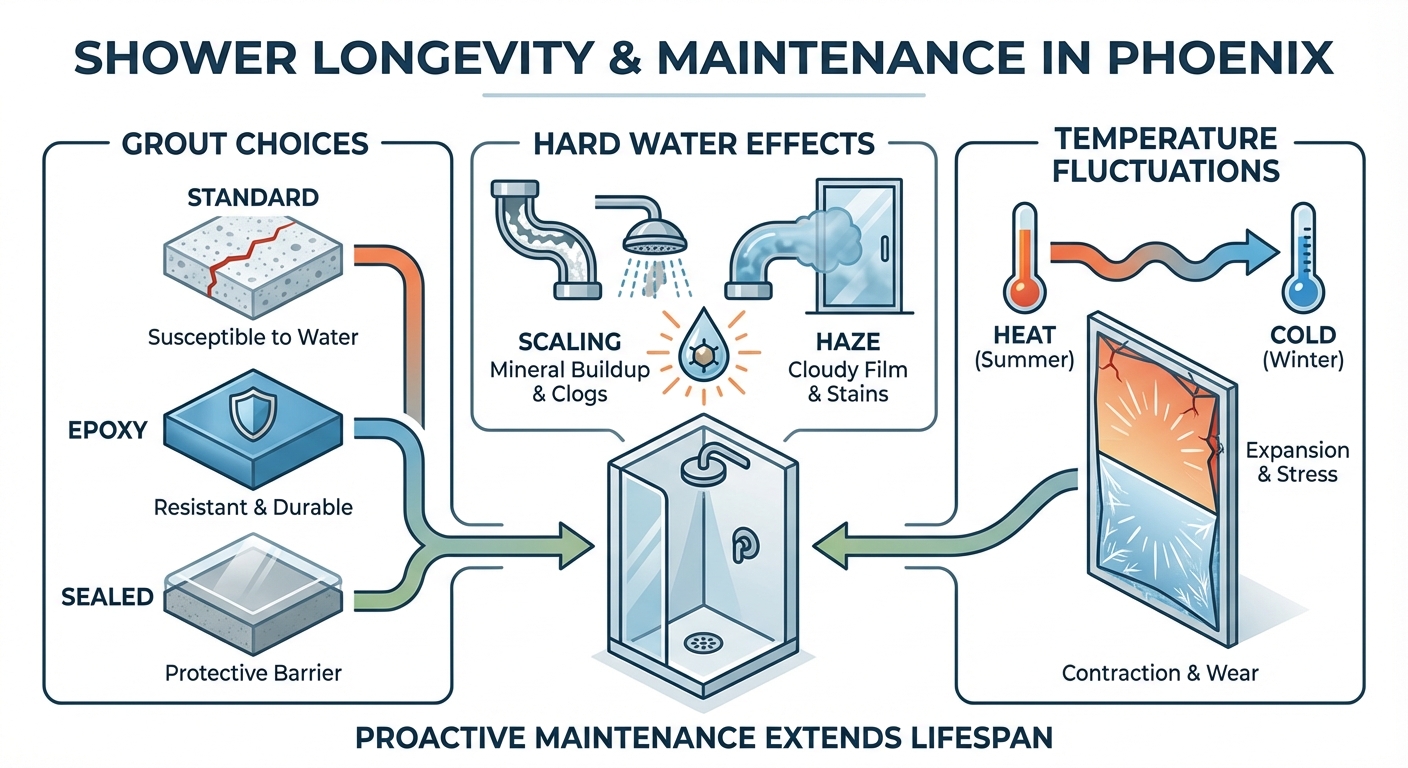
6. Grout, Hard Water, and Shower Upkeep
Building a durable, leak-free shower involves careful planning and execution of the waterproofing system. However, the longevity and appearance of a shower also depend on the materials used for its visible surfaces, particularly the grout, and how it is maintained. This is especially true in environments like Phoenix, Arizona, where extreme hard water conditions and significant temperature fluctuations add stress to shower components. This section discusses the impact of grout choices and Phoenix's unique environmental factors on shower longevity and maintenance practices. It explains why certain materials and habits can greatly affect a shower's lifespan and its aesthetic quality.
Grout Choices and Their Impact on Longevity and Maintenance
Grout, while seemingly a minor component, plays a significant role in the overall performance and upkeep of a tiled shower. The choice of grout directly affects how well the shower resists moisture penetration, staining, and mineral buildup. Two main types of grout are commonly used: cementitious and epoxy.
Cementitious Grout
Composition and Properties: Traditional cementitious grout is made from a blend of Portland cement, sand, and water. This composition makes it inherently porous. It acts much like concrete, allowing water to penetrate its surface and be absorbed into the grout lines [10]. While it allows moisture to pass through, it does not mean a shower relying solely on grout for waterproofing is safe. Tile and grout are not considered waterproof; a membrane or liner must always be in place behind them to prevent leaks [10].
Maintenance in Phoenix: In Phoenix, the porous nature of cementitious grout presents specific challenges. The city's water is notably hard, ranging from 9.9 to 16.1 grains per gallon (gpg) of minerals [7]. This high mineral content means that as water passes through or dries on cementitious grout, it leaves behind mineral deposits, leading to discoloration, efflorescence (a white powdery substance), and a general dulling of the grout appearance. These deposits, combined with soap scum, can quickly make a shower look unclean, even if it has just been washed. To combat this, cementitious grout requires regular maintenance, including the application of a penetrating sealer. This sealer helps to fill the pores of the grout, making it less absorbent and more resistant to stains and mineral buildup [10]. However, these sealers are not permanent and typically need to be reapplied every one to two years to maintain their effectiveness.
Epoxy Grout
Composition and Properties: Epoxy grout is a two-part or three-part system consisting of an epoxy resin, a hardener, and sometimes filler powder. When these components are mixed and cured, they form a solid, non-porous material [10]. This non-porous characteristic is the main advantage of epoxy grout over cementitious varieties. It means epoxy grout does not absorb water, making it highly resistant to staining, mold, mildew, and chemical degradation [10].
Advantages in Phoenix Conditions: For showers in Phoenix, epoxy grout offers significant benefits. Its resistance to water absorption means that mineral-rich Phoenix water cannot easily penetrate the grout lines and deposit scale internally. This helps prevent the white haze and discoloration often seen with cementitious grout. Epoxy grout requires no sealing, which simplifies long-term maintenance. Its resistance to mold and mildew also contributes to a cleaner, more hygienic shower surface. Many professional remodelers in Phoenix now recommend or use epoxy grout in showers despite its higher initial cost, recognizing its superior performance and reduced maintenance needs in the local environment and the benefits it provides to clients [2].
Installation Considerations: While offering notable advantages, epoxy grout is more expensive than cementitious grout, potentially costing three to five times more [10]. It is also more challenging to install. Epoxy grout has a shorter working time (pot life) and is stickier, requiring precise application and prompt cleanup from tile surfaces to avoid a permanent haze. These factors can contribute to higher labor costs for epoxy grout installation.
Comparison Table: Cementitious vs. Epoxy Grout
| Feature | Cementitious Grout | Epoxy Grout |
|---|---|---|
| Composition | Portland cement, sand, water | Epoxy resin, hardener, filler |
| Porosity | Porous, absorbs water | Non-porous, highly water-resistant |
| Sealing Required | Yes (periodically) | No |
| Stain Resistance | Low to moderate (improves with sealer) | High |
| Mold/Mildew Resistance | Low (requires cleaning and sealing) | High |
| Hard Water Impact | Prone to scale and discoloration | Very resistant to scale and discoloration |
| Initial Cost | Lower | Higher (3-5x cementitious) |
| Installation Difficulty | Easier | More difficult, shorter working time |
| Maintenance Effort | Higher (regular sealing, thorough cleaning) | Lower (routine cleaning) |
Hard Water in Phoenix and Its Solutions
Phoenix's water is known for its extreme hardness, with mineral content ranging from approximately 9.9 to 16.1 grains per gallon [7]. This makes Phoenix water among the hardest in the United States. Hard water contains high levels of dissolved minerals, primarily calcium and magnesium. When this water evaporates, it leaves behind these mineral deposits, forming unsightly limescale or water spots on shower surfaces.
Impact on Shower Surfaces
- Grout Haze and Discoloration: As discussed, hard water can infiltrate porous cementitious grout, leaving white or yellowish mineral deposits that alter the grout's color and texture. Even on epoxy grout, surface deposits can form if not cleaned.
- Glass Etching and Haze: Shower glass is particularly vulnerable to hard water. Over time, repeated exposure to mineral-laden water can lead to etching, where the glass becomes permanently hazy or dull, reducing its clarity and appearance.
- Fixture Damage: Mineral buildup can clog showerheads, faucets, and other plumbing fixtures, reducing water flow and requiring more frequent cleaning or replacement.
- Stone Damage: Natural stone tiles, such as marble or travertine, are sensitive to acids and some mineral deposits. Hard water can etch or stain these surfaces, causing permanent damage and dulling their finish [11].
Strategies for Mitigation
To address the challenges posed by Phoenix's hard water, homeowners and professionals employ several strategies:
- Water Softeners: Installing a whole-house water softener is one of the most effective ways to combat hard water issues. A softener removes the hardness minerals from the water supply before it reaches the shower, significantly reducing scale buildup on all surfaces and fixtures. While an upfront investment, this can greatly reduce maintenance and extend the life and appearance of shower components.
- Surface Sealers and Coatings:
- For cementitious grout, applying a high-quality penetrating sealer is essential. This creates a barrier that slows mineral absorption.
- For glass enclosures, professional installers often apply hydrophobic (water-repelling) coatings. These coatings make water bead up and run off the glass more easily, preventing minerals from bonding to the surface. Phoenix Home Remodeling, for instance, recommends these protective coatings to their clients due to local water quality [2].
- Natural stone tiles also require regular sealing to protect against mineral penetration and etching.
- Daily Cleaning Practices: Simple daily habits can make a big difference:
- Squeegee or Towel-Dry: Wiping down shower walls, glass, and fixtures with a squeegee or a microfiber towel after each use removes mineral-laden water before it can dry and deposit scale.
- Rinse-Free Sprays: Daily shower sprays can help to dissolve minerals and soap scum, making surfaces easier to clean.
- Material Selection: Choosing materials that are naturally more resistant to hard water can minimize maintenance. Glazed porcelain tiles, for example, are non-porous and highly resistant to staining and etching, outperforming softer natural stones like travertine in hard water environments [11].
Shower Upkeep and Mold Prevention
Even with advanced waterproofing and durable materials, regular upkeep is essential for maintaining a shower's appearance, hygiene, and long-term functionality. This involves proper ventilation, cleaning, and periodic inspection of sealants.
Ventilation
Adequate ventilation is critical for managing humidity within the shower area. High humidity promotes the growth of mold and mildew on surfaces, regardless of the underlying waterproofing. An exhaust fan, properly sized for the bathroom and used during and for 15-20 minutes after showering, helps remove moisture from the air. In Phoenix, where temperature swings are common, preventing moisture buildup is important for surface hygiene.
Cleaning Practices
- Regular Cleaning: Routine cleaning with pH-neutral cleaners is recommended to remove soap scum, body oils, and light mineral deposits. For areas with hard water, specialized cleaners designed to dissolve limescale may be needed.
- Avoiding Abrasive Cleaners: Harsh, abrasive cleaners can damage tile and grout surfaces, especially natural stone, and may strip away sealers. Diluted white vinegar can be effective for mineral deposits but should be used cautiously on natural stone.
- Soap Choice: Using liquid body washes (synthetic detergents) instead of traditional bar soaps can reduce the amount of soap scum formed, as liquid soaps are less likely to react with hard water minerals.
Case Study: Hard Water Havoc in Phoenix: A Phoenix resident with a travertine shower experienced significant aesthetic deterioration due to hard water and minimal upkeep. The travertine became discolored and hazy, and the glass blocks dulled [11]. Professional restoration involved steam cleaning, polishing, and sealing the surfaces. This example highlights that even if a shower is leak-proof, hard water can severely impact its appearance if not properly managed [11]. It led the homeowner to install a water softener and adopt more rigorous maintenance [11].
Sealant Integrity and Replacement
Flexible sealants, typically 100% silicone caulk, are used in all changes of plane within a shower (e.g., corners, where the shower base meets the wall, and around shower door frames). These joints are crucial for accommodating movement and preventing water penetration where grout would crack [3]. Over time, caulk can degrade, crack, peel, or become stained with mold that is difficult to clean. Manufacturers typically suggest a lifespan of about five years for shower caulk. In Phoenix's warm climate, this degradation might occur faster. Regular inspection of these sealed joints is important. If cracking, peeling, or persistent mold is observed, the old caulk should be removed and replaced. This is a normal part of shower maintenance and helps maintain the integrity of the moisture barrier.
The "Good, Better, Best" Approach to Shower Planning in Phoenix
When planning a shower installation in Phoenix, understanding the tiered approach to waterproofing and finishing can help homeowners make informed decisions based on budget, desired longevity, and maintenance expectations.
Good: Basic Code-Compliant Shower
This approach involves meeting minimum building code requirements. It typically features a PVC or rubber pan liner over a sub-floor, creating a pre-sloped mortar bed. Walls are usually cement backer board with a plastic sheeting or roofing felt moisture barrier behind them. The liner runs a few inches up the walls and over the curb [4]. A standard clamping drain directs water that seeps through the tile and grout. Cementitious grout is used and sealed after curing. This "good" system is the most cost-effective upfront. However, it relies heavily on the integrity of a few critical components (like the pan liner and weep holes) and allows the mortar bed to stay damp after each use, potentially leading to efflorescence or mold growth if ventilation is poor [4]. Many of the common leaks in older showers originate from failures in these traditional systems, especially if installation details like corner folds or weep hole protection are overlooked [2]. Given Phoenix's heat and hard water, the potential for issues related to moisture retention and temperature-induced material movement is higher with this basic approach, requiring ongoing maintenance like re-caulking and frequent grout sealing.
Better: Enhanced Modern Shower
A "better" system incorporates modern materials to improve durability and reduce leak risk. This often means using a surface-applied waterproofing system, such as a liquid-applied membrane (ANSI A118.10 compliant) or a sheet membrane, across all shower walls and the floor [4]. This creates a continuous, direct-to-tile waterproof layer, preventing water from reaching the substrate (backer board or mortar bed). This method significantly reduces the chance of hidden moisture damage and mold. All corners and seams are reinforced with manufacturer-specified tapes or fabrics. While the drain might still be a traditional clamping type, the topical membrane effectively keeps water from saturating the mortar bed. Sealants are often upgraded to polyurethane or higher-quality silicones for improved flexibility and durability. Grout might be a high-performance cementitious type with additives for better density and mildew resistance. This approach addresses many common failure points, especially on walls where traditional methods rely on a less strong moisture barrier. Material and labor costs are higher than the "good" option but offer a substantially more strong and longer-lasting shower system, often considered the new standard by many professionals [2].
Best: Premium smooth Shower System
The "best" systems are fully engineered, manufacturer-specific solutions designed for maximum waterproofing and longevity, often offering extended warranties (10-25 years). Examples include systems from Schluter-Systems (Kerdi) or Laticrete (Hydro Ban). These systems typically feature:
- Proprietary Components: Integrated systems with products like bonding flange drains, waterproof foam backer boards, or factory-sloped shower pans.
- Continuous Surface Membrane: A sheet membrane or a liquid membrane forms a completely encapsulated waterproof envelope from floor to ceiling [4]. This means water that penetrates the tile and grout is immediately directed to the drain on the waterproof surface, eliminating the "water sandwich" effect seen in traditional pans.
- Reinforced Details: Pre-formed corners and sealing bands are used at all transitions and penetrations (like mixing valves) for a highly reliable seal.
- Advanced Grout and Sealants: Epoxy grout or advanced urethane grouts are often specified, eliminating the need for sealing. All movement joints use 100% silicone.
These systems virtually eliminate typical leak points and are less susceptible to installer errors. While they represent the highest upfront cost in materials and sometimes labor, their long-term value in durability, minimal maintenance, and peace of mind is significant. Some manufacturers, including Schluter, offer lifetime warranties against leaks when their full system is installed by a certified professional. For Phoenix homeowners, this "bulletproof" approach provides strong protection against the challenges of hard water, temperature fluctuations, and potential structural movement, ensuring a shower that can last for decades with minimal issues.
The choice of grout, diligent maintenance practices, and awareness of environmental factors like hard water are critical to the long-term enjoyment and durability of any shower. Understanding the "good, better, best" spectrum of shower systems allows homeowners to select a solution that aligns with their expectations for performance and upkeep, especially in demanding climates like Phoenix. Ultimately, a well-built shower combines strong waterproofing science with intelligent material choices and consistent care.Conclusion of Grout, Hard Water, and Shower Upkeep
The selection of grout, coupled with proactive maintenance habits, significantly influences a shower's lifespan and appearance, especially when confronting challenges like Phoenix's hard water and wide temperature fluctuations. Cementitious grout, while traditional, demands ongoing sealing and cleaning to resist mineral buildup and staining. Epoxy grout, conversely, offers a non-porous, low-maintenance solution that excels in hard water environments. Effective strategies for mitigating hard water effects include water softeners, protective coatings, and diligent daily drying. Proper ventilation, regular cleaning, and timely replacement of silicone sealants are also critical for preventing mold and preserving aesthetics.
The "Good, Better, Best" framework highlights how system choices impact durability and maintenance. While code-compliant showers offer a basic level of protection, modern surface-applied membranes and integrated systems provide superior, long-term performance and minimize common failure points, thereby protecting the substantial investment a shower represents. By understanding these principles, homeowners and contractors can make informed decisions that ensure shower longevity and reduce costly repairs.
The next section will discuss best practices for shower cleaning specific to different tile types and how to spot early warning signs of water damage, further equipping homeowners with the knowledge needed for effective shower care.
7. Bill of Materials: Good, Better, Best
Creating a shower that withstands the daily assault of water presents a significant building challenge, especially in a demanding environment like Phoenix, Arizona. The choice of materials and construction methods directly impacts the shower's longevity and performance. This section outlines a tiered approach to shower waterproofing systems: "Good," "Better," and "Best." These categories describe different levels of material quality and installation methods, ranging from code-compliant to systems designed for maximum durability. Understanding these distinctions helps homeowners and building professionals make informed decisions that prevent costly failures. Shower leaks are the leading cause of bathroom water damage, with about 66% of calls involving showers in Phoenix alone [2]. A small defect, such as a pinhole leak, can lead to over $20,000 in repairs if water spreads undetected [2]. Given these risks, selecting the right bill of materials is critical.
The Phoenix climate adds specific considerations. The city's water is hard, ranging from 9.9 to 16.1 grains per gallon [7], which speeds up scale and grout haze formation. Daily temperature swings, often exceeding 30°F between day and night, increase material stress, highlighting the need for expansion joints and flexible sealants [2]. Also, tile over slab foundations is common, requiring attention to perimeter movement and drain bonding. Modern waterproofing methods, particularly surface-applied membranes and improved drains, "fail far less often" than older liner-and-mortar designs [2]. This section details how different material selections impact the shower's ability to resist water intrusion, accommodate movement, and endure the specific challenges of the Phoenix environment. Each tier will define the components for the shower pan, walls, curbs, benches, niches, and the types of grout and sealants used.
7.1. "Good" - Code-Compliant Basic Shower System
The "Good" shower system represents a basic, code-compliant approach to waterproofing. This system aims to meet minimum building requirements, offering a functional shower at a lower upfront cost. While it can perform adequately if installed perfectly, it has inherent characteristics that make it more vulnerable to issues over time, especially in Phoenix. This system relies on traditional methods and materials, described in standards like TCNA B415 [19].
7.1.1. Pan Construction
- Membrane: A 40-mil PVC or CPE (chlorinated polyethylene) flexible pan liner is typically used [2]. This liner forms the primary waterproof barrier on the shower floor. It is laid over a pre-sloped mortar bed (often called a "pre-slope") that directs water to the weep holes of the drain. The liner extends up the perimeter walls a minimum of 3 inches above the finished curb or threshold [2].
- Substrate: The liner is placed over a sloped subfloor or a pre-slope of dry-pack mortar. A second layer of mortar is then placed on top of the liner, which creates the final sloped surface for tile installation. This means water must penetrate the tile and top mortar layer before reaching the liner.
- Drain: A two-piece clamping drain is used. The pan liner is clamped between the two parts of the drain body, creating a seal. Weep holes at the base of the drain allow water that saturates the mortar bed to drain away [19]. These weep holes are critical but are often clogged by installers if not properly protected with pea gravel or spacers.
7.1.2. Wall Construction
- Backer Board: Cement board or fiber-cement board (e.g., HardieBacker, WonderBoard) is installed on the wall studs. This provides a stable, water-resistant surface for tile adhesion. It is important to note that cement board is water-resistant, not waterproof; it can get wet without degrading but does not stop water from passing through.
- Moisture Barrier: A 4-mil (or thicker) polyethylene sheet or asphalt felt is stapled to the studs behind the cement board [10]. This acts as a secondary moisture barrier, protecting the wood framing from water that may penetrate the cement board. This barrier typically starts at the stud level above the pan liner, overlapping the liner by several inches.
- Seams and Corners: Seams between cement board panels are usually taped with fiberglass mesh tape and thin-set mortar. Inside corners are typically filled with grout.
7.1.3. Curb, Bench, and Niche Construction
- Curb: The curb is typically built using stacked lumber or concrete blocks, then covered with the pan liner before the final mortar bed and tile. The liner must wrap over the top of the curb and extend down the outside face, or be carefully folded and sealed at the top inner edge [2]. Penetrations for shower door screws are a common failure point if not handled correctly.
- Benches and Niches: These elements are typically framed with wood or metal studs and then covered with cement board. The interior surfaces are tiled directly. Proper slope (1/8 inch per foot minimum) is crucial on horizontal surfaces like bench tops and niche bottoms to prevent water pooling [1].
7.1.4. Grout and Sealants
- Grout: Basic sanded or unsanded cementitious grout is used. This grout is porous and absorbs water, making it prone to staining, mildew, and mineral buildup in Phoenix’s hard water conditions [10]. It requires periodic sealing (every 1-2 years) to help mitigate these issues.
- Sealants: Acrylic latex caulk, which offers limited flexibility, is commonly used in corners and at changes of plane (e.g., where walls meet the floor or curb). This type of caulk often cracks over time, especially with Phoenix's temperature swings, creating paths for water [1].
7.1.5. Limitations in Phoenix
While code-compliant, the "Good" system has several drawbacks in Phoenix:
- The mortar bed can remain saturated, creating a "water sandwich" that promotes efflorescence and mold growth over time [20].
- The reliance on a moisture barrier behind the cement board means water can still reach and move within the wall cavity before hitting the barrier, potentially causing issues if the barrier is punctured or improperly installed.
- Cementitious grout and flexible caulk have shorter lifespans and require more maintenance, especially with Phoenix's hard water and significant thermal expansion/contraction [2].
- Failures at corners, curbs, and drains are most common in these traditional assemblies if any detail is missed [2]. Such errors can lead to expensive repairs, often averaging $6,000 per shower
The "Better" shower system moves beyond minimum code, incorporating modern surface-applied waterproofing technologies to create a more strong and durable shower. This system addresses many of the weaknesses of the "Good" system, especially regarding moisture management and durability for Phoenix conditions. It often involves methods compliant with ANSI A118.10 standards for waterproof membranes [21].
7.2.1. Pan Construction
- Membrane: This system uses a liquid-applied waterproofing membrane (e.g., Laticrete Hydro Ban, Custom Building Products RedGard) directly on the sloped mortar bed [21]. This membrane creates a continuous, smooth waterproof layer on the surface of the pan, preventing water from saturating the mortar bed. The liquid membrane goes from the pan up the walls, forming an integrated system.
- Substrate: A traditional mortar bed is pre-sloped, allowed to cure, and then coated with the liquid membrane. Alternatively, a pre-fabricated foam shower base (which is inherently sloped and waterproof by design) may be used, with liquid membrane applied over its surface or at seams if it's a multi-component system.
- Drain: Often, a two-piece clamping drain is still used, but the liquid membrane is carefully applied to form a waterproof "divot" around the drain, effectively creating a single-stage drainage system on the surface. Some "Better" systems may upgrade to a bonding flange drain for a more direct connection with the membrane.
7.2.2. Wall Construction
- Backer Board: Cement board or fiber-cement board is used.
- Waterproofing: A liquid-applied waterproofing membrane is brush or roller-applied in two or more coats over the entire surface of the cement board walls, from the pan up to the typical showerhead height or higher. This creates a continuous, direct-bond waterproof layer on the surface of the substrate. Any water that penetrates the tile and grout hits this membrane and is directed downward.
- Seams and Corners: All seams and changes of plane (e.g., wall-to-wall corners, wall-to-pan junctions) are reinforced with alkali-resistant fiberglass mesh tape embedded in the liquid membrane (per manufacturer instructions). This adds tensile strength and prevents cracks [23].
7.2.3. Curb, Bench, and Niche Construction
- Curb: Curbs are typically built with dense materials (e.g., concrete blocks, wood covered with cement board) and fully coated with the liquid waterproofing membrane. The membrane ensures the entire curb assembly is waterproof, shedding water back into the shower. Careful detailing is needed for any door attachment points, avoiding punctures through the waterproof layer.
- Benches and Niches: These structures are framed (often with wood or metal) and covered with cement board. All surfaces, especially horizontal ones like bench tops and niche bottoms, are sloped (minimum 1/8 inch per foot) [1]. The entire bench and niche are fully coated with the liquid membrane, with reinforcing mesh at all corners and seams to prevent cracking and ensure a continuous waterproof barrier.
7.2.4. Grout and Sealants
- Grout: High-performance cementitious grout with polymer additives is commonly used. These grouts are denser, more stain-resistant, and less porous than basic cement grout, reducing water absorption and mildew growth. They still benefit from periodic sealing but less frequently than basic grout.
- Sealants: 100% silicone sealant is used at all changes of plane (corners, floor-to-wall joints, around drains and fixtures), often color-matched to the grout. Silicone offers superior flexibility and durability compared to acrylic caulk, accommodating movement caused by temperature fluctuations in Phoenix [1].
7.2.5. Benefits and Considerations in Phoenix
The "Better" system offers significant advantages:
- Improved Moisture Management: Water is stopped at the surface, preventing saturation of the mortar bed and backer board. This eliminates the "water sandwich" and reduces the risk of mold and efflorescence.
- Reduced Leak Risk: The continuous surface membrane, reinforced seams, and flexible silicone sealants address common failure points like corners and penetrations.
- Enhanced Durability: The more strong system handles Phoenix's temperature swings and hard water with greater resilience.
- Maintenance: High-performance grout requires less frequent sealing than basic cementitious grout.
This system generally comes at a moderate increase in material and labor costs compared to the "Good" system. However, the reduced risk of future problems and a longer lifespan often make it a worthwhile investment. It represents a widely accepted modern standard for quality shower construction.
7.3. "Best" - Premium smooth Shower System
The "Best" shower system represents the highest standard in shower waterproofing, designed for maximum longevity, minimal maintenance, and peace of mind. These systems are often proprietary, fully engineered solutions from a single manufacturer, offering system warranties that can extend for decades. They eliminate virtually all typical failure points and are highly resilient to Phoenix's specific climate challenges. Examples include Schluter Kerdi systems or Wedi/KBRS foam board systems [4].
7.3.1. Pan Construction
- Membrane/Component: This tier typically employs a pre-sloped, waterproof foam shower base (e.g., Schluter Kerdi-Shower tray, Wedi Fundo Primo). These bases are made of extruded polystyrene foam, which is inherently waterproof and dimensionally stable. The entire system is then covered by a bonded sheet membrane (e.g., Schluter Kerdi membrane) or the foam board itself acts as the waterproof layer.
- Drain: A specific bonding flange drain is integral to these systems (e.g., Schluter Kerdi-Drain). The sheet membrane or waterproof board directly bonds to the flange of the drain, creating a single-plane waterproof assembly. This means water always drains on the surface of the membrane without ever entering a mortar bed.
7.3.2. Wall Construction
- Backer Board/Substrate: Waterproof foam backer boards (e.g., Schluter Kerdi-Board, Wedi Building Panels) are installed directly on the studs. These boards are composed of XPS foam with a cementitious coating, making them lightweight, stable, and completely waterproof upon installation.
- Waterproofing: With systems like Schluter, a bonded sheet membrane is applied over the foam backer boards, extending from the floor to the ceiling. All seams are waterproofed with special banding tape (e.g., Kerdi-Band) and thin-set mortar. If using Wedi, the panels themselves are waterproof, and all seams are sealed with manufacturer-specific sealant or tape. This ensures a continuous, vapor-tight envelope around the entire shower area.
- Penetrations: All pipe penetrations for mixing valves, showerheads, and other accessories are sealed with pre-fabricated gaskets or collars that integrate seamlessly with the membrane system, eliminating common leak points.
7.3.3. Curb, Bench, and Niche Construction
- Curb: Pre-fabricated waterproof foam curbs (e.g., Schluter Kerdi-Board-SC, Wedi Curbs) are used. These are lightweight, easy to install, and inherently waterproof. They are integrated into the main membrane system with banding tape or sealant. They can be tiled directly.
- Benches and Niches: Built using waterproof foam panels (e.g., Schluter Kerdi-Board, Wedi Building Panels) or pre-fabricated foam bench and niche kits. These components are fully integrated into the shower's waterproof envelope. All horizontal surfaces have a built-in slope. Corners are sealed with pre-formed membrane corners (e.g., Kerdi-Kereck) or specialized sealants.
7.3.4. Grout and Sealants
- Grout: Epoxy grout (e.g., Laticrete SpectraLOCK, Mapei Kerapoxy) or advanced urethane grout is specified. Epoxy grout is non-porous, highly resistant to stains, chemicals, and mildew, and does not require sealing [10]. This is ideal for Phoenix’s hard water, eliminating mineral buildup and cleaning challenges on grout lines. It has a higher upfront cost and more complex installation but offers superior performance and durability.
- Sealants: 100% pure silicone sealant (e.g., Schluter Kerdi-Sealant, Laticrete Latasil) is used extensively at all changes of plane, including wall-to-wall corners, wall-to-pan junctions, and where tile meets glass or plumbing fixtures. These high-quality sealants maintain elasticity and protect against movement and water intrusion for many years.
7.3.5. Benefits and Considerations in Phoenix
The "Best" system offers several high-value benefits:
- Complete Waterproofing: The shower forms a fully sealed, vapor-tight envelope, preventing any water or vapor from reaching the substrate or wall cavities. This is critical for preventing mold and structural damage. Water is managed at the surface, eliminating saturated mortar beds.
- Superior Movement Accommodation: The integration of foam boards and flexible membranes, combined with 100% silicone sealants, allows the system to easily handle Phoenix’s significant daily temperature fluctuations, minimizing cracking and leaks. Many of these systems also offer crack isolation properties (ANSI A118.12 compliant) which is beneficial for concrete slab foundations common in Phoenix.
- Long-Term Durability & Low Maintenance: With non-porous epoxy grout and high-quality sealants, these showers stand up exceptionally well to hard water, soap scum, and general wear. Maintenance is greatly reduced to basic cleaning, with no need for periodic grout sealing. Phoenix Home Remodeling, for example, often recommends these strong solutions to ensure long-term performance for their clients.
- System Warranties: Manufacturers often provide extended system warranties (10-25 years, sometimes lifetime) when their components are installed together by certified professionals according to specifications. This offers significant peace of mind to homeowners.
The "Best" system has the highest initial cost due to specialized materials and potentially more intricate installation. However, the virtual elimination of leak risks, drastically reduced maintenance, and long warranties typically make it the most cost-effective solution over the life of the shower. This tier is an investment that avoids the $20,000+ repair costs associated with shower failures [2].
7.4. Comparative Overview of Systems
The following table summarizes the key material choices and characteristics across the "Good," "Better," and "Best" shower waterproofing systems, providing a clear comparison for Phoenix applications.
Feature "Good" (Code-Compliant Basic) "Better" (Enhanced Modern) "Best" (Premium smooth) Pan Waterproofing 40-mil PVC/CPE liner under mortar bed (TCNA B415)[19] Liquid-applied membrane over sloped mortar bed or foam base (ANSI A118.10)[21] Pre-sloped waterproof foam base with bonded sheet membrane (e.g., Schluter Kerdi-Shower) Wall Waterproofing Cement board with moisture barrier (plastic sheeting) behind it Cement board with liquid-applied membrane over surface (ANSI A118.10)[21] Waterproof foam backer board or cement board with bonded sheet membrane (e.g., Schluter Kerdi-Board) Drain Type Two-piece clamping drain with weep holes Two-piece clamping drain with integrated liquid membrane, or early bonding flange drains Proprietary bonding flange drain (e.g., Schluter Kerdi-Drain) Curb/Bench/Niche Construction Wood/concrete covered with cement board; pan liner wraps curb. No membrane on benches/niches. Wood/metal frame with cement board, all surfaces coated with liquid membrane, reinforced seams. Sloped. Pre-fabricated waterproof foam components (curbs, benches, niches); fully integrated with membrane. Sloped. Grout Type Standard Portland cementitious grout (sanded/unsanded) High-performance polymer-modified cementitious grout Epoxy grout or advanced urethane grout (non-porous, no sealing needed)[10] Joint Sealant Acrylic latex caulk 100% silicone sealant 100% silicone sealant (often manufacturer-specific) Phoenix Climate Suitability Minimum code, vulnerable to hard water and thermal movement if not perfectly installed and maintained. Good resistance to hard water and thermal movement, reduces moisture in walls. Superior resistance to hard water, thermal movement, effectively impermeable and vapor-proof. Expected Lifespan (phoenix) 5-15 years, often fails earlier without diligent maintenance. Average failure at 6-12 years.[2] 15-25 years with proper installation. 25+ years, often with manufacturer warranties. Initial Cost Lowest Moderate Highest Maintenance High (frequent re-sealing, re-caulking, cleaning) Moderate (less frequent sealing, routine cleaning) Low (routine cleaning only; no sealing needed) 7.5. Key Takeaways for Material Selection in Phoenix
The choice between "Good," "Better," and "Best" heavily depends on budget, desired longevity, and tolerance for maintenance. However, given Phoenix's unique climate factors:
- Hard Water: The 9.9 to 16.1 gpg water hardness in Phoenix [7] makes non-porous epoxy grout a significant advantage in "Better" and "Best" systems, greatly reducing mineral buildup, staining, and cleaning effort. For "Good" systems, diligent grout sealing and regular cleaning are essential.
- Temperature Swings: Daily temperature fluctuations exacerbate material stress. The flexibility of silicone sealants and the decoupling properties of bonded surface membranes (especially those meeting ANSI A118.12 for crack isolation) in "Better" and "Best" systems are crucial for preventing cracks that lead to leaks.
- Slab Foundations: Common in Phoenix, slab foundations can experience movement. Fully bonded surface membranes and foam boards provide a degree of decoupling that helps mitigate the risk of cracks transferring to the tile and waterproofing layer.
- Preventable Failures: The vast majority of shower failures are preventable through proper material selection and installation [1]. Investing in "Better" or "Best" systems upfront can prevent costly repairs later. The total cost to repair a leaking shower can be $6,000 or more, and a single leak can cause over $20,000 in damage [1], [2].
- Professional Installation: Regardless of the chosen tier, strict adherence to manufacturer instructions and industry standards (TCNA, ANSI) is paramount. Many failures are due to improper installation, not the materials themselves [26]. Even the "Best" materials will fail if not installed correctly. Phoenix Home Remodeling, for example, emphasizes following manufacturer specifications closely to ensure system integrity.
For homeowners, asking about the specific waterproofing system and materials a contractor plans to use is a simple way to gauge the quality and expected performance. A contractor who transparently explains the tiers and the rationale behind their recommendations (like Phoenix Home Remodeling) is likely committed to durable results rather than just meeting minimum code. In summary, while a "Good" shower might suffice for some, the benefits of moving to a "Better" or "Best" system in Phoenix, particularly for long-term reliability and reduced maintenance, are substantial and often outweigh the initial cost difference.
The next section will explore deeper into specific detailing for critical areas like corners, benches, and niches, explaining why these areas are common failure points and how to properly waterproof them across all three tiers.
8. Phoenix-Specific Considerations
Shower waterproofing in Phoenix, Arizona, faces particular challenges due to the local climate, water properties, and common construction practices. These factors mean that building durable, leak-proof showers requires careful attention to detail and a deeper understanding of material science than in other regions. Failures in shower waterproofing are a leading risk in residential construction in Phoenix. Approximately 66% of all bathroom leak calls in the city involve a shower, with most problems originating at critical junctions like corners, curbs, or drains [1]. Such leaks, even small ones, can cause substantial hidden damage, costing thousands of dollars in repairs before any outward sign of a leak appears [2].
The average age of a failing tiled shower in Phoenix is only 6 to 12 years [3], a short lifespan that suggests traditional or improperly applied methods are insufficient for the conditions. Modern approaches, using surface-applied waterproof membranes, significantly reduce failure rates and offer better longevity [4]. Builders and homeowners in Phoenix must consider these local factors when planning and executing shower installations to ensure long-term performance and avoid costly repairs.
Climate Influences on Shower Durability
The arid climate of Phoenix, characterized by significant daily temperature fluctuations, places unique stresses on building materials. Temperatures in the desert can swing by more than 30°F between day and night [5]. This constant heating and cooling causes materials to expand and contract, leading to movement stress on grout lines and tile assemblies.
Flexible sealants and expansion joints are crucial to accommodate this movement. If grout is used in corners and at changes of plane instead of flexible caulk, these rigid joints are likely to crack, creating pathways for water [6]. Industry standards, such as TCNA EJ171, require flexible sealants in these areas to prevent cracking. Without them, even a well-waterproofed shower can develop fissures over time, allowing water to penetrate behind the tile [7].
While the overall humidity is low, the hot, dry air can also influence how materials cure and how quickly water evaporates after use. This dry environment means that while some water in a flood test might evaporate, skilled professionals still carefully monitor the water level for leaks. The hot surroundings can also affect the curing of liquid membranes and sealants, making strict adherence to manufacturer guidelines for application temperatures and cure times even more important.
Hard Water Impacts on Shower Finishes and Longevity
Phoenix is known for its hard water, containing approximately 10 to 16 grains per gallon of minerals [8]. This is among the hardest water in the U.S. [9]. High mineral content accelerates limescale formation on shower surfaces, causes grout haze, and contributes to soap scum buildup. These mineral deposits do not directly cause leaks, but they degrade the appearance of a shower and make it harder to clean, potentially obscuring early warning signs of water intrusion.
The choice of grout plays a large role in how well a shower holds up to hard water. Traditional cementitious grout is porous, allowing minerals to penetrate and stain. It requires regular sealing to repel water and resist staining [10]. If not sealed, hard water combined with soap scum can lead to discolored grout lines and persistent white haze. In contrast, epoxy grout is non-porous and highly resistant to chemicals and water [11]. It does not require sealing and is less prone to mold, mildew, or mineral absorption, making it a better choice for Phoenix conditions despite its higher cost and more complex application.
To mitigate hard water effects, homeowners in Phoenix often use water softeners, glass protectant coatings, and daily squeegeeing of surfaces [12]. Phoenix Home Remodeling recommends protective coatings for glass enclosures to their clients due to local water quality [13]. Without such measures, finishes like natural stone can become etched and dulled by mineral deposits over time, requiring professional cleaning and restoration [14]. This highlights that shower durability includes not just leak prevention but also maintaining the appearance of the finish materials against environmental factors.
Common Construction Methods and Their Implications
The prevailing construction methods in Phoenix, such as slab-on-grade foundations, also affect shower waterproofing strategies. Tile over slab construction is common, which means attention to perimeter movement joints and proper drain bonding is necessary. Movement at the junction where a shower pan meets the slab or subfloor must be addressed, often with flexible sealants, to prevent water from traveling under the floor if a leak occurs [15].
Shower Pan and Wall Systems
There are three main approaches to shower construction, often described as "Good, Better, Best," each with different implications for Phoenix-specific conditions:
- Good (Traditional Liner-and-Mortar): This method uses a PVC or rubber pan liner below a thick mortar bed on the shower floor with cement backer board on the walls [16]. The liner typically extends a few inches up the walls and over the curb. While code-compliant (TCNA B415), this system has limitations. The mortar bed remains wet for extended periods after each use, which can promote mold in the presence of organic material [17]. Failures often occur if the liner is punctured, if it is not installed correctly at corners, or if weep holes in the drain assembly become clogged [18]. Given Phoenix's heat, any wood structure within the shower (like wood curbs or bench frames) can be more prone to rot if these assemblies get wet [19].
- Better (Enhanced Modern Shower): This approach incorporates liquid-applied or sheet membranes on all walls and the floor, creating a continuous waterproof barrier [20]. This means the entire wet area is enveloped in a direct membrane system behind the tile, so water never reaches the cement board or mortar bed [21]. All corners and joints are reinforced, and upgraded sealants are used. This method addresses most common water entry points and is more strong against leaks, although installation quality remains critical.
- Best (Premium smooth System): These systems are comprehensive, proprietary solutions, such as Schluter Kerdi or Laticrete Shower Systems. They feature bonding flange drains, waterproof foam boards or pre-sloped pans, and continuous sheet membranes from floor to ceiling [22]. With these systems, water hitting the tile and passing through the grout immediately encounters a waterproof surface that directs it to the drain. Pre-formed corners and sealed penetrations are standard. These systems minimize the chance of errors and offer superior longevity, often backed by manufacturer warranties of 10-25 years. This approach is common among top contractors like Phoenix Home Remodeling for its reliability [23]. These advanced systems also often meet ANSI A118.12 crack-isolation standards, a benefit for slab foundations which can crack [24].
Integral Component Waterproofing
Specific components within a shower are particularly susceptible to leaks and require special attention in Phoenix:
Corners and Changes of Plane
Inside corners, where walls meet or a wall meets the floor, are common sites for leaks. They should be sealed with flexible sealant (100% silicone caulk) rather than rigid grout [25]. Grout in corners will eventually crack due to building movement, especially with Phoenix's temperature swings, creating paths for water. Preformed corner pieces for sheet membranes or reinforced fabric with liquid membranes should be used to ensure continuity of the waterproof layer.
Shower Benches and Niches
Benches and niches are known leak sources if not properly constructed. A critical step is ensuring a slight forward slope (about 1/8 inch per foot) on bench tops and niche bottoms to prevent water from pooling [26]. Every seam and junction around these features needs waterproofing tape or fabric. For solid surface bench tops that extend into the wall, fewer grout lines simplify waterproofing. Regardless of the material, continuous membrane coverage is essential to prevent water from penetrating these recessed or protruding elements [27].
Curb Detailing
Shower curbs are vulnerable points, especially where shower doors are installed. Screwing through the horizontal surface of a curb into the waterproof liner is a common cause of pan leaks [28]. Best practice dictates anchoring shower doors to walls or using adhesives that avoid penetrating the curb top. Curbs should be constructed from moisture-resistant materials like masonry or foam. They must also slope slightly inward toward the shower (about 1/4 inch per foot) to drain water back into the pan [29]. The curb should be fully wrapped with membrane, using preformed corner patches at its junctions with walls [30].
Flood Testing and Verification
Flood testing is a mandatory step in Phoenix to confirm the integrity of shower pan waterproofing before tile installation. Industry standards and local codes require a new shower pan to hold water for a minimum of 24 hours [31]. However, in Phoenix, many contractors and inspectors prefer 48 hours or more due to the dry climate, which can cause significant evaporation and mask a slow leak [32]. Covering the water surface during the test can minimize evaporation and provide a more accurate reading.
The procedure involves plugging the drain (and weep holes for traditional systems), filling the pan with water, marking the water level, and inspecting for any drop or signs of moisture in adjacent areas after the test period [33]. A moisture meter can verify dryness in areas below or around the shower [34]. Documenting the flood test with timestamped photos, as practiced by Phoenix Home Remodeling [35], provides proof of due diligence and can be valuable for warranties or insurance claims [36].
Skipping this test is a significant risk. A tiny puncture or seam failure, invisible under normal use, could be detected during a flood test and repaired before the more costly tile installation begins [37]. Homeowners should always confirm that their contractor will perform and document a flood test. In Phoenix, the flood test is often a required step for permit final inspection of a shower pan.
Case Studies and Real-World Examples
The importance of these Phoenix-specific considerations is underscored by past failures:
- The 450 Leaky Showers Case (2008): A large builder in the Southwest experienced widespread shower failures in over 450 new homes, leading to water damage and mold issues just a few years after construction [38]. The investigation revealed multiple compounding errors: unsloped benches, improperly overlapped liners, drywall used in wet areas, clogged drain weep holes, and grouted corner joints [39]. This resulted in an estimated $2.7 million in repairs for the builder [40]. This case highlights how systemic failures to follow basic waterproofing standards can lead to catastrophic costs.
- Phoenix Homeowner's Costly Curb Leak (2025): A Phoenix homeowner faced over $20,000 in repairs from a leak at a shower curb just 7 years after a remodel [41]. Water seeped through a small puncture or gap in the membrane, migrating undetected into an adjacent closet and causing mold and structural damage [42]. This illustrates the high cost of minor waterproofing errors, especially in critical areas like curbs and penetrations.
- Hard Water Havoc in a Stone-Tiled Shower (Phoenix, 2019): A Phoenix resident's natural stone and glass block shower deteriorated significantly due to hard water and insufficient maintenance [43]. The travertine discolored, grout darkened, and glass turned hazy. Professional restoration was required, along with education on consistent maintenance, water softening, and regular sealing [44]. This example demonstrates that even without leaks, hard water can severely impact a shower's aesthetics and function, emphasizing the need for appropriate material choices and upkeep in Phoenix [45].
Conclusion
Phoenix's dry climate, significant temperature swings, and mineral-rich water create a unique environment for shower construction. Adhering to strict industry standards, such as those outlined in the TCNA Handbook and ANSI codes, is not sufficient without applying specific knowledge for local conditions. The shift toward surface-applied waterproof membranes, careful detailing at corners, curbs, and niches, and rigorous flood testing for at least 48 hours are essential practices.
Furthermore, recognizing the impact of hard water on finishes means specifying epoxy grout, recommending water softeners, and emphasizing dedicated maintenance routines for homeowners. A proactive approach, focusing on strong materials and careful installation from the outset, prevents the costly repairs and frustrations associated with shower leaks in Phoenix. The choice of a "Better" or "Best" waterproofing system, though more expensive upfront, usually offers a more reliable and durable shower experience given these local challenges.
The next section explores specific TCNA Handbook methods and ANSI standards in detail, providing a blueprint for achieving these higher levels of shower construction.
9. Frequently Asked Questions
Shower integrity is a common concern for many homeowners, especially in areas with specific environmental challenges like Phoenix, Arizona. This section addresses common questions about shower waterproofing, installation, and maintenance. The aim is to provide clear, actionable information, drawing on industry standards and real-world experience, particularly relevant to preventing leaks and preserving shower longevity in demanding conditions.
What are the most common shower leak points?
Shower leaks often originate in specific areas that experience high stress or require careful detailing. Based on field observations, roughly 66% of bathroom leak calls in Phoenix involve the shower. Most often, these failures occur at corners, curbs, or drains [1]. These transition points are where different materials meet, creating vulnerabilities if not properly sealed and protected.
- Corners: Inside corners where walls meet, or where walls meet the floor, are frequent leak sites. Grouting these areas instead of using flexible sealant (silicone caulk) is a common error. Normal building movement, especially with Phoenix's significant daily temperature swings, causes rigid grout to crack, allowing water to pass behind the tile [12].
- Curbs: The shower curb is a critical area. It experiences water spray and traffic, and it often has shower door tracks mounted to it. Screw penetrations through the top of the curb into the waterproofing liner are a leading cause of pan leaks. Curbs that are not sloped slightly inward (toward the shower) can direct water onto the bathroom floor. Improper membrane wrapping and unreinforced corners at the curb are also common issues [39].
- Drains: Improper drain installation can lead to leaks. For traditional pan liners, weep holes (small openings around the drain designed to let water drain from the mortar bed) can become clogged with mortar or debris, trapping water in the pan and potentially causing damage. With newer bonding flange drains, an inadequate seal between the membrane and the drain flange can allow water to escape.
- Benches and Niches: These architectural features, while desirable, present additional challenges. Benches must be properly sloped (typically 1/8 inch per foot) to prevent water from pooling. Both benches and niches require continuous waterproofing, careful detailing of inside corners with appropriate membranes or sealants, and reinforcement at all seams. Failures commonly occur if waterproofing is not continuous or if they are not sloped for drainage [38].
- Substrate issues: While not a direct leak point for water exiting the shower enclosure, issues like using drywall instead of cement board in wet areas can lead to rapid deterioration and moisture development behind the tile.
Many leaks are not catastrophic but are "slow leaks" that allow continuous moisture into the substrate. This can lead to mold development, softening of drywall, or efflorescence on grout over time. A single pinhole leak can cause extensive damage, with one case in Phoenix resulting in over $20,000 in repairs due to a tiny curb gap [6].
Which waterproofing membranes work best in Phoenix conditions?
Phoenix's climate, with its high daily temperature swings (often 30°F or more between day and night) [4], combined with hard water and common slab-on-grade construction, places specific demands on shower waterproofing systems. Modern surface-applied membranes generally perform better than traditional pan liners in these conditions by minimizing moisture retention and accommodating movement [25].
There are two main types of surface-applied membranes:
-
Sheet Membranes: These are pre-formed sheets, typically made of polyethylene with fleece webbing (e.g., Schluter Kerdi, Laticrete Hydro Ban Board). They offer consistent thickness and are less susceptible to application errors in terms of material quantity. They are good for creating a continuous waterproof envelope from floor to ceiling [29]. Manufacturers often provide pre-formed corner pieces and sealing bands that simplify waterproofing complex areas like niches and benches. These systems also often meet ANSI A118.12 crack-isolation standards, which is beneficial for decoupling tile from concrete slabs prone to cracking [25].
Pros:
- Consistent thickness across the entire application.
- Easy to inspect visually for full coverage before tiling [29].
- Excellent for detailing corners and niches with pre-formed components [30].
- Good for movement accommodation, helpful on slab foundations.
Cons:
- Requires careful seam overlapping and bonding.
- Can add slight bulk in corners due to material thickness.
-
Liquid-Applied Membranes: These are elastomeric coatings applied with a roller or brush (e.g., RedGard, Laticrete Hydro Ban Liquid). They form a smooth, monolithic waterproof layer once cured. Liquid membranes are effective for custom shapes and pipe penetrations [31]. The ability to "paint" the waterproofing into every nook and cranny makes them very adaptable. However, achieving the correct film thickness is crucial; too thin an application can compromise waterproofing [33]. Many liquid systems also require reinforcing fabric at changes of plane to maintain integrity against movement.
Pros:
- smooth application, especially around odd shapes and penetrations [31].
- Very flexible, adapting to minor substrate movement.
Cons:
- Thickness of application is operator-dependent; thin spots can fail [33].
- May require multiple coats and reinforcing fabric for corners/seams.
- Curing times must be observed before tiling.
Both sheet and liquid membranes, when correctly applied according to manufacturer instructions and adhering to standards like ANSI A118.10, offer superior performance compared to older pan liner methods. They prevent water from saturating the mortar bed and substrate, reducing the risk of mold and accelerating drying times. Top contractors in Phoenix often use systems like Schluter Kerdi or Laticrete Hydro Ban, which offer full moisture management solutions [24]. Some professionals even combine types, using sheet membranes for large areas and liquid membranes for complex details, provided the products are compatible [34].
How long should a flood test be?
A flood test is a critical step to verify the integrity of the shower pan waterproofing before tile installation. It involves plugging the drain and filling the shower pan with water to a specified level, usually just below the top of the curb. Industry best practice and plumbing codes mandate that a new tiled shower pan hold water for a minimum of 24 hours [10].
In Phoenix, due to the dry climate and potential for evaporation, many local contractors and inspectors prefer an extended test period of at least 48 hours, and sometimes up to 72 hours, to ensure any detected water loss is from a leak and not evaporation [10]. To account for evaporation during the test, some builders cover the water surface with plastic film to create a vapor barrier, or allow for a slight drop in water level if no signs of dampness are observed outside the pan [11].
The procedure for a flood test typically involves:
- Installing an inflatable or mechanical plug in the drain pipe below the weep holes (for traditional systems, weep holes must also be blocked to allow for a true test of the pan's integrity) [42].
- Filling the pan with water to the intended level (e.g., up to the top of the curb) and marking the water line with tape [13].
- Leaving the water undisturbed for the required test duration (24-48 hours).
- After the test period, checking for any drop in the water level (beyond what is attributable to evaporation) and inspecting all surrounding areas (subfloor, walls outside the shower, ceiling below for upstairs showers) for any signs of moisture [44]. Moisture meters can be used to detect subtle dampness [43]. A significant drop that cannot be attributed to evaporation indicates a leak, which must be located and repaired before tiling can continue [44].
Documenting the flood test with timestamped photos of the initial and final water levels is a best practice. This provides proof of due diligence and can be valuable for warranty claims or future inspections [45]. Skipping this test is a gamble that can lead to costly repairs later if a leak is present but hidden by the finished tilework [60].
How does grout choice affect maintenance in Phoenix?
The choice of grout significantly impacts a shower's long-term maintenance, especially in Phoenix, where water hardness levels are high, ranging from 9.9 to 16.1 grains per gallon [9]. This high mineral content means water spotting and scale buildup are prevalent issues.
-
Cementitious Grout: Traditional cement-based grout is porous and will absorb water [47]. This porosity makes it susceptible to staining, mildew growth, and the accumulation of hard water minerals. The absorbed moisture can lead to efflorescence, where white mineral deposits appear on the grout surface. Cementitious grout requires periodic sealing (typically every 1-2 years) to help repel water and resist stains. Without diligent sealing and cleaning, it can quickly show signs of wear and mineral haze in Phoenix's hard water environment.
Pros:
- Less expensive than epoxy grout.
- Easier to install for many tile setters.
Cons:
-
Epoxy Grout: Epoxy grout is made from resin and a hardener, creating a dense, non-porous, and highly water-resistant joint [48]. Once cured, it does not require sealing and is very resistant to stains, mold, and hard water penetration. This makes it a preferred choice for showers in high-water-hardness areas like Phoenix, as it significantly reduces maintenance needs. Although its initial cost is higher (3-5 times more expensive than cement grout) and it can be trickier to install, the long-term benefits often outweigh the upfront expense [48].
Pros:
- Non-porous, highly resistant to water, stains, and chemicals [48].
- Does not require sealing.
- Resists mildew and hard water scale buildup more effectively.
- Provides years of low-maintenance beauty.
Cons:
- Higher upfront cost.
- More difficult and time-consuming to install, requiring specialized skill.
Beyond grout choice, addressing hard water directly is key. Many Phoenix homeowners install whole-house water softeners to reduce mineral content. Daily squeegeeing or wiping down shower surfaces after use also helps minimize scale buildup. Applying glass protectant coatings to shower enclosures can make glass easier to clean and prevent etching. For cementitious grout, regular deep cleaning and resealing are essential maintenance tasks [51].
What are the critical details for ensuring shower longevity in Phoenix?
Achieving a long-lasting, leak-free shower in Phoenix requires attention to several critical details, particularly those that accommodate movement and manage water effectively. The emphasis on these details is magnified by Phoenix's climate, which includes high daily temperature fluctuations and hard water.
- Movement Joints (Expansion Joints): These are crucial at all changes of plane-where walls meet, and where walls meet the floor or shower pan. Instead of rigid cementitious grout, these joints must be filled with a flexible sealant, such as 100% silicone caulk [12]. This allows normal expansion and contraction of building materials (exacerbated by Phoenix's temperature swings) without cracking the joint, which would create a pathway for water. Neglecting movement joints is a common cause of failure; many failed showers had no expansion joints, leading to cracked grout [17]. The TCNA Handbook (EJ171) specifically outlines the need for these flexible joints.
- Sloping Horizontal Surfaces: All horizontal surfaces within the shower must be properly sloped to drain water. This includes the shower pan (1/4 inch per foot minimum), shower benches (1/8 inch per foot minimum), and even the top of the shower curb (sloped inward toward the shower). Flat or improperly sloped surfaces allow water to pool, increasing the chances of water penetration through grout and into the substrate [38]. For curbs, an inward slope prevents water from channeling onto the bathroom floor [39].
- Continuous Waterproofing Layer: Tile and grout are not waterproof; they are water-resistant surfaces. A continuous, impermeable waterproof membrane must be installed behind the tile, creating a true barrier [15]. This layer should extend from the shower pan up the walls to above the showerhead, and fully encompass any benches or niches. Surface-applied membranes (sheet or liquid) provide this continuity effectively, reducing the risk of water reaching the framing or substrate.
- Proper Drain Installation: Whether using a traditional clamping drain or a modern bonding flange drain, correct installation is paramount. Traditional drains require an unobstructed path for water to reach weep holes (e.g., using pea gravel or spacers instead of packing solid mortar). Bonding flange drains require a watertight seal between the membrane and the drain flange without wrinkles, which can best be verified by a flood test [40].
- Penetration Sealing: Any point where a pipe or fastener penetrates the waterproof membrane must be carefully sealed. This includes mixing valve escutcheons, showerhead arms, and particularly any screws for shower door installation. Best practice is to avoid penetrating the horizontal surface of the curb when installing shower doors; instead, anchor to walls or use adhesives [39]. Manufacturers typically provide specific sealing collars or methods for these penetrations, which must be followed to prevent leaks.
- Hard Water Considerations: Given Phoenix's hard water, integrating strategies to manage mineral buildup is part of long-term shower health. This includes selecting dense, non-porous materials like porcelain tile and epoxy grout, applying glass protection coatings, and recommending regular maintenance such as squeegeeing and water softening. While not directly waterproofing, these measures prevent the degradation of surfaces that can indirectly lead to moisture problems (e.g., etched grout becoming more porous).
Each of these details contributes to creating a strong, durable shower. Neglecting even one can compromise the entire system, leading to premature failure and costly repairs. Quality contractors emphasize these details, often relying on full-system manufacturer approaches (like those from Schluter or Wedi) to ensure every component works together effectively [55].
How do "Good, Better, Best" shower systems compare?
Understanding the different levels of shower construction helps homeowners and builders make informed decisions based on desired longevity, budget, and risk tolerance. Here's a comparison of "Good," "Better," and "Best" shower systems, with considerations for Phoenix's specific climate.
Good - Basic Code-Compliant Shower
A "Good" shower system meets the minimum building code requirements. This is usually the most budget-friendly option initially, but it often comes with higher maintenance needs and a shorter expected lifespan before potential issues arise.
- Waterproofing: Typically involves a PVC or rubber pan liner installed over a pre-sloped mortar bed on the floor [62]. This liner extends a few inches up the walls and over the curb [63]. Walls generally use cement backer board (CBU) or moisture-resistant drywall, with a moisture barrier (e.g., plastic sheeting or roofing felt) behind it to protect the framing.
- Drainage: Uses a standard two-part clamping drain. Water that permeates the tile and grout on the floor is collected by the mortar bed, which drains through weep holes into the lower part of the clamping drain.
- Grout & Sealant: Standard cementitious grout is used, requiring periodic sealing. Corners and changes of plane may be grouted, which is a common failure point as grout cracks with building movement [17].
- Phoenix Considerations: The mortar bed can remain damp longer, potentially fostering mold if ventilation is poor. The reliance on grout in corners is particularly problematic due to the large temperature swings. Wood framing in curbs or benches would be more susceptible to moisture damage if the liner is compromised.
- Expected Life: With perfect installation and diligent maintenance, 10-15 years. However, common installation errors often lead to failures earlier (6-12 years is common for failing showers [7]).
Better - Enhanced Modern Shower
A "Better" shower system incorporates modern waterproofing technologies to improve durability and reduce common failure points, often at a moderate increase in cost. This level typically represents a good balance of cost and performance.
- Waterproofing: Employs surface-applied membranes (either liquid-applied or sheet membranes) over the cement board on all walls and the floor. This creates a continuous, direct-bonded waterproof layer that prevents water from ever reaching the mortar bed or framing [64]. Corners and seams are reinforced with manufacturer-specific tapes or fabrics.
- Drainage: May still use an enhanced two-part clamping drain where the membrane is carefully integrated, or it might feature a bonding flange drain that connects directly to the surface membrane, ensuring that water is shed immediately on the membrane surface.
- Grout & Sealant: Features flexible sealant (100% silicone or advanced polyurethane) in all changes of plane. Higher-performance cement grouts with additives for mildew resistance or some form of epoxy grout may be used, particularly in high-water-exposure areas.
- Phoenix Considerations: This system is significantly more resilient to Phoenix challenges. Water does not sit in a mortar bed, reducing mold potential. The direct membrane protects against movement-related cracks if correctly installed. Reduces the impact of hard water on the substrate.
- Expected Life: 15-25 years with proper installation and reasonable maintenance. The investment helps avoid costly issues down the line.
Best - Premium smooth Shower System
The "Best" shower system represents the highest level of performance, longevity, and peace of mind. It typically involves fully engineered, proprietary systems that integrate all components for maximum waterproofing and durability, often backed by extensive manufacturer warranties.
- Waterproofing: Utilizes a complete, integrated system from a single manufacturer (e.g., Schluter-Kerdi, Wedi, Laticrete Hydro Ban System). This includes pre-sloped foam shower trays or waterproof foam boards for walls and structural components, which themselves are waterproof [55]. A continuous sheet or liquid membrane envelops the entire shower enclosure (floor to ceiling). All penetrations are sealed with manufacturer-specific gaskets or sealants [56].
- Drainage: Incorporates a proprietary bonding flange drain that integrates seamlessly with the waterproof membrane system, providing single-plane drainage.
- Grout & Sealant: Exclusively uses 100% silicone sealant for all changes of plane. Epoxy or advanced urethane grouts are standard, providing unmatched resistance to water, stains, and chemicals, and requiring minimal maintenance [57].
- Phoenix Considerations: Offers superior resistance to Phoenix's hard water, high temperatures, and structural movement. Water is shed quickly, minimizing mold risk. The system approach ensures compatibility and reduces installation complexity once understood.
- Expected Life: 25+ years, often with strong manufacturer warranties (e.g., 10-25 years against leaks when installed by certified professionals according to specifications) [58]. This is the "bulletproof" option, protecting against virtually all typical shower failures.
Phoenix Home Remodeling, for example, might offer tiers, explaining that while a code-minimum shower is available, a "better" or "best" system provides significantly improved resilience against the local conditions [61]. The decision matrix often balances initial cost with long-term maintenance, total cost of ownership, and peace of mind.
How do I maintain my shower to prevent issues in Phoenix?
Maintaining a shower in Phoenix involves specific considerations due to hard water and high temperatures. Even a perfectly waterproofed shower needs ongoing care to prevent surface issues and prolong its aesthetic appeal and functional life.
- Address Hard Water: Phoenix's water has a high mineral content, leading to scale buildup.
- Water Softeners: Consider installing a whole-house water softener to significantly reduce mineral deposits on all surfaces [50].
- Daily Squeegee/Wipe Down: After each use, squeegee or wipe down glass, tiles, and fixtures to remove mineral-laden water before it dries and leaves spots or scale [51].
- Glass Protective Coatings: Apply a professional glass protectant coating to shower enclosures. These coatings make water bead up, reducing water spots and making cleaning easier. Phoenix Home Remodeling recommends these coatings for clients [49].
- Appropriate Cleaners: Use cleaners specifically designed for hard water. For resilient surfaces like glazed porcelain tile or epoxy grout, diluted vinegar solutions can be effective, but always test in an inconspicuous area and avoid on natural stone or unsealed grout.
- Grout Care:
- Seal Cementitious Grout: If you have cement-based grout, apply a high-quality penetrating sealer annually or bi-annually. This helps repel water and stains, slowing down the mineral buildup [50].
- Epoxy Grout Benefits: If you're building a new shower, choosing epoxy grout eliminates the need for sealing and makes cleaning much simpler due to its non-porous nature [48].
- Ventilation: Always run the exhaust fan for at least 15-20 minutes after showering, or open a window if possible. This removes humidity, which is crucial for preventing mold and mildew growth on grout, caulk, and surfaces. Trapped humidity often encourages mildew even in moisture-resistant materials [53].
- Caulk Inspection and Replacement: Regularly inspect all flexible sealant joints (silicone caulk) in corners, around fixtures, and along the shower door. If you notice cracking, peeling, or persistent black mildew that cannot be cleaned, it's time to remove the old caulk and reapply fresh, mold-resistant silicone. Caulk typically has a lifespan of around 5 years [52].
- Regular Cleaning: Consistent cleaning with pH-neutral products is important. This removes soap scum, body oils, and mold spores before they become ingrained. Using liquid body wash instead of bar soap can reduce soap scum formation.
- Natural Stone Care: If your shower includes natural stone (like travertine or marble), understand its specific needs. These materials are more porous and reactive to hard water and acidic cleaners. They require professional-grade impregnating sealers and specific pH-neutral cleaners [51]. Without diligent care, Phoenix's hard water can etch and dull stone surfaces over time.
Preventative maintenance extends the life and appearance of your shower significantly. Ignoring these steps can lead to costly professional cleaning and restoration services, as seen in cases where hard water severely damaged stone-tiled showers in Phoenix [51].
For more detailed information on specific installation methods and materials, please refer to Section 10: Conclusion and Recommendations.
References
- PPT - Shower Leaks Are the #1 Bathroom Risk: How Phoenix Home Remodeling Prevents Cost PowerPoint Presentation - ID:14737366
- PPT - Shower Leaks Are the #1 Bathroom Risk: How Phoenix Home Remodeling Prevents Cost PowerPoint Presentation - ID:14737366
- PPT - Shower Leaks Are the #1 Bathroom Risk: How Phoenix Home Remodeling Prevents Cost PowerPoint Presentation - ID:14737366
- What Are Phoenix Water Hardness Levels? | Rayne Water Conditioning
- PPT - Shower Leaks Are the #1 Bathroom Risk: How Phoenix Home Remodeling Prevents Cost PowerPoint Presentation - ID:14737366
- How homebuilders can combat costly water intrusion in showers | Pro Builder
- How homebuilders can combat costly water intrusion in showers | Pro Builder
- How homebuilders can combat costly water intrusion in showers | Pro Builder
- How to Perform a Flood Test on a Shower Pan - Engineer Fix
- PPT - Shower Leaks Are the #1 Bathroom Risk: How Phoenix Home Remodeling Prevents Cost PowerPoint Presentation - ID:14737366
- How homebuilders can combat costly water intrusion in showers | Pro Builder
- Cementitious vs Epoxy Grout Comparison - Raltro Trades
- The best waterproofing methods for a shower - AZ BathMasters
- PPT - Shower Leaks Are the #1 Bathroom Risk: How Phoenix Home Remodeling Prevents Cost PowerPoint Presentation - ID:14737366
- PPT - Shower Leaks Are the #1 Bathroom Risk: How Phoenix Home Remodeling Prevents Cost PowerPoint Presentation - ID:14737366
- PPT - Shower Leaks Are the #1 Bathroom Risk: How Phoenix Home Remodeling Prevents Cost PowerPoint Presentation - ID:14737366
- PPT - Shower Leaks Are the #1 Bathroom Risk: How Phoenix Home Remodeling Prevents Cost PowerPoint Presentation - ID:14737366
- PPT - Shower Leaks Are the #1 Bathroom Risk: How Phoenix Home Remodeling Prevents Cost PowerPoint Presentation - ID:14737366
- What Are Phoenix Water Hardness Levels? | Rayne Water Conditioning
- How to Perform a Flood Test on a Shower Pan - Engineer Fix
- How to Perform a Flood Test on a Shower Pan - Engineer Fix
- How homebuilders can combat costly water intrusion in showers | Pro Builder
- How homebuilders can combat costly water intrusion in showers | Pro Builder
- How homebuilders can combat costly water intrusion in showers | Pro Builder
- How homebuilders can combat costly water intrusion in showers | Pro Builder
- Bathroom Remodel Gone Wrong? Here’s What to Do - Gun Barrel Plumbing
- Bathroom Remodel Gone Wrong? Here’s What to Do - Gun Barrel Plumbing
- How homebuilders can combat costly water intrusion in showers | Pro Builder
- How homebuilders can combat costly water intrusion in showers | Pro Builder
- PPT - Shower Leaks Are the #1 Bathroom Risk: How Phoenix Home Remodeling Prevents Cost PowerPoint Presentation - ID:14737366
- How homebuilders can combat costly water intrusion in showers | Pro Builder
- PPT - Shower Leaks Are the #1 Bathroom Risk: How Phoenix Home Remodeling Prevents Cost PowerPoint Presentation - ID:14737366
- How homebuilders can combat costly water intrusion in showers | Pro Builder
- How homebuilders can combat costly water intrusion in showers | Pro Builder
- Shower Waterproofing Systems: Sheet vs Liquid Guide (2026)
- PPT - Shower Leaks Are the #1 Bathroom Risk: How Phoenix Home Remodeling Prevents Cost PowerPoint Presentation - ID:14737366
- Shower Waterproofing Systems: Sheet vs Liquid Guide (2026)
- Shower Detail - Tile | International Masonry Institute
- The best waterproofing methods for a shower - AZ BathMasters
- Shower Detail - Tile | International Masonry Institute
- The best waterproofing methods for a shower - AZ BathMasters
- PPT - Shower Leaks Are the #1 Bathroom Risk: How Phoenix Home Remodeling Prevents Cost PowerPoint Presentation - ID:14737366
- Shower Waterproofing Systems: Sheet vs Liquid Guide (2026)
- Shower Waterproofing Systems: Sheet vs Liquid Guide (2026)
- Shower Waterproofing Systems: Sheet vs Liquid Guide (2026)
- Shower Waterproofing Systems: Sheet vs Liquid Guide (2026)
- Shower Waterproofing Systems: Sheet vs Liquid Guide (2026)
- Liquid vs. Sheet Shower Waterproofing Membranes: Which Is Best for Your Shower | Tile This LLC
- Shower Waterproofing Systems: Sheet vs Liquid Guide (2026)
- Shower Waterproofing Systems: Sheet vs Liquid Guide (2026)
- Shower Waterproofing Systems: Sheet vs Liquid Guide (2026)
- PPT - Shower Leaks Are the #1 Bathroom Risk: How Phoenix Home Remodeling Prevents Cost PowerPoint Presentation - ID:14737366
- PPT - Shower Leaks Are the #1 Bathroom Risk: How Phoenix Home Remodeling Prevents Cost PowerPoint Presentation - ID:14737366
- How homebuilders can combat costly water intrusion in showers | Pro Builder
- How homebuilders can combat costly water intrusion in showers | Pro Builder
- Shower Waterproofing Systems: Sheet vs Liquid Guide (2026)
- Shower Detail - Tile | International Masonry Institute
- How to Perform a Flood Test on a Shower Pan - Engineer Fix
- How to Perform a Flood Test on a Shower Pan - Engineer Fix
- How to Perform a Flood Test on a Shower Pan - Engineer Fix
- How to Perform a Flood Test on a Shower Pan - Engineer Fix
- PPT - Shower Leaks Are the #1 Bathroom Risk: How Phoenix Home Remodeling Prevents Cost PowerPoint Presentation - ID:14737366
- How to Perform a Flood Test on a Shower Pan - Engineer Fix
- PPT - Shower Leaks Are the #1 Bathroom Risk: How Phoenix Home Remodeling Prevents Cost PowerPoint Presentation - ID:14737366
- PPT - Shower Leaks Are the #1 Bathroom Risk: How Phoenix Home Remodeling Prevents Cost PowerPoint Presentation - ID:14737366
- Cementitious vs Epoxy Grout Comparison - Raltro Trades
- Cementitious vs Epoxy Grout Comparison - Raltro Trades
- PPT - Shower Leaks Are the #1 Bathroom Risk: How Phoenix Home Remodeling Prevents Cost PowerPoint Presentation - ID:14737366
- All-in-One Transformation: How a Stone Cleaning in Phoenix AZ Removed the Hard Water Stains in This Shower and Made Its Glass Blocks Shiny Again
- All-in-One Transformation: How a Stone Cleaning in Phoenix AZ Removed the Hard Water Stains in This Shower and Made Its Glass Blocks Shiny Again
- All-in-One Transformation: How a Stone Cleaning in Phoenix AZ Removed the Hard Water Stains in This Shower and Made Its Glass Blocks Shiny Again
- All-in-One Transformation: How a Stone Cleaning in Phoenix AZ Removed the Hard Water Stains in This Shower and Made Its Glass Blocks Shiny Again
- The best waterproofing methods for a shower - AZ BathMasters
- The best waterproofing methods for a shower - AZ BathMasters
- The best waterproofing methods for a shower - AZ BathMasters
- The best waterproofing methods for a shower - AZ BathMasters
- The best waterproofing methods for a shower - AZ BathMasters
- How homebuilders can combat costly water intrusion in showers | Pro Builder
- How homebuilders can combat costly water intrusion in showers | Pro Builder
- How homebuilders can combat costly water intrusion in showers | Pro Builder
- How homebuilders can combat costly water intrusion in showers | Pro Builder
- How homebuilders can combat costly water intrusion in showers | Pro Builder
- How homebuilders can combat costly water intrusion in showers | Pro Builder
- How homebuilders can combat costly water intrusion in showers | Pro Builder
- PPT - Shower Leaks Are the #1 Bathroom Risk: How Phoenix Home Remodeling Prevents Cost PowerPoint Presentation - ID:14737366
- Bathroom Remodel Gone Wrong? Here’s What to Do - Gun Barrel Plumbing
- Bathroom Remodel Gone Wrong? Here’s What to Do - Gun Barrel Plumbing
- Bathroom Remodel Gone Wrong? Here’s What to Do - Gun Barrel Plumbing
- All-in-One Transformation: How a Stone Cleaning in Phoenix AZ Removed the Hard Water Stains in This Shower and Made Its Glass Blocks Shiny Again
- All-in-One Transformation: How a Stone Cleaning in Phoenix AZ Removed the Hard Water Stains in This Shower and Made Its Glass Blocks Shiny Again
- All-in-One Transformation: How a Stone Cleaning in Phoenix AZ Removed the Hard Water Stains in This Shower and Made Its Glass Blocks Shiny Again
- All-in-One Transformation: How a Stone Cleaning in Phoenix AZ Removed the Hard Water Stains in This Shower and Made Its Glass Blocks Shiny Again