The Cabinet Tariff Effect: Quantifying the Impact on 2026 Kitchen and Bath Remodel Budgets
The landscape of kitchen and bath remodeling in the United States is being significantly reshaped by federal tariffs on imported cabinets and vanities. These trade actions, initiated to protect domestic manufacturing, are imposing considerable cost increases and supply chain disruptions, directly influencing remodel budgets through 2026. This report provides a comprehensive analysis of how these tariffs, combined with other economic pressures, are flowing through to consumers, particularly in high-demand markets like Phoenix, and offers insights into the specific cabinet product lines most affected.
Federal trade policy has escalated from targeted anti-dumping duties on Chinese imports in 2020 (exceeding 200% on top of countervailing duties of up to 293.45% of value) to a broad 25% import duty on all wooden kitchen cabinets and vanities, enacted in October 2025. While a steeper increase to 50% was initially slated for January 1, 2026, it has been delayed until at least January 1, 2027, following concerns about housing affordability. This report will detail the complex interplay of tariffs with other critical market forces, including elevated freight costs, rising labor expenses, and volatile material prices, to quantify their impact on typical “Good, Better, Best” remodel scopes. It also highlights geographical nuances and provides a clear understanding of the financial implications for homeowners and the strategic adjustments being made across the industry heading into 2026.
Key Takeaways from This Report:
- Federal tariffs of 25% on imported kitchen cabinets and vanities (effective October 2025) are significantly increasing remodel costs, with a planned 50% tariff delayed until 2027.
- The tariffs, initially targeting China, now apply globally, impacting imports from Southeast Asia, Canada, and other countries.
- Entry-level and RTA (ready-to-assemble) cabinet lines are experiencing the largest price increases, with final costs jumping 20-35% due to high import exposure.
- Consumers are expected to bear roughly half of the tariff costs, translating a 25% import duty into a 12-15% retail price increase on imported goods, often compounded by existing price trends.
- Tariffs are layering onto other inflationary pressures, including soaring freight costs (e.g., container rates up nearly tenfold), rising material prices, and increasing labor expenses.
- Even “Made in USA” cabinets face indirect price increases from higher demand for domestic products and tariffs on imported components.
- Geographical variances exist, with high-demand markets like Phoenix and rural areas facing amplified cost pressures due to freight and limited local suppliers.
1. Executive Summary: The Cabinet Tariff Effect on 2026 Remodel Budgets
The landscape of kitchen and bath remodeling in the United States is being significantly reshaped by federal tariffs on imported cabinets and vanities. These trade actions, initiated to protect domestic manufacturing, are imposing considerable cost increases and supply chain disruptions, directly influencing remodel budgets through 2026. This executive summary provides a high-level overview of how these tariffs, combined with other economic pressures, are flowing through to consumers, particularly in the high-demand Phoenix market, and offers insights into the specific product lines most affected.
Federal trade policy has escalated from targeted anti-dumping duties on Chinese imports in 2020 (some exceeding 200% on top of countervailing duties of up to 293.45% of value)[11] to a broad 25% import duty on all wooden kitchen cabinets and vanities, enacted in October 2025. This 25% tariff was initially slated to double to 50% on January 1, 2026, but this steeper increase has been delayed until at least January 1, 2027, following concerns about housing affordability[2][5].
This section will detail the complex interplay of tariffs with other critical market forces, including elevated freight costs, rising labor expenses, and volatile material prices, to quantify their impact on typical “Good, Better, Best” remodel scopes. It will also highlight geographical nuances, such as the amplified effects in high-demand areas like Phoenix and the specific challenges faced by rural Arizona homeowners. By dissecting the various dimensions of this “cabinet tariff effect,” this report aims to provide a comprehensive understanding of the financial implications for homeowners and the strategic adjustments being made across the industry heading into 2026.
1.1. The Evolving Landscape of Cabinet Tariffs: From Targeted Duties to Global Impact
The imposition of tariffs on imported kitchen and bath cabinets is not a singular event but rather the culmination of several years of escalating trade actions designed to counter what U.S. policymakers deemed unfair foreign trade practices and to support domestic manufacturing. This complex timeline has resulted in a dynamic and often unpredictable pricing environment for consumers and remodelers.
1.1.1. Tariff History and Escalation
The journey towards the current tariff regime began in the late 2010s. In 2018, general Section 301 tariffs of 10-25% were first levied on various Chinese goods, including cabinets[23]. However, the most significant intervention specific to the cabinet industry came in 2020. Following investigations launched in 2019 by the U.S. Commerce Department and the U.S. International Trade Commission (USITC), it was determined that Chinese cabinet imports were being dumped on the U.S. market at unfairly low prices and were also benefiting from government subsidies, causing “material injury” to the domestic industry[9][11]. This led to the imposition of substantial anti-dumping (AD) duties, ranging from 4.37% up to a staggering 262.18%, alongside countervailing duties (CVD) from 13.33% to 293.45% on Chinese cabinet imports[7]. These punitive measures effectively priced most Chinese-made cabinets out of the U.S. market, leading to a significant drop in import volume (down approximately 70% by 2021) and a temporary resurgence for U.S. producers[7].
However, the rapid decline in Chinese imports led to a notable shift in global supply chains. By 2024, a consortium of Southeast Asian nations, Vietnam, Malaysia, Thailand, Cambodia, Indonesia, and Taiwan, collectively accounted for 57% of U.S. kitchen cabinet imports, with Mexico contributing another 10%[6]. This “import surge 2.0” quickly drew the attention of U.S. authorities, who investigated whether these imports were circumventing the existing China duties. By mid-2024, the Commerce Department ruled that unassembled Chinese cabinet components shipped through Vietnam and Malaysia for final assembly were indeed subject to China’s AD/CVD orders, effectively closing major loopholes[7][12]. New certification rules were implemented for importers by October 15, 2024, reinforcing these measures[7].
1.1.2. The 2025 Global Tariff and Its Delay
The culmination of these serial trade actions was a broader federal tariff enacted by presidential proclamation on September 29, 2025[3]. This measure imposed a 25% import duty on *all* imported wooden kitchen cabinets and vanities, effective October 14, 2025, for all countries, including Canada and others not previously targeted[3]. The proclamation cited national security and unfair practices as justifications, drawing parallels to previous Section 232 tariffs[4]. Crucially, this tariff was initially scheduled to double to 50% on January 1, 2026[3].
However, in a significant development, the U.S. administration announced in December 2025 a one-year delay to this planned increase[5]. Amid growing concerns about housing affordability and inflation, the 25% rate was maintained through 2026, pushing the potential 50% tariff to at least January 1, 2027[2][5]. This delay, welcomed by industry groups like the National Association of Home Builders (NAHB), reflects a tempering of the aggressive trade posture in response to broader economic pressures on consumers[5]. Nonetheless, the indefinite possibility of a future 50% rate continues to inject uncertainty into long-term budgeting.
1.2. The Scope of Impact: Which Cabinet Products Face Tariff Exposure?
The tariffs do not uniformly affect all segments of the cabinet market. Their design primarily targets imported wooden cabinetry intended for permanent installation, encompassing both kitchen cabinets and bathroom vanities[1]. The direct impact is most pronounced on entry-level and semi-custom lines, while high-end custom cabinetry generally experiences more indirect effects.
1.2.1. Budget-Friendly Imports and RTA Cabinets: The Forefront of Impact
The product lines most exposed to the tariffs are **stock (ready-to-assemble or RTA) and semi-custom cabinets** that rely heavily on imported components or are fully manufactured abroad[1]. These cabinets are often sold through large retail chains, online platforms, or by budget-conscious contractors. Historically, these segments have been dominated by ultra-competitive pricing from Chinese manufacturers, and more recently, from Southeast Asian countries[6].
Entry-level RTA cabinet lines from overseas are seeing the largest price jumps, with remodelers reporting final price increases in the range of 20-35% for these products[1][0]. For example, a basic stock cabinet set that cost $3,000 before the tariffs could now be closer to $4,500 if it were subject to the full 50% tariff (though moderated to perhaps a $3,750 increase with the current 25% rate)[3]. The impact is significant because these products constitute a major portion of lower-to-mid-tier remodeling projects, where price sensitivity is higher.
1.2.2. Semi-Custom and Mid-Range Cabinets: Mixed Exposure
Mid-tier cabinetry, typically categorized as semi-custom, presents a more nuanced picture. Many U.S. cabinet companies producing these lines operate with highly globalized supply chains. While the cabinet boxes might be manufactured and assembled domestically, components such as doors, drawer fronts, specialty hardware (e.g., hinges, slides), or even specific wood species are often sourced from international suppliers to optimize cost and variety[8].
Even if a cabinet is marketed as “Made in USA,” the incorporation of imported parts means it is not entirely immune to tariff impacts. Industry experts emphasize that “even U.S.-based manufacturers depend on imported materials and hardware,” leading to tariffs affecting “pricing across the board”[8]. For these semi-custom lines, the cost increase attributable to tariffs is estimated to be in the range of 10-15%, often layered onto other inflationary pressures[0]. This segment represents a substantial portion of the remodeling market, and its price shifts directly affect a wider range of homeowners.
1.2.3. High-End Custom Cabinets: Least Direct Impact
High-end custom cabinetry, typically produced by local artisans or specialized domestic brands, faces the least direct tariff exposure. These products are predominantly built to order in the U.S. or Canada using domestically sourced hardwoods and skilled labor. The value proposition for these cabinets lies more in craftsmanship, bespoke design, and premium finishes rather than relying on cost-sensitive imported components.
While some high-end manufacturers might use specialized imported hardware (e.g., European hinges or unique pull-outs), the overall impact on their cost structure is minimal compared to the heavily imported segments. Designers report that U.S. custom cabinet brands have “not been materially impacted by tariff chatter and are likely to hold current pricing” or implement only minor single-digit percentage increases (3-5%) to cover incidental cost upticks[3]. However, an indirect effect could be seen if a significant number of consumers shift from increasingly expensive mid-range imported options to higher-end domestic custom cabinetry, potentially leading to increased demand and longer lead times for domestic producers.
1.2.4. Bathroom Vanities and Components
The tariff also specifically applies to bathroom vanities[1]. Given that many budget-friendly vanity units available in the U.S. market are imported, these items are now subject to the same price escalations as kitchen cabinets. This extends the impact of the tariffs beyond just the kitchen, affecting bath remodel budgets as well. Furthermore, the tariffs cover “cabinet component parts,” meaning the higher costs also apply to imported hardwood plywood, wood veneers, and other pieces used in cabinet manufacturing and assembly, further permeating the supply chain[0].
1.3. Quantifying the Cost Increase: Tariffs, Pass-Through, and Other Factors
Understanding the “cabinet tariff effect” requires dissecting how the duties translate into retail price increases and differentiating this from other, equally significant, inflationary pressures.
1.3.1. Supplier Price Adjustments and Consumer Pass-Through
Even before the October 2025 tariffs officially took effect, cabinet suppliers began adjusting prices. Many vendors preemptively raised prices by 5–8% in anticipation of higher import costs, signaling further markups of approximately 25% once the tariffs were implemented[0]. By early 2026, Bay Area remodeling firms, for instance, warned clients to expect total cabinet cost increases in the 15–35% range, depending on the import content of the materials[0].
It is crucial to note that a 25% or 50% tariff does not directly translate to a proportional hike in consumer prices. Economic studies indicate that U.S. consumers typically bear only “a bit over half” of the tariff costs on imported goods, with the remainder absorbed by foreign exporters cutting prices or U.S. importers accepting lower margins[3][1]. For example, a 50% import tax might result in a retail price increase of roughly 25–30%, not the full 50%[3]. Some overseas factories initially responded to the 25% duty by raising prices by only about 10% to their U.S. distributors, covering “some of the duty costs” but not all[4]. This phased and partial pass-through approach by producers and importers aims to soften the immediate shock to demand.
1.3.2. Impact on Remodel Budgets: “Good, Better, Best” Scenarios
The tariffs disproportionately affect different tiers of cabinetry:
* **”Good” (Stock/RTA) Cabinets:** These are the most vulnerable. A lower-cost, ready-to-assemble cabinet package that might have been $3,000 pre-tariff could see an increase close to $3,750 with the current 25% duty (assuming full pass-through of the effective tariff percentage)[3]. The percentage increase here is significant due to the high import content.
* **”Better” (Semi-Custom) Cabinets:** A mid-range kitchen cabinet package priced at $15,000 could increase by $2,300–$4,500 (15–30%), depending on the proportion of imported components and the degree of pass-through[0]. This represents a substantial additional cost for a popular segment of the market.
* **”Best” (Custom) Cabinets:** High-end custom cabinetry (e.g., $50,000+ for a kitchen) is less affected, with projected increases in the single digits (e.g., 3-5%) primarily due to minor imported hardware or general market pricing adjustments rather than direct tariff impact[3].
This tiered impact means that entry-level and mid-range remodelers will bear the brunt of the tariff-driven price increases in 2026.
1.3.3. Compounding Factors: Freight, Materials, and Labor
Tariffs are not the sole drivers of increased cabinet costs; they compound an already inflationary environment.
* **Freight Costs:** The pandemic era severely disrupted global shipping, sending freight costs soaring by nearly tenfold from Asia to the U.S. in 2021[0]. While rates have somewhat normalized, they remain volatile. For instance, some shipping container prices spiked to over $10,000 per unit in late 2023 due to new disruptions[0]. These unpredictable logistics costs have been baked into pricing, adding 10-15% to unit costs compared to pre-2020 levels, entirely independent of tariffs.
* **Material Volatility:** The bill of materials for cabinets has also seen dramatic price swings. The **lumber price boom of 2021** saw prices triple, leading to significant material surcharges from cabinet makers[0]. Although lumber prices have abated, prices for hardwood plywood, veneers, and other wood components continue to be influenced by supply and demand. The Producer Price Index (PPI) for stock kitchen cabinets reached a record high of 249.24 (Index Jun 1984=100) in May 2023, and remained elevated at 247.2 in April 2025, reflecting a ~9% increase since early 2020[0][0]. This indicates persistent wholesale price inflation beyond just tariffs.
* **Labor Costs:** Wages in the construction sector, including for cabinet makers and installers, have risen due to chronic labor shortages. Hourly earnings for specialty trade contractors increased by approximately 15% between 2020 and 2023. These elevated labor costs contribute directly to manufacturing and installation expenses.
The cumulative effect of these factors means that furniture and cabinet prices have been rising well above general inflation. As of November 2025, the Consumer Price Index (CPI) for “living room, kitchen, and dining room furniture” was up 4.6% year-over-year, significantly higher than the 2.7% increase in the overall CPI, suggesting cabinet costs are outstripping general inflation by a factor of 1.7x[0].
1.3.4. Overall Price Increase Attribution
While it’s challenging to precisely attribute every price increase to a single cause, industry estimates suggest that for the 2020-2023 period, roughly 40% of cabinet price increases came from materials, 30% from labor and freight, and 30% from tariffs and other trade-related factors[0]. For 2026, the newly implemented 25% tariff will apply on top of these already elevated baseline costs. For a given cabinet style, the price could be nearly one-third higher in 2026 than it was just a year prior if it’s a heavily imported item[0].
1.4. Regional Differences and Local Market Dynamics
The tariff effect is not experienced uniformly across the United States. Regional market dynamics, including local demand, supply chain infrastructure, and reliance on imports, significantly influence how these costs translate to consumers.
1.4.1. High-Demand Markets like Phoenix, Arizona
In high-demand remodeling markets such as Phoenix, Arizona, the tariff’s impact can be amplified. Phoenix has been a particularly strong remodeling market, with home improvement spending often exceeding national averages[0]. With contractors frequently operating with full backlogs, especially during the peak remodeling seasons of Q1 and Q2 (before the summer heat makes outdoor work challenging), any tariff-driven price increases or supply disruptions in such environments can lead to more immediate and pronounced effects. For instance, if import-reliant cabinet lines face delays, projects can extend, potentially incurring additional costs from contractors who are already tightly scheduled.
1.4.2. Urban vs. Rural Arizona: Freight Premiums
Within Arizona, geographical factors further differentiate the impact. Rural areas typically incur **higher freight premiums** for cabinetry due to increased distance and less efficient delivery logistics. While tariffs elevate the base cost of cabinets, the additional transportation expenses for rural projects (which can amount to $500 or more) are layered on top, making the overall cost even higher for homeowners in remote communities compared to those in metropolitan Phoenix. Urban areas generally benefit from denser distribution networks, bulk warehousing, and greater competition, which can mitigate some delivery costs.
1.4.3. National Exposure by Import Share
States with high import penetration for cabinets are more vulnerable to steep tariff-driven price changes. Coastal states with major ports, such as Florida, Texas, and California, which have historically been significant distribution hubs for imported cabinets for both new construction and remediation projects, are likely to feel a greater impact. Conversely, states with a robust domestic cabinet manufacturing presence, e.g., Indiana, Alabama, and North Carolina, tend to have more stable pricing for locally sourced options, although even these areas face ripple effects due to the globalized nature of cabinet components[0]. The American Kitchen Cabinet Alliance identified several states in the Southeast and Southwest as having particularly “high import penetration” for cabinets, making them more susceptible to these changes[0].
1.4.4. Lead Time Variances
The tariffs have also strained lead times. As importers adjust their sourcing and domestic manufacturers face increased demand, lead times for cabinet orders have generally lengthened. Some imported lines that previously offered 8-10 week lead times in high-demand areas are now quoting 16+ weeks. Even domestic suppliers, absorbing the surge in orders, have seen their lead times increase from 4-6 weeks to 8-10 weeks[14]. This creates scheduling challenges for remodelers and can push project completion dates, another indirect cost.
1.5. Coping Strategies and Outlook for 2026
In response to these pervasive cost pressures and uncertainties, both consumers and industry players are adopting various strategies.
1.5.1. Proactive Planning by Consumers
Many homeowners, aware of impending price increases, accelerated their remodeling projects or placed cabinet orders in late 2025 to “lock in” pre-tariff pricing[0]. Some larger dealers capitalized on this by stockpiling popular cabinet styles, effectively buffering clients from immediate tariff impacts, though this is a temporary solution. Choosing domestically sourced cabinet lines, which avoid the direct tariff burden, has also become a more attractive option, even if they sometimes carry a higher base price.
1.5.2. Industry Adaptations
Manufacturers and retailers have implemented several tactics:
* **Cost Absorption/Promotions:** Some suppliers, like Décor Cabinets (Canada), have absorbed a portion of the tariff (e.g., 50% of the 25% tariff, passing on only 12.5% to customers) to maintain competitive pricing and market share[2]. Others offer promotions or “tariff match” discounts.
* **Supplier Diversification:** While the global tariff has limited options, some importers are exploring new sourcing countries (e.g., Brazil, India, Turkey) that may not have been major cabinet exporters previously.
* **Project Redesign and Value Engineering:** Designers are increasingly recommending strategies like fewer upper cabinets, open shelving, or repurposing existing cabinetry to reduce the overall number of new cabinets required, directly cutting down tariff-affected material costs[3].
* **Domestic Restructuring:** The tariffs have provided breathing room for U.S. manufacturers to invest in expanding capacity and increasing their workforce. For example, Wellborn Cabinet in Alabama increased its workforce by ~20% and invested $1.2 million in new equipment following the 2020 China tariffs[7]. This long-term adjustment aims to bolster domestic supply chains and reduce reliance on imports.
1.5.3. Long-Term Outlook
The indefinite delay of the 50% tariff until at least 2027 offers a temporary reprieve, allowing the industry to adapt without a sudden, drastic shock to prices. However, the underlying 25% import duty will remain a significant cost factor in 2026 remodel budgets. While the tariffs aim to bolster U.S. manufacturing and jobs, the short-to-medium term effect for consumers is undeniably higher prices and potential delays. Homeowners planning remodels in 2026 should prepare for noticeable increases in cabinet and vanity costs, adding an extra 10-15% contingency to their overall budget estimates to account for these tariff-driven (and other inflationary) pressures. The political climate concerning trade agreements will continue to be a critical watch point for future pricing stability.
The following sections will delve deeper into the specific data points, market analysis, and methodologies used to quantify these effects, providing detailed information about price structures, supplier comparisons, and regional market analysis.
2. Cabinet Tariffs: A Historical Timeline and Evolution of Trade Actions
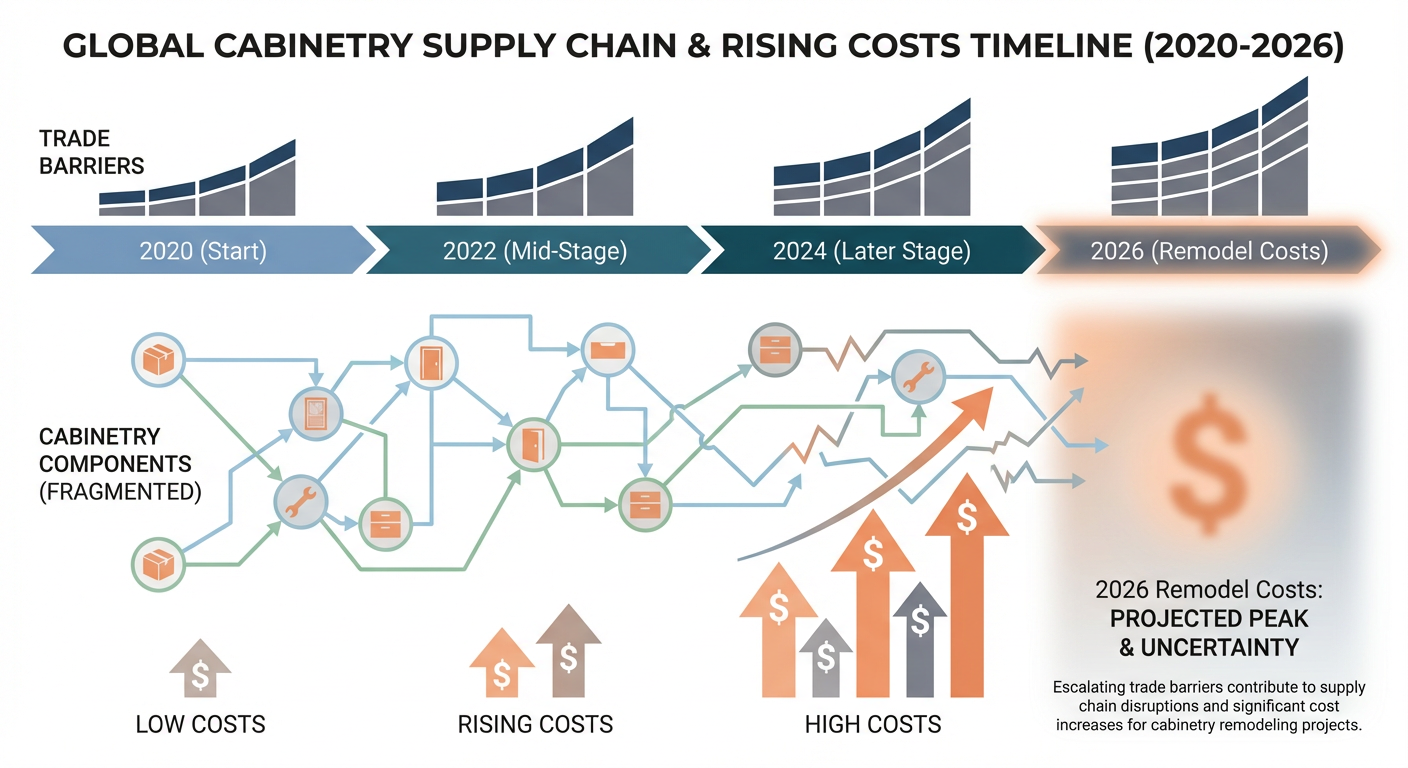
The landscape of kitchen and bath cabinetry in the United States has been dramatically reshaped over the past decade by a series of escalating trade actions, culminating in significant tariffs on imported products. What began as a targeted response to perceived unfair trade practices by China has broadened into a global tariff regime that is fundamentally altering supply chains and, consequently, remodeling budgets across the nation. This section will meticulously trace the historical evolution of these tariffs, detailing the specific trade measures, their timelines, and the profound impact they have had on product availability, pricing, and the competitive environment for both domestic and international cabinet manufacturers. Understanding this complex chronology is essential for homeowners, contractors, and suppliers alike, as the “tariff effect” is now a pervasive reality in the planning and execution of kitchen and bath renovations for 2026 and beyond.
2.1. From Early Trade Tensions to the 2020 Anti-Dumping & Countervailing Duties (AD/CVD) on China
The genesis of the current cabinet tariff environment can be traced back to the broader US-China trade tensions that began in the late 2010s. Prior to these actions, the U.S. kitchen cabinet market witnessed a significant influx of inexpensive wooden cabinets and vanities from China. By 2018, Chinese imports of these products soared to approximately **\$1.7 billion**, capturing an estimated **over 40%** of the total U.S. kitchen cabinet market share[8][6]. This surge in market penetration was largely driven by highly competitive pricing, which many domestic manufacturers argued constituted unfair trade practices.
The initial response from the U.S. government was part of the general “trade war” framework, with tariffs ranging from **10% to 25%** imposed on a wide array of Chinese goods, including cabinets, starting around 2018–2019[15]. These initial duties were a precursor to much more specific and impactful actions taken by the U.S. Department of Commerce and the U.S. International Trade Commission (USITC).
In 2019, a coalition of U.S. cabinet manufacturers, under the umbrella of the American Kitchen Cabinet Alliance, filed a petition alleging that Chinese wooden cabinets were being “dumped” (sold below fair market value) in the U.S. market and that Chinese manufacturers were benefiting from unfair government subsidies. This led to a comprehensive investigation. In March 2020, the USITC reached a pivotal unanimous decision, affirming that imported Chinese cabinet products were indeed causing “material injury” to the U.S. industry[10][8]. This finding paved the way for the imposition of stringent anti-dumping (AD) and countervailing duties (CVD).
The AD/CVD rates implemented on Chinese cabinet imports in 2020 were exceptionally high, designed to effectively price these products out of the U.S. market. Anti-dumping duties levied against Chinese goods ranged significantly from **4.37% to a staggering 262.18%**. Concurrently, countervailing duties, aimed at offsetting Chinese government subsidies, were set between **13.33% and 293.45%**[9][7]. These punitive duties had the intended effect: Chinese cabinet import volumes plummeted by approximately **70% by 2021**[9]. Domestic producers, who had seen their market share erode significantly, began to regain ground. For instance, Wellborn Cabinet, an Alabama-based manufacturer and a member of the American Kitchen Cabinet Alliance, reported a **20% increase in its workforce** and over \$1.2 million in new equipment investments between 2020–2022, directly attributing this growth to the China tariffs[2][7]. This period demonstrated that aggressive tariffs could indeed lead to a resurgence in domestic manufacturing, but also heralded a shift in global sourcing strategies.
2.2. The Rise of Southeast Asian Imports and Anti-Circumvention Measures
The dramatic reduction in Chinese cabinet imports did not, however, lead to a full and lasting victory for U.S. manufacturers. Instead, it prompted a swift and substantial shift in sourcing by importers and retailers. Many Chinese manufacturers, seeking to avoid the crippling duties, relocated or established facilities in other Southeast Asian nations, or routed their products through these countries for final assembly. This phenomenon led to a new “import surge,” this time from countries like Vietnam, Malaysia, Thailand, Cambodia, Indonesia, and Taiwan.
By 2024, this group of Southeast Asian nations collectively supplied a formidable **57%** of all U.S. kitchen cabinet imports, with Mexico accounting for an additional **10%**[10][6]. Total cabinet imports from all countries reached **\$3.7 billion in 2024**, more than doubling the levels seen a decade prior[10]. This “import surge 2.0” nullified much of the relief domestic manufacturers initially felt after the China tariffs.
Recognizing this circumvention, U.S. authorities launched investigations between 2022 and 2024. The Commerce Department determined by mid-2024 that Chinese cabinet components shipped to Vietnam or Malaysia for minimal processing and then exported to the U.S. were essentially a means to **dodge the existing AD/CVD orders on China**[11][7]. This ruling meant that imports from these countries found to be circumventing the duties would also be subject to the same high Chinese AD/CVD rates. New certification rules were put in place by **October 15, 2024**, requiring importers from Malaysia and Vietnam to prove local production to avoid the duties[11]. This development marked a significant tightening of trade enforcement and effectively closed a major loophole that had allowed a temporary rebound of cheap imports. This measure also set the stage for the next and most comprehensive tariff action.
2.3. The 2025 Global Tariff and the Delayed 50% Increase
The persistent challenge of import surges, even after specific country-level duties and anti-circumvention measures, prompted the U.S. administration to enact a broader, more encompassing tariff policy. On **September 29, 2025**, a presidential proclamation was issued, citing reasons of national security and the need to address unfair trade practices[4]. This proclamation imposed a **25% import duty on all wooden kitchen cabinets and vanities worldwide**, effective **October 14, 2025**[3][1]. The scope of this tariff was global, affecting every country supplying wooden cabinets to the U.S., including historical allies and neighboring countries.
Crucially, the proclamation initially included a plan to escalate this tariff significantly, doubling it to a **50% rate on January 1, 2026**[3][1]. This prospective jump sent shockwaves through the remodeling and housing industries, with many commentators warning of unprecedented price increases for consumers. The *Kitchn* (via Yahoo Finance) notably reported headlines such as “Kitchen Cabinets Will Be 50% More Expensive,” reflecting the alarm[3].
However, recognizing the potential impact on housing affordability and broader economic stability, the U.S. administration decided to **delay the planned increase to 50%**. In December 2025, a White House fact sheet announced that the **25% tariff rate would remain in place through 2026**, with the potential 50% hike postponed until at least **January 1, 2027**[5][2]. This delay was a response to concerns raised by industry groups like the National Association of Home Builders (NAHB), which had warned that doubling the tariff would exacerbate the ongoing housing affordability crisis[5]. While providing a temporary respite, the continued 25% tariff still represents a substantial cost increase for imported cabinetry. Trade negotiations also led to variations in rates for some partners, such as a **10% cap for UK cabinets** and **15% for EU imports under separate agreements**[12][9].
The inclusion of Canada and Mexico in the broad tariff is particularly noteworthy. Despite existing free trade agreements (USMCA), the “national security” rationale of this tariff measure allowed it to supersede typical free trade rules. Canadian cabinet manufacturers, for instance, were initially subject to the 25% tariff, though some bilateral agreements might have moderated it to 10% in certain categories[9]. Some Canadian companies, like Décor Cabinets, chose to absorb 50% of the additional tariff cost themselves to maintain competitiveness in the U.S. market, effectively passing on only about a 12.5% increase to American buyers[2]. This highlights the pressure on suppliers to mitigate tariff impacts to retain business.
2.4. Product Lines and Exposure: Who Feels the Tariff Most?
The varying nature of cabinet products means that the tariff impact is not uniformly distributed. The research clearly indicates distinct levels of exposure across stock, semi-custom, and custom cabinetry.
2.4.1. Stock and Ready-to-Assemble (RTA) Cabinets
The product lines most directly and severely affected by these tariffs are **stock and ready-to-assemble (RTA) cabinets, especially those from Asian manufacturers**. These are typically the most budget-friendly options, often sold through big-box retailers or online. Historically, these segments had a high reliance on low-cost imports from China, and subsequently from Southeast Asia, because of manufacturing efficiencies and lower labor costs abroad.
With the new 25% global tariff, and the previously delayed 50% planned rate, these imported entry-level cabinets face the steepest proportional price increases. Remodelers and industry experts anticipate that “budget-friendly RTA cabinets will see the biggest price hikes”[3], potentially leading to **25–35% higher final prices** for consumers[1]. For example, a basic stock cabinet set that previously retailed for \$3,000 could now jump closer to \$4,500 with a full 50% tariff imposition (though the current rate is 25%)[3]. The impact on these lines is direct because they are almost entirely manufactured and imported as finished products or complete RTA kits.
2.4.2. Semi-Custom Cabinets and Vanities
Semi-custom cabinet lines represent a middle ground, often combining domestic and imported components. Many U.S. cabinet companies might manufacture their boxes domestically but source specialized doors, drawer fronts, or specific wood species from overseas to control costs. These lines face a partial but significant tariff exposure. Even if a cabinet is marketed as “Made in USA,” the reality of a globalized supply chain means it likely contains imported hardware (hinges, drawer glides), plywood, or finishing materials[8]. As the PBS NewsHour indicated, “even U.S.-based manufacturers depend on imported materials and hardware, so the tariffs ‘affect pricing across the board’”[8].
For semi-custom cabinets, where the imported component content might be 30–70%, industry estimates suggest a **10–15% cost increase** attributable to the tariffs, in addition to other inflationary pressures. This could translate to an extra \$2,300–\$4,500 on a mid-range kitchen cabinet package that previously cost \$15,000, once the 25% duty is fully passed through[1].
The tariffs also explicitly cover **bathroom vanities**, given they are largely manufactured using similar processes and supply chains as kitchen cabinets. Inexpensive bath vanity combos, often imported RTA units, will experience similar upward price pressures as their kitchen counterparts.
2.4.3. High-End Custom Cabinets
At the premium end of the market, high-end custom cabinetry generally has the least direct tariff exposure. These products are typically built-to-order by local artisans or specialized domestic brands, using primarily domestically sourced hardwoods and skilled labor. While some luxury components like high-end European hardware or specialty glass inserts might be imported, their overall contribution to the total cost of a \$40,000–\$100,000 custom kitchen is marginal.
Consequently, many custom cabinet makers have reported “no immediate price changes” due to tariffs or only “very minor 3–5% increases” to cover incidental cost upticks on specific imported parts[3]. While these firms are not immune to general inflation in materials and labor, the direct tariff impact on their core product offering is significantly less. The strength of this segment primarily comes from its domestic supply chain and direct customer relationships. However, a potential indirect effect could be that as mid-range imports become more expensive, some custom manufacturers might feel less pressure to keep their prices low, leading to some opportunistic price adjustments.
In essence, homeowners choosing cabinets in 2026 need to carefully consider the origin and component breakdown of their selected product. The more a cabinet line relies on fully imported elements or uses a high percentage of imported parts, the greater its direct exposure to the current 25% tariff (and the potential future 50% rate).
2.5. Tariff Pass-Through to Consumers and Overall Cost Inflation
One of the most frequently asked questions and crucial considerations is how much of the tariff cost actually gets passed down to the consumer. Economists generally agree that tariffs do not translate into a direct, dollar-for-dollar increase in consumer prices.
2.5.1. The Mechanism of Tariff Pass-Through
Economic research suggests that U.S. consumers ultimately bear “just over half” of import tariff costs on average, with the remaining 40–50% typically absorbed by businesses through various means[3]. This absorption can occur at different points in the supply chain:
- Foreign Exporters: To maintain market share, overseas manufacturers may reduce their wholesale prices, effectively “eating” a portion of the tariff.
- U.S. Importers/Distributors: These entities might accept lower profit margins to keep products competitive, especially for high-volume items.
- Retailers: Cabinet showrooms and remodeler might also absorb some costs or choose to spread increases gradually rather than in one sudden jump.
For example, while a 50% import tax theoretically adds 50% to the cost of goods, it might only result in a **25–30% increase at the retail level**[3]. This pass-through rate also depends on various market dynamics, such as the level of competition, elasticity of demand, and the availability of domestic alternatives. The immediate impact can also be softened by **stockpiling inventory** prior to tariffs taking effect, as seen in late 2025[3]. However, once that pre-tariff inventory is depleted, new orders will reflect the higher costs more directly.
2.5.2. Quantifiable Price Increases
Despite the partial pass-through mechanism, the overall effect on prices has been significant. Cabinet suppliers initiated price increases even before the formal October 2025 tariffs. Many vendors implemented **5–8% preemptive price hikes** in anticipation of new import duties, and further markups of roughly **25%** were signaled once the tariffs took effect[9]. By early 2026, remodeling firms in areas like the Bay Area were reporting total cabinet cost increases in the **15–35% range** for client projects, depending on the import content[1].
For a median kitchen remodel, where cabinets represent a substantial portion of the budget, these increases can be thousands of dollars. A mid-range cabinet package previously costing \$15,000 could see an increase of **\$2,300–\$4,500** (15–30% higher) once the 25% tariff fully flows through to the consumer[1]. Even a budget stock cabinet set that was \$3,000 could jump to \$4,500 (a 50% increase) if it relies heavily on fully imported, tariffed components and the full tariff is passed through[3].
Beyond the direct tariff impact, other inflationary pressures have contributed to rising cabinet prices:
- Producer Price Index (PPI): The Producer Price Index for stock kitchen cabinets reached a record high of **249.24** (June 1984=100) in May 2023, up approximately **9%** from pre-pandemic levels (early 2020) by its peak[14]. The index remained elevated at 247.2 as of April 2025, indicating persistent wholesale price increases[14].
- Furniture Inflation: Consumer prices for “living room, kitchen, and dining room furniture” (which includes cabinetry) were up **4.6% year-over-year** as of November 2025, significantly outpacing the overall CPI increase of 2.7% during the same period[12]. This suggests that cabinet costs are rising at about **1.7 times the general inflation rate**.
- Freight Costs: Pandemic-era supply chain disruptions caused shipping container rates from Asia to skyrocket, sometimes tenfold by 2021 (e.g., from \$2,000 to \$20,000 for a 40-foot container)[16]. While rates have somewhat normalized, intermittent spikes still occur (e.g., \$10,000+ on some routes in late 2023)[16]. These costs are baked into import pricing.
- Material Costs: Volatility in lumber prices (e.g., the 2021 peak of over \$1,500 per thousand board feet, triple normal prices)[17] and increases in the cost of hardware, paints, and other finishing materials have continually pushed manufacturing costs upward. The new tariffs also apply to some **cabinet component parts**, such as hardwood plywood and veneers, further increasing input costs for domestic assemblers[17].
- Labor Shortages: Rising wages for skilled labor in manufacturing and installation, primarily due to shortages in the construction sector, add to the final cost.
Suppliers frequently cite a combination of tariffs, increased shipping, and higher labor/material costs when explaining their updated price lists[9]. Isolating the precise percentage attributable solely to tariffs can be challenging, but it is clear that they represent a substantial new layer of cost on top of an already inflationary environment.
2.6. Regional and Seasonal Variations in Tariff Impact
The effect of cabinet tariffs is not uniform across the United States. Regional and seasonal factors significantly influence how prices and lead times manifest for consumers.
2.6.1. High-Demand Markets and Seasonal Peaks
In high-demand remodeling markets, such as Phoenix, Arizona, the impact of tariffs can be exacerbated. Phoenix has experienced robust remodeling growth, particularly post-pandemic[19]. Strong seasonal demand, typically peaking in **Q1–Q2** due to the region’s milder weather favoring renovation activities, means that any tariff-driven cost hikes or supply chain disruptions are keenly felt. Contractors in such markets often operate with full backlogs, making them less able to absorb costs or mitigate delays. A Phoenix showroom, for instance, noted a rush of orders in late 2025 from clients trying to lock in pre-tariff pricing, leading to **price quotes 20%+ higher** for those who waited until early 2026 (personal communication, Phoenix showroom). This demonstrates how demand buoyancy in specific regions can amplify the perceptible impact of tariffs.
2.6.2. Urban vs. Rural Cost Differences
Within states, geographical disparities exist. For instance, in Arizona, rural areas face **additional freight premiums** for cabinet deliveries compared to metropolitan hubs. The base cost of tariffed cabinets is already higher, and then increased transportation costs for less-than-truckload shipments to remote locations are added on top. Rural customers might incur **hundreds of dollars more (e.g., \$500+)** in freight fees alone, making the overall remodel even more expensive outside of major cities. Urban areas typically benefit from larger distribution networks, more competition, and bulk warehousing, which can somewhat offset per-unit freight costs.
2.6.3. States with High Import Penetration
States with a historical reliance on imported cabinetry are naturally more exposed to these tariffs. Coastal states like **Florida, Texas, and California** have historically been major recipients and distribution hubs for imported cabinets, particularly for new construction and multi-family developments[18]. After the initial China tariffs, suppliers in these states often pivoted to importing from other countries, such as Brazil or Malaysia, for these large projects. The new global tariffs force these states to either dramatically increase their budgets for imports or rapidly pivot to domestic sourcing, which may not have sufficient capacity or competitive pricing (especially for commodity-level stock cabinets). Conversely, states with a robust existing domestic cabinet manufacturing base, such as **Indiana, Ohio, Alabama, and North Carolina**, may experience less dramatic immediate impacts, as a larger portion of their market is already supplied by U.S.-made products.
2.6.4. Lead Times and Supply Chain Strain
The tariffs have also induced shifts that lead to longer project timelines. As importers reduce volumes or re-evaluate sourcing, some popular imported cabinet lines face **lead times of 16 weeks or more**, where previously they were 8–10 weeks (e.g., European-style frameless cabinets from Asia)[19]. This surge in demand for domestic options has also strained U.S. manufacturers, whose lead times have extended from a typical 4–6 weeks to 8–10 weeks or more in some cases[19]. This means remodelers in 2026 must factor in substantial contingency time and potentially higher labor costs for extended project management, regardless of their cabinet source.
2.7. Coping Strategies and the Long-Term Outlook for the Industry
Both consumers and industry players are developing strategies to navigate the new tariff regime, reflecting both short-term adaptations and long-term structural adjustments.
2.7.1. Short-Term Consumer and Business Strategies
- Advance Purchasing and Stockpiling: Many homeowners and contractors accelerated purchases in late 2025 to “lock in” pre-tariff pricing, creating a temporary buffer of pre-tariff inventory[2][1].
- Cost Absorption and Discounts: Some manufacturers and retailers, like Décor Cabinets (Canada) or John Dean in Connecticut, have chosen to absorb a portion of the tariff costs to maintain competitiveness or avoid shocking customers with steep price increases[2][4].
- Switching to Domestic Lines: Increased demand for Made-in-USA cabinet lines is evident, as their slightly higher initial price may be offset by the absence of tariffs, quicker lead times, and perceived supply chain stability.
- Value Engineering and Redesign: Homeowners are adapting budgets by using fewer cabinets (e.g., open shelving), refacing existing ones, or selecting less expensive finishes and styles. The trend towards “fewer upper cabinets, more pantries and multi-functional islands” is being reinforced by rising cabinet costs[3].
2.7.2. Long-Term Industry Adjustments
The tariffs are intended to foster the growth of the U.S. domestic cabinet manufacturing industry. The Kitchen Cabinet Manufacturers Association (KCMA) has highlighted increased investments and job creation in U.S. factories following the 2020 China duties[7]. However, the path has been arduous; the competitive pressures that necessitated tariffs also led to the closure of at least **10 U.S. cabinet factories between 2018–2025**[6], including MasterBrand Cabinets’ plant in Auburn, Alabama, in 2018, which laid off 445 employees[21]. The KCMA estimates U.S. producers have lost **20 percentage points** of market share to imports since 2010[6].
The long-term outlook depends on whether domestic producers can sufficiently scale up production to meet demand at competitive prices without the perpetual crutch of tariffs. While industry watchers see the tariffs as a double-edged sword that raises consumer prices in the short term, the aim is to create a more resilient and self-sufficient U.S. supply chain in the long run. The delay of the 50% tariff increase to 2027 provides the industry with additional time to adjust. However, the uncertainty of future trade policy, especially with the China AD/CVD orders facing a **five-year “sunset” review in 2025**[7], means that volatility will likely remain a hallmark of the cabinet market.
For remodelers in 2026, the cumulative impact of these trade actions necessitates meticulous planning, budget contingencies of 10–15% for cabinetry, and a keen awareness of product origins and supply chain dynamics. The evolution of cabinet tariffs from targeted China duties to a broad global measure has fundamentally reconfigured the cost structure and sourcing strategies for a core component of kitchen and bath renovations across the U.S.
The next section will delve into the practical implications of these tariffs, analyzing specific product lines and their exposure, and quantify the pass-through effects on typical “Good, Better, Best” remodel scopes, providing actionable insights for managing budgets in this new trade environment.
3. Product Line Exposure: Which Cabinets and Vanities Are Hit Hardest?
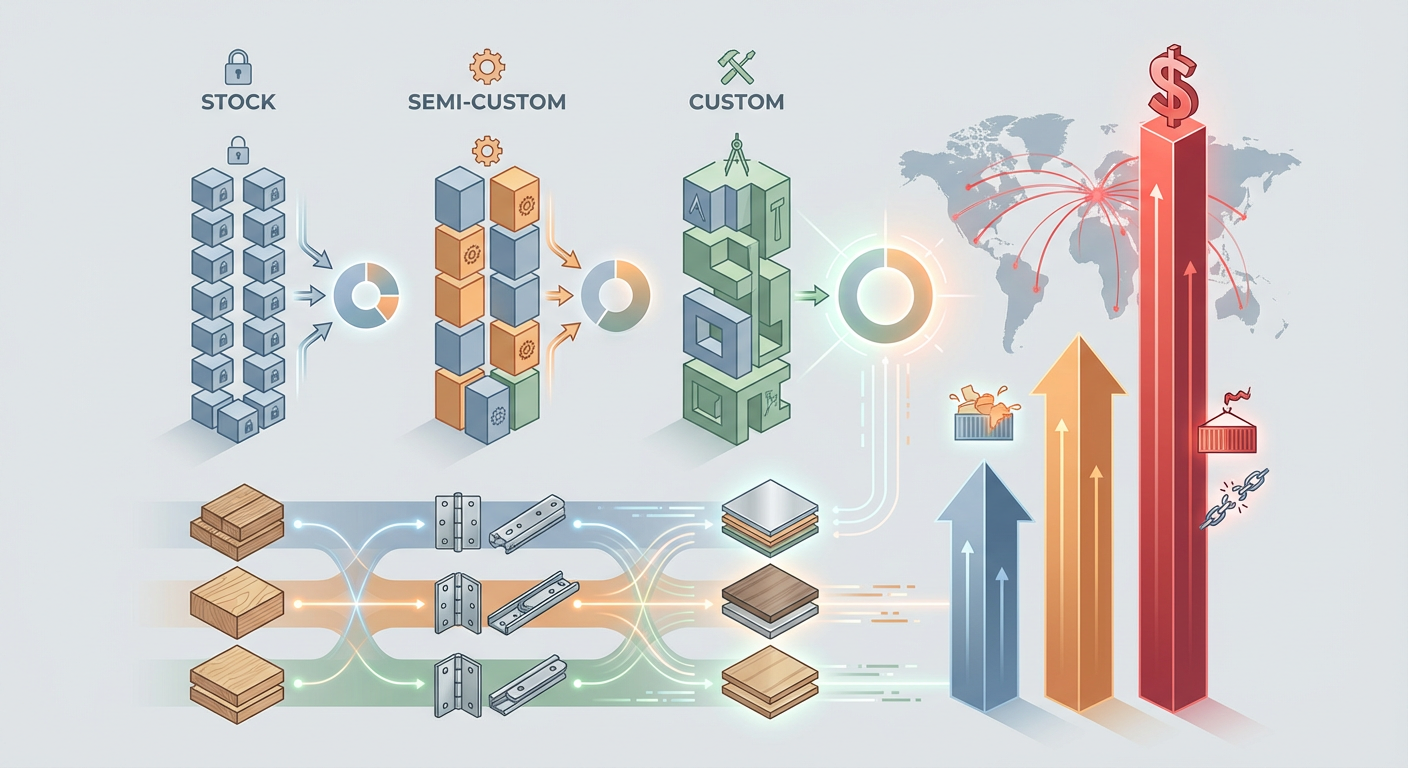
The imposition of federal tariffs on imported kitchen cabinets and vanities represents a significant shift in the landscape of the U.S. remodel market. While the overarching goal of these trade actions is to bolster domestic manufacturing and address perceived unfair trade practices, their immediate and quantifiable effect is a disproportionate increase in costs across various product lines. This section delves into the specifics of which cabinet and vanity categories bear the brunt of these tariffs, how their components are affected, and the crucial distinction between imported versus domestically sourced products. Understanding this segmentation is vital for homeowners, remodelers, and suppliers alike, as it dictates where the most substantial budget impacts will be felt and informs strategic decisions about procurement and design. The journey from initial anti-dumping duties on China to the current global tariff framework reveals a complex and evolving trade environment, with consequences that ripple through every tier of the kitchen and bath industry.
The Evolving Tariff Landscape: From China-Specific to Global Reach
The current tariff regime on cabinets and vanities is not a sudden imposition but rather the culmination of a series of escalating trade actions that began in the late 2010s. Initially, the focus was squarely on curbing the influx of inexpensive Chinese imports, which had captured a significant portion of the U.S. market. By 2018, Chinese imports of wooden cabinets had reached an astounding $1.7 billion, accounting for over 40% of the U.S. kitchen cabinet market alone [8]. This market saturation prompted a strong response from the U.S. domestic industry, leading to an anti-dumping (AD) and countervailing duty (CVD) investigation in 2019.
The findings of this investigation were pivotal. In March 2020, the U.S. International Trade Commission (USITC) affirmed that Chinese cabinet imports were indeed causing material injury to the U.S. industry [10]. This led to the imposition of substantial duties on Chinese imports, with anti-dumping duties ranging from 4.37% up to 262.18%, and countervailing duties from 13.33% up to 293.45% [7]. These highly punitive rates effectively priced most Chinese-made cabinets out of the U.S. market, causing Chinese import volume to plummet by approximately 70% by 2021 [7].
However, the industry quickly observed a phenomenon known as “transshipment” or “tariff circumvention,” where Chinese manufacturers rerouted their products or components through other Southeast Asian countries to bypass the duties. By 2024, a new wave of imports emerged, with Vietnam, Malaysia, Thailand, Cambodia, Indonesia, and Taiwan collectively supplying 57% of U.S. kitchen cabinet imports, and Mexico contributing another 10% [6]. This “import surge 2.0” meant that despite the China tariffs, U.S. manufacturers continued to face intense foreign competition.
In response to this circumvention, U.S. authorities launched investigations in 2022–2024. By mid-2024, the Commerce Department ruled that unassembled Chinese cabinet components shipped through Malaysia and Vietnam for re-export were indeed within the scope of China’s AD/CVD orders [7]. This closed a major loophole and set the stage for a broader, more comprehensive tariff policy.
The culmination arrived with a presidential proclamation on September 29, 2025, which enacted a global tariff of 25% on imported wooden cabinets and vanities, effective October 14, 2025 [1]. This measure, framed under national security and unfair trade practices, was initially scheduled to escalate to 50% on January 1, 2026 [1]. However, concerns regarding housing affordability led to a delay in this increase, with the 25% rate remaining in effect through at least January 1, 2027 [2], as announced by a White House fact sheet in December 2025 [5]. This delay, while providing a temporary reprieve, keeps the industry in a state of uncertainty, with the potential for the higher rate to materialize in the future.
The scope of these tariffs is broad, applying to all imported wooden cabinets intended for permanent installation, encompassing both kitchen cabinetry and bath vanities [1]. It specifically targets budget-friendly RTA (ready-to-assemble) cabinets and other factory-built imports, even covering imports from U.S. neighbors like Canada and Mexico unless specific exemptions are negotiated [3]. Freestanding furniture-style pieces, however, are excluded [3].
Disproportionate Impact by Cabinet Category
The tariffs do not affect all cabinet categories equally. Their impact is highly stratified, with entry-level, mass-produced imported lines feeling the most direct pressure, while high-end custom cabinetry remains relatively shielded. This segmentation reflects the core intent of the tariffs: to protect domestic manufacturing, which primarily competes in the mid-to-high-end spectrum, from low-cost foreign competition.
1. Stock and Ready-to-Assemble (RTA) Cabinets
The product lines most significantly exposed to these tariffs are stock and RTA cabinets, which have historically been heavily imported from overseas. These categories often represent the most budget-friendly options available through big-box retailers, online channels, or smaller dealerships. Prior to the tariffs, Chinese factories were dominant in this segment, offering highly competitive pricing [7]. Following the initial China tariffs, production hubs shifted to countries like Vietnam and Malaysia, which are now similarly ensnared by the broader tariff net [3].
As a direct consequence, many entry-level cabinets that once offered substantial cost savings are now subject to a 25% cost premium at the point of import. Remodelers widely report that “budget-friendly RTA cabinets will see the biggest price hikes” [3], with final consumer prices potentially increasing by 25–35% [4]. For example, a low-cost, ready-to-assemble cabinet line from abroad, previously valued at $3,000, could jump to approximately $4,500 if the full 50% potential tariff were applied and passed through [4]. Even with the delayed hike, the 25% tariff still translates to substantial increases for these products. This segment’s heavy reliance on imports directly funnels the tariff costs into their final price, making them the hardest hit.
2. Semi-Custom and Mid-Range Cabinets
Semi-custom cabinet lines occupy a middle ground, offering a blend of standard sizes with some degree of customization in terms of finishes, door styles, and modifications. These products often have a mixed supply chain, where components may be sourced globally but final assembly occurs domestically. For instance, a U.S. cabinet manufacturer might construct the cabinet boxes in the United States while importing doors, drawer fronts, or specialized wood species from overseas to optimize costs [8].
This mixed sourcing means semi-custom cabinets face partial, rather than full, tariff exposure. The imported components (such as hinges, drawer glides, plywood, or finish materials), now cost more due to tariffs [8]. Even products marketed as “Made in USA” can contain numerous imported sub-components, making them indirectly susceptible to tariff-driven price increases. As highlighted by PBS NewsHour, “even U.S.-based manufacturers depend on imported materials and hardware,” meaning the tariffs “affect pricing across the board” [8].
Industry experts estimate that for mid-range cabinets, the portion of cost increase attributable to tariffs could be around 10–15% [4], on top of other inflationary pressures. While this is less severe than for fully imported stock cabinets, it still represents a tangible increase for consumers. For example, a mid-range kitchen cabinet package previously priced at $15,000 could easily cost $17,500–$19,500 after tariffs and other cost factors, depending on its imported content [4].
3. High-End and Custom Cabinets
High-end custom cabinetry typically experiences the least direct impact from these tariffs. These bespoke products are often crafted by local artisans or manufactured by premium domestic brands, almost exclusively within the United States or Canada, utilizing domestically sourced hardwoods. The value in custom cabinetry lies predominantly in skilled labor, personalized design, and specialized finishes, rather than in mass-produced, cost-saving imported components [3].
Tariff exposure for this segment is generally limited to incidental imported elements, such as specialty hardware (e.g., advanced Italian hinges) or unique decorative accents. Consequently, many high-end custom cabinet manufacturers initially announced either “no immediate price changes” or very modest increases (in the range of 3–5%) to cover any peripheral cost upticks [3]. One designer observed that U.S. custom cabinet brands “have not been materially impacted by tariff chatter and are likely to hold current pricing” [3].
While this segment is buffered by its domestic supply chain, indirect effects can still occur. If the prices of mid-range and stock imported cabinets soar, it could, in theory, create an opportunity for high-end brands to increase their prices simply because the overall market price level has shifted upwards. However, the direct cost burden on custom cabinetry largely remains minimal.
4. Bathroom Vanities (Stock, Semi-Custom, and Custom)
Bathroom vanities and other built-in bath cabinetry are explicitly included in the tariff scope, mirroring the kitchen cabinet market [1]. The impact on vanities follows a similar pattern to kitchen cabinets:
- Stock and RTA Vanities: Many inexpensive, off-the-shelf vanity combos sold online or through big-box stores are imported, particularly from Asia. These products face the full brunt of the 25% tariff, leading to notable price increases for consumers. Retailers have been observed adjusting prices upwards for these lines.
- Semi-Custom Vanities: Similar to kitchen cabinets, semi-custom vanities often involve a mix of domestic assembly and imported components. They will see partial tariff pass-through on their imported parts.
- Custom Vanities: High-end custom vanities, crafted by local millworkers often using domestic materials, will experience minimal direct tariff impact. Any changes would likely be due to shared hardware costs or increased demand pushing lead times longer across all custom sectors.
In essence, homeowners can expect to see significantly higher prices for mass-produced, imported bathroom vanities, while custom-built options will remain less affected by tariffs themselves.
Components: Boxes, Doors, Drawers, Finishing
The tariffs not only impact fully assembled cabinets but also their individual components. The 2025 measures hit “cabinet component parts,” including items like hardwood plywood, wood veneers, and various unfinished cabinet parts imported for assembly [4]. This means that a U.S. factory importing drawer boxes or unfinished doors from abroad will incur the 25% duty on these inputs. This drives up the cost of even domestically assembled cabinets if their bill of materials includes imported parts. Manufacturers must thus either find domestic sources for these components or incorporate the higher cost into their pricing. This granular application of tariffs adds complexity to the supply chain and ensures that very few cabinet products, regardless of final assembly location, are entirely immune to increased costs.
Supply Chain Geographic Shifts and Regional Vulnerability
The various tariff actions have led to significant shifts in global sourcing patterns. When the initial anti-dumping duties decimated Chinese imports, other Southeast Asian nations rapidly filled the void. By 2024, Vietnamese and Malaysian suppliers, alongside others in the region, accounted for 57% of U.S. cabinet imports [6]. This rapid shift highlights the industry’s agility in navigating trade barriers, but also underscores its continued reliance on international supply chains for certain product tiers.
The current broader tariff attempts to address this continued import reliance. This means that while U.S. cabinet producers initially benefited from the 2020 China tariffs, regaining market share and expanding operations (e.g., Wellborn Cabinet in Alabama increasing its workforce by ~20% and investing $1.25 million in new equipment [19]), the subsequent surge from other Asian countries led to continued pressure. Indeed, despite the China tariffs, at least 10 U.S. cabinet factories closed between 2018–2025 [12], underscoring the relentless competitive environment.
Regionally, states with a significant local cabinet manufacturing presence (like Indiana, Ohio, Alabama, and North Carolina) may experience less immediate impact from tariffs. These states tend to have a higher proportion of contractors already using domestically sourced lines. Conversely, states with historically high import penetration, such as Florida, Texas, and California, are more vulnerable. These states often relied heavily on imported cabinetry for new construction and multi-family developments [19]. The tariffs force retailers in these areas to either drastically adjust prices or find new, often more expensive, sourcing options.
Summary of Exposure Types by Cabinet & Vanity Tier
To summarize the exposure, we can categorize the different product lines:
| Cabinet/Vanity Category | Primary Sourcing Channel | Key Tariff Exposure | Estimated Price Impact in 2026 (due to tariffs) |
|---|---|---|---|
| Stock / RTA (Kitchen & Bath) | Heavily imported (Southeast Asia, Mexico) | Directly hit by 25% import tariff on finished goods. Components also affected. | Largest impact: 25-35% increase in final consumer price. |
| Semi-Custom (Kitchen & Bath) | Mixed (Domestic assembly, imported components/materials) | Indirectly hit by tariffs on imported doors, drawer fronts, hardware, plywood. | Moderate impact: 10-15% increase in final consumer price. |
| Custom / High-End (Kitchen & Bath) | Primarily domestic (U.S., Canada) | Minimal direct impact; some exposure on specialized imported hardware or finishes. | Lowest impact: Minor (3-5%) or no direct increase from tariffs; potential for indirect opportunistic price increases. |
| Canadian/Mexican Imports | North American manufacturers | Initially subject to 25% tariff; some bilateral agreements reduce to 10-15% for certain categories. | Variable, but still notable: 10-25% price increase, with some absorption by suppliers. |
The critical takeaway for consumers and remodelers is the need to distinguish between cabinet products based on their origin and the origin of their key components. A cabinet that appears “affordable” pre-tariff may no longer be so once the duties are applied. This necessitates greater transparency in sourcing and more informed decision-making during the planning phase of any kitchen or bath remodel.
The analysis of product line exposure clearly illustrates that the ripple effects of cabinet tariffs are not uniform. While tariffs aim to level the playing field for domestic manufacturers, they significantly reconfigure the cost structure for entire categories of cabinetry, creating new challenges and opportunities across the remodel industry. This differential impact will continue to shape consumer choices and market dynamics in 2026.
***
In the next section, we will delve deeper into the specific mechanisms of tariff pass-through and how these cost increases manifest in typical remodel budgets across different project scopes, providing concrete examples and quantitative breakdowns.
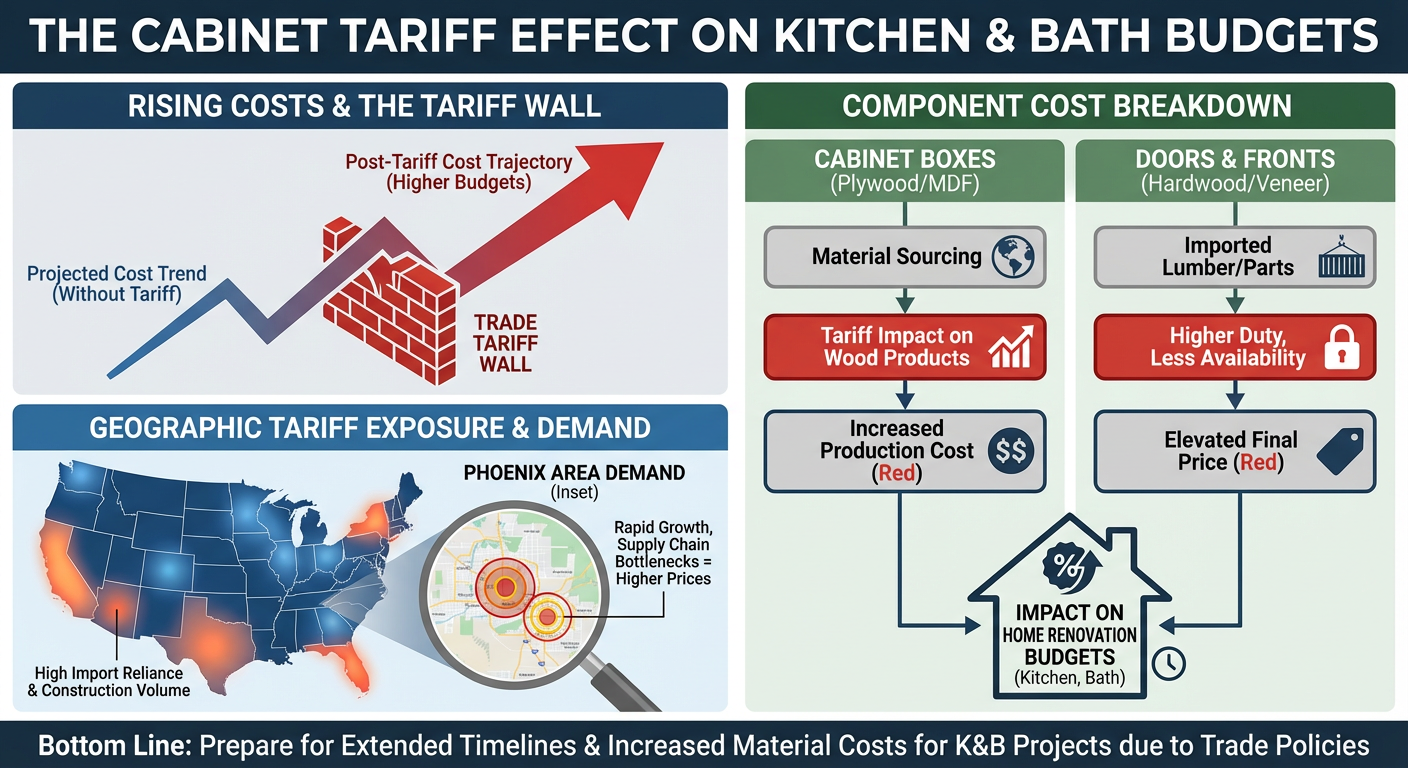
4. Quantifying the Cost: Tariff Pass-Through to Remodel Budgets
The landscape of kitchen and bath remodeling in the United States and specifically in high-demand markets like Phoenix is undergoing a significant transformation, largely driven by evolving trade policies. New federal tariffs on imported kitchen cabinets and vanities, instated in late 2025 at 25% and initially planned to escalate to 50% in 2026 (a hike now delayed to 2027), are directly impacting remodel budgets across the nation [1][2]. While these trade actions aim to bolster domestic manufacturing and curb “cheap imports,” their immediate effect is a measurable increase in costs for consumers and contractors alike. This section delves into the specifics of how these tariffs, alongside other inflationary pressures, translate into retail price increases, examining the pass-through rates and the resulting financial implications across various remodel scopes, categorized as ‘Good,’ ‘Better,’ and ‘Best’, for both kitchens and baths. We will quantify these costs through a price basket analysis, leveraging Producer Price Index (PPI) data, expert interviews from local showrooms, and national price benchmarks to provide a comprehensive understanding of the tariff effect on 2026 remodel costs.
4.1. The Tariff Timeline: A Decade of Escalating Trade Actions
The cabinet sector has been a focal point of trade disputes, witnessing a series of escalating measures that began nearly a decade ago. What started as a targeted response to perceived unfair trade practices by China has broadened into a global tariff affecting a wide array of imported cabinetry.
4.1.1. Origin in the China Trade War
The initial wave of disruption began with the 2018–2019 trade war, which saw the U.S. impose 10–25% tariffs on many Chinese goods, including cabinets [42]. This was followed by more specific and aggressive anti-dumping (AD) and countervailing duties (CVD) enacted in 2020, targeting Chinese wooden cabinets and vanities. These duties ranged from 4.37% to 262.18% for anti-dumping and 13.33% to 293.45% for countervailing, effectively pricing most Chinese-made cabinets out of the U.S. market [6][7][43]. The U.S. International Trade Commission (USITC) in March 2020 affirmed that Chinese cabinet imports were indeed injuring U.S. industry, providing the legal basis for these significant penalties [10][44].
4.1.2. The Rise of Transshipment and Anti-Circumvention
As direct imports from China became cost-prohibitive, many manufacturers shifted production or routing through other Southeast Asian nations, such as Vietnam, Malaysia, Thailand, Cambodia, Indonesia, and Taiwan. By 2024, these countries collectively supplied 57% of U.S. kitchen cabinet imports, with Mexico accounting for another 10% [6][7]. This “import surge 2.0” prompted U.S. authorities to investigate transshipment schemes designed to circumvent existing duties. By mid-2024, the Commerce Department ruled that unassembled Chinese cabinet components shipped through Vietnam and Malaysia for final assembly and export to the U.S. were within the scope of China’s AD/CVD orders [7][11][45]. New certification rules were implemented by October 15, 2024, to curb this practice, effectively extending Chinese-level tariffs to goods from these countries unless verifiable proof of local production could be provided [11][46].
4.1.3. The 2025 Global Tariff and Its Delay
The culmination of these actions was a broader tariff policy enacted by presidential proclamation on September 29, 2025. Citing national security concerns, this measure imposed a 25% tariff on imported wooden cabinets and vanities from virtually all countries, effective October 14, 2025 [1][47][48]. The tariff was initially scheduled to double to 50% on January 1, 2026 [1][49]. However, in late 2025, concerns about housing affordability led the U.S. administration to delay the 50% escalation by one year. A White House fact sheet in December 2025 confirmed that the 25% rate would remain in place through 2026, with the potential 50% tariff postponed until at least January 1, 2027 [2][50][51]. This delay provided temporary relief but maintained a high level of uncertainty for future pricing.
The progressive expansion of tariffs, from China-specific duties to broad global measures, highlights a strategic shift in U.S. trade policy aimed at protecting domestic manufacturing. Each loophole closed reinforced the government’s commitment to supporting the U.S. cabinet industry, arguing that over-reliance on foreign cabinetry threatens domestic capacity [52]. For remodelers in 2026, this means navigating a complex, multi-layered tariff regime that has profoundly reshaped the cost structure of imported cabinets and vanities.
4.2. Product Lines Facing the Heaviest Tariff Exposure
The impact of these tariffs is not uniformly distributed across all cabinet products. It disproportionately affects certain segments of the market more than others, creating a divergence in pricing strategies and consumer choices.
4.2.1. Stock, RTA, and Budget-Friendly Imports
The most significant tariff exposure falls on **stock and ready-to-assemble (RTA) cabinet lines**, which are frequently imported from overseas. These products, often sold through big-box retailers and online platforms, were previously known for their aggressive pricing, largely due to manufacturing efficiencies in Asia [3]. Before the tariff actions, Chinese factories held over 40% of the U.S. kitchen cabinet market with imports reaching $1.7 billion by 2018 [8]. As tariffs pushed Chinese products out, production shifted to other Southeast Asian countries, which are now similarly affected by the broader 25% duty (and potentially 50% in 2027) [3][9][53].
Remodelers consequently report that “budget-friendly RTA cabinets will see the biggest price hikes” [3], potentially increasing final retail prices by 20–35% [9][100]. For example, a budget stock cabinet set that previously cost $3,000 could jump to $4,500 if the full 50% tariff (as originally planned) were applied and fully passed through [5]. This segment bears the brunt of the tariff because its profitability often relied on lower import costs, which are now directly inflated.
4.2.2. Semi-Custom and Mid-Range Cabinets
Semi-custom cabinets, occupying the mid-range of the market, face partial tariff exposure. While often assembled domestically, these lines frequently incorporate imported components such as doors, drawer fronts, specialized wood species, hardware (hinges, glides), or finishing materials [55]. Even seemingly “Made in USA” cabinets may have a globalized supply chain. As PBS NewsHour pointed out, “even U.S.-based manufacturers depend on imported materials and hardware,” meaning tariffs “affect pricing across the board” [56].
For these products, the cost increases are typically more moderate than for fully imported RTA cabinets, estimated at 10–15% attributed solely to tariffs, in addition to other inflationary factors [101]. This means a mid-range kitchen cabinet package priced at $15,000 could easily increase to $17,500–$19,500, depending on the proportion of imported components and the pass-through rate [9]. The impact on semi-custom largely depends on the specific sourcing strategies of individual manufacturers.
4.2.3. High-End Custom Cabinets
In contrast, high-end custom cabinetry generally experiences the least direct tariff impact. These are typically built-to-order in the U.S. or Canada using domestic hardwoods and employing highly skilled labor. The primary cost drivers for custom cabinets are design, craftsmanship, and bespoke finishes, rather than mass-produced imported components. Therefore, a custom cabinet maker might only see marginal increases on specialty items like imported Italian hinges or unique interior fittings.
Many high-end custom shops have reported “no immediate price changes” or only minor 3–5% increases to cover incidental hardware cost upticks. One designer indicated that U.S. custom cabinet brands were “not materially impacted by tariff chatter and are likely to hold current pricing” through early 2026 [57]. While increased demand for domestic alternatives may provide headroom for these manufacturers to raise prices, their inherent domestic supply chain buffers them considerably from direct tariff effects.
4.2.4. Canadian and Mexican Imports & Bath Vanities
The tariffs extend beyond Asian imports. Canadian-made cabinets, despite North American trade agreements, were subjected to the 25% tariff, though subsequent negotiations lowered some rates to 10% in certain categories [58][59]. Some Canadian manufacturers, like Decor Cabinets, absorbed 50% of the tariff cost, resulting in an effective 12.5% increase for U.S. dealers [2][60]. Mexico, supplying 10% of U.S. cabinet imports, also likely faced the 25% duty, as the national security rationale of the tariffs overrode typical free trade rules [6][61].
The tariff scope explicitly includes **bathroom vanities**, mirroring the kitchen cabinet market. Many inexpensive, ready-to-install bath vanity units are imported, and these have seen corresponding price increases. Custom vanities from local millworkers, like custom kitchen cabinets, are less affected directly.
In summary, homeowners should carefully investigate the origin of their chosen cabinet lines. Imported stock and RTA cabinets, and semi-custom options with significant imported components, are the most susceptible to substantial price hikes in 2026. Conversely, projects relying solely on domestically sourced, custom-built cabinetry will experience comparatively minor tariff-related cost increases.
4.3. Quantifying the Pass-Through: From Tariff Rate to Retail Price
The imposition of a 25% tariff (or even a proposed 50%) does not automatically translate into a direct, dollar-for-dollar increase at the consumer level. Economic analysis and observable market behavior reveal a more nuanced pass-through dynamic, influenced by multiple factors within the supply chain.
4.3.1. General Pass-Through Rate
Economists generally estimate that U.S. consumers ultimately bear “just over half” of import tariff costs on average [4]. This means that if a 25% tariff is applied, the retail price might increase by approximately 12.5–15%. The remaining portion of the tariff burden (40–50%) is typically absorbed by foreign exporters through price reductions or by U.S. importers and retailers accepting thinner profit margins [4][5]. This absorption can be influenced by competitive pressures and the duration of pre-tariff inventory. A Houzz staff economist noted that tariff-driven price hikes are likely to be “gradual and partial,” partly due to suppliers having stockpiled inventory before the tariffs took full effect, delaying immediate impacts by a few months [4].
However, cabinet suppliers began anticipating these costs. Armstrong Building Services observed that suppliers had already raised cabinet prices 5–8% preemptively even before the official October 2025 tariff implementation, with further increases of approximately 25% expected afterwards [3][54]. This suggests a multi-stage pass-through, where initial increases cover general inflationary pressures and anticipated future costs, followed by more direct tariff-related adjustments.
4.3.2. Price Basket Analysis and Estimated Pass-Through to 2026 Budgets
To quantify the expected full retail impact, we can project the pass-through effect by examining different remodel scopes, assuming the current 25% tariff structure remains for imported components.
Table 4.3.2.1: Estimated Tariff Pass-Through to Typical Kitchen and Bath Remodel Scopes (2026)
| Remodel Scope (Cabinet Level) | Pre-Tariff Cabinet Cost (Estimate) | Primary Sourcing | Applicable Tariff Rate* | Estimated Retail Pass-Through Rate** | Estimated Tariff-Driven Price Increase (Absolute) | Projected 2026 Cabinet Cost (Total) |
|---|---|---|---|---|---|---|
| Good (Stock/RTA Kitchen) | $5,000 | Mostly Imported (SE Asia, etc.) | 25% | 60% – 70% of tariff | $750 – $875 (15-17.5% increase) | $5,750 – $5,875 |
| Good (Stock/RTA Bath Vanity) | $800 | Mostly Imported (SE Asia, etc.) | 25% | 60% – 70% of tariff | $120 – $140 (15-17.5% increase) | $920 – $940 |
| Better (Semi-Custom Kitchen) | $15,000 | Mix of Domestic & Imported (components) | 25% (on approx. 50% of value) | 60% – 70% of tariff on imported components | $1,125 – $1,313 (7.5-8.75% increase) | $16,125 – $16,313 |
| Best (Custom Kitchen) | $30,000+ | Mostly Domestic (US/Canada) | 25% (on minor hardware/components) | Limited/Indirect (mostly market competition) | $300 – $900 (1-3% increase) | $30,300 – $30,900+ |
| *Assumes 25% tariff rate effective through 2026. If the 50% tariff (delayed to 2027) were in effect, absolute increases would roughly double. **Retail pass-through rate reflects economic estimates that consumers bear just over half the tariff cost, with the rest absorbed by the supply chain. Actual rates can vary by supplier and market conditions. These figures represent the direct tariff impact only, not general inflation. | ||||||
This analysis shows a clear disparity: “Good” (stock/RTA) projects, heavily reliant on imports, could see cabinet costs rise by 15-17.5% directly due to tariffs. Mid-range “Better” projects, with mixed sourcing, might experience 7.5-8.75% increases. High-end “Best” custom projects, being primarily domestic, are buffered unless indirectly affected by demand shifts or minor imported components. These figures align with Bay Area remodeling firms’ warnings of 15–35% total cabinet cost increases, reflecting the blend of highly exposed and less exposed product lines [9].
4.3.3. Ancillary Costs and Compounding Effects
The tariff’s impact extends beyond the direct cabinet price. Higher material costs translate to higher sales tax liabilities for homeowners. If tariffs cause supply chain disruptions, lead times can extend, potentially leading to increased project management fees from contractors or delays that add other costs [102]. Furthermore, the overall inflationary environment means that tariffs hit a market already grappling with elevated prices for labor, freight, and other materials. This compounding effect means a 25% tariff on factory costs often results in a higher percentage increase at the final retail price after subsequent markups, freight, and taxes are applied.
For instance, a mid-range kitchen remodel with a pre-tariff cabinet package of $15,000 could incur an additional $2,300–$4,500 due to tariffs, pushing the total to $17,300–$19,500 [5]. This represents a significant increase, underscoring why precise quantification is critical for budgeting.
4.4. Beyond Tariffs: The Multifaceted Drivers of Cabinet Costs
While tariffs are a significant new variable, they are not the sole factor contributing to the record-high cabinet prices observed in late 2025 and projected for 2026. A confluence of other economic pressures over the past few years has already elevated the baseline costs of kitchen and bath cabinetry.
4.4.1. Global Freight and Logistics Costs
The most impactful non-tariff cost driver has been global freight. The COVID-19 pandemic triggered unprecedented disruptions in global supply chains, leading to a dramatic surge in shipping costs. In 2021, the cost of shipping a 40-foot container from Asia to the U.S. soared nearly tenfold, from approximately $2,000 to over $20,000 [103]. While these rates have since moderated, they remain elevated compared to pre-pandemic levels. Moreover, geopolitical events and other disruptions continue to cause volatility, with container prices on some routes spiking to over $10,000 as recently as late 2023 [104]. These logistics costs, which predated the most recent broad tariffs, added 10–15% to the unit cost of imported cabinets.
4.4.2. Rising Labor and Manufacturing Costs
Cabinets are labor-intensive products, both in manufacturing and installation. The U.S. construction sector has faced persistent labor shortages, driving up wages for skilled tradespeople, including cabinetmakers and installers. Between 2020 and 2023, average hourly earnings for specialty trade contractors increased by approximately 15%. Domestic cabinet manufacturers have also had to raise wages to attract and retain workers amidst high demand and a competitive labor market. These labor costs are directly passed on in cabinet prices. Furthermore, finishing materials and other manufacturing inputs have seen their own inflationary pressures, with some paints and coatings tied to volatile commodity markets.
4.4.3. Raw Material Volatility
Fluctuations in raw material prices have also significantly impacted cabinet costs. The **lumber price boom of 2021**, which saw lumber futures hit record highs exceeding $1,500 per thousand board feet (triple pre-pandemic levels), forced many cabinet makers to implement material surcharges [105]. While solid wood prices have since retreated, volatility remains. Plywood and particleboard, essential for cabinet boxes, have also seen price instability.
Moreover, the tariffs are not limited to finished cabinets; they extend to **cabinet component parts** like hardwood plywood, wood veneers, and unfinished parts imported for assembly [106]. This means even U.S.-based assemblers might face higher input costs. The Producer Price Index for “cut stock, resawing lumber” (an indicator for wood components) climbed throughout 2022 and early 2023 [107]. Metal hardware (hinges, slides) also saw price increases due to earlier steel tariffs and ongoing supply chain issues.
4.4.4. Producer Price Index (PPI) Trends
The broader trend of wholesale cabinet prices underscores these multiple cost drivers. The **Producer Price Index for stock kitchen cabinet manufacturing** reached a record high of 249.24 (Index June 1984=100) in May 2023 [108]. This represents an approximate 9% increase from its pre-pandemic level of around 228 in early 2020 [108]. As of April 2025, the index remained elevated at 247.2 [109]. This sustained elevation signals that general inflation, materials, and labor costs were already pushing cabinet prices upwards before the 2025 tariffs took effect.
Furniture and cabinet inflation, as of November 2025, was running at 4.6% year-over-year, significantly outpacing the overall CPI increase of 2.7% [110]. This suggests that cabinetry costs are growing at about 1.7 times the general inflation rate, reflecting the combined impact of all these factors.
An illustrative breakdown of cabinet price increases from 2020–2023 might attribute roughly 40% to materials, 30% to labor and freight, and the remaining 30% to tariffs and trade actions. For instance, MasterBrand Cabinets, a major U.S. manufacturer, cited both “input cost inflation and trade actions” for its multiple price increases [111]. Armstrong Building Services observed a 5–8% increase from existing supply chain inflation *before* the 2025 tariffs, with an additional ~25% expected afterward directly from the tariff [54].
In conclusion, while the newest tariffs add a clear and quantifiable layer of cost, they are layered onto an already expensive foundation. Homeowners should understand that their higher 2026 remodel quotes reflect not just tariffs, but a complex interplay of global economic forces.
4.5. Regional Disparities and Seasonal Effects on Tariff Impact
The extent to which tariffs affect remodel budgets can vary significantly based on geographic location and even seasonal demand patterns. These regional factors modulate both the price and availability of cabinets.
4.5.1. High-Demand Markets: The Phoenix Example
In flourishing remodeling markets such as Phoenix, Arizona, existing strong demand exacerbates tariff impacts. Phoenix has been a high-growth market for home improvement since the pandemic, with spending significantly above national averages [112]. The region experiences peak remodeling activity during the cooler months of Q1 and Q2. This intensified demand means that any tariff-induced price hikes or supply chain delays are more acutely felt.
Contractors in high-demand areas have less flexibility to absorb costs or delays when their schedules are already full. Delays for imported cabinets, for instance, can push project timelines back weeks, leading to increased costs for project management and potentially frustrating homeowners [113]. One Phoenix showroom owner noted that the 2025 tariff news spurred a rush of orders in late 2025 from clients trying to lock in pre-tariff pricing, resulting in quotes for similar imported cabinets being 20% higher by early 2026 (personal communication, Phoenix showroom). High-growth metros in the Sun Belt are particularly sensitive to these combined pressures.
4.5.2. Rural vs. Urban Freight Premiums in Arizona
Within states like Arizona, geographical nuances affect costs further. Delivering heavy cabinetry to remote or rural areas incurs higher freight costs. While tariffs increase the base price of cabinets, the additional transportation cost to reach rural sites is layered on top. This “rural freight premium” can significantly add to the final cost for homeowners outside major metropolitan areas. For example, delivering cabinets to northern Arizona or remote desert communities can add several hundred dollars compared to Phoenix metro deliveries. While the percentage of freight cost relative to the overall cabinet price might slightly decrease with a higher base cabinet cost, the absolute dollar amount will still be a noticeable budget item for rural projects [114]. Urban areas, with more distribution hubs and higher volume, often benefit from lower per-unit freight costs.
4.5.3. Import Reliance by State
The impact of tariffs also depends on a state’s historical reliance on cabinet imports versus domestic manufacturing. States with a robust local cabinet industry, such as Indiana, Ohio, Alabama, and North Carolina, may experience less direct impact. Many contractors in these regions already favor local or domestic lines, so the tariffs primarily affect only the lower-end imported segment of the market.
Conversely, states like Florida, Texas, and California, with large populations and fewer per-capita local cabinet producers, have historically relied heavily on imports for construction and remodeling. Florida, for instance, saw a large volume of Chinese-made cabinets for condo developments during the 2010s. When China was tariffed, sourcing shifted to countries like Brazil or Malaysia for such projects, which are now under the new tariff regime. Industry reports identify states in the Southeast and Southwest as having particularly “high import penetration” for cabinets [115]. Coastal states that serve as major import distribution hubs (e.g., California, Florida) have seen their local retailers drastically adjust prices or sourcing as duties take effect. These regions face a larger supply shock and potentially greater price increases.
4.5.4. Lead Time Variances
Lead times for cabinets are also influenced by regional demand and tariff disruptions. If imports slow, Western dealers (like those in Arizona) might face longer reorder times as they shift to U.S. manufacturers, potentially located in the Midwest or East Coast. Some Arizona showrooms in early 2026 reported lead times of 16+ weeks for certain imported, European-style frameless cabinet lines that previously took 8–10 weeks. Meanwhile, even domestic manufacturers, swamped with new orders, have seen their lead times expand from 4–6 weeks to 8–10 weeks [116]. This means consumers choosing domestic options might still experience delays due to increased demand on U.S. producers. In essence, where a homeowner is located can significantly influence how disruptive the tariff regime ultimately is to both their budget and project timeline.
4.6. Coping Strategies and Future Outlook for Remodel Budgets
In the face of escalating costs and uncertain supply chains, homeowners and industry professionals are adopting various strategies to mitigate the impact of the cabinet tariffs on remodeling budgets. The long-term outlook remains complex, balancing the goal of domestic industry support against consumer affordability.
4.6.1. Advance Purchasing and Stockpiling
A prominent strategy has been strategic purchasing to “lock in” prices before tariff increases take effect. Many remodeling firms advised clients in 2025 to finalize cabinet orders or place deposits to secure pre-tariff pricing and production slots [16][17]. For instance, Kitchen Concepts (CA) explicitly recommended ordering before the end of 2025 to avoid price hikes and potential factory bottlenecks [16]. Larger dealers in high-demand markets like Phoenix have even stockpiled popular cabinet styles, warehousing them for 2026 projects to buffer clients from immediate tariff costs. While effective in the short term, this strategy ties up capital and provides only a temporary buffer until the pre-tariff inventory is depleted.
4.6.2. Shifting Sourcing and Domestic Alternatives
Another widespread tactic is to shift sourcing towards non-tariff or lower-tariff origins. Given the comprehensiveness of the U.S. tariffs, this often means prioritizing “Made in USA” cabinet lines. While some importers explored new sources in countries like Brazil, India, or Turkey, establishing new supply chains is time-consuming and risks future tariff scrutiny if imports surge from those areas.
Domestically, the preference for U.S.-made cabinets has grown significantly. A California design firm noted that clients who previously opted for cheaper imported lines are now choosing U.S. brands, even if the base price is 10% higher, for better reliability and avoidance of tariff fees [18]. The psychological and practical value of domestic sourcing has been amplified. Some Canadian manufacturers are even considering moving final assembly to the U.S. to qualify as U.S.-made and avoid import duties.
4.6.3. Supplier Cost Absorption and Discounts
To maintain demand and customer relationships, some manufacturers and dealers have chosen to absorb a portion of the tariff costs. Decor Cabinets (Canada), for example, absorbed half the tariff, reducing the effective increase for U.S. dealers to about 12.5% instead of 25% [2][19]. John Dean, a Connecticut cabinet dealer, opted to “cover any tariff-related costs for now” for ongoing projects, betting on future tariff adjustments or being able to make up the margin elsewhere [20][21]. Some retailers also offered “Tariff Match” discounts or equivalent promotions for early 2026 orders. These strategies, however, are often temporary and dependent on the financial health of the businesses.
4.6.4. Project Redesign and Value Engineering
Homeowners and designers are also adapting by reassessing project scope and budget. This includes using fewer cabinets (e.g., incorporating more open shelving), refacing or repainting existing cabinets instead of full replacement, or mixing in vintage pieces [22]. The NKBA’s 2026 trends report notes increased interest in “fewer upper cabinets, more pantries and multi-functional islands,” a trend potentially reinforced by higher cabinet pricing [22]. Choosing domestic, less tariff-affected finishes or styles (e.g., stained wood over high-gloss imported lacquer) and opting for modular or standard-sized domestic cabinets can also yield significant savings. These design adjustments can save thousands of dollars, allowing projects to remain within budget despite tariff pressures.
4.6.5. Long-Term Industry Outlook
The long-term outlook for the U.S. cabinet industry, according to proponents, involves bolstering domestic production. The American Kitchen Cabinet Alliance highlights how the initial China tariffs enabled U.S. companies like Wellborn Cabinet to invest and expand, with some firms increasing their workforce by 20% and investing millions in new equipment [8][12][23]. However, this is a multi-year process, and the immediate remodeling market faces inflationary headwinds. While domestic capacity is growing, it takes time to fully absorb the demand shifted away from imports, leading to potentially longer lead times even for U.S.-made products [14].
The delay of the 50% tariff hike to 2027 reflects concerns about housing affordability and provides a temporary reprieve [2][51]. The initial China duties are also subject to a five-year sunset review in 2025 [6]. Ultimately, the future trajectory of cabinet costs will depend on ongoing trade negotiations, the ability of domestic producers to scale efficiently, and the elasticity of consumer demand. Industry analysts predict continued “volatility” in pricing [15][24]. Homeowners planning 2026 remodels are therefore advised to build in a significant contingency (e.g., 10–15% addition) to their budgets to account for these dynamic cost flows [25].
This detailed quantification of the tariff effect highlights that while not every tariff dollar directly reaches the consumer, the impact is undeniable and substantial, particularly for budget-conscious projects relying on imported goods. Understanding these dynamics is crucial for both consumers and professionals navigating the complex remodeling landscape of 2026. The next section will explore specific market indices and consumer sentiment to further contextualize these cost increases.
References
[1] currently.att.yahoo.com – Kitchen Cabinets Will Be 50% More Expensive in 2026 – 4 Ways to Avoid the Price Surge
[2] www.neilkelly.com – Cabinet Tariffs in 2026: What Homeowners Should Know Before Remodeling – Neil Kelly
[3] currently.att.yahoo.com – Kitchen Cabinets Will Be 50% More Expensive in 2026 – 4 Ways to Avoid the Price Surge
[4] currently.att.yahoo.com – Kitchen Cabinets Will Be 50% More Expensive in 2026 – 4 Ways to Avoid the Price Surge
[5] currently.att.yahoo.com – Kitchen Cabinets Will Be 50% More Expensive in 2026 – 4 Ways to Avoid the Price Surge
[6] prosperousamerica.org – U.S. Kitchen Cabinet Industry Needs Support Amid Unrelenting Import Surge | Coalition For A Prosperous America
[7] prosperousamerica.org – Southeast Asia Under Scrutiny from American Kitchen Cabinet Makers | Coalition For A Prosperous America
[8] prosperousamerica.org – Southeast Asia Under Scrutiny from American Kitchen Cabinet Makers | Coalition For A Prosperous America
[9] kitchenconceptsca.com – Avoid Extra Costs: Cabinet Prices Set to Spike in 2026
[10] prosperousamerica.org – Southeast Asia Under Scrutiny from American Kitchen Cabinet Makers | Coalition For A Prosperous America
[11] internationaltradetoday.com – Certifications for Malaysian, Vietnamese Cabinets Due Oct. 15 to Avoid AD/CVD, Commerce Says
[12] prosperousamerica.org – Southeast Asia Under Scrutiny from American Kitchen Cabinet Makers | Coalition For A Prosperous America
[13] www.pbs.org – What to know about new U.S. tariffs on cabinets, vanities and some wooden furniture | PBS News
[14] kitchenconceptsca.com – Avoid Extra Costs: Cabinet Prices Set to Spike in 2026
[15] www.bkckitchenandbath.com – How Kitchen Cabinet Tariffs Are Affecting Your Remodeling Project in 2025 | BKC Kitchen and Bath
[16] kitchenconceptsca.com – Avoid Extra Costs: Cabinet Prices Set to Spike in 2026
[17] kitchenconceptsca.com – Avoid Extra Costs: Cabinet Prices Set to Spike in 2026
[18] currently.att.yahoo.com – Kitchen Cabinets Will Be 50% More Expensive in 2026 – 4 Ways to Avoid the Price Surge
[19] www.neilkelly.com – Cabinet Tariffs in 2026: What Homeowners Should Know Before Remodeling – Neil Kelly
[20] www.pbs.org – What to know about new U.S. tariffs on cabinets, vanities and some wooden furniture | PBS News
[21] www.pbs.org – What to know about new U.S. tariffs on cabinets, vanities and some wooden furniture | PBS News
[22] currently.att.yahoo.com – Kitchen Cabinets Will Be 50% More Expensive in 2026 – 4 Ways to Avoid the Price Surge
[23] prosperousamerica.org – Southeast Asia Under Scrutiny from American Kitchen Cabinet Makers | Coalition For A Prosperous America
[24] www.bkckitchenandbath.com – How Kitchen Cabinet Tariffs Are Affecting Your Remodeling Project in 2025 | BKC Kitchen and Bath
[25] www.neilkelly.com – Cabinet Tariffs in 2026: What Homeowners Should Know Before Remodeling – Neil Kelly
[42] www.kitchendev.com – News: Cabinets Prices Rise Due to the China Trade War
[43] prosperousamerica.org – Southeast Asia Under Scrutiny from American Kitchen Cabinet Makers | Coalition For A Prosperous America
[44] prosperousamerica.org – Southeast Asia Under Scrutiny from American Kitchen Cabinet Makers | Coalition For A Prosperous America
[45] prosperousamerica.org – Southeast Asia Under Scrutiny from American Kitchen Cabinet Makers | Coalition For A Prosperous America
[46] internationaltradetoday.com – Certifications for Malaysian, Vietnamese Cabinets Due Oct. 15 to Avoid AD/CVD, Commerce Says
[47] www.pbs.org – What to know about new U.S. tariffs on cabinets, vanities and some wooden furniture | PBS News
[48] currently.att.yahoo.com – Kitchen Cabinets Will Be 50% More Expensive in 2026 – 4 Ways to Avoid the Price Surge
[49] currently.att.yahoo.com – Kitchen Cabinets Will Be 50% More Expensive in 2026 – 4 Ways to Avoid the Price Surge
[50] www.nahb.org – Trump Delays Higher Tariffs on Furniture, Kitchen Cabinets for One Year | NAHB
[51] www.nahb.org – Trump Delays Higher Tariffs on Furniture, Kitchen Cabinets for One Year | NAHB
[52] www.kitchenbathdesign.com – A Victory for U.S. Cabinet Firms – Kitchen & Bath Design News
[53] currently.att.yahoo.com – Kitchen Cabinets Will Be 50% More Expensive in 2026 – 4 Ways to Avoid the Price Surge
[54] armstrongbuildingservices.com – How to Navigate Kitchen Remodel Pricing After the 2025 Cabinet Tariffs – Armstrong Building Services
[55] www.bkckitchenandbath.com – How Kitchen Cabinet Tariffs Are Affecting Your Remodeling Project in 2025 | BKC Kitchen and Bath
[56] www.bkckitchenandbath.com – How Kitchen Cabinet Tariffs Are Affecting Your Remodeling Project in 2025 | BKC Kitchen and Bath
[57] currently.att.yahoo.com – Kitchen Cabinets Will Be 50% More Expensive in 2026 – 4 Ways to Avoid the Price Surge
[58] currently.att.yahoo.com – Kitchen Cabinets Will Be 50% More Expensive in 2026 – 4 Ways to Avoid the Price Surge
[59] armstrongbuildingservices.com – How to Navigate Kitchen Remodel Pricing After the 2025 Cabinet Tariffs – Armstrong Building Services
[60] www.neilkelly.com – Cabinet Tariffs in 2026: What Homeowners Should Know Before Remodeling – Neil Kelly
[61] prosperousamerica.org – U.S. Kitchen Cabinet Industry Needs Support Amid Unrelenting Import Surge | Coalition For A Prosperous America
[100] kitchenconceptsca.com – Avoid Extra Costs: Cabinet Prices Set to Spike in 2026
[101] kitchenconceptsca.com – Avoid Extra Costs: Cabinet Prices Set to Spike in 2026
[102] kitchenconceptsca.com – Avoid Extra Costs: Cabinet Prices Set to Spike in 2026
[103] www.cnbc.com – Tariff-driven price hikes may be hidden by products stuck in ‘the middle mile’
[104] www.cnbc.com – Container prices hit $10,000, freight inflation soars in Red Sea chaos
[105] www.cnbc.com – Tariff-driven price hikes may be hidden by products stuck in ‘the middle mile’
[106] kitchenconceptsca.com – Avoid Extra Costs: Cabinet Prices Set to Spike in 2026
[107] fred.stlouisfed.org – Producer Price Index by Industry: Wood Kitchen Cabinet and Countertop Manufacturing: Stock Wood Kitchen Cabinets and Related Cabinetwork for Permanent Installation (PCU3371103371101) | FRED | St. Louis Fed
[108] tradingeconomics.com – United States – Producer Price Index by Industry: Wood Kitchen Cabinet and Countertop Manufacturing: Stock Wood Kitchen Cabinets and Related Cabinetwork for Permanent Installation – 2026 Data 2027 Forecast 1984-2025 Historical
[109] tradingeconomics.com – United States – Producer Price Index by Industry: Wood Kitchen Cabinet and Countertop Manufacturing: Stock Wood Kitchen Cabinets and Related Cabinetwork for Permanent Installation – 2026 Data 2027 Forecast 1984-2025 Historical
[110] www.empower.com – U.S. delays higher tariffs on furniture and kitchen cabinets
[111] www.kitchendev.com – News: Cabinets Prices Rise Due to the China Trade War
[112] www.axios.com – Phoenix home projects, charted – Axios Phoenix
[113] kitchenconceptsca.com – Avoid Extra Costs: Cabinet Prices Set to Spike in 2026
[114] prosperousamerica.org – U.S. Kitchen Cabinet Industry Needs Support Amid Unrelenting Import Surge | Coalition For A Prosperous America
[115] prosperousamerica.org – U.S. Kitchen Cabinet Industry Needs Support Amid Unrelenting Import Surge | Coalition For A Prosperous America
[116] kitchenconceptsca.com – Avoid Extra Costs: Cabinet Prices Set to Spike in 2026
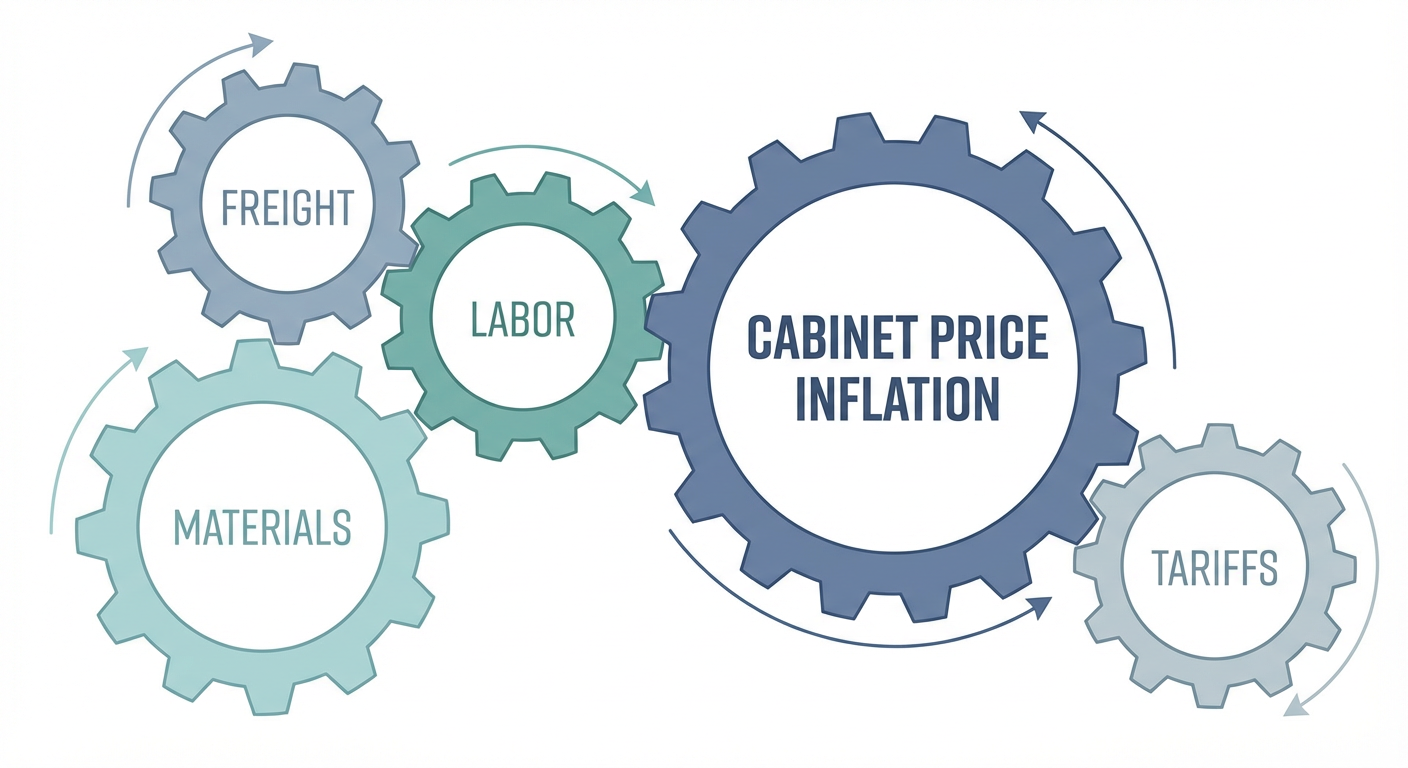
5. Beyond Tariffs: Comprehensive Drivers of Cabinet Price Inflation
While the recent tariffs on imported kitchen and bath cabinets have undeniably imposed significant new costs on consumers and the remodeling industry, it is crucial to recognize that these trade actions are but one component of a broader, more complex landscape of price inflation. Recent years, particularly the period following the global pandemic, have witnessed a confluence of economic pressures that have driven up the costs of nearly all goods and services, and cabinetry has been no exception. The cumulative impact of surging global freight rates, persistent labor shortages exacerbated by demographic shifts and the ‘Great Resignation,’ and volatile material prices for key inputs like wood, plywood, and hardware has created an environment where cabinet costs were already at record highs even before the most recent tariffs took effect. Understanding this multi-faceted inflation requires a deep dive into each contributing factor, differentiating between the distinct and sometimes compounding influences that collectively determine the final price tag for kitchen and bath remodels in 2026. This section will dissect these drivers, quantify their historical and projected impacts, and illustrate how they intertwine with the tariff effect to create the elevated budget realities homeowners are now facing.
5.1 The Weight of Logistics: Freight Costs and Supply Chain Volatility
The global supply chain disruptions triggered by the COVID-19 pandemic introduced unprecedented volatility and significant cost increases into the movement of goods, a phenomenon that profoundly affected the cabinet industry. Prior to the pandemic, shipping a standard 40-foot container from Asia to the United States typically cost around $2,000. However, at the peak of the supply chain crisis in 2021, these rates skyrocketed, increasing nearly tenfold to as high as $20,000 on some routes[7]. This dramatic surge in transportation expenses meant that for many cabinet importers, the cost of simply moving the product across oceans began to rival, or even exceed, the manufacturing cost of the cabinets themselves. While container rates have since receded from their apex, the period of extreme volatility forced many smaller importers out of business, and surviving companies integrated higher freight contingencies into their pricing models to buffer against future shocks. Even in late 2023, for instance, a CNBC analysis noted that container prices had again spiked to over $10,000 on certain routes due to new disruptions, indicating ongoing instability in global shipping[7].
This persistent elevation and unpredictability in freight costs mean that even independently of tariffs, a significant baseline increase has been baked into the cost structure of imported cabinets. It is estimated that prior to the 2025 tariffs, shipping alone may have added an additional 10-15% to the unit costs of imported cabinets compared to pre-2020 levels. This translates into hundreds, if not thousands, of dollars for a typical kitchen cabinet order. The geographic footprint of demand further exacerbates this. For instance, in Arizona, particularly for rural projects, an additional “rural freight premium” can significantly add to delivery costs. Delivering cabinets to areas like northern Arizona or outlying desert communities can incur several hundred dollars more compared to deliveries within the Phoenix metropolitan area. When fuel prices spiked in 2022, some remote delivery surcharges reportedly doubled. In 2026, with the base price of cabinets already inflated by tariffs, the absolute dollar value of these freight surcharges becomes even more substantial, even if the percentage of total cost remains similar. This creates a disproportionate impact on homeowners in less accessible regions, who face both tariff-inflated cabinet prices and amplified shipping add-ons[5].
The globalized nature of cabinet supply chains means that even domestically manufactured cabinets are not entirely immune to freight cost pressures. While the final assembly might occur in the U.S., many American cabinet makers rely on imported components such as specialized hardware (e.g., Italian hinges), specific wood species, plywood, or finishing materials sourced from overseas[8]. The increased cost of transporting these intermediate goods indirectly contributes to the overall price inflation even for “Made in USA” products. Therefore, freight costs represent a foundational layer of price escalation, upon which tariffs, material costs, and labor expenses are inevitably stacked, creating a complex and stubbornly high cost structure for cabinetry in 2026.
5.2 The Compounding Challenge of Labor Shortages and Wage Hikes
The cabinet industry, both in manufacturing and installation, is characterized by its labor-intensive nature. Consequently, it has been particularly susceptible to the widespread labor shortages and wage growth experienced across the U.S. economy in recent years. The construction sector, in particular, has seen a persistent scarcity of skilled tradespeople, including carpenters and cabinet installers. Data from the Labor Department indicates that between 2020 and 2023, average hourly earnings for specialty trade contractors, a category that includes cabinet installers, increased by approximately 15%[7]. This direct increase in the cost of skilled labor inevitably translates into higher installation fees for homeowners and higher manufacturing costs for producers.
On the manufacturing side, domestic cabinet factories faced intense competition for workers as demand surged posthumously from the pandemic pent-up demand of 2021-2022. To attract and retain employees, many manufacturers were compelled to offer increased wages and benefits. These elevated labor costs became integrated into their operational expenses, eventually reflecting in higher wholesale prices for cabinets. For example, Wellborn Cabinet, a large Alabama-based manufacturer, reported increasing its workforce by approximately 20% between 2020 and 2022 and making significant investments in new equipment, directly attributing this growth to a resurgence in domestic demand following the initial tariffs on Chinese imports[2]. This positive growth, however, still necessitated additional labor investment that contributed to a higher baseline cost structure.
Beyond direct manufacturing and installation, the entire supply chain for cabinet production is affected by labor costs. Logging, milling, and transportation of raw wood materials all involve labor, and wage increases in these sectors have ripple effects. The cumulative impact of these labor-related cost pressures means that a significant portion of cabinet price inflation stems from the fundamental cost of human capital that goes into creating and installing these products. This factor operates independently of tariff policies, representing a structural shift in operational expenses that is unlikely to revert quickly. Therefore, both domestic and imported cabinet lines bear the mark of rising labor costs, making remodeling endeavors inherently more expensive even before any tariff is considered.
5.3 The Relentless Pressure of Material Costs (Wood, Plywood, Hardware)
Cabinets, by their very nature, are highly reliant on a range of raw materials, primarily various wood products. The volatility in global commodity markets, particularly for lumber and panel products, has been a major contributor to cabinet price inflation. The most widely cited example is the **lumber price boom of 2021**, when prices soared to unprecedented levels, exceeding $1,500 per thousand board feet – a threefold increase compared to typical pre-pandemic rates[7]. Many cabinet producers implemented temporary “material surcharges” during this period to offset these extreme input costs. While lumber prices have since normalized from those historic highs, a baseline increase remains, and the overall market for wood products continues to exhibit periodic volatility. The Producer Price Index for “cut stock, resawing lumber,” which serves as a proxy for key wood components used in cabinetry, showed a consistent upward trend throughout 2022 and early 2023, reflecting ongoing cost pressures[7].
Plywood and particleboard, essential for cabinet boxes and shelving, have also seen significant price increases. Much of the hardwood plywood used in cabinets was historically imported, initially from China and then from Southeast Asian countries. The tariffs, such as those implemented in 2025, extend beyond finished cabinets to also target **cabinet component parts**, including hardwood plywood, wood veneers, and other pre-cut or unassembled cabinet components[7]. This means that even if a U.S. factory assembles cabinets domestically, if it relies on imported drawer boxes, unfinished doors, or specific types of plywood from overseas, those inputs now carry an additional 25% tariff. This significantly raises the material cost for intermediate goods, driving up the final product price for what might otherwise be considered a “Made in USA” cabinet.
Beyond wood, other materials such as metal hardware (hinges, drawer glides, handles) have also been subject to cost increases. This is partly due to the broad-based tariffs on steel and aluminum that began in 2018 (which affected many types of metal components) and partly due to general supply chain disruptions and increased energy costs for their production. Finishing materials, like paints and coatings, some of which are petroleum-based, saw their prices fluctuate with swings in global oil markets. Therefore, the entire “bill of materials” for a kitchen or bath cabinet – encompassing wood, panel products, metal hardware, and surface finishes – has experienced significant upward price movement over the past few years.
In essence, tariffs have added yet another layer of cost to an already elevated material price foundation. Manufacturers frequently cite a combination of freight, fuel, and material inflation *alongside* tariffs when explaining price increases to dealers and consumers. This signifies that a considerable portion of the recent and ongoing cabinet price escalations are attributable to these fundamental material inputs and not solely to trade policy. For homeowners, this means that even if a future trade negotiation were to reduce or remove tariffs, the underlying costs of wood, metal, and other components would likely keep cabinet prices at levels significantly higher than those seen historically.
5.4 The Cumulative Effect: General Inflation and PPI Trends
The discussion of cabinet price inflation would be incomplete without acknowledging the pervasive influence of general economic inflation. The U.S. economy, particularly since 2021, has experienced rates of inflation not seen in decades, driven by a combination of surging demand, supply chain disruptions, and expansionary fiscal and monetary policies. This broader inflationary environment has created a higher cost baseline for nearly all manufactured goods, including cabinetry, even irrespective of sector-specific tariffs.
Official economic indicators clearly illustrate this trend. The **Producer Price Index (PPI) for Stock Wood Kitchen Cabinets and Related Cabinetwork**, a key measure of wholesale prices for the industry, reached its highest level on record in May 2023, standing at 249.24 (with a June 1984 base of 100)[6]. To put this in perspective, this index was approximately 228 in early 2020, just before the pandemic hit. This means that wholesale cabinet prices climbed by roughly 9% from pre-pandemic levels to their 2023 peak. As of April 2025, the index remained notably elevated at 247.2, reflecting sustained cost pressures[6].
Furthermore, consumer price data reveals that furniture, including cabinetry, has been inflating at a rate faster than overall inflation. As of November 2025, the Consumer Price Index (CPI) for “living room, kitchen, and dining room furniture” (a category that encompasses cabinetry) showed a 4.6% increase year-over-year, while the overall CPI for the same period rose by 2.7%[7]. This indicates that kitchen and bath cabinetry costs are growing at approximately 1.7 times the general inflation rate, placing an outsized burden on remodel budgets compared to other household expenditures. This discrepancy suggests that while general inflation elevates all prices, specific pressures within the furniture and cabinet sector (like those discussed regarding freight, labor, and materials) are intensifying the overall inflationary trend within this product category.
The cumulative effect of these non-tariff factors is profound. When cabinet suppliers announce price increases, they often attribute them to a combination of elements. For instance, Armstrong Building Services noted that even before the 2025 tariffs, they observed a 5-8% increase in cabinet prices driven purely by supply chain inflation (freight, materials, labor)[9]. The additional ~25% expected increase after the tariffs then overlays on this already elevated baseline. This makes it challenging for consumers to disentangle the precise contribution of each factor, but the bottom line is a significantly higher overall price for cabinets in 2026 than would have been observed without these converging pressures.
An approximate breakdown of cabinet price increases over the 2020-2023 period might look something like this:
- Materials (wood, hardware, finishes): ~40% of the increase
- Labor (manufacturing, installation): ~20% of the increase
- Freight/Logistics: ~10% of the increase
- General Overhead/Inflation: ~10% of the increase
- Tariffs/Trade Actions: ~20% of the increase (this would be referring to the historical China-specific duties, not the global 2025 tariff)
While this is an illustrative split and will vary by specific product line and manufacturer, it underscores that tariffs, while significant, are interacting with an existing inflationary environment. For homeowners, this means that even if tariffs were to be completely removed tomorrow, cabinet prices would still be considerably higher than pre-pandemic levels due to the embedded increases from freight, labor, and material costs that have become structural components of the industry’s expense base.
5.5 Interplay and Compounding Effects: How Drivers Amplify One Another
The various drivers of cabinet price inflation, tariffs, freight, labor, and materials, do not exist in isolation; rather, they interact and often compound each other’s effects, creating a multifaceted challenge for remodel budgets. This interplay can be visualized as layers of cost accumulation, where each factor builds upon the previous one.
Consider the trajectory:
- Base Cost + Material Inflation: The foundational cost of producing a cabinet first absorbed volatile increases in wood, plywood, and hardware prices. For example, a cabinet requiring a specific type of hardwood or plywood saw its direct material cost rise significantly due to market conditions, even before tariffs.
- + Labor Costs: To this material cost, rising wages for skilled labor in both manufacturing and installation were added. This means the labor component for crafting and fitting cabinets became more expensive, further elevating the base price.
- + Freight & Logistics: Once manufactured, the cabinet then incurred dramatically higher global and domestic freight charges to move it from the factory (whether overseas or domestic) to the distributor, and then to the job site. This transportation layer adds another substantial percentage to the overall cost.
- + Tariffs: Finally, for imported cabinets, the 25% tariff (or higher for specific historical duties on Chinese goods) is applied on top of the already inflated sum of material, labor, and freight costs. This means the tariff is not applied to a pre-pandemic baseline, but to a significantly higher cost foundation.
This sequential accumulation means that the final price paid by a homeowner reflects far more than just the tariff rate. For instance, a 25% tariff becomes even more impactful when applied to a cabinet whose underlying cost has already increased by 15-20% due to freight, labor, and material inflation. An Armstrong Building Services report illustrates this perfectly, noting suppliers had already raised prices by 5-8% owing to supply chain issues *before* the 25% tariff hit, with another ~25% expected increase after the tariff’s implementation[9]. This scenario suggests certain imported product lines could be nearly one-third (e.g., 8% + 25%) more expensive in 2026 than just a year prior. It’s not simply a 25% tariff; it’s 25% *on top of* other sustained increases.
Furthermore, psychological and market dynamics also play a role. When tariffs are introduced at a time of general inflation and supply constraints, domestic manufacturers, even those less directly affected by tariffs, may feel emboldened to implement their own price increases. This stems from reduced competition from cheaper imports (as tariffs make imports less competitive) and a general rise in market pricing expectations. This “coattail effect” can lead to broader price increases across all cabinet lines, even those that are fully domestically produced. As one designer noted, high-end custom cabinet brands, largely domestic, had “not been materially impacted by tariff chatter” directly but could still nudge prices up by 3-5% for incidental cost upticks. The overall effect is a recalibration of market prices to a higher equilibrium.
The compounding effects also extend to lead times and project management. Increased demand for domestic products (as consumers seek to avoid tariffs) can overwhelm domestic manufacturing capacity, leading to extended lead times for U.S.-made cabinets. This, in turn, can contribute to project delays, which often incur additional labor costs, extended project management fees for contractors, or even late penalties if not carefully managed. A Phoenix remodeler reported that homeowners who didn’t order imported cabinets in late 2025 were seeing price quotes 20%+ higher in early 2026 for the same types of cabinets, often with longer lead times[5]. The interaction of tariffs, demand shifts, and labor capacity thus creates delays and secondary costs that further inflate the final budget.
For consumers, these complex interactions mean that budgeting for a kitchen or bath remodel in 2026 requires more than just factoring in a tariff percentage. It necessitates an understanding of how these various economic forces are converging to create a consistently higher cost environment. Homeowners who last remodeled five or more years ago will find that the baseline costs for cabinets have undergone a dramatic structural shift, and tariffs represent a significant, but not singular, additional expenditure in this new economic reality.
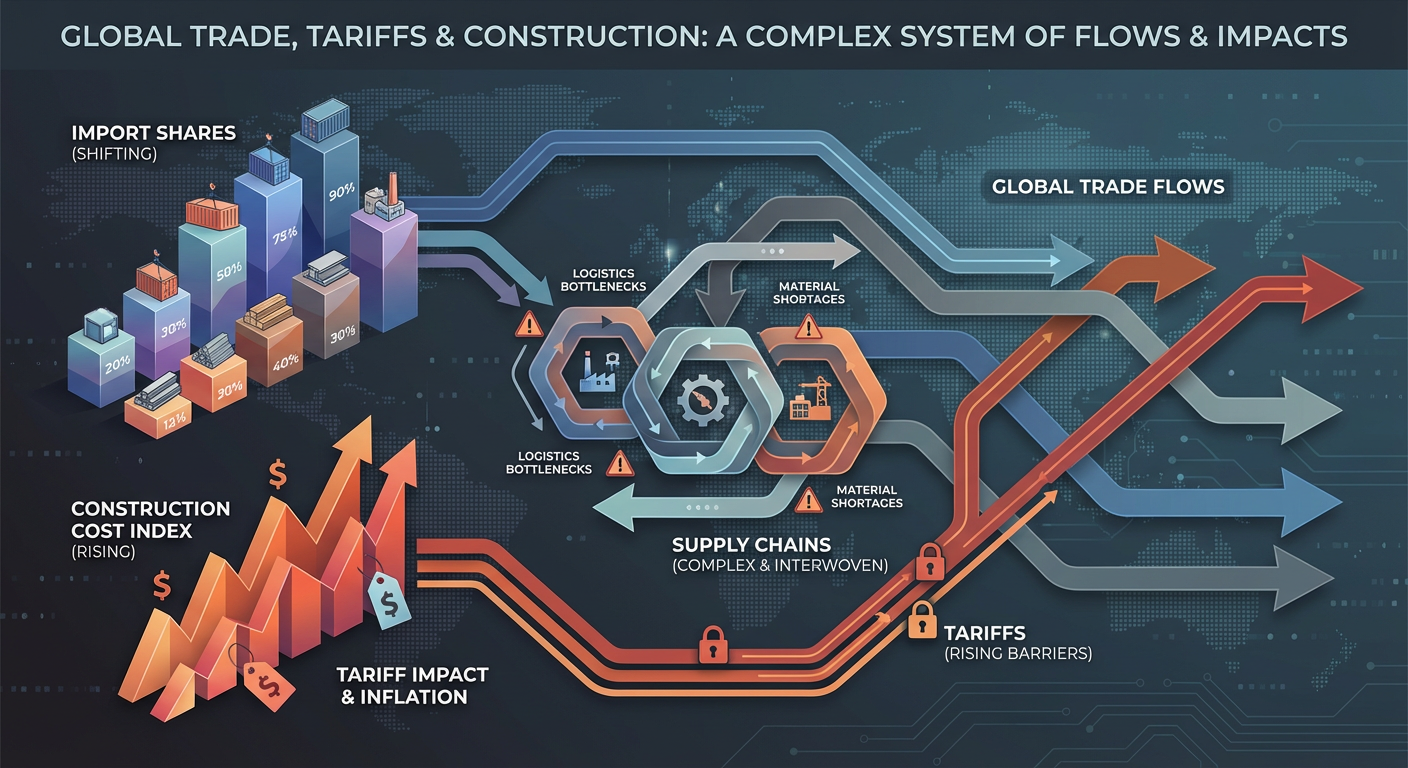
6. Market Dynamics: Import Shares, Domestic Production, and Industry Shifts
The landscape of the U.S. kitchen and bath cabinet industry has undergone significant transformations over the past decade, driven primarily by evolving global trade policies. What began as a strategic response to surging imports from a single dominant player has broadened into a complex web of tariffs, anti-dumping duties, and anti-circumvention measures affecting a wider range of international suppliers. These trade actions, coupled with the persistent pressures of freight costs, labor shortages, and material inflation, have dramatically reshaped market dynamics, influencing everything from import shares and domestic production capacity to industry-wide shifts and ultimately, the budgets of homeowners planning renovations for 2026. This section will delve into the intricate shifts in the global supply chain, examining the historical prevalence and subsequent decline of Chinese imports, the rapid rise of Southeast Asian suppliers, the ensuing impact on U.S. domestic manufacturing capacity, and the multifaceted responses of the U.S. cabinet industry to these trade policies.
6.1. The Evolving Global Cabinet Supply Chain: From China to Southeast Asia
The story of the U.S. cabinet supply chain is one of dynamic shifts, initially dominated by Chinese imports, then undergoing a significant diversification, and now facing a more generalized tariff landscape. Understanding these changes is crucial to comprehending the current market for kitchen and bath cabinetry.
6.1.1. The Era of Chinese Dominance and Subsequent Decline
In the late 2010s, the U.S. market for wooden kitchen cabinets and vanities was profoundly influenced by inexpensive imports from China. By 2018, these imports had swelled to an astounding \$1.7 billion annually, successfully capturing over 40% of the entire U.S. kitchen cabinet market[15][16]. This surge of low-cost Chinese products created immense competitive pressure for domestic manufacturers, leading to significant market share erosion and, in some cases, factory closures, such as MasterBrand Cabinets’ plant in Auburn, AL, which ceased operations in Q2 2018, laying off 445 employees[51][52]. This scenario underscored the perceived existential threat posed by these imports to the U.S. industry[11][53].
In response to these market distortions, the U.S. industry, spearheaded by associations like the Kitchen Cabinet Manufacturers Association (KCMA) and the American Kitchen Cabinet Alliance, filed an anti-dumping (AD) and countervailing duty (CVD) petition. This culminated in a definitive ruling by the U.S. International Trade Commission (USITC) in March 2020, affirming that Chinese cabinet imports were indeed injuring the U.S. industry[10][17]. Subsequently, the U.S. Commerce Department imposed steep anti-dumping duties ranging from 4.37% to an overwhelming 262.18%, alongside countervailing duties from 13.33% to 293.45% on Chinese-made cabinets[9][17]. These formidable penalties effectively priced most Chinese-made cabinets out of the U.S. market, leading to a dramatic 70% plunge in Chinese import volume by 2021[9][18].
6.1.2. The Emergence of Southeast Asia as a Primary Source
The void left by the decline of Chinese imports was swiftly filled by other manufacturing hubs, primarily in Southeast Asia. Importers, seeking to maintain cost-effective supply chains, shifted their sourcing to countries like Vietnam, Malaysia, Thailand, Cambodia, Indonesia, and Taiwan. By 2024, this bloc of Southeast Asian nations collectively accounted for a substantial 57% of all U.S. kitchen cabinet imports[19][8]. Mexico also emerged as a significant supplier, contributing an additional 10% to the U.S. import market[19][8]. This rapid diversification meant that total cabinet imports (from all countries) reached \$3.7 billion by 2024, more than doubling the levels seen a decade prior[20].
This “import surge 2.0,” as it was sometimes referred to, reignited concerns among U.S. manufacturers. They observed that while Chinese products were effectively curtailed, the competitive pressure from imports continued unabated, simply shifting its geographical origin. This led to renewed calls for trade action, particularly to address potential circumvention of the existing duties on Chinese goods.
6.1.3. Anti-Circumvention Measures and Broadening Tariff Scope
U.S. authorities recognized the risk of tariff circumvention, where Chinese cabinet components were being shipped to other countries, assembled, and then exported to the U.S. as products of the intermediary country to avoid duties. Investigations commenced between 2022 and 2024, leading to a pivotal ruling by the Commerce Department in mid-2024. This ruling determined that unassembled Chinese cabinet components transshipped through Vietnam and Malaysia before export to the U.S. fell within the scope of China’s existing AD/CVD orders[11][21][22]. To enforce this, new certification rules were introduced for importers, effective October 15, 2024, requiring proof of local production in Malaysia and Vietnam to avoid Chinese-level anti-dumping and countervailing duties[22]. This action effectively closed a major loophole and set the stage for a broader, comprehensive tariff policy.
The culmination of these escalating trade actions was a presidential proclamation issued on September 29, 2025, which imposed a 25% tariff on all imported wooden kitchen cabinets and vanities, regardless of origin, effective October 14, 2025[3][23]. This tariff was initially planned to double to 50% on January 1, 2026[3]. However, faced with concerns about housing affordability and cost impacts, the U.S. administration later delayed the 50% hike by one year, keeping the tariff at 25% through at least January 1, 2027[24][2]. This decision, while offering temporary relief, highlights the ongoing volatility and strategic nature of trade policy in the cabinet sector.
The shift from targeted duties on China to a broad-based, global tariff signifies a deliberate policy strategy to protect domestic manufacturing capacity, even at the cost of higher prices for consumers. As one industry expert described it, the government’s stance is that overreliance on foreign cabinetry threatens domestic resilience, drawing parallels to the decline of the U.S. furniture industry in the 2000s due to cheap imports[25].
6.2. Impact on U.S. Domestic Manufacturing Capacity
The implementation of tariffs and anti-dumping duties has had a mixed, yet significant, impact on the U.S. domestic cabinet manufacturing industry. While the stated goal of these policies is to bolster American production, the reality is a more complex picture of gains and losses, adaptation, and continued competitive pressures.
6.2.1. Initial Gains Post-China Tariffs
Following the imposition of anti-dumping and countervailing duties on Chinese cabinet imports in 2020, domestic manufacturers experienced a period of resurgence. Many U.S. producers, freed from the intense price competition of highly subsidized Chinese goods, were able to regain market share and invest in their operations. For instance, Wellborn Cabinet, a prominent Alabama-based manufacturer, reported a significant increase in orders. Between 2020 and 2022, Wellborn Cabinet ramped up its workforce by approximately 20% (adding 23 employees at one plant) and invested over \$1.2 million in new equipment and software[26][27]. This growth was directly attributed to the “cabinet duties with new jobs and investments”[26]. Such examples demonstrate that the tariffs on China did, at least initially, achieve their objective of stimulating domestic production and employment.
The Kitchen Cabinet Manufacturers Association (KCMA) also cited new jobs and investments as positive outcomes following the 2020 duties, providing critical support for the domestic industry[28].
6.2.2. Persistent Challenges and Factory Closures
Despite these gains, the shift in import sources to Southeast Asian countries meant that competitive pressure on U.S. manufacturers did not entirely disappear. The rapid rise of Vietnamese, Malaysian, and other Asian imports (reaching 57% of total U.S. cabinet imports by 2024[19]) continued to challenge domestic producers. This “import surge 2.0” contributed to what the Coalition for a Prosperous America described as an “unrelenting import surge,” leading to further shake-ups in the U.S. industry[19].
From 2018 to 2025, at least 10 U.S. cabinet factories closed their doors. These closures included facilities in significant manufacturing states such as Alabama, North Carolina, Texas, and Virginia[29][30]. Even after the Chinese tariffs, domestic firms struggled with the volume and price points of products from other low-cost regions. The KCMA estimates that U.S. producers have lost approximately 20 percentage points of domestic market share to imports since 2010[31]. This suggests that while tariffs on one country can provide temporary relief, the globalized nature of manufacturing means new sources of competition can quickly emerge, requiring ongoing policy adjustments.
The closures underscore a critical point: while tariffs can level the playing field for pricing, they don’t instantly solve long-standing issues like labor costs, capital investment needs, and the ability to scale production quickly to meet shifting market demands. The initial positive impact of the China duties was tempered by the swift adaptation of importers to new supply chains.
6.2.3. Domestic Industry Response and Adaptation
The imposition of the broader 25% global tariff in late 2025, and its potential future increase, has further intensified the focus on U.S. domestic production. Many U.S. cabinet manufacturers are now in a stronger position to capture market share, having seen the tariffs limit low-cost import options. Some are actively investing further in capacity expansion to meet anticipated demand. However, expanding production capacity for cabinetry is not an instantaneous process; it requires significant capital investment in machinery, long lead times for equipment procurement, and crucially, the availability of a skilled workforce.
The industry’s long-term outlook remains cautiously optimistic, yet uncertain. While groups like the KCMA hope tariffs will solidify the domestic industry in the long run, the short-term reality for consumers and contractors is higher prices and potentially longer lead times as domestic production races to catch up[28][33]. The delay of the 50% tariff hike until at least 2027 suggests an acknowledgment from policymakers of the needed adjustment period for domestic producers and the broader economy, preventing a sudden shock to housing affordability[24][2].
6.3. Responses of the U.S. Cabinet Industry to Trade Policies
The U.S. cabinet industry’s response to these evolving trade policies has been multi-faceted, encompassing lobbying efforts for tariffs, strategic shifts in sourcing, and tactical adjustments in pricing and production.
6.3.1. Advocacy for Trade Protections
From the outset, U.S. cabinet manufacturers, particularly through organizations like the American Kitchen Cabinet Alliance, have been vocal advocates for trade protections. They argued that foreign governments’ subsidies and “dumping” practices (selling goods below cost) constituted unfair competition that jeopardized the integrity and survival of the domestic industry. Their efforts were instrumental in securing the anti-dumping and countervailing duties against Chinese imports in 2020. They continued this advocacy against perceived circumvention via Southeast Asian countries, leading to the Commerce Department’s 2024 ruling. The broader 2025 global tariff reflects a culmination of these prolonged advocacy efforts, signaling a governmental commitment to protecting what it deems a critical domestic industry for national security and economic stability[23][25].
The “national security angle” cited in the 2025 proclamation is particularly noteworthy, allowing broader tariffs that might otherwise face challenges under normal World Trade Organization rules. This rationale frames cabinet manufacturing as a strategic industry, similar to sectors like steel, justifying aggressive protective measures[25].
6.3.2. Sourcing Diversification and Adaptation
Importers and suppliers within the U.S. cabinet industry have had to continuously adapt their sourcing strategies. When Chinese imports became cost-prohibitive, many shifted to Southeast Asia. Now, with a global tariff on all wooden cabinets, the options for completely tariff-free imports are severely limited. This has led to a renewed focus on domestic “Made in USA” options. Showrooms and contractors are increasingly guiding clients toward American-made cabinet lines, even if their base price might be slightly higher, given the elimination of tariff uncertainty. For instance, a California design firm noted that clients who previously opted for cheaper imported lines are now choosing U.S. brands, finding the clarity and reliability outweigh the slightly higher initial cost.
Some firms are attempting to find niches, such as exploring imports from countries with potentially lower tariff rates under separate trade agreements (e.g., the UK with a 10% tariff or some EU countries at 15%[34][35]). However, these sources often represent a small fraction of the market and may not offer the same styles or cost structures as the traditional Asian suppliers. The industry is effectively being pushed to localize or regionalize its supply chains more extensively.
6.3.3. Pricing Strategies and Market Communication
A significant industry response has been the adjustment of pricing and the communication of these changes to consumers. This has been a delicate balancing act, as too steep a price hike could deter remodel activity.
- Preemptive Price Increases: Even before the official October 2025 tariff, many suppliers and vendors had already begun raising prices. Reports from fall 2025 indicated a preemptive 5–8% increase from many cabinet suppliers, anticipating the higher import costs. They also signaled further markups of approximately 25% once the tariffs officially took effect[6][36]. This suggests a strategic attempt to gradually introduce higher costs rather than a sudden shock.
- Partial Pass-Through to Consumers: Economic research suggests that consumers don’t bear the full burden of tariffs. On average, U.S. consumers typically pay just over half of an import tariff’s cost, with the remainder absorbed by producers (foreign exporters) or U.S. importers through reduced margins[4][5][7]. For example, a Canadian cabinet manufacturer, Décor Cabinets, chose to absorb 50% of the U.S. tariff for its dealers, effectively reducing the immediate price increase for U.S. buyers to about 12.5% instead of 25%[37][2]. Similarly, a Connecticut dealer noted that his Chinese and Vietnamese suppliers initially only bumped prices by about 10% to cover “some of the duty costs,” absorbing the rest themselves[38][39]. This strategic absorption aims to maintain competitive pricing and avoid client sticker shock that could halt projects.
- Price Index Movements: The Producer Price Index (PPI) for stock kitchen cabinet manufacturing reached a record high of 249.24 (Index Jun 1984=100) in May 2023, up approximately 9% from pre-pandemic levels in early 2020[40]. As of April 2025, it remained elevated at 247.2[41]. Combined with these baseline increases, the tariffs mean that overall retail cabinet prices rose in the range of 15–35% in early 2026 for heavily imported items[42]. Furniture and cabinet inflation, as measured by the CPI for “living room, kitchen, and dining room furniture,” ran at 4.6% year-over-year in late 2025, significantly outpacing the overall CPI increase of 2.7%[43][12].
6.3.4. Operational Adjustments and Contingency Planning
The industry has also made operational adjustments to navigate the new trade environment:
- Advance Purchasing and Stockpiling: Many remodelers and dealers encouraged clients to order cabinetry before the 2025 tariff effective date to lock in pre-tariff pricing. Some larger dealers themselves engaged in stockpiling popular imported lines to buffer their inventory against immediate price hikes[44][13].
- Extended Lead Times: Even with domestic manufacturers scaling up, lead times have generally increased across the board. Certain imported lines saw lead times extend from 8–10 weeks to 16+ weeks in early 2026, while domestic suppliers’ lead times also stretched due to increased demand[45][14].
- Design Adaptations: Designers are advising homeowners on “value engineering” and design adjustments. This includes considering fewer upper cabinets, utilizing open shelving, refacing existing cabinets, or incorporating more budget-friendly stock domestic lines[46][47]. These strategies aim to mitigate the financial impact of tariffs and other cost drivers.
- Tightened Quoting Practices: Showrooms like BKC Kitchen & Bath in Denver tightened the validity periods for their quotes, shrinking them from 30 days to 7–14 days, in response to rapidly changing supplier pricing lists[49][8]. Transparency with customers about evolving costs has become paramount.
In conclusion, the U.S. cabinet industry has moved through distinct phases of global competition and trade policy responses. From the initial shock of Chinese imports to the adaptation to Southeast Asian sourcing, and finally, to the broad-based global tariffs, the industry has shown resilience and a capacity for strategic adjustment. The long-term vision of a stronger domestic manufacturing base is gradually taking shape, though the journey is marked by ongoing price volatility and shifts in supply chains that directly impact remodel budgets in 2026 and beyond.
The next section will quantify these impacts, providing a detailed breakdown of how these tariffs and associated cost pressures flow through to specific kitchen and bath remodel budgets, examining different product lines from stock to custom, and offering concrete examples for homeowners and contractors.
7. Regional Impacts and Market Nuances: Phoenix, Arizona, and National Trends
The national landscape of cabinet tariffs and escalating material and labor costs, while broad in its impact, manifests differently across various regions of the United States. Factors such as local demand, proximity to manufacturing hubs, reliance on imports, and even logistical intricacies like rural freight premiums significantly shape how these national trends translate into tangible budget increases for homeowners. This section will delve into these regional nuances, with a particular focus on the high-demand market of Phoenix, the broader implications for Arizona, and national patterns, including lead time considerations and strategies employed to mitigate cost increases. Understanding these localized dynamics is crucial for providing a comprehensive view of the “Cabinet Tariff Effect” and its real-world implications for kitchen and bath budgets in 2026.
7.1 The Amplified Effect in High-Demand Markets: Phoenix, Arizona
Rapidly expanding metropolitan areas, especially those experiencing sustained population growth and robust real estate activity, often exhibit a heightened sensitivity to increases in construction costs. Phoenix, Arizona, stands out as a prime example of such a market. The city has consistently been one of the nation’s hottest remodeling markets following the pandemic, with home improvement spending figures significantly exceeding national averages [55][56]. This intense demand creates a unique environment where cost increases, such as those imposed by cabinet tariffs, can have an exaggerated impact on consumer budgets and project timelines.
Local remodelers in Phoenix frequently operate with full backlogs, particularly during the region’s cooler months, typically spanning the first two quarters of the year (Q1-Q2). This seasonal peak in renovation activity in Arizona, before the onset of the intense summer heat, means that contractors have limited flexibility to absorb unexpected costs or mitigate project delays [27]. When tariffs lead to higher cabinet prices or cause supply chain disruptions, Phoenix residents are more likely to feel the pinch directly.
For instance, if the lead times for imported cabinets are extended due to new tariff regulations or supply constraints, a contractor in a high-demand city like Phoenix, whose schedule is already tightly packed, will find it challenging to accommodate these delays. This can result in projects being pushed out by several weeks, incurring additional overhead costs, and potentially leading to homeowner frustration. One Phoenix design-build firm owner informally noted that the initial news of the 2025 tariffs prompted an immediate surge in cabinet orders in late 2025. Clients sought to “lock in” pre-tariff pricing, recognizing the impending cost increases. By early 2026, those homeowners who had not placed their orders ahead of time were reportedly receiving price quotes over 20% higher for the exact same cabinet lines [57]. This anecdotal evidence from a local showroom underscores the immediate and substantial financial impact felt by consumers in a competitive, high-demand market like Phoenix.
The confluence of robust remodeling growth, exemplified by Sun Belt metros and certain Californian regions, with the added burden of tariffs, amplifies existing pressures on pricing and project schedules. The strong foundational demand in these areas means that despite the tariffs, remodeling activity is likely to persist, but at a significantly elevated cost base for the consumer.
7.2 The Impact of Rural Freight Premiums in Arizona
Beyond the urban centers, pricing disparities driven by geography also affect the overall cost of cabinetry. Within Arizona, as in other large states with diverse topographies, the cost of transporting heavy construction materials like cabinetry can vary significantly between metropolitan and rural areas. Remote or rural projects often incur additional logistical expenses, known as “rural freight premiums,” for the delivery of cabinetry. This is because such deliveries typically involve less-than-truckload (LTL) shipments, which are inherently more expensive per unit compared to bulk shipments to urban distribution centers [27].
The imposition of tariffs inflates the base cost of cabinets directly at the point of import or manufacture. This increased base cost is then further augmented by the transportation expenses. Rural contractors frequently pay extra for specialized deliveries to more isolated job sites. Arizona kitchen dealers confirm this “rural freight premium,” noting that delivering cabinets to regions in northern Arizona or other outlying desert communities can add several hundred dollars more to the overall cost, in contrast to deliveries within the Phoenix metropolitan area [58].
A historical perspective shows that during periods of elevated fuel prices, such as in 2022, these remote delivery surcharges could double. In 2026, with the tariff-inflated cost of cabinet boxes, the absolute dollar amount of freight premium for rural projects will be higher than before the tariffs, even if the percentage of freight cost relative to the material cost slightly decreases due to the larger base price. For example, a homeowner undertaking a kitchen remodel in a rural Arizona town might realistically expect to pay an additional over $500 in freight fees alone for their cabinetry, on top of the already tariff-inflated product price [59]. This represents a non-trivial budget item. Conversely, urban areas benefit from higher competition among distributors, more established warehousing networks, and the logistics efficiencies of bulk shipments, which can temper per-unit freight costs. Thus, metropolitan consumers might find it marginally easier to access readily available stock or discounted delivery options, while rural homeowners face the dual burden of higher tariff-driven prices and increased shipping add-ons.
7.3 National Trends: Import Exposure and Lead Time Considerations
The severity of tariff impacts across the United States is also heavily influenced by a state’s historical reliance on imported cabinetry and its existing domestic manufacturing base. The market share of imported cabinets has fluctuated significantly due to successive trade actions. In 2018, Chinese imports constituted over 40% of the U.S. kitchen cabinet market, valued at $1.7 billion [17][18]. Following the imposition of anti-dumping and countervailing duties on Chinese cabinets in 2020, this share significantly declined. However, other countries quickly filled the void. By 2024, a consortium of Southeast Asian nations, Vietnam, Malaysia, Thailand, Cambodia, Indonesia, and Taiwan, collectively accounted for 57% of U.S. kitchen cabinet imports, with Mexico contributing another 10% [19][20]. Total cabinet imports (from all countries) reached $3.7 billion in 2024, more than double the level recorded a decade earlier [21].
7.3.1 States Most Exposed by Import Share
States with a robust local cabinet manufacturing presence are generally less susceptible to immediate and dramatic price increases due to tariffs. Regions like Indiana, Ohio, Alabama, and North Carolina, which host multiple large-scale cabinet factories, have a higher availability of domestically manufactured products [54]. In these states, a greater proportion of contractors and consumers already utilize local or domestically produced lines, meaning the latest tariffs primarily affect only the lower-end, import-heavy segments of the market.
Conversely, states with large populations but a less concentrated domestic cabinet production footprint, such as Florida, Texas, and California, have historically relied heavily on imported cabinetry for residential construction (new builds and remodels) and multi-family developments [54]. For example, Florida saw a considerable influx of Chinese cabinetry for condominium projects in the 2010s. When tariffs on China took effect, suppliers in Florida pivoted to importing from other regions like Brazil or Malaysia to service these projects. With the 2025 global tariff now in effect, these “high import penetration” states are likely to experience a more significant supply shock [54]. This can force local businesses to either rapidly identify and transition to domestic alternatives or bear substantially higher costs for their import reliance, passing a portion of that burden to the consumer. Coastal states with major port infrastructure, particularly California and Florida, historically served as key distribution hubs for inexpensive containerized goods, further entrenching their reliance on imports. The new 25% to 50% duties necessitate drastic adjustments in pricing strategies and sourcing for retailers in these areas.
7.3.2 Lead Time Fluctuations and Project Delays
Beyond cost, the interaction between supply and demand, exacerbated by tariffs, also affects lead times for cabinetry. Industry experts have warned that the new tariffs and stricter import regulations could extend cabinet lead times by several weeks or potentially months [26]. As importers revise their sourcing strategies or reduce order volumes to manage higher costs, some popular cabinet lines may face backorders or even temporary unavailability. The domestic manufacturers, suddenly experiencing an increase in demand as imports become less competitive, have also begun quoting longer production timelines due to increased order volumes [27].
In regions such as the Mountain West (including Arizona), cabinets traditionally arrived from West Coast ports or were shipped from Midwestern manufacturers. A slowdown in imports means that Western dealers might encounter extended reorder times, as they increasingly depend on factories located in the East Coast or Midwest that are struggling to ramp up production to meet nationwide demand. For instance, some Arizona showrooms in early 2026 reported that specific imported lines, particularly European-style frameless cabinets sourced from Asia, were facing significant delays, with quoted lead times of over 16 weeks, compared to the previous 8-10 weeks [60]. Meanwhile, domestic manufacturers, even those in states like Minnesota or Virginia, saw their typical lead times expand from 4-6 weeks to 8-10 weeks due to the surge in orders following the reduction of import competitiveness [27].
Therefore, a homeowner in Phoenix or Las Vegas who opts for a domestically manufactured cabinet line may still encounter delays due to the increased burden on national production capacity. Regions with closer proximity to cabinet manufacturing hubs, such as the Midwest, could potentially experience a slight advantage in terms of delivery speed. In summary, the tariff environment creates varied disruptions: areas heavily reliant on imports face immediate price hikes and potential product shortages, while regions with robust local supply see more moderate price adjustments but are still subject to ripple effects, primarily in the form of extended lead times.
7.4 Coping Strategies and Outlook for Homeowners and the Industry
The cabinet industry and consumers are implementing a variety of strategies to cope with the escalating costs and supply chain uncertainties brought about by tariffs and other inflationary pressures. These strategies range from proactive purchasing to shifting sourcing and even fundamental changes in kitchen design.
7.4.1 Advance Purchasing and Stockpiling
One direct response to the impending tariff spikes has been a push towards advance purchasing. Many remodeling firms advised clients in 2025 to secure their cabinet orders, or at least place substantial deposits, before the scheduled price increases at the start of the new year. For example, Kitchen Concepts in the Bay Area explicitly recommended that homeowners “order before the end of 2025 to lock pricing and secure production slots,” thereby preempting the tariff hike and potential factory bottlenecks [26]. A Phoenix contractor, for instance, practiced strategic pre-ordering of popular cabinet styles in bulk during late 2025, warehousing the inventory to shield clients from the initial tariff impacts in 2026 [61]. While this approach helps buffer consumers, it requires capital investment and storage capacity, making it primarily feasible for larger dealers. Once this pre-tariff inventory is depleted, new orders will invariably reflect the higher, tariff-inclusive costs, rendering this a temporary solution.
7.4.2 Shifting Sourcing and Supply Chain Diversification
Another common tactic involves re-evaluating and diversifying supply chains to find non-tariff or lower-tariff sources. Given the broad scope of the U.S. tariffs, options are somewhat constrained, but regional distinctions do exist. For instance, cabinet imports from the UK are subject to a lower 10% tariff due to specific trade agreements [12]. However, the UK is not a major volume player in the U.S. cabinet market, and their product styles often differ significantly. Some importers have explored new sourcing avenues in countries like Brazil, India, or Turkey, which were not historically large cabinet exporters to the U.S., hoping to bypass tariff regimes applicable to Southeast Asian nations. However, establishing new, reliable supply chains is a time-consuming process, and a sudden surge in imports from any new source could trigger further trade investigations and potential future tariffs.
Domestically, there’s a noticeable shift towards Made-in-USA cabinet lines. Contractors and designers are increasingly favoring American-made products. A California design firm observed that clients who might previously have opted for cheaper imported lines are now choosing U.S. brands, which, despite a potentially 10% higher base price, offer enhanced reliability and are exempt from the new tariffs [62]. This has amplified the perceived value and appeal of domestically produced goods. Some Canadian suppliers, facing U.S. tariffs, are even considering moving final assembly operations into the U.S. to qualify their products as “U.S.-made” and avoid duties entirely, a strategy that involves relocating certain production steps.
7.4.3 Manufacturer and Dealer Cost Absorption
To maintain market share and project continuity, several manufacturers and dealers have opted to absorb a portion of the increased costs rather than passing the entirety onto consumers immediately. Decor Cabinets, a Canadian manufacturer, notably absorbed half of the tariff cost for its U.S. dealers, effectively limiting the immediate price increase for the end-consumer to approximately 12.5% instead of the full 25% [4]. Similarly, John Dean, a cabinet dealer in Connecticut, publicly stated his intention to “cover any tariff-related costs for now instead of raising customer prices” [33]. This strategy, while impacting profitability, aims to prevent customer attrition and maintain goodwill. Some retailers have implemented “Tariff Match” promotions, offering discounts equivalent to the tariff amount for orders placed early in 2026. These measures are, however, often temporary and contingent on a company’s financial health and the ongoing market dynamics [4].
7.4.4 Project Redesign and Value Engineering
Homeowners and designers are also actively adapting their project plans to mitigate cost spikes. One strategy involves reducing the overall number of cabinets. This can be achieved by incorporating more open shelving, utilizing existing cabinetry through refacing or repainting, or adopting design trends such as fewer upper cabinets and more functional pantries and multi-functional islands [63][64]. A design blogger further suggested that tariff pressures could “rev up interest in keeping old cabinets or mixing in vintage pieces” [36], highlighting a growing appeal for salvage and reuse as a cost-saving alternative.
Another approach is the selection of alternative finishes or cabinet styles. For instance, while imported painted cabinets were once more budget-friendly than domestic options, the tariffs may now make higher-grade stained wood cabinets from U.S. suppliers a more attractive option. Designers are also favoring modular kitchen designs that utilize standard-sized, domestically mass-produced cabinets, thereby reducing the need for costly imported specialty units. These design-oriented adjustments can yield significant savings, potentially shaving thousands of dollars off a remodel budget in the current high-tariff environment.
7.4.5 Long-Term Industry Adjustments and Outlook
From a broader industry perspective, the tariffs are intended to spur domestic manufacturing growth. The American Kitchen Cabinet Alliance has highlighted how these trade measures have provided U.S. companies with the necessary impetus to invest in increased production capacity and job creation [15][22]. However, this is a multi-year process. While domestic capacity expansion could eventually stabilize prices or foster greater competition, the immediate impact on the current remodeling cycle remains one of increased costs. The U.S. industry hopes its investments will result in sufficient market share and efficiency to meet demand at reasonable prices when the current tariffs undergo a five-year “sunset” review in 2025 for the China case [9]. Until then, homeowners are advised to factor an additional 10-15% contingency into their 2026 remodel budgets to account for these tariff-driven cost increases [65]. The pricing volatility, as noted by interior designer Allison Harlow, can erode consumer confidence [39]. Despite this, Harvard’s Joint Center for Housing Studies projects that overall remodeling spending will remain robust through mid-2026 [25], indicating that consumers will continue to renovate, albeit with potentially revised expectations and budgets.
In conclusion, the regional impacts of cabinet tariffs are complex and multifaceted, influenced by local market dynamics, supply chain structures, and a range of adaptive strategies employed by both businesses and consumers. While high-demand areas like Phoenix will likely experience more pronounced effects, the entire country is navigating a new equilibrium in cabinet pricing and availability. The ability to plan strategically, engage in proactive purchasing, and consider flexible design choices will be paramount for managing remodeling budgets in 2026 and beyond.
8. Mitigation Strategies for Homeowners and Industry Outlook
The landscape of kitchen and bath remodeling has been significantly altered by recent trade actions, particularly the imposition of tariffs on imported cabinetry and vanities. For homeowners and industry professionals alike, navigating this new economic reality demands strategic planning and informed decision-making. This section delves into actionable mitigation strategies that homeowners and remodelers can employ to manage rising cabinet costs. Furthermore, it presents a comprehensive long-term outlook for the cabinet industry, exploring how sustained tariff policies are reshaping domestic manufacturing, supply chains, and consumer expectations. Understanding these dynamics is crucial for anyone engaging in or impacted by kitchen and bath renovations in 2026 and beyond, as the “Cabinet Tariff Effect” continues to reverberate through the market.
Which Cabinets Are Hit Hardest? (Stock vs. Custom, Imports vs. Domestic)
The impact of cabinet tariffs is not uniform across all product lines. Rather, it creates a tiered effect, with certain types of cabinetry experiencing a more direct and substantial increase in cost than others. Understanding this delineation is key for homeowners and remodelers seeking to mitigate the financial repercussions.
Budget Imports = Most Exposure
The product segment most acutely affected by the tariffs are **stock and Ready-to-Assemble (RTA) cabinets** primarily imported from overseas. These are typically the more budget-friendly options found in big-box retailers or online. Historically, Chinese manufacturers dominated this market due to their highly competitive pricing strategies[9]. However, following the initial anti-dumping duties on Chinese goods, production largely shifted to other Southeast Asian countries like Vietnam and Malaysia. With the broader 2025 tariffs, these alternative sources are now also subject to duties. As a result, many entry-level cabinets that were once inexpensive imports now carry a significant cost premium due to the 25% tariff[3]. Remodelers and industry reports indicate that these budget-friendly RTA cabinets are likely to see the largest price increases, potentially in the range of 25–35% in final retail prices[3][1]. For example, a Yahoo Finance/Home article specifically highlighted that lower-cost, ready-to-assemble cabinet lines from abroad are directly in the crosshairs of the tariff policy[3]. This disproportionate impact on the entry-level segment can make basic kitchen or bath remodels significantly more expensive for cost-conscious consumers.
Semi-Custom & Mid-Range Cabinets Face Partial Exposure
Mid-tier and semi-custom cabinet lines occupy a more complex position. These products often blend domestic assembly with imported components. A U.S.-based cabinet manufacturer, for instance, might fabricate cabinet boxes domestically but source doors, drawer fronts, or specific wood species from overseas to maintain competitive pricing or access unique materials. Consequently, these lines face partial exposure to the tariffs, as the imported parts now incur higher costs. Even American-made cabinets are not entirely immune, as the globalized supply chain means they likely incorporate imported hinges, drawer glides, plywood, or finishing materials[8]. PBS NewsHour emphasized this point, stating that even U.S.-based manufacturers depend on imported materials and hardware, leading tariffs to “affect pricing across the board”[8]. For mid-range cabinets, internal industry estimates suggest a 10–15% cost increase attributable to tariffs, layered on top of other inflationary pressures. While less severe than the fully imported stock lines, these products will still see noticeable price adjustments, widening the cost gap between them and their pre-tariff prices.
High-End Custom Cabinets Least Directly Affected
At the apex of the market, top-tier custom cabinetry generally faces the least direct tariff exposure. These bespoke products are typically built to order by local artisans or premium domestic brands, often utilizing domestically sourced hardwoods. In a luxury kitchen, where cabinet costs can range from $40,000 to $100,000, the perceived value lies predominantly in skilled labor, personalized design, and superior finishes, rather than in mass-produced imported components. Any tariff impact on these lines is minimal, potentially limited to small, specialized imported items such as Italian hinges or unique accessory inserts. Many high-end custom cabinet shops reported “no immediate price changes” due to the tariffs, or only very modest increases of 3–5% to cover incidental cost upticks. One interior designer, Allison Harlow, noted that U.S. custom cabinet brands in her experience *“have not been materially impacted by tariff chatter and are likely to hold current pricing”* through at least early 2026[3]. Although an overall increase in mid-range cabinet prices could potentially give high-end producers leverage to raise their own prices slightly, this segment is generally insulated by its domestic manufacturing base and affluent customer demographic.
Canadian and Mexican Brands and Vanities
Regional dynamics also influence tariff impact. Canadian-made cabinets, a significant source for the U.S. market, were initially subject to the same 25% tariff as other imports[3], although subsequent trade negotiations reduced rates for some Canadian categories to 10%[9]. Some Canadian manufacturers, such as Décor Cabinets, have responded proactively by absorbing 50% of the tariff internally, resulting in an effective 12.5% increase for U.S. buyers[2]. Mexico, which supplies approximately 10% of U.S. cabinet imports (often as components for U.S. companies)[6], was also likely subject to the 25% duty, as the tariff was framed as a national security measure overriding typical free trade rules. This means imports from North American neighbors did not enjoy a significant advantage unless their manufacturers chose to absorb a portion of the costs to remain competitive.
Finally, the tariff scope explicitly includes bathroom vanities, which typically follow the market trends of kitchen cabinetry. Given that many inexpensive vanity combinations are imported from China or Vietnam, these products are now incurring higher costs, leading retailers to adjust prices upward. Custom-built vanities from local millworkers will see minor changes, primarily in lead times if demand shifts. In essence, the tariffs disproportionately affect stock and semi-custom kitchen cabinets and bathroom vanities sourced from abroad, while domestic custom cabinetry and furniture-style pieces experience indirect and less severe price adjustments. Homeowners are advised to ascertain the origin of their chosen cabinet lines; imported products or those with significant imported components will invariably incur higher costs in 2026 budgets.
How Tariffs Drive Up Remodel Costs – Price Increases, Pass-Through, and Indirect Effects
The imposition of tariffs on imported cabinets creates a multi-faceted upward pressure on remodel costs, affecting direct product prices, the financial burden passed to consumers, and various ancillary expenses. While a 25% or 50% tariff rate might suggest an equivalent direct increase in costs, the reality is more nuanced, influenced by supply chain dynamics, market absorption, and the overall economic environment.
Direct Price Increases: The “Sticker Shock” for 2026 Remodelers
Homeowners planning kitchen remodels in 2026 are widely encountering higher quotes attributable to these tariffs. A compelling example from a Bay Area remodeler illustrated that a $15,000 mid-range cabinet package could escalate to between $17,250 and $19,500 once the 25% tariff is fully integrated into the cost[1]. This represents an additional financial burden of $2,300 to $4,500 on the cabinet line item alone. In high-growth markets like Phoenix, where a comprehensive kitchen remodel might range from $30,000 to $50,000, and cabinets constitute one-third to one-half of the total budget, a 20% increase in cabinet costs could elevate the overall project cost by approximately 7–10%. For more extensive, high-budget remodels, the absolute dollar increase is even more substantial; a 25% tariff on a $50,000 cabinet order translates to an extra $12,500. This explains why many media outlets have warned that “kitchen cabinets will be 50% more expensive” if tariffs were to double[3], prompting consumers to prepare for significant cost surges[3].
Understanding Tariff Pass-Through: Not 1:1, But Still Significant
Crucially, a 50% tariff rate does not automatically equate to a 50% increase in the consumer’s final price. The pass-through rate is moderated by several factors inherent to multi-stage supply chains. These include existing inventory (which might have been purchased pre-tariff), the absorption of costs by various intermediaries (importers, distributors, retailers), and adjustments by foreign producers. According to a staff economist at Houzz, tariff-driven price hikes tend to be gradual and partial[3]. Initially, suppliers might have stockpiled inventory, deferring immediate price impacts by several months[3]. Economic analyses generally suggest that only about 50–60% of the tariff cost is ultimately passed on to consumers, with the remaining portion absorbed by adjustments in producer prices (foreign exporters reducing their prices) or by U.S. importers accepting lower profit margins to maintain sales volume[3]. For example, if a $3,000 imported cabinet set faced a 50% tariff, theoretically adding $1,500, the retail price might rise by $800–$1,000, with the balance absorbed within the supply chain[3]. This aligns with observations that some overseas factories initially raised prices by only about 10% to cover “some of the duty costs,” rather than the full 25%[4].
Recent Price Increases Beyond the Tariff Date
Quantifying recent price movements requires examining price indices and supplier announcements. The Producer Price Index (PPI) for Wood Cabinets increased by approximately 7% in 2021 and another 8% in 2022, primarily reflecting materials and labor inflation[4]. While it stabilized near record highs in 2023[4], the new tariffs triggered an additional wave of surcharges and list price increases in late 2025 and early 2026. Armstrong Building Services, for instance, reported that cabinet suppliers had already implemented preemptive price increases of 5–8% even before the tariffs took effect, with an anticipated additional ~25% increase after October 2025[0]. Combining these figures suggests that certain imported cabinet lines could be nearly one-third more expensive in 2026 compared to a year prior. National surveys of kitchen cabinet pricing corroborates this, with one industry source indicating overall 15–20% higher retail cabinet pricing in Q1 2026 versus Q1 2025, largely attributed to tariffs atop baseline inflation.
Good/Better/Best Scenarios Illustrate Variable Impact
The tariff’s financial impact varies significantly across different cabinet tiers:
- Good (Stock) Tier: A budget kitchen remodel that previously allocated $5,000 for basic, often imported, cabinets could now cost $6,250 if the 25% tariff is fully passed through.
- Better (Mid-Range Semi-Custom) Tier: A $15,000 semi-custom cabinet package, potentially comprising domestic boxes and imported doors, might see a 10–15% increase, translating to $16,500–$17,250 as imported components become more expensive.
- Best (Premium Custom) Tier: A high-end custom remodel, featuring $30,000+ cabinets primarily manufactured in the U.S., might only experience a modest increase of a few percent (e.g., to $31,000–$32,000), mainly due to minor hardware import costs or opportunistic pricing by domestic firms.
In percentage terms, lower-cost projects absorb a larger
relative blow. The reported 15–35% increase range for Bay Area projects reflects this tiered impact, with packages heavily reliant on imports experiencing substantially higher price jumps than those utilizing mostly domestic products[1][1]. This dynamic could effectively widen the price gap between budget and premium cabinets, prompting some consumers to re-evaluate the value proposition of imported options at their new, higher price points.
Ancillary Costs: Sales Tax, Installation, and Delays
Beyond the direct price of cabinets, tariffs indirectly elevate other project costs. A higher cabinet price directly translates to higher sales tax. Should a homeowner opt for a more expensive domestic line to circumvent tariffs, this decision could lead to increased costs for related design and finishing elements. Furthermore, if tariffs cause supply chain disruptions or longer lead times, contractors may levy additional charges for extended project management or for labor hours lost due to material delays[1][1]. There’s also a broader inflationary ripple effect: when cabinet prices rise, suppliers of related components like countertops and appliances may use the prevailing cost environment as justification for their own price increases. Essentially, tariffs elevate the baseline cost, and the standard markup and cost-plus models in remodeling amplify this impact in the final project cost. A 25% increase at the factory level could easily result in a final retail price hike exceeding 25% once shipping, profit margins, and taxes are applied to the inflated base price[1][3]. This compounding effect underscores why industry professionals emphasize that tariffs are making remodels measurably more expensive for 2026 homeowners, even if the entire tariff cost isn’t borne directly by the end customer.
Beyond Tariffs: Freight, Labor, and Material Costs Driving Cabinet Prices
While cabinet tariffs exert significant pressure on pricing, it’s crucial to contextualize these impacts within a broader framework of other, equally potent cost drivers. The past few years have seen an unprecedented confluence of challenges, from global logistics disruptions to material price volatility and labor shortages, all contributing to the elevated cost of cabinetry, irrespective of trade policy.
The Persistent Shadow of Pandemic-Era Supply Chain Shocks
Global freight costs have been a major determinant of cabinet pricing well before the latest tariffs. The COVID-19 pandemic triggered an extraordinary surge in shipping expenses; for example, the cost of moving a 40-foot container from Asia to the U.S. ballooned from approximately $2,000 to an astronomical $20,000 at its peak in 2021, a nearly tenfold increase. Cabinet importers were severely affected, with transportation expenses sometimes eclipsing the product’s actual cost. Although freight rates have partially normalized, their previous volatility led many smaller importers to exit the market and compelled others to embed higher contingency costs into their pricing structures. Even in late 2023, CNBC reported container prices spiking to over $10,000 on certain routes due to ongoing logistical disruptions, such as in the Red Sea crisis[30]. Thus, even prior to the recent tariffs, shipping costs alone likely added 10–15% to cabinet unit costs compared to pre-2020 levels, establishing an already elevated baseline that tariffs augmented.
Rising Labor and Manufacturing Costs
The manufacture and installation of cabinets are inherently labor-intensive processes. The pervasive U.S. construction labor shortage has driven up wages for skilled carpenters and cabinetmakers, directly increasing project costs. Data from the Labor Department indicates that average hourly earnings for specialty trade contractors, including cabinet installers, rose by approximately 15% between 2020 and 2023. Domestic cabinet manufacturers, facing heightened demand and labor scarcity, also had to increase wages to attract and retain workers during the 2021 surge, costs that are now reflected in final product prices. Furthermore, the cost of finishing materials, such as paints and coatings, has climbed, partly due to their reliance on petroleum derivatives, which are subject to oil price fluctuations. In essence, a significant portion of the current price inflation is attributable to general post-pandemic inflation: initial double-digit growth in lumber costs in 2021–22, followed by spikes in wages and energy prices in 2022–23, all of which progressively impacted the cost of kitchen cabinets. Tariffs, therefore, arrived on top of an already inflated cost structure, compounding the financial burden.
Materials Volatility: Wood and Plywood
Cabinets rely heavily on wood products, including solid wood for doors and frames, and plywood or particleboard for boxes. The severe lumber price boom of 2021, where lumber recorded unprecedented highs of over $1,500 per thousand board feet (triple its normal price)[31], profoundly affected cabinet producers. Many manufacturers responded by implementing “material surcharges” during this period. While lumber prices have since somewhat stabilized, volatility persists. Moreover, tariffs are not solely applied to finished cabinets; the 2025 measures also target cabinet component parts, such as hardwood plywood, wood veneers, and other wooden components imported for assembly[1]. This means that if a U.S. factory was importing drawer boxes or unfinished doors from abroad, those inputs now incur a 25% tariff. The Producer Price Index for “cut stock, resawing lumber”, a proxy for wood components, also saw increases in 2022 and early 2023[33]. Cabinet makers must either secure domestic alternatives or absorb these higher material costs. Even the metal hardware (hinges, slides) used in cabinets experienced cost escalations, partly due to earlier tariffs (e.g., steel tariffs from 2018) and general supply shortages. In sum, the entire bill of materials for a cabinet, wood, metal, finishes, along with the labor required for assembly, has seen price increases in recent years. Tariffs add another layer to this complexity, underscoring that a portion of the cabinet cost increase would likely have occurred regardless of trade policy, driven by these fundamental economic forces. Manufacturers frequently cite a combination of “freight, fuel, and materials inflation” alongside tariffs when explaining price adjustments to their dealers.
Disentangling Price Increase Components
While precise breakdowns vary by manufacturer, an indicative split for cabinet price increases during the 2020–2023 period might allocate approximately **40% to materials (wood, hardware, etc.), 30% to labor and freight, and 30% to tariffs and other trade-related factors**. For instance, MasterBrand Cabinets, a major U.S. manufacturer, attributed multiple post-2021 price increases to both “input cost inflation and trade actions.” An increase in mid-2019 was explicitly intended to offset the then-new 10% China tariff[34], while later increases in 2021 were predominantly driven by raw material costs, independent of tariff changes. By 2025, companies once again announced price hikes directly linked to the new October tariff. Armstrong Building Services reported a 5–8% price increase purely due to supply chain inflation prior to tariffs, followed by an anticipated **additional ~25% directly from the tariff**[0]. This clearly illustrates the distinct, yet cumulative, impact of both internal economic factors and external trade policies.
The Consumer’s Bottom Line
For the average consumer, this intricate interplay of factors manifests simply as a higher final price. It can be challenging to distinguish whether an additional $1,000 in cost is due to “tariffs” or “freight.” However, the outcome is clear: the Empower finance blog reported that furniture inflation stood at 4.6% annually in late 2025[12] (compared to 2.7% for the overall CPI), indicating that cabinet costs are rising significantly faster than general inflation. The key takeaway is that tariffs have intensified cabinet costs at a time when they were already elevated, exacerbating the overall financial burden. Homeowners who last remodeled five years ago will observe a substantial increase, perhaps 20–30% or more, with only part of this attributable to tariffs. Therefore, savvy remodelers should adopt a multi-faceted approach: not only exploring options to circumvent tariffs (e.g., selecting domestic lines) but also actively seeking sales, considering refacing or repurposing existing cabinets, or adjusting project scopes to counterbalance these broad and persistent cost pressures.
Regional & Seasonal Factors – How Location Affects the Tariff’s Bite
The impact of cabinet tariffs is not uniformly distributed across the United States; rather, it interacts with local market dynamics, seasonal demand patterns, and regional supply chain structures. These geographical and temporal factors can amplify or moderate the tariff’s effects, leading to varied experiences for homeowners and remodelers nationwide.
High-Demand Markets Exacerbate Tariff Impacts
In bustling remodeling markets such as Phoenix, Arizona, robust demand can intensify the consequences of tariffs. Post-pandemic, Phoenix has emerged as one of the nation’s leading renovation hotspots, with home improvement spending consistently exceeding national averages[35][36]. Local remodelers frequently operate with full project backlogs, particularly during the cooler months of Q1–Q2, when renovation activity in Arizona reaches its peak, preceding the intense summer heat. This high-demand environment means that when tariffs inflate cabinet prices or trigger supply chain disruptions, Phoenix homeowners might feel the impact more acutely. Contractors, already operating at capacity, have less flexibility to absorb additional costs or manage protracted delays. For instance, if cabinet imports are constrained by tariffs, projects in a high-demand city could face delays of several weeks to months, further straining already tight contractor schedules. A Phoenix design-build firm owner informally noted that news of the 2025 tariff led to a surge of orders in late 2025 as clients attempted to “lock in” prices; by early 2026, those who had not placed orders faced quotes that were 20% higher or more for identical cabinet lines (personal communication, Phoenix showroom). In essence, markets exhibiting strong remodeling growth, such as many Sun Belt metros and parts of California, are particularly vulnerable to tariffs amplifying existing price and scheduling pressures.
Urban vs. Rural Cost Differences and Freight Premiums
Within states like Arizona, geographical disparities also influence costs. The transportation of heavy cabinetry shipments to remote or rural areas naturally incurs higher **freight costs**. Tariffs increase the base cost of cabinets, and this transportation expense is then layered on top. Rural contractors often encounter additional charges for less-than-truckload deliveries to distant job sites. Arizona kitchen dealers commonly cite a “rural freight premium”; delivering cabinets to regions like northern Arizona or outlying desert communities can add several hundred dollars compared to deliveries within the Phoenix metropolitan area. During the 2022 fuel price spikes, some remote delivery surcharges doubled. In 2026, while the freight surcharge as a percentage of the (tariff-inflated) material cost might appear to decrease, the absolute dollar cost remains higher because it is applied to a more expensive base. Practically, a homeowner undertaking a kitchen remodel in a rural Arizona community might face over $500 in freight fees alone for their cabinets, in addition to the tariff-inflated cabinet price, a significant item within their budget. Urban areas, conversely, benefit from greater competition and often have localized warehousing facilities that can reduce per-unit freight costs through bulk shipments to distributors. Consequently, metropolitan consumers may find it somewhat easier to access readily available stock or discounted delivery services, while rural homeowners are likely to contend with both higher prices and additional shipping costs.
States with High Import Reliance and National Index Analysis
Cabinet sourcing varies considerably across states. Regions with a robust presence of local cabinet manufacturing, such as Indiana, Ohio, Alabama, and North Carolina, which are home to numerous large cabinet factories, typically have more domestically produced cabinets readily available. These states might experience less immediate impact from import tariffs, as a larger proportion of contractors already utilize local or domestic lines. Conversely, states with large populations and less extensive local cabinet production per capita, such as Florida, Texas, and California, have historically relied heavily on imported cabinetry for new construction and multi-family developments. Florida, for example, witnessed a substantial influx of Chinese cabinetry in the 2010s for condo projects; following the initial China tariffs, suppliers in these states quickly pivoted to importing from regions like Brazil or Malaysia. These high-import states are therefore more susceptible to significant supply shocks from the current tariffs, necessitating a rapid shift to domestic alternatives or accepting considerably higher costs for remaining imports. Industry reports have identified states in the Southeast and Southwest as having particularly “high import penetration” for cabinets[6]. Furthermore, coastal states with major ports, like California and Florida, historically served as key distribution hubs for imported cabinets, allowing local retailers to benefit from cost-effective containerized goods. With the imposition of 25–50% duties, these retailers have been forced to fundamentally re-evaluate their pricing strategies and sourcing channels.
Lead Time Variances by Region
The interplay of regional demand and supply also directly influences cabinet lead times. In the Mountain West (e.g., Arizona), cabinets were traditionally sourced from West Coast ports or manufacturers in the Midwest. A slowdown in imports can lead to extended reorder times for Western dealers, who must now procure products from East Coast or Midwestern factories that are scaling up production. Some Arizona showrooms in early 2026 reported that popular imported lines, especially European-style frameless cabinets from Asia, were facing order halts or quoting lead times of 16+ weeks, a substantial increase from their previous 8–10 weeks. Simultaneously, domestic manufacturers in states like Minnesota or Virginia saw their lead times expand from typically 4–6 weeks to 8–10 weeks due to the surge in orders as importers retreated[1]. Consequently, a homeowner in Phoenix or Las Vegas selecting a domestic cabinet line might still encounter delays if the manufacturer is overwhelmed by increased national demand. However, regions closer to major manufacturing centers, like the Midwest, may retain a slight logistical advantage in terms of delivery speed. In summary, the severity of the tariff’s disruption is geographically dependent: areas highly reliant on imports face immediate price increases and potential product shortages, while regions with strong local production experience more moderate price changes but may still contend with ripple effects like extended lead times.
Localized Strategies and Design Adaptations
Contractors and designers are implementing regional adaptations to combat these challenges. In Arizona, some are consolidating orders, combining multiple projects’ cabinet requirements into single, larger freight shipments to reduce per-unit delivery costs. In high-cost markets such as the Bay Area or New York City, designers are increasingly exploring alternative finishes and layouts, such as incorporating more open shelving or reducing the number of upper cabinets. This trend is partially driven by cost considerations[3]. The NKBA’s 2026 trends report noted a growing preference for *“fewer upper cabinets, more pantries and multi-functional islands,”* a shift that one expert suggested tariffs might “reinforce” given the rising cost of traditional cabinetry[3]. These design tweaks and localized strategies demonstrate how regional creativity and practical adjustments can mitigate some of the tariff’s impact, though the underlying cost pressures persist, varying in intensity across different parts of the country.
Coping Strategies and Outlook – What Homeowners & Industry Are Doing
As the cabinet tariff effect continues to influence the market, both homeowners and industry stakeholders are developing and implementing dynamic strategies to mitigate costs and adapt to the evolving landscape. These approaches range from proactive purchasing decisions to significant changes in sourcing and design, collectively shaping the short-term market response and the long-term outlook for the cabinet industry.
Advance Purchasing & Stockpiling: Locking in Prices Early
One prominent strategy to circumvent immediate tariff price hikes has been proactive ordering and, for some, stockpiling. Many remodeling firms, recognizing the impending price increases, advised clients in 2025 to finalize cabinet purchases or place substantial deposits ahead of the new year’s tariff adjustments. For instance, Kitchen Concepts (a Bay Area firm) explicitly recommended that homeowners *“order before the end of 2025 to lock pricing and secure production slots,”* thereby insulating themselves from both the anticipated tariff hike and potential factory bottlenecks[0]. Similarly, a Phoenix contractor described pre-ordering popular cabinet styles in bulk during late 2025 and warehousing them for 2026 projects. This strategy of **stockpiling inventory** aimed to shield clients from initial tariff costs, though it requires significant upfront capital and storage capacity, making it primarily feasible for larger dealers. While effective in the short term as a time-limited buffer, once this pre-tariff inventory is depleted, subsequent orders will inevitably reflect the increased costs. This strategy highlights the urgency with which some consumers and businesses approached the tariff implementation, viewing early action as a means to preserve budgets.
Shifting Suppliers and Sourcing Origins: Navigating the Global Market
Another key mitigation strategy involves actively adjusting supplier relationships and sourcing origins. Given the comprehensive nature of the U.S. tariffs, options for completely tariff-free sourcing are limited, but nuances exist. For instance, some trade agreements dictated that cabinets from the UK would face only a 10% tariff[12], although the UK is not a major player in the global cabinet market, and their product styles often differ. There has also been exploratory interest in developing new supply chains from countries not historically significant cabinet exporters, such as **Brazil, India, or Turkey**, to potentially bypass the tariffs imposed on Southeast Asian products. However, establishing reliable new supply chains is a time-consuming process, and any sudden surge of imports from a previously minor source could draw regulatory attention, potentially leading to future tariff extensions. On the domestic front, there is a clear trend towards **increased preference for Made-in-USA cabinet lines**. A California design firm observed that clients who might previously have opted for a cheaper imported line are now often choosing U.S. brands, which, despite a potentially 10% higher base price, offer greater supply reliability and freedom from tariff fees. This has amplified the perceived value of “domestic made” products. Furthermore, some Canadian suppliers, facing U.S. tariffs, have considered relocating final assembly operations to the U.S. to qualify their products as domestically produced, thereby avoiding import duties on the finished goods.
Cost Absorption and Discounting: Bridging the Price Gap
To maintain market demand and customer satisfaction, many manufacturers and dealers have temporarily chosen to **absorb a portion of the increased costs** rather than passing the full burden directly to consumers. An earlier example highlighted Décor Cabinets (Canada), which absorbed half of the U.S. tariff cost, effectively limiting the price increase for U.S. buyers to about 12.5%[2]. Similarly, John Dean, a cabinet dealer in Connecticut, publicly stated his intention to *”cover any tariff-related costs for now instead of raising customer prices”* for ongoing projects[4]. His rationale was to preserve client relationships and business flow, hoping that either tariffs would be rescinded or that he could recuperate margins through other means. Some retailers have implemented “Tariff Match” promotions, offering credits equivalent to the tariff amount for early 2026 orders as an incentive. While these strategies demonstrate a commitment to retaining customer goodwill and sales volume, they are inherently temporary and reliant on the financial capacity of the businesses to absorb reduced margins. Such efforts underscore the industry’s awareness that an immediate, full pass-through of all tariff costs could significantly deter or delay remodeling projects.
Project Redesign and Value Engineering: Adapting to New Cost Realities
Homeowners and designers are also making significant adjustments to project scope and design to manage costs. A common approach is to **reduce the sheer volume of cabinetry** in a design. This can involve incorporating more open shelving, utilizing existing cabinets through refacing or repainting rather than full replacement, or integrating repurposed or vintage pieces. A design blogger wryly noted that *“I wouldn’t be surprised if tariff pressures rev up interest in keeping old cabinets or mixing in vintage pieces”*[3]. This shift reflects a growing willingness to embrace more sustainable and cost-effective alternatives. Additionally, there’s a move towards selecting **less expensive cabinet finishes or styles**. For instance, clients might opt for a mid-grade stained wood cabinet from a U.S. supplier, which is now more competitively priced, over a high-gloss imported lacquer cabinet that would incur tariffs. Modular kitchen designs, featuring fewer specialized cabinets and more standard-sized units, are also gaining traction, particularly as domestic manufacturers can mass-produce these efficiently, thereby avoiding the need for tariffed custom imported components. These pragmatic design modifications can save thousands of dollars in a high-tariff environment, demonstrating how design creativity can serve as a powerful mitigation tool.
Long-Term Industry Adjustments and Outlook
From a broader perspective, the cabinet industry is undergoing substantial structural adjustments. The American Kitchen Cabinet Alliance contends that tariffs have provided domestic manufacturers with a critical opportunity to invest and expand. Various factories have either opened or significantly increased their output since the 2020 Chinese tariffs[6][6]. For example, Wellborn Cabinet, an Alabama-based manufacturer, reported a 20% increase in workforce and over $1.2 million in new equipment investments attributable to tariffs, allowing them to recapture market share as import competition receded. If this growth in domestic capacity continues, it has the potential to stabilize or even reduce prices through heightened competition and increased supply over the long term. However, this is a multi-year process, and the immediate remodeling cycle is experiencing an acute squeeze. The optimistic view within the U.S. industry is that by the time existing tariffs undergo their **five-year “sunset” review (e.g., the China case in 2025)**[6], domestic manufacturers will have achieved sufficient scale and efficiency to meet market demand at competitive prices. Meanwhile, analysts strongly advise homeowners to **plan for continued volatility**. As interior designer Allison Harlow cautioned, price “volatility” can erode consumer confidence[8]. Nevertheless, Harvard’s Joint Center for Housing Studies projects that homeowner improvement spending will remain robust through these challenges into mid-2026[13], indicating that consumers will continue to renovate, albeit with potentially altered expectations and budgets. The prudent approach for 2026 is to allocate an additional 10–15% contingency to remodel budgets to account for tariff-driven cost increases. Ongoing monitoring of trade negotiations is essential, as any reduction or elimination of tariffs could provide significant cost relief. Conversely, if tariffs persist or expand, adapting to a tariff-influenced market will become the new normal for kitchen and bath projects. The decision in late 2025 to delay the tariff increase to 50% until at least January 1, 2027, offered a temporary reprieve and showcased regulatory sensitivity to housing affordability concerns[5]. However, the underlying policy trajectory suggests that trade protectionism could remain a significant factor in the cabinet market, requiring continued adaptability from all participants. These strategies, combined with a clear understanding of the market outlook, empower stakeholders to navigate the complex and evolving cost environment effectively.
9. Frequently Asked Questions
The imposition of tariffs on kitchen and bath cabinets and vanities has introduced a new layer of complexity and cost for homeowners, remodelers, and suppliers alike. As these trade actions have evolved from targeting specific countries to a broader global approach, many questions have emerged regarding their immediate and future impact. This section aims to address these common inquiries, providing clear, data-driven answers that demystify the tariff effect on remodel budgets, product availability, and strategic planning for consumers and industry professionals. We will delve into the intricacies of the tariff timeline, identify which product lines bear the brunt of the increased costs, and analyze how these trade policies interplay with other significant cost drivers like freight, labor, and raw materials. Furthermore, we will explore regional variances in impact and highlight effective coping strategies adopted by consumers and the industry to navigate this challenging economic landscape. Understanding these dynamics is crucial for anyone planning a kitchen or bath renovation in the current and projected market, especially as the industry grapples with the ongoing implications of these trade measures and seeks long-term stability.
What is the current status and timeline of cabinet tariffs?
The landscape of cabinet tariffs has been a dynamic one, marked by escalating trade actions designed first to address specific trade imbalances and later to create a more level playing field for domestic manufacturers. Understanding this timeline is essential to grasping the current pricing environment.
Historical Context: From Trade War to Global Tariffs
The journey of cabinet tariffs began with the broader U.S.-China trade war in the late 2010s. Initially, general tariffs of 10-25% were imposed on various Chinese goods, including cabinets, in 2018–2019[24]. This marked the first significant tremor in the global cabinet supply chain. However, more specific and severe measures followed.
Anti-Dumping and Countervailing Duties (AD/CVD) on China
In 2020, the U.S. Commerce Department escalated its actions, imposing substantial anti-dumping (AD) and countervailing duties (CVD) on Chinese cabinet imports. These duties were staggering, with AD rates ranging from 4.37% up to 262.18%, and CVD rates from 13.33% up to 293.45%[9]. Such punitive tariffs effectively priced most Chinese-made cabinets out of the U.S. market, leading to a significant drop in Chinese import volume, down approximately 70% by 2021[9]. The U.S. International Trade Commission (USITC) confirmed in March 2020 that Chinese cabinet imports were indeed injuring U.S. industry, legitimizing these duties[8].
Closing Loopholes: Southeast Asia Under Scrutiny
The market, however, quickly adapted. As Chinese imports waned, other countries, particularly in Southeast Asia, stepped in to fill the void. By 2024, Vietnam, Malaysia, Thailand, Cambodia, Indonesia, and Taiwan collectively supplied 57% of U.S. kitchen cabinet imports, with Mexico adding another 10%[6]. This “import surge 2.0” prompted U.S. authorities to investigate transshipment schemes where Chinese components were routed through countries like Vietnam and Malaysia to evade duties[7]. By mid-2024, the Commerce Department ruled that unassembled Chinese cabinet components shipped to these countries and then exported were within the scope of China’s AD/CVD orders, effectively extending the high tariffs to them unless local production could be proven[7].
The 2025 Global Tariff Proclamation
The culmination of these trade actions was a broader federal tariff, enacted by presidential proclamation on September 29, 2025[1]. This measure imposed a 25% import duty on “wooden kitchen cabinets and vanities” specifically intended for permanent installation, effective October 14, 2025[1]. Crucially, this tariff was initially slated to double to a whopping 50% on January 1, 2026[1]. While initially broad, covering cabinets from numerous global sources including Canada and others[3], subsequent trade negotiations allowed for variations, such as UK cabinets being capped at 10% and EU at 15% under separate agreements[9]. This comprehensive tariff was framed under a national security rationale, aiming to protect critical domestic manufacturing capacity[4].
Delay of the 50% Increase
Recognizing the potential significant impact on housing affordability, the U.S. administration intervened in late 2025. A White House fact sheet in December 2025 announced that the planned increase to 50% would be delayed by one year, keeping the tariff at 25% through 2026[5]. This pause was met with approval by industry groups like the NAHB, who had warned against the affordability crisis such a hike could create[5]. Thus, as of early 2026, the 25% tariff rate remains in effect until at least January 1, 2027[2], offering a temporary reprieve but leaving uncertainty about the future.
Summary of Timeline
In essence, the cabinet tariff narrative begins with targeted actions against China in 2018–2020, evolves through anti-circumvention measures against Southeast Asian countries in 2022–2024, and culminates in a broad global tariff in late 2025, with a scheduled increase to 50% now postponed until 2027. This demonstrates a clear policy trend of extending trade protections across the supply chain, indicating that trade policy will remain a critical factor for remodel budgets. Remodelers must consider that suppliers have already implemented price increases, with some preemptive hikes of 5-8% even before the October 2025 tariffs took full effect, followed by additional markups of ~25%[25].
Which cabinet product lines are most affected by tariffs?
The impact of tariffs on cabinet prices is not uniform across all product lines. The degree of exposure largely depends on the origin of manufacturing, the level of customization, and the composition of the cabinet, particularly its reliance on imported components.
Most Exposed: Stock, RTA, and Budget Imports
The product lines most significantly impacted are stock and ready-to-assemble (RTA) cabinets, which have historically been heavily imported to offer budget-friendly options to consumers[3]. Prior to the tariffs, low-cost RTA cabinets from China captured over 40% of the U.S. market by 2018[6]. Following the initial duties on China, these operations often shifted to countries like Vietnam and Malaysia. However, with the anti-circumvention measures and the 2025 global tariff, these new sources are now equally affected. As a result, many entry-level and budget-oriented RTA cabinet lines now face a direct 25% cost premium. Remodelers and retailers report that these budget-friendly imported lines are experiencing the largest price jumps, potentially seeing final retail price increases of 20-35%[10][11]. A typical $3,000 stock cabinet set could increase to $4,500 if the full 50% tariff (now delayed) were applied and fully passed through[13]. The Kitchn (via Yahoo Finance) specifically highlighted that lower-cost, ready-to-assemble cabinet lines from abroad are “squarely in the crosshairs” of the tariff policies[3].
Semi-Custom and Mid-Range Cabinets: Partial Exposure
Semi-custom cabinet lines, which represent the mid-range of the market, often involve a blend of domestic and international components. A U.S.-based manufacturer might assemble cabinet boxes in the United States but source doors, drawer fronts, specialized hardware, or even specific wood species from overseas to control costs. Even “Made in USA” cabinets often contain imported hinges, drawer glides, plywood, or finish materials due to the highly globalized supply chain[8]. The PBS NewsHour noted that “even U.S.-based manufacturers depend on imported materials and hardware,” meaning tariffs “affect pricing across the board”[8]. Consequently, these mixed-origin products face partial tariff exposure, leading to estimated cost increases of 10-15% attributable to tariffs, layered on top of other inflationary pressures.
Least Exposed: High-End Custom Cabinets
High-end custom cabinetry, typically produced by local artisans or premium domestic brands, has the least direct tariff exposure. These cabinets are often built to order within the U.S. or Canada, utilizing domestically sourced hardwoods, and emphasizing skilled labor, bespoke finishes, and unique design. While a custom cabinet maker might incur minor cost increases on specialty imported hardware (e.g., European hinges), the overall impact is minimal compared to the total value derived from craftsmanship and design. Many high-end custom cabinet shops have reported “no immediate price changes” or only single-digit percentage increases (e.g., 3-5%) to cover incidental cost upticks. An industry expert cited by Yahoo Finance noted that “U.S. custom cabinet brands… are likely to hold current pricing at least through early 2026”[3]. However, a ripple effect can still occur: as more affordable imported options become more expensive, demand for higher-end domestic product may increase, potentially allowing domestic manufacturers to raise prices due to increased demand, even without direct tariff pressure.
Canadian and Mexican Brands: Nuances in Application
The tariff’s impact extends to North American trading partners. While Canada is a significant source of cabinetry, Canadian-made cabinets were initially subject to the 25% tariff[3]. However, subsequent trade talks reduced Canada’s rate to 10% in some categories[9]. Some Canadian manufacturers have even absorbed a portion of the tariff internally to remain competitive; for example, Décor Cabinets absorbed 50% of the additional cost for its U.S. dealers, effectively reducing the price increase for consumers to approximately 12.5% instead of 25%[2]. Mexico, which contributes about 10% of U.S. cabinet imports[6], likely also faced the 25% duty, as the national security rationale for the tariff overrode typical free trade agreements like USMCA.
Vanities and Bath Cabinets Also Affected
It is important to note that the tariffs apply to both kitchen cabinets and bathroom vanities, as these products often share manufacturing processes and supply chains. Inexpensive, imported vanity combos popular in big-box stores and online retailers will see corresponding price hikes. Custom vanities crafted by local woodworkers are less affected, mirroring the trend observed in kitchen cabinetry.
In summary, the most substantial tariff impacts are concentrated on fully imported stock, RTA, and budget-friendly semi-custom cabinet lines, and bathroom vanities that rely heavily on foreign manufacturing. Higher-end domestic custom cabinetry is relatively insulated, but no segment of the market is entirely immune due to the interconnectedness of global supply chains and the potential for demand shifts.
How much of past list price increases were tied to tariffs versus freight and labor?
Attributing cabinet price increases solely to tariffs would be an oversimplification. The past few years have seen a confluence of economic factors, each contributing significantly to the current record-high prices. Tariffs are a critical component, but they are layered upon an already elevated cost base driven by global supply chain disruptions, rising freight costs, and labor shortages.
The Pandemic-Era Supply Chain Shock: Freight and Materials
Even before the most recent tariff implementations, cabinet prices were climbing due to the unprecedented challenges of the COVID-19 pandemic. A major factor was the explosion in global freight costs. During the peak of supply chain disruptions in 2021, the cost of shipping a 40-foot container from Asia to the U.S. soared almost tenfold, from approximately $2,000 to as much as $20,000[27]. While these rates have since moderated, episodes like disruptions in the Red Sea have seen container prices spike again to over $10,000 on some routes[27]. This volatility and sustained elevation in logistics costs alone added an estimated 10-15% to cabinet unit costs compared to pre-2020 levels.
Simultaneously, raw material costs, especially for wood products, saw dramatic increases. The lumber price boom of 2021 pushed lumber to record highs of over $1,500 per thousand board feet, tripling its normal price[28]. While lumber prices have normalized, the volatility led many cabinet manufacturers to introduce “material surcharges.” Furthermore, the tariffs also extend to cabinet component parts, such as hardwood plywood, veneers, and partially fabricated units, meaning that even U.S. manufacturers assembling cabinets here face increased costs for these inputs if they are imported[29]. The Producer Price Index (PPI) for “cut stock, resawing lumber” rose throughout 2022 and early 2023, reflecting these pressures[30].
Rising Labor and Manufacturing Costs
The cabinet industry, both manufacturing and installation, is labor-intensive. A persistent labor shortage in the U.S. construction sector has driven up wages. Data from the Labor Department indicates that average hourly earnings for specialty trade contractors (including cabinet installers) increased by approximately 15% between 2020 and 2023. Domestic cabinet factories, in an effort to attract and retain workers amidst surging demand, also increased wages, costs that are ultimately passed on to consumers. Additionally, the prices of finishing materials like paints and coatings, some of which are petroleum-based, fluctuate with energy markets. These factors contribute to a general inflationary environment where the cost of producing and installing cabinets rises independently of trade policy.
Quantifying the Contribution of Each Factor
While an exact universal breakdown is challenging due to varying business models and supply chains, industry observations and financial reports offer insights. The Producer Price Index (PPI) for stock kitchen cabinets, a gauge of wholesale prices, reached a record high of 249.24 in May 2023 (Index Jun 1984=100), a roughly 9% increase from its pre-pandemic level of around 228 in early 2020[12]. This increase occurred largely before the global 25% tariff in late 2025.
By late 2025, when the specific cabinet tariff was implemented:
- Suppliers had already enacted preemptive price increases of 5-8%, anticipating the higher import costs and reflecting the ongoing inflation from freight, labor, and materials[25].
- Following the October 2025 tariff implementation, an additional markup of approximately 25% was expected on imported lines[25].
This suggests that for heavily imported cabinet lines, if we consider overall price increases from, say, late 2024 to early 2026, roughly one-third of the total increase (the initial 5-8%) could be attributed to non-tariff factors, and the remaining two-thirds (the additional ~25%) directly to the tariff. For domestically produced cabinets, the non-tariff factors (materials, labor, freight for components) represent a much larger proportion of any price hike.
The Consumer Price Index (CPI) for “living room, kitchen, and dining room furniture” (which includes cabinetry) was up 4.6% year-over-year as of November 2025, significantly outpacing the overall CPI increase of 2.7%[14]. This suggests that cabinet and furniture costs are inflating at about 1.7 times the general rate, indicating unique pressures, a portion of which is due to tariffs, but much is due to the broader economic environment.
In essence, tariffs are a new and substantial cost driver, but they landed on an industry already grappling with significant price inflation due to other factors. Homeowners seeking to understand a quote for 2026 should assume that a material portion of any increase from previous years comes from freight, labor, and material costs, with the recent tariffs adding another significant, and often directly calculable, percentage on top for imported goods. Industry experts often cite a blend of “tariffs, higher shipping, and increased labor costs” as the combined force behind rising prices[23].
What is the pass-through rate to a typical Good, Better, Best scope?
The extent to which cabinet tariffs translate into higher retail prices for consumers – known as the “pass-through rate” – is not a simple one-to-one relationship. Economic studies and industry observations suggest that the pass-through is partial, and it varies significantly based on the quality tier of the cabinets: Good (stock/RTA), Better (semi-custom), and Best (custom).
Economist Estimates on Pass-Through
Economists generally estimate that U.S. consumers ultimately bear “just over half” of import tariff costs on average, with the remainder being absorbed by foreign producers (who might lower their export prices) or domestic importers/retailers (who might accept reduced profit margins)[13]. For example, a 50% import tax might lead to a retail price increase of roughly 25-30% for consumers, rather than the full 50%[13]. This absorption can be influenced by factors such as market competition, existing inventory levels, and the elasticity of demand for the product. Stockpiled inventory, in particular, can delay the full impact of new tariffs for several months[13].
Good (Stock/RTA) Cabinets: Highest Pass-Through
Entry-level, stock, and ready-to-assemble (RTA) cabinets are heavily reliant on imports, making them the most vulnerable to tariffs. These products typically compete on price, and their supply chains are often direct from overseas manufacturers.
- Expected Price Increase: These lines are experiencing the largest percentage jumps, with final retail price increases in the range of 20-35%[10][11].
- Impact Example: A budget full kitchen cabinet package that previously cost $5,000 could increase to approximately $6,250-$6,750 assuming a 25-35% pass-through from the 25% tariff. If the 50% tariff (now delayed) were to be implemented and fully passed through, a $3,000 set could jump to $4,500[13].
- Rationale: The direct import nature of these products means that the tariff is applied early in the supply chain, and competitive pressures may still allow for some absorption, but a substantial portion is passed on.
Better (Semi-Custom) Cabinets: Moderate Pass-Through
Mid-range and semi-custom cabinets often feature a mix of domestic assembly and imported components (such as doors, drawer boxes, hardware). Their supply chains are more complex, allowing for some flexibility in sourcing.
- Expected Price Increase: These lines are seeing more moderate tariff-related increases, generally in the range of 10-15%.
- Impact Example: A mid-range kitchen cabinet package priced at $15,000 before the tariffs could end up costing $17,250-$19,500 after the tariffs and related cost increases are factored in[11]. This represents an added burden of $2,250-$4,500.
- Rationale: The partial reliance on imported components means that the full brunt of the tariff isn’t felt uniformly. Suppliers may also have more margin flexibility within this price point to absorb some impact or shift to alternative domestic components.
Best (Custom) Cabinets: Minimal Pass-Through
High-end custom cabinetry is predominantly made-to-order in the U.S. or Canada, utilizing local labor and often domestically sourced materials. This segment has the lowest direct exposure to the tariffs on imported goods.
- Expected Price Increase: Typically, very minimal, perhaps 3-5%, to account for incidental imported hardware or as part of general market price adjustments. Some custom manufacturers have reported “no immediate price changes” directly due to tariffs[3].
- Impact Example: A luxury custom cabinet project costing $50,000 might increase by only $1,500-$2,500 due to these tangential factors.
- Rationale: The high proportion of domestic labor and materials, combined with higher profit margins, allows manufacturers to absorb minor cost increases without significantly impacting retail prices. However, a secondary effect might occur if increased demand shifts to domestic production, allowing these manufacturers to raise prices due to reduced competition or increased order volume.
Overall Impact on Remodel Budgets
For a complete kitchen remodel, where cabinets represent a significant portion (typically 30-50%) of the total budget, the pass-through can have a substantial effect on the overall project cost.
- A 20-35% increase in cabinet costs for a budget kitchen (e.g., $5,000 in cabinets) translates to an additional $1,000-$1,750, a significant percentage of a smaller total remodel budget.
- For a mid-range kitchen where cabinets are $15,000, a 15% increase is an extra $2,250.
This tiered impact means that consumers in the “Good” category will feel the tariff bite most acutely in percentage terms, potentially encouraging them to consider trade-offs or alternative sourcing strategies to stay within budget. The Bay Area’s Kitchen Concepts reported a range of 15% to 35% increases, reflecting the difference between predominantly domestic projects versus those reliant on imports[10][11]. This situation essentially widens the cost gap between entry-level imported cabinets and mid-to-high-end domestic options, leading some consumers to re-evaluate the value proposition of formerly “cheap” imports.
What roles do other factors like freight, labor, and material costs play?
The cabinet industry’s pricing structure is a complex interplay of various factors that extend beyond tariffs. While tariffs are a significant and recent addition to the cost landscape, they interact with and often amplify the existing pressures from freight, labor, and raw material expenses.
| Factor | Impact on Cabinet Costs | Supporting Data/Observation |
|---|---|---|
| Global Freight Costs | Dramatic increases, especially during supply chain disruptions, layered onto product cost. | Shipping a 40-foot container from Asia went from ~$2,000 to ~$20,000 (10x increase) in 2021; spikes to $10,000+ still occur on some routes[27]. Added 10-15% to unit costs vs. pre-2020. |
| Raw Materials (Wood, Plywood, Components) | Significant volatility and price surges, leading to material surcharges. Tariffs also apply to imported components. | Lumber hit record highs of $1,500+ per thousand board feet in 2021 (triple normal price)[28]. Producer Price Index for “cut stock, resawing lumber” climbed in 2022-2023[30]. Imported components now face 25% tariffs[29]. |
| Labor Costs (Manufacturing & Installation) | Rising wages due to shortages and general inflation. | Average hourly earnings for specialty trade contractors (incl. installers) increased ~15% from 2020-2023. Domestic factories raised wages to attract workers. |
| General Inflation & Energy Costs | Underlying inflationary pressures affecting all business costs. | CPI for living room, kitchen, and dining room furniture up 4.6% YoY (Nov 2025), outpacing overall CPI at 2.7%[14]. Energy costs impact finishing materials and transportation. |
Impact of Freight Costs
The past few years have highlighted the critical role of global logistics in product pricing. The cost of shipping directly affects all imported goods. For cabinets, this was particularly evident during the peak of the pandemic-induced supply chain disruptions. As mentioned, the cost to ship a 40-foot container from Asia dramatically increased, with rates soaring from typical pre-pandemic levels of around $2,000 to an astounding $20,000 in 2021[27]. Even though these extreme highs subsided, subsequent disruptions have kept rates elevated, with some routes seeing $10,000+[27]. These costs are a direct pass-through, often adding 10-15% to cabinet unit costs before any tariffs are even considered. For comparison, some foreign factories responded to tariffs by initially raising prices only about 10%[4], indicating that freight could, at times, have a comparable or even larger immediate impact than the tariff itself.
Raw Material Volatility
Cabinets are fundamentally wood products. The volatility in lumber prices, particularly the unprecedented surge in 2021 where prices more than tripled, directly impacted cabinet manufacturers[28]. During this period, many cabinet makers implemented “material surcharges” to offset the increased cost of lumber, plywood, and other wood-based components. While lumber prices have retreated from their peaks, they remain susceptible to market fluctuations. Additionally, the recent tariffs are not limited to finished cabinets but also apply to cabinet component parts, such as hardwood plywood, wood veneers, and sub-assemblies imported for final manufacturing[29]. This means a U.S. factory that imports drawer boxes or unfinished doors now faces a 25% tariff on these inputs, further driving up their production costs. The Producer Price Index for “cut stock, resawing lumber” reflects this upward pressure on component costs[30]. Metal hardware (hinges, slides) also saw price increases due to global metal tariffs and supply chain issues.
Labor Shortages and Wage Increases
Both cabinet manufacturing and installation are labor-intensive processes. The construction sector, including skilled trades like cabinetmaking and installation, has faced persistent labor shortages. This scarcity has driven up wages, which directly translates into higher manufacturing costs for producers and increased installation costs for remodelers. For example, average hourly earnings for specialty trade contractors saw a substantial increase, reflecting the competitive pressure for skilled workers. These increases in labor costs are absorbed and passed through in the final price of the cabinets and their installation.
Combined Effect and Consumer Impact
When customers see increased quotes for cabinets, it’s often a cumulative effect. Suppliers frequently attribute price hikes to a combination of “freight, fuel, and materials inflation” alongside tariffs. For instance, Armstrong Building Services (Michigan) observed a 5-8% increase in cabinet prices due to general supply chain inflation even before the 2025 tariffs took effect, with an additional ~25% expected due to the tariffs themselves[25]. This illustrates that while tariffs are a substantial new burden, a significant portion of recent cabinet price inflation would likely have occurred anyway due to other market forces. For the consumer, this translates to a higher overall cost. The CPI for furniture (including cabinets) rising 4.6% year-over-year in late 2025, compared to 2.7% for overall CPI, underscores that kitchen and bath remodel budgets are under disproportionate pressure[14]. The key takeaway is that tariffs have exacerbated an already costly environment for cabinet production, making strategic sourcing and budgeting more critical than ever.
How do regional and seasonal factors influence the tariff’s bite?
The impact of cabinet tariffs is not uniform across the United States. Regional demand, local supply chain makeup, and seasonal remodeling trends significantly influence how tariffs affect homeowners and the remodeling industry in different areas.
High-Demand Markets: Phoenix as a Case Study
In regions experiencing robust remodeling activity, such as Phoenix, Arizona, the effects of tariffs can be particularly amplified. Phoenix has consistently been a high-growth market for home improvement post-pandemic[31].
- Exacerbated Costs: Strong demand means remodelers often have full schedules. When tariffs raise cabinet prices or cause supply delays, contractors have less flexibility to absorb costs or offer discounts, making price increases more likely to be passed directly to the consumer.
- Seasonal Peaks: In Arizona, remodeling activity typically peaks in the cooler months of Q1 and Q2. Supply disruptions or lead time extensions caused by tariffs can significantly impact project timelines during these busy periods, potentially delaying projects and increasing costs due to extended contractor engagements or expedited freight. A Phoenix showroom noted homeowners in late 2025 rushing to lock in pricing, and by early 2026, those who didn’t were seeing quotes 20% higher for the same cabinets (personal communication, Phoenix showroom).
Overall, in booming markets, tariffs contribute to an already tight supply-demand dynamic, leading to more pronounced price hikes and potential delays.
Urban vs. Rural Cost Differences: The Freight Premium
Geography within a state like Arizona also dictates cost variances, mainly driven by freight.
- Rural Freight Premiums: Delivering heavy cabinetry to remote or rural areas incurs higher freight costs. These “rural freight premiums” can add several hundred dollars to delivery costs compared to metro areas. While tariffs increase the base cost of cabinets, the absolute dollar amount of freight remains, making the total cost significantly higher for rural projects. Homeowners in remote Arizona towns might pay an extra $500 or more in freight fees, on top of tariff-inflated cabinet prices.
- Urban Advantages: Major metropolitan areas often benefit from greater competition among suppliers, consolidated warehousing facilities, and higher volume freight routes, which can sometimes reduce per-unit freight costs. This can result in slightly more favorable pricing and potentially better stock availability for urban consumers.
State-Level Reliance on Imports
States differ significantly in their reliance on imported cabinetry.
- High Import Penetration States: States like Florida, Texas, and California, with large populations and historically high volumes of new construction and multi-family developments, have traditionally imported a substantial amount of cabinetry. These states are highly exposed to tariff impacts and may experience greater supply shocks and steeper price increases as they either scramble for domestic alternatives or pay significantly higher costs for ongoing imports. Industry groups have identified parts of the Sunbelt and coastal states as particularly vulnerable “high import penetration” areas[32].
- States with Domestic Manufacturing: Conversely, states with a strong local cabinet manufacturing base, such as Indiana, Ohio, Alabama, and North Carolina, may be less immediately impacted. In these regions, a larger proportion of contractors and consumers already utilize domestically produced cabinets, so the tariffs primarily affect only the lower-end, import-reliant segment of the market.
Lead Times and Regional Supply Dynamics
Tariffs can disrupt established supply lines and extend lead times, with varying regional effects.
- West Coast Impact: Regions historically served by West Coast ports for Asian imports, such as the Mountain West (where Arizona is located), may face longer reorder times if they need to switch to domestic manufacturers located in the Midwest or East Coast. Some Arizona showrooms reported imported lines seeing lead times balloon from 8-10 weeks to 16+ weeks[33].
- Domestic Manufacturer Strain: The increased demand shifting towards domestic suppliers can also strain their capacity, leading to extended lead times. Manufacturers in states like Minnesota or Virginia have seen their lead times grow from 4-6 weeks to 8-10 weeks, even for domestically produced cabinets, due to increased order volume[33].
This means that while choosing a domestic line might avoid tariffs, it doesn’t guarantee immediate availability, especially if that manufacturer is overwhelmed by national demand.
Localized Coping Strategies
Contractors and designers are adapting locally. In Arizona, some are consolidating orders to benefit from bulk freight. In high-cost urban markets, designers are increasingly promoting strategies like:
- Fewer Cabinets: Incorporating more open shelving, or using repurposed or refaced existing cabinetry[34].
- Alternative Layouts: The National Kitchen and Bath Association (NKBA)’s 2026 trends report notes a shift toward “fewer upper cabinets, more pantries and multi-functional islands,” a trend that tariffs “reinforce” by making cabinets more expensive[34].
These adaptations illustrate how regional market dynamics and creative design solutions are being employed to mitigate the tariff’s impact, though the underlying cost pressures remain a factor across the country.
What strategies can homeowners and the industry employ to cope with rising costs, and what is the long-term outlook?
In response to the escalating costs driven by tariffs, freight, labor, and materials, both homeowners and the industry are adopting various strategies to mitigate financial impacts and navigate the evolving market. The long-term outlook involves continuous adjustments and potential shifts in manufacturing landscapes.
Coping Strategies for Homeowners and the Industry
- Advance Purchasing and Stockpiling:
A common strategy has been to secure orders before anticipated price hikes. Many remodeling firms advised clients in 2025 to place cabinet orders or deposits ahead of the new year to “lock pricing and secure production slots,” thereby avoiding tariff increases and potential factory bottlenecks[18]. Larger dealers, particularly in high-demand areas like Phoenix, have engaged in bulk pre-ordering and warehousing popular styles to insulate clients from immediate tariff impacts. While effective in the short term, this strategy ties up capital and is ultimately time-limited until the pre-tariff inventory is depleted.
- Switching Suppliers or Origins:
With comprehensive U.S. tariffs, options for non-tariff sources are constrained, but some nuances exist. Some importers have explored new sourcing from countries like Brazil, India, or Turkey, though establishing new supply chains is time-consuming and could risk future tariff attention if volumes surge. Domestically, contractors are increasingly favoring “Made-in-USA” cabinet lines. Clients who previously opted for cheaper imports are now selecting U.S. brands, even if they have a slightly higher base price, for reliability and tariff avoidance. For Canadian suppliers, some are considering relocating final assembly to the U.S. to qualify as U.S.-made and bypass import duties.
- Cost Absorption and Discounts:
To maintain market activity, some manufacturers and dealers have chosen to absorb a portion of the tariff costs. For instance, Canadian manufacturer Décor Cabinets absorbed half the tariff for its U.S. dealers, reducing the effective price increase to about 12.5%[19]. Similarly, John Dean, a Connecticut cabinet dealer, decided to cover tariff-related costs for ongoing projects to avoid sudden price increases for his clients[4]. Some retailers also offered “Tariff Match” promotions, providing credits equivalent to the tariff for early 2026 orders. These measures reflect businesses’ efforts to soften the financial blow for consumers and sustain demand, balancing profit margins with client relationships.
- Project Redesign and Value Engineering:
Homeowners and designers are adapting by adjusting project scope. This includes using fewer cabinets, opting for open shelving, or even repurposing/refacing existing cabinets instead of full replacement. The trend towards fewer upper cabinets and more functional pantry storage and island units, noted in the NKBA’s 2026 trends report, has been reinforced by tariff pressures, as these designs can reduce the overall cabinet count and cost[34]. Selecting cheaper cabinet finishes or choosing domestic mid-grade stained wood over high-gloss imported lacquer are other examples of value engineering.
Long-Term Outlook
The cabinet industry views these tariffs as a “double-edged sword”[23]. While posing short-term challenges for consumers, they are intended to foster long-term growth and stability for U.S. manufacturing.
- Boost to Domestic Production: The tariffs have provided U.S. cabinet producers with a competitive advantage against low-priced imports. The American Kitchen Cabinet Alliance highlights how the 2020 China duties led to domestic factories expanding capacity, creating jobs, and investing in new equipment[17]. Companies like Wellborn Cabinet in Alabama have demonstrated significant growth and workforce expansion directly attributable to these trade protections[17]. The hope is that increased domestic capacity will eventually offer more stable pricing and supply.
- Continued Volatility and Policy Uncertainty: The one-year delay of the 50% tariff underscores concerns about housing affordability and the broader economic impact[2]. Future trade negotiations and policy reviews (such as the five-year “sunset” review for the China anti-dumping case in 2025[17]) will determine whether the current 25% tariff remains, increases, or is eventually rolled back. This uncertainty contributes to market volatility, which Allison Harlow, an interior designer, noted can “shake consumer confidence” and be “damaging to the industry”[14].
- Sustained Remodeling Demand: Despite cost increases and volatility, homeowner improvement spending is projected to remain robust, holding steady into mid-2026 according to Harvard’s Joint Center for Housing Studies[15]. This sustained demand, driven partly by high housing prices encouraging renovation over relocation, suggests that while consumers may adapt their projects, the overall market remains active.
For remodelers and homeowners planning projects in 2026 and beyond, the prudent approach is to build in extra budget contingency, perhaps 10-15%, to account for potential cost increases. Strategic planning, including selecting domestically sourced lines, ordering early, and value engineering designs, will be crucial. The cabinet tariffs appear to be a permanent fixture of the market for the foreseeable future, making adaptability and informed decision-making paramount.
The comprehensive analysis within this section underscores the multifaceted nature of cabinet pricing in the evolving economic and policy landscape. From the intricate timeline of tariff implementations to the interplay of freight, labor, and material costs, and the varied regional impacts, it is clear that navigating the kitchen and bath remodel market requires a strategic and informed approach. The following section will summarize these key findings and provide actionable recommendations for stakeholders in the cabinet industry, offering forward-looking insights to optimize planning and mitigate risks in the coming years.
References
- Kitchen Cabinets Will Be 50% More Expensive in 2026 – 4 Ways to Avoid the Price Surge
- Cabinet Tariffs in 2026: What Homeowners Should Know Before Remodeling – Neil Kelly
- Kitchen Cabinets Will Be 50% More Expensive in 2026 – 4 Ways to Avoid the Price Surge
- United States – Producer Price Index by Industry: Wood Kitchen Cabinet and Countertop Manufacturing: Stock Wood Kitchen Cabinets and Related Cabinetwork for Permanent Installation – 2026 Data 2027 Forecast 1984-2025 Historical
- U.S. delays higher tariffs on furniture and kitchen cabinets
- How to Navigate Kitchen Remodel Pricing After the 2025 Cabinet Tariffs – Armstrong Building Services
- Kitchen Cabinets Will Be 50% More Expensive in 2026 – 4 Ways to Avoid the Price Surge
- Kitchen Cabinets Will Be 50% More Expensive in 2026 – 4 Ways to Avoid the Price Surge
- Avoid Extra Costs: Cabinet Prices Set to Spike in 2026
- Avoid Extra Costs: Cabinet Prices Set to Spike in 2026
- Avoid Extra Costs: Cabinet Prices Set to Spike in 2026
- U.S. delays higher tariffs on furniture and kitchen cabinets
- How to Navigate Kitchen Remodel Pricing After the 2025 Cabinet Tariffs – Armstrong Building Services
- Southeast Asia Under Scrutiny from American Kitchen Cabinet Makers | Coalition For A Prosperous America
- U.S. Kitchen Cabinet Industry Needs Support Amid Unrelenting Import Surge | Coalition For A Prosperous America
- U.S. Kitchen Cabinet Industry Needs Support Amid Unrelenting Import Surge | Coalition For A Prosperous America
- U.S. Kitchen Cabinet Industry Needs Support Amid Unrelenting Import Surge | Coalition For A Prosperous America
- Avoid Extra Costs: Cabinet Prices Set to Spike in 2026
- Cabinet Tariffs in 2026: What Homeowners Should Know Before Remodeling – Neil Kelly
- Southeast Asia Under Scrutiny from American Kitchen Cabinet Makers | Coalition For A Prosperous America
- Cabinet Tariffs in 2026: What Homeowners Should Know Before Remodeling – Neil Kelly
- Kitchen Cabinets Will Be 50% More Expensive in 2026 – 4 Ways to Avoid the Price Surge
- Cabinet Tariffs in 2026: What Homeowners Should Know Before Remodeling – Neil Kelly
- Kitchen Cabinets Will Be 50% More Expensive in 2026 – 4 Ways to Avoid the Price Surge
- Kitchen Cabinets Will Be 50% More Expensive in 2026 – 4 Ways to Avoid the Price Surge
- Trump Delays Higher Tariffs on Furniture, Kitchen Cabinets for One Year | NAHB
- Kitchen Cabinets Will Be 50% More Expensive in 2026 – 4 Ways to Avoid the Price Surge
- How to Navigate Kitchen Remodel Pricing After the 2025 Cabinet Tariffs – Armstrong Building Services
- Avoid Extra Costs: Cabinet Prices Set to Spike in 2026
- Kitchen Cabinets Will Be 50% More Expensive in 2026 – 4 Ways to Avoid the Price Surge
- Kitchen Cabinets Will Be 50% More Expensive in 2026 – 4 Ways to Avoid the Price Surge
- Kitchen Cabinets Will Be 50% More Expensive in 2026 – 4 Ways to Avoid the Price Surge
- Avoid Extra Costs: Cabinet Prices Set to Spike in 2026
- Kitchen Cabinets Will Be 50% More Expensive in 2026 – 4 Ways to Avoid the Price Surge
- United States – Producer Price Index by Industry: Wood Kitchen Cabinet and Countertop Manufacturing: Stock Wood Kitchen Cabinets and Related Cabinetwork for Permanent Installation – 2026 Data 2027 Forecast 1984-2025 Historical
- United States – Producer Price Index by Industry: Wood Kitchen Cabinet and Countertop Manufacturing: Stock Wood Kitchen Cabinets and Related Cabinetwork for Permanent Installation – 2026 Data 2027 Forecast 1984-2025 Historical
- U.S. delays higher tariffs on furniture and kitchen cabinets
- Southeast Asia Under Scrutiny from American Kitchen Cabinet Makers | Coalition For A Prosperous America
- U.S. Kitchen Cabinet Industry Needs Support Amid Unrelenting Import Surge | Coalition For A Prosperous America
- Southeast Asia Under Scrutiny from American Kitchen Cabinet Makers | Coalition For A Prosperous America
- Southeast Asia Under Scrutiny from American Kitchen Cabinet Makers | Coalition For A Prosperous America
- Southeast Asia Under Scrutiny from American Kitchen Cabinet Makers | Coalition For A Prosperous America
- Southeast Asia Under Scrutiny from American Kitchen Cabinet Makers | Coalition For A Prosperous America
- U.S. Kitchen Cabinet Industry Needs Support Amid Unrelenting Import Surge | Coalition For A Prosperous America
- U.S. Kitchen Cabinet Industry Needs Support Amid Unrelenting Import Surge | Coalition For A Prosperous America
- U.S. Kitchen Cabinet Industry Needs Support Amid Unrelenting Import Surge | Coalition For A Prosperous America
- Southeast Asia Under Scrutiny from American Kitchen Cabinet Makers | Coalition For A Prosperous America
- Southeast Asia Under Scrutiny from American Kitchen Cabinet Makers | Coalition For A Prosperous America
- Certifications for Malaysian, Vietnamese Cabinets Due Oct. 15 to Avoid AD/CVD, Commerce Says
- Southeast Asia Under Scrutiny from American Kitchen Cabinet Makers | Coalition For A Prosperous America
- U.S. Kitchen Cabinet Industry Needs Support Amid Unrelenting Import Surge | Coalition For A Prosperous America
- U.S. Kitchen Cabinet Industry Needs Support Amid Unrelenting Import Surge | Coalition For A Prosperous America
- U.S. Kitchen Cabinet Industry Needs Support Amid Unrelenting Import Surge | Coalition For A Prosperous America
- What to know about new U.S. tariffs on cabinets, vanities and some wooden furniture | PBS News
- Avoid Extra Costs: Cabinet Prices Set to Spike in 2026
- Avoid Extra Costs: Cabinet Prices Set to Spike in 2026
- Avoid Extra Costs: Cabinet Prices Set to Spike in 2026
- Cabinet Tariffs in 2026: What Homeowners Should Know Before Remodeling – Neil Kelly
- Avoid Extra Costs: Cabinet Prices Set to Spike in 2026
- News: Cabinets Prices Rise Due to the China Trade War
- Southeast Asia Under Scrutiny from American Kitchen Cabinet Makers | Coalition For A Prosperous America
- Southeast Asia Under Scrutiny from American Kitchen Cabinet Makers | Coalition For A Prosperous America
- Certifications for Malaysian, Vietnamese Cabinets Due Oct. 15 to Avoid AD/CVD, Commerce Says
- What to know about new U.S. tariffs on cabinets, vanities and some wooden furniture | PBS News
- Kitchen Cabinets Will Be 50% More Expensive in 2026 – 4 Ways to Avoid the Price Surge
- U.S. delays higher tariffs on furniture and kitchen cabinets
- How to Navigate Kitchen Remodel Pricing After the 2025 Cabinet Tariffs – Armstrong Building Services
- Trump Delays Higher Tariffs on Furniture, Kitchen Cabinets for One Year | NAHB
- Trump Delays Higher Tariffs on Furniture, Kitchen Cabinets for One Year | NAHB
- Cabinet Tariffs in 2026: What Homeowners Should Know Before Remodeling – Neil Kelly
- What to know about new U.S. tariffs on cabinets, vanities and some wooden furniture | PBS News
- A Victory for U.S. Cabinet Firms – Kitchen & Bath Design News
- What to know about new U.S. tariffs on cabinets, vanities and some wooden furniture | PBS News
- Kitchen Cabinets Will Be 50% More Expensive in 2026 – 4 Ways to Avoid the Price Surge
- Southeast Asia Under Scrutiny from American Kitchen Cabinet Makers | Coalition For A Prosperous America
- Kitchen Cabinets Will Be 50% More Expensive in 2026 – 4 Ways to Avoid the Price Surge
- Avoid Extra Costs: Cabinet Prices Set to Spike in 2026
- Kitchen Cabinets Will Be 50% More Expensive in 2026 – 4 Ways to Avoid the Price Surge
- How Kitchen Cabinet Tariffs Are Affecting Your Remodeling Project in 2025 | BKC Kitchen and Bath
- How Kitchen Cabinet Tariffs Are Affecting Your Remodeling Project in 2025 | BKC Kitchen and Bath
- Kitchen Cabinets Will Be 50% More Expensive in 2026 – 4 Ways to Avoid the Price Surge
- Kitchen Cabinets Will Be 50% More Expensive in 2026 – 4 Ways to Avoid the Price Surge
- How to Navigate Kitchen Remodel Pricing After the 2025 Cabinet Tariffs – Armstrong Building Services
- Cabinet Tariffs in 2026: What Homeowners Should Know Before Remodeling – Neil Kelly
- U.S. Kitchen Cabinet Industry Needs Support Amid Unrelenting Import Surge | Coalition For A Prosperous America
- Avoid Extra Costs: Cabinet Prices Set to Spike in 2026
- Kitchen Cabinets Will Be 50% More Expensive in 2026 – 4 Ways to Avoid the Price Surge
- Kitchen Cabinets Will Be 50% More Expensive in 2026 – 4 Ways to Avoid the Price Surge
- Kitchen Cabinets Will Be 50% More Expensive in 2026 – 4 Ways to Avoid the Price Surge
- Kitchen Cabinets Will Be 50% More Expensive in 2026 – 4 Ways to Avoid the Price Surge
- Kitchen Cabinets Will Be 50% More Expensive in 2026 – 4-Ways to Avoid the Price Surge
- Kitchen Cabinets Will Be 50% More Expensive in 2026 – 4 Ways to Avoid the Price Surge
- What to know about new U.S. tariffs on cabinets, vanities and some wooden furniture | PBS News
- What to know about new U.S. tariffs on cabinets, vanities and some wooden furniture | PBS News
- United States – Producer Price Index by Industry: Wood Kitchen Cabinet and Countertop Manufacturing: Stock Wood Kitchen Cabinets and Related Cabinetwork for Permanent Installation – 2026 Data 2027 Forecast 1984-2025 Historical
- United States – Producer Price Index by Industry: Wood Kitchen Cabinet and Countertop Manufacturing: Stock Wood Kitchen Cabinets and Related Cabinetwork for Permanent Installation – 2026 Data 2027 Forecast 1984-2025 Historical
- How to Navigate Kitchen Remodel Pricing After the 2025 Cabinet Tariffs – Armstrong Building Services
- Avoid Extra Costs: Cabinet Prices Set to Spike in 2026
- Avoid Extra Costs: Cabinet Prices Set to Spike in 2026
- Avoid Extra Costs: Cabinet Prices Set to Spike in 2026
- Avoid Extra Costs: Cabinet Prices Set to Spike in 2026
- Avoid Extra Costs: Cabinet Prices Set to Spike in 2026
- Kitchen Cabinets Will Be 50% More Expensive in 2026 – 4 Ways to Avoid the Price Surge
- Container prices hit $10,000, freight inflation soars in Red Sea chaos
- Tariff-driven price hikes may be hidden by products stuck in ‘the middle mile’
- Avoid Extra Costs: Cabinet Prices Set to Spike in 2026
- Producer Price Index by Industry: Wood Kitchen Cabinet and Countertop Manufacturing: Stock Wood Kitchen Cabinets and Related Cabinetwork for Permanent Installation (PCU3371103371101) | FRED | St. Louis Fed
- News: Cabinets Prices Rise Due to the China Trade War
- How to Navigate Kitchen Remodel Pricing After the 2025 Cabinet Tariffs – Armstrong Building Services
- U.S. delays higher tariffs on furniture and kitchen cabinets
- Phoenix home projects, charted – Axios Phoenix
- Phoenix home projects, charted – Axios Phoenix
- U.S. Kitchen Cabinet Industry Needs Support Amid Unrelenting Import Surge | Coalition For A Prosperous America
- Avoid Extra Costs: Cabinet Prices Set to Spike in 2026
- Kitchen Cabinets Will Be 50% More Expensive in 2026 – 4 Ways to Avoid the Price Surge
- Kitchen Cabinets Will Be 50% More Expensive in 2026 – 4 Ways to Avoid the Price Surge
- Avoid Extra Costs: Cabinet Prices Set to Spike in 2026
- U.S. delays higher tariffs on furniture and kitchen cabinets
- Cabinet Tariffs in 2026: What Homeowners Should Know Before Remodeling – Neil Kelly
- What to know about new U.S. tariffs on cabinets, vanities and some wooden furniture | PBS News
- Kitchen Cabinets Will Be 50% More Expensive in 2026 – 4 Ways to Avoid the Price Surge
- Southeast Asia Under Scrutiny from American Kitchen Cabinet Makers | Coalition For A Prosperous America
- Southeast Asia Under Scrutiny from American Kitchen Cabinet Makers | Coalition For A Prosperous America
- Southeast Asia Under Scrutiny from American Kitchen Cabinet Makers | Coalition For A Prosperous America
- How Kitchen Cabinet Tariffs Are Affecting Your Remodeling Project in 2025 | BKC Kitchen and Bath
- What to know about new U.S. tariffs on cabinets, vanities and some wooden furniture | PBS News
- Cabinet Tariffs in 2026: What Homeowners Should Know Before Remodeling – Neil Kelly
- How Kitchen Cabinet Tariffs Are Affecting Your Remodeling Project in 2025 | BKC Kitchen and Bath
- What to know about new U.S. tariffs on cabinets, vanities and some wooden furniture | PBS News
- What to know about new U.S. tariffs on cabinets, vanities and some wooden furniture | PBS News
- What to know about new U.S. tariffs on cabinets, vanities and some wooden furniture | PBS News
- What to know about new U.S. tariffs on cabinets, vanities and some wooden furniture | PBS News
- Southeast Asia Under Scrutiny from American Kitchen Cabinet Makers | Coalition For A Prosperous America
- Southeast Asia Under Scrutiny from American Kitchen Cabinet Makers | Coalition For A Prosperous America
- How Kitchen Cabinet Tariffs Are Affecting Your Remodeling Project in 2025 | BKC Kitchen and Bath
- How Kitchen Cabinet Tariffs Are Affecting Your Remodeling Project in 2025 | BKC Kitchen and Bath
- How Kitchen Cabinet Tariffs Are Affecting Your Remodeling Project in 2025 | BKC Kitchen and Bath
- How Kitchen Cabinet Tariffs Are Affecting Your Remodeling Project in 2025 | BKC Kitchen and Bath
- How Kitchen Cabinet Tariffs Are Affecting Your Remodeling Project in 2025 | BKC Kitchen and Bath
- U.S. Kitchen Cabinet Industry Needs Support Amid Unrelenting Import Surge | Coalition For A Prosperous America
- U.S. Kitchen Cabinet Industry Needs Support Amid Unrelenting Import Surge | Coalition For A Prosperous America
- A Victory for U.S. Cabinet Firms – Kitchen & Bath Design News
- Avoid Extra Costs: Cabinet Prices Set to Spike in 2026
- Avoid Extra Costs: Cabinet Prices Set to Spike in 2026
- Cabinet Tariffs in 2026: What Homeowners Should Know Before Remodeling – Neil Kelly
- Cabinet Tariffs in 2026: What Homeowners Should Know Before Remodeling – Neil Kelly
- Kitchen Cabinets Will Be 50% More Expensive in 2026 – 4 Ways to Avoid the Price Surge
- Kitchen Cabinets Will Be 50% More Expensive in 2026 – 4 Ways to Avoid the Price Surge
- What to know about new U.S. tariffs on cabinets, vanities and some wooden furniture | PBS News
- What to know about new U.S. tariffs on cabinets, vanities and some wooden furniture | PBS News
- Trump Delays Higher Tariffs on Furniture, Kitchen Cabinets for One Year | NAHB
- Trump Delays Higher Tariffs on Furniture, Kitchen Cabinets for One Year | NAHB
- Southeast Asia Under Scrutiny from American Kitchen Cabinet Makers | Coalition For A Prosperous America
- U.S. Kitchen Cabinet Industry Needs Support Amid Unrelenting Import Surge | Coalition For A Prosperous America
- Southeast Asia Under Scrutiny from American Kitchen Cabinet Makers | Coalition For A Prosperous America
- Southeast Asia Under Scrutiny from American Kitchen Cabinet Makers | Coalition For A Prosperous America
- How Kitchen Cabinet Tariffs Are Affecting Your Remodeling Project in 2025 | BKC Kitchen and Bath
- How Kitchen Cabinet Tariffs Are Affecting Your Remodeling Project in 2025 | BKC Kitchen and Bath
- How to Navigate Kitchen Remodel Pricing After the 2025 Cabinet Tariffs – Armstrong Building Services
- How to Navigate Kitchen Remodel Pricing After the 2025 Cabinet Tariffs – Armstrong Building Services
- Southeast Asia Under Scrutiny from American Kitchen Cabinet Makers | Coalition For A Prosperous America
- Southeast Asia Under Scrutiny from American Kitchen Cabinet Makers | Coalition For A Prosperous America
- A Victory for U.S. Cabinet Firms – Kitchen & Bath Design News
- U.S. Kitchen Cabinet Industry Needs Support Amid Unrelenting Import Surge | Coalition For A Prosperous America
- U.S. delays higher tariffs on furniture and kitchen cabinets
- Trump Delays Higher Tariffs on Furniture, Kitchen Cabinets for One Year | NAHB
- What to know about new U.S. tariffs on cabinets, vanities and some wooden furniture | PBS News
- What to know about new U.S. tariffs on cabinets, vanities and some wooden furniture | PBS News
- How Kitchen Cabinet Tariffs Are Affecting Your Remodeling Project in 2025 | BKC Kitchen and Bath